CEO Saad al-Kaabi says QatarEnergy may have to declare force majeure on long-term contracts for up to five years.
Published On 19 Mar 202619 Mar 2026
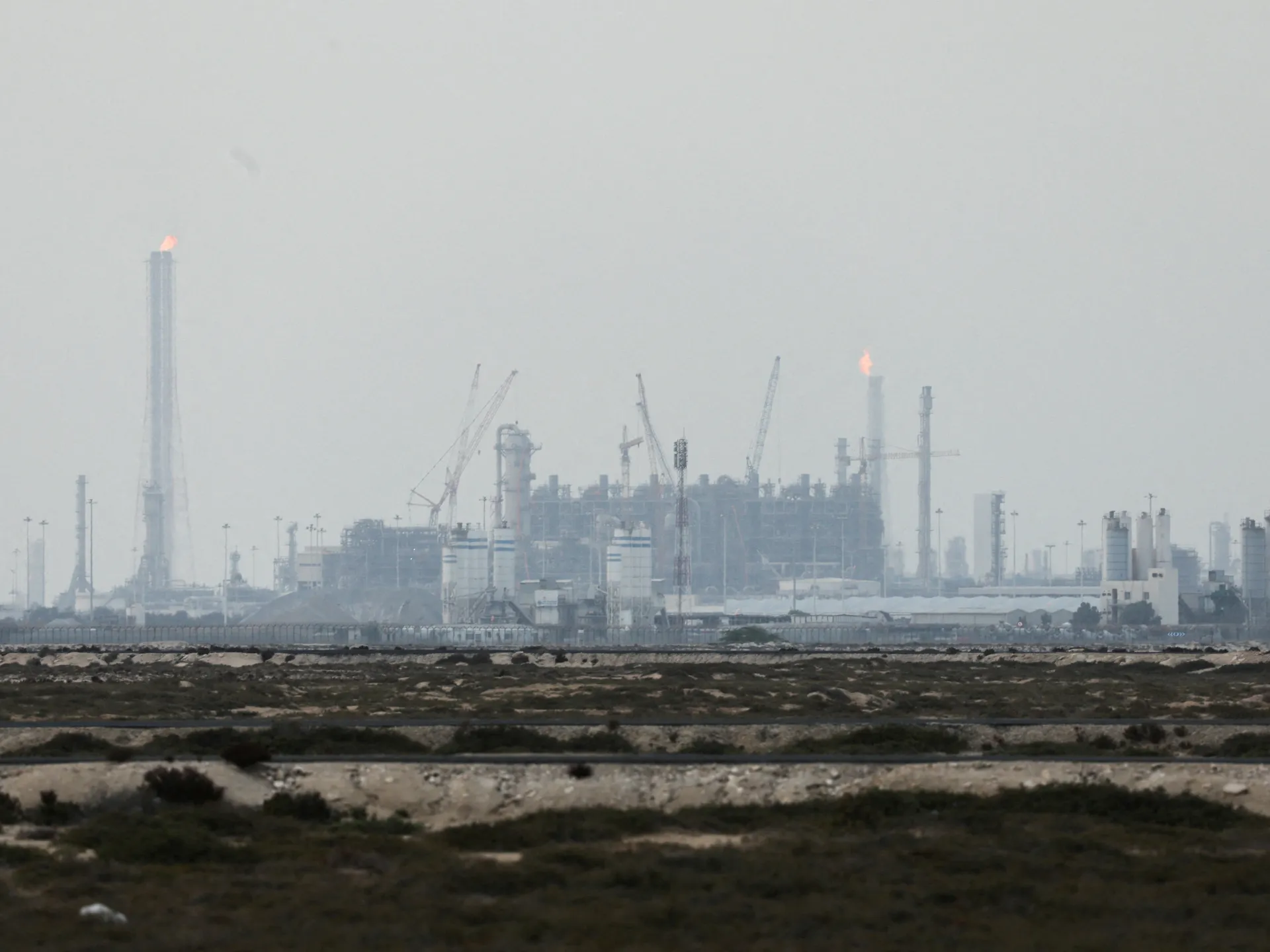
Iranian attacks on Qatar have wiped out 17 percent of its liquefied natural gas (LNG) export capacity, causing an estimated $20bn in lost annual revenue and threatening supplies to Europe and Asia, QatarEnergy’s CEO says.
Saad al-Kaabi told the Reuters news agency on Thursday that two of Qatar’s 14 LNG trains, the equipment used to liquefy natural gas, and one of its two gas-to-liquids facilities were damaged in Iranian strikes this week.
Recommended Stories
list of 3 itemsend of list
The repairs will sideline 12.8 million tonnes of LNG production per year for three to five years, he said.
“I never in my wildest dreams would have thought that Qatar would be – Qatar and the region – in such an attack, especially from a brotherly Muslim country in the month of Ramadan, attacking us in this way,” al-Kaabi said in an interview.
His comments came hours after Iran on Wednesday launched a series of attacks on oil and gas facilities across the Gulf region after the Israeli military bombed its South Pars offshore gasfield.
Tehran has been firing missiles and drones across the Middle East in response to the United States-Israeli war on Iran, which began on February 28.
It also has essentially blocked the Strait of Hormuz, a critical Gulf waterway through which about one-fifth of the world’s oil and LNG supplies transit, fuelling soaring petrol prices and global concerns about rising inflation.
Iran’s attacks on energy infrastructure have heightened tensions with its Arab Gulf neighbours, who have condemned the strikes as a violation of international law.
Iranian Foreign Minister Abbas Araghchi said on Thursday that his country would show “ZERO restraint” if its infrastructure is struck again as the Israeli attack on the South Pars gasfield continued to spur condemnation.
“Our response to Israel’s attack on our infrastructure employed FRACTION of our power. The ONLY reason for restraint was respect for requested de-escalation,” Araghchi wrote on X.
“Any end to this war must address damage to our civilian sites.”
‘Stay away from oil and gas facilities’
During Thursday’s interview with Reuters, al-Kaabi said QatarEnergy may have to declare force majeure on long-term contracts for up to five years for LNG supplies bound for Italy, Belgium, South Korea and China due to the two damaged trains.
“I mean, these are long-term contracts that we have to declare force majeure. We already declared, but that was a shorter term. Now it’s whatever the period is,” he said.
QatarEnergy had declared force majeure on its entire output of LNG after earlier attacks on its Ras Laffan production hub, which came under fire again on Wednesday. “For production to restart, first we need hostilities to cease,” al-Kaabi said.
The damaged units cost about $26bn to build, al-Kaabi said. He also told Reuters that the scale of the damage from the attacks has set the region back 10 to 20 years.
“If Israel attacked Iran, it’s between Iran and Israel. It has nothing to do with us and the region,” he said.
“And so now, in addition to that, I’m saying that everybody in the world, whether it’s Israel, whether it’s the US, whether it’s any other country, everybody should stay away from oil and gas facilities.”
Saudi Arabia’s Foreign Minister warns Iran that regional neighbours have ‘significant’ capabilities with which to respond to Tehran’s aggression.
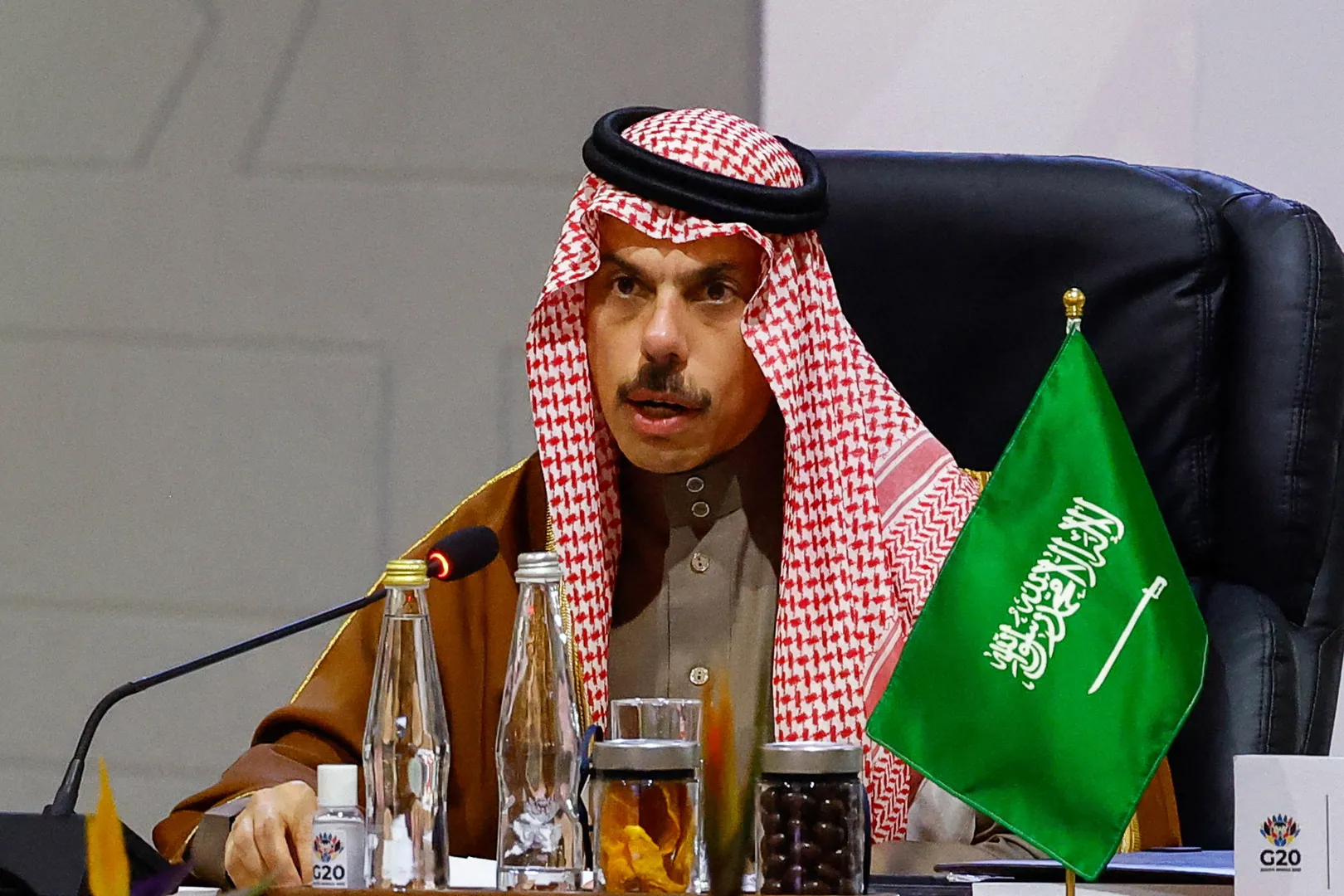
Saudi Arabia’s Foreign Minister Prince Faisal bin Farhan Al Saud has warned Iran that tolerance of its attacks on his country and those of neighbouring Gulf states is limited, calling on Tehran to immediately “recalculate” its strategy.
Warning that Saudi Arabia and other Gulf states have “very significant capacities and capabilities” that could be drawn on should they “choose to do so”, the foreign minister told a news conference early on Thursday that Iran had carefully planned its strategy for striking regional neighbours, despite denials from Tehran’s diplomats.
Recommended Stories
list of 4 itemsend of list
“The level of accuracy in some of this targeting – you can see it in our neighbours as well as the kingdom – indicates that this is something that was premeditated, preplanned, preorganised and well thought out,” Prince Faisal said.
“I’m not going to lay out what would and would not precipitate a defensive action by the Kingdom [of Saudi Arabia] because I think that is not a wise approach to signal to the Iranians,” the foreign minister continued.
“But I think it’s important for the Iranians to understand that the kingdom, but also its partners who have been attacked and beyond, have very significant capacities and capabilities that they could bring to bear should they choose to do so,” he said.
“The patience that is being exhibited is not unlimited. Do they [the Iranians] have a day, two, a week? I’m not going to telegraph that,” he added.
“I would hope they understand the message of the meeting today and recalculate quickly and stop attacking their neighbours. But I am doubtful they have that wisdom.”
Prince Faisal’s warning followed a meeting of foreign ministers from Arab and Islamic countries in the Saudi capital earlier in the day to discuss the expanding war in the region, which on Wednesday saw Iranian attacks on Gulf energy sites, including Qatar’s Ras Laffan gas facility, where significant damage was reported, and the United Arab Emirates’ Habshan gas facility.
Qatar’s Ministry of Foreign Affairs expressed its “strong condemnation and denunciation of the blatant Iranian attack targeting Ras Laffan Industrial City”, located 80km (50 miles) northeast of the Qatari capital Doha, which is the world’s largest liquefied natural gas (LNG) production facility, producing some 20 percent of the world’s LNG supply.
Iran’s Islamic Revolutionary Guard Corps (IRGC) had warned earlier that oil and gas facilities in Qatar, Saudi Arabia and the UAE would face retaliation for an Israeli strike on Iran’s South Pars gasfield.
Iranian state media reported that facilities linked to the country’s huge offshore South Pars field – located off the coast of southern Iran’s Bushehr province – had come under attack.
Saudi Arabia’s Ministry of Defence also said on Wednesday that its air defences had intercepted four Iranian ballistic missiles that targeted Riyadh and two launched towards the country’s eastern region.
Air defences in the UAE dealt with 13 ballistic missiles and 27 drones, according to the country’s Defence Ministry, while operations were suspended at the Habshan gas facility as authorities responded to incidents caused by fallen debris after the successful interception of a missile.
The Saudi foreign minister also told the news conference on Thursday that while the war will end one day, it will take much longer to restore relations with Iran as trust “has completely been shattered” due to Tehran’s tactics of targeting its neighbours.
“We know for a fact that Iran has been building this strategy over the last decade and beyond,” Prince Faisal said.
“This is not something that is a reaction to an evolving circumstance where Iran is improvising. This has been built into their war planning: targeting their neighbours and using that to try and put pressure on the international community,” he said.
“So when this war eventually ends, in order for there to be any rebuilding of trust, it will take a long time. And I have to tell you, if Iran doesn’t stop … immediately, I think there will be almost nothing that can re-establish that trust,” he added.
Iranian strikes come after Israel attacked Iran’s South Pars gasfield, with President Pezeshkian warning of ‘uncontrollable consequences’ that could ‘engulf the entire world’.
Qatar’s Foreign Ministry strongly condemns attack that caused “extensive damage” at the Ras Laffan complex.
Published On 18 Mar 202618 Mar 2026
Qatar’s Ministry of Interior says civil defence teams are responding to a fire at the country’s main gas facility after an Iranian attack.
In a statement on Wednesday, QatarEnergy said there was “extensive damage” following the “missile attacks” on Ras Laffan Industrial City.
“All personnel have been accounted for and no casualties have been reported at this time,” the world’s largest liquefied natural gas (LNG) producer added.
The announcements came hours after Iran threatened to attack oil and gas facilities across the Gulf region in retaliation for an Israeli attacks on its South Pars gasfield as the fallout from the United States-Israeli war on the country continues to escalate.
Iran’s warning was directed at Qatar’s Mesaieed Petrochemical Complex, Mesaieed Holding Company and Ras Laffan Refinery; Saudi Arabia’s Samref Refinery and Jubail Petrochemical Complex; and the United Arab Emirates’s Al Hosn Gas Field.
In a statement, Qatar’s Foreign Ministry strongly condemned “the brutal” Iranian targeting of Ras Laffan Industrial City.
“Qatar considers this assault a dangerous escalation, a flagrant violation of its sovereignty, and a direct threat to its national security,” it said.
On March 2, Qatar suspended LNG production following an attack on at its giant Ras Laffan facility, as well as on a water tank at a power plant in Mesaieed Industrial City.
Qatar, UAE, Kuwait and Saudi Arabia report new blasts, interceptions, with war edging to 3-week mark.
Published On 18 Mar 202618 Mar 2026
Iran has fired missiles and drones at several Gulf Arab nations, which have sought to intercept them, in a now-daily fallout from the United States-Israel war launched on Iran nearly three weeks ago that has engulfed the Middle East with deaths, destruction, assassinations, and an energy crisis spreading far beyond the region.
Early Tuesday, Qatar’s Ministry of Defence said its armed forces intercepted a missile attack against the country.
Recommended Stories
list of 4 itemsend of list
The Kuwait National Guard said it shot down an unmanned aircraft at dawn. The statement came hours after the Kuwaiti army said it was intercepting hostile missile and drone attacks.
The UAE, Saudi Arabia and Bahrain have also reported intercepting missiles and drones in recent hours.
Saudi Arabia’s Ministry of Defense reported the interception and destruction of a drone in the Eastern Region.
Earlier Tuesday, the UAE Ministry of Defence said the country’s air defences were “currently responding to incoming missile and drone threats from Iran”. The announcement came four hours after another reported attack from Iran. Later, a loud bang was heard in Dubai as authorities said air defences were dealing with a missile threat.
Al Jazeera’s Zein Basravi, reporting from Dubai, said, “The UAE has been the hardest hit by Iran’s retaliation. For instance, there have been 3000 different projectiles – missiles and drones – fired at GCC countries by Iran in terms of its retaliation. More than half, well over half, have targeted places in the UAE. Overnight was no different … Multiple explosions heard throughout the city.
“That glow of defensive weapons and interceptions in the night skies, something that has become all too familiar, not just in Dubai, but in cities across the GCC. Once again seen over the skies here.
“Dubai’s media office confirming that they were the result of air defence interception operations,” he added.
There have been several deaths in the Gulf nations, where an economic effect is also being acutely felt since the war began.
Gulf economies bear brunt of Iran war
The economies of the Gulf are suffering some of the worst damage.
Iran has launched continuous attacks on Gulf states since the onset of the conflict on February 28, arguing that it is attacking military bases used by the US for the war. Gulf nations have rejected Tehran’s claims, insisting the attacks on them are unjustified.
The Iranian strikes have upended energy production and inflicted major disruption to tourism and travel, putting the region at risk of some of the most severe economic harm since the 1990-1991 Gulf War.
After nearly three weeks of war, the economic effect on the region has already been substantial.
Middle Eastern oil producers’ daily output declined from 21 million barrels to 14 million barrels after a little more than a week of conflict as they deal with the closure of the Strait of Hormuz, according to Rystad Energy.
Ukrainian President Zelenskyy says Moscow and Tehran are ‘brothers in hatred’; claims Iran’s drones ‘contain Russian components’.
More than 200 Ukrainian military experts are in the Gulf region and wider Middle East helping governments in their defence against Iran’s drone attacks, Ukraine’s President Volodymyr Zelenskyy has said.
In an address to dozens of members of the United Kingdom Parliament in London on Tuesday, the Ukrainian leader said 201 Ukrainian anti-drone experts are in the region and another 34 “are ready to deploy”.
Recommended Stories
list of 4 itemsend of list
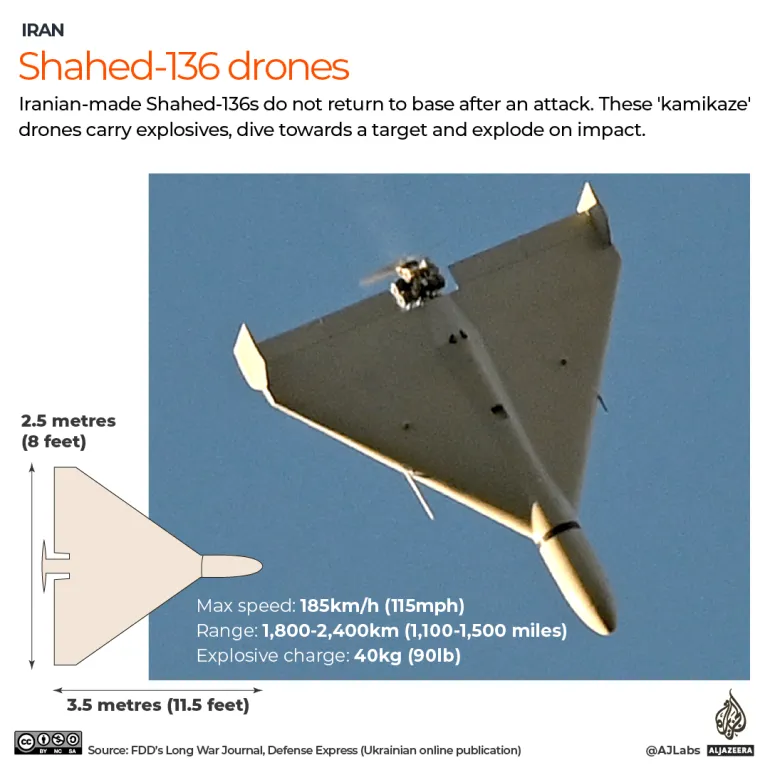
“These are military experts, experts who know how to help, how to defend against Shahed drones,” Zelenskyy said in his speech, referring to the Iranian-designed “kamikaze” drones that Russia has been using in its war against Ukraine since 2022.
“Our teams are already in the Emirates, Qatar, Saudi Arabia, and on the way to Kuwait,” the Ukrainian leader said.
“We are working with several other countries – agreements are already in place. We do not want this terror of the Iranian regime against its neighbours to succeed,” he said.
Last week, the Ukrainian leader said military teams had been sent to several Gulf states and Jordan.
Zelenskyy, who met with UK Prime Minister Keir Starmer and NATO chief Mark Rutte earlier on Tuesday, said Russia had received the Shahed-136 drones from the Iranians, who had “taught Russia how to launch them and gave it the technology to produce them”.
“Russia then upgraded them. And now we have clear evidence that Iranian Shaheds used in the region contain Russian components,” Zelenskyy said, describing the drones as designed for “low-cost destruction of expensive critical infrastructure”.
“So what is happening around Iran today is not a faraway war for us, because of the cooperation between Russia and Iran,” he said.
“The regimes in Russia and Iran are brothers in hatred, and that is why they are brothers in weapons. And we want regimes built on hatred to never win – in anything,” he added.
The Ukrainian leader then addressed his country’s newly developed prowess in drone warfare and manufacturing, claiming that 90 percent of Russian losses on the front lines in Ukraine are being “caused by our drones”.
Ukraine has moved on from making sea and aerial drones to producing interceptors that target drones, he said, adding that Ukraine is capable of producing at least 2,000 interceptors per day – half of which are required for its own defence and the remainder available for use by Kyiv’s allies.
“If a Shahed needs to be stopped in the Emirates – we can do it. If it needs to be stopped in Europe or the United Kingdom – we can do it. It is a matter of technology, investment, and cooperation,” he said.
While Ukraine has become one of the world’s leading producers of sophisticated, battlefield-proven drone interceptors, US President Donald Trump has said he does not need Ukraine’s help with countering Tehran’s drones targeting military targets in the Middle East.
After meeting with Zelenskyy at 10 Downing Street, Starmer said Russian President Vladimir Putin “can’t be the one who benefits from the conflict in Iran, whether that’s oil prices or the dropping of sanctions”.
During Zelenskyy’s visit on Tuesday, London and Kyiv signed a deal on a “defence partnership”, which is said to combine “Ukraine’s expertise and the UK’s industrial base to manufacture and supply drones and innovative capabilities”.
‘For 40 years, we’re protecting you’: US President Donald Trump criticises allies’ reluctance to commit forces to open the key waterway for Gulf oil exports.
Joint attacks by the United States and Israel have severely reduced Iran’s capacity to fire missiles and drones, experts say, but Iran retains enough capabilities to inflict significant damage.
“Iran’s ballistic missile capacity is functionally destroyed. Their navy assessed combat ineffective. Complete and total aerial dominance over Iran,” the White House said on Saturday. “Operation Epic Fury is yielding massive results,” it said in reference to the war launched by Israel and the US on February 28.
Recommended Stories
list of 3 itemsend of list
On Sunday, President Donald Trump said US forces had decimated Iran’s drone manufacturing capacity.
Still, on Monday afternoon, Qatar announced it had intercepted the latest in a series of missiles fired from Iran towards the country. Saudi Arabia, the United Arab Emirates and Bahrain also issued alerts. A missile landed on a car in Abu Dhabi, killing a person.
So are Iran’s missile capabilities severely reduced? And how is it still firing projectiles at its neighbours and Israel?
Is Iran firing fewer missiles now?
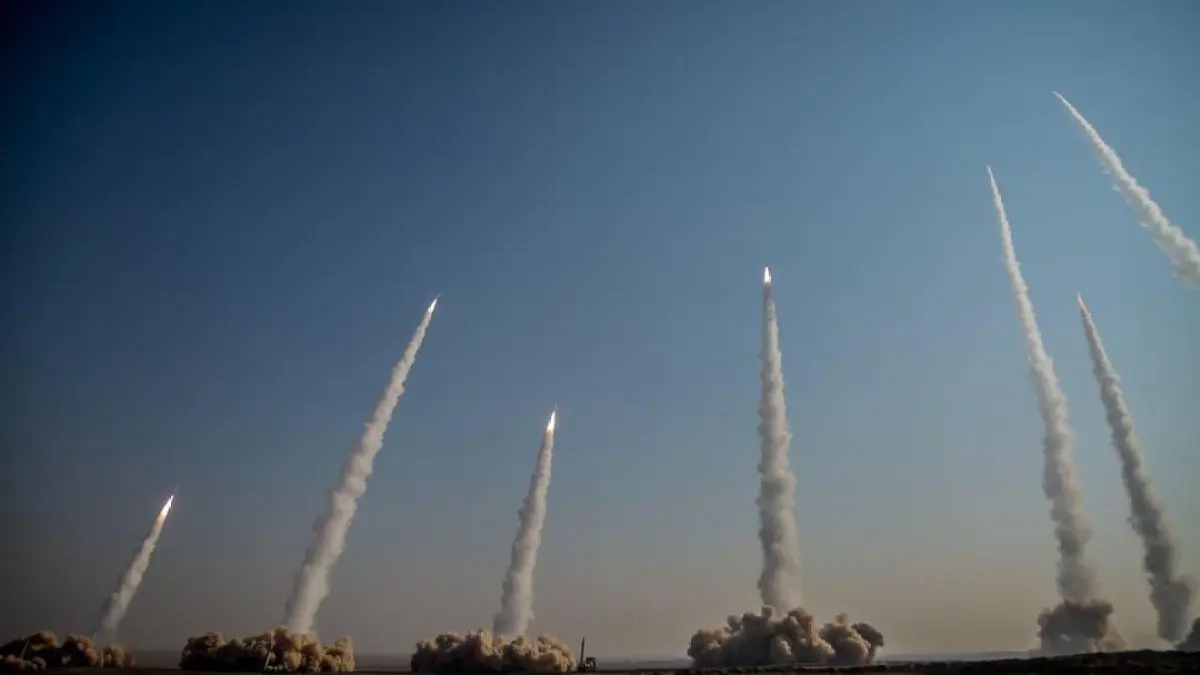
Indeed, the number of retaliatory missiles and drones that Iran has fired towards Gulf countries, Israel and other nations in the region has seen a steep decline since the start of the war.
In the first 24 hours of the conflict, Iran had fired 167 missiles (ballistic and cruise) and 541 drones at the United Arab Emirates, for instance. By contrast, on day 15 of the conflict, it had shot four missiles and six drones, according to a tally compiled by Al Jazeera based on the emirate’s Defence Ministry statements.
The barrage against Israel has also decreased, from nearly 100 projectiles over the first two days to a single-digit number in the past few days, according to Israel’s Institute for National Security Studies.
Last week, the Pentagon said missile launches were down 90 percent from the first day of fighting and drone attacks were down by 86 percent.
How big is Iran’s missile arsenal – and how much has it been hit?
Iran has the largest inventory of ballistic missiles in the region, the US Office of the Director of National Intelligence assessed in 2022. While there are no official accounts on how many missiles it has, Israeli intelligence reports suggest it counted around 3,000 missiles, a figure that dropped to 2,500 following the 12-day war last June.
Key to the US-Israel strategy has been hunting down Iran’s launchers. Each missile launch generates a signature, such as a large explosion, that can be picked up by a satellite and radar systems.
According to a senior Israeli military official cited by the Institute for the Study of the War, Israel has put up to 290 launchers out of service, out of an estimated 410 to 440 launchers.
But Iran is a vast country, and without boots on the ground, it will be hard to completely eliminate Iran’s capacity to shoot despite the US and Israel having nearly full control of the country’s airspace, said David Des Roches, an associate professor at the National Defense University in Washington, DC.
“It is not obvious to identify launchers,” Des Roches told Al Jazeera. “What we see are missiles that were put in hidden places or places not associated with the military before the war, when there was less observation”.
According to Des Roches, the slowdown in launches is due to Iranian forces having lost the capacity to launch volleys. As a result, Iran has been firing one or two missiles at a time towards civilian and commercial infrastructure, especially in Gulf countries, instead of aiming volleys at military targets. Iran insists that it is targeting only US interests in the region.
“Militarily speaking [Iran’s action] is not significant – this is what is called harassment fire to exhaust alert systems in nearby countries and scare people off,” Des Roches said.
What’s Iran’s strategy?
According to Hamidreza Azizi, an expert on Iran and visiting fellow with the German Institute for International and Security Affairs (SWB), Tehran’s central calculation is that the Gulf and Israel may run out of their defensive capabilities before Iran runs out of missiles.
“There might be some interest in making this a war of attrition,” he said, pointing at the lower, yet constant, number of weapons launched from Iran each day.
“Although the US and Israel have been successful in taking out some of the launchers and major missile bases, the Iranians have decentralised the missile bases and missile command and they have been increasingly relying on mobile launchers which makes it more difficult for the other side to detect and target,” Azizi said. “This is a race about time.”
And in that race, Iran believes it has a chance, say experts.
“It does not matter how many you launch as long as you maintain a credible threat,” Muhanad Seloom, an assistant professor in critical security studies at the Doha Institute for Graduate Studies, told Al Jazeera. “It takes one successful drone to shatter a sense of security.”
Iran has long experience in producing cheap yet effective drones. The Shahed 136 can be made quickly and in large numbers in relatively simple factories, and several of them can be fired at once, overwhelming defences. It also doesn’t need complex launchers that can be targeted in air strikes. With a speed of just 185km/h (115mph), Shaheds can be shot down by helicopters. Still, many have managed to get through US and Gulf air defence systems.
Just on Monday, a fire broke out near the UAE’s Dubai International Airport in a drone-related incident that temporarily disrupted flights; another drone attack caused a fire at the Fujairah industrial area, also in the UAE; air sirens sounded in central Israel due to a missile fired from Iran; and in the Strait of Hormuz – a key waterway through which 20 percent of global energy supplies are shipped – hundreds of vessels remain paralysed over fear of being struck despite few attacks on ships. Since the start of the war, a maritime tracker has reported 20 incidents related to vessels.
This, say experts, is part of Iran’s defensive doctrine of asymmetric warfare against militarily superior powers, such as the US and Israel. The weaker party, Iran in this case, turns to unconventional methods of warfare, wearing down the enemy by targeting key infrastructure to inflict economic pain.
Tehran has already pushed oil prices to higher than $100 a barrel and sent global markets into panic mode. The second-biggest exporter of natural gas, Qatar, continues to keep shut its production; Bahrain’s state oil company has declared force majeure on its shipments, and oil production from Iraq’s main southern oilfields has plunged 70 percent.
If Iran can keep raising global oil prices, “it will inflict equal or more damage to the US than American bombs in Iran,” said Vali Nasr, a professor of international affairs and Middle East studies at Johns Hopkins University.
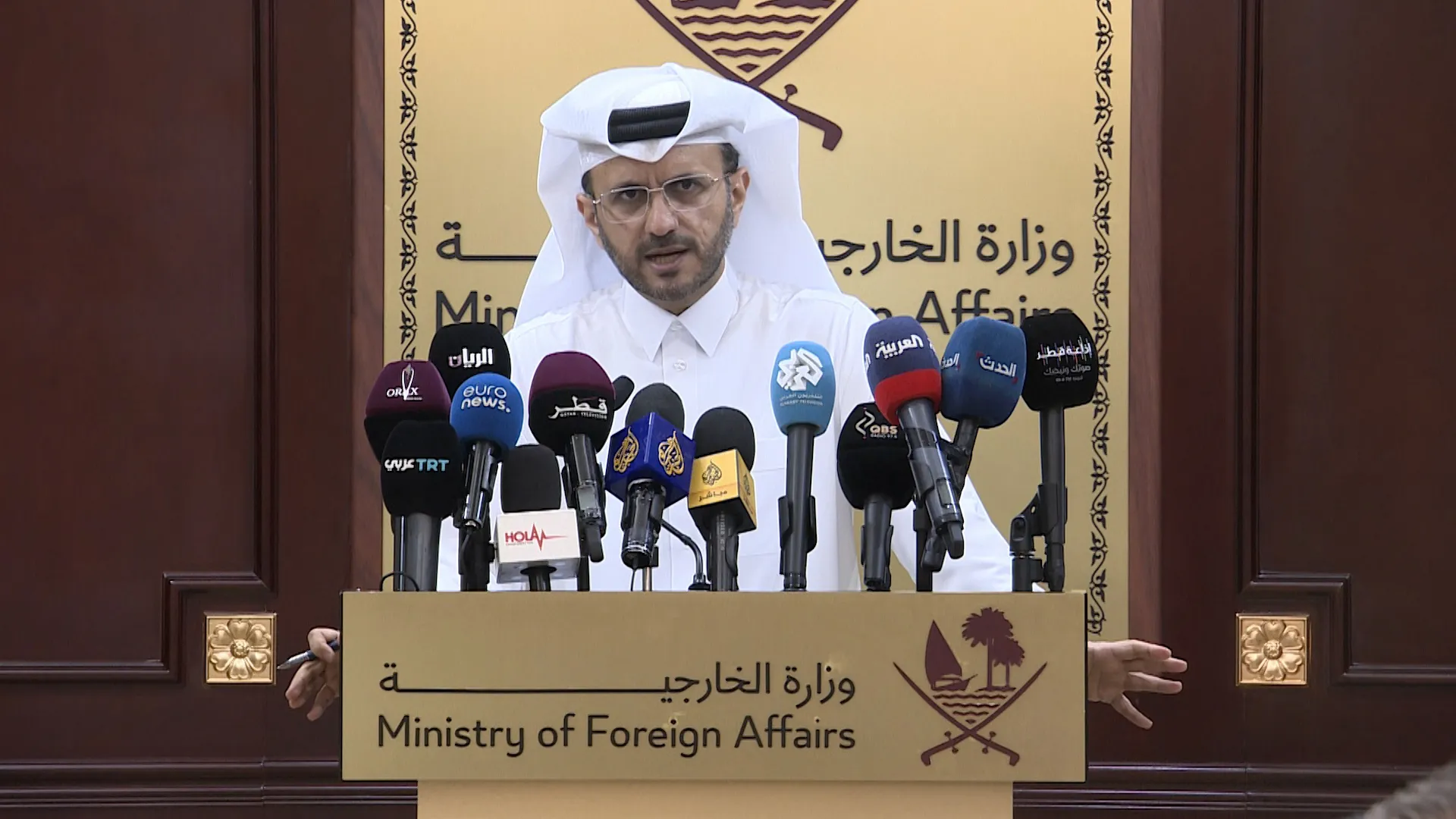
Qatar’s Foreign Ministry spokesperson Majed Al Ansari says Iranian attacks have targeted residential areas and Hamad International Airport, contradicting Tehran’s denial that is has been attacking civilian sites.
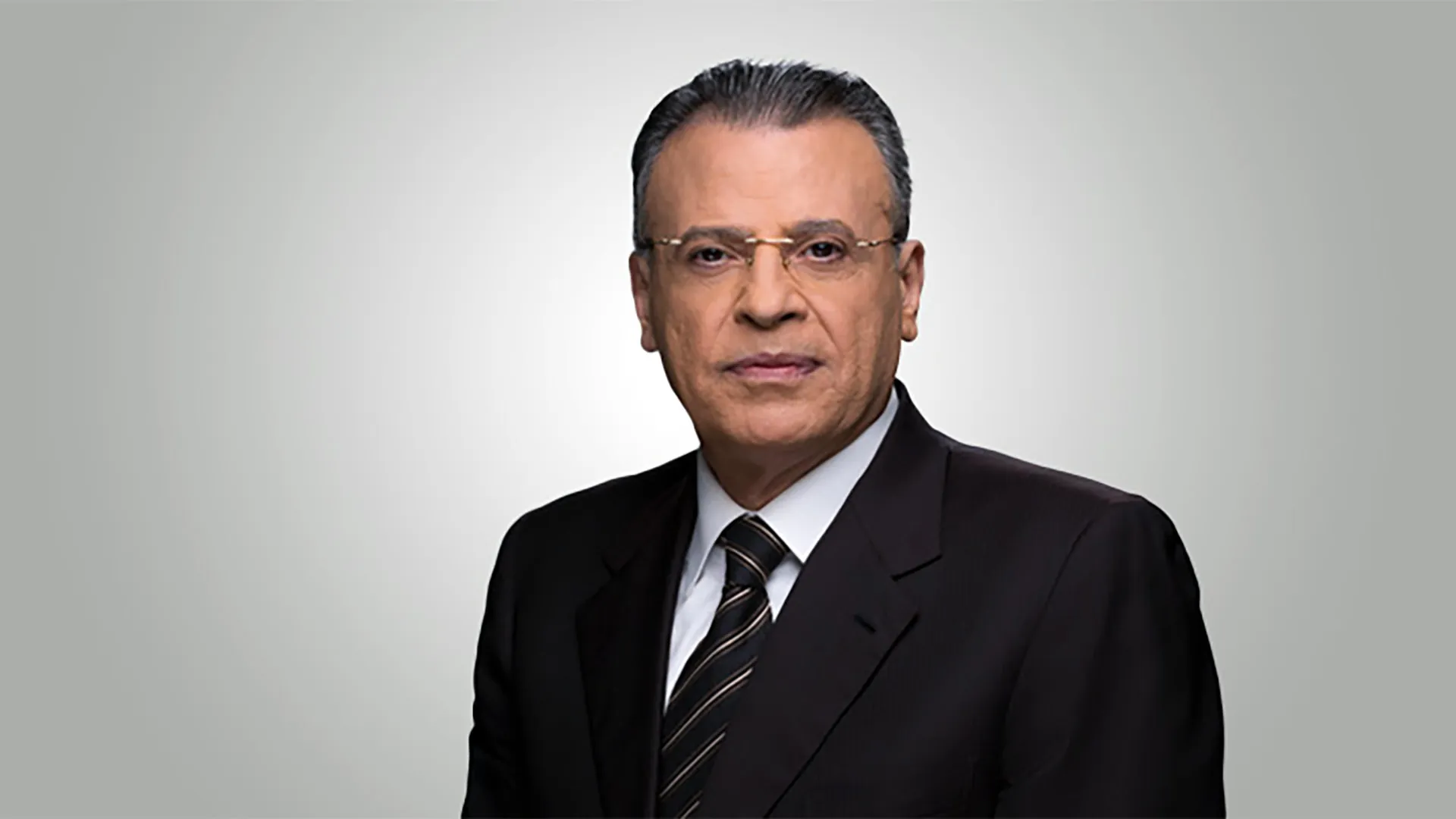
The Palestinian presenter delivered the network’s first-ever bulletin when it went on air in 1996.
Published On 15 Mar 202615 Mar 2026
Share
Al Jazeera Arabic presenter Jamal Rayyan, the first face ever seen on the channel when it launched nearly three decades ago, has died at the age of 73.
Rayyan passed away on Sunday after a broadcasting career spanning more than five decades, during which he covered major global and regional events for the channel – from the United States wars in Afghanistan and Iraq to the Arab Spring.
Recommended Stories
list of 4 itemsend of list
He had been with Al Jazeera since its first day on air on November 1, 1996, when he presented the channel’s opening bulletin at the start of what would become a major broadcaster in the Arab world.
Born in Tulkarem in the occupied West Bank in 1953, the Palestinian presenter began his career at Jordanian Radio and Television in 1974 before working with several broadcasters in the region and beyond, including Emirati television, South Korean public broadcasting, and BBC Arabic.
Rayyan later recalled being sworn to secrecy after being quietly selected for the historic role.
“The vice chairman of the board came and said to me, ‘You have been chosen to be the first face on Al Jazeera, but we want one thing from you: do not tell anyone,’” he told Al Jazeera’s In-Depth Studies, a collection of testimonies from the channel’s founders and early staff.
Measured delivery, distinctive voice
The announcement that Rayyan was presenting the first bulletin was made public half an hour before airtime. He entered the studio deliberately on an empty stomach, he recalled, to ensure he could breathe well and deliver.
“As the broadcast started, my heart began beating rapidly. However, after I appeared on the screen and said, ‘Welcome to the first broadcast of Al Jazeera channel,’ I returned to my natural state and finished the broadcast. As soon as I finished and exited the studio, the entire room erupted in applause,” Rayyan said.
He spent nearly three decades as one of Al Jazeera’s most recognisable presenters, building a following of 2.3 million on X.
Over the years, Rayyan became a familiar presence in homes across the Arab world, his measured delivery and distinctive voice closely associated with Al Jazeera’s news bulletins.
In the Arab world and beyond, his broadcasts and the channel’s editorial approach reached wide audiences and helped shape regional news coverage in the years that followed.
The fixture, part of the Qatar Football Festival, has been cancelled amid the ongoing US-Israeli war on Iran.
Published On 15 Mar 202615 Mar 2026
Share
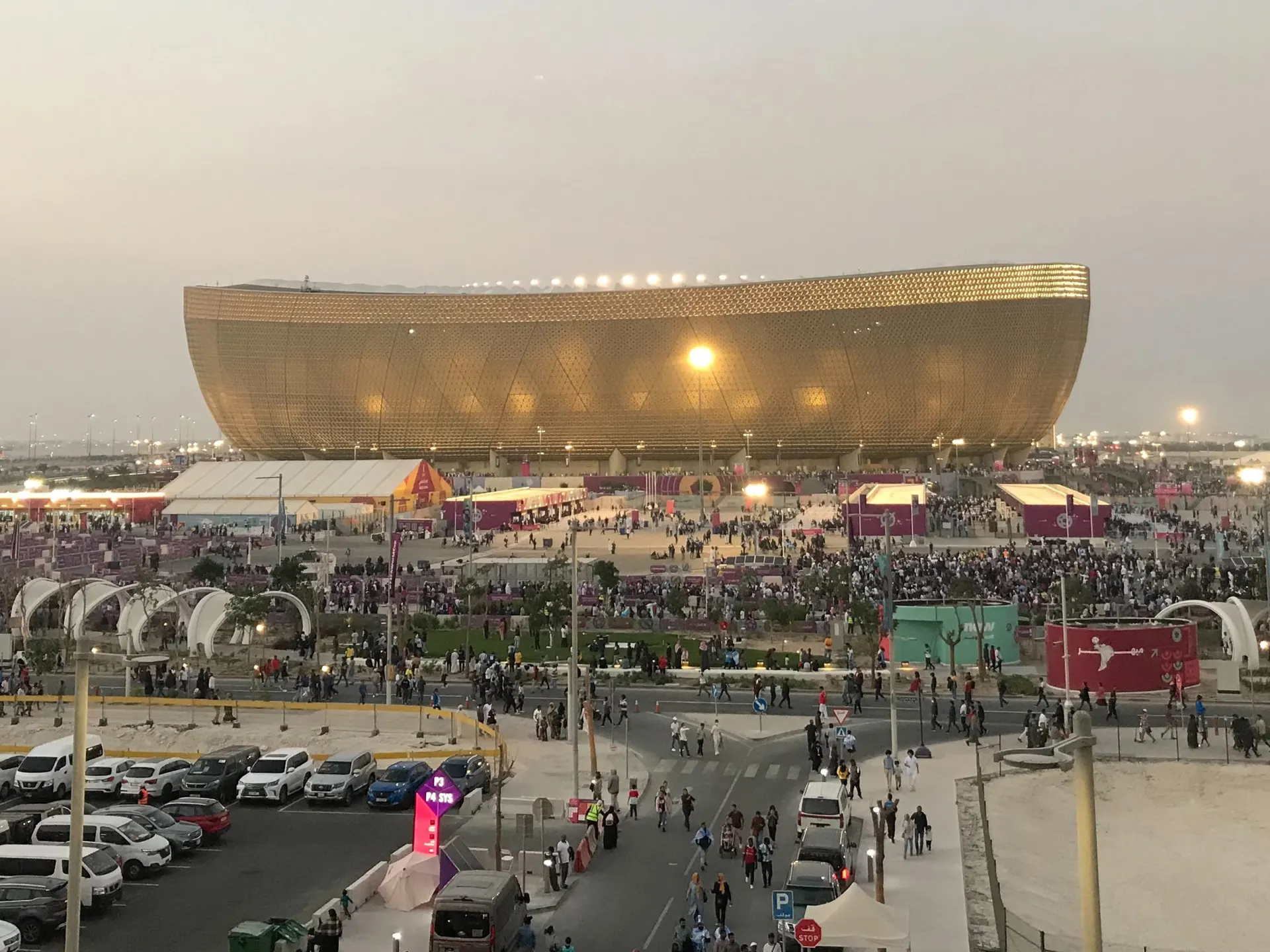
The ‘Finalissima’ match between Spain and Argentina that was scheduled to be held in Qatar later this month has been cancelled due to the conflict in the Middle East, UEFA said in a statement.
“It is a source of great disappointment to UEFA and the organisers that circumstances and timing have denied the teams of the chance to compete for this prestigious prize in Qatar,” UEFA said in a statement on Sunday.
The US-Israeli strikes on Iran have affected countries throughout the Gulf, disrupting travel in some of the world’s busiest transit hubs and forcing several sporting events to be cancelled due to safety concerns.
The contest between European champions Spain and Copa America winners Argentina was scheduled for March 27 at Doha’s Lusail Stadium, where fans would have had the opportunity to watch Lionel Messi go head-to-head with Lamine Yamal.
UEFA said they held discussions with the organising authorities in Qatar and concluded that the match could not take place due to the “current political situation” in the region.
The Spain vs Argentina game was part of the Qatar Football Festival, as promoted by local organisers.
The five-day festival also included Egypt vs Saudi Arabia and Qatar vs Serbia on March 26; Egypt vs Spain and Saudi Arabia vs Serbia on March 30 and Qatar vs Argentina on March 31.
Serbia will now play Spain away instead.
“Serbia will face the current European champions, Spain, on away turf on March 27, and four days later they will host the Saudi Arabian national team,” the Football Association of Serbia said in a statement.
UEFA said they explored other feasible alternatives to play the Finalissima but they proved to be ‘unacceptable’ to the Argentinian Football Association (AFA).
UEFA first offered to stage the match at the Santiago Bernabeu with a 50:50 split of supporters in the stadium.
A second option was to stage the Finalissima over two legs – at the Bernabeu on March 27 and the second leg in Buenos Aires during an international window before the next Euros and Copa America.
However, the AFA rejected both options. UEFA said Argentina made a counter offer to play the game after the World Cup but Spain had no available dates.
“Ultimately, UEFA sought a commitment from Argentina that, if a neutral venue in Europe could be found, the game could go ahead on 27 March… or on the alternative date of 30 March. This proposal was also rejected,” UEFA added.
The 2022 edition of the Finalissima was held at Wembley Stadium in London where Argentina beat Italy 3-0.
BBC Sport has contacted the Argentine FA for comment.
Uefa said: “Argentina made a counter suggestion to play the game after the World Cup but, as Spain has no available dates, that option had to be ruled out.”
The Spanish FA said, external it had “worked intensively” to get the game on in any format possible, whether in Spain or at a neutral venue.
It said: “Spain was prepared to play as it has always been stated. They set no conditions.
“Spain, together with Uefa, has offered all possibilities.”
On Saturday the Bahrain and Saudi Arabian Formula 1 Grands Prix due to be held in April were cancelled.
Formula 1 said it is not safe to stage the races because of the conflict across the region.
The Finalissima, which is staged every four years and is organised by Uefa and the South American Football Confederation (Conmebol), was last won by Argentina at Wembley in 2022.
The Qatar GP, scheduled for April 10-12, has been rescheduled for November 8 amid the ongoing US-Israeli war on Iran.
Published On 15 Mar 202615 Mar 2026
Share
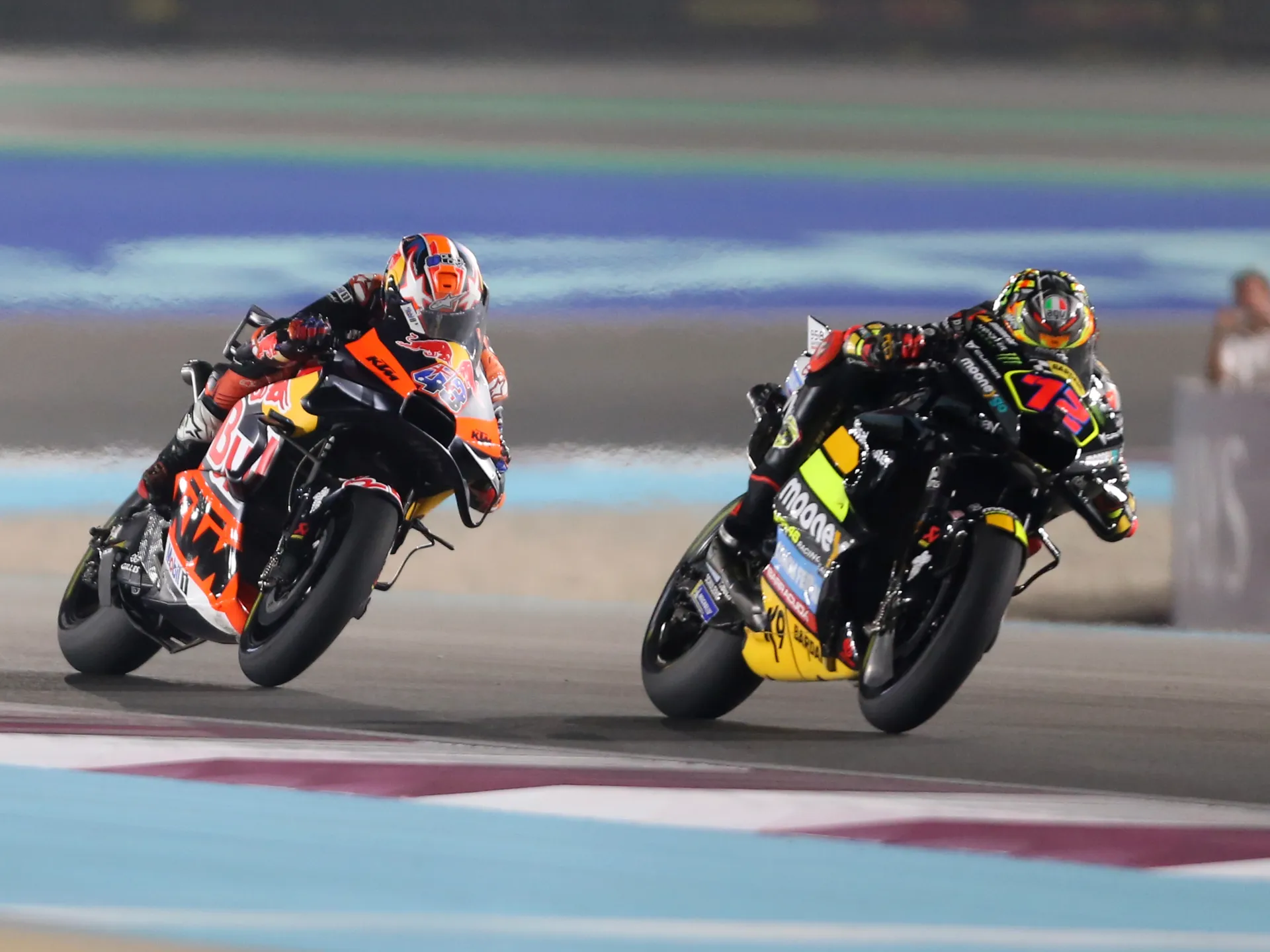
The Qatar Grand Prix that was scheduled to be held next month has been postponed due to the ongoing conflict in the Middle East, the sport’s governing body announced.
“MotoGP confirms that the Qatar Grand Prix, originally scheduled for April, has been postponed to November 8 due to the ongoing geopolitical situation in the Middle East,” MotoGP said on Sunday.
The Lusail International Circuit was set to host the fourth round of the 2026 championship from April 10-12 but it has now been rescheduled for November 8, organisers said in a statement.
“Following extensive scenario planning and calendar analysis, the revised date has been chosen to ensure minimal disruption to the wider MotoGP schedule.”
The Portuguese Grand Prix will now take place on November 22 and the season finale in Valencia will move to November 29, organisers added.
Aprilia’s Marco Bezzecchi leads the championship after the first round in Thailand. The next two races will be held in Brazil (March 20-22) and the United States (March 27-29).
Earlier on Sunday, Formula One and its governing body, FIA, said the Grands Prix races in Bahrain and Saudi Arabia will not happen in April due to safety concerns related to the Iran war.
Both countries have been hit during Iran’s retaliatory attacks after the United States and Israel launched a wave of strikes on Iran.
The announcement was made in Shanghai ahead of the Chinese Grand Prix.
“Due to the ongoing situation in the Middle East region, the Bahrain and Saudi Arabian Grands Prix will not take place in April,” F1 said. “While several alternatives were considered, it was ultimately decided that no substitutions will be made in April.”
F1 was due to race in Bahrain on April 12 and in the Saudi Arabian city of Jeddah on April 19.
“While this was a difficult decision to take, it is unfortunately the right one at this stage considering the current situation in the Middle East,” said Stefano Domenicali, president and CEO of F1.
“The FIA will always place the safety and well being of our community and colleagues first. After careful consideration, we have taken this decision with that responsibility firmly in mind,” FIA’s president, Mohammed Ben Sulayem, said.
The FIA did not explicitly rule out rescheduling the races and, along with F1, did not use the words “cancel” or “postpone” in announcing that the series would not be in Bahrain or Saudi Arabia next month.
Sheikh Khalifa bin Hamad says Qatar will ‘not hesitate’ to ensure its stability as US-Israeli war on Iran continues.
Published On 13 Mar 202613 Mar 2026
Share
Qatar’s Interior Minister Sheikh Khalifa bin Hamad has said the situation in the Gulf country is “stable” amid Iranian drone and missile attacks launched across the Middle East in response to the US-Israeli war on Iran.
In an interview with Qatar Television on Friday, Sheikh Khalifa said the Qatari government had a plan in place to deal with the prospect of more Iranian attacks amid a regional war.
Recommended Stories
list of 3 itemsend of list
“The security situation in the country is stable, and we will not hesitate to take any measure that ensures the stability of our nation,” he said.
The interior minister said Qatar’s early warning system has been effective as authorities responded to reports of falling missile fragments at more than 600 sites across the country.
He added that Qatar has enough water to last for several months, as well as food reserves that will cover the nation’s needs for a year and a half.
Sheikh Khalifa’s remarks come as Qatar and other countries in the Gulf region have faced a barrage of Iranian attacks since the United States and Israel launched a war against Iran on February 28.
While Iran has said it is targeting US and Israeli military interests in the wider Middle East, the strikes have hit civilian infrastructure, including oil and gas facilities.
That has prompted a slowdown in regional energy production, which – coupled with Iran’s closure of the Strait of Hormuz, a key Gulf waterway – has raised concerns around the war’s effects on global economies.
Earlier this week, the United Nations Security Council passed a resolution denouncing the Iranian attacks on Gulf Cooperation Council (GCC) countries.
Sheikha Alya Ahmed bin Saif Al Thani, Qatar’s ambassador to the UN, had condemned the firings as “a clear violation of international law and the UN Charter”.
The attacks, she told reporters in New York on Wednesday, “impacts deeply the foundation of understanding upon which bilateral relations between our countries have been built”.
Gulf countries, including Qatar, Bahrain and Kuwait, have declared force majeure on gas exports following the United States-Israel war on Iran, now in its third week, and the disruptions to shipping through the Strait of Hormuz, as Tehran has retaliated across the region, targeting US assets.
QatarEnergy was among the first to halt production, shutting down gas liquefaction on March 2 and sending ripples through global energy markets. Kuwait Petroleum Corporation and Bahrain’s Bapco Energies followed days later, while India invoked emergency measures to redirect gas supplies to priority sectors.
Oil prices also soared to more $100 a barrel as war intensified and uncertainty grew over energy shipments through one of the world’s most critical maritime chokepoints.
Here’s what we know about force majeure and what Gulf countries invoking it means for global oil and gas markets.
What is force majeure?
Force majeure, from the French meaning “superior force”, is a clause in contracts that allows a party to be excused from its obligations when an event beyond its control prevents performance.
This legal move can allow a party to suspend its obligations temporarily, be released from them partially or fully, or adjust them to reflect the new circumstances.
Why are Gulf countries invoking force majeure?
Companies in Qatar, Kuwait and Bahrain have invoked it following severe disruptions to shipping through the Strait of Hormuz caused by US-Israeli military strikes against Iran that started on February 28.
Following these attacks, a commander in Iran’s Islamic Revolutionary Guard Corps (IRGC) said on March 2 that the Strait of Hormuz was closed and warned that any vessel attempting to pass through would be attacked, a statement echoed by Iran’s new supreme leader, Mojtaba Khamenei, on Thursday.
As a result, Gulf companies started invoking force majeure, in order “to avoid paying damages or other financial penalties under their contracts”, Ilias Bantekas, a professor of transnational law at Hamad bin Khalifa University in Qatar, told Al Jazeera.
“These companies are most likely unable to fulfil their obligations, for example, to deliver shipments of oil and gas to other countries, or for shippers to transport them across the Arabian Gulf,” he said.
Does war automatically qualify as force majeure?
No. For war to qualify as force majeure, it must either be covered by the contract or actually prevent one or both parties from performing their obligations.
Companies and states typically include force majeure clauses that define which events qualify, meaning that when force majeure is invoked, the parties rely on provisions they previously agreed upon.
“War can always be foreseen, but perhaps not at the level at which it is being waged right now,” Bantekas said, adding that under general contract provisions, ships carrying goods are usually expected to find another route, “even if it is more costly to them”.
“What we could never have foreseen is that the Strait of Hormuz could be closed to shipping altogether, even if Iran were attacked in the brutal way it is now. I think that, on its own, could be sufficient to constitute a force majeure event,” he said.
“However, only a court would have the authority to make a definitive determination as to whether this kind of war, under these particular circumstances, amounts to force majeure,” he added.
Will LNG and oil markets be affected?
Yes. QatarEnergy’s declaration of force majeure alone has already significantly disrupted the global LNG market, as Qatar accounts for nearly 20% of global supply.
Gas prices soared immediately following the country’s halt of gas production, and global gas markets are expected to experience shortages for weeks, if not longer.
“The lack of visibility over the likely duration of force majeure, and of the broader military conflict, is injecting extreme uncertainty into global oil, gas and LNG prices,” Seb Kennedy, global gas and LNG analyst, told Al Jazeera.
“Prices will necessarily keep rising as volumes are withheld from the market, until price pain triggers demand destruction in price-sensitive areas of the economy,” he noted.
Which other countries have invoked force majeure?
On Tuesday, India invoked force majeure to redirect gas supplies from non-priority sectors to key users after disruptions to liquefied natural gas shipments through the Strait of Hormuz, according to a government notification.
But India’s measures are a “domestic demand-management response”, Kennedy said, as its government is relocating its limited gas supplies internally “to protect critical sectors such as households, small businesses, power generation and city gas distribution”.
(Al Jazeera)
Kennedy said the move reflects the difficult choices facing LNG-dependent economies, where governments may prioritise households and power generation over industrial users.
This prioritisation of LNG for domestic use “highlights the tough choices facing LNG-dependent countries”, he noted.
Aside from India, Omani trading house OQ also declared force majeure to a customer in Bangladesh after the Qatari supply was halted.
How will this affect US and European markets?
US LNG exporters are likely to benefit from the disruption. Analysis by Energy Flux estimates that US LNG exporters could generate about $4bn in windfall profits in the first month of the disruption alone.
If the situation persists, “US LNG windfall profits could reach $33bn above the pre-Iran average within four months. Over eight months, that figure rises to $108bn,” says Kennedy.
(Al Jazeera)
These gains largely come at the expense of European consumers, Kennedy notes, as Europe is the main destination for US LNG and remains heavily reliant on those supplies to refill gas storage and ensure winter supply security.
European stock markets fell last week, while the region’s natural gas prices rose sharply again.
What does this mean for Asian markets?
Major Asian economies such as India, China and South Korea rely heavily on imported LNG.
On the other hand, Southeast Asia alone has significant fossil fuel resources, but the region still depends heavily on imported oil and gas, much of which is transported through the Strait of Hormuz.
“Wealthier buyers such as Japan and South Korea can generally outbid others to secure cargoes during periods of extreme scarcity,” Kennedy said, noting that price-sensitive importers, especially in South and Southeast Asia, tend to be “forced out of the market” whenever prices soar, “leading to demand destruction, fuel switching, or industrial curtailment”.
“In that sense, the crisis does not hit all LNG importers equally: It becomes a contest of balance sheets as much as a question of physical supply.”
Can force majeure be challenged?
If a force majeure clause is written in the contract, then it stands because the parties have consented to it.
Contrary to that, if it has not been written in the contract, then any unforeseen event would potentially be open to legal challenge, and it becomes a matter of convincing the courts that the event could never have been foreseen and that it makes obligations on one of the parties impossible to perform.
“However, in the present circumstances, the stronger parties – the ones waiting for deliveries of oil and gas elsewhere in the world – may actually be harming themselves if they refuse to accept force majeure,” Bantekas said.
“Doing business with Gulf countries could become more difficult in the future, and premiums would likely rise significantly. So, I do not think they will be taking these matters to court,” he noted.
Heavy Israeli strikes have hit Tehran, Iran, as its allies launch attacks across Gulf states, and shipping through the Strait of Hormuz has been severely disrupted, sending global oil prices soaring.
Meanwhile, political pressure is mounting in Washington as the conflict spreads across the region.
Recommended Stories
list of 1 itemend of list
Here is what we know about what has been happening in the past 24 hours:
In Iran
Supreme leader speaks: Appointed last week following the assassination of his father, Iran’s new Supreme Leader Mojtaba Khamenei has issued his first statement, warning that attacks on Israel and US military assets and infrastructure in the Middle East will continue unless bases hosting US forces in the region are closed.
Heavy strikes on Tehran: The Israeli military has launched a new “extensive wave” of air attacks on Iran’s capital, Tehran, leaving the city covered in thick smoke on Friday morning.
Strait of Hormuz closure and surging oil prices: The Strait of Hormuz, which connects the Gulf to the Gulf of Oman, is closed, causing Brent crude oil prices to surge past $100 per barrel. The strait, which falls into the territorial waters of Iran and Oman, is the only waterway to the open sea available to oil and gas producers in the Gulf. Iran has stated that the strait is under Iranian control and US-and Israel-linked ships are banned. Other vessels must receive Iranian permission to pass.
Civilian casualties: Iran’s ambassador to the United Nations, Amir Saeid Iravani, said at least 1,348 civilians have been killed, with victims ranging in age from eight months to 88 years old.
A navy vessel is seen sailing in the Strait of Hormuz [Sahar Al Attar/AFP]
In Gulf countries
Regional retaliation and attacks: Iran has launched waves of drones and missiles towards Gulf countries that host US military assets and troops, and has targeted oil tankers and facilities.
Bahrain: The nation has reported intercepting 114 missiles and 190 drones since the war began on February 28.
Saudi Arabia: The country intercepted 10 drones over its eastern region and later destroyed an additional 28 drones that breached its airspace.
Attacks on the UAE: The country has strongly condemned Iranian strikes on the region, and said they have hit Dubai International Airport and some hotels.
Evacuations: Australia has ordered all “non-essential” officials to leave the United Arab Emirates and Israel, and urged its citizens to evacuate the Middle East while it is still safe to do so
Qatar’s response: Qatar’s airspace is officially closed, but Qatar Airways has scheduled more than 140 special flights to help repatriate stranded residents and citizens.
Qatar has strongly rejected Israeli media claims that it intentionally paused liquefied natural gas (LNG) production to manipulate US energy prices; officials clarified that the suspension was actually forced by an Iranian drone attack.
A view of the damaged part of the Dubai Creek Harbour tower after it was hit by an Iranian drone attack in Dubai, United Arab Emirates [EPA]
In the US
Trump claims war moving ‘rapidly’: US President Donald Trump told reporters the war against Iran was moving “very rapidly”.
“It’s doing very well, our military is unsurpassed,” he said at the White House, not directly responding to the latest comments from Iran’s new supreme leader.
Domestic opposition: More than 250 US organisations have signed a letter calling on Congress to halt funding for the war. They argue the $11.3bn spent in the first six days of the conflict is diverting crucial funds from urgent domestic needs, such as food benefits.
No ‘need’ for ground troops in Iran: US Senator Lindsey Graham has played down the possibility of US troops being deployed to Iran, but suggested the war could continue for some time. “I don’t see this conflict ending today,” the Republican senator told reporters in Washington, DC.
In Israel
New missile wave launched at Israel: The Israeli military said early on Friday that Iran had fired a new barrage of missiles towards Israel, and instructed people in affected areas to head to shelters.
Israel strikes Basij force: Israel’s military said it had struck checkpoints set up in Tehran by the Basij force of Iran’s Revolutionary Guards as part of efforts to undermine control by the authorities.
Regime change: Israeli Prime Minister Benjamin Netanyahu said Israel can create conditions for regime change, but it is up to Iran’s people to take to the streets. He also said Israel is aiming to stop Iran from moving nuclear and ballistic projects underground.
In Lebanon, Iraq
Downed US aircraft: A US KC-135 refuelling aircraft crashed in western Iraq. While the Islamic Resistance in Iraq claimed it shot the aircraft down using air defence systems, US Central Command (CENTCOM) stated the aircraft went down in “friendly airspace” and was not the result of hostile fire.
Iraqi port closures: Iraq has shut its port operations after an Indian crew member was killed during an attack on a US-owned oil tanker in Iraqi waters.
Six French soldiers hurt: A drone attack wounded six French soldiers in Erbil, in Iraq’s autonomous Kurdish region, President Emmanuel Macron said on Thursday.
Deadly attacks in southern Lebanon: Israeli bombardments continue on southern towns and villages. A strike on the village of Arki, near Sidon, killed nine people, including five children.
Mounting death toll and mass displacement: Lebanese officials have reported that at least 687 people have been killed in Israeli attacks on Lebanon since last Monday, including 98 children. The intense bombardments have displaced an estimated 700,000 to 750,000 people from their homes.
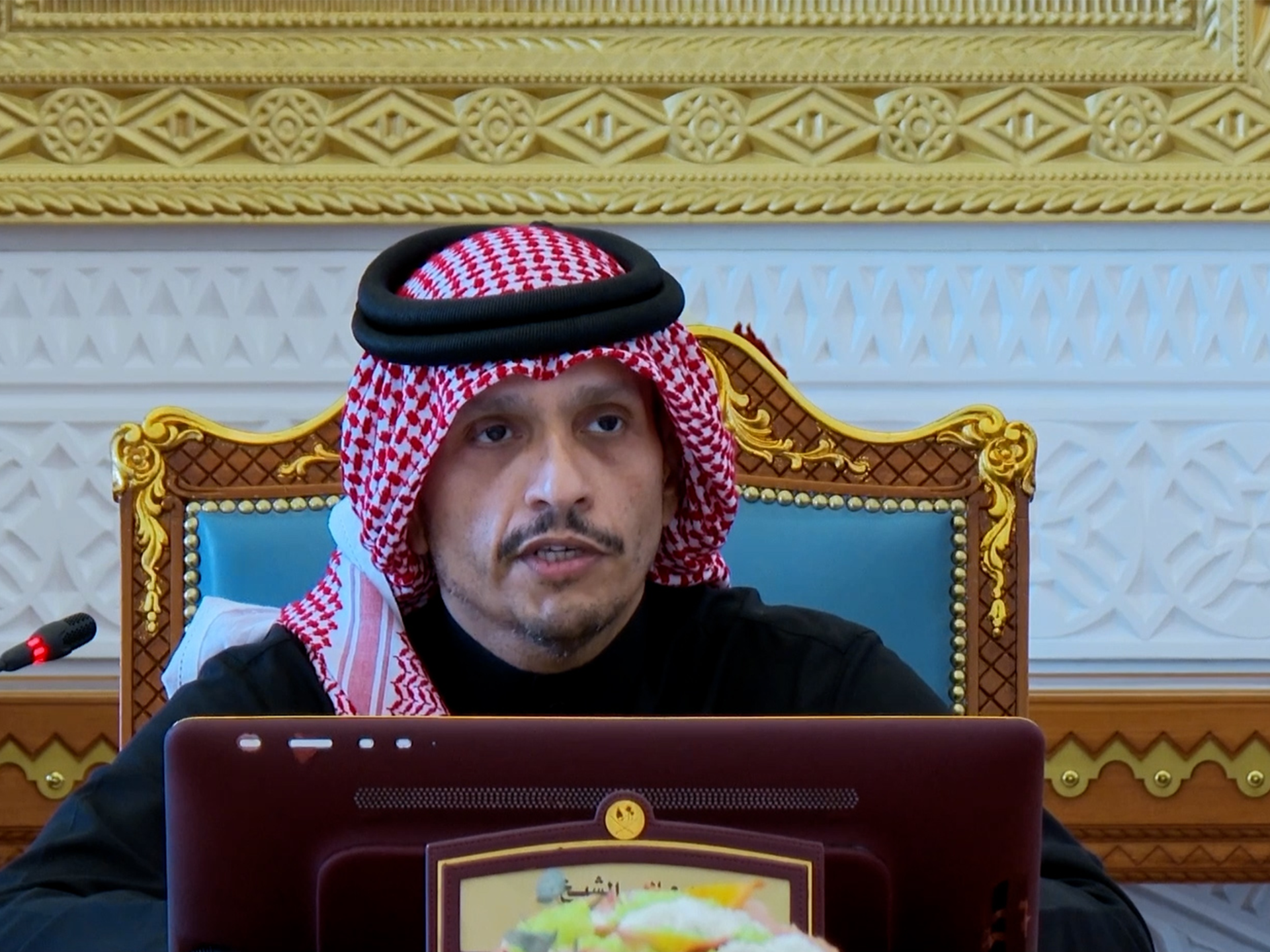
During a cabinet meeting, Qatar’s Prime Minister Sheikh Mohammed bin Abdulrahman Al Thani called for strengthening the country’s ability to withstand “hardship” as the US-Israel war on Iran rages.
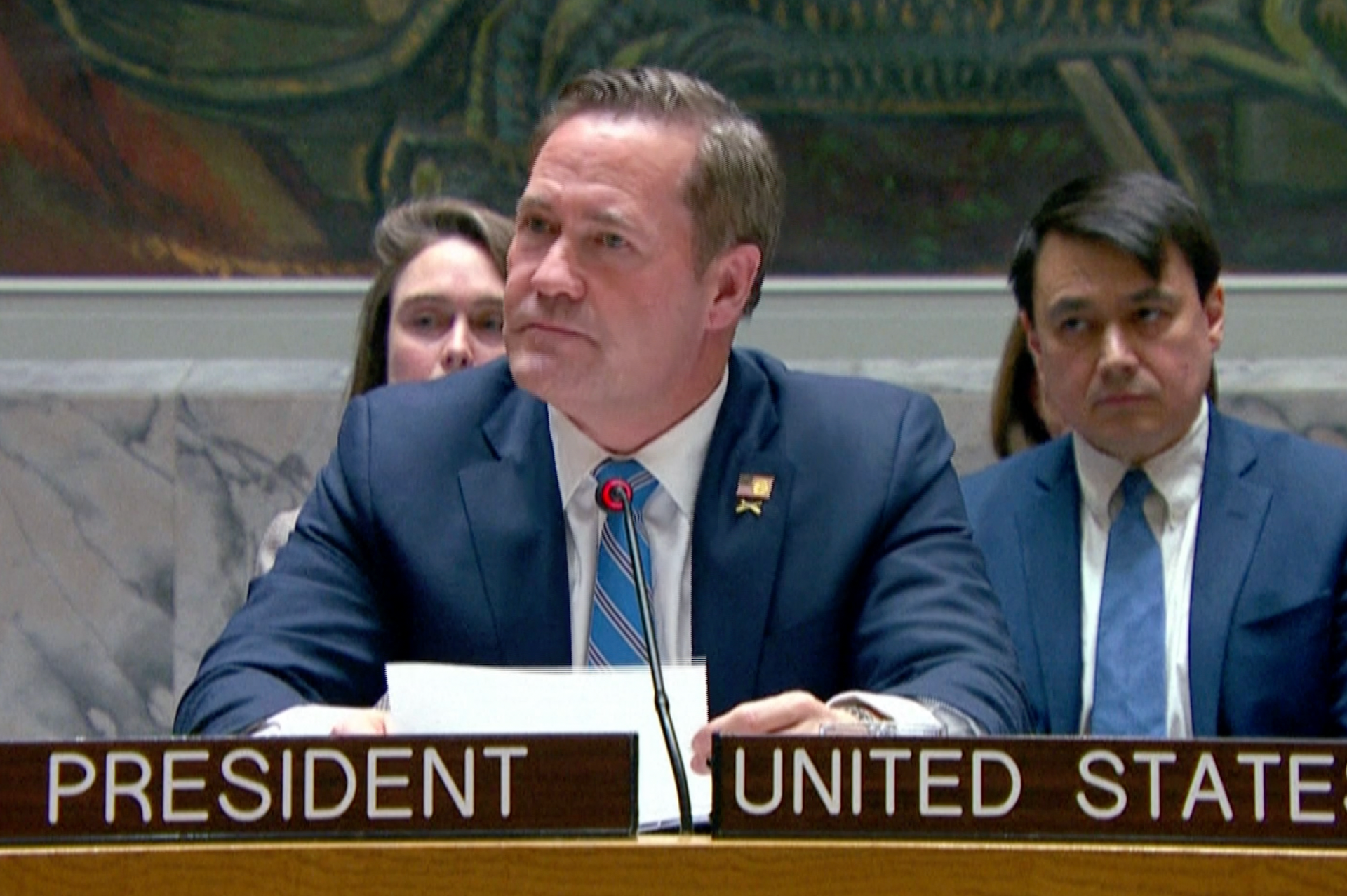
The UN Security Council has passed a resolution put forward by Gulf Cooperation Council members calling on Iran to halt its attacks on Gulf countries. The measure was adopted with 13 votes in favour and two abstentions, while no member states voted against it.
Mohammed bin Abdulaziz al-Khulaifi also says Qatar and Oman cannot act as mediators while under attack.
Published On 11 Mar 202611 Mar 2026
Share
Qatar’s minister of state for foreign affairs has called for a de-escalation in hostilities across the Middle East and urged Iran and the US to return to the negotiation table for a mediated solution.
Speaking to Al Jazeera in an exclusive interview, Mohammed bin Abdulaziz al-Khulaifi said that Iran’s attacks on its regional neighbours bring “benefit for no one”.
Recommended Stories
list of 4 itemsend of list
Iran has responded to a nearly two-week-long bombardment campaign from the United States and Israel by firing missiles and drones at its neighbours in the Gulf region and beyond, causing casualties, damaging critical infrastructure and severely disrupting the region’s energy-driven economy.
Al-Khulaifi said Qatar remains “extremely worried” about the wider range of attacks, including against civilian infrastructure.
“It’s unfortunate where we are standing right now,” the minister said.
“We also believe that there is no pathway to a sustainable and long-lasting solution other than returning to the negotiation table,” he told Al Jazeera.
Qatar condemns in the “strongest terms, the unjustified and outrageous attacks on the state of Qatar that directly impact its own sovereignty”, he said.
Doha will continue to take “every possible and legal measure to defend and practise its exercise of self-defence against this aggression”, he added.
Al-Khulaifi said the conflict demands a “global solution” to ensure that the Gulf’s energy supply chain keeps moving through the Strait of Hormuz, where global traffic has been severely disrupted by the conflict.
Ensuring freedom of movement through the waterway is “very critical,” he noted.
It is notable, Al-Khulaifi pointed out, that Iran has targeted countries such as Qatar and Oman, which had previously served as regional mediators and tried to “build bridges between Iran and the West”.
Neither country can play that role as long as the attacks continue, he said.
“We will not be able to fulfil that role under attack, and that’s something the Iranians need to understand.”
Qatari Prime Minister Mohammed bin Abdulrahman Al Thani tried to convey those points during a phone call with Tehran several days ago, the foreign minister said, when he urged Iran to cease attacks on its neighbours.
“The regional countries are not an enemy of Iran, and the Iranians are not understanding that idea,” Al-Khulaifi told Al Jazeera.
Doha also remains in contact with officials in the US and has encouraged US President Donald Trump to cease hostilities, he said.
“Our line of communication is always open with our colleagues in the United States, and we keep encouraging and supporting the pathway of peace and resolving conflicts through peaceful means.
“We really hope that the parties can find that pathway, end military operations, and return to the negotiation table.”
Twelve days ago the U.S., a World Cup host country, launched a full-scale bombing campaign against Iran, a country that has qualified to play in the tournament. That’s never happened before.
Five days later, that same World Cup host began military operations inside the borders of Ecuador, another World Cup qualifier, half a world away. That’s never happened before either.
With the tournament scheduled to kick off in three months, those events have soccer scholar Jonathan Wilson questioning whether it’s wise for the World Cup to go on at all.
“It seems to me, for each passing day, it’s less and less likely that the World Cup can happen,” he said.
That take seems unduly alarmist said David Goldblatt, a British sportswriter and sociologist who is a visiting professor at Pitzer College in Claremont. Anything short of a full-scale war inside the U.S. would not be enough to pull the plug on the tournament now, he said. Especially with FIFA expecting revenues of as much as $11 billion.
“I mean, it’s not a good look,” Goldblatt conceded. “And certainly when set against FIFA’s official pronouncements on its role in encouraging world peace and cosmopolitan celebrations of a universal humanity, none of that sits terribly easily.
“But in terms of actually running the World Cup, I don’t think it’s going to make very much difference at all.”
However, with the Trump administration open to engaging in more international conflicts, there’s little doubt this World Cup, the largest and most complex in history, will also be the most political in history as well.
Complicating things further is the fact the current conflict in the Middle East hasn’t been limited to just the U.S. and Iran. Iranian missiles have hit both Qatar and Saudi Arabia, among other countries, and Jordan has fired on U.S. assets.
Those three countries are World Cup qualifiers as well.
The fate of a soccer tournament pales in importance to the death and destruction the conflagration in the Middle East has produced, of course. But the need for unity is the very reason there’s a World Cup in the first place.
When French soccer administrator Jules Rimet founded the tournament 96 years ago, he believed soccer could be a tool for international peace. And in the early years of the tournament, Rimet, FIFA’s longest-serving president and a talented diplomat, was able to limit the impact of geopolitics on the World Cup, watering down Mussolini’s influence on the 1934 World Cup, for example, and steering the 1938 tournament away from Hitler’s Germany.
FIFA President Gianni Infantino has taken a far different approach, courting President Donald Trump’s support despite his growing number of global conflicts.
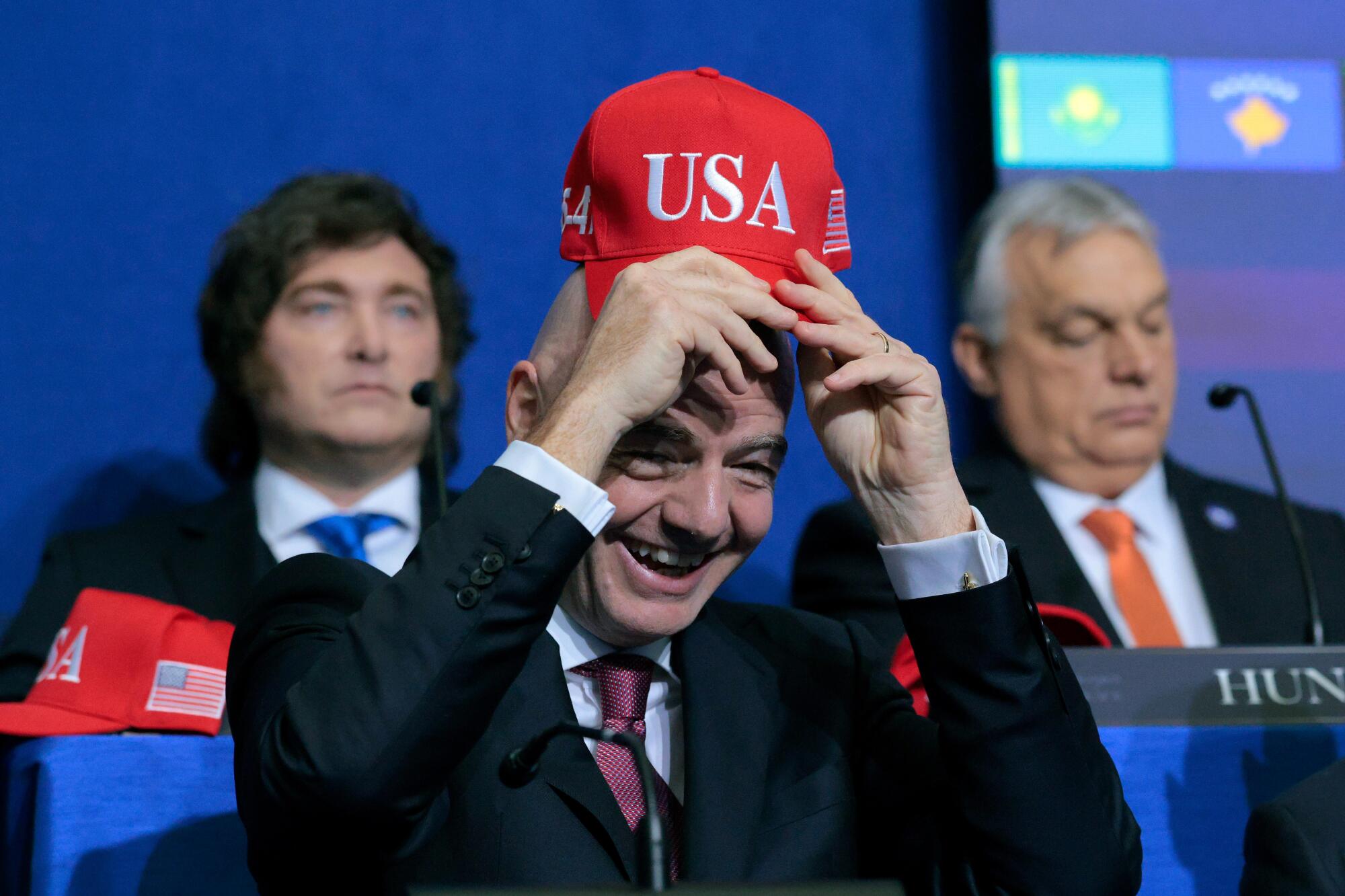
A week before bombs began falling on Iran, Infantino appeared at the inaugural meeting of Trump’s Board of Peace wearing a red cap with ‘USA’ on the front and the numbers ‘45-47’ — a reference to Trump’s non-consecutive presidencies. That act was so blatantly partisan, IOC president Kirsty Coventry said her organization would investigate whether Infantino, an IOC member, breached the terms of the group’s charter, which requires members to act independent of political interests.
FIFA president Gianni Infantino holds up a USA hat as he attends the inaugural meeting for the Board of Peace at the Institute of Peace in Washington on Feb. 19.
(Chip Somodevilla / Getty Images)
“Infantino has absolutely breached every FIFA protocol on neutrality,” said Wilson, author of “The Power and Glory: The History of the World Cup.”
“Absolute neutrality is always impossible and not desirable, but it has clearly gone way, way, way beyond. The peace prize looked grotesque at the time. It looks even worse now. And I can’t see how the future will look kindly on Infantino. I think Infantino has to some extent legitimized Trump.”
This is hardly new behavior from Infantino, who had close relationships with Vladimir Putin ahead of the 2018 tournament played in Russia and Qatar’s leaders ahead of the 2022 tournament despite their well-known human rights violations.
The list of countries Infantino is asking to overlook poor relations with the country hosting the majority of World Cup games this summer is growing.
Consider that Denmark, which administers Greenland, an autonomous territory Trump has also threatened to invade, can qualify for the tournament in a European playoff that will take place later this month. Then there’s World Cup qualifiers Haiti, Ivory Coast and Senegal, who aren’t at war with the U.S. but whose citizens have been banned from entering the country to cheer for their teams. That completely contradicts a promise from Infantino, who said “everybody will be welcome” at the 2026 World Cup.
“If I had a crystal ball I could tell you now what is going to happen,” Heimo Schirgi, the World Cup chief operating officer for FIFA, said Monday. “But obviously the situation is developing. It’s changing day by day and we are monitoring closely. [But] the World Cup will go on right? The World Cup is too big and we hope that everyone can participate that has qualified.”
Goldblatt, the Pitzer professor, said Infantino’s action are understandable since he has few cards to play against Trump.
President Trump speaks as he receives the FIFA Peace Prize as FIFA president Gianni Infantino applauds on Dec. 5 the Kennedy Center in Washington.
(Patrick Smith / Getty Images)
“What’s Infantino going to do? What levers can you pull?” he asked. “You can threaten to take it away. That’s not happening. Moral admonishment? Who’s going to take that from FIFA? It is a farcical idea that anybody thinks that the president of FIFA has any kind of collective moral authority or any role as a spokesperson for the progressive part of the world.
“They may fantasize that this is the case. But it is morally and politically absurd that any of us should expect that of these people. So if you are Infantino and that is the case, you know what works with Trump? What works is flattery. So of course he’s gone down that path.”
The games, Goldblatt said, will go on even if bombs are still falling. And that may not be an entirely bad thing.
“Football’s a great distraction. That’s partly why it’s so popular,” he said. “It will be virtually impossible, if the war continues, for that not to be a central element of like, the meaning and the purpose of what we’re all doing here.
“How we’ll feel and what it will look like, I don’t know. It will be very strange. Football is unpredictable and extraordinary. Something will happen that will warm our souls.”
⚽ You have read the latest installment of On Soccer with Kevin Baxter. The weekly column takes you behind the scenes and shines a spotlight on unique stories. Listen to Baxter on this week’s episode of the “Corner of the Galaxy” podcast.