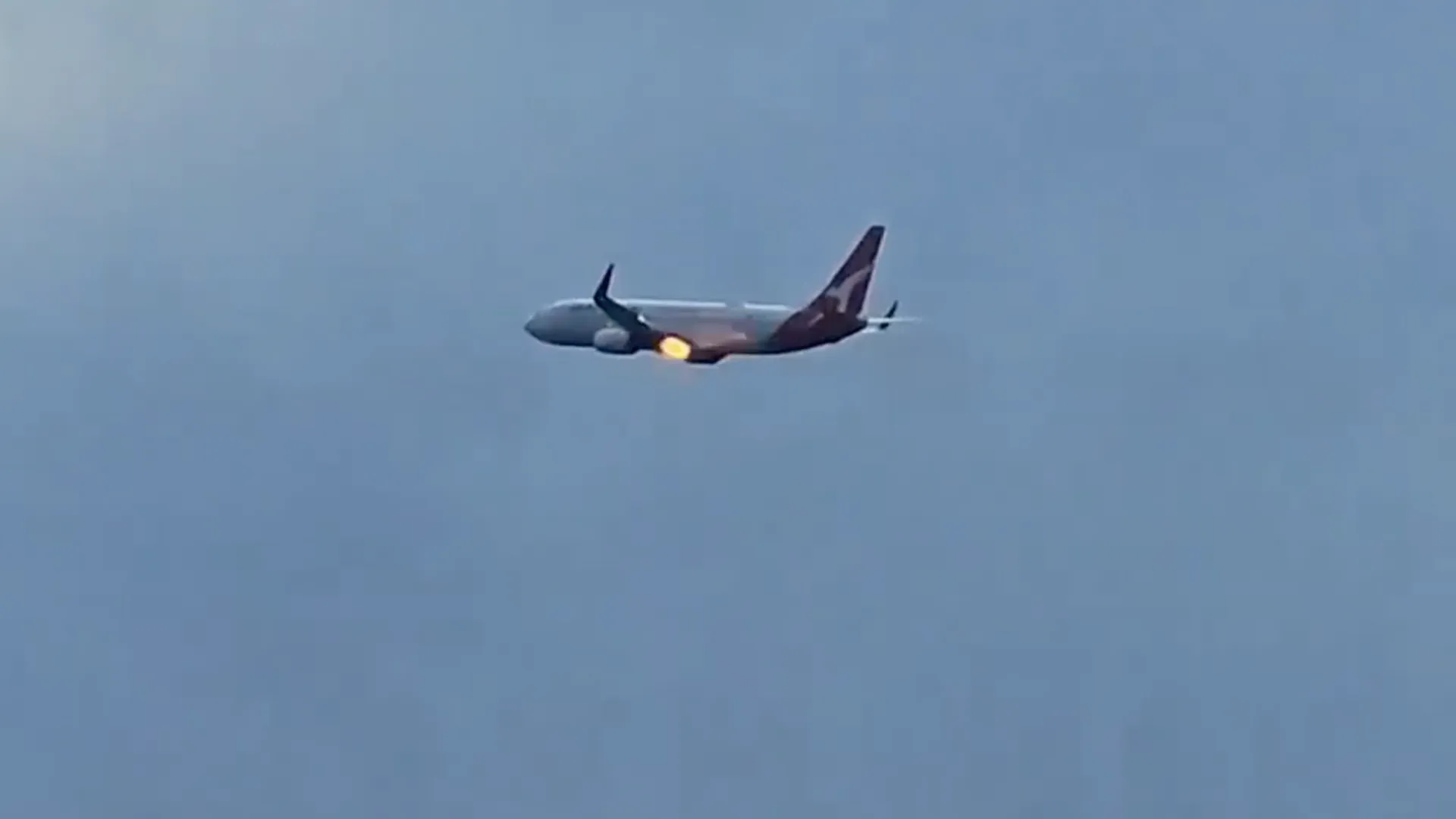
Qantas

Qantas flight forced to divert after ‘passenger bites flight attendant’

The plane was forced to be diverted and ended up at its target destination several hours behind schedule after refuelling in Tahiti

A Qantas flight bound for Dallas was forced to make an emergency diversion to Tahiti after a passenger allegedly bit a cabin crew member mid-flight.

The dramatic incident unfolded aboard QF21, which had departed Melbourne for the gruelling 18-hour journey to the US.

Crew members and passengers reportedly stepped in to assist the flight attendant after the alleged attack took place in the air.

The aircraft was diverted to Papeete, the capital of French Polynesia, where local police boarded the plane and removed the passenger.

Qantas confirmed the man has since been banned from flying with the airline.

A spokesperson for the carrier said: “We have zero tolerance for disruptive or threatening behaviour on our flights.”

After refuelling in Tahiti, the aircraft resumed its journey to Dallas but arrived several hours behind schedule.

It is not yet known what sparked the alleged altercation onboard.

It comes after a weekend of flight chaos.

Airports in Japan, China, India, the UAE, Singapore and Thailand have all been impacted, with airlines cancelling 366 flights and delaying a further 2,949 services, according to aviation tracking data reported by Travel and Tour World.

Major airlines affected include China Eastern Airlines, IndiGo, AirAsia and Etihad Airways, with disruption concentrated around major transit hubs including Tokyo Haneda Airport, Shenzhen Bao’an International Airport, Kempegowda International Airport, Singapore Changi Airport and Zayed International Airport.

Industry analysts say the disruption is being driven by a combination of heavy storms across parts of Asia, congestion at key airports and the continuing impact of Middle East airspace restrictions, which have forced airlines to reroute aircraft and absorb significantly higher fuel costs.

The wider aviation sector is also dealing with fallout from geopolitical tensions linked to the conflict involving Iran, which has led to airspace closures and longer flight times on major Europe-Asia routes.

It has been reported this week that several carriers have already begun scaling back international schedules because of soaring operating costs.

Source link

Hundreds of passengers stranded after 34 flights cancelled and 272 more delayed

Major airlines cancelled 34 flights with 272 more delayed on Sunday, April 26, leaving hundreds of passengers stranded at several different airports

Hundreds of passengers have been left stranded after 34 flights were cancelled and a further 272 delayed across the region.

Widespread disruption was recorded throughout aviation networks across Australia and New Zealand on Sunday,April 26.

Travellers were left stuck at major airports, including Sydney, Melbourne, Brisbane, Wellington, Auckland, and Christchurch.

Jetstar, Qantas and Virgin Australia were responsible for the bulk of the cancellations, though the knock-on effect was felt throughout the broader travel network.

New Zealand saw numerous flights fail to operate, while Australian passengers endured lengthy hold-ups, reports the Express.

Melbourne’s Tullamarine airport bore the brunt of the delays, with 84 flights failing to depart or arrive on time.

A further seven flights from the Victoria airport were also axed throughout the day, all of which belonged to either Virgin Australia or Jetstar.

As Australia’s busiest airport, Sydney recorded the highest number of cancellations, with 10 flights failing to take off and leaving scores of passengers stranded.

A further 69 flights at the airport also faced significant delays.

Brisbane was similarly affected, with 62 flights experiencing considerable hold-ups and lengthy waiting times.

Across New Zealand, Auckland was hit with eight cancelled flights and 44 delays, with the disruption particularly affecting long-haul connecting services from the country.

Wellington experienced fewer disruptions overall, though four flights were still cancelled.

The travel disruption comes amid mounting concerns surrounding air travel as a result of the ongoing Middle East conflict and rising fuel costs.

While this is not considered the cause of the current chaos, New Zealand airlines have spoken out about the impact that soaring energy prices are having on the industry.

On April 7, Air New Zealand announced that it would reduce flights throughout May and June and increase ticket prices, noting it had been amongst the first carriers to introduce widespread fare hikes when the conflict erupted.

Passengers affected by the travel disruption have been advised to get in touch with their airlines to discuss compensation.

Source link

Longest non-stop flight in the world will have passengers strapped in for 22 hours

For some frequent flyers, this might seem like a dream about to come true

If you’ve ever taken a long haul flight from London to Australia, you’ll be familiar with a standard refuel stop on route. Well, soon, an ultra-long-haul flight will be set to test out a non-stop route as Australian airline, Qantas, prepares a plane that will be a record breaker for the world’s longest flight.

Next year (2027), the first test flight of the new Qantas A350-1000ULR aeroplane will be trying out a non-stop route with the aim of reaching its destination as quickly as possible.

For some frequent flyers, this may seem like a dream about to come true, while other air passengers may prefer to stick with the standard stop-off option, which gives a chance to get off the aircraft and walk around a little before setting off again.

The airline’s pending launch of the world’s longest commercial flight next year is highly anticipated by many – and will see passengers strapped in for 22 hours in total.

Two new direct routes will connect Sydney to London and New York, beating the current longest commercial flight of 18 hours and 30 minutes, which connects Newark Liberty International Airport in the US state of New Jersey to Singapore’s Changi Airport.

A specially configured aircraft will soon be able to fly for longer, all due to an additional rear centre fuel tank with a 20,000 litre capacity.

The first of these aeroplanes is currently awaiting its destiny in Toulouse, France, with its engines fitted, and final ground checks will take place soon before it’s ready for its first test flight.

Inside the plane, first class can enjoy reclining armchairs along with a separate bed – and Qantas describe the cabins as having a “science-backed design to minimise jetlag and maximise wellbeing”.

The aeroplane will boast a total of 238 seats, less than the standard 300 or more seats that other flight providers offer.

Extra space provides a unique “wellbeing zone” which both premium economy and economy cabin passengers can enjoy while flying long haul.

In total, there are six first class suites on board, 52 business class suites, 40 premium economy seats and 140 economy seats for passengers to book up (when the flight launches next year).

The new extra-long haul flight has been nicknamed “Project Sunrise” since it was first considered nearly 10 years ago.

Euro News explained the nickname as “a nod to the ‘double sunrise’ endurance flights operated by Qantas between Crawley in Western Australia and RAF Base Koggala in what is now Sri Lanka”.

During the Second World War, “both Airbus and Boeing were tasked with extending the flying range of their next generation of long-haul aircraft to accommodate such routes”, Euronews reported.

Source link