proposal

Arts panel made up of Trump appointees approves his White House ballroom proposal

The U.S. Commission of Fine Arts, a panel made up of President Trump’s appointees, on Thursday approved his proposal to build a ballroom larger than the White House itself where the East Wing once stood.

The seven-member panel is one of two federal agencies that must approve Trump’s plans for the ballroom. The National Capital Planning Commission, which has jurisdiction over construction and major renovation to government buildings in the region, is also reviewing the project.

Members of the fine arts commission originally had been scheduled to discuss and vote on the design after a follow-up presentation by the architect, and had planned to vote on final approval at next month’s meeting. But after the 6-0 vote on the design, the panel’s chairman, Rodney Mims Cook Jr., unexpectedly made another motion to vote on final approval.

Six of the seven commissioners — all appointed by the Republican president in January — voted once more in favor. Commissioner James McCrery did not participate in the discussion or the votes because he was the initial architect on the project before Trump replaced him.

The ballroom will be built on the site of the former East Wing, which Trump had demolished in October with little public notice. That drew an outcry from lawmakers, historians and preservationists who argued that the president should not have taken that step until the two federal agencies and Congress had reviewed and approved the project, and the public had a chance to provide comment.

The 90,000-square-foot ballroom would be nearly twice the size of the White House, which is 55,000-square-feet, and would accommodate about 1,000 people, Trump has said. The East Room, currently the largest room in the White House, can fit just over 200 people at most.

Commissioners offered mostly complimentary comments before the votes.

Cook echoed one of Trump’s main arguments for adding a larger entertaining space to the White House: It would end the long-standing practice of erecting temporary structures on the South Lawn that Trump describes as tents to host visiting dignitaries for state dinners and other functions.

“Our sitting president has actually designed a very beautiful structure,” Cook said. “The United States just should not be entertaining the world in tents.”

The panel received mainly negative comments from the public

Members of the public were asked to submit written comment by a Wednesday afternoon deadline. Thomas Leubke, the panel’s secretary, said “over 99%” of the more than 2,000 messages it received in the past week from around the country were in opposition to the project.

Leubke tried to summarize the comments for the commissioners.

Some comments cited concerns about Trump’s decision to unilaterally tear down the East Wing, as well as the lack of transparency about who is paying for the ballroom or how contracts were awarded, Leubke said. Comments in support referenced concerns for the image of the United States on the world stage and the need for a larger entertaining space at the White House.

Trump has defended the ballroom in a recent series of social media posts that included drawings of the building. He said in one January post that most of the material needed to build it had been ordered “and there is no practical or reasonable way to go back. IT IS TOO LATE!”

The commission met Thursday over Zoom and heard from Shalom Baranes, the lead architect, and Rick Parisi, the landscape architect. Both described a series of images and sketches of the ballroom and the grounds as they would appear after the project is completed.

Trump has said the ballroom would cost about $400 million and be paid for with private donations. To date, the White House has only released an incomplete list of donors.

A lawsuit against the project is still pending

The National Trust for Historic Preservation has sued in federal court to halt construction. A ruling in the case is pending.

In comments it submitted to the commission, the privately funded group recommended that the size of the ballroom be reduced to “accommodate and respect the primary historic importance of the original Executive Residence.”

At the commission’s January meeting, some commissioners had questioned Baranes, Trump’s architect, about the “immense” design and scale of the project even as they broadly endorsed Trump’s vision. On Thursday, Baranes described changes he has since made to the design, and the commissioners said they welcomed the adjustments.

The ballroom project is scheduled for additional discussion at a March 5 meeting of the National Capital Planning Commission, which is led by a top White House aide. This panel heard an initial presentation about the project in January.

Superville writes for the Associated Press.

Source link

Bernie Sanders formally kicks off California wealth tax campaign

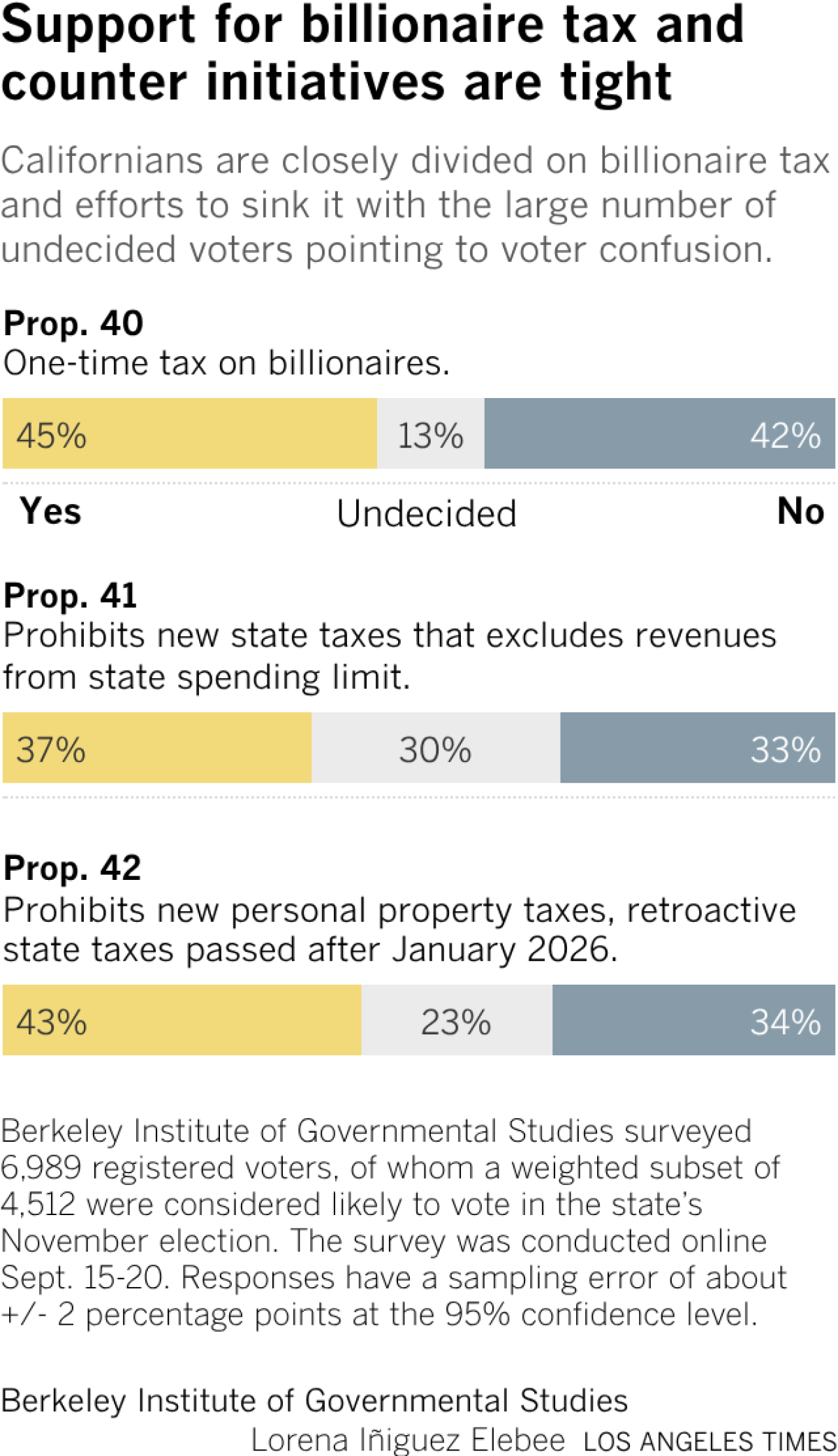
Populist Sen. Bernie Sanders on Wednesday formally kicked off the campaign to place a billionaires tax on the November ballot, framing the proposal as something larger than a debate about economic and tax policy as he appeared at a storied Los Angeles venue.

“The billionaire class no longer sees itself as part of American society. They see themselves as something separate and apart, like the oligarchs,” he told about 2,000 people at the Wiltern. The independent senator from Vermont compared them to kings, queens and czars of yore who believed they had a divine right to rule.

These billionaires “have created huge businesses with revolutionary technologies like AI and robotics that are literally transforming the face of the Earth,” he said, “and they are saying to you and to everybody in America, who the hell do you think you are telling us what we — the ruling elite, the millionaires, the billionaires, the richest people on Earth — who do you think you are telling us what we can do or not?”

California voters can show the billionaires “that we are still living in a democratic society where the people have some power,” Sanders said.

The senator is promoting a labor union’s proposal to impose a one-time 5% tax on the assets of California billionaires and trusts to backfill federal healthcare funding cuts by the Trump administration. Supporters of the contentious effort began gathering voter signatures to place the measure on the November ballot earlier this year. Sanders previously endorsed the proposal on social media and in public statements, and said he would seek to create a national version of the wealth tax.

But Wednesday’s event, a rally that lasted more than two hours and featured a lengthy performance by Rage Against the Machine guitarist Tom Morello, was framed as the formal launch of the campaign.

“Some people are free to choose between five-star restaurants, while others choose which dumpster will provide their next meal,” Morello said. “Some are free to choose between penthouse suites, while others are free to choose in which gutter to lay their heads.”

The guitarist’s comments came amid a set that included Rage’s protest song “Killing in the Name” and Bruce Springsteen’s social justice ballad “The Ghost of Tom Joad.”

“The people who’ve changed the world in progressive, radical or even revolutionary ways,” Morello said, “did not have any more money, power, courage, intelligence or creativity than anyone here tonight.”

Milling about outside the Wiltern, a historic Art Deco venue, were workers being paid $10 per signature they gathered to help qualify the proposal for the November ballot. Inside, attendees heard from labor leaders, healthcare workers and others whose lives are being affected by federal funding cuts to healthcare.

Lisandro Preza said he was speaking not only only as a leader of Unite Here Local 11, which represents more than 32,000 hospitality workers, but also as someone who has AIDS and recently lost his medical coverage.

“For me, this fight is very personal. Without my health coverage, the thought of going to the emergency room is terrifying,” he said. “That injection I rely on costs nearly $10,000 a month. That shot keeps my disease under control. Without it, my health, my life, are at risk, and I’m not alone. Millions of Americans are facing the same after massive federal healthcare cuts are putting our hospitals on the brink of collapse.”

Sanders, who punctuated his remarks with historic statistics about wealth in the United States and anecdotes about billionaires’ purchases of multiple yachts and planes, tied the impending healthcare cuts to broader problems of growing income and wealth inequality; the consolidation of corporate ownership, including over media outlets; the decline in workers’ wages despite increased productivity; and the threats to the job market of artificial intelligence and automation. He said all these issues were grounded in the greed of the nation’s wealthiest residents.

“For these people, enough is never enough,” he said. “They are dedicated to accumulating more and more wealth and power … no matter how many low-income and working-class people will die because they no longer have health insurance.”

“Shame! Shame!” the audience screamed.

In addition to the wealth tax event, Sanders also plans to use his time in California to meet with tech leaders and speak on Friday at Stanford University about the effects of artificial intelligence and automation on American workers alongside Rep. Ro Khanna (D-Fremont).

Millions of California voters deeply support the Vermont senator, who won the state’s 2020 Democratic presidential primary over Joe Biden by eight points, and narrowly lost the 2016 Democratic primary to Hillary Clinton.

Sanders were the first presidential candidate Elle Parker, 30, ever cast a ballot for in a presidential election.

“He’s inspired me,” said the podcaster, who lives in East Hollywood. “I just love the way he uses his words to inspire us all.”

Supporters proposed the wealth tax to make up for the massive federal funding cuts to healthcare that Trump signed last year. The California Budget & Policy Center estimates that as many as 3.4 million Californians could lose Medi-Cal coverage, rural hospitals could shutter, and other healthcare services would be slashed unless a new funding source is found.

But the tax proposal is controversial, creating a notable schism among the state’s Democrats because of concerns that it will prompt an exodus of the state’s wealthy, who are the major source of revenue that buttresses California’s volatile budget.

Gov. Gavin Newsom is among the Democrats who oppose it, as is San Jose Mayor Matt Mahan, who is among the dozen candidates running to replace the termed-out governor.

Mahan argued that the proposal had already hurt the state’s finances by driving economic investment and tax revenue out of California to tax-friendly environs.

“We need ideas that are sound, not just political proposals that sound good,” he said. “The answer is to close the federal tax loopholes the ultra-wealthy use to escape paying their fair share and invest those funds in paying down our debt, rebuilding our infrastructure, and protecting our most vulnerable families from skyrocketing healthcare premiums. The only winners in this proposal are the workers and taxpayers of Florida and Texas, who will take our jobs and benefit from the capital and tax revenue California is losing.”

A group affiliated with the governor plans to run digital ads opposing the proposal featuring Newsom along with other politicians on both sides of the aisle, as first reported by the New York Times.

The proposal has received more expected and unified backlash from the state’s conservatives and business leaders, who have launched ballot measures that could nullify part if not all of the proposed wealth tax. This is dependent on which, if any, of the measures qualify for the ballot — the number of votes each receives in November compared to the labor effort.

Silicon Valley billionaires, notably PayPal co-founder Peter Thiel and venture capitalist David Sacks — both major Trump supporters — announced they had already decamped California because of the effort.

Rob Lapsley, president of California Business Round Table, added that if the wealth tax is approved, it would destroy the state’s innovation economy, destabilize tax revenue and ultimately result in all Californians paying higher taxes.

“Let’s be clear — this $100-billion tax increase isn’t just a swipe at California’s most successful entrepreneurs; it’s a tax no one can afford because it weakens the entire economic ecosystem that supports jobs, investment, wages, and public services for everyday Californians,” he said. “When high earners leave, the cost doesn’t vanish — it lands on everyone through fewer jobs, less investment, and a weaker tax base — a recipe for new and higher taxes for everyone.”

Source link

Billionaires Spielberg, Zuckerberg look outside of California amid wealth-tax proposal

California may be losing two of the state’s most famed residents and generous political donors.

Filmmaker Steven Spielberg recently moved to New York and Facebook co-founder Mark Zuckerberg is eyeing purchasing a new property in Florida, stirring speculation about whether their decisions are tied to a proposed new tax on California billionaires to fund healthcare for the state’s most vulnerable residents.

Although a handful of prominent conservatives who bolted out of California noisily blamed their departure on the controversial wealth tax measure, as well as the state’s liberal ways and what they describe as cumbersome business regulations, neither Zuckerberg nor Spielberg has given any indication that the tax proposal is the reason for their moves.

A spokesperson for Spielberg, who has owned homes on both the East and West coasts since at least the mid-1990s, said the sole motivation for Spielberg and his wife, actor Kate Capshaw, decamping to Manhattan was to be near family.

“Steven’s move to the East Coast is both long-planned and driven purely by his and Kate Capshaw’s desire to be closer to their New York based children and grandchildren,” said Terry Press, a spokesperson for the prodigious filmmaker. She declined to answer questions about his position on the proposed ballot measure.

Director Steven Spielberg presents former president Bill Clinton with the Ambassadors Humanity award

Director Steven Spielberg presents president Bill Clinton with the Ambassadors Humanity award at the 5th Annual Ambassadors for Humanity Dinner Honoring former President Bill Clinton to support the Survivors of the Shoah Visual History Foundation held at the Amblin theatre Universal Studios on February 17, 2005 in Los Angeles, California.

(Frazer Harrison / Getty Images)

On Jan. 1, Spielberg and Capshaw officially became residents of New York City, settling in the historic San Remo co-op in Central Park West. The storied building is among the most exclusive in Manhattan, having been home to Bono, Mick Jagger, Warren Beatty, Tiger Woods and many other celebrities. On the same day, Spielberg’s Amblin Entertainment opened an office in New York City.

Zuckerberg and his wife, pediatrician Priscilla Chan, are considering buying a $200-million waterfront mansion in South Florida, the Wall Street Journal first reported this month. The property is located in Miami’s Indian Creek, a gated barrier island that is an alcove of the wealthy and the influential, including Amazon founder Jeff Bezos and Trump’s daughter Ivanka and her husband, Jared Kushner.

Representatives for Zuckerberg declined to comment.

The billionaires’ moves raised eyebrows because they take place as supporters of the proposed 5% one-time tax on the assets of California billionaires and trusts are gathering signatures to qualify the initiative for the November ballot. Led by the Service Employees International Union-United Healthcare Workers West, they must gather the signatures of nearly 875,000 registered voters and submit them to county elections officials by June 24.

If approved, the tax would raise roughly $100 billion that would largely pay for healthcare services, as well as some education programs. Critics say it would drive the wealthy and their companies out of the state. On Dec. 31, venture capitalist David Sacks announced that he was opening an office in Austin, Texas, the same day PayPal co-founder Peter Thiel publicized that his firm had opened a new office in Miami.

The proposed ballot measure, if it qualifies for the ballot and is approved by voters, would apply to Californians who are residents of the state as of 2026. But residency requirements are murky. Among the factors considered by the state’s Franchise Tax Board are where someone is registered to vote, the location of their principle residence, how much time they spend in California, where their driver’s license was issued and their cars registered, where their spouse and children live, the location of their doctors, dentists, accountants and attorneys, and their “social ties,” such as the site of their house of worship or county club.

It’s unclear whether the proposal will qualify for the November ballot, and if it does, whether voters will approve it. However, a mass exodus of a number of the state’s billionaires — more than 200 people — would have a notable effect on state revenue, regardless. The state’s budget volatility is caused by its heavy reliance on taxes paid by the state’s wealthiest residents, including from levies on capital gains and stock-based compensation.

“The highest-income Californians pay the largest share of the state’s personal income tax,” according to Gov. Gavin Newsom’s 2026-27 budget summary that was published in January. “The significant share of personal income taxes — by far the state’s largest General Fund revenue source — paid by a small percentage of taxpayers increases the difficulty of forecasting personal income tax revenue.”

This reliance on wealthy Californians is among the reasons the proposed billionaires tax has created a schism among Democrats and is a source of discord in the 2026 governor’s race to replace Newsom, who cannot seek another term and is weighing a presidential bid. He opposes the proposal; Sen. Bernie Sanders (I-VT.) campaigned for it Wednesday evening at the Wiltern in Los Angeles.

“I am not only supportive of what they’re trying to do in California, but we’re going to introduce a wealth tax for the whole country. We have got to deal with the greed, the extraordinary greed, of the billionaire class,” Sanders told reporters Feb. 11.

Zuckerberg and Spielberg are both prolific political donors, though it is difficult to fully account for their contributions to candidates, campaigns and other entities because of how they or their affiliates donate to them as well as the intricacies of campaign finance reporting.

Spielberg, 79, a Hollywood legend, is worth more than $7 billion, according to Forbes. He and his wife have donated almost universally to Democratic candidates and causes, according to Open Secrets, a nonprofit, nonpartisan tracker of federal campaign contributions, and the California secretary of state’s office.

The prolific filmmaker, who won acclaim for movies such as “Schindler’s List,” “Jaws,” “Jurassic Park” and the “Indiana Jones” trilogy, was born in Ohio and lived with his family in several states before moving to California. He attended Cal State Long Beach but dropped out after Universal Studios gave him a contract to direct television shows.

Zuckerberg, 41, launched Facebook while in college and is worth more than $219 billion, making him among the world’s richest people, according to Forbes.

His largest personal federal political donation appears to be $1 million to FWD.us, a group focused on criminal justice and immigration reform nationwide, according to Open Secrets.

Zuckerberg, who is currently a registered Democrat in Santa Clara County, has donated to politicians across the partisan spectrum, including Democrats such as former House Speaker Nancy Pelosi and current Senate Minority Leader Chuck Schumer to Republicans such as President Trump’s Secretary of State Marco Rubio when he ran for the White House and Chris Christie during his New Jersey gubernatorial campaign.

Both men’s personal donations don’t include their other effects on campaign finances — Spielberg has helped countless Democratic politicians raise money in Hollywood; Zuckerberg’s company has made other contributions. Meta — the parent company of Facebook, Instagram and WhatsApp — donated $1 million to Trump’s inauguration committee in December 2024. Zuckerberg later attended the president’s swearing in at the U.S. Capitol Rotunda.

Zuckerberg, born in White Plains, N.Y., created an early prototype of Facebook while at Harvard University and dropped out to move to Silicon Valley to complete the social media platform, as depicted in the award-winning film “The Social Network.”

He still owns multiple properties in California and elsewhere, including a controversial, massive compound on Kauai that includes two mansions, dozens of bedrooms, multiple other buildings and recreational spaces — and an underground bunker that features a metal door filled with concrete, according to a 2023 investigation by Wired. The cost of land acquisition and construction reportedly has topped $300 million.

Meta is based in Menlo Park, Calif., though it has been incorporated in Delaware since Facebook’s founding in 2004.

Times staff writer Queenie Wong contributed to this report.

Source link

Citing fire risk, L.A. city may get more power to remove hillside homeless encampments

Los Angeles city officials may be empowered to remove homeless encampments from hillside areas at severe risk of fire, even without the property owner’s permission, under a proposal that the City Council moved forward on Tuesday.

The proposal would allow the city to remove hazardous materials, including homeless encampments, from private property in hillside areas in “Very High Fire Severity Zones,” including in the Santa Monica and Verdugo Mountains.

By an 11-3 vote, the council directed the city attorney to draft changes to the municipal code, which the council will then vote on at a later date.

“Prevention [of fires] is the most cost-effective tool we have,” said Councilmember Monica Rodriguez, who sponsored the proposal. “When we are in imminent threat of wildfires, especially as it relates to or is exacerbated by these types of encampments, we have a duty to act.”

Rubbish fires, many related to homeless encampments, have skyrocketed over the last several years, according to Los Angeles Fire Department data. Rodriguez said there have been five wildfires in her northeast San Fernando Valley district since she took office in 2017, though none was caused by an encampment.

Between 2018 and 2024, about 33% of all fires in the city, and more than 40% of rubbish fires, involved homeless Angelenos, according to the LAFD.

Rodriguez said the city is often left flat-footed when encampments pop up on hillsides and property owners don’t help address the issue.

“If a private property owner is not responsive, it puts the rest of the hillside community under threat,” Rodriguez said in an interview.

Rodriguez’s motion said it’s often difficult for city departments, including police and fire, to get permission from property owners to enter.

“It can take weeks to determine property ownership and to obtain the necessary signoffs from property owners to access the property, causing unnecessary delays and increasing the risk for a serious fire and threats to public safety,” the motion reads.

Some council members argued that while they agreed with the intent of the proposal, some details needed to be addressed.

Councilmember Hugo Soto-Martínez — who voted against the proposal — said he was concerned that homeless people would end up getting shuffled around the city.

“What I don’t want to see is this being used as a tool to push homeless folks from one side of the street to the other side of the street,” he said before casting his vote.

Soto-Martínez said he wouldn’t vote for the proposal until the city developed a definition of what a fire hazard is.

Councilmember Ysabel Jurado also voted against the proposal, saying she wanted the council to do more research before changing the municipal code.

Councilmember Eunisses Hernandez was the third “no” vote.

Source link

Warner Bros. reopens bidding process, allowing Paramount to make its case

Warner Bros. Discovery is cracking open the door to allow spurned bidder, Paramount Skydance, to make its case — but Warner’s board still maintains its preference for Netflix’s competing proposal.

Warner’s move to reopen talks comes after weeks of pressure from Paramount, which submitted an enhanced offer to buy Warner last week. Paramount’s willingness to increase its offer late in the auction attracted the attention of some Warner investors.

On Tuesday, Warner Bros. Discovery responded with a letter to Paramount Chairman David Ellison and others on Paramount’s board, giving the group seven days to “clarify your proposal.”

“We seek your best and final proposal,” Warner board members wrote. Warner set a Feb. 23 deadline for Paramount to comply.

The closely watched sale of the century-old Warner Bros., known for “Batman,” “The Big Bang Theory,” “Casablanca,” and HBO, the home of “Game of Thrones” and “Succession,” is expected to reshape Hollywood.

The flurry of activity comes as Warner Bros. Discovery and Netflix are seeking to enter the home stretch of the auction. Warner separately issued its proxy and set a special March 20 meeting of its shareholders to decide the company’s fate.

Warner Bros. Discovery is recommending that its stockholders approve the $82.7-billion Netflix deal.

“We continue to believe the Netflix merger is in the best interests of WBD shareholders due to the tremendous value it provides, our clear path to achieve regulatory approval and the transaction’s protections for shareholders against downside risk,” Warner Chairman Samuel A. Di Piazza, Jr., said in a Tuesday statement.

Still, the maneuver essentially reopens the talks.

Warner Bros. is creating an opportunity for Paramount to sway Warner board members, which could perhaps prompt Netflix to raise its $27.75 a share offer for Warner’s Burbank-based studios, vast library of programming, HBO and streaming service HBO Max.

Netflix is not interested in buying Warner Bros. Discovery’s basic cable channels, including CNN, TBS, HGTV and Animal Planet, which are set to be spun off to a stand-alone company later this year.

In contrast, Paramount wants to buy the entire company and has offered more than $30 a share.

Last week, Paramount sweetened its bid for Warner, adding a $2.8-billion “break fee” that Warner would have to pay Netflix if the company pulled the plug on that deal. Paramount also said it would pay Warner investors a “ticking fee” of 25 cents a share for every quarter after Jan. 1 that the deal does not close.

“While we have tried to be as constructive as possible in formulating these solutions, several of these items would benefit from collaborative discussion to finalize,” Paramount said last week as it angled for a chance to make its case. “We will work with you to refine these solutions to ensure they address any and all of your concerns.”

Netflix agreed to give Warner Bros. Discovery a temporary waiver from its merger agreement to allow Warner Bros. Discovery to reengage with Paramount, which lost the bidding war on Dec. 4.

“We granted WBD a narrow seven-day waiver of certain obligations under our merger agreement to allow them to engage with PSKY to fully and finally resolve this matter,” Netflix said Tuesday in a statement. “This does not change the fact that we have the only signed, board-recommended
agreement with WBD, and ours is the only certain path to delivering value to WBD’s stockholders.”

Netflix has matching rights for any improved Paramount offer. The company renewed its confidence in its deal and its prospect to win regulatory approval.

“PSKY has repeatedly mischaracterized the regulatory review process by suggesting its proposal will sail through, misleading WBD stockholders about the real risk of their regulatory challenges around the world,” Netflix said in its statement. “WBD stockholders should not be misled into thinking that PSKY has an easier or faster path to regulatory approval – it does not.”

Warner Bros. Discovery acknowledged that Paramount’s recent modification “addresses some of the concerns that WBD had identified several months ago,” according to the letter to Paramount.

But Warner Bros. Discovery added Paramount’s offer “still contains many of the unfavorable terms and conditions that were in the draft agreements … and twice unanimously rejected by our Board,” Warner Bros. Discovery said.

Warner’s board told Paramount it will “welcome the opportunity to engage” during the seven-day negotiation period.

Paramount has been pursuing the prized assets since last September.

“Every step of the way, we have provided PSKY with clear direction on the deficiencies in their offers and opportunities to address them,” Warner Chief Executive David Zaslav said in a statement. “We are engaging with PSKY now to determine whether they can deliver an actionable, binding proposal that provides superior value and certainty for WBD shareholders.”

Source link

Israel approves proposal to register West Bank lands as ‘state property’ | Israel-Palestine conflict News

The Israeli government has approved a proposal to register large areas of the occupied West Bank as “state property,” for the first time since the Israeli occupation of the territory in 1967.

Israeli public broadcaster KAN on Sunday said the proposal was submitted by far-right Finance Minister Bezalel Smotrich, Justice Minister Yariv Levin, and Defence Minister Israel Katz.

“We are continuing the settlement revolution to control all our lands,” said Smotrich.

Most Palestinian land is not formally registered because it is a long, complicated process that Israel stopped in 1967. Registration of land establishes permanent ownership. International law states an occupying power cannot confiscate land in occupied territories.

The Palestinian Presidency slammed the Israeli government’s decision, calling it a “serious escalation” and saying the Israeli move effectively nullifies signed agreements and clearly contradicts resolutions of the United Nations Security Council, Wafa news agency reported.

Meanwhile, Israeli Defence Minister Katz described the move as an “essential security and governance measure designed to ensure control, enforcement, and full freedom of action for the State of Israel in the area”, the Jerusalem Post newspaper reported.

Last week, the Israeli Security Cabinet approved measures promoted by Smotrich and Katz that further facilitate the unlawful seizure of Palestinian land in the occupied West Bank.

Analysts describe it as a de facto annexation of the Palestinian territory, warning that it will profoundly reshape its civil and legal landscape by eliminating what the Israeli ministers called longstanding “legal obstacles” to the expansion of illegal settlements there.

Speaking from Ramallah, political analyst Xavier Abu Eid told Al Jazeera Israel is “packing annexation into some sort of a bureaucratic move”. He said the International Court of Justice in 2024 said the Israeli actions amount to annexation of the occupied West Bank.

“People should understand this is not just a step towards annexation, we are experiencing annexation as we speak today. What the Israeli government is doing is implanting their political programme – a policy that has already been presented,” he said.

Palestinian landowners are going to face more threats and intimidation from Israeli settlers supported by the Israeli government, he warned.

Source link

Secrecy surrounds hiring of LAPD messaging guru with Hollywood resume

Last year, LAPD leaders quietly brought on a temporary consultant to advise on how to give the department’s battered public image a spit shine.

In a proposal reviewed by The Times, the consultant wrote that the LAPD’s standing as “one of the most prominent and visible law enforcement agencies in the world” was on the line.

The name of the person offering to help chart the path forward was not mentioned when the contract went before the Police Commission for approval. Nor did it come up Feb 3. when, after a heated debate, the City Council approved the creation of a new LAPD communications strategist role with an annual salary of $191,000.

LAPD Deputy Chief Jonathan Pinto, head of the Human Resources Bureau, acknowledged under questioning from council members that the department already had someone in mind for the role — but declined to say who.

Numerous department sources, who were not authorized to speak publicly about the confidential personnel matter, identified the candidate as the consultant: Robert Port, a filmmaker, writer and director who has worked for decades in Hollywood.

Port declined to comment, as did an LAPD spokesperson.

Winner of a 2003 Academy Award for his documentary short “Twin Towers,” about a pair of brothers — a policeman and a fireman — who responded to the World Trade Center on 9/11, Port has served as an executive producer or written for shows ranging from Amazon Prime’s “Jack Ryan” to “Numb3rs” on CBS.

A biography attached to his consulting proposal says he has been a reserve Los Angeles County sheriff’s deputy for the last decade. His ties to LAPD Chief Jim McDonnell and the city’s former top cop, William Bratton, date back years through shared East Coast roots.

In his consulting proposal, Port said he would “outline a forward-looking plan that strengthens messaging, builds trust, supports officer morale, and protects the LAPD’s image as the most professional and polished agency in the country.”

“In other words, let’s bring some luster back to the badge!” he wrote.

But the secrecy around Port’s hiring has already triggered fresh criticism, along with questions about whether the LAPD — which already has multiple officers working in its press shop — really needs more help communicating.

During the City Council hearing last week, Pinto said the department’s press shop would continue focusing on dealing with outside media inquiries, but that the new civil service-exempt role would draft “comprehensive integrated communication plans.”

Reporting directly to McDonnell, the position would allow the department to present a clear, unified message to the agency’s 8,700-some officers, said Pinto, while building “brand awareness” and boosting recruitment.

Several council members questioned how the new position might influence the LAPD’s messaging, noting that McDonnell has been out of lockstep with city leaders on issues such as the response to federal immigration enforcement and the use of force against protesters.

Others on the council pressed Pinto about what they saw as a lack of clarity on the job description.

“If we’ve got nothing to hide, then we shouldn’t be acting like we have something to hide,” said Councilmember Monica Rodriguez, adding that she was uncomfortable approving such a high salary given the city’s financial straits and the possibility of other civilian employees being furloughed.

The council eventually voted 10 to 5 to approve the position.

Port has kept a relatively low public profile since he started his consulting work last fall, mostly operating behind the scenes. Images posted on social media showed him walking around the crime scene at the Brentwood home of Rob Reiner, where authorities say the filmmaker and his wife were murdered by their son in December.

In his consulting proposal, Port cited conversations with McDonnell, Assistant Chief Dominic Choi and other department leaders in which they “emphasized the need for outside expertise in shaping the department’s image, both within the organization and to the public in all aspects of communication, video, and media.”

Among his proposals was to create a more “centralized” social media strategy rather than continuing to let the LAPD’s 21 stations spread across the city each handle their own online accounts.

“The goal is to maintain strong community engagement while also giving the LAPD a single, recognizable voice across all platforms and portraying its positive messaging to fellow Angelians.”

For decades, Hollywood helped sell the LAPD’s nationwide image as the epitome of professional law enforcement with shows such as “Dragnet,” “Adam-12” and “T.J. Hooker.” Today, Port said, that relationship was “less structured.” Using his industry background, he said, he could help the department better vet proposals, including a recent pitch from a major production company for a “ride-along”-style reality series.

He also suggested that he could advise a public relations firm previously hired by the LAPD to overhaul its marketing strategy. “Port’s experience in storytelling and award-winning creative expertise in advertising enable him to review these materials with a critical eye,” the proposal said.

Port’s four-month media consulting contract was paid for by a $20,000 donation from the Police Foundation, a nonprofit group that raises funds for LAPD equipment and offers other forms of support. The paperwork around the donation did not include Port’s name but said that the money would go to pay for a consultant “to develop forward-looking, integrated communications plan that strengthens messaging, builds trust, and supports officer morale.”

Then-Commissioner Erroll Southers voted against the contract, saying at the time he was uncomfortable with the department’s unwillingness to share details about the position — even with its civilian bosses.

The decision to try to bring on Port marks the latest shakeup of the department’s press office. The unit has had four different police captains in as many years, and the chief civilian spokesperson job has been vacant since the abrupt resignation of Jennifer Forkish last October.

Source link

Ballot proposal may change pay for L.A. County deputies, firefighters

Los Angeles County leaders are pushing forward a measure for the November ballot that would remove their ability to have final say on one of the costliest decisions they make: How much to pay firefighters and sheriff’s deputies.

The supervisors voted 4 to 0 on Tuesday to have their lawyers draft a ballot measure that would give final decision-making power in contract disputes regarding pay and working conditions for public safety workers to a three-person panel, a practice known as binding arbitration.

Supporters say the proposal, which the supervisors are pushing to get on the November ballot, would offer a new tool to smooth over disputes and provide a “reset” after recent tumultuous contract negotiations.

“It incentivizes both parties to come to a fair agreement,” said Supervisor Lindsey Horvath, who introduced the measure along with Supervisor Hilda Solis.

The supervisors are expected to vote again on the proposal in the coming months before putting it on the ballot.

Currently, if contract talks hit an impasse, the five county supervisors can, after a complex mediation process, impose a final offer. Public safety workers, who are not allowed to strike, say they have no leverage with which to fight back, giving the county final word.

Under the new proposal, the power dynamics would shift. An arbitration panel would instead make the final decision on some contract disputes for public safety employees, including firefighters, sheriff’s deputies and county lifeguards. The panel would have one arbitrator chosen by the county, one chosen by the union and one agreed to by both sides.

It’s rare for labor negotiations to get to this point. The county said it has imposed contract terms after reaching impasse over negotiations twice since 2001, once with the Union of American Physicians and Dentists in 2001 and Supervising Deputy Probation Officers in 2024.

“The goal is to never have to get to that step,” Horvath said.

Unions say the measure would give them needed leverage and remove political pressure from the thorniest contract questions. Critics say it shifts financial control away from politicians and into the hands of unaccountable arbitrators, which could lead to bloated labor costs.

“Arbitrators aren’t elected, they’re not required to weigh countywide trade-offs like homeless services, healthcare, capital improvements, all of those things,” said Supervisor Holly Mitchell, the only supervisor to abstain from the vote.

Interim County Executive Officer Joseph M. Nicchitta said he viewed it as a potential “seismic change” in how the county handles labor negotiations.

“Because the arbitrators ‘pick a winner’ as between the parties’ final offers, the decision will no longer be a compromise. One side will win,” Nicchitta wrote in a Feb. 9 letter to the board.

Substantial raises mandated by arbitrators, he wrote, “could, among other things, materially and detrimentally increase the County’s day-to-day operating costs, lead to workforce reductions and program curtailments, balloon our unfunded pension liabilities, and damage the County’s credit ratings.”

The decision of who gets final say over wage increases will become increasingly important as county leaders try to steer the government through financial tumult brought on by federal cuts, booming labor costs and billions in sex abuse payouts. Last week, the supervisors unanimously approved $200 million in homeless service cuts to close the budget gap.

Horvath said more than 20 jurisdictions in California use binding arbitration for public safety workers, including the counties of San Francisco and Sacramento.

Public safety unions are simultaneously gathering signatures to get the proposal on the ballot in case the board decides against moving forward. A coalition of public safety unions has started a campaign arguing that binding arbitration would “remove politics from pay decisions” and leave “pay decisions in the hands of neutral experts.”

“They have every intention and probably all of the resources needed to collect signatures to put something on the ballot that gets them this,” Supervisor Janice Hahn said. “This makes sense to work on something that we can have some input in.”

Source link