Mercedes would also prefer for the new engines to be turbocharged but is not as trenchant on the idea as Audi.
Ben Sulayem said in an Instagram post this week that he wants V8s to return because they are “lighter, cheaper, safer and louder”.
His idea is effectively a return to the engine regulations F1 last had in 2013 before turbo hybrid engines made their debut in 2014.
The post said: “V8s are lighter, simpler and more cost-effective, while sustainable fuels mean they can remain aligned with our environmental ambitions. Most importantly, they bring back the unique, visceral sound that fans around the world associate with Formula 1.”
No significant research has been undertaken on the topic of whether audiences do want louder engines to return to F1.
An article on BBC Sport on the topic of F1’s future engines last month contained a poll that received 26,000 responses.
The single biggest vote was for a V8 or V6 turbo engine with 30% hybrid capacity, and there was a clear majority for a turbo engine with significant hybrid capability.
Audi has proposed to the FIA that F1 could use a V8 twin turbo engine with a so-called “hot V”, where the turbos are contained within the two cylinder banks.
This is exactly the engine used in a new hypercar Audi launched on Thursday in Antibes near Monaco. The Nuvolari has a four-litre twin turbo engine with 30% hybrid capacity.
Dollner said: “The Nuvolari has a V8 so we don’t have problems with V8 engines. You have to see that in the overall context. So to just pick one question of a regulation is not really answering the overall question, ‘where do you want to go with the regulation?'”
Asked whether there were any deal breakers with regard to the new rules that could threaten Audi’s participation in F1, Dollner said: “No, not right now. As I think and believe and trust that we will have a good discussion regarding the regulation and we will definitely have sustainable fuels.
“That’s not a topic under discussion and it’s more in some areas a philosophical question, but let’s see what the process brings.”
The FIA has the power to impose engine rules for 2031 because the contracts that bind the teams to F1 and the FIA expire after 2030.
But doing so would risk losing manufacturers at a time when the current hybrid rules – which everyone in the sport accepts are flawed and need refining – have attracted General Motors and Ford as well as Audi, and persuaded Honda to reverse a decision to leave.
The Canadian Grand Prix was the race in which the Formula 1 title battle finally came alive this year.
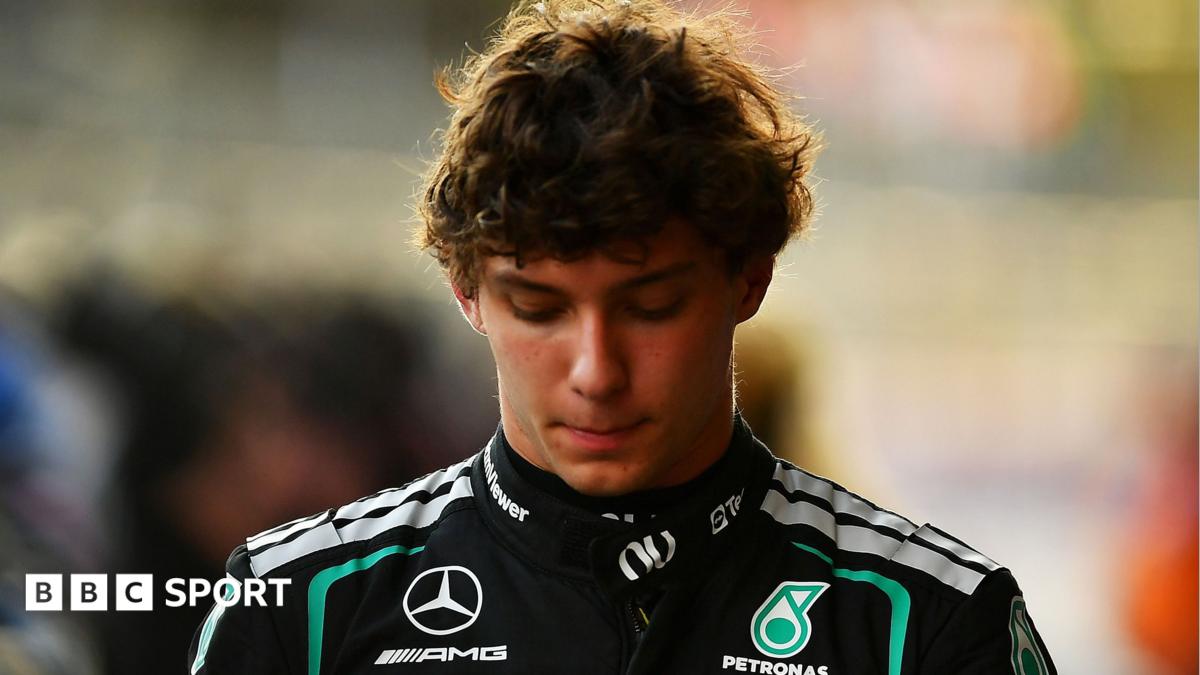
It was also, however, the race in which it took a potentially decisive turn, putting a huge dent in George Russell’s hopes of beating his 19-year-old Mercedes team-mate Kimi Antonelli to the championship.
Russell’s retirement from the race came after 30 laps of frenetic battling between the pair which lit up the Circuit Gilles Villeneuve on a damp, gloomy day so cold it tempted world champions McLaren into a seemingly inexplicable decision to start the race on a dry track on wet-weather tyres.
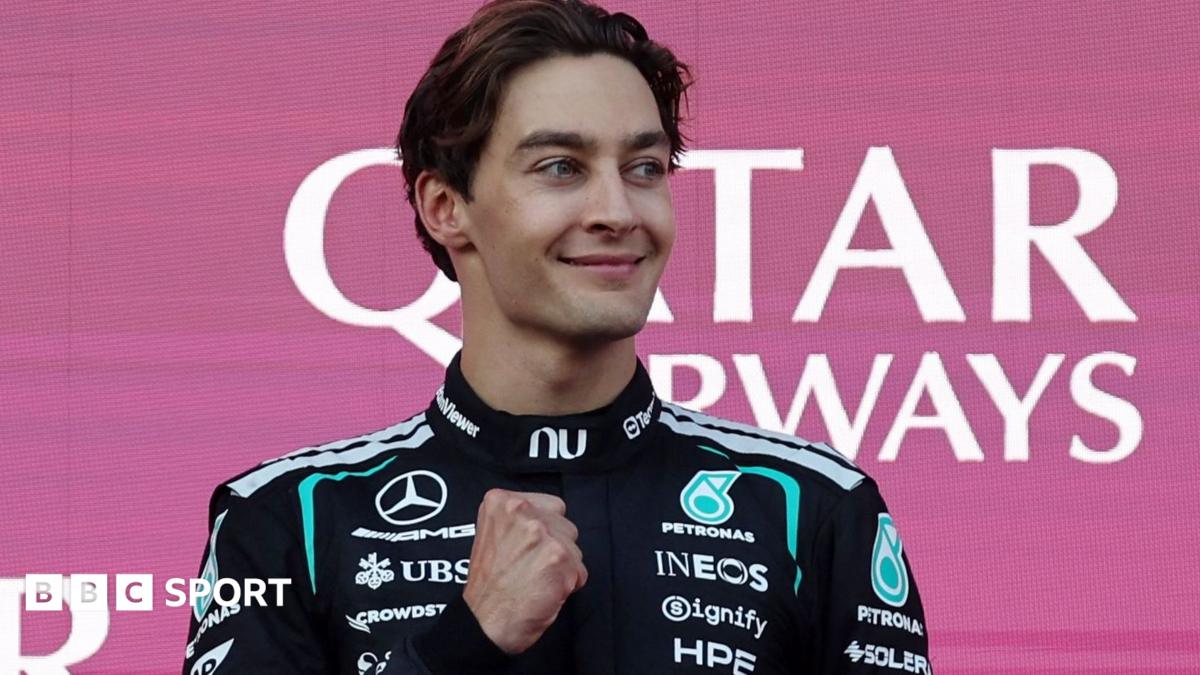
Russell’s retirement handed the win to Antonelli, his fourth in a row, and the Italian now has a massive 43-point lead.
Doubtless there are many twists and turns to come in the remaining 17 races. Even so, that will take some recovering.
Afterwards, Russell was stoic but understandably downbeat.
“Right now it’s his to lose,” he said. “He is so many points ahead. It feels like the gods don’t want me to be in this fight, when I look at the safety-car timing in Japan, breaking down in China Q3, fighting for pole, breaking down from the lead here today.
“But, you know, the pressure’s off. Go out, enjoy every single race. Try to win every single race. And I’ve got nothing to lose.
“I don’t want to be stood here talking like that. It is, of course, frustrating, but I want to be in that fight. Hopefully, the luck will turn.”
George Russell bounced back after a difficult recent run to beat Mercedes team-mate Kimi Antonelli to sprint pole at the Canadian Grand Prix.
The Briton, who is 20 points adrift of the Italian after four races this season, headed Antonelli by 0.068 seconds after being fastest on both runs in final qualifying.
Lando Norris headed an all-McLaren second row, 0.315secs off pole and 0.019secs in front of team-mate Oscar Piastri.
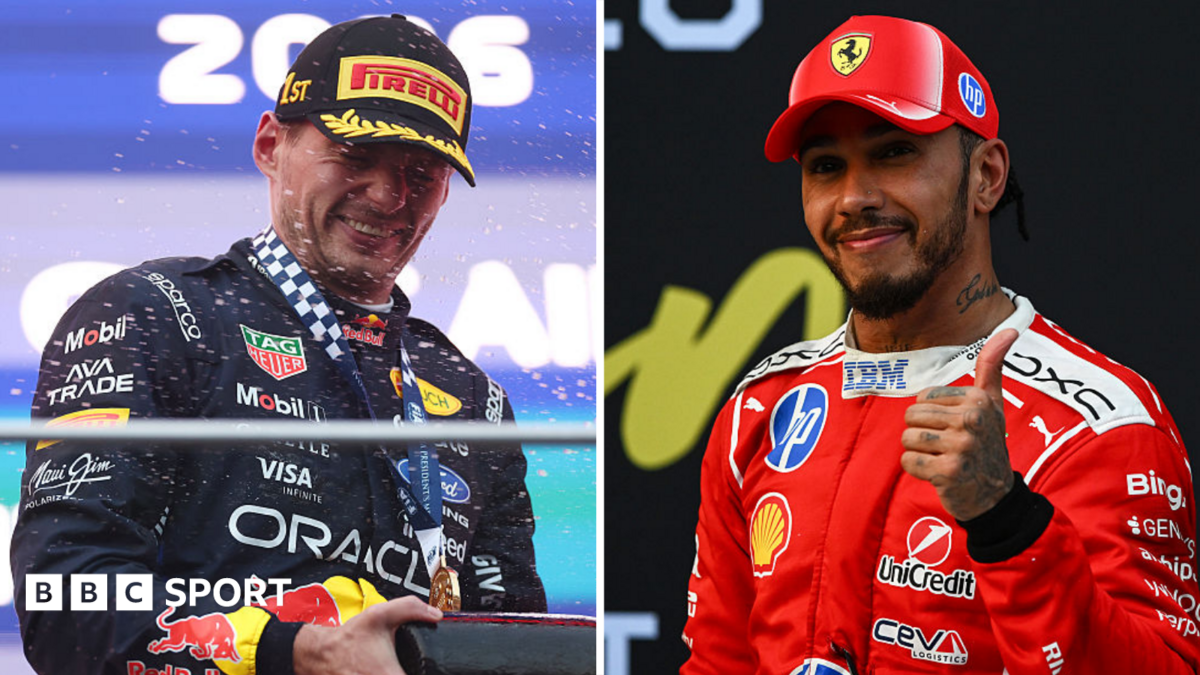
Ferrari and Red Bull completed a two-by-two top eight with Lewis Hamilton ahead of Charles Leclerc and then Max Verstappen in front of Isack Hadjar.
Russell came to Montreal looking to turn around what he admitted had been a “turbulent” start to the season, in which Antonelli has won three of the four grands prix so far, and he has started the weekend off well.
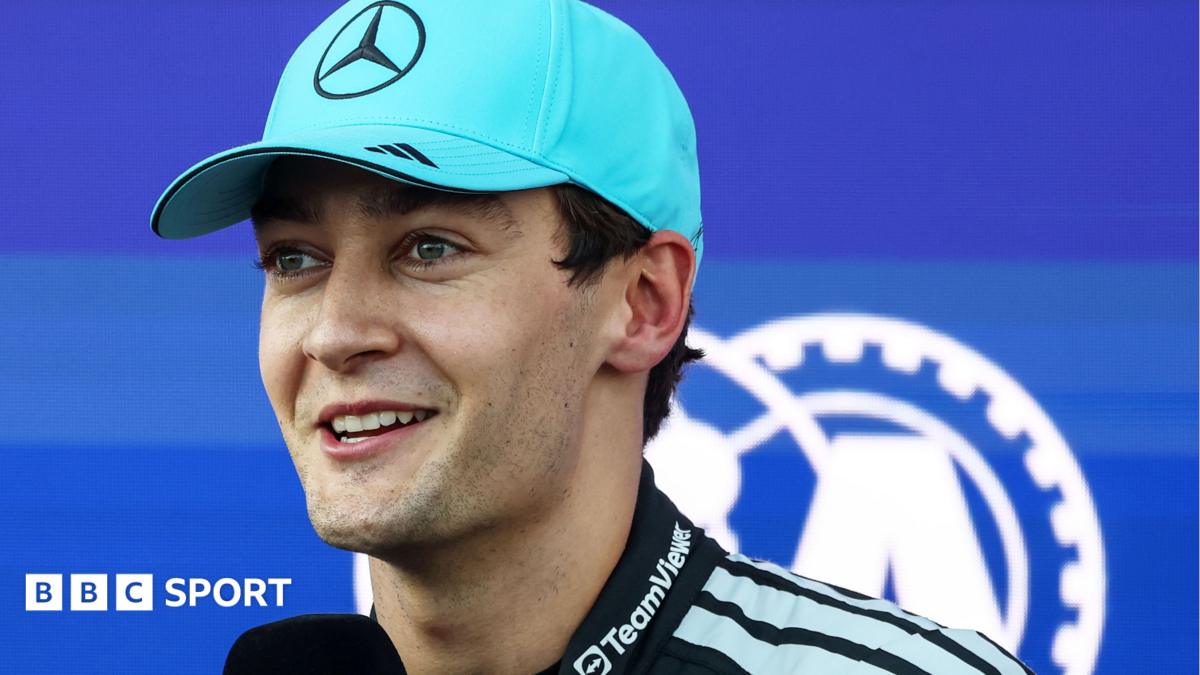
“It feels great after a tough Miami but I never doubted myself,” said Russell. “I always knew what I could do. This is an amazing circuit, high grip, and feels like you’re driving a proper grand prix car.”
Mercedes have a major upgrade on their car for this race and Russell said it had made a significant difference.
“It’s definitely feeling great,” he said. “The team have done a great job to bring this forward. Pleased to have it on the car and pleased to be back in P1. It’s been a little while but still a big focus for tomorrow.”
Antonelli said he had started his lap with his tyres under temperature and described his session as “messy”.
McLaren also brought an upgrade to Montreal, their second in as many races, but while it kept them within range of Mercedes it was not enough to counterbalance the effect of Mercedes on this track, where the world champions have often struggled.
Norris said: “A good surprise. After this morning, we were a little bit worried about how far off we were. More just the lack of confidence in the car.
“But we changed some things on the car and seemed to make a good improvement. I could have got more out of it, but not enough to close the gap to the guys ahead.”
Hamilton was 0.361secs off pole and 0.084secs ahead of Leclerc on a circuit where he shares the record number of wins with Michael Schumacher.
The seven-time champion was pleased with his performance, saying his decision not to go into the Ferrari simulator before this race, because of a feeling it was leading to incorrect set-up choices, had paid off.
“Probably the best qualifying session we’ve had for some time,” said Hamilton. “Great work with the engineers.
“The car felt really fantastic from P1. We made just subtle changes going into qualifying. Q1 and Q2 was looking good and then I don’t know what the others are able to turn up a bit more, but I am just happy to be in the fight.
“I was having so much fun out there, and the fact I didn’t do the sim and it was the best I felt all year. I chose a set-up we’ve not used before and its transformed the car for me.”
And Verstappen, struggling with a car he said was “jumping” at the rear, was just 0.101secs clear of tea-mate Hadjar.
“My feeling in the car was not very good,” said Verstappen. “I was struggling a lot with the ride. All over the bumps I couldn’t put my foot down. Actually my feet were even flying off the pedals and it made it very difficult to be consistent.”
For Russell, this cannot be an easy moment in his career. A Mercedes protege himself, he has waited eight years for this moment – the best car, with Mercedes.
Last year, he was comfortably the better driver of the two; only rarely did Antonelli get the better of him. So he earned his status as pre-season championship favourite.
The Briton, 28, lived up to that when he won the first race of the season in Australia from pole position, but since then things have gone against him.
A technical problem almost certainly robbed him of pole in China and handed it to Antonelli, who converted it into a maiden win. A safety car intervened to hand the victory in Japan to Antonelli, when without it most likely either McLaren’s Oscar Piastri or Russell would have won.
But there was no doubt about the Miami win. Antonelli put it on pole. Russell was fifth on the grid, behind upgraded cars from the Red Bull, McLaren and Ferrari teams.
Antonelli made a sixth bad start in a row and lost ground. But he stayed calm, fought back, and grabbed the win from McLaren’s Lando Norris over the pit stop period.
Norris initially thought that was all about McLaren making a mistake by letting Mercedes pit first, not wanting to go too early with rain threatening.
But McLaren team principal Andrea Stella said the team still had the margin to stay ahead of Antonelli when they did stop three laps after him, but that a series of events conspired against them.
First, there was the time gained by what Stella called a “huge” first lap out of the pits by Antonelli after his stop. That risked overheating his tyres, which he would have to deal with later, but ensured he was still within striking range of the McLaren.
Then Norris made a couple of errors on his in-lap and had a slow stop. Combine all that, and it was enough to put Antonelli right on Norris’ tail when the McLaren came out of the pits. The Mercedes quickly swept past, and Antonelli held Norris off for the rest of the race.
Russell is keeping things in perspective, recognising there are still 18 races to go, and a lot can happen.
“Clearly he’s in a very good place at the moment and momentum is with him,” Russell said. “But, having got enough experience myself in championships I’ve won and how momentum swings throughout the year, and looking at the championship last year, to be honest, I’m not even considering it.
“It’s just that I want to get back on to the top step of the podium. The first three races, I had the performance to do that, but this weekend I absolutely did not have the performance to do that.
“So, I could be standing here now with three very different results in previous races, with this one being a bit of a one-off, but obviously things worked out differently in Japan and China, but that’s Formula 1 sometimes.”
Russell admitted that the “pace was really, really poor on my side”, and that he has never gelled with the Miami circuit and its low-grip surface and slow corners.
But Hill said: “You can’t have that, you can’t have a track that you don’t gel with. You’ve got to be good across everything. George now has to regroup, has to look at where he is at and what the new paradigm is.”
Norris was left to rue the pit stop decision – “How did we not win this?” he said over the radio. “We can make it easier for ourselves.”
But this was a strong showing from McLaren, who introduced a major upgrade package this weekend, which brought them right into the fight with Mercedes.
Leclerc was brought in on lap 21 for his stop, and complained over the radio that he had not been consulted.
The decision did drop him down the field and force him to fight past slower cars. He regained third, but then lost it again to Norris’ team-mate Piastri on the penultimate lap as he began to struggle for grip.
Leclerc then spun on his own on the last lap, shortly after Piastri had overtaken him, and he lost two further positions into and out of the final corner, as first Russell and then Verstappen came past him.
Verstappen pitted under the safety car for his fresh tyres, hoping the gamble would pay off. It dropped him to the back, but with some aggressive overtaking and the others pitting in front of him, it put him in the lead mid-race.
But he was never going to hold on with his worn tyres, and he slipped down. Still, fifth was a decent result after his early error, which was followed by some very aggressive racing that prompted complaints from some of his rivals.
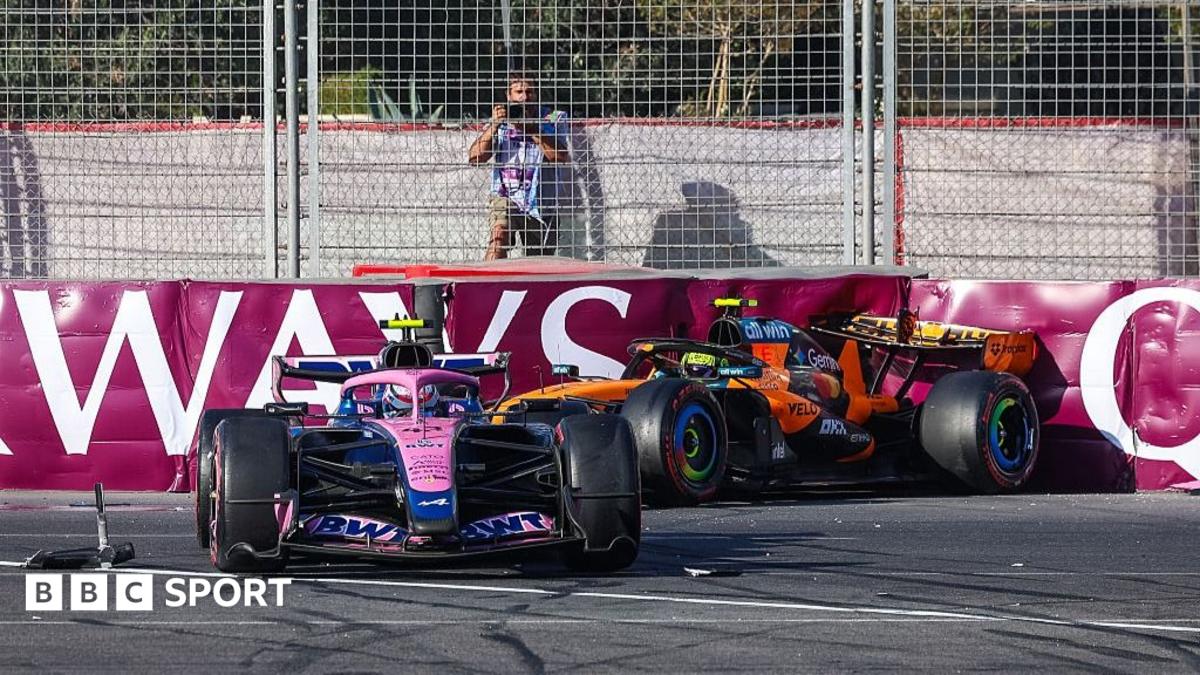
Leclerc slipped back to sixth, ahead of team-mate Lewis Hamilton, whose car was damaged in a first-lap clash with Alpine’s Franco Colapinto.
The Argentine took eighth, ahead of the Williams cars of Carlos Sainz and Alex Albon.
Verstappen faces an investigation from the stewards for crossing the white line on pit exit, while a collision between Russell and Verstappen while they were racing in the closing stages and in which the Mercedes’ front wing was damaged is also under consideration.
The decision to move the start time of the race was made by commercial rights holder F1 and governing body the FIA on Saturday evening in Miami.
A statement from F1 and the FIA said the decision was made because “the weather forecast (predicts) heavier rainstorms later in the afternoon close to the original planned race start time”.
The statement added: “This decision has been taken to ensure the least amount of disruption to the race, and to ensure the maximum possible window to complete the grand prix in the best conditions and to prioritise the safety of drivers, fans, teams and staff.”
The aim is to try to finish the race before the worst of the weather arrives, which is forecast to be at about 15:00 local time (20:00 BST), one hour before the original start time.
That heavy rain, once it starts, is expected to stay for hours, so the fear was that sticking with the original start time would have meant the race could not be run.
Moving it forward, the race is still likely to be wet, but the hope is the conditions will be acceptable for running the cars.
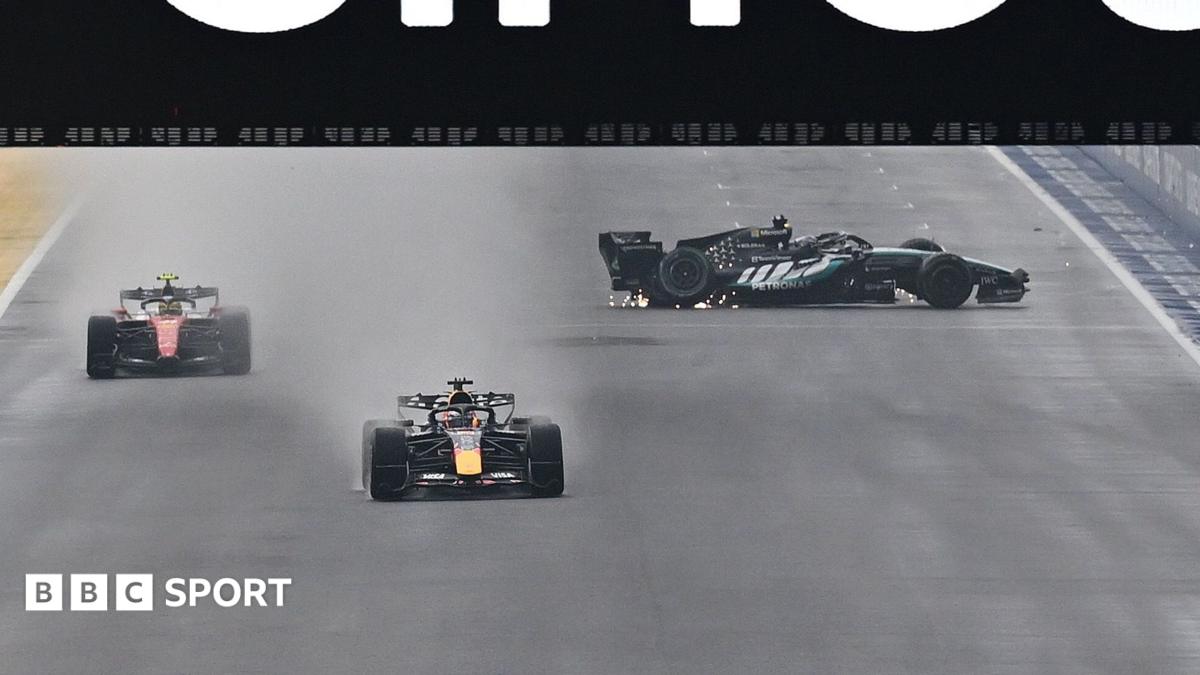
F1 cars do run in the rain, but the limiting factor is always visibility from the vast amounts of spray thrown up by the cars, as well as aquaplaning if the amounts of standing water are significant enough to force the low-running cars to effectively float on top of water on the track.
Norris’ team-mate Oscar Piastri added: “It’s obviously going to be a voyage into the unknown for everybody. When it rains here, it normally is pretty torrential, so it could be an interesting day.
“It’s just going to be what happens with the power-unit, how you get power, where you get power is in a computer’s hands.
“Just making sure that that does roughly what we expect. Obviously, the margin for error when it’s wet is significantly smaller.”
It was Norris’ first pole since Las Vegas last year, three races from the end of his championship season, and a suggestion – at the very least – that Mercedes may not have things all their own way this year, after all.
Antonelli salvaged a good result for Mercedes after a difficult session.
The Mercedes car has often struggled in the heat, and the 32C temperatures did not seem to do it any favours.
But after not looking competitive for most of the session, Antonelli ensured he was the very last car to set a time in the final session, when the track would be at its grippiest, and it paid off.
“It was a pretty messy session,” the Italian said. “I struggled a lot with the car and on the medium (tyres) I couldn’t get a lap in, and then on the soft, all of a sudden, the car became more alive. I felt more comfortable.
“We definitely felt we were expecting this weekend to be quite a bit tougher, also because those teams brought major upgrades which they closed the gap massively, or even went in front of us. McLaren have the same engine as us and they improve a lot the car, but I think we can be in the fight.”
Russell took the opposite route, running first, and he ended up 0.4secs back from his team-mate, not an ideal result given he already has to make up nine points on Antonelli in the championship.
“Pretty surprising how big a jump McLaren and Ferrari have made,” Russell said. “That’s pretty damn impressive. All day they’ve been quicker than us. From my side, I’ve been struggling all day.
“Miami is not a track I particularly love, especially in these hotter conditions, but it’s only sprint qualifying. Just overheating the tyres a lot in that twisty section in the middle. Struggling to get the right balance with the car.”
The Ferrari was very fast through practice and the first two qualifying sessions on the medium tyre, but struggled on the soft in the final session.
“The upgrades are fine,” Leclerc said. “It’s just everybody brought upgrades. McLaren did a very big step forward but I felt like they didn’t optimise their first races so they were always there but didn’t put everything together.
“On our side, we have struggled with tyres. The medium were working very well. On the soft, it was not a nice feeling, so on that we have got to look at it. We know on the race pace we are stronger but in terms of qualifying there is still work to be done.”
For two thirds of Sunday’s Acura Long Beach Grand Prix, Alex Palou bided his time… waiting for the one break he needed.
It came in the form of a caution on the 58th lap, allowing him to overtake front-runner Felix Rosenqvist exiting pit lane and hold the lead the rest of the way, taking the checkered flag by 3.96 seconds for his third triumph in five IndyCar Series races this season and his first at Long Beach.
Right after being showered with applause and confetti at victory lane, the 29-year-old Spaniard thanked his crew, whose quick work on the last pit stop proved to be the difference.
“Everyone was coming in on that yellow and they did an incredible job,” he said. “We were either going to win it or not win right there.”
Rosenqvist settled for second and Scott Dixon, Palou’s Chip Ganassi Racing teammate, was third.
It was the 11th win over the last 22 races dating back to 2024 for the Barcelona native and the 22nd win of his career, tying him with Tony Bettenhausen and Emerson Fittipaldi. It also vaulted him to the top of the Series standings as he chases his fourth Series championship in a row and fifth overall. Palou won the opener March 1 in St. Petersburg (also a street course) and the fourth race March 29 in Alabama.
Palou led for only 32 of the 90 laps Sunday and acknowledged it would have been difficult to catch Enqvist if not for the stoppage.
“I wasn’t giving up but it would’ve been tough to get him today,” Palou admitted. “He was already three seconds ahead. I was happy with my car but I was struggling more on the soft tires than the hards so I’d say my chances were low. The feeling was great seeing all the open space coming out of pit lane because when you spend 60 laps behind a car it disturbs you. I tried to match him on soft tires but it wasn’t working.”
Alex Palou speeds through a curve of the track.
(Ronaldo Bolaños / Los Angeles Times)
In six starts at Long Beach, Palou has never finished lower than fifth.
There is little room to maneuver on the 1.968-mile course with 11 tight turns, but after starting in the third position next to defending champion Kyle Kirkwood, Palou managed to sneak past Pato O’Ward into second place heading into the first turn on Lap 2.
“Making that move on the straightaway was big because I knew it was one of our only chances to get a pass on Pato,” Palou said. “I got that good run on that last corner and he didn’t expect it.”
This year marked the 51st edition of the longest-running major street race in North America, which started in 1975 as part of the Formula 5000 Series, switched to the CART/Champ Car World Series in 1984 and joined the IndyCar Series in 2009.
The top four qualifiers started on softer, high-grip “alternate” tires to establish position while the rest of the grid started on harder, more durable “primaries” to manage degradation on the 110-degree track surface. Of the 25 starters, 24 completed the 177.12 miles.
“We were going to make the two-stop strategy work but didn’t know if it would be doable or not,” Palou added. “As soon as I saw I couldn’t get Felix it was all about patience, fuel and waiting for the right time. I owe this win to my team. Without that pit stop I probably wouldn’t be sitting here now. It only takes one mistake to go from second to seventh but they’re great under pressure.”
Cars make their way down a straightaway during Long Beach Grand Prix.
(Ronaldo Bolaños / Los Angeles Times)
Past winners Will Power and Josef Newgarden moved into the top two positions after Rosenqvist pitted but the Swede regained the lead when Newgarden pitted for the first time on Lap 37 and dropped back to 14th.
The first 45 laps were caution-free as Rosenqvist, Palou, Kirkwood, David Malukas and O’Ward held the top five spots. Newgarden fell out of contention when a flat spot on his left front tire dropped him back to 14th.
Rosenqvist’s three-second lead was erased when debris on the track exiting the Aquarium Fountain drew the only yellow flag all afternoon and narrowed the gap. Capitalizing on favorable pit position, Palou emerged from the lane just ahead of Rosenqvist.
After earning the pole position with a lap time of 1 minute, 7.4625 seconds in qualifying, the runner-up had mixed emotions after leading for 51 laps with no win to show for it.
“You want to win when you have an opportunity but I’m proud of today,” Rosenqvist said. “We weren’t as good as Alex on the blacks… the last pit cycle was the defining moment. We had to come around 14, he had more of an opening and his crew nailed it. That happens.”
Kirkwood, who was vying for his third win in four years, finished right where he started in fourth.
“I had a good cushion and figured even with a bad stop I’d probably stay ahead but I knew there’d probably be a yellow at some point and there it came,” Rosenqvist lamented. “Considering Alex had primary [tires] also I think we would’ve been able to hold him off. It’s definitely disappointing when you can’t wrap it up.”
Dixon, who started in the position, earned his first podium this season and the 136th of his career.
Fans watch with two laps left in the race.
(Ronaldo Bolaños / Los Angeles Times)
“The race itself was a bit blah — I sat in the same position for most of it,” Dixon said. “Luckily for us we had it easy out of that last stop.”
Al Unser Jr. holds the record for most wins at Long Beach, chalking up six in eight years, including an unmatched four in a row from 1988 to 1991.
Tom Sargent is becoming a fan of street circuits after two wins this weekend. Driving the Porsche 911 Cup for GMG Racing in the Mobil Pro Class, the 22-year-old Australian led from start to finish in Race 1 of the Carrera Cup North America on Saturday. In Race 2 on Sunday morning, he again started from the pole and claimed a 0.965-second victory over Aaron Jeansonne to complete the double.
In his last bid at Long Beach three years ago, he hit the wall on Lap 2 but still finished second.
“Momentum in sports is critical and the past few weeks have been really cool for me,” Sargent said. “I didn’t do any street circuit racing before I came to the States. Maybe it fits my driving style.”
The high-powered Indy cars that will be racing in Sunday’s Grand Prix of Long Beach will burn about two gallons of fuel on each of their 90 trips around the tight 1.968-mile street course.
So if all 27 cars that start the race also finish it, the field will use 4,860 gallons of fuel. And that doesn’t include the fuel used in qualifying or in the other five classifications of cars that will be participating in the three days of racing in Long Beach.
That’s a lot of fuel for drivers who will end up in the same place they started, especially when seven weeks of war in the Middle East has driven the price of gasoline to record highs. However, the fuel the IndyCar series uses differs significantly from what that comes out of the pump at the gas station.
“This year marks the fourth season that IndyCar has used 100% renewable race fuel for the NTT IndyCar Series — the first motorsport series in North America to utilize this type of fuel,” an IndyCar spokesperson wrote in a statement. “Developed through a collaboration with Shell, this innovative fuel consists of a blend of second-generation ethanol derived from sugarcane waste and other biofuels mainly derived from animal waste. The use of this renewable race fuel enables a 60% reduction in life cycle greenhouse gas emissions.”
So while driving Indy cars 177 miles in a circle may seem wasteful during a gas crunch, Sunday’s race will have a negligible affect on the price and availability of fuel at service stations. The greater impact will be made by fans driving to Long Beach; last year’s three-day race weekend drew more than 200,000 people.