Police arrest three people outside insurer of Israeli arms maker Elbit, including Thunberg for holding placard.
British police have arrested Swedish activist Greta Thunberg and two other people at a pro-Palestine protest in central London, according to campaign group Defend Our Juries.
The group said Thunberg was arrested on Tuesday at the Prisoners for Palestine protest held in the heart of London’s Square Mile financial district outside the offices of Aspen Insurance, which provides coverage for Israeli defence contractor Elbit Systems.
Recommended Stories
list of 3 itemsend of list
The group said Thunberg had arrived after the protest began, and it shared video footage of the activist holding a sign reading, “I support the Palestine Action prisoners. I oppose genocide.” Thunberg has called Israel’s war in Gaza a genocide and has twice joined flotilla campaigns to try to break Israel’s siege of Gaza.
The City of London Police, which polices the financial district, confirmed that a 22-year-old woman, a description corresponding to Thunberg, was arrested for displaying a placard “in support of a proscribed organisation (in this case Palestine Action) contrary to Section 13 of the Terrorism Act 2000”.
This is the latest protest in solidarity with activists from the Palestine Action group, six of whom are currently on hunger strike in British prisons with two now hospitalised. The direct action group has been proscribed as a “terrorist organisation” by the United Kingdom’s government.
Defend Our Juries said Tuesday’s protest was held to draw attention to Aspen Insurance’s “complicity in genocide” and to express solidarity with prisoners affiliated with Palestine Action.
Thunberg is seen after her arrest for holding a placard expressing support for Palestinian Action prisoners and condemnation of Israel’s genocide [Handout/Defend Our Juries]
Two others, a man and a woman, were also arrested at the protest although they had “glued themselves nearby”, according to the City of London Police, which described damage with “hammers and red paint” to “a building on Fenchurch Street”, where the offices of Aspen Insurance are located.
Defend Our Juries confirmed the damage, saying in a news release that two activists “covered the front of the building with symbolic blood-red paint, using re-purposed fire extinguishers” before attaching themselves to the front of the building in the aim of “drawing attention to Aspen’s complicity in Genocide, disrupting their business, and closing down the building”.
The group said Aspen Insurance, a global insurer and reinsurer, was targeted because of its affiliation with Elbit Systems UK, a subsidiary of Elbit Systems, which is Israel’s largest arms producer. It describes its drones as “the backbone” of the Israeli military.
Palestine Action protesters had targeted one of the UK subsidiary’s operations in Bristol last year. Among their five key demands, the group’s hunger strikers want the manufacturer, which has several UK factories, to be shut down.
Defend Our Juries said in its news release that Deputy Prime Minister and Justice Minister David Lammy has “refused to speak to legal representatives of the hunger-strikers, or their families”.
A few days earlier, Thunberg had voiced solidarity with the hunger strikers on Instagram, saying: “It is up to the state to intervene, and put an end to this by meeting these reasonable demands that pave the way for the freedom of all those who choose to use their rights trying to stop a genocide, something the British state has failed to do themselves.”
A Palestine Action spokesperson said in relation to her arrest that it was not clear whether police had “made another one of their mistakes in interpreting the crazy ban on Palestine Action” or whether they had “turned anyone expressing support for prisoners locked up beyond the legal time limit for taking action to stop a genocide into alleged terrorists”.
London, United Kingdom – Lawyers of imprisoned hunger-striking activists linked to the protest group Palestine Action have put the British government on notice as the justice secretary refuses to meet them.
Imran Khan & Partners, which represents the collective, wrote a pre-claim letter to the government on Monday, warning that they would seek a High Court case should officials fail to respond by Tuesday afternoon.
Recommended Stories
list of 4 itemsend of list
Eight activists, aged between 20 and 31, have participated in a rolling strike that began on November 2. There are rising fears that one or more of them could soon die in jail.
In recent days, their relatives and loved ones have told Al Jazeera of their deteriorating health and repeated hospital admissions.
Their lawyers have long called for a meeting with Justice Secretary David Lammy to discuss welfare and prison conditions, believing such an intervention could be life-saving.
But the government has so far refused, saying hunger strikes are not an unusual phenomenon in prisons and that policies to provide adequate medical care to anyone refusing food are being followed.
“Our clients’ food refusal constitutes the largest co-ordinated hunger strike in British history since 1981,” the lawyers wrote, referring to the Irish Republican inmates led by Bobby Sands. Sands and nine others died of starvation, one on day 46 of the protest.
“As of today’s date, [the current] strike has lasted up to 51 days, nearly two months, and poses a significant risk to their life with each passing day,” the lawyers wrote.
The detainees are being held in five prisons over their alleged involvement in break-ins at the United Kingdom’s subsidiary of the Israeli defence firm Elbit Systems in Bristol and a Royal Air Force base in Oxfordshire. They deny the charges against them, such as burglary and violent disorder.
Amu Gib, Heba Muraisi, Teuta Hoxha and Kamran Ahmed are on day 52, 51, 45 and 44 of their protests, respectively. Lewie Chiaramello, who is diabetic and refuses food every other day, began his protest 30 days ago.
Qesser Zuhrah, Jon Cink and Umer Khalid have ended their strike.
All eight will have spent more than a year in prison before their trials take place, well beyond the UK’s usual six-month pre-trial detention limit.
The hunger strikers’ five demands include immediate bail, the right to a fair trial and the de-proscription of Palestine Action, which accuses the UK government of complicity in Israel’s war crimes in Gaza. The UK government banned Palestine Action in July, branding it a “terror” group, a label that applies to groups such as ISIL (ISIS). The protesters have called for an end to alleged censorship in prison, accusing authorities of withholding mail, calls and books. They are also urging that all Elbit sites be closed.
‘Engage with each one’
Leading human rights barrister Michael Mansfield has backed calls for the government to intervene.
“It’s a simple proposition, engage with each one,” he told Al Jazeera. “That’s your job [as government], that’s what you’re there for. You are safeguarding people’s health, welfare and life.”
In a letter addressed to Lammy, he wrote, “Fundamental human rights in the United Kingdom are being destroyed in this quagmire of disinterest and populist politics, the most important being the presumption of innocence and the right to a fair trial by means of preparation and due process.
“There has to be an equality of arms which can hardly be achieved when a defendant is held in oppressive and lengthy periods of remand.”
Families of the prisoners have alleged mistreatment in prison, saying some detainees have been verbally abused and left without care in dangerous health conditions. The Ministry of Justice has denied these accusations and says it cannot comment on individual cases.
“Government takes action when it chooses to,” Mansfield wrote. “There could be no more appropriate time than now with the life-endangering protest by the hunger strikers. The delay is grotesque in some cases, up to two years with trial dates being set in 2027.”
Nida Jafri, a friend of hunger striker Amu Gib, plans to deliver Mansfield’s letter – and one of her own – in hand to the Ministry of Justice on Tuesday.
“These people are on remand – not convicted, still awaiting full legal process,” reads Jafri’s letter. “They are weak, in pain, and visibly wasting away. The absence of adequate medical observation or humane treatment under prison or hospital care is not only unacceptable; it breaches fundamental rights to health, dignity, and life.”
Prosecutors accuse the official, named as Fahad A, of torturing dozens of prisoners in jail run by Syrian intelligence.
Published On 22 Dec 202522 Dec 2025
Share
German prosecutors have charged a former Syrian security official with crimes against humanity, accusing him of torturing dozens of prisoners at a Damascus jail while ex-President Bashar al-Assad was in power.
Germany’s Federal Public Prosecutor General’s office announced the indictment on Monday, alleging the ex-prison guard, named only as Fahad A, took part in more than 100 interrogations between 2011 and 2012 in which prisoners were “subjected to severe physical abuse”.
Recommended Stories
list of 3 itemsend of list
The abuse included electric shocks, cable beatings, forced stress positions and suspensions from the ceiling, according to a statement by the prosecutor’s office.
“As a result of such mistreatment and the catastrophic prison conditions, at least 70 prisoners died,” said the statement, noting the former guard is also charged with murder.
The official was arrested on May 27 and formally indicted on December 10.
He is being held in pre-trial detention, the German prosecutor’s office added.
Syrians have demanded justice for crimes committed under the decades-long rule of al-Assad, who was removed from power in December 2024 after a rapid rebel offensive.
The Assad regime, which was accused of mass human rights abuses, including the torture of detainees and enforced disappearances, fell after nearly 14 years of civil war.
Universal jurisdiction
In Germany, prosecutors have used universal jurisdiction laws to seek trials for suspects in crimes against humanity committed anywhere in the world.
Based on these laws, several people suspected of war crimes during the Syrian conflict have been arrested in the last few years in Germany, which is home to about one million Syrians.
In June, a court in Frankfurt handed a life sentence to a Syrian doctor convicted of carrying out acts of torture as part of al-Assad’s crackdown on dissent.
The doctor, Alaa Mousa, was accused of torturing patients at military hospitals in Damascus and Homs, where political prisoners were regularly brought for supposed treatment.
Witnesses described Mousa pouring flammable liquid on a prisoner’s wounds before setting them alight and kicking the man in the face, shattering his teeth. In another incident, the doctor was accused of injecting a detainee with a fatal substance for refusing to be beaten.
One former prisoner described the Damascus hospital where he was held as a “slaughterhouse”.
Presiding judge, Christoph Koller, said the verdict underscored the “brutality of Assad’s dictatorial, unjust regime”.
London, United Kingdom – Two Palestine Action-affiliated remand prisoners on hunger strike have been taken to hospital, according to a family member and a friend, adding to fears that the young Britons refusing food in protest could die at any moment.
Twenty-eight-year-old Kamran Ahmed, who is being held at Pentonville prison in London, was hospitalised on Saturday, his sister, Shahmina Alam, told Al Jazeera.
Recommended Stories
list of 4 itemsend of list
Amu Gib, 30, who has not eaten food for 50 days at HMP Bronzefield in Surrey, was taken to hospital on Friday, said the Prisoners for Palestine group and friend Nida Jafri, who is in regular contact with them. Gib uses the pronoun they.
Ahmed and Gib are among six detainees protesting across five prisons over their alleged involvement in break-ins at the United Kingdom’s subsidiary of the Israeli defence firm Elbit Systems in Bristol and a Royal Air Force base in Oxfordshire.
They deny the charges against them, such as burglary and violent disorder.
“It’s day 42 [of Ahmed’s hunger strike], and at this point, there’s significant risk of organ damage,” said his sister, Alam. “We know that he’s rapidly been losing weight in the last few days, losing up to half a kilogram [1.1lbs] a day.”
Ahmed’s last recorded weight was 60kg (132lbs).
When Al Jazeera first interviewed Alam on December 12, Ahmed, who is 180cm (5′ 11”), weighed 64kg (141lbs), having entered prison at a healthy 74kg (163lbs). On Thursday, Alam told journalists at a news conference in London that he weighed 61.5kg (136lbs).
Ahmed’s speech was slurred in a call with the family on Friday, said Alam. He is said to be suffering from high ketone levels and chest pains.
“Honestly, I don’t know how he’s going to come out of this one,” said Alam.
It is the third time Ahmed has been hospitalised since he joined the hunger strike.
Shahmina Alam with her younger brother, Kamran Ahmed, a Palestine Action-linked hunger striker [Courtesy of the Alam family]
‘Critical stage’
The hunger strikers’ demands include immediate bail, the right to a fair trial and the de-proscription of Palestine Action, which accuses the UK government of complicity in Israel’s war crimes in Gaza. The UK government banned Palestine Action in July, branding it a “terror” group, a label that applies to groups such as ISIL (ISIS).
The protesters have called for an end to their alleged censorship in prison, accusing authorities of withholding mail, calls and books. They are also urging that all Elbit sites be closed.
The six are expected to be held for more than a year until their trial dates, well beyond the UK’s six-month pre-trial detention limit.
Qesser Zuhrah, a 20-year-old who has refused food for 50 days, is also in hospital, having lost 13 percent of her body weight, according to her lawyers. The other protesters are Heba Muraisi, Teuta Hoxha and Lewie Chiaramello, who is diabetic and refuses food every other day.
There was no immediate comment from either Pentonville or HMP Bronzefield.
‘I’m scared’
Gib called their friend, Jafri, on Thursday from prison, telling her they needed a wheelchair to attend a doctor’s appointment where their vital signs would be checked.
Prison staff at first “refused” to provide a wheelchair, and later, after offering one, “refused to push” it, Jafri said. “So they laid there with … no check of their vitals on day 47 of their hunger strike,” Jafri said.
When they are hospitalised, the prisoners are unable to call their loved ones, as they can from jail.
Jafri told Al Jazeera, “I’m scared they’re there alone with no phones and no calls allowed.”
Gib, who has lost more than 10kg (22lbs), is below the normal range for most health indicators, which is “highly concerning” for their immune system, their lawyers have said.
Prison officials have “failed to provide [Gib] with thiamine [a vitamin] consistently, and Amu is feeling the effects on their cognitive function”, the lawyers said.
Gib’s eyes are also “sore with the bright [prison] lights”, Jafri said.
Amu Gib (left) with their friend, Nida Jafri [Courtesy: Nida Jafri]
The lawyers have demanded a meeting with Secretary of State for Justice David Lammy, hoping his intervention could be life-saving. Thousands of everyday Britons, hundreds of doctors and dozens of MPs have urged Lammy to heed their call. But so far, he has refused, leading critics to accuse the UK government of wilfully ignoring the issue.
The UK media have also been accused of downplaying the protest and its dangers.
The protest is said to be the largest coordinated hunger strike in UK prisons since 1981, when Irish Republican inmates led by Bobby Sands refused food.
“In contrast to the robust media coverage of the Irish hunger strikes in the 1980s, the Palestine Action hunger strikes have been largely met with media silence,” wrote Bart Cammaerts, a professor of politics and communication at the London School of Economics.
“What will it take for the British media to pay attention to the plight of jailed pro-Palestinian activists? The death of an activist? Or the awakening of a moral conscience?”
Emma Groves, 35, from Belfast, was refused entry to Switzerland and detained at Zurich airport after making an easy mistake when packing
Abigail Nicholson Content Editor
11:37, 19 Dec 2025Updated 11:37, 19 Dec 2025
A woman was turned away from her holiday destination and held in custody after making one crucial error while travelling. Emma Groves, 35, from Belfast, made her way to Dublin Airport for a four-night break in Zurich, Switzerland on December 1 this year.
The pair dropped off their luggage and completed check-in before passing through security without any problems. Emma had reserved the Aer Lingus flight approximately three weeks earlier after spotting a hotel she fancied visiting on TikTok.
However, it wasn’t until the duo reached border control in Zurich that they discovered Emma had made a grave blunder which left her devastated. Following the loss of her passport several weeks beforehand, Emma had requested a replacement document, which arrived at her home.
Yet after discovering her original passport, she failed to destroy it and stored it in a drawer alongside her moisturisers and fake tan products.
Emma explained: “I had grabbed it [passport] the night before and give my passport to my boyfriend, he minds them because I do lose everything. Only the night before I thought ‘my goodness am I going to be able to travel, the gold has completely faded off’ this which is strange for it being a new passport. It was in a drawer with all my moisturisers and fake tans. So I did think it’s probably just rubbed off.”
Upon reaching the Swiss border, Emma discovered her passport had been flagged as cancelled. She recalled: “He just said ‘do you have another one’ and then it kind of clicked. The border police came and got me and my boyfriend.
“We went into this room and said we realised what had happened. I said I’ve got a new one but I’ve grabbed the old one so he said because it had been cancelled it was an invalid document.”
Emma was informed she would need to be flown back to Dublin before she could re-enter the country using her valid passport. Her boyfriend chose to remain in the country and await Emma’s return.
Emma found herself placed in a “weird” airport hotel, which she likened to a “mini prison”, containing roughly 20 beds separated by curtains.
She explained: “They put me in an airport hotel and I was in there for about three or four hours, but it was just like a room with a lot of beds in it separated by curtains. I just sat and watched Stranger Things get me through.
“It was scary enough in the hotel because there were a lot of people in there, and there kind of wasn’t really any security or even a locked door. It was a weird room.
“[In Dublin] we used a machine to drop off the luggage, but then we did have to go over to a desk to leave them, and she checked the passport and stuff. The passports were scanned so you’d think they would pick up if it was cancelled.
“Border security in Switzerland said I shouldn’t have been able to get that far. It wasn’t until like 6pm that they told me I’d be getting on the flight at 8pm.”
It’s understood that Aer Lingus verifies that a presented passport corresponds to the passenger’s identity and remains valid. In instances where a passport has been cancelled but remains in date, the discrepancy would be spotted upon entry to another country.
Emma was then accompanied around the airport by a chaperone before being boarded onto the aircraft first, as her passport had been seized. She was given a set of documents which stated she was denied entry and had her passport confiscated.
Upon her return to Dublin, her mother met her with her replacement passport, allowing her to purchase fresh flights to Zurich, which she described as an “expense she didn’t need”.
Emma explained: “When I flew over, I actually initially wasn’t going to bring the forms back, but my mum was like ‘just take them’, so I flew out fine but when I got to the Swiss border again the border control lady was like ‘oh this doesn’t make sense it says you’ve already been here but you haven’t left’.’I give her the forms and she was like ‘oh okay that kind of explains it’ and I got through.”
Emma was informed by border officials that she would face no future travel difficulties due to it being an honest mistake. A representative from Aer Lingus stated: “Passengers travelling with Aer Lingus are responsible for ensuring they have all relevant travel documentation and compliance with relevant laws and regulations of the countries they are flying to, from, or transiting through. Passports used for travel must be valid and in date. If a travel document is not valid for travel, passengers may be refused entry when they reach their planned destination, as was the case in this instance.”
Maxwell, a former British socialite and Epstein accomplice, says her conviction for trafficking a ‘miscarriage of justice’.
Published On 18 Dec 202518 Dec 2025
Share
Ghislaine Maxwell, former girlfriend and accomplice of convicted sex offender Jeffrey Epstein, has asked a federal judge in the United States to set aside her sex trafficking conviction and quash her 20-year prison sentence.
Maxwell made the long-shot legal bid in a Manhattan court on Wednesday, saying “substantial new evidence” had emerged proving that constitutional violations spoiled her trial in 2021 for recruiting underage girls for wealthy financier Epstein, who died in 2019.
Recommended Stories
list of 4 itemsend of list
In the lengthy filing, Maxwell, 63, argues that “newly discovered evidence” proves that she “did not receive a fair trial by independent jurors coming to Court with an open mind”.
“If the jury had heard of the new evidence of the collusion between the plaintiff’s lawyers and the Government to conceal evidence and the prosecutorial misconduct they would not have convicted,” Maxwell wrote.
She said the cumulative effect of the constitutional violations resulted in a “complete miscarriage of justice”.
Maxwell submitted the filing herself, not in the name of a lawyer.
Proceedings of the type brought by Maxwell are routinely denied by judges and are often the last-ditch option available to offenders to have their convictions overturned, the AFP news agency reports.
Maxwell’s filing also comes just days before records in her legal case are scheduled to be released publicly as a result of US President Donald Trump’s signing of the Epstein Files Transparency Act.
The law, which Trump signed after months of public and political pressure on his administration, requires the Department of Justice to provide the public with Epstein-related records by December 19.
The circumstances of Epstein’s death and his influential social circle, which spanned the highest reaches of business and politics in the US, have also fuelled conspiracy theories about possible cover-ups and unnamed accomplices
Critics also continue to press President Trump to address his own once-closerelationship with Epstein.
The Justice Department has said it plans to release 18 categories of investigative materials gathered in the massive sex trafficking probe, including search warrants, financial records, notes from interviews with victims, and data from electronic devices.
Epstein was arrested in July 2019 on sex trafficking charges but was found dead a month later in his cell at a New York federal jail, and his death was ruled a suicide.
Maxwell, once a well-known British socialite, was arrested a year later and convicted of sex trafficking in December 2021.
In July, she was interviewed by the Justice Department’s second-in-command and soon afterwards moved from a federal prison in Florida to a prison camp in Texas.
Maxwell’s transfer from the Federal Correctional Institution (FCI) Tallahassee – a low-security prison in Florida – to the minimum-security Federal Prison Camp in Bryan, Texas, was carried out without explanation at the time.
Judge sentences former Harvard Medical School morgue manager for stealing organs and various body parts for sale to others.
Published On 17 Dec 202517 Dec 2025
Share
The former manager of the Harvard Medical School morgue has been sentenced to eight years in prison for the theft and sale of body parts, taken from cadavers that had been donated for medical research.
Cedric Lodge, who managed the morgue for more than two decades before being arrested in 2023, was given an eight-year sentence by a US District Judge in Pennsylvania on Tuesday.
Recommended Stories
list of 3 itemsend of list
“He caused deep emotional harm to an untold number of family members left to wonder about the mistreatment of their loved ones’ bodies,” prosecutors wrote in a court filing.
The 58-year-old Lodge pleaded guilty to transporting stolen goods across state lines in May, with prosecutors stating that he had taken heads, faces, brains, skin, and hands from cadavers in the morgue to his home in Goffstown, New Hampshire, before selling them to several individuals.
Lodge’s wife, Denise, was also sentenced to one year in prison for her role in facilitating the sale of the stolen organs and body parts to several individuals, including two people in Pennsylvania, who then mostly resold them.
Prosecutors asked District Judge Matthew Brann in Williamsport, Pennsylvania, to give Lodge 10 years in prison, the maximum sentence for the crime, which they said “shocks the conscience” and was carried out “for the amusement of the disturbing ‘oddities’ community”.
Patrick Casey, a lawyer for Lodge, asked the judge for leniency, while conceding “the harm his actions have inflicted on both the deceased persons whose bodies he callously degraded and their grieving families”.
Harvard Medical School has yet to comment on Lodge’s sentencing, but has previously called his actions “abhorrent and inconsistent with the standards and values that Harvard, our anatomical donors, and their loved ones expect and deserve”.
A US court ruled in October that Harvard Medical School could be sued by family members who had donated the bodies of loved ones for medical research. In that case, Chief Justice Scott L Kafker described the affair as a “macabre scheme spanning several years”.
Harvard Medical School in the Longwood Medical Area in Boston, Massachusetts, US, in 2022 [Brian Snyder/Reuters]
Some define time as linear, some see it as a block. Others refer to it as something spent, in the present, or the future. Meanwhile, others consider it to be supernatural or holy, or something to twist, tame or traverse.
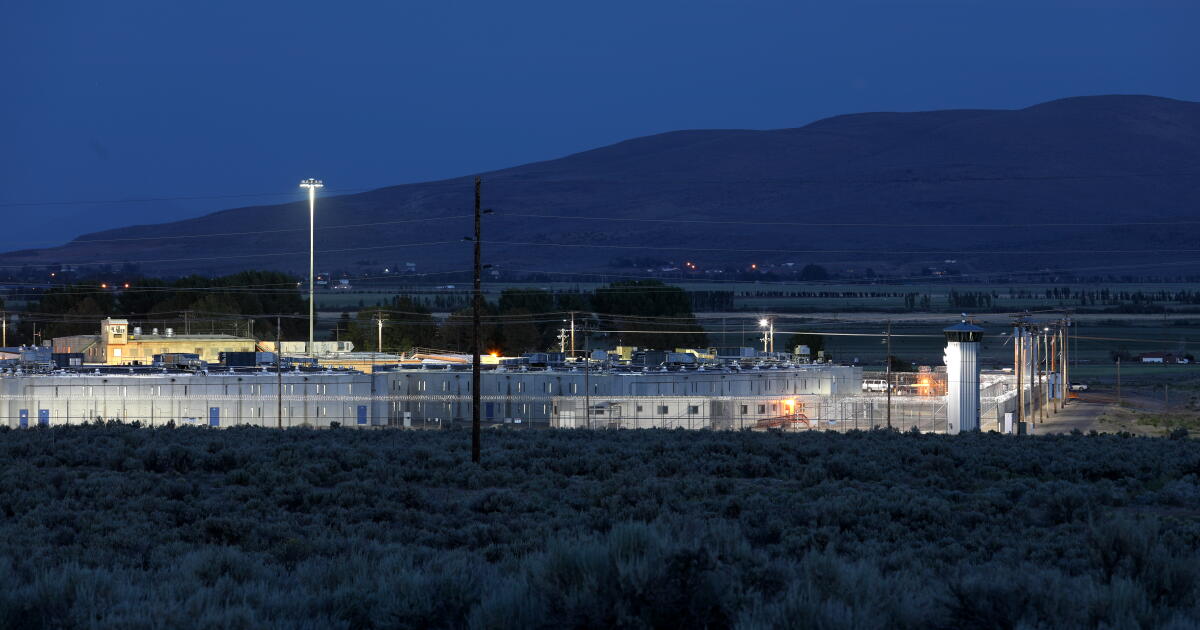
As someone who has been sentenced to a lifetime behind bars, time is both abstract and defined. When you have so much time, it is all you have, yet, inside, you have almost no control over how to spend it.
Every day, I can hear it: tick, tick, tick. It’s torturous, like that dripping faucet in my cell.
So to quiet the sound, I study. I learn. I try to build something meaningful from the minutes.
At the time of my arrest in 2002, I was a 25-year-old entrepreneur who had started a successful business. I was enrolled in college, working towards my degree in Information Technology, when my world collapsed. Once in New Jersey State Prison (NJSP) in Trenton, I had a simple choice: either give up on all of my dreams, or fight for them alongside my efforts to prove my innocence. So, I decided to use my time to complete my education.
My father had brought our family to the United States from Pakistan so his two sons could have access to higher education. He passed away this past January, and it is because of him I keep studying, to fulfil the dream he carried across an ocean.
Yet on the inside, that dream has been hard to chase.
‘You guys aren’t going anywhere’
Prison life is an insidious thing. The environment is conducive to vice and illicit activities. Drugs and gambling are easy to find; doing something constructive, like education, well, that can be a monumental task.
The NJSP’s education department only offers GED-level (high-school level) education. Prisoners can also enrol in outside correspondence courses, also known as independent study. These include certifications, like in paralegal studies, costing about $750 to $1,000.
For-profit “correspondence schools” advertise mail-order college degrees, but most, costing anywhere from $500 to $1,000, are unaccredited – selling paper, not knowledge. Some men collect a bachelor’s, master’s, and even a doctorate in a single year. I could not bring myself to do that. For me, an accredited degree is something that cannot be dismissed, and would make me feel on par with those in the free world.
But the options for college degrees from reputable accredited universities can run into the thousands – a non-starter for most of those imprisoned. So I began with a prison paralegal training course taught by fellow prisoners helping others with their legal battles.
Later on, I watched a PBS documentary about the Bard Prison Initiative in New York, a real college programme, accredited and rigorous, for men and women in the state’s prisons. Inspired, I decided to write dozens of letters to reputable universities across the country, asking them to take me as a test case to do a degree. None replied.
Then I learned about NJ-STEP, a programme offering college courses to prisoners at East Jersey State Prison. But when I asked to enrol, the NJSP’s education supervisor replied that it was not offered at our prison. When I appealed to the administration, a security major told me, “Why should I bring the NJ-STEP here? You guys aren’t going anywhere.”
His words echoed, as if a sentence within a sentence.
[Illustration by Martin Robles]
The myth of higher education
Thomas Koskovich, 47, has spent nearly three decades in NJSP, where he is serving a life sentence.
When I asked him about the opportunities for higher education in the prison, he scoffed.
“What college programme?” he blurted.
“The only thing they let us do is something called independent study, and by the way, you pay for everything yourself. The prison doesn’t help you. They just proctor [meaning they provide someone to administer] the tests.”
Thomas works as a teacher’s aide, a prison job detail, in the Donald Bourne School, named after a policeman who was killed by a prison inmate in 1972. The teachers come from the outside, while aides like Thomas assist them and also tutor students requiring extra support. He helps men earn their GEDs while knowing there is no path offered beyond that to further higher education.
“I’ve seen guys stuck in GED classes for 15 years,” he said.
Prisoners get stuck for different reasons: classes get cancelled because of emergencies, or sometimes the men have little education to begin with and require years to learn to read and write. Students also get paid $70 a month to attend, so some consider it a job – particularly as prison jobs are scarce – and deliberately fail so they can stay at the school for longer.
Of the two dozen or so students, “the school averages maybe five to 10 graduates a year”, Thomas explained.
He earns about $1,500 a year, far less than the $20,000 he would need to afford an accredited correspondence degree. But he chooses to help others in the same school where he got his GED because, as he put it, “Most people in here aren’t career criminals. They just got caught in bad situations.”
He added, “If given half a chance, they’d choose a legal, meaningful life.”
Thomas sees education as key to self-betterment. It was a book, Pedagogy of the Oppressed by Paulo Freire, a Brazilian Marxist educator, given to him by an activist friend that showed him the power of education, he says.
Education equips us to “better handle stressful situations” and nurture creativity and “artistic expression”, he reflected. “But most importantly, we can develop skills that will allow us to earn a living legally and contribute to society in a positive way.”
The Department of Corrections may store bodies, but it does not nurture minds, though many will eventually be freed back into society after serving their terms, while others could win their freedom in court or through clemency.
And education can only help with transitioning into life on the outside. According to the Prison Policy Initiative, a research and advocacy nonprofit, limited access to education in prisons remains a major barrier to rehabilitation and reentry into society. Decades of studies support the idea that education in prison reduces recidivism – a RAND meta-analysis found a 43 percent lower likelihood of reoffending among inmates who pursued studies.
Kashif Hassan, 40, from Brooklyn in New York City, has been imprisoned for 15 years. Serving a life-plus-10-year sentence, he has earned multiple degrees, including two PhDs, one in business administration and one in criminal justice, through university distance education.
Unlike other prisoners, Kashif was fortunate in that his family could afford the tens of thousands in accredited college tuition fees.
“I have two sons,” he told me, “and I want to show them that no matter the circumstances, even here, you can keep learning.”
He laughed when I asked about support from the NJSP’s education department. “None,” he said. “They even cancelled the college correspondence roster [a list that allowed students enrolled in long-distance education to access the prison law library and school computers to type and print]. They say it’s for security, but really, it’s about control.”
Kashif has also been on the waiting list for a paralegal course for 10 years.
“Education is a powerful tool,” he said. “It helps you understand your rights, navigate the system, and articulate yourself better. Especially in here, it’s the difference between feeling powerless and feeling empowered.”
A door where there was a wall
In 2023, I learned of a glimmer of progress. The Thomas Edison State University (TESU) in Trenton – ranked among the state’s top 20 public institutions – launched a new programme enabling men in NJSP to pursue accredited college degrees.
In 2024, I began taking TESU courses for a liberal arts degree. My tuition is paid for by grants and scholarships. The programme runs independently from the NJSP’s education department, which only proctors exams. For those of us long shut out of higher learning, it felt revolutionary. As if a door opened where there had only been a wall. It has made me feel free and given me purpose.
For Michael Doce, 44, another student in the programme who is serving a 30-year sentence, the door is narrow but precious. “I want to stick it to the NJDOC, to say, ‘Look what I did all on my own.’”
Michael studied engineering at Rutgers University before he was imprisoned. Now he is earning a communications degree.
“My family buys used textbooks,” he said. These are mailed to the prison, but security checks mean they can take weeks to reach him.
“But the prison just banned used books,” he added. “Depending on how much new ones cost, I might not be able to continue.”
Al Jazeera requested clarification from the New Jersey Department of Corrections about the cancellation of the roster and the banning of used books, but did not receive a response.
Michael shrugged and gave a wry smile. “If too many guys signed up, they’d probably cancel the whole thing. I’m being funny, but not really.”
He maintains top grades and dreams of becoming a journalist. “A criminal conviction closes a lot of doors,” he told me. “I’m just trying to open new ones.”
‘Doing his own time’
There is a couplet from the 18th-century Urdu poet Mir Taqi Mir that goes:
Yaarān-e deyr o Ka‘bah, donon bulā rahe hain
Ab dekhen Mir, apnā jānā kidhar bane hai
My heart is torn between two calls – the world of love and the house of God.
Now it is a test to see which way my soul will turn.
Perhaps that captures the prisoner’s daily dilemma: between despair and determination; between giving up and growing. In the absence of rehabilitation, every man must choose his own path – “doing his own time,” as the popular prison phrase goes – towards light or darkness.
Men like Thomas, Kashif, Michael, and many others choose light. They choose education.
The Department of Corrections may store bodies, but it cannot own the will to grow. Education here is not charity. It is resistance. It is the one realm where we can still choose, and in choosing, we stay human and free.
Because in the end, freedom does not begin with release. It begins with the decision to grow. It begins with the mind.
And in this place, where time is both enemy and companion, every page turned, every lesson learned, is a way to quiet the endless ticking, a way to remind ourselves that even behind bars, time can still belong to us.
Tick. Tick. Tick.
This is the final story in a three-part series on how prisoners are taking on the US justice system through law, prison hustles and hard-won education.
Tariq MaQbool is a prisoner at New Jersey State Prison (NJSP), where he has been held since 2005. He is a contributor to various publications, including Al Jazeera English, where he has written about the trauma of solitary confinement (he has spent a total of more than two years in isolation) and what it means to be a Muslim prisoner inside a US prison.
Martin Robles is also a prisoner at NJSP. These illustrations were made using lead and coloured pencils. As he has limited art supplies, Robles used folded squares of toilet paper to blend the pigments into different shades and colours.
Police officers escort South Korean crypto mogul Do Kwon (C) to a holding facility pending his extradition in Podgorica, Montenegro, on March 23, 2024. A U.S. judge sentenced Kwon to 15 years in prison Thursday for a fraudulent cryptocurrency scheme. File Photo by Boris Pejovic/EPA-EFE
Dec. 12 (UPI) — A federal judge in New York sentenced Do Kwon, the former CEO of blockchain and cryptocurrency company Terraform Labs, to 15 years in prison for a scheme that cost victims billions of dollars.
The 34-year-old South Korean native received a higher sentence than defense lawyers and even prosecutors sought — five years and 12 years, respectively, The New York Times reported. Prosecutors agreed to let Kwon serve the second half of his sentence in South Korea.
U.S. District Judge Paul A. Engelmayer for the Southern District of New York said he went with the 15-year sentence because Kwon’s crimes represented “fraud on an epic, generational scale.” He also ordered Kwon to pay more than $19 million in proceeds from the scheme.
The judgment was handed down in court Thursday, some four months after Kwon pleaded guilty to one count of conspiring to commit commodities fraud, securities fraud and wire fraud as well as one count of committing wire fraud. Authorities arrested Kwon in Montenegro after he led them on an 18-month manhunt, The Guardian reported.
“Do Kwon devised elaborate schemes to mislead investors and inflate the value of Terraform’s cryptocurrencies for his own benefit,” U.S. Attorney Jay Clayton said Thursday in a news release.
“When his crimes caught up to him, Kwon embarked on a deceptive public relations campaign to cover up his fraud, laundered the proceeds of his illegal schemes and sought to purchase political protection in foreign countries to evade criminal prosecution.”
Federal prosecutors said Terraform, under Kwon, offered a unique blockchain that issued stablecoins under a distinct protocol that it falsely claimed would maintain a fixed value even when market conditions fluctuated. He told investors the company’s stablecoin, UST, could always be exchanged for $1 of its blockchain’s native LUNA token.
Kwon received investments from several firms across the globe to buy or lend Terraform’s cryptocurrencies built on the company’s blockchain. The market value of all UST and LUNA surpassed $50 billion by spring 2022.
Prosecutors said, though, that much of that growth was due to Kwon’s falsifications about Terraform’s technology, causing the two cryptocurrencies to collapse in value and losing investors $40 billion. Kwon hid the losses through a fraudulent audit.
Company Kawasaki Heavy Industries presents its latest humanoid robot, “RHP Kaleido 9,” during the 2025 International Robot Exhibition in Tokyo on December 3, 2025. Photo by Keizo Mori/UPI | License Photo
Jennifer Shah, a former star on “The Real Housewives of Salt Lake City,” has been moved from a federal prison into a community confinement program after serving less than half of her sentence for defrauding thousands of people.
A Bureau of Prisons spokesperson confirmed that Shah was transferred Wednesday morning from the Federal Prison Camp in Bryan, Texas, to the program overseen by the Phoenix Residential Reentry Management Office. The transfer means that Shah is either being held in home confinement or in a halfway house. Her projected release date is Aug. 30.
“For privacy, safety, and security reasons, we do not discuss the conditions of confinement for any individual, including reasons for transfers or release plans, nor do we specify an individual’s specific location while in community confinement,” BOP spokesperson Emery Nelson wrote in an email to the Associated Press.
Shah, 52, was sentenced in 2023 to six and a half years in prison for defrauding people in a telemarketing scam that stretched nearly a decade. At the time, Assistant U.S. Atty. Robert Sobelman said she was the most culpable of more than 30 defendants accused of participating in the nationwide fraud targeting people who were often vulnerable, older or unsophisticated electronically. The fraud involved bogus services that were promoted as enabling people to make substantial amounts of money through online businesses.
Shah pleaded guilty to a conspiracy charge in July 2022, and during her sentencing she apologized to the “innocent people” she said she’d hurt and pledged to pay $6.5 million in restitution and forfeiture once she is released from prison.
Prosecutors said she used profits from the fraud on luxuries that included living in a nearly 10,000-square-foot mansion in Utah dubbed “Shah Ski Chalet,” an apartment in midtown Manhattan and leasing a Porsche Panamera. The government said she also seemed to mock the charges against her by claiming that the “only thing I’m guilty of is being Shah-mazing” and then she profited from it by marketing “Justice for Jen” merchandise after her arrest.
At the sentencing, Shah apologized and said the proceeds from the merchandise would go toward victims.
“I alone am responsible for my terrible decisions. It was all my fault and all my wrongdoing,” Shah said, later continuing, “I wish I could have stood outside myself and seen the harm I was causing and changed course. I am profoundly and deeply sorry.”