Rubio heads to Latin America to push U.S. counter-drug priorities with Trump-friendly leaders
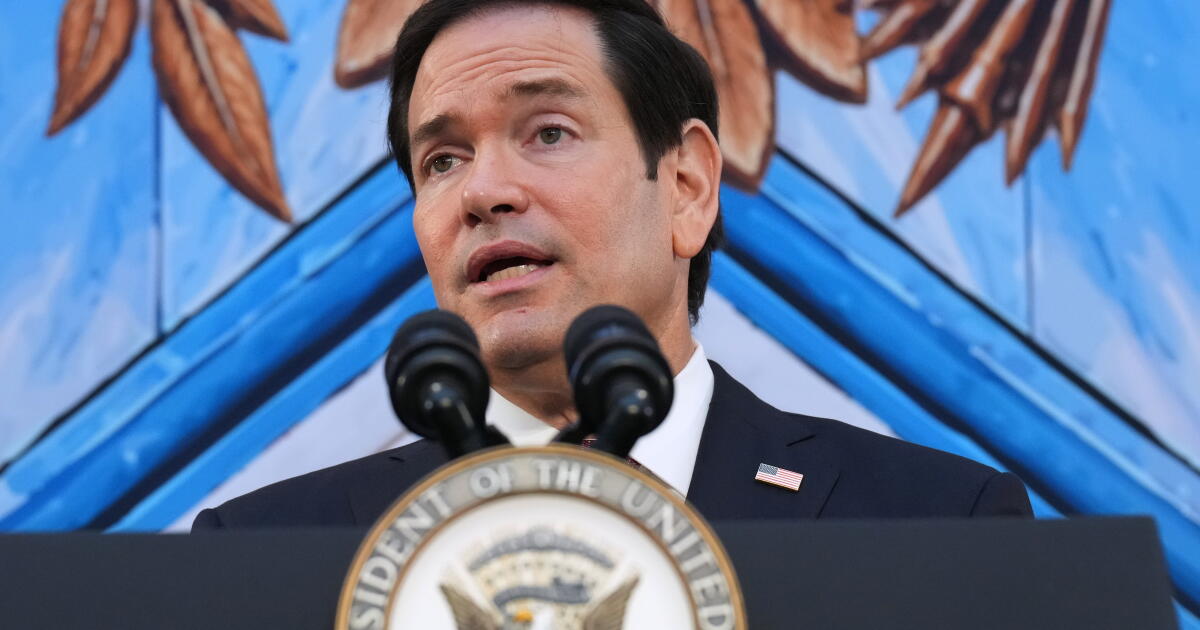
MIAMI — Secretary of State Marco Rubio begins a three-nation tour of Latin America on Tuesday, visiting U.S.-aligned conservative leaders as the Trump administration steps up military operations to combat drug trafficking and seeks further inroads in the Western Hemisphere aimed at improving America’s energy standing and combating illegal migration.
Just a week after sealing a massive oil deal with Venezuelan leaders after a U.S. military operation in January deposed then-leader Nicolás Maduro, Rubio was traveling to neighboring Colombia to meet President Abelardo de la Espriella. Colombia’s new leader has embraced President Trump’s policies on issues ranging from drugs to immigration and energy.
De la Espriella is one of a new generation of right-wing conservatives to win election and show support for Trump’s muscular approach to a region that had tilted leftward in recent decades.
In announcing the trip last week, which also will take Rubio to Ecuador and Peru, the State Department said Rubio and all three leaders would be discussing “enhanced cooperation in the shared fight against narcoterrorism, which threatens our hemisphere.”
Rubio visits as Latin American allies help expanded efforts to fight drug trafficking
The trip comes a day after U.S. forces intercepted and sank another Ecuadorian vessel that Washington accuses of links to the criminal group Los Choneros.
It was the latest action by the U.S. against boats and vessels in Latin America that it says are involved in drug trafficking. Expanded operations in the Caribbean Sea and eastern Pacific Ocean began a year ago, coinciding with an extreme crackdown on migrants in the U.S. illegally, many of them from Latin America.
The vessel sunk Monday was the fifth targeted by U.S. forces in the region in less than two weeks — in most cases with the cooperation or at least tacit support of the conservative leaders with whom Rubio will meet.
But unlike strikes on alleged drug-trafficking boats in Latin American waters that began in September 2025, those on board the vessel were removed and transferred to Ecuadorian authorities. It appears to be a shift after a series of strikes on boats over the year have killed at least 227 people, which the Trump administration accuses of being “narcoterrorists” but without providing evidence.
The U.S. military carried out at least two of those deadly strikes last month before starting to intercept floating refueling stations that it says support illicit drug trafficking operations at sea.
Colombia’s president vows to crack down on drug trafficking and immigration
Colombian Foreign Minister Omar Bula said in a video released Tuesday that Rubio’s visit marks the beginning of “rebuilding a strategic alliance with the United States, our main partner in the region.” He affirmed that Colombia will focus on discussing security, which includes combating drug trafficking, trade, and the defense of “shared values.”
De la Espriella has promised to take a hard line against drug traffickers and pledges to deport thousands of migrants who are in Colombia without residence permits, mainly Venezuelans, as he tries to make significant changes to the nation’s immigration policies that he says will reduce crime.
After taking office last month, De la Espriella brought Colombia into the Americas Counter Cartels Coalition and strengthened long-standing security cooperation with the United States, following strained relations during the 2022-2026 administration of progressive Gustavo Petro.
In just a month in office, De la Espriella has carried out at least three bombings against illegal armed groups and increased military operations. However, several minors have died during the bombings, which has drawn criticism from opposition leaders.
As part of his security strategy, he has focused his efforts on showcasing the results of military operations. However, there was criticism from the opposition and the state-run Ombudsman’s Office after De la Espriella displayed the bodies of alleged criminals wrapped in white bags on the ground alongside seized ammunition.
After winning the election, De la Espriella identified several leaders of Colombia’s illegal armed groups as “military targets.” Last week, he announced that the first of these, Naín Andrés Pérez Toncel, alias “Bendito Menor,” one of the leaders of the Self-Defense Forces of the Sierra Nevada, an illegal armed group in the north of the country, had been killed by police.
Nicknamed “El Tigre,” or The Tiger, the president has shifted the country’s security policy, closing the peace negotiations initiated by Petro during his administration, which he considers a failed effort that only increased violence in Colombia.
Colombia grapples with illegal armed groups vying for control of territories strategically important for drug trafficking and illegal mining, despite the fact that a decade ago the state signed a historic peace agreement with the FARC rebel group.
After meeting De la Espriella in Barranquilla on the Caribbean, where he will sign a civil nuclear cooperation deal and a critical minerals agreement, Rubio will make a brief stop in Quito.
He will meet Ecuadorian President Daniel Noboa whose government has steadily increased counternarcotics operations conducted with the U.S. military.
Rubio will round out the visit with a stop in Lima, Peru, where he will meet new President Keiko Fujimori — the daughter of former leader Alberto Fujimori — as the government also has taken a rightward turn.
Lee and Suárez write for the Associated Press. Suarez reported from Bogota, Colombia.