primary

Assembly OKs Bill to Move State’s Primary to March

Legislation to move the California presidential primary from early June to early March, in an effort to make the state a more important player in presidential politics, passed the Assembly on Wednesday.

The bill was sent to the Senate on a 43-22 vote. If approved there, it will go to Gov. Pete Wilson, who has said he favors moving up the primary date.

A March date would make California the first large-population state to hold a presidential primary or a caucus.

Assemblyman Jim Costa (D-Fresno), the measure’s author, said Californians have been “no more than onlookers” as presidential candidates have been selected in recent years. Costa said the California vote last affected the outcome of a Democratic primary in 1972, while the state has not played a major role in a Republican selection since the 1964 contest between Barry Goldwater and Nelson Rockefeller.

Assemblyman Richard Katz (D-Sylmar) said California “has been treated like a 24-hour ATM machine,” with candidates raising large amounts of money in this state but spending it on primaries and caucuses elsewhere.

Assemblyman Pat Nolan (R-Glendale) denounced the proposal as an “expensive boondoggle to allow people in this building to become kingmakers.” Nolan also said moving up the primary date would make it difficult for the Legislature or the courts to arrive at a reapportionment plan well in advance of the primary.

But Costa said a March primary would cost no more than an election in June and that “modern computers can draw reapportionment lines quickly.”

Forty Democrats were joined by three Republicans–Assemblymen Gerald N. Felando of San Pedro, David G. Kelley of Hemet and Charles W. Quackenbush of Saratoga–in supporting the bill. All 22 no votes were cast by Republicans.

Source link

Democrats tackle outside groups flooding their primaries with campaign cash

Democrats are struggling to come up for air after outside groups flooded their first round of midterm primaries with campaign cash.

As the Democratic Party fights to regain control of Congress, organizations affiliated with the American Israel Public Affairs Committee, cryptocurrency and artificial intelligence have dominated the airwaves, sometimes leaving candidates on the sidelines of their own campaigns.

Democratic pollster Zac McCrary said the primaries have “become proxy wars, and the candidates are almost afterthoughts in larger skirmishes.”

Now the Democratic National Committee is advancing a resolution at its New Orleans spring meeting to condemn the surge of spending that has scrambled its primaries and exacerbated tensions within the party.

Candidates who lost have pointed their fingers at special interests, blaming them for derailing their campaigns. Others who are still in the running are courting voters by denouncing deep-pocketed outside groups. Even those who have benefited from the spending have expressed concern.

“It’s definitely a brave new world,” McCrary said.

“We’re not talking about doubling of campaign expenditures,” he added. “We’re talking about 10 times or 20 times more.”

Dan Sena, a former executive director at the Democratic Congressional Campaign Committee, said party organizations are no longer the ones with the clout to push favored candidates.

“All that’s been completely smashed now,” Sena said. Even if Democrats regain control of the U.S. House, he warned that outside spending could damage the party in the long run.

Referring to House Minority Leader Hakeem Jeffries, he said, “You’re going to hand Jeffries a caucus that is divided.”

Democrats bear the brunt of big spending

So far this cycle, outside money in U.S. House races has largely targeted districts particularly friendly to Democrats, meaning the primaries will likely determine who will win the general election in November. After a record number of House members retired this year, many of those seats opened up for the first time in years, drawing dozens of Democratic hopefuls.

In Illinois, for example, there was more than $125 million in outside spending across five open Democratic primaries. In all but one of those congressional races, the outside spending exceeded candidate spending.

While it’s still early in the calendar, there are indicators that many more races could see big spending. Almost 40 seats have already seen more than $1 million in outside spending, according to Federal Election Commission filings.

In Illinois, the top three spenders in U.S. House races were groups affiliated with American Israel Public Affairs Committee, or AIPAC, according to AdImpact, which tracks ad buys in political races, followed by the cryptocurrency-affiliated Fairshake.

AIPAC was founded to support strong ties between the U.S. and Israel, a particularly controversial issue as Democratic hostility toward Israel rises over the war in Gaza. Some Democratic National Committee, or DNC, members wanted to call out AIPAC’s role in primaries, but the final resolution did not.

“We had various resolutions that focused on different industries and groups, and instead of going one-by-one, we passed a blanket repudiation,” DNC Chair Ken Martin said in a statement.

Campaign spending has divided Democrats

The latest DNC meeting marks another chapter in longstanding disputes between progressives and the party establishment.

Progressives want the party to adopt official language that all Democratic presidential contenders oppose money from dark-money groups, or super PACs that aren’t required to disclose their donors.

“It’s necessary that we actually have the party do something on this issue, not just say something,” said Larry Cohen, co-chair of Our Revolution, a progressive group founded by independent Sen. Bernie Sanders of Vermont, who caucuses with Democrats.

The resolution being advanced at the DNC meeting in New Orleans is viewed by progressives as a step toward that goal. However, some Democrats warn against weakening their candidates when facing a Republican Party that’s flush with cash.

“Provided that we don’t handcuff ourselves in the general elections — because if the Republicans are going to use dark money in general elections, we should be using our money in general elections, too — if you provide an even playing field, I think then that’s fine,” said Sen. Ruben Gallego, an Arizona Democrat. “But we just can’t be handcuffing ourselves in the general to lose races.”

Any DNC resolutions would not stop outside groups from surging funds into primary contests or general elections. But some Democrats believe the issue is core to the party’s values.

“We should eliminate any super PAC in a Democratic primary. And I think every presidential candidate in 2028 should pledge that they will not have any super PAC spending in a Democratic primary,” said Rep. Ro Khanna, a progressive and possible Democratic presidential contender who co-chaired Sanders’ 2020 presidential campaign.

“That should be a litmus test,” Khanna argued. “If you’re not willing to take that pledge, then you’re part of the problem.”

Askarinam, Brown and Sweedler write for the Associated Press. Brown reported from New York.

Source link

How big of a tent do Democrats want? Michigan’s Senate primary is testing the limits

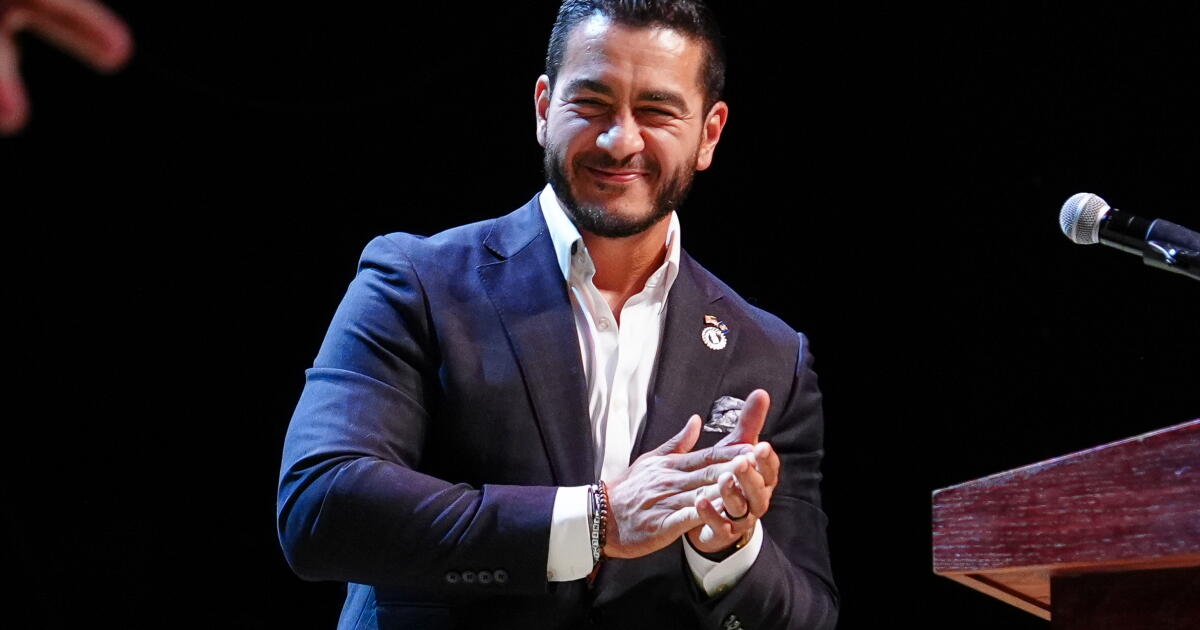
By the time Hasan Piker takes the microphone at two campaign events with a Senate candidate in Michigan on Tuesday, the popular but controversial online streamer will have already generated plenty of noise inside the Democratic Party.

Some have pitched him as a gateway to young people — particularly young men — who have drifted to the right in recent years. Others fear he is a sign of the party beholden to its extremes, pointing to inflammatory rhetoric like “Hamas is a thousand times better” than Israel, describing some Orthodox Jews as “inbred” and that “America deserved 9/11.”

Piker’s scheduled appearances with Abdul El-Sayed, a progressive candidate in the Democratic primary for U.S. Senate in Michigan, have catalyzed questions of how big a tent the party wants to build as it works to regain power in the midterm elections and win back the White House.

In an interview with the Associated Press, Piker cast the reaction as part of a broader fight for the party’s future.

“There is definitely, I think, a battle right now for who gets to be more representative of the national Democratic Party,” he said.

Piker remains largely unapologetic for his past remarks, although he’s said some were poorly worded. He called the renewed focus on them “totally ridiculous, especially considering that there are far more consequential things happening in the world right now.”

“The super wealthy are picking apart the scraps of the American carcass like a bunch of vultures, and some of the Democrats are talking about their affiliations with a Twitch streamer,” Piker said. “I think Americans understand that this is totally ridiculous.”

The 34-year-old Turkish American streamer has 3.1 million followers on Twitch and 1.8 million on YouTube, making him an influential voice in a shifting media landscape where mainstream outlets are losing clout. Unlike traditional podcasts, his livestreams are often unscripted and interactive. He has hosted prominent Democrats, including Rep. Alexandria Ocasio-Cortez and New York City Mayor Zohran Mamdani.

Piker said he is a “megaphone” for an angry electorate, and he believes the criticism that he faces is less about him personally and more about what he represents — a younger, more populist wing of the party.

“I think they find me to be a more appropriate target than to just actively disparage the voters,” he said.

El-Sayed, who has been backed by progressive Sen. Bernie Sanders, is attempting to channel that appeal in appearances at Michigan State University and the University of Michigan on Tuesday. A physician and former county health official, he is locked in a competitive Senate primary with U.S. Rep. Haley Stevens and state Sen. Mallory McMorrow. It’s a critical race for a seat being vacated by Democratic Sen. Gary Peters and the winner of the primary will likely face former Republican Rep. Mike Rogers.

The three candidates have differing views on U.S. foreign policy toward Israel. Both El-Sayed and McMorrow have described the war in Gaza as a genocide. El-Sayed wants to stop all military assistance while McMorrow has pushed for a two-state solution. Stevens has described herself as a “proud pro-Israel Democrat.”

McMorrow told Jewish Insider that Piker was someone who “says extremely offensive things in order to generate clicks and views and followers,” and she compared him to white supremacist Nick Fuentes. Trump’s decision to dine with Fuentes between his presidencies ignited a firestorm of controversy over his association with extreme voices on the right. Stevens said El-Sayed is “choosing to campaign with someone who has a history of antisemitic rhetoric.”

El-Sayed responded to the backlash over Piker by saying “if we want to have a conversation where we’re actually bringing people together about the things that we need and deserve, we’re gonna have to go to unlikely and uncommon places.”

Not everyone in the party wants to go to those places. Rep. Brad Schneider of Illinois, who chairs the moderate New Democratic Coalition and co-chairs the Congressional Jewish Caucus, called Piker “an unapologetic antisemite.”

“We are deeply disappointed by the decision to host a speaker at the University of Michigan with a documented record of antisemitic rhetoric,” said Rabbi Davey Rosen, the CEO of Michigan Hillel. “Such invitations normalize hate and contribute to a hostile environment for Jewish students.”

Piker said he is not antisemitic and describes himself as anti-Zionist. Hostility toward Israel has risen across the political spectrum and became a fault line within the Democratic Party during the war in Gaza.

Criticism has centered on Piker’s past remarks. After the Oct. 7 attack on Israel, Piker argued that whether reports of sexual violence are accurate “doesn’t change the dynamic” of the conflict. He has repeatedly said the core issue is Israel’s conduct in Gaza.

Piker has drawn backlash for a comment in which he said “America deserved 9/11,” made during a 2019 livestream while discussing U.S. foreign policy. Piker has said the remark was poorly worded and added in the AP interview that he “didn’t mean that Americans deserved to die.”

Cappelletti writes for the Associated Press.

Source link

CNN will televise California gubernatorial primary debate in May

CNN will host a California gubernatorial primary debate May 5.

The two-hour debate will take place at 6 p.m Pacific time at a venue in the Los Angeles area that is yet to be determined. CNN anchors Elex Michaelson and Kaitlan Collins will serve as moderators.

The debate will air live across CNN, CNN International, CNN en Español and, for viewers without cable, on CNN’s subscription streaming service.

Participating candidates must have at least 3% support among likely primary voters in two state polls or an average of 3% across two polls that meet CNN’s methodology standards. The polls must be released between Feb. 1 and April 27.

The candidates must also have raised, contributed or lent to their campaigns at least $1 million, based on publicly available data from the California secretary of state.

Candidates from both parties are eligible to participate due to California’s “jungle primary” system, in which all candidates appear on the same ballot regardless of political affiliation. The top two finishers advancing to a November runoff, even if they are both from the same party.

Two Republicans, conservative commentator Steve Hilton and Riverside County Sheriff Chad Bianco, are the leading candidates, according to a poll released Wednesday by UC Berkeley’s Institute of Governmental Studies and co-sponsored by The Times.

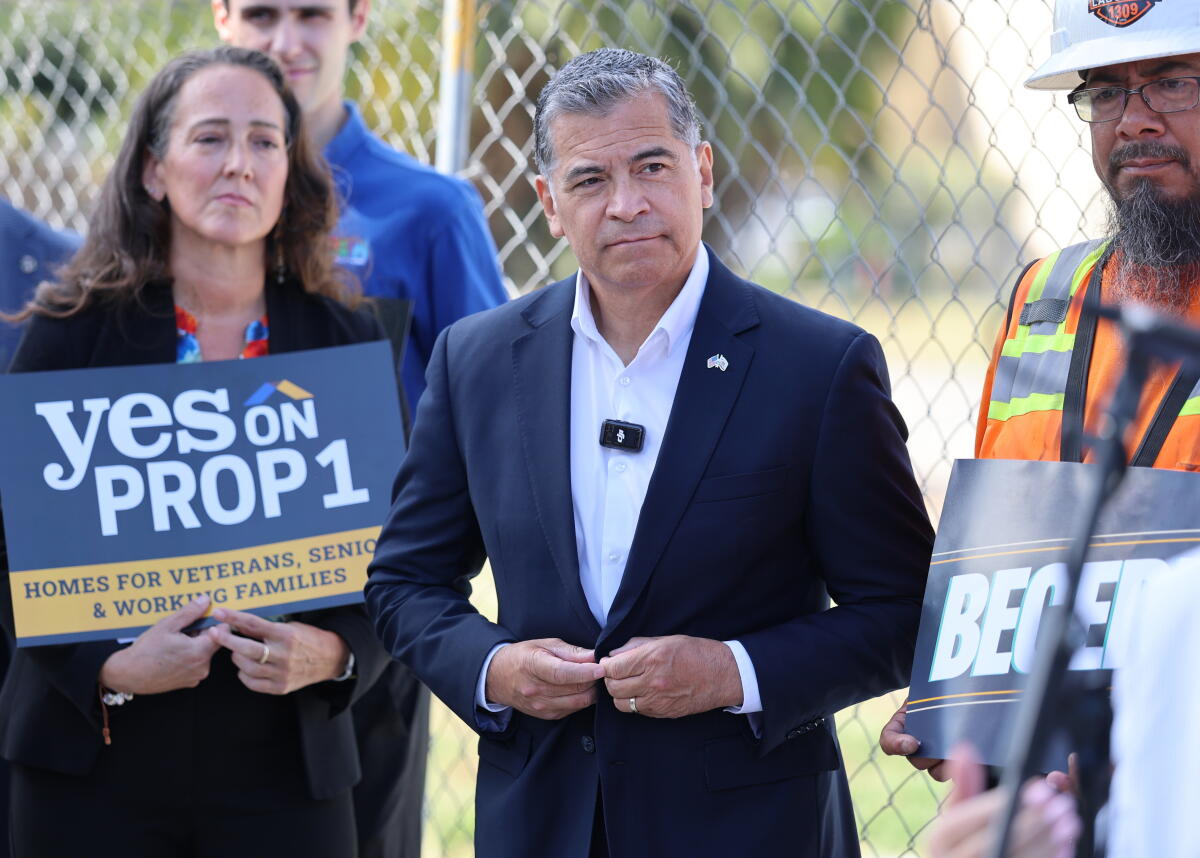
The poll showed six Democratic candidates currently qualifying for the debate under CNN’s standards: U.S. Rep. Eric Swalwell, former House Rep. Katie Porter, philanthropist Tom Steyer, former U.S. Secretary of Health and Human Services Xavier Becerra, former state Assembly Speaker Antonio Villaraigosa and San José Mayor Matt Mahan.

CNN typically does not carry debates involving candidates in statewide races, but the network believes that the California contest is significant enough for a national platform.

“One out of approximately every eight Americans lives in the Golden State and it is at the forefront of some of the most complex challenges of our time,” said David Chalian, CNN’s political director and Washington bureau chief. “California’s jungle primary system also allows for the debate to include a wide spectrum of viewpoints and proposals to tackle those challenges that will reverberate across the country in this pivotal election year.”

Source link

President Trump endorses Steve Hilton in the California governor’s race

President Trump endorsed conservative commentator Steve Hilton for California governor late Sunday night.

The endorsement could have a major impact on a race that remains up for grabs, with recent opinion polls showing Hilton and his top Republican rival, Riverside County Sheriff Chad Bianco, as top contenders in the 2026 contest.

“He is a truly fine man, one who has watched as this once great State has gone to Hell,” Trump posted on Truth Social, adding that he has known Hilton for many years.

Trump in his endorsement praised Hilton while attacking the record of California Gov. Gavin Newsom, using a derogatory name for the governor. Newsom is serving the last year of his final term as governor as he weighs running for president in 2028.

“Gavin Newscum and the Democrats have done an absolutely horrendous job. People are fleeing, crime is increasing, and Taxes are the highest of any State in the Country, maybe the World. Steve can turn it around, before it is too late, and, as President, I will help him to do so! With Federal help,” Trump said.

Despite California’s solidly Democratic electorate, a recent poll by UC Berkeley’s Institute of Governmental Studies found Hilton and Bianco leading the crowded field of candidates just months before the June 2 primary — leading to the possibility of Democrats being shut out of a November election that will determine California’s next governor. The crowded field of Democrats in the race has splintered their party’s voters, providing an opening for the Republicans, the poll showed.

Under the state’s top-two primary system, the top two candidates advance to the general election, regardless of their party affiliation.

If Trump’s endorsement leads to California Republican voters coalescing behind Hilton, severely damaging Bianco’s campaign, that likely would reduce the odds of two GOP candidates finishing in first and second place in the primary.

Trump’s endorsement came the day after Hilton and Bianco squared off in a testy debate in Rancho Mirage that was moderated by Richard Grenell, Trump’s former ambassador to Germany, and days before the state GOP meets in San Diego to consider an endorsement in the race.

On Saturday, Bianco said he suspected that Trump would weigh in on the race and that his team had been in talks with the president’s advisors.

“Of course, I would want him to support me. He’s the president of the United States,” Bianco said in an interview.

Hilton on Saturday questioned whether the president would weigh in on the race.

“I’ve said that I’d be honored to have the President’s endorsement. I think that the California Governor’s race is pretty low on his [agenda] right now,” he said in an interview. “I haven’t asked for that, and I’m not expecting him to weigh in.”

Jon Fleischman, the former executive director of the California Republican Party, wrote on Substack late Sunday that he believes that Trump’s endorsement will significantly boost Hilton’s support among GOP voters.

“This Timing Is Not Accidental,” he wrote, noting that while it was previously unclear whether either candidate could receive the 60% of delegate votes to secure the party nod at its upcoming convention. “Well, obviously this endorsement from the President for Hilton will supercharge his momentum going into the weekend convention”

Source link

Mark Sanford makes a last-minute bid to return to Congress — again — in South Carolina

Mark Sanford, the former South Carolina congressman and governor whose political ascendancy was stalled by a 2009 affair, wants to return to Congress — again.

Just hours ahead of the deadline to do so, Sanford filed candidacy paperwork with state officials to run in the June 9 GOP primary for South Carolina’s 1st District seat, which he has held twice before.

Sanford’s first political office was in the 1st District. An outsider with almost no name recognition, he navigated a primary for the open seat, finishing second before winning the runoff. He served for six years before his outside run at governor, again pushing his way through a crowded primary, then knocking off the last Democrat to hold the office.

But his eight years were overshadowed by the Appalachian Trail, which became shorthand for Sanford’s disappearance to go to Argentina to see his lover. Sanford’s wife, family and his staff didn’t know where he was.

Beating back both an ethics inquiry and calls to resign, Sanford held fast, leaving office on his own terms.

In 2013, Sanford won back his old seat, beating 15 other candidates in a primary and runoff. He won two more full terms before falling to a GOP challenger in 2018 who had President Trump’s backing.

The seat would go on to flip to Democratic hands that fall for the first time in decades, won back by GOP Rep. Nancy Mace in 2020. Mace is running for governor this year.

Sanford, 65, also briefly ran for president in 2020, challenging Trump for the nomination in what he characterized as a “long shot” effort around warnings about the national debt. Some, including Sanford’s former gubernatorial staffers, initially questioned whether the effort was a serious one, positing that it might be an effort to stay relevant after the 2018 defeat.

Sanford dropped out of the contest just ahead of the New Hampshire primary. Sanford’s home state would ultimately opt not to hold a 2020 GOP presidential primary, clearing the way for Trump’s nomination in South Carolina.

Sanford did not immediately return a message seeking comment on Monday. True to the themes that have dominated his political thinking, an email release on Sanford’s candidacy focused on the national debt, with the candidate saying he felt 1st District voters wanted a representative “who is an advocate for financial sanity that has been lost in Washington for all too long.“

Since leaving the U.S. House, Sanford has hung onto more than $1.3 million in a federal campaign account, funds that he can now use in a primary already crowded with multiple Republican and Democratic candidates.

Kinnard and Collins write for the Associated Press.

Source link

Column: The time has come to discard California’s top-two open primary

It’s probably time for California to reform the outdated “reform” that could be leading us into an absurd November election with no Democratic candidate for governor allowed on the ballot.

The absurdity is that Democratic voters outnumber Republicans in California by nearly 2 to 1. But the voters’ choices for governor could be restricted to just two Republicans — both disciples of President Trump, who is despised in this state.

We’d be electing our first GOP governor in 20 years.

The odds against this scenario are high. But it’s an increasing possibility.

It’s conceivable because of a crowded Democratic field of candidates and a 2010 reform placed on the ballot after a late-night deal demanded by a Republican state senator — Abel Maldonado of Santa Maria — in exchange for his vote to pass a stalled budget and tax increase.

The compromise led to voter approval of California’s unique top-two open primary. The top two vote-getters advance to the November runoff, regardless of party. It’s called an open primary because voters can choose any candidate, no matter their party.

So two Democrats or two Republicans might be the only choices in November — in statewide, congressional and legislative races. That doesn’t happen often, but it has a few times.

It doesn’t reflect the current reality of American politics, with voters sharply polarized between Democrats and Republicans. They want to vote for someone from their own party and are not interested in choosing among two perceived evils.

We should consider returning to a primary system that produces party nominees — one Democrat and one Republican — to give voters a more varied selection in November. Maybe even allow a third or fourth candidate to emerge from minority parties.

It’s too late to change for this year, but we could for future elections. It would require voter approval.

For the present, we’re saddled with the unwieldy dilemma of there being eight major Democratic candidates and just two Republicans. If the combined Democratic vote is splintered among the eight Democrats in the June 2 primary, the two Republicans could end up finishing first and second.

Political data guru Paul Mitchell, who has been running primary election simulations, pegs the chances of a Democratic lockout at 20%.

“There’s only a one-in-five chance, but you don’t want to see a one-in-five chance with something this important,” says the statistician, who works mostly for Democrats.

“To be safe, the Democratic Party needs to have a candidate polling at 20% or more. And none of the Democratic candidates are half way there. It’s scary.”

Mitchell bases his assessment on a poll released last week by state Democratic chairman Rusty Hicks, part of an effort to pressure low-polling Democratic candidates to step out of the race.

The survey showed both Republicans leading the field — former Fox News host Steve Hilton with 16% and Riverside County Sheriff Chad Bianco at 14%. At 10% each were three Democrats: Rep. Eric Swalwell of the San Francisco Bay Area, former Orange County Rep. Katie Porter and wealthy climate activist Tom Steyer. No other Democrat registered above 3%. There were 24% undecided.

The straggling candidates need to ask themselves, Hicks says: “if you’re polling 1% to 2%, do you have a path to get to 20?

“All of these candidates are experienced. They know in their gut when they’re viable or not.”

Mitchell says, “A lot of folks are now looking at why we have a wacky system that causes [a party chair] to tell candidates they should drop out of a race.”

Yes, it does smack of being undemocratic even if it’s practical politics.

Mitchell says the top-two system should be scrapped.

Hicks agrees.

“Things that were promised [by top-two promoters] have not been delivered,” the state party chairman told me. “It’s time to consider going back to the kind of system voters like.”

Appealing to the middle

I called around and got different views from veteran Democratic strategists.

“It was sold as reform, but it’s not reform. It’s a distortion of the process,” one former political consultant told me, asking for anonymity because of his current employment. “Everybody thought it would yield more moderate, consensus candidates, but that’s not what’s happening.”

Consultant Steve Maviglito, who ran the 2010 campaign against the top-two system, says it’s undemocratic because it risks not giving voters “a chance to cast a ballot for a candidate they have some belief in. That’s what our system is built on.”

The grand theory, he notes, was that candidates would be forced to appeal to the middle.

“Just the opposite,” Maviglio argues. “Democrats want a strong Democrat and Republicans want a strong Republican. The only thing in the middle of the road is a dead armadillo.”

Moreover, he points out, the top-two system has been manipulated by Democrats — including Sen. Adam Schiff and Gov. Gavin Newsom — to boost a Republican in the primary to guarantee a non-competitive, easy election in November.

That’s a bit sleazy.

“The top-two has actually been hugely good to Democrats,” says Democratic strategist Garry South. “They need to think this through. Since the top-two primary was implemented, there have only been three same-party runoffs for state office out of 26 races — all three of them Democrats.

“The current specter of two Republicans [in November] is not the fault of the top-two primary system. It’s due to every Democrat and their brother — or sister — taking a flier and filing for governor.”

“Never,” replies consultant David Townsend when asked whether the top-two primary should be junked. He ran the ballot campaign authorizing it. Townsend insists today’s Legislature contains more moderate Democrats because of the top-two and that they provide a check on the liberal majority.

That’s true to some degree.

OK, we could leave the top-two system for the Legislature and scuttle it for statewide offices.

The thought of being limited to a choice between two Republicans — or two Democrats — for governor is unacceptable and un-American.

You’re reading the L.A. Times Politics newsletter

George Skelton and Michael Wilner cover the insights, legislation, players and politics you need to know. In your inbox Monday and Thursday mornings.

What else you should be reading

The must-read: USC cancels gubernatorial debate amid uproar over candidates of color being excluded

The L.A. Times Special: It’s been decades since California had a governor’s race like this one. That was a shocker

Until next week,
George Skelton


Was this newsletter forwarded to you? Sign up here to get it in your inbox.

Source link

Yes, a Republican could be next governor of California. And a recall would begin immediately

Once upon a time in California, I went to the Orange County fairgrounds to watch Arnold Schwarzenegger give the signal for a wrecking ball to drop onto a vehicle.

The audience went wild, and Schwarzenegger went on to become governor and deliver on his promise to roll back a car tax increase, thereby blowing a $4-billion hole in the state budget.

I think it’s fair to say that in the current gubernatorial campaign season, the excitement level is several decibels below what we experienced in 2003. But once again, it’s fair to say we’ve not seen anything quite like this year’s derby.

“There’s no historical precedent in modern California history for a governor’s race with such a large field or such an amorphous field of candidates,” said longtime political observer Dan Schnur. “Unless you’re paying very close attention, it feels like a big multi-headed political blob.”

To break that down, eight Democrats and two Republicans are running in the primary, and here’s the craziest thing about that:

The two Republicans could be the top two vote-getters because the Democrats have arranged themselves into a circular firing squad. While the Dems scramble for votes in the June 2 primary, the two Republicans lead in the polls because they’re splitting the GOP vote, and under the rules of the top-two primary, they could face off in the November election.

That means that California, which is one of the bluest states in the country and has nearly twice as many registered Democrats as Republicans, could end up with a Republican governor, which would be like having a Dodgers manager who wears a Yankees jersey in the dugout.

And by the way, if it happens, the Republican would be able to shuffle regulatory boards, attempt to squeeze budgets and create a bit of chaos, but still not get much accomplished because of Democratic super-majorities in the Senate and Assembly.

And he would be targeted for recall even before he takes office. (More on that in a minute.)

There is a way for the Democrats to avoid this humiliation, but they can’t seem to agree on anything at the moment. Party leaders have all but asked the candidates at the bottom of the polls to bow out, but understandably the response has been, “Why me? I’m no worse than the others.”

USC decided to host a debate night, a simple enough proposition, but then flubbed the deal by leaving four candidates off the invitation list — four candidates of color. A kerfuffle followed, and the debate was dumped, and an attempt to let everyone into the party fell apart.

So now what?

It’s possible the Dems will huddle around one or two candidates who then move up in the polls and remove the threat of the unthinkable — two Republicans head-to-head. That would be Riverside County Sheriff Chad Bianco going against former Fox TV host Steve Hilton.

It’s also possible the Dems will play dirty and either spend money to promote one of the two Republican candidates or torpedo one of them. All they want, at the moment, is for a Democrat to make it past the primary, because that would all but ensure victory in November, given voter registration advantages.

And then, if that doesn’t work, there’s the recall scenario.

“You could shut it down probably within five or six months,” said Mike Madrid, a longtime California GOP political consultant.

“It would surely happen,” said Rob Stutzman, a GOP strategist who helped Schwarzenegger knock Gov. Gray Davis out of office, and take his job, in the 2003 recall.

A wealthy Democratic donor could bankroll the recall campaign, Stutzman said. Or public employee unions might put up the money, given that a Republican winner is likely to create a state version of Elon Musk’s ham-handed attempt to fire nearly everyone on the federal payroll.

“The pitch,” Stutzman said of the recall strategy in an email, would be that “Trump still looms and CA must resist, and a GOP gov is a fluke of weird election law. Difficult to imagine it wouldn’t succeed.”

I thought of one more approach the Democrats could use to make sure at least one of them is on the ballot in November. Tom Steyer, a leader for many years on one of the most critical issues in California and the world, climate change, has already spent tens of millions of dollars on TV ads that run about every two minutes, promoting him as the best candidate for governor.

They’re so repetitious, you can’t help but tune them out.

But everyone would pay close attention if Steyer instead ran ads offering incentives for either Bianco or Hilton to leave the state. Steyer could offer $10 million cash for Bianco to move to Hawaii, and maybe throw in a beach house. He could buy a private jet for Hilton to take him back to his native Britain. Every day, there could be new ads upping the ante until one of them leaves the Golden State.

Wouldn’t that be a better use of Steyer’s money? It might even get him elected.

To be honest, having some honest pushback against Democratic authority in California wouldn’t be a terrible thing. It’s not as if Gov. Gavin Newsom and other Democrats are winning the battle against homelessness, housing shortages, affordability and other big challenges, and voters understandably want more — way more — for their tax dollars.

An experienced, no-nonsense, sensible, fiscally conservative GOP candidate would do the state good.

The problem is that the two Republicans in the running, Bianco and Hilton, are Trump toadies.

In an embarrassingly amateurish political stunt, Bianco blew the president a kiss and all but begged for an endorsement by seizing 650,000 ballots from last November’s election to determine whether they were fraudulently counted.

Hilton recently said in an interview with ABC’s Eyewitness News 7 that he believes “everybody supports” Trump’s immigration policies.

Hilton might have missed the news that U.S.-born residents are carrying their passports in case they’re targeted by skin color. That Californians by the thousands have joined the resistance. That despite claims, most deportees don’t have criminal records. And that even some of the state’s GOP lawmakers have begged Trump to stop raiding industries that rely on immigrant help (and are often owned by Republicans).

And by the way, is this a smart time for a GOP candidate in California to be doing his best Trump impression?

The president’s popularity is down, consumer prices are up, he’s shamelessly pardoned drug lords and Jan. 6 barbarians, he thinks the presidency is a game of Battleship after promising to keep us out of wars, gas prices are sky high, he just said he was glad that Vietnam War hero and former FBI Director Robert Mueller had died, and he’s playing golf all day as if everything’s hunky dory.

Like I said, there’s not a big-name character like Schwarzenegger in the race, but that doesn’t mean there aren’t good options. If you like Bianco or Hilton, so be it. Otherwise I suggest you read up on the other eight:

Steyer, Supt. of Public Instruction Tony Thurmond, former L.A. Mayor and legislative leader Antonio Villaraigosa, former Rep. Katie Porter, former state attorney general and U.S. Health and Human Services Secretary Xavier Becerra, former State Controller Betty Yee, San José Mayor Matt Mahan, and U.S. Rep. Eric Swalwell.

And you better act fast.

The primary is less than 10 weeks away.

steve.lopez@latimes.com

Source link

Contributor: Kamala Harris is polling well, which signifies nothing

When I read all the hype being heaped on Kamala Harris’ lead in early polls for the 2028 Democratic nomination, I have to chuckle to myself.

The release of a Rasmussen Reports poll in February was titled, “Kamala Harris Still Leads 2028 Field for Democrats.” One headline in the Hill predicted, “Kamala Harris may yet be the Democratic nominee in 2028.” A Washington Examiner piece about polling warned, “Democrats won’t get rid of Kamala Harris that easily for 2028.”

I chuckle not because I don’t believe the numbers, but because I don’t believe any poll this far out in an open contest is meaningful, let alone determinative. I’ve seen this movie before, and it didn’t end well.

In 2003, after managing the successful 2002 reelection campaign of California Gov. Gray Davis, I signed on as an advisor to the presidential campaign of Connecticut Sen. Joseph Lieberman — who, I needn’t remind anyone, had been the Democratic nominee for vice president in the 2000 election, which he and Al Gore lost in a nail-biter to George W. Bush.

Based simply on his high name identification from that hellzapoppin’ race, and the fact his name had been on the ballot in all 50 states just two years before, Lieberman initially led the Democratic field quite handily in almost every national poll.

An ABC News/Washington Post survey in January 2003 found Lieberman leading the Democratic field with 27%. A Gallup poll from that same month also placed him first, ahead of both John Kerry and Richard Gephardt.

A Pew poll in the summer of 2003 also found Lieberman atop the field, as the best-known candidate at 85% name recognition, and 58% support, ahead of Kerry, Gephardt and Howard Dean.

Boy, did we brag about Lieberman’s lead at every stop and in every press release. But in the end, the promising early numbers meant nothing. When actual votes were cast, Lieberman totally flamed out, receiving a measly 8.9% of the vote in the critical first primary in New Hampshire, finishing dead last, and dropping out of the race in February 2004, having lost every primary and caucus up to that point.

Why? A lot of reasons, including mistakes made by the candidate and campaign. But fundamentally because, when Democrats started to take a close look at and assess the full field, they relegated Lieberman to the status of a loser, and they wanted to move on. We heard a lot of, “He had his chance and lost.” Does Harris come to mind?

The fact is, we Democrats tend to put defeated presidential nominees in the rear-view mirror pretty quickly. Think of Michael Dukakis, Gore and Kerry. And let’s not forget, Harris obtaining the nomination in 2024 was a fluke; she didn’t compete in one primary or receive one primary vote. The first time she ran for president, in the 2020 cycle, she also didn’t win one primary or receive a single primary vote, because she ran a bad campaign and hightailed it out of the race before a single vote was cast. Two strikes and you’re out?

We Democrats just don’t renominate losers. The last time we did it was exactly 70 — yes, 70 — years ago, with Adlai Stevenson in 1956 after he had lost the 1952 presidential race to Dwight Eisenhower. Stevenson rewarded Democrats for this recycling effort by losing to Eisenhower a second time — by an even worse margin. Democrats learned their lesson: Reheating doesn’t work with failed candidates.

And, come on, Harris not only lost to Trump, not only lost all seven swing states, but was the first Democratic presidential nominee in 20 years to lose the popular vote. And her weak showing also helped Republicans wrest control of the Senate from Democrats. We’re supposed to imagine that’s a credible record on which to run again for the nomination?

All of these breathless stories about Harris leading the field nationally also never mention her perilous standing in her own home state of California. A Berkeley IGS survey in August revealed that by a margin of 18 percentage points, even her fellow Democrats in California did not want her to run again. A Politico poll this month showed Gov. Gavin Newsom with a 2-to-1 lead in California among voters leaning toward voting in the 2028 Democratic primary.

So have fun, Kamala Harris, enjoying your name-ID high while it lasts (although maybe a mite longer than your 107-day presidential effort).

Garry South is a Democratic strategist who has managed four campaigns for governor of California and played significant roles in three presidential campaigns, including that of Al Gore.

Source link

Illinois primary: Lt. Gov. Stratton wins Democratic race for Senate seat

March 18 (UPI) — Illinois Lt. Gov. Juliana Stratton claimed victory late Tuesday in a close race to be the Democratic Senate nominee in November, as voters headed to the polls to cast ballots in primary elections.

Dozens of local and federal contests were held throughout the state on a busy election Tuesday that included 17 U.S. House races but only one for the Senate — a seat being left vacant by the retiring Dick Durbin, the six-term senator and the No. 2 Democrat in the Senate.

Stratton claimed victory in a packed race for the Democratic nomination for Durbin’s seat.

“We did it,” she told supporters in her victory speech in Chicago.

“Tonight, we showed what’s possible when you listen to the people and give the people what they want.”

Stratton ran on a progressive platform of securing a single-payer healthcare system and a $25 minimum wage, while rejecting all corporate Political Action Committee funding during her campaign.

U.S. Reps. Raja Krishnamoorthi and Robin Kelly emerged as her main political rivals.

Krishnamoorthi told his supporters in a brief speech Tuesday night at the Westin Hotel in Chicago’s River North neighborhood that he had called Stratton to congratulate her on winning the primary.

“I offered her my full support on the road ahead,” he said.

Krishnamoorthi positioned himself as the anti-President Donald Trump Democrat, often railing against the Republican leader and campaigning on his so-called Trump accountability plan of reforms to rein in presidential power to prevent abuses of power.

“Obviously, this is not the result we sought, but unlike Donald Trump, I’m not going to question the outcome,” he said.

“Now we must come together as Democrats and as Americans to make sure that we return to principles that made us a beacon of freedom and opportunity for the world.”

Kelly conceded online.

“Tonight’s isn’t the outcome we wanted, but I am so proud of us, and I still believe in putting people over profits,” she said in a statement.

“You want to know that your elected leaders are fighting for YOU, not distracted by outside noise. I’ll continue that fight in the U.S. house. I still have your back.”

As of early Wednesday, when an estimated 92% of the ballots had been counted, Stratton had secured about 40.1% of the vote share to Krishnamoorthi’s 33.2% and Kelly’s 18.1%, CNN and CBS News reported.

In a statement, Durbin, who did not endorse any candidate in the race, said he looked forward to “passing the torch” to Stratton when his term ends, while congratulating Krishnamoorthi and Kelly.

“Now our attention must turn to ensuring Juliana wins the general election on November 3,” he said. “With Donald Trump in the White House for another two years, the challenges facing our country and state will continue to be historic and unprecedented. We need Juliana Stratton fighting alongside Sen. [Tammy] Duckworth every day.”

On the GOP side, Don Tracy, former Illinois Republican Party chairman, was poised to seek Durbin’s vacant Senate seat as his party’s nominee.

Tracy campaigned in the blue state by positioning himself as a center-right candidate at a time of extremism in his party, stating on his website that he would seek “common sense solutions over extreme agendas.”

He also argued to be a voice for the entire state, voicing concerns that all federal elections had become contests for Chicago and Cook County.

“It’s time to make Illinois a two-party state again,” he said in a statement claiming victory on Facebook, while bashing Stratton as “the most extreme far-left U.S. Senate candidate this state has ever seen.”

“I will push for common sense solutions that make life more affordable for working families. I will work for everyday Illinoisans, not special interests or extreme agendas.”

Tracy was poised to win early Wednesday with nearly 40% of the vote share compared to lawyer Jeannie Evans’ nearly 23%, the closest runner-up, CNN and CBS News reported.

Evans campaigned on being a political outsider and a conservative Republican, while championing lowering costs and fighting crime.

In the governor’s race, Illinois is poised to have a rematch of 2022, when Gov. JB Pritzker, a Democrat, beat Republican farmer Darren Bailey.

While Pritzker ran uncontested, Bailey was seemingly coasting to the GOP nomination in a landslide.

With 94% of ballots counted, Bailey had won 53.5% of the vote share to runner-up Ted Dabrowski’s 28.8%, according to CNN and CBS News tallies.

“The first fight has been won, but make no mistake, we are just getting warmed up,” he said in his victory speech.

“Best birthday ever.”

Bailey ran on a law-and-order campaign that included lowering property taxes, cutting government spending and cracking down on repeated criminal offenders.

Source link

Illinois primary Tuesday looks to fill six open congressional seats

March 16 (UPI) — Illinois will have busy primary elections Tuesday as voters select a candidate to replace retiring U.S. Sen. Dick Durbin and fill five U.S. House seats without incumbents.

Three House seats are open due to retirements, and two others have incumbents running for Senate. All seats are expected to be filled with Democrats.

There will also be primaries for governor of the state, but there are no Democrats running against incumbent Democrat JB Pritzker.

Illinois voters “have an opportunity for generational turnover — where a boomer senator is stepping down, and you’ve got three Gen-Xers, who’ve been around on the scene for quite some time, trying to get the seat,” Northwestern University political science professor and Democratic strategist Alvin Tillery told ABC News. Tillery is not involved in any Illinois races.

“It could be another 20 or 30 years before we have a Senate race this competitive in Illinois,” he added.

Key Republicans running for Senate are attorney Jeannie Evans and former Illinois GOP chair Don Tracy.

There are 11 Democrats vying for the seat, but the top three are Rep. Raja Krishnamoorthi, Lt. Gov. Juliana Stratton and Rep. Robin Kelly.

Krishnamoorthi has raised the most money — more than $30 million — while Stratton has the benefit of Pritzker’s endorsement.

All three have run on fighting President Donald Trump and opposing Immigrations and Customs Enforcement, which operated heavily in Chicago during Operation Midway Blitz.

“Fighting ICE has become synonymous with opposing and fighting back against Trump,” Brandon Davis, a Democratic consultant who worked on Chicago Mayor Brandon Johnson’s 2023 campaign, told NBC News.

“I’m the only one with the background of standing up to bullies and bad actors, and successfully doing so, and now I have to stand up to Donald Trump,” Krishnamoorthi told ABC News in an interview. He would be the second Indian-American to hold a seat in the Senate.

Stratton is the first Black lieutenant governor in Illinois and told ABC News: “I have the best path in the nation to elect another Black woman to the United States Senate.”

Kelly has the endorsement of longtime Congressional Black Caucus member Rep. Jim Clyburn, D-S.C. He campaigned with Kelly on Tuesday, telling WLS-TV she is “our go-to person on healthcare issues.”

But all three have focused their ads against ICE.

Stratton has said she wants to “abolish” the agency because, “I don’t believe that this agency can be reformed. I want ICE and CBP out of our American cities.”

Krishnamoorthi said he wants to “abolish Trump’s ICE.” He explained he’s pushing for reforms to stop them from wearing masks and stop “roving gangs of ICE and CBP agents stirring up trouble in our cities.”

Kelly has called to dismantle ICE and the whole of the Department of Homeland Security, saying it’s “too big, too unwieldy and they’re not accountable.”

Source link