primary election

What the primary chaos says about California Democrats

The first rule of a primary election is: Don’t make too much of the results.

The intrepid folks who bother to cast a ballot in these first-round races are largely a group of engaged voters, and drawing conclusions from such a narrow minority is a losing game.

So however the final June results tally out, the lessons learned won’t easily translate to the larger electorate that will almost surely show up in November. But if this election doesn’t tell us much about what fall voters will do, it does tell us something about the Democratic Party that dominates this state: It’s chaotic, to put it gently. And no, that’s not entirely the fault of the “jungle” primary.

Traditional rules seem to have broken down (not a bad thing) and new ones haven’t yet emerged. The old guard has lost control, and maybe vision, and the result is more candidates willing to sidestep seniority and a wait-your-turn mentality to try their luck — especially younger progressives.

Sometimes that chutzpah works, sometimes it doesn’t, but it’s a mirror of the national trend of Democratic infighting and a glimpse into just how fragmented the party has become as it tries to figure out who it stands for and who it supports before the 2028 presidential election.

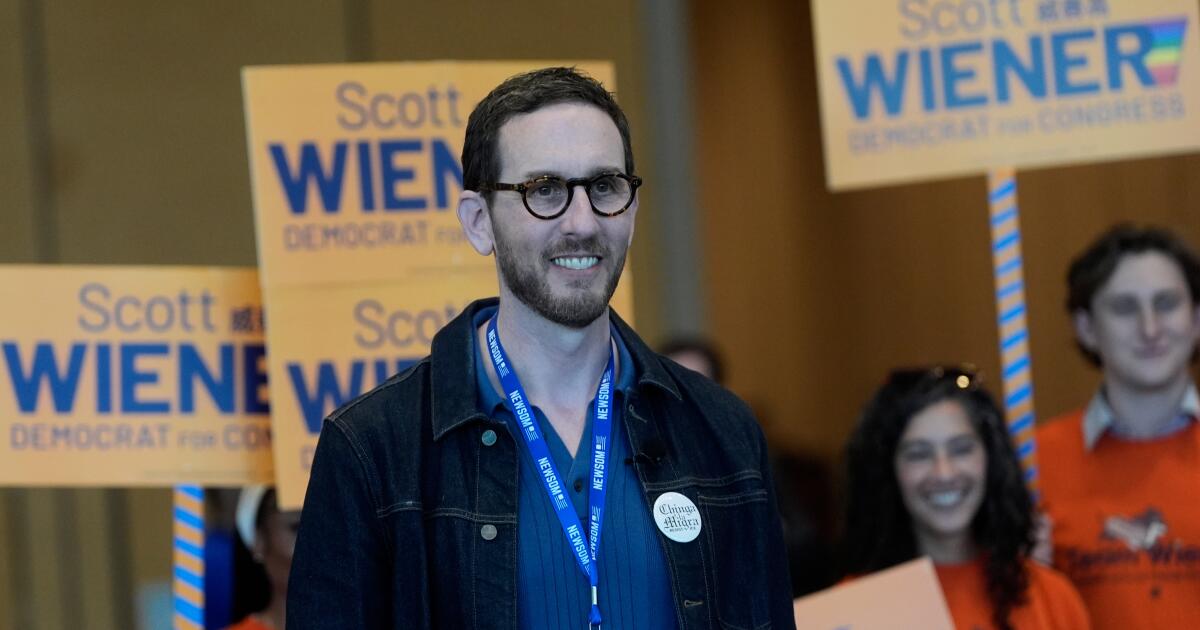
“I feel like I’m definitely running against major institutional forces, but that’s how it is,” state Sen. Scott Wiener told me recently. “At times we see sort of a little bit of a fortress mentality, and other perspectives are not welcome, and younger folks, newer voices are not welcome, and and that’s a dynamic that plays out in a lot of different places.”

Wiener, who could be considered king of the line-jumpers, just took the top spot in the San Francisco-centered race to represent the 11th Congressional District, the seat held by Nancy Pelosi since 1987, when Wiener was 17.

By most accounts, Pelosi and Wiener had a mostly cordial relationship until last year, when he entered the race before she announced her retirement. Though Wiener had been clear for years that he planned such a run when Pelosi stepped down, Pelosi is an icon in the city, beloved by constituents and uncontested as queen of the old guard.

Announcing his campaign before she officially made that decision — or had the chance to choose her successor — sent shock waves through the political firmament. When Pelosi endorsed Supervisor Connie Chan in May, it was seen by many as a sign of her displeasure. Chan, who had struggled to gain traction in the primary, came in second with the Pelosi boost and will face Wiener in November.

Across the state, there were other races with upstart contenders. In Southern California, Jake Levine, a progressive Democrat who served in the Obama White House, took on incumbent Brad Sherman. Sherman, who at 71 has served almost 30 years in Congress, resoundingly beat out Levine by more than 20 points.

In Sacramento, there is Mai Vang, a progressive City Council member, who is challenging Rep. Doris Matsui, another member of the old guard royalty. Vang is in a tie for second place with a Republican contender as remaining votes are counted.

And of course, there is the governor’s race itself, which included a field so determined and uncontrollable even before the fiasco of Eric Swalwell’s sexual misconduct scandal that the state Democratic Party started putting out its own polling in a seeming bid to convince some blue contenders to drop out. It didn’t work. Notably, progressive Katie Porter and moderate San José Mayor Matt Mahan stuck in until the bitter end. But old guard candidate Xavier Becerra came out on top.

If these races have a lesson, it’s that different Democratic voters want different things, but the party hasn’t figured out how to embrace that other than offering up the moderate middle ground.

“This is a big question to this Democratic establishment, about how big of a tent they want to build,” said Irene Kao of Courage California, a progressive advocacy organization.

She said that it “bodes well” that so many strong progressive challengers came out for the primary, because it allows a chance for candidates outside the party power structure to find an audience with voters, even if they are ultimately unsuccessful.

And where voters go, the party will eventually be forced to follow. That doesn’t necessarily mean a more progressive Democratic Party, but it likely means a more inclusive one if they want to lure the kind of low-information and low-propensity voters who make or break a general election.

“People are sick of the games, and sick of people trying to just maneuver things to get their own person in,” Wiener said. “People want to have choices.”
Source link

L.A. divided: Bass, Pratt and Raman dominated in different parts of the city

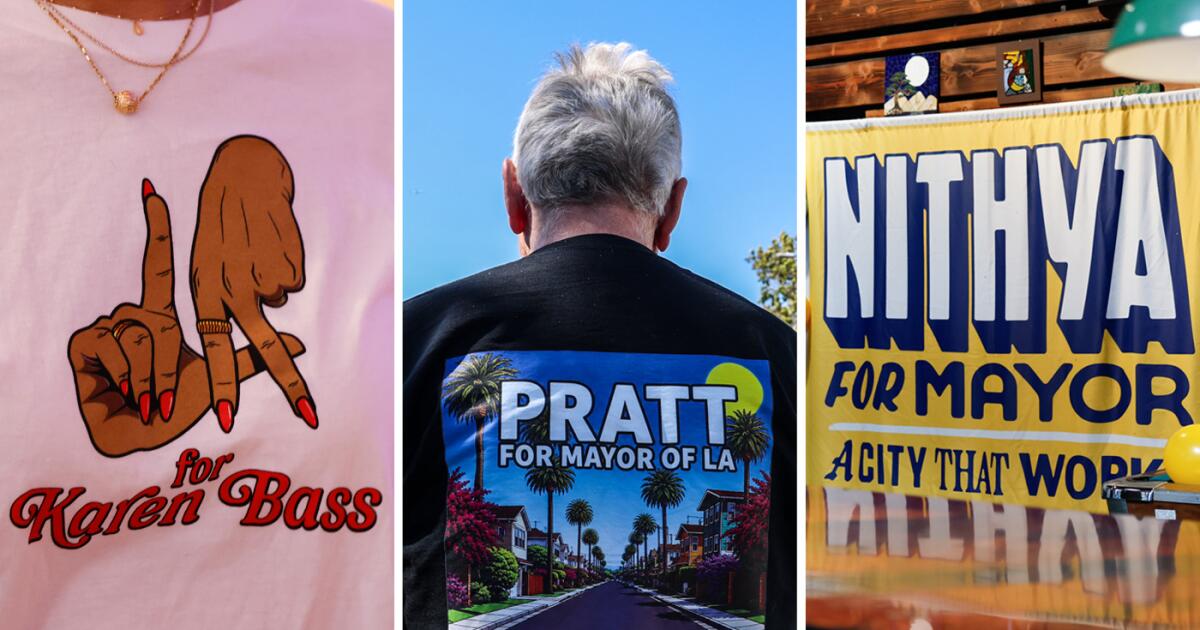
Mayor Karen Bass ran the table in South Los Angeles, Spencer Pratt found strong support from his Westside base, and Nithya Raman racked up votes in Echo Park and other neighborhoods with a concentration of renters, according to a Times analysis of partial precinct-level results from this week’s primary election.

The Times analysis, based on an estimated 62% of the ballots counted so far, found that Pratt was favored in many of the same neighborhoods that voted for mayoral candidate Rick Caruso in 2022, while Raman made inroads in progressive areas dominated by Bass four years ago.

Bass found support in neighborhoods along much of the Harbor and Santa Monica freeway corridors, along with central San Fernando Valley communities from Van Nuys to Arleta.

With much of the vote left to be counted, a map prepared by The Times showing how neighborhoods voted represents a snapshot of an election still very much underway. Bass garnered enough votes on election night to qualify for a Nov. 3 runoff, the Associated Press determined, but votes are still being tallied and it’s not yet clear if she will face Pratt or Raman.

Early returns show Pratt with a significant lead over Raman, but some analysts expect the remaining ballots to lean Democratic, as many left-of-center voters held onto their mail-in ballots until the last minute as they waited to choose between Democratic gubernatorial candidates.

Not surprisingly, Pratt did well in the Pacific Palisades, where his home burned down in the 2025 fire, garnering 60% in one precinct. The next closest candidate there was Adam Miller at 14%.

A registered Republican, Pratt also led in many of the more conservative neighborhoods that were dominated in the 2022 mayoral primary by Caruso, a former Republican who switched to being a Democrat before running for mayor. Pratt was ahead in much of the Westside and the West Valley, the analysis found, including much of Woodland Hills, Encino, West Hills and Chatsworth — just like Caruso four years ago.

“The Pratt vote mirrors a tremendous amount of the Rick Caruso vote: geographically, demographically and ideologically,” said Dave Jacobson, a Democratic consultant and co-founder of J&Z Strategies.

Certain Valley neighborhoods that supported Caruso didn’t go to Pratt, though, as Bass made inroads in areas including Northridge and North Hills, extending her support farther west into the Valley than she did in her last primary.

At the same time, Pratt appeared poised to win some neighborhoods that Bass carried in 2022. He was leading in Studio City and Hancock Park, according to the preliminary returns in areas where Bass led Caruso after the primary.

Bass’ stronghold in South L.A.

Bass’ support eroded to some extent since 2022, when she secured 43% of the vote in the primary against Caruso, then-Councilmember Kevin de Leon and leftist Gina Viola, the analysis based on partial returns shows. Even so, Bass outperformed her 2022 primary results in many areas south of the Santa Monica Freeway, though the precincts are slightly different than they were four years ago, making direct comparisons difficult.

In one precinct in Gramercy Park, Bass picked up 82% of the vote so far — up from a similar precinct where she won about 75% of the vote in 2022. Part of Bass’ dominance in the area could have to do with the fact that Pratt and Raman didn’t perform as well as Caruso did in many of these South L.A. neighborhoods.

Still, in some parts of the neighborhood, Bass underperformed 2022, though she still won more than half the vote.

In a Baldwin Hills neighborhood precinct where she won 77% of the vote last time, Bass was down to about 64% this year so far, as Raman took 20% of the precinct and Pratt had 9%. In 2022, Caruso won less than 13% of the area.

Bill Carrick, a longtime Democratic consultant, said it was unsurprising to see Bass’ support continue to be strong in South L.A.

“She’s been in the community there, lived there a long time and represented them in various capacities,” he said. “She’s a pretty well-known figure. She’s tied into all the networks.”

The Raman factor

The partial election returns show Raman leading the pack in precincts known for their progressive politics, particularly those with younger people in renter-heavy neighborhoods stretching from Hollywood to Highland Park.

Every neighborhood that Raman won was taken by Bass during the primary in 2022, though Viola, a leftist candidate that year, also did well in these precincts compared with other parts of the city.

On the Westside, Raman found few spots to lead, taking Sawtelle and Palms by fairly narrow margins, although those margins could possibly increase as more votes are counted.

She also dominated the Westwood precinct that includes UCLA, winning 56% of the vote in one precinct, compared with Bass’ 19% and Pratt’s 10%. And in a Los Feliz precinct in her council district, Raman so far has 58% of the vote, far ahead of Bass and Pratt.

Still, as of Wednesday, Raman was trailing in 54 of the 66 precincts in her own council district.

Zachary Donnini, a data expert with the nonpartisan group VoteHub, said he expects to see Raman’s numbers rise as the county continues to count late-arriving mail-in ballots, which he says tend to skew younger and more Democratic — which is Raman’s base.

“All the areas that are good for Pratt are going to become less good for him, and all areas that look less good for Raman are going to look better for her,” Donnini said.

Too close to call

Across the city, certain battleground precincts were so tight that no single candidate had a lead as of Wednesday’s count, on which The Times’ analysis was based.

In two adjacent Koreatown precincts, Bass and Raman were tied, with 117 votes in one and 187 votes in another, with Pratt trailing not far behind in both.

Bass and Raman also split a downtown Los Angeles precinct with 199 votes each, though Raman carried much of the rest of downtown, which Bass won in 2022.

In the Valley, it was Bass and Pratt who split precincts. In one Sun Valley precinct, the two each took 151 votes compared with Raman’s 80. They also tied in an Encino precinct.

Source link

Becerra advances to November, moves closer to becoming California’s first elected Latino governor

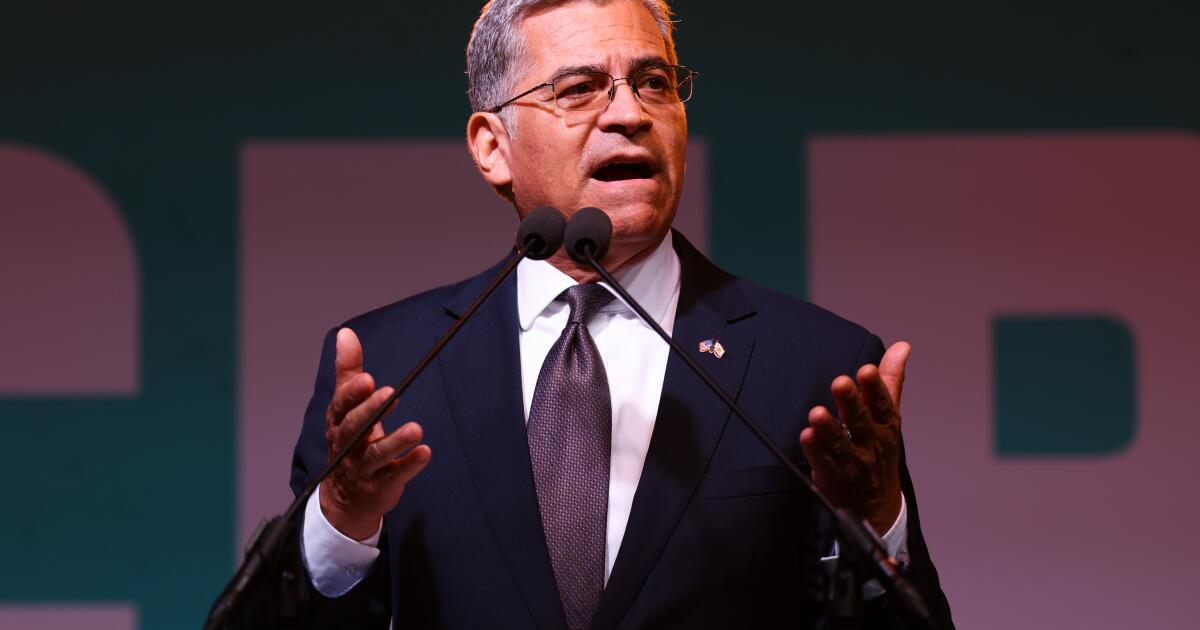
Veteran Democratic politician Xavier Becerra won one of the top two spots in California’s primary election for governor, according to the Associated Press, a finish that puts him in a prime position to win in November and make history as California’s first elected Latino governor.

“The people of the great state of California, in the greatest nation on earth, have spoken — loudly and proudly,” Xavier Becerra said in a statement Friday. “We will not be bought. We will not be bullied. And we are never backing down. November, here we come.”

Former Fox News host Steve Hilton, a Republican, remains in a close second and appears on the cusp of securing the right to face off with Becerra in the November general election.

Tom Steyer, a hedge fund manager turned climate change activist, may be destined to finish in third place — which would be a disappointing end to a campaign that saturated California’s television screens, social media scrolls and mailboxes thanks to the progressive Democrat spending $216 million of his own wealth.

Becerra’s victory was declared by the Associated Press on Friday evening, three days after the June 2 election — an indication of the competitive race to replace termed-out Gov. Gavin Newsom and California’s lengthy process of counting ballots. Still, Becerra and Hilton were within a percentage point of each other, though that could change as the vote tally continues. While his fate is not sealed, Steyer faces long odds to finish in the top two.

Under California’s primary system, only the two candidates who receive the most votes in the primary advance to the November general election, regardless of their party affiliation.

Becerra would enter the general election campaign with a significant edge over Hilton since Democratic voters in California outnumber Republicans by almost a 2-to-1 margin, a telltale reason why no GOP candidate has won a statewide race since 2006.

President Trump’s endorsement of Hilton helped consolidate support from Republican voters, which was pivotal to his success in the primary, but would likely hurt him in a face-off against Becerra. Nearly two-thirds of voters in the state want a governor who will fight Trump’s policies, according to the survey by UC Berkeley’s Institute of Governmental Studies that was co-sponsored by the Los Angeles Times.

Becerra could make history by becoming the first Latino to be elected governor — and the first to lead the state in more than 150 years. The last time a Latino held the office was in 1875, when then-Lt. Gov. Romualdo Pacheco was elevated to fill a vacancy and served for 10 months.

“California has made history. Xavier Becerra’s advancement to the general election is a defining moment both for the state, and for the millions of Latino families who have been instrumental in shaping the state’s future. … As home to the nation’s largest Latino population, California will once again demonstrate the decisive power of Latino voters,” said Voto Latino Executive Director Beatriz Lopez.

Though Latinos make up about 40% of the state’s population and are California’s largest ethnic group, they historically have lower turnout in elections and are underrepresented in government. Though Becerra often cites his upbringing as a child of working-class Mexican immigrants, he will still need to demonstrate he can deliver for those communities, said Christian Arana, vice president of civic power and policy at the California-based Latino Community Foundation.

“There’s a lot of excitement about the representation side,” Arana said. “You can have Latino representation, but whether or not that will actually lead to tangible outcomes for Latino communities, that’s what people want to know.”

Once stuck in the single-digits in public opinion polls with a handful of other Democratic candidates, Becerra rose quickly and unexpectedly following the political demise of former Rep. Eric Swalwell.

Becerra’s rise began days after Swalwell dropped out in April following allegations of sexual assault and misconduct, which he denies. Becerra quickly consolidated support from elected officials including Assembly Speaker Robert Rivas and influential groups like Planned Parenthood Affiliates of California and the California Medical Assn.

But both supporters and critics of Becerra struggle to explain exactly how or why he became the main beneficiary of Swalwell’s downfall.

Becerra’s campaign credits the timing of a major television and digital advertising push. The political ads began running just before the allegations against Swalwell came out and depicted Becerra as a calm, experienced leader with a record pushing back against Trump and support from Young Democrat groups.

Steyer’s campaign hired an intelligence firm to look into the online surge favoring Becerra and found thousands of bot accounts had amplified Becerra on various social media platforms. Becerra’s campaign denied any involvement and dismissed the influence of the fake accounts.

Political experts describe it as the stars aligning for the longtime Democratic politician. In the aftermath of the scandal, voters were apparently drawn to Becerra’s long resume and calm, thoughtful demeanor.

“He just never overreacted. Even when attacked [during debates], he was calm,” said Fernando Guerra, professor of Chicano Studies at Loyola Marymount University. That “gave the sense of being a moderate, while he’s really a liberal, so he was able to appeal not only to Latinos, but to liberals and to moderates.”

After Swalwell’s campaign crumbled, members of the political brain trust — many with ties to Newsom — that had been advising the former congressman began working for Becerra, including digital strategist Alf LaMont and veteran consultants Courtni Pugh and Lindsey Cobia.

“There was nothing going for him for a long, long time,” said Jason McDaniel, associate professor of political science at San Francisco State University. “I do think it was just people looking for someone who had a lot of experience who could win.”

Becerra’s first election victory was to the state Assembly in 1990. He served one term before successfully running for a Los Angeles congressional seat, which he held for 24 years.

Then-Gov. Jerry Brown appointed Becerra as state attorney general in 2017, a post he used to challenge Trump administration policies in the courts more than a 100 times — with great success. Becerra helped craft the Affordable Care Act in Congress and defended it as attorney general, and Joe Biden nominated him to serve as Health and Human Services secretary.

The 68-year-old veteran elected official has faced criticism on the campaign trail for his record leading the massive federal agency, particularly over a New York Times investigation that found thousands of unaccompanied migrant children ended up working in dangerous jobs after they were released to sponsors.

Some former Biden administration officials, many of them anonymous, have also criticized Becerra’s leadership of the agency.

Still, Becerra’s supporters said the candidate’s experience, particularly when it comes to fighting the Trump administration, qualifies him for California’s top job.

“He’s had some very important positions in government,” labor leader Dolores Huerta said at Becerra’s election night party in downtown Los Angeles. “He is qualified. He doesn’t have to go into a learning mode.”

“He’s a legal scholar,” said David Dixon, a political science professor at Cal State Dominguez Hills and brother to a longtime Becerra aide. “When our Constitution is threatened, we need people like him to be in positions of power to reclaim things we are losing now.”

Times staff writers Seema Mehta, Dakota Smith and Andrew Khouri contributed to this report.

Source link

Live Election 2026 primary results, updates: Who won California’s governor, congressional races?

We’re tracking races across California, including primary elections for U.S. congressional districts that were recently redistricted. Results for governor, statewide officers such as the attorney general and insurance commissioner, as well as state Senate and Assembly contests are available on this page.

In state-level primary races, the top two finishers will move on to the general election in November. Their names will be indicated with checkmarks once their races are called by the Associated Press.

Initial results are expected shortly after the polls close at 8 p.m.

Every registered voter in the state receives a ballot by mail. To vote by mail, these ballots must be postmarked by June 2. They may take several days to process. Results from provisional and conditional ballots also take longer, and will be added to the tally once they are cleared.

The data on this page updates periodically as results come in from the Associated Press. The secretary of state will certify results in early July.

Icon: Figure standing at podium

Governor

The California governor’s race is a tight battle between 24 Democrats , 12 Republicans and 25 candidates from other parties or with no party preference . Half a dozen of which had real support in the polls. The crowded field is vying to replace Democratic Gov. Gavin Newsom. California has never elected a woman as governor and only once a person of color, making this race potentially historic for the state. The top two vote-getters move on to the general election regardless of party preference.

Back to top

Election live results section icon showing a map of California.

Statewide races

Back to top

Board of Equalization

Back to top

Icon: Capitol building

U.S. House

California’s congressional map was redrawn last year after the passage of Proposition 50. Several seats are expected to flip from red to blue due to Newsom’s redistricting effort. In some cases, districts were moved slightly and incumbents remain unchallenged. However, in one area, lines have been redrawn with no overlap at all with their current boundary: Rep. Ken Calvert’s 41st District in the Inland Empire was eliminated and completely redrawn in Los Angeles County. Calvert is now challenging Republican incumbent Young Kim in the 40th District. Both are marked as incumbents on the table below.

The 1st Congressional District — which was redrawn further south to cover portions of Butte, Colusa, Glenn, Lassen, Modoc, Shasta, Siskiyou, Sutter, Tehama and Yuba counties — is holding a special primary election to fill the seat left vacant by Rep. Doug LaMalfa’s death in January.

Back to top

State Senate

Back to top

State Assembly

Back to top

Source link

Live Election 2026 primary results, updates: who won Los Angeles mayor, city council, LAUSD

Elections in the city of Los Angeles include mayor, City Council, three ballot measures and Los Angeles Unified School District board seats and, if you live in the city, you’ve maybe seen an ad about them.

The high-profile competition between incumbent Mayor Karen Bass, City Councilmember Nithya Raman and conservative reality star Spencer Pratt has been tumultuous. And that is to say nothing of Rae Huang, Adam Miller and the nine others contenders.

With leaked files, millions in campaign fundraising donated by a candidate’s mother, and a multi-campaign effort by L.A.’s chapter of Democratic Socialists of America, the race for mayor isn’t the only one making headlines this primary.

A candidate can win by getting a majority of the vote. If no one receives 50% + 1 vote, the top two advance to the November election.

Mayor

The Associated Press, which surveys the numbers posted by local election officials and projects the winner using vote returns and other data, will call a winner (or a runoff) for L.A. mayor.

City Council

Back to top

Officers

Back to top

Ballot measures

Back to top

Los Angeles Unified School District

Back to top

Source link

Live Election 2026 primary results, updates: who won California’s competitive congressional districts

On the ballot this year is an entirely new congressional map.

Redrawn with the passage of Proposition 50, the new districts favor Democrats in November. But those gains aren’t guaranteed. Candidates have to make it through California’s primary, where the top two vote-getters move on to the general election regardless of party preference.

While many districts shifted only slightly, some Republican districts were split, some Democrat districts were strengthened, and in one district lines were redrawn with no overlap at all with their 2024 boundary.

Several seats are competitive — either with a tight race between Republicans or because the seat is expected to flip from red to blue. With redistricting, only four seats are considered solidly Republican, according to the Cook Political Report, down from the nine GOP seats won in 2024.

The 1st Congressional District — which was redrawn farther south to cover portions of Butte, Colusa, Glenn, Lassen, Modoc, Shasta, Siskiyou, Sutter, Tehama, and Yuba counties — is one to likely flip.

Rep. Ken Calvert’s 41st District in the Inland Empire was eliminated and completely redrawn in Los Angeles County. Calvert is now challenging Republican incumbent Young Kim in the 40th District. Both are marked as incumbents in the results below.

In its new position, the 41st District was carved, in part, out of the previous 38th District. The current representative for the 38th District, Democrat Linda Sánchez, is running in the 41st District and is marked as an incumbent.

Several seats, such as former House Speaker Nancy Pelosi’s 11th District, are competitive between candidates from differing wings of the Democratic party. While in District 22, Democrats are competing to challenge Republican Rep. David Valadao in a redrawn, Latino-majority swing district.

Also on this page are noncompetitive local districts that may still be of interest to Times’ readers in Southern California.

Not seeing the race you’re looking for? See all of California’s U.S. House races on the statewide election page.

Source link

Your last-minute guide to election day challenges in California’s 2026 primary election

It’s election day in California’s 2026 primary, and you’re headed to the polls — until you realize you’re not sure you’re registered, or fear you might not make it to the vote center on time.

Here are some common election day concerns and challenges and how to end your Tuesday with an “I voted” sticker.

I forgot to register to vote

You can still register to vote on election day as a conditional voter through the same-day voter registration process.

Eligible citizens who need to register or re-register to vote within 14 days of an election can complete this process and vote at county elections offices, polling places or vote centers. To register you’ll need to provide a driver’s license, a state identification number or the last four digits of your Social Security number.

A complete list of county election office addresses can be found here.

Your submitted ballot will be processed and counted once the county elections office has completed the voter registration verification process.

If you’re unsure about your voter status, you can find your record here by providing some personal information including your date of birth and driver’s license number.

I don’t know where my polling place is

You can find your nearest polling place on the California secretary of state’s website here.

You can also use Los Angeles County’s voter center locator on the registrar-recorder/county clerk website here.

On election day, voting centers are open from 7 a.m. to 8 p.m. across the state.

I can’t submit my mail-in ballot myself

You can have someone else submit your ballot.

Anyone can drop off your mailed ballot as long as you authorize them to do so and they do not get paid on a per-ballot basis, according to the secretary of state.

You and the person you’ve authorized to submit your mailed ballot must fill and sign the outside of the ballot envelope.

I forgot my check-in code for in-person voting

Los Angeles County election officials say you can check in at a vote center by scanning your “quick check-in code” — a number that verifies your voter registration.

Your code can be found on your mailed sample ballot and vote center postcard. Take either of those hard copies to the vote center.

If you forgot the hard copies, you can retrieve the code by verifying your voter registration here. You’ll need to input your last name, birth date, the house number of your residential address and ZIP Code. For assistance call, (800) 815-2666, Option 2.

I want to drop my ballot in a box but fear it’s too late

There are three ways you can submit your mailed ballot on election day:

  • You can put it in a ballot drop box. The cutoff time for doing so is 8 p.m., which is also when the polls close on election day.
  • Drop it off at a vote center, where the deadline is the same.
  • Drop it off at a United States post office. Be sure to get a hand-stamped postmark from a postal employee. Mailed ballots must be postmarked on election day and received no later than seven days after election day.

I think I forgot to sign by mailed ballot envelope

If you failed to sign your vote-by-mail ballot return envelope, your vote will still count.

Your county elections official will notify you by mail, phone or email, according to the secretary of state. You can also be notified by way of the “Where’s My Ballot?” tracking tool if you have signed up for automatic notifications that will ping you if there are issues with your ballot.

Your county elections office will provide you with a form to fill out and return completed.

The form will be given to you two days prior to the day your county certifies the election, so be sure to fill it out and return it to your county elections office right away.

I’m going to be late getting to the polls; can I still vote?

In California, any voter who is in line at 8 p.m. when the polls are scheduled to close is allowed to vote, according to the secretary of state.

If there is a line when the polls close, a poll worker stands at the back of the line to let people who arrive after 8 p.m. know that the polls have closed.

Any voter who arrives after the polls have closed may not be allowed to vote, even if voters who were in line to vote before the polls closed are in the process of voting.

Source link

GOP governor hopefuls give closing arguments to oft-forgotten Central Valley Republicans

In the waning days before California’s primary election, the two top Republicans running for California governor delivered closing arguments in front of a friendly Central Valley audience Friday evening.

Though Riverside County Sheriff Chad Bianco and former Fox News host Steve Hilton have attacked each other throughout the campaign, they abstained from feuding and instead focused on common enemies — Gov. Gavin Newsom and Democratic lawmakers who control the Legislature.

Hilton criticized Newsom’s new $20-million program to provide free diapers for families of newborn babies, referring to the outgoing governor as “the great loaded diaper of California himself.”

Earlier this year, Hilton and Bianco topped the governor’s race polls as a packed field of Democrats split many of the state’s liberal voters. Under California’s “jungle primary” system, where the top two candidates advance from the primary to the general election regardless of political affiliation, that led to fleeting hope among Republicans that the two candidates could shut Democratic candidates out of the November election.

“That idea was always a fantasy,” Hilton wrote in an op-ed published in the New York Post earlier this week in which he urged Bianco to drop out of the race “for the sake of the state we both love.”

“Steve, it is time for you to drop out,” Bianco retorted in a video posted to social media soon after. “In no world, no world does Steve Hilton beat a Democrat in November.”

After winning an endorsement from President Trump in early April, Hilton has steadily outpaced Bianco in polls. A poll commissioned by the California Democratic Party released last week showed Hilton leading the field with support from 22% of likely voters, followed by Democrat and former Biden Cabinet member Xavier Becerra with 21%. Bianco was at 10%, down from 15% in a previous poll conducted two weeks prior.

Still, Bianco, the two-term sheriff of California’s fourth most populous county, is a favorite of many Republicans in the state and won more support from delegates during the party’s recent endorsing convention than Hilton, though neither reached the necessary 60% to win the party backing.

While the two candidates have needled each other with personal digs and insults throughout much of the campaign, they appeared to set that energy aside during the Clovis forum and even traded some compliments. Hilton praised “sheriffs like Chad who actually understand what public safety looks like” while Bianco acknowledged that his opponent “should be very proud” to have Trump’s endorsement.

State Sen. Shannon Grove (R-Bakersfield), who moderated the more than 90-minute event, praised their “extraordinary civility” before she pressured each to commit to backing whichever Republican makes it through the June 2 primary — or if they both advance, continue to focus on policy debates over attacks.

The forum was hosted by the Fresno County & City Republican Women Federated as part of a fundraiser and dinner honoring the upcoming 250th anniversary of the nation’s founding. About 450 attendees were served dishes inspired by presidential favorites including sirloin steak for Theodore Roosevelt, a chopped salad from Chasen’s, a favorite Los Angeles eatery for Ronald Reagan, and a chocolate pie with cherry vanilla ice cream for Trump.

The Central Valley stretches from Bakersfield to Redding and is home to some of the nation’s most lucrative farmland. It also includes the heart of California oil country in Kern County. Yet residents feel largely neglected by statewide politicians who are more drawn to the ample votes and wealthy donors in Southern California and the Bay Area.

“We are the breadbasket of the world but we’ve been overlooked for too long,” said Andrea Shabaglian, a vice president of the Fresno Republican women’s group. “When gubernatorial candidates come here to sit down and listen to our communities, they realize that a stronger Valley means a stronger California.”

Though he lost California handily to former Vice President Kamala Harris in the 2024 election, Trump dominated in the state’s midsection. Even in Fresno County, where the Republican forum was held, Trump beat Harris by a four percentage point margin despite Democratic voters slightly outnumbering Republicans.

“We need a Republican in office because California is a mess. I mean, anybody with common sense can see that,” said LuAnne Pinedo-Madden, a retiree living in the Sierra foothill community of Coarsegold who listed transgender girls being allowed to compete in girls’ sports and government corruption as her top concerns.

Pinedo-Madden said she was “pretty sure” she had decided which of the Republican candidates to vote for but declined to say whom. “I feel that if we don’t get a Republican in office, we’re looking at moving” to Utah, Idaho or Nevada, she said. “We can’t take this anymore.”

Bianco and Hilton spoke about their plans to improve public safety, small businesses, homeowner’s insurance and water management, a crucial issue for the conservative-leaning owners of vast swaths of California’s agricultural heartland.

Signs along the major highways that straddle California’s Central Valley proclaim that “Food grows where water flows” and criticize Newsom for allowing water to flow into the ocean instead of capturing and storing more of it for farming.

Both of the GOP candidates described their visions for the state, which include building new dams and raising existing ones to store more water.

“We don’t have the water problem. We have a water management problem,” Bianco said before falsely arguing that “we get more water every single year than any other state in the country” and that California has “never, ever, ever been in a drought.”

“The water will be flowing to our farmers, the oil will be flowing to our refineries, the forests will be managed, the timber will be harvested” and used to build new single-family homes, Hilton said. “We’ve got the best weather, we’ve got the best people, we’ve got the best farmers, we’ve got everything we need to make this place amazing, except a good governor. Very soon we’ll have that as well.”

Though a Republican governor would likely face a hostile Legislature intent on blocking many priorities, Bianco and Hilton both promised sweeping cuts and cutbacks of state agencies. Both pledged on Friday to replace every member of the state’s parole review board, which drew criticism in February when it granted elderly parole to a man convicted of 16 counts of kidnapping and child molestation in 1999.

“California criminal justice is absolutely broken and it was forced upon us in the name of reform. What I’m going to do is make it a crime to hear the word reform again, because we lost track of what that word even means,” Bianco said.

He also pledged to eliminate laws and environmental regulators often blamed for slowing housing development: the California Environmental Quality Act, the California Coastal Commission and the state Air Resources Board.

Though his opponent has the coveted Trump endorsement, Bianco argued that it will hurt Hilton’s chances of winning the general election. The Republican president has never been popular in deep-blue California; just 25% of adults in the state approved of Trump’s performance according to a February survey by the Public Policy Institute of California.

“Steve should rightfully be proud of being endorsed by President Trump [but] we have to actually realize, is that a good thing in California? It’s a good thing in this room,” Bianco said as the crowd cheered at the mention of the president’s name. “We have to realize strategically that President Trump ran three elections in this state, and he lost 60-40 in all three of them.”

The Riverside sheriff argued he is “the only person that can actually sway Democrats to vote for a Republican across party lines on a public safety platform.”

Source link

New West Virginia law requiring photo IDs at polling places greets voters in primary election

Presenting a utility bill as a valid form of identification at a voting precinct in West Virginia has gone the way of the tavern polling place and the punch-card ballot.

State lawmakers tightened an existing voter identification law by requiring photo ID at the polls, with some exceptions. The law was used for the first time in Tuesday’s primary election, and officials said they’ve seen very few glitches.

“The whole point of the law is just making sure you are who you say you are,” Secretary of State Kris Warner said Monday.

Voters will nominate candidates for U.S. Senate, U.S. House and state legislature. They also will elect two new state Supreme Court justices.

During the in-person early voting period that ended Saturday, Warner said his office hadn’t heard of anyone who demanded to vote without a photo ID. He said the state had asked residents to use photo IDs for the past few elections, so “it was not a big shock that it was now law.”

During his statewide travels over the past two weeks, Warner said he was told of some instances where people returned to their vehicle to retrieve a photo ID after entering a polling place. Another voter used an exception to the law by filling out a form that was verified by a poll worker who has known them for at least six months. There also were exceptions for first-time voters.

Most states either require or request some form of ID for in-person voting at the polls.

Proponents say the West Virginia law will cut down on voter fraud and that a photo ID is already required for everyday tasks such as getting on an airplane or buying alcohol.

The bill sailed through the Republican-supermajority legislature last year. All votes against it were cast by Democrats, some who argued it would suppress access to the polls. State Democratic Party Chair Mike Pushkin said no credible evidence was shown during legislative debate that West Virginia had a widespread problem with ineligible voting. Pushkin said the legislation was “designed more for political messaging than solving actual problems.”

But Warner said it allows senior citizens to use expired driver’s licenses, as long as it was valid on their 65th birthday

“I wanted to make sure it didn’t prevent anyone from voting,” Warner said.

Forms of identification that are no longer accepted at polling places include utility bills, bank statements, hunting and fishing licenses, bank or debit cards, and concealed carry gun permits. Acceptable forms of photo IDs include a driver’s license, U.S. passport, military ID, employee ID issued by a government agency and a student ID from a high school or college.

Monongalia County Clerk Carye Blaney said for several years her county has used an electronic system to scan bar codes on the back of driver’s licenses to check in voters at polling places.

“I think that it makes voters feel more secure, or it confirms for the voters the security of our elections when we are verifying a photo to a person,” Blaney said.

Raby writes for the Associated Press.

Source link

As primary election nears, top candidates for California governor debate tonight

With the California governor’s race quickly approaching, six candidates will face off Wednesday evening in the first debate since former Rep. Eric Swalwell dropped out of the race in the aftermath of sexual assault and misconduct allegations.

The debate takes place at a critical moment in the turbulent contest to replace termed-out Gov. Gavin Newsom. Ballots will start landing in Californians’ mailboxes in less than two weeks, and voters are split by a crowded field of eight prominent candidates. The debate also takes place after former state Controller Betty Yee ended her campaign because of a lack of resources and support in the polls.

Two Republicans — Riverside County Sheriff Chad Bianco and conservative commentator Steve Hilton — and four Democrats — billionaire Tom Steyer, former Biden administration Secretary Xavier Becerra, former Orange County Rep. Katie Porter and San Jose Mayor Matt Mahan — will take the stage at Nexstar’s KRON4 studios in San Francisco. Former Los Angeles Mayor Antonio Villaraigosa and state Supt. of Public Instruction Tony Thurmond, both Democrats, were not invited to participate because of their low polling numbers.

As the candidates strive to distinguish themselves in a crowded field, the debate could include fiery exchanges about the role of money in politics and potential heightened attacks on Becerra, who has surged in the polls since Swalwell dropped out. With the debate taking place on Earth Day, environmental issues are also likely to be raised.

The Wednesday night gathering is the first televised debate in the gubernatorial contest since early February. Last month, USC canceled a debate hours before it was set to begin over mounting criticism that its criteria excluded all major candidates of color.

The 7 p.m. debate is hosted by Nexstar and will be moderated by KTXL FOX40 anchor Nikki Laurenzo and KTLA anchor Frank Buckley. It can be viewed on KRON4 (San Francisco), KTLA5 (Los Angeles), KSWB/KUSI (San Diego), KTXL (Sacramento), KGET (Bakersfield) and KSEE (Fresno). NewsNation will also air the debate.

Source link