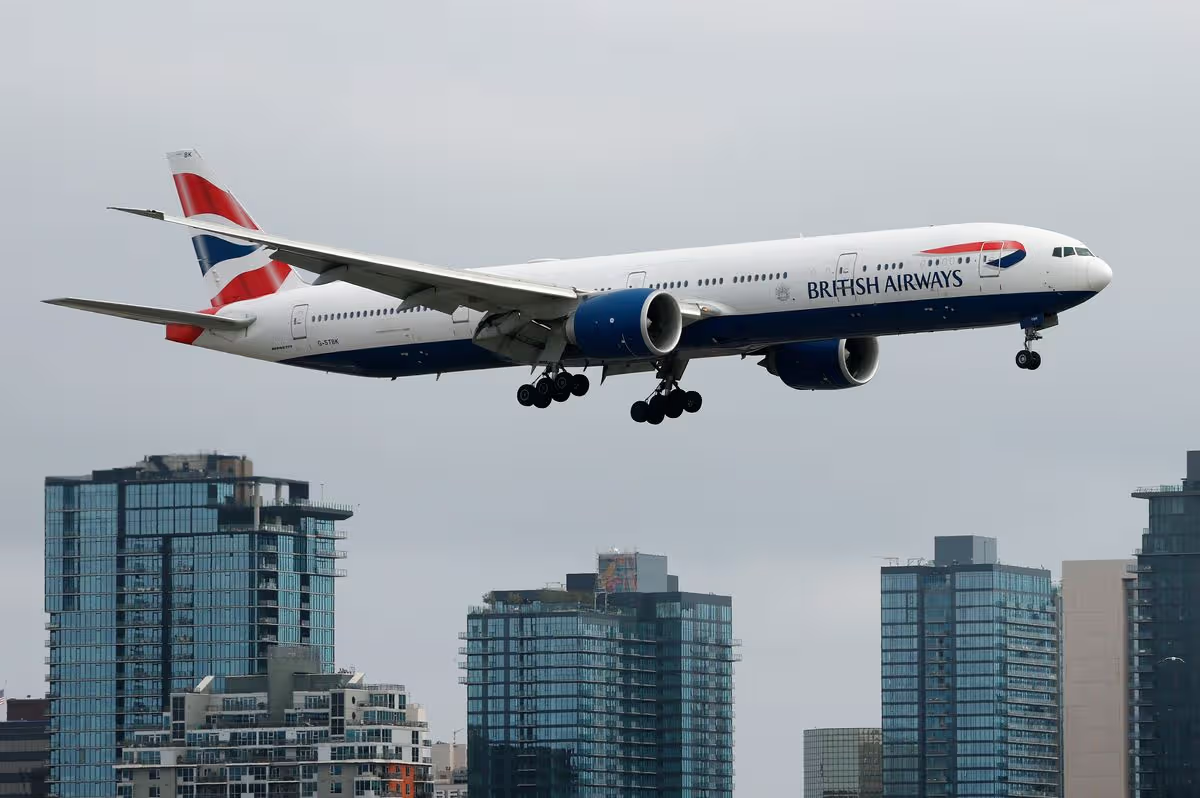
British Airways is understood to be looking at raising fares following a hit caused by a spike in jet fuel costs
15:43, 10 May 2026Updated 15:44, 10 May 2026
Costs are up for airlines across the world
British Airways (BA) has released a statement to passengers concerning possible price rises. The UK’s flag carrier airline shared the announcement across its social media platforms.
In a post titled ‘The British Airways Holidays Promise’, it emphasised that existing customers would not face an increase in their holiday costs if they had already made a booking, even if the airline’s operating expenses rose.
The price of aviation fuel has roughly doubled since the commencement of US-Israeli strikes on Iran in late February. It continues to remain elevated, despite a lull in hostilities and speculation about an end to the conflict.
It confirmed that the ‘cost of your holiday won’t change once you’ve booked your trip’. The full statement declared: “Book with confidence, whatever’s happening in the world.
“The price you book is the price you pay. Once you’ve booked your flight or holiday package, the price you’ve paid is locked in and won’t change, even if our costs increase later.
Content cannot be displayed without consent
“You can secure your holiday with a low deposit now and spread the agreed cost over time. The cost of your holiday won’t change once you’ve secured your trip.
“When you book a package with British Airways Holidays, we offer you a dedicated helpline, 24/7, in case you need assistance during your trip. All packages booked in the UK with British Airways Holidays are ATOL protected, giving you peace of mind from the moment you book and while you’re away.
“If your flight is cancelled, as part of a British Airways Holidays package or flight only booking, we’ll always offer you the option to rebook onto another flight or to accept a full refund under UK and EU Regulations. Your holiday is protected, so you can focus on looking forward to it.”
This follows confirmation that BA’s charges are set to increase as the airline attempts to recoup some of its financial losses. The Guardian reports the carrier has taken a €2bn (£1.7bn) hit to its finances due to soaring jet fuel costs.
The International Airlines Group (IAG) revealed its annual fuel bill is now projected to reach around €9bn, up sharply from the previously forecast €7.1bn. The group anticipates recovering roughly 60 per cent of the €2bn shortfall through ‘revenue and cost management actions’, with BA expected to shoulder the majority of the fare hikes.
A Jet2 survey has shown a shift in how people are booking their holidays amid concerns over jet fuel supplies
13:30, 09 May 2026Updated 13:30, 09 May 2026
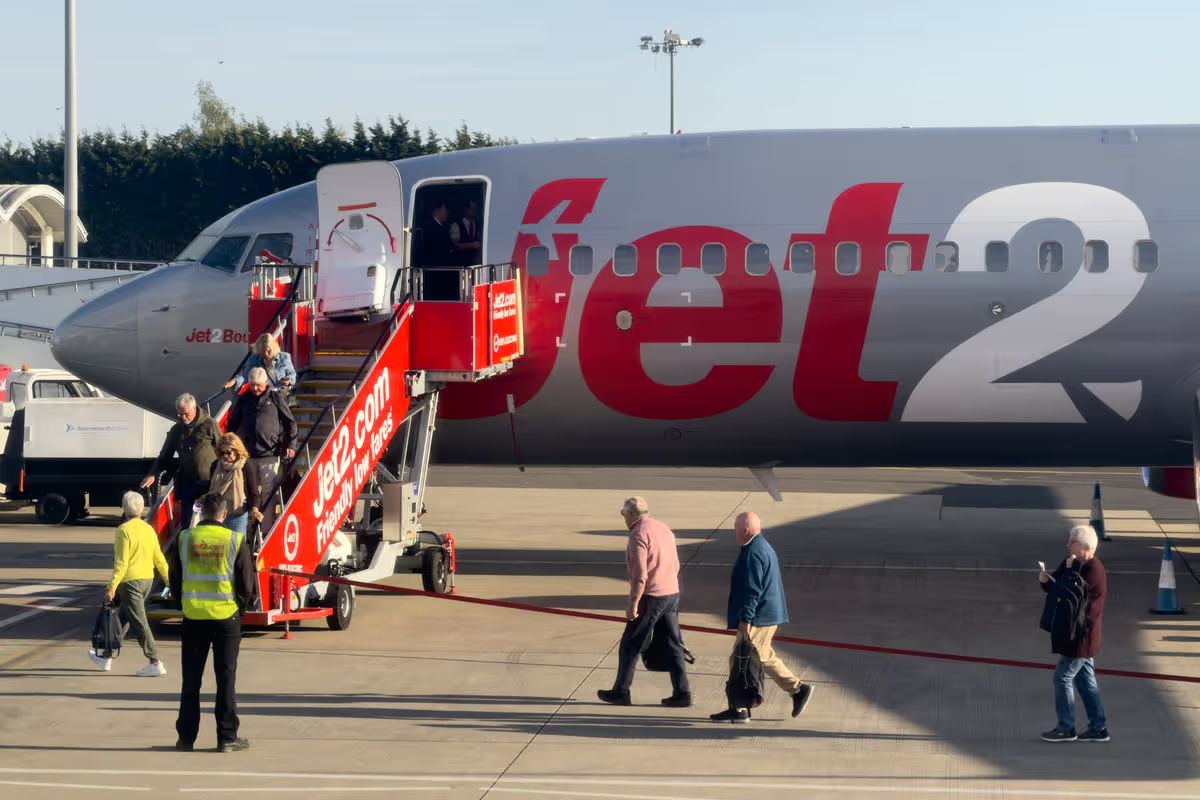
Jet2 said passengers concerned about cancellations are booking their trips differently(Image: Getty)
Jet2 has revealed that passengers are making a major change to how they book holidays amid concern over major jet fuel problems this year due to teh Middle East Crisis. As the Middle East crisis deepens, mounting concerns suggest Britain could face a jet fuel shortage that may disrupt holiday flights.
Goldman Sachs has cautioned that Britain is the country “most exposed” to jet fuel shortages triggered by the Iran conflict, stoking fears of further flight cancellations and ruined summer getaways. Analysts at one of the world’s largest investment banks warned that the UK is heavily dependent on imports routed through the closed Strait of Hormuz, with “critically low levels” of supplies and inadequate refining capabilities.
And personal finance expert Martin Lewis has spoken out about the issue – highlighting people who book their flights and hotels separately might not get compensation if flights are cancelled. Jet2 said package holidays are now the top choice for travellers, with 51% opting for this booking method – a 5% rise since February. During the same timeframe, those preferring to book through separate providers has fallen by six percentage points to 20%, while ‘accommodation only’ bookings have plummeted to just 2%.
Jet2 said the results showed main attractions of package holidays have remained consistent, with value (36%) and convenience (36%) leading the way. However, the appeal of ‘added security with one provider, ATOL/ABTA protection’ has climbed by four percentage points since February to reach 26%, according to the survey.
This protection ensures customers are safeguarded against any alterations to their bookings, including the possibility of refunds should travel plans be scrapped, while guaranteeing holidays meet the highest standards for customer service, booking amendments, and health and safety.
Jet2 has pledged not to impose surcharges on any confirmed flights or holidays to offset rising costs, such as jet fuel, giving customers peace of mind that the price they book is the final price they’ll pay.
Steve Heapy, CEO of Jet2, commented: “Consumers want assurance during times of uncertainty and package holidays provide that assurance. On top of all the protection that our package holidays guarantee, Jet2 is well known as being a consumer champion that goes above and beyond to look after customers. Ahead of a busy summer season, this means new and existing customers know that their well-deserved holidays are in the very best hands with us, and we are very excited about welcoming everyone onboard and taking them on their breaks.”
As millions of Jet2 customers gear up for a bustling summer season, the firm has confirmed it intends to run its scheduled services as planned.
Martin Lewis gave a warning for anyone who has already booked their holiday for this summer. In an update the personal finance guru gave an alert to people who have already paid for breaks from the main holiday firms and airlines like TUI, Jet2, Ryanair, Wizz, easyJet and British Airways.
During his Money Show Live on ITV, the financial expert responded to an audience member who asked: ‘If my flight’s cancelled due to no jet fuel will you definitely receive all your money back even for your hotel booking as well.’
Mr Lewis made clear that travellers would lose their hotel booking costs if they had arranged accommodation independently from flights booked with airlines such as Jet2, TUI, Wizz, Ryanair or easyJet – as they would not be protected under consumer regulations.
He stated: “No. And I think this is what people need to be very aware of. If you booked a package holiday where you booked everything in one, then under the package holiday regulations and rules and protections generally if your flight went you would get everything back.”
He went on to say: “And so actually at the moment package holidays give you a certain level of extra security that you wouldn’t get if you did a DIY booking where you bought your hotel and flight separately.” The reason behind this, he explained, is that the hotel booking itself remains valid: “Because the point is if you lose your flight and you’ve DIY booked, there’s nothing wrong with your hotel.
“The issue is you can’t get there. Your hotel is still there. It’s not faulty. It’s not cancelling. So, you don’t have those consumer rights.” If the hotel hasn’t done anything wrong, then guests might look at how they’ve made their booking – but that route offers no solution either.
He said: “So, you would then say, ‘What about using a credit card or debit card protection?’ It won’t work because there’s nothing faulty. And that’s just giving you the same replica rights that you would have with the retailer.”
Meanwhile, holiday giant TUI has issued a direct message to those with May bookings. TUI Managing Director Neil Swanson in a message on Facebook, pledged that May half-term flights would proceed as scheduled: “We know you may be feeling a little uneasy after recent headlines, and we want to reassure anyone travelling over May half term that they can look forward to their holiday with confidence with TUI. We have good visibility on fuel supplies and are operating our holiday programme as planned, with no flights being cancelled due to fuel shortages.
“Our careful planning across fuel, flying and hotel capacity means we’re able to continue offering great value and stable prices – with no fuel surcharges added by TUI. The price you see is the price you pay, and all TUI package holidays are ABTA & ATOL protected, giving peace of mind from booking right through to returning home.”
On TUI’s Facebook page, holidaymakers reported seeing significant price hikes. Marie said: “We booked our August holiday nearly 18 months ago and paid 5.2K. Just checked it to book now and it’s 6.7K. Glad we booked so far in advance. Already booked August 2027 holiday for same price as we paid this year.”
Lynn replied: “Marie Tomes we’re the exact same. Been going to the same hotel for 7yrs. They renegotiated the contract last year. For us to book for next year its going to be nearly 1k each more for our 2weeks. We’re going to make the most of this year as our last visit.”
One concerned traveller, Rno, raised worries about upcoming summer trips: “What about those who have already booked a hotel and flight for the entire month of August? I have a booking for my family and I’m worried Note that the plane is a TUI and the flight is to Egypt.”
TUI responded: “Hi there. We’re monitoring the situation closely. Right now, we don’t expect any disruption to flights or holidays, but we’ll keep this under review and contact customers directly if anything changes that affects their booking. “
Meanwhile, Jet2 revealed it too is witnessing a notable shift in booking behaviour amongst travellers. Experts such as Martin Lewis have urged travellers to book holidays as a package deal, warning that purchasing flights and accommodation separately could leave them without full compensation should anything go awry.
EasyJet has issued a new statement this Saturday, May 2 as UK travellers consider their holiday plans amid concern over jet fuel shortages
Robert Rowlands Deputy editor, money and lifestyle, content hub
17:33, 02 May 2026
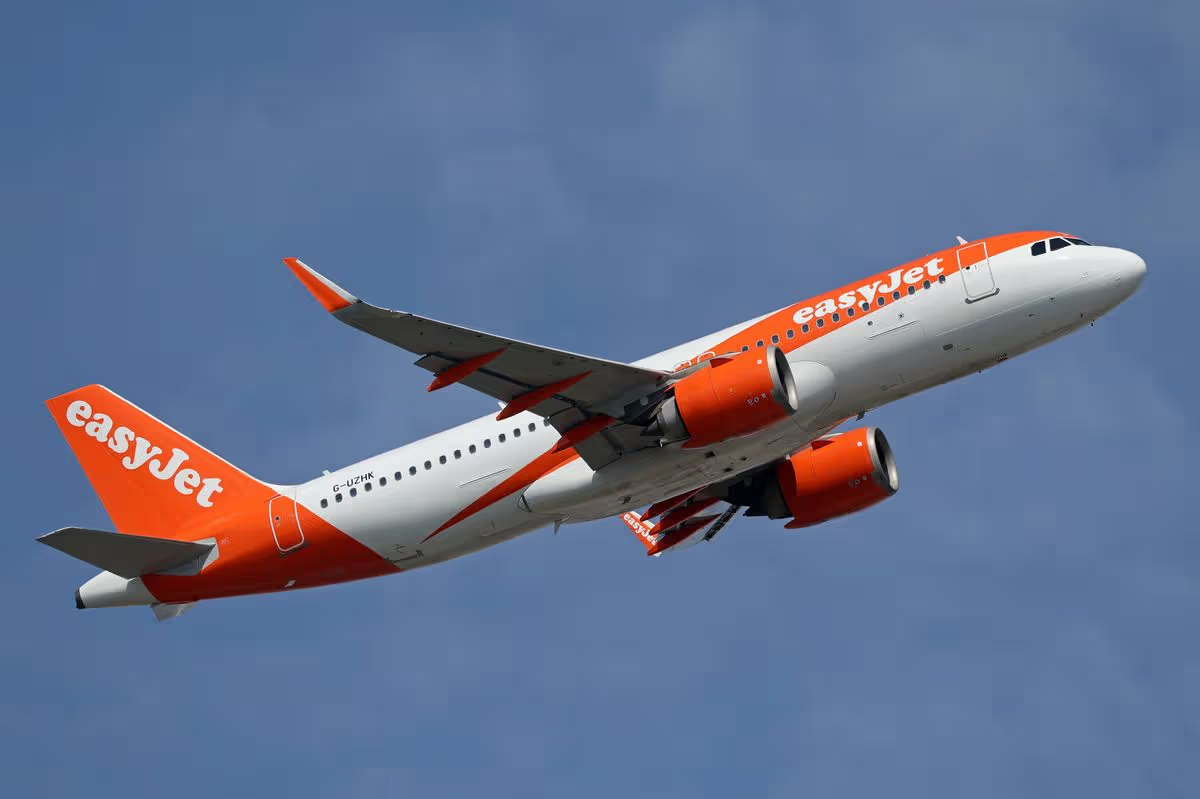
(Image: NurPhoto, NurPhoto via Getty Images)
EasyJet has issued a new update for UK travellers currently looking to book their summer flights. Holidaymakers up and down the country are busy making plans for the warmer months ahead.
However, they are doing so amid uncertainty hanging over parts of the airline industry. This follows jet fuel shortages brought about by the effective closure of the Strait of Hormuz by Iran.
Lufthansa has already confirmed that 20,000 of its flights are to be axed as a result. Industry experts warn that further airlines are likely to slash their capacity in the coming weeks – with Ted Wake, managing director of Kirker Holidays, last week predicting that “I think other airlines within the UK market will be doing something similar.”
Across the Atlantic, we reported earlier today that budget carrier Spirit Airlines has announced it is grounding all of its flights, as the jet fuel crisis, combined with mounting financial pressures, pushed the airline to the edge of collapse. easyJet has now set out new commitments to customers alongside a fresh statement.
It is all part of a bid to put the minds of UK passengers at rest as they weigh up their summer travel options. Ryanair and Wizz Air have also moved within the past 24 hours to offer their own reassurances to British holidaymakers.
In a statement released today, easyJet said: “easyJet is not seeing any disruption to fuel supply. We continue to operate our flights and package holidays as normal, are not making changes and intend to operate our full summer schedule. We remain in close contact with suppliers who continue to provide uninterrupted supply and are diversifying exporting from additional countries globally to bolster supplies going forward.”
easyJet made the latest statement as it introduced new measures designed to give UK travellers greater peace of mind when booking flights. The airline has unveiled a ‘Book with Confidence Promise’ in a move to reassure passengers ahead of the summer season.
The carrier says it is guaranteeing that customers won’t be hit with post-booking price rises or fuel surcharges. easyJet says it plans to operate its complete network schedule, which includes more than 50 million seats and 30 new UK routes.
According to the airline, the ‘Ultimate Flexibility’ policy enables holidaymakers to amend or cancel their bookings up to 28 days prior to departure. Kenton Jarvis, CEO at easyJet said: “We understand that global events may affect travellers’ confidence at the moment, but we believe that everyone has a right to book their flights and holidays with confidence.
“That’s why we’re launching our ‘Book with Confidence Promise’. Our customers won’t be charged any more after they book, including no fuel surcharges, and package holidays customers can continue to benefit from Ultimate Flexibility when they book with easyJet Holidays.”
Jet2, easyJet and TUI have all pledged not to impose additional charges on travellers for fuel price increases. In new remarks published today, Michael O’Leary, the boss of Ryanair, Europe’s largest airline, told The Times that 80 per cent of its fuel supply until March 2027 had been secured in advance. He confirmed the company would not be reducing any flights, despite the crisis costing the firm approximately £37 million each month in extra fuel costs on its unhedged supply.
Eddie Wilson, chief executive of Ryanair, warned that rival airlines could soon begin “gouging” their schedules should prices remain elevated. He said: “What’s going to happen with airlines that are not financially robust, they either have to decide whether they are going to continue flying at a loss or start gouging their schedules. That’s not something we are contemplating.”
Meanwhile, Wizz Air has also moved to reassure customers. Speaking to renowned UK travel broadcaster and journalist Simon Calder on his Independent travel podcast, the airline expressed confidence that it will deliver a full schedule of flights this summer.
“We have just launched our biggest-ever network from the UK and in particular from Luton,” said Yvonne Moynihan, managing director of Wizz Air UK. “Despite the challenging geopolitical crisis, business goes on as usual. In airlines, we are well used to crises, so we are resilient and we’re well adapted.
“For low-cost airlines like Wizz in the UK, we don’t see any shortage of fuel.” She said that if jet fuel shortages affected the UK, the airline would get fuel from elsewhere.
“We can take more fuel than is required in those destinations,” she said. “We can even fly to other countries and and pit-stop, if you will, if we need additional fuel.
“But we’re not seeing an Armageddon situation. We have fuel supply. We have other mechanisms for uplifting fuel.”
A Jet2 spokesman said: “We remain in continual dialogue with our fuel suppliers, as is standard practice. Based on the conversations we have been having, we see no reason not to look forward to operating our scheduled programme of flights and holidays as normal.”
Airlines UK said: “UK airlines continue to operate normally and are not experiencing issues with jet fuel supply.”