press

Hong Kong court rules Dow Jones tried to stop journalist taking union role | Freedom of the Press News

Court also acquits Dow Jones on the charge of dismissal over Selina Cheng’s leadership role with the Hong Kong Journalists Association.

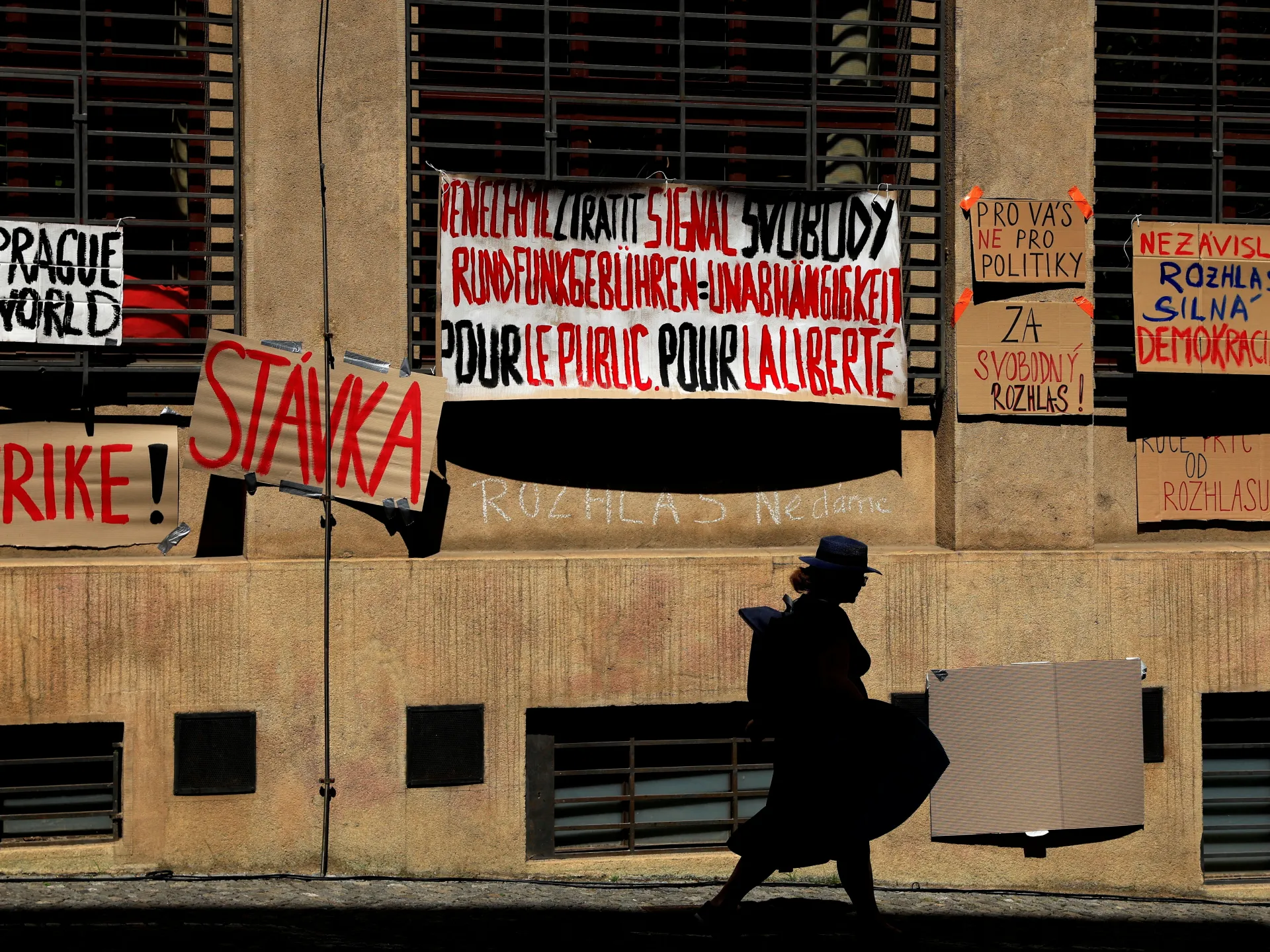
A Hong Kong court has convicted Dow Jones for trying to deter a journalist from taking a union role, but also acquitted the publisher on the charge of dismissal over the role, in a case that raised concerns about media freedom in the city.

Selina Cheng, who was fired by the Wall Street Journal (WSJ) in July 2024, had accused the newspaper’s publisher Dow Jones of unlawfully terminating her employment over her role chairing the Hong Kong Journalists Association (HKJA) and of trying to prevent her from standing for a union position.

Recommended Stories

list of 3 itemsend of list

The court found the company guilty on Thursday of trying to prevent Cheng’s right to run for the union chairmanship.

However, the judge sided with Dow Jones’ argument that she was made redundant because of corporate restructuring, and not due to her role as HKJA chair.

The right to take part in a trade union is protected by Hong Kong’s labour laws. An employer found guilty on “prevent or deter” charges could be fined up to 100,000 Hong Kong dollars ($12,755).

“If reporters’ employment rights are not sufficiently safeguarded, or when their rights are violated and not enforced in law, then we can no longer work safely as reporters,” Cheng told reporters outside the court after the ruling.

The judge said the company’s requirement that Cheng seek prior permission to take a union role was an “unjustified deterrent” of her rights.

Dow Jones said it disagreed with the ruling and was evaluating next steps.

“The Wall Street Journal has a long and proud history as an employer in Hong Kong. Throughout that time, we have remained deeply respectful of its labour laws and supportive of our employees’ rights, while publishing excellent, impartial journalism about the region,” a spokesperson said.

Sentencing is expected to be handed down at a later date.

Cheng launched a private prosecution last year for illegal termination, after filing a complaint with the Labour Department that did not result in a prosecution.

Founded in 1968, the HKJA is Hong Kong’s longest-established journalists’ organisation and one of the last remaining groups advocating for media rights in the city.

Although Hong Kong was once known for its independent news outlets, media freedom has come under strain and many outlets have disbanded since Beijing imposed a 2020 national security law following sometimes violent pro-democracy protests, according to international rankings and HKJA surveys.

Source link

Trump calls on FCC to punish ‘Meet the Press’ moderator Kristen Welker

President Trump lashed out Sunday at NBC’s “Meet the Press” moderator Kristen Welker, calling on the Federal Communications Commission to punish her over comments she made about the president’s record in endorsing primary candidates.

“Kristen Welker, the Unpopular ‘Hostess’ of the once great Meet the Press, now considered Meet the Fake Press, just stated that Donald Trump has ‘mixed results’ on his Endorsements of Candidates, when the recent WINS of Darline Graham and Mike Mazzei, stand at 100% for the U.S. Senate, and 98% for the U.S. House, recently and over the longterm,” Trump wrote on Truth Social.

Trump actually endorsed Mazzei in the Oklahoma governor’s race, not a congressional seat.

“How can anyone be allowed to say this, working for freely given Public Airwaves?” Trump added. “Because of this purposeful inaccuracy, she will be reported to the FCC for rebuke or punishment.”

Welker was previewing Sunday’s edition of “Meet the Press” on NBC’s Washington station WRC when she made the remarks about Trump’s endorsements.

“He’s going to loom large over these midterms,” Welker said. “There’s no doubt about that. He, of course, has endorsed a slate of candidates in the primaries. He’s had some mixed results, but most recently, his pick of Senator Darline Graham, of course, the sister of the late Senator Lindsey Graham, was successful in her primary battle, so now she takes on Dr. Annie Andrews in South Carolina.”

In a statement, NBC News expressed its support for Welker. “Kristen is one of the best in the business and we stand by her,” a representative said in a statement.

FCC Chairman Brendan Carr has shown a willingness to use his agency’s levers to go after broadcast media outlets Trump deems unfriendly. In April, he called for an early review of the TV station licenses held by ABC, claiming the company’s diversity and inclusion policies are in violation of federal anti-discrimination laws.

ABC has filed a lawsuit against the FCC to block the review, saying it was motivated by Trump’s animus toward the late-night host Jimmy Kimmel.

Going after Welker for an anodyne analysis that did not match the president’s perception of his endorsement results would be a stretch, according to the FCC’s own guidelines.

“The FCC’s authority to take action on complaints about the accuracy or bias of news networks, stations, reporters or commentators in how they cover — or sometimes opt to not cover — events is narrow,” according to the FCC website. “The agency is prohibited by law from engaging in censorship or infringing on First Amendment rights of the press.”

Anna Gomez, the lone Democratic member of the FCC, said Trump’s comments are dangerous and also demonstrate a fundamental lack of understanding of the agency’s role.

“As I’ve said many times, the FCC has no authority to punish journalists this administration doesn’t like,” Gomez wrote on the social platform X. “These threats to press freedom are dangerous. They undermine the foundation of our democracy, and they have no place in it.”

Trump is clearly sensitive about critiques of his endorsement powers. On Friday, Bill Maher did a lengthy segment on his show “Real Time,” apologizing to the president for having said “almost none” of his endorsed candidates are winning their primaries. Maher noted that out of 260 candidates endorsed by Trump, only nine have lost. Maher noted that many of those candidates were heavy favorites to win but agreed that his statement was not accurate.

Maher also gave a strong indication that Trump had texted him to express his unhappiness over his comments.

But “Real Time” is on cable and streaming where the FCC has no say on programming content. The agency regulates broadcast channels that are delivered over the public airwaves.

Source link

Sarah Huckabee Sanders refuses to say that the press is not the ‘enemy of the people’

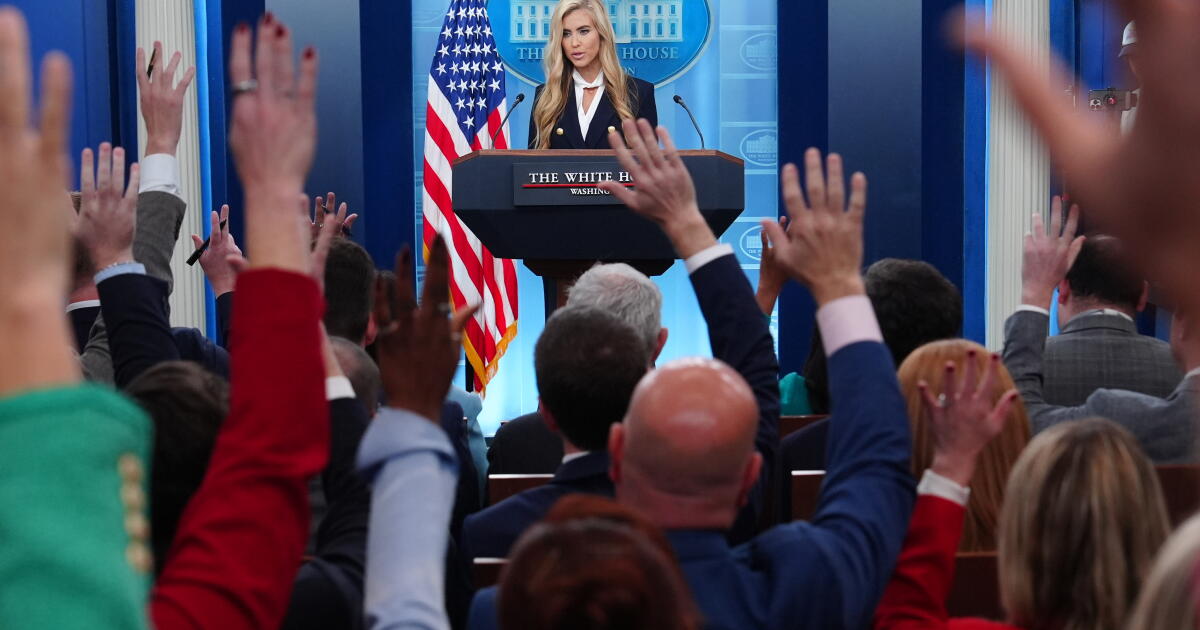
During a testy White House briefing Thursday, a reporter challenged Press Secretary Sarah Huckabee Sanders to counter President Trump’s claim that the American press is the “enemy of the people.” She wouldn’t.

The heated exchange between Sanders and CNN’s chief White House correspondent, Jim Acosta, came near the end of a briefing on Russia’s attempted interference in the midterm elections, and just hours after Ivanka Trump unhesitatingly broke with her father in a public interview, telling her questioner that she does not believe that the media is the enemy.

Acosta told Sanders, “I think it would be a good thing if you were to say right here, at this briefing, that the press — the people who are gathered in this room right now, doing their jobs every day, asking questions of officials like the ones you brought forward earlier — are not the enemy of the people.”

“I think we deserve that,” he added.

“I think the president has made his position known,” Sanders replied, proceeding to express her own disdain at length. She told Acosta that it was “ironic” that “you and the media attack the president for his rhetoric when they frequently lower the level of conversation in this country.”

Sanders claimed that media outlets “incite anger” and have “personally” attacked her, adding that she was unfairly ridiculed at the White House Correspondents’ Assn. dinner in April by the comedian that the organization hired to headline the event.

“As far as I know, I’m the first press secretary in the history of the United States that’s required Secret Service protection,” she said.

“Tell that to the five dead people in Annapolis!” another reporter shouted, referring to the employees of the Capital newspaper who were shot dead in their Annapolis, Md., office in June.

Acosta followed up, giving Sanders another chance to disavow Trump’s claim.

“For the sake of this room, the people who are in this room, this democracy, this country, all the people around the world are watching what you’re saying, Sarah,” he told her. “The president of the United States should not refer to us as the enemy of the people.”

Sanders didn’t yield. She said she appreciated Acosta’s “passion,” but reiterated that Trump had made his position on the matter clear. Then she moved on to the next question. And, as the briefing ended, Acosta walked out.

A much different exchange played out earlier in the day, when Ivanka Trump was interviewed before an audience in Washington by Mike Allen, the executive editor of Axios, a news website.

“Do you think that we’re the enemy of the people?” Allen asked her.

The president’s daughter, who is also his senior White House advisor but — unlike Sanders — doesn’t have to be fearful of her job security, responded, “No, I do not.”

“That’s not a view that’s shared in your family,” Allen pressed, as the audience laughed.

“I have some sensitivity around why people have concerns and gripe, especially when they feel targeted. But, no, I do not feel that the media is the enemy of the people,” Trump said.

In a tweet later Wednesday, President Trump sought to suggest that he and his daughter were in complete agreement, and said that she had given the right response.

But then he repeated the accusation: “It is the FAKE NEWS, which is a large percentage of the media, that is the enemy of the people!”

The latest from Washington »

@ElizaFawcett


Source link

Is Afghanistan a Preview of Where Global Press Freedom Is Heading?

What Five Years of Directives Add Up To

On August 10, 2026, Reporters Without Borders marked five years of Taliban rule with an assessment that Afghanistan has become, in the organization’s words, a prison for information. The report catalogs more than twenty national directives and a long list of provincial decrees, most delivered verbally rather than published, that have progressively stripped Afghan journalism of independence. The starkest new detail is legal rather than administrative. A Code of Criminal Procedure quietly enacted in January 2026 now punishes insulting the country’s supreme leader with thirty nine lashes and a year in prison, and insulting the wider leadership with twenty lashes and six months. Afghanistan sits at one hundred seventy fifth of one hundred eighty countries in RSF’s 2026 World Press Freedom Index, alongside North Korea, Eritrea and China, as global press freedom overall falls to its lowest point in twenty five years.

From Verbal Orders to Written Law

The Taliban’s approach to media control has moved through recognizable phases since retaking Kabul in August 2021. Eleven rules issued that September gave authorities broad power over what could be published. Restrictions escalated from there: a November 2021 ban on interviewing regime critics, a March 2022 prohibition on rebroadcasting Voice of America and Radio Free Europe, and a July 2022 declaration by supreme leader Haibatullah Akhundzada that criticizing officials contradicts Islamic law, which recast basic accountability as religious transgression. Afghanistan’s 2015 Press Law, the last formal legal protection for journalists, was repealed in April 2024. What followed was an acceleration rather than a pause. September 2024 rules banned live political programming and limited on air guests to Taliban approved voices. A July 2024 law prohibiting broadcast images of living beings has since spread to more than twenty provinces. Women have been pushed out of the profession in stages, from mandatory face covering for television presenters in 2021 to a March 2025 Kandahar order banning women’s voices from radio entirely.

The Shift From Deniable Pressure to Permanent Law

What separates the January 2026 Code of Criminal Procedure from everything that preceded it is durability. Verbal orders and provincial decrees can be denied, reversed or applied unevenly, and much of what RSF documents over the past five years was communicated exactly that way, through unpublished instructions passed down from de facto ministries rather than through any formal legislative process. A criminal code cannot be waved away the same way. The document only became public because it was leaked; the Taliban never announced it. RSF notes the code does not mention journalists specifically, but it offers them no exemption either, meaning ordinary reporting on Taliban governance now falls under the same provisions that criminalize insulting the leadership. A separate article requires citizens to report any contact with government opponents, extending the incentive to inform beyond state security services into the population at large. Legal researchers reviewing the code have also flagged provisions dividing defendants into social categories, with punishment calibrated to status rather than offense, a structure that undercuts equal treatment under law well beyond the press freedom question alone.

The scale of the resulting collapse is difficult to overstate. RSF’s country data shows forty three percent of Afghan outlets disappeared within three months of the takeover, more than two thirds of the roughly twelve thousand journalists working in the country in 2021 have left the profession, and eight in ten women journalists have stopped working entirely. Behind each of those figures sits a newsroom that no longer exists or a byline that no longer appears, the practical result of a five year campaign that RSF’s South Asia desk head has described as turning criticism itself into a legal offense.

Stay ahead of the geopolitical week.

MD Briefing delivers expert analysis across five global fronts — the Indo-Pacific, energy, geoeconomics, European security, and the Middle East — every Monday morning. Free.

None of this makes Afghanistan an isolated case, which is what gives the story weight beyond South Asia. RSF’s own 2026 index places Afghanistan’s collapse inside a broader global pattern: more than half the world’s countries now rate as difficult or very serious environments for journalism, the worst showing the index has recorded in a quarter century. The organization has also pointed to a specific mechanism spreading well beyond authoritarian states, in which national security and counterterrorism justifications, first normalized after the September 11 attacks, are increasingly invoked to restrict reporting on matters of public interest, a pattern RSF says now appears in established democracies as well as in regimes like Afghanistan’s. Afghanistan represents the extreme endpoint of that continuum rather than an exception to it, which is precisely why treating it as a uniquely Afghan problem understates the lesson.

The crackdown has also produced a measurable outflow with consequences well beyond Afghanistan’s borders. RSF data shows the number of countries journalists have been forced to flee from worldwide has doubled over five years, from nineteen to forty, with Afghanistan topping the list. Those journalists do not disappear once they cross a border. Pakistan and Iran, the two most common host states, have each carried out mass deportations of Afghan refugees through 2026, and independent reporting from RSF and Human Rights Watch has documented Afghan journalists, including some holding valid visas, among those detained and forcibly returned toward the same authorities they fled. Resettlement pipelines to Europe and North America have slowed at the same time, leaving exiled journalists in prolonged legal limbo in third countries with limited protection. For policymakers well outside the region, that combination turns a domestic censorship story into a live test of asylum and non return commitments.

Three Paths From Here

The most likely trajectory is continued institutionalization rather than reversal. The Taliban leadership has shown no interest in press freedom as a bargaining chip for international recognition, and the shift from verbal directive to codified criminal law suggests an intent to make current restrictions permanent rather than negotiable. This path is highly likely through the remainder of 2026 and into 2027, with enforcement of the new code expanding province by province and further directives layered on top of an already dense regulatory web.

A second, less likely path involves narrow, tactical loosening tied to international engagement. If the Taliban pursues formal recognition or unlocked aid financing, cosmetic concessions on foreign broadcasters or select outlets are possible, mirroring past patterns of selective accommodation when the leadership has wanted to project moderation to specific foreign audiences. This outcome is possible but not likely to alter the underlying legal architecture, since Akhundzada’s own framing of criticism as a religious offense forecloses any structural reform led from within the leadership itself.

A third path, already underway, is a deepening exile crisis that draws in host and resettlement states more directly than the domestic censorship story alone ever could. Continued deportations from Pakistan and Iran, combined with stalled resettlement processing in Europe and North America, raise the probability of a high profile forced return case drawing sustained international attention, potentially forcing governments to clarify protection commitments to Afghan media workers in ways they have so far avoided through case by case handling. This path is likely to intensify over the next twelve months regardless of what happens inside Afghanistan itself, since it depends as much on Pakistani and Iranian deportation policy as on any Taliban decision.

Why a Domestic Censorship Story Is Not a Domestic Story

Afghanistan’s press freedom collapse will keep being read as an isolated horror story unless it is placed against the trend line RSF itself is now drawing, in which national security framing, once confined to the world’s most repressive states, is migrating into ordinary governance practice elsewhere. The clearest near term indicator to track is enforcement, not legislation. The Code of Criminal Procedure has existed on paper since January 2026 without a confirmed public prosecution under its press relevant articles. The first documented case brought under Article 19 or Article 23 against a journalist or commentator will mark the moment Taliban media law moves from threat to precedent, and from precedent to template.

Source link

Trump reveals Karoline Leavitt to step down as White House press secretary | Donald Trump News

DEVELOPING STORY,

Leavitt is departing her role to spend more time with family after giving birth to her second child, according to Trump.

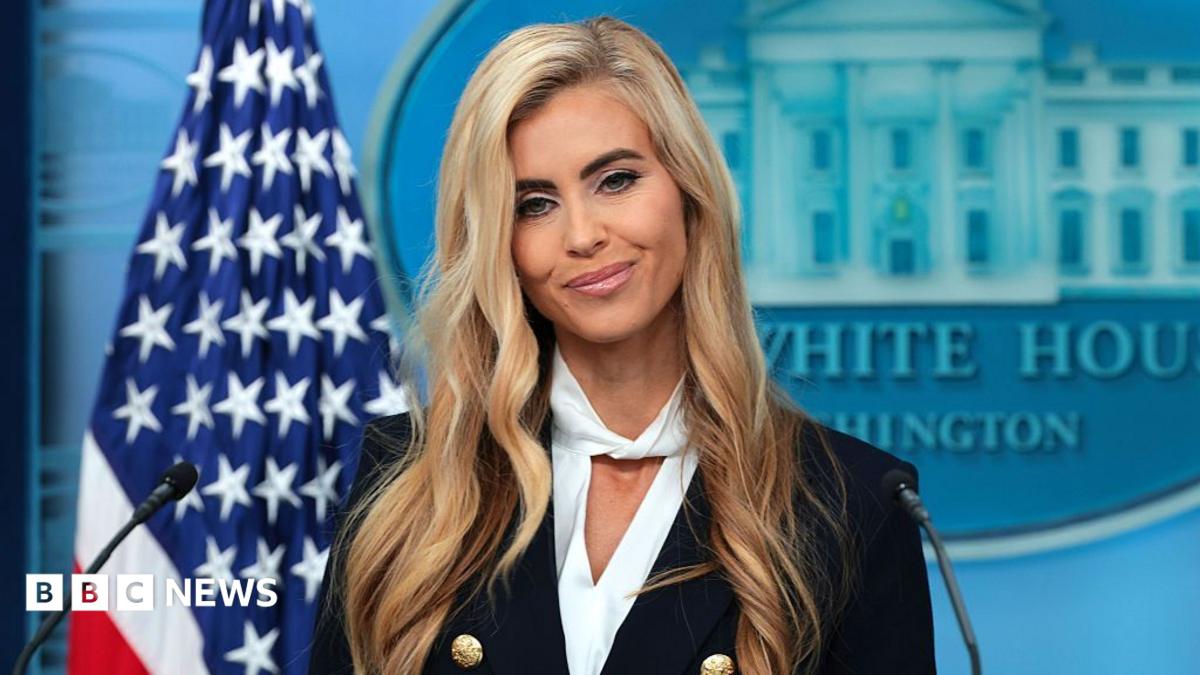
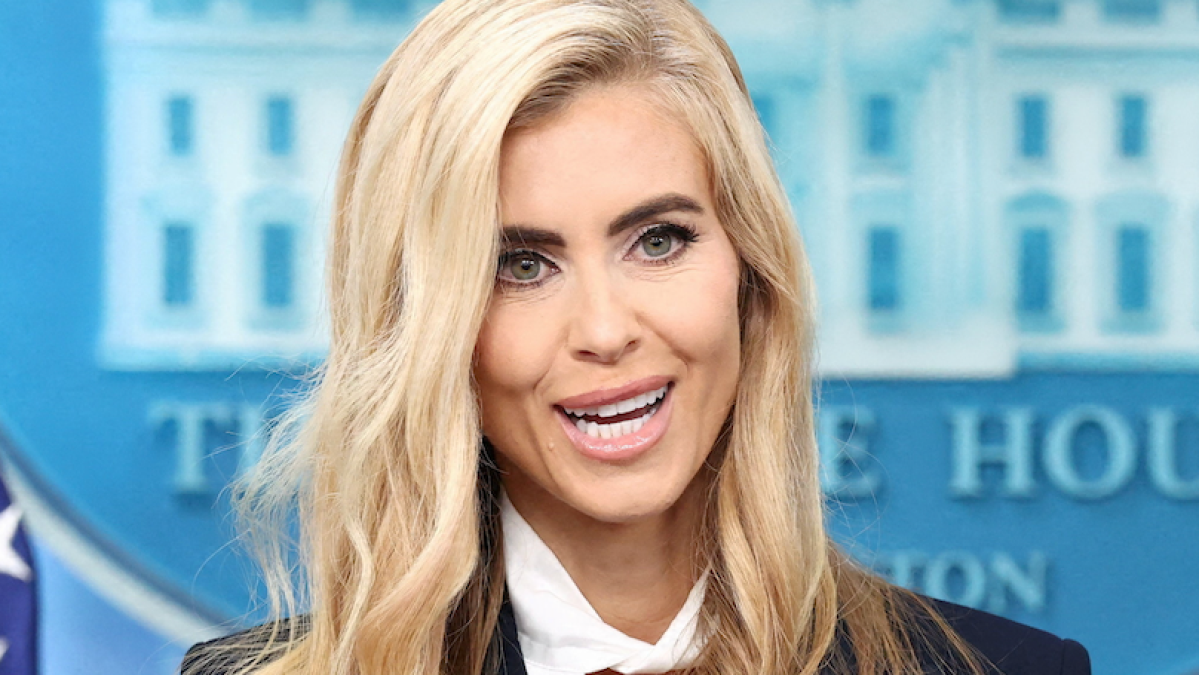
White House Press Secretary Karoline Leavitt will be departing her role at the end of the month to prioritise her family, United States President Donald Trump announced on Truth Social.

“Karoline has been a real leader in the White House, and has done a phenomenal job fighting for Justice, Liberty, and Freedom, since 2018,” Trump wrote in a post on Wednesday, revealing the staffing shake-up.

He noted that Leavitt would remain one of his “top outside advisors” and an “influential voice within the Republican Party”.

Leavitt is the latest in a series of senior Trump officials to step down from his second administration.

Since the start of this year, high-level figures like former Attorney General Pam Bondi and ex-Secretary of Homeland Security Kristi Noem have been fired.

Other officials — including former Secretary of Labour Lori Michelle Chavez-DeRemer and Todd Lyon, acting head of Immigration and Customs Enforcement (ICE) — have resigned amid scrutiny over their leadership.

Leavitt’s departure, however, comes on the heels of her maternity leave. She and her spouse Nicholas Riccio gave birth to their second child, a baby girl named Viviana, in early May.

The 27-year-old stepped away from her duties as White House press secretary in late April. She returned to the White House podium for her first formal press briefing in mid-July.

“Karoline has been one of the best White House Press Secretaries in the History of the Office”, Trump said in his post.

He added that Leavitt would continue to serve his administration as the Republican Party seeks to “conclusively win the Midterm Elections” in November.

This is a developing story. More details to come.

Source link

White House press secretary Karoline Leavitt to leave at month’s end

White House press secretary Karoline Leavitt, the youngest person to hold the role, will leave at month’s end, President Trump announced Wednesday.

Leavitt, 28, just recently returned to the White House after taking a brief leave for the birth of her second child in May.

Leavitt, who served Trump as a press aide during his first go-around in the White House, has been one of the most visible advocates of Trump’s “Make America Great Again” movement. The Republican president described her as one of his “most trusted aides” in a social media post announcing her departure.

He said Leavitt “will be departing her role at the end of the month so she can spend more time with her beautiful young children and family, a decision I totally understand and respect! Karoline will now be one of my top outside advisers, and an influential voice within the Republican Party, as we work to defy History, and conclusively win the Midterm Elections.”

Leavitt recently returned to work after taking leave following the birth of her second child, a daughter, in May. She also has a two-year-old son.

“The truth is since returning to the White House after the birth of my daughter, I have felt in my heart that I cannot be the best mom my two young children deserve while devoting the constant time, energy, and attention required of the White House Press Secretary — and that is why I have ultimately made the bittersweet decision to depart the White House and embark on a new chapter in my life,” Leavitt said in a social media post.

Trump did not outline plans for who might replace her in the high-profile role.

Source link