press

Press freedom groups allege Larry Ellison vowed to oust CNN anchors

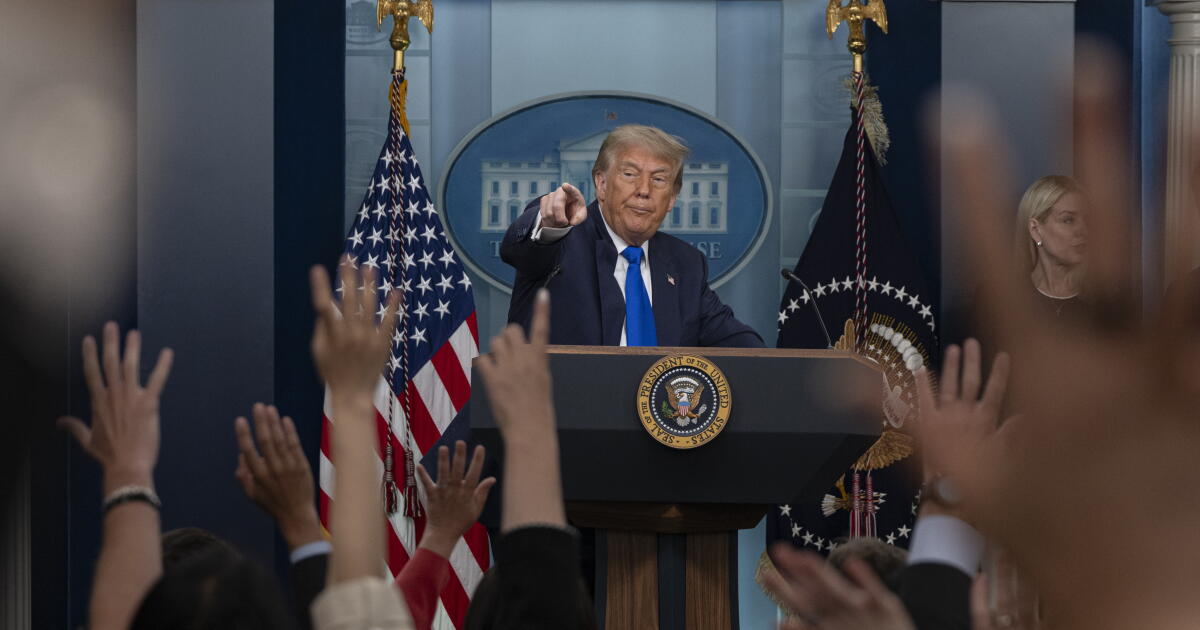
Two press freedom groups that own shares in Paramount Skydance are demanding to see the company’s books and internal documents, citing allegations that the company’s leaders may have promised favors to the White House to win approval for Paramount’s deal to acquire Warner Bros. Discovery.

The letter, sent Thursday to Paramount chief legal officer Makan Delrahim, says that media reports alleging that Paramount owner David Ellison and others promised favors to the Trump administration “create credible concern that Paramount leadership has offered, solicited, or effectuated a corrupt exchange,” which the groups argue would “constitute a breach of fiduciary duties” and open the company up to a “range of potential civil and criminal penalties.”

The letter cites Delaware law that allows stockholders to inspect the company’s books and records “for any proper purpose.”

Paramount declined to comment on the letter.

Among the issues raised in the letter are promises reportedly made by David Ellison and his father, Oracle billionaire Larry Ellison, that they would make “sweeping” changes at the news network CNN, which is owned by Warner Bros. Discovery.

The Ellison family acquired Paramount, which includes CBS and the storied Melrose Avenue film studio, last summer.

The letter cites changes implemented in CBS since their acquisition, including their decision to end late night television house Stephen Colbert’s show days after he characterized a settlement Paramount reached with Trump as a “big fat bribe.”

Under Ellison’s ownership, the letter says, numerous high-profile reporters have left the network and its ratings have dropped to “historic lows.”

Larry Ellison, who is backing the financing of Paramount’s proposed takeover of Warner, reportedly told White House officials that Paramount would “implement the CBS playbook” at CNN if the merger is approved, and remove anchors and commentators at the cable news network that Trump doesn’t like, according to the letter.

The effort comes just two weeks after Warner Bros. Discovery shareholders overwhelmingly approved the proposed merger. Investors have supported the Larry Ellison family takeover, which would become the biggest Hollywood merger in nearly a decade. The deal would pay Warner stockholders $31 per share — four times the stock price a year ago.

The letter was written on behalf of the Freedom of the Press Foundation, which develops secure communication tools for journalists and tracks violations of press freedom, and Reporters Without Borders, which tracks press freedom globally.

The organizations are being represented by former federal prosecutor Brendan Ballou, who established the Public Integrity Project this year to challenged alleged government corruption, as well as Delaware attorney Ronald Poliquin.

The missive, which could be a precursor to a lawsuit, opens another avenue of attack against the controversial $111-billion deal, which would transform the smaller Paramount into an industry titan.

With Warner Bros. Discovery, the Ellisons would also control HBO, TBS and the vast film and TV library of Warner Bros., which includes the Harry Potter, DC Comics, and Scooby-Doo, in addition to CNN.

Paramount, led 43-year-old David Ellison, wants to finalize its Warner Bros. takeover by the end of September. President Trump favors the deal; he has long agitated for changes at CNN.

But the proposed merger would saddle the combined company with $79 billion in debt, stoking fears that Paramount would be forced to make steep cost cuts to juggle such a large debt load.

Politicians, unions and progressive groups separately have pressed California Atty. Gen. Rob Bonta to scrutinize the proposed merger, hoping that he brings an antitrust lawsuit in an attempt to upend the deal.

More than 4,000 film industry workers, including Ben Stiller, Bryan Cranston, Ted Danson, J.J. Abrams, Jane Fonda and Kristen Stewart, have signed an open letter imploring Bonta and other regulators to block the merger. The group lamented the proposed tie-up, saying it “would reduce the number of major U.S. film studios to just four.”

Opponents fear the consolidation would lead to massive layoffs and diminish the quality of programming that Warner Bros., CNN and HBO are known for.

Hollywood has sustained thousands of layoffs over the last seven years since Walt Disney Co. swallowed Fox’s entertainment assets in another huge merger. In addition, the film production economy hasn’t recovered from shutdowns during the 2023 labor strikes. An estimated 42,000 entertainment industry jobs were lost from 2022 and 2024.

On Thursday, 34 California Democrats in Congress also sent a letter to Bonta, encouraging him to look closely at the merger.

The deal is expected to become one of the largest leveraged buyouts ever.

Ballou, who is working with the press freedom groups, previously served as a Justice Department special counsel with expertise in private equity transactions.

He resigned from the Justice Department in January 2025 when Trump returned to office. In his book, “Plunder: Private Equity’s Plan to Pillage America,” Ballou examined large leveraged buyouts and found that many of which resulted in bankruptcies.

Source link

Democratic senators press U.S. military on Israel’s evacuation zones, warning of legal risks

A dozen U.S. Democratic Senators have called for the U.S. Central Command to answer questions about American coordination with Israel in declaring broad “ evacuation zones ” in Lebanon and Iran, alleging that the practice may violate international law.

The letter underlines how the Democratic Party — both its leaders and the base — has grown increasingly critical of Israel.

Since the beginning of the U.S.-Israeli war against Iran and the latest Israel-Hezbollah war in Lebanon, the Israeli military has regularly issued maps covering large areas of territory along with warnings telling all residents of the zones to flee. Israel had previously used a similar approach in Gaza.

The senators said the sweeping warnings have “been used to permanently displace people and destroy homes and towns” and that some civilians who refused to leave their homes in the areas have been killed by subsequent strikes.

The 12 senators led by Vermont Sen. Peter Welch, in a letter dated May. 4 to CENTCOM chief Adm. Brad Cooper that was provided to The Associated Press, state that Israel’s practice of unilaterally declaring mass evacuation warnings in Lebanon and Iran “likely contravene international laws the United States has helped develop around humane warfare.”

The other signatories include senators Bernie Sanders of Vermont, Elizabeth Warren of Massachusetts and Sen. Tammy Baldwin of Wisconsin.

The letter asked the CENTCOM chief whether U.S. forces have coordinated military targets with Israeli forces during the recent war with Iran, whether they provided assistance or intelligence helping Israel’s military to impose the evacuation zones in Lebanon and Iran, and whether CENTCOM signed off on U.S. military support for the targeting of people or infrastructure in the evacuation zones. It also asked whether the U.S. military has reviewed the legality of the practice.

The Israeli military declined to comment when asked about the letter. CENTCOM did not immediately respond to a request for comment.

In the past, Israel has said the evacuation maps aim to keep civilians out of harm’s way. It says Hezbollah has positioned fighters, tunnels and weapons in civilian areas across southern Lebanon, from which it has launched hundreds of drones and missiles — without warning — into northern Israel.

A shift in the party stance

Observers said the move is part of a larger shift in the stance of Democratic Party leaders on U.S. military assistance to Israel. Democrats have also been critical of the Trump administration’s entry into the war on Iran alongside Israel.

The letter came nearly three weeks after more than three dozen Democrats supported an effort by Sanders to block arms sales to Israel, signaling a growing discontent in the party with Israeli Prime Minister Benjamin Netanyahu and the wars in Gaza and Iran.

The two resolutions to block U.S. sales of bulldozers and bombs to Israel were opposed by all Republicans and rejected 40-59 and 36-63.

Jon Finer, former deputy national security adviser under President Joe Biden, said the recent steps by Democratic senators reflect a “growing concern about Israeli conduct of various wars that cause civilian harm and U.S. complicity in that” across the spectrum within the Democratic Party.

Asked why the Democratic Party is taking these steps now and not at the time when the war in Gaza and the Israel-Hezbollah war broke out — when the Democratic Biden administration was in power — Finer said: “our operational integration with Israel appears to be growing, which is part of it, but the truth is the Democratic base has been moving in this direction for some time and Washington has been catching up.”

Andrew Miller, a former senior official on Israel and Palestinian Affairs at the State Department, said the letter “represents a shift among congressional Democrats moving from questions of the legality of Israeli military operations to concerns about the complicity of the U.S. military.”

“It demonstrates that Democrats are taking international law very seriously and that is a welcome development,” Miller said.

The evacuation zones

Israel has issued dozens of evacuation warnings in Lebanon since the latest Israel-Hezbollah war began on March 2. Over 1 million people in Lebanon have fled their homes during the war.

Israel has also issued similar warnings for Iranians, both during the 12-day Israel-Iran war last year and during the U.S.-Israeli war launched on Iran on Feb. 28. In one case last year they warned 300,000 people in Tehran, Iran’s capital, to evacuate.

On Wednesday, the Israel military’s Arabic-language spokesperson Avichay Adraee issued an evacuation warning to residents of 12 villages in southern Lebanon saying Hezbollah is using them to launch attacks. The warnings came despite a ceasefire that has been nominally in place since April 17, although Israel and Hezbollah have been carrying daily attacks since then.

The senators said the declaration of evacuation zones does not absolve Israeli and U.S. forces “from the absolute legal responsibility to determine that each individual person or civilian facility targeted by drones, jets, and gunfire is, in fact, a military target.” It said the use of the zones has been linked to “the deaths of thousands of civilians,” describing them as “kill zones.”

In response to questions by the AP last month, the Israeli military said it issues warnings by phone, text, radio broadcast, social media and leaflets dropped from the air, in accordance with the “principles of distinction, proportionality and feasible precautions” under international law.

Mroue writes for the Associated Press. AP writer Julia Frankel contributed to this report from Jerusalem.

Source link

World Press Freedom Day marked in Gaza as journalist death toll rises | Gaza

NewsFeed

Palestinian journalists in Gaza marked World Press Freedom Day by honouring colleagues killed and targeted by Israel, as the territory becomes the deadliest place ever recorded for media workers. Pope Leo XIV called for greater protection of reporters ‘pursuing the truth’, especially in war zones.

Source link

Investigators say Trump assassination suspect shot officer at press gala | Donald Trump News

Secret Service agent at White House correspondents’ dinner was ‘definitively’ hit by suspect’s bullet, prosecutor says.

Authorities in the United States have said that the suspect accused of attempting to kill President Donald Trump was the one who shot a Secret Service agent at the White House correspondents’ dinner last month.

Officials initially did not provide details on how the agent – who was wearing a bulletproof vest – was injured. On Sunday, US Attorney Jeanine Pirro told CNN that investigators have confirmed that the agent was shot by the alleged gunman, Cole Tomas Allen.

Recommended Stories

list of 3 itemsend of list

“It is definitively his bullet. He hit at that Secret Service agent. He had every intention to kill him and anyone who got in his way, on his way to killing the president of the United States,” Pirro said.

“This was a premeditated, violent act, calculated to take down the president, and anyone who was in the line of fire.”

She added that a pellet that came from the suspect’s shotgun was “intertwined with the fiber” of the agent’s protective vest.

The determination could lead to additional legal charges against the 31-year-old suspect. It also rules out speculation that the agent may have been struck by so-called “friendly fire”.

The Justice Department announced three charges against Allen last week – attempting to assassinate Trump, the transportation of a firearm across states with intent to commit a felony and the discharge of a firearm during a crime of violence.

A sentence of life in prison faces anyone convicted of attempted assassination.

Last week, Acting Attorney General Todd Blanche said Allen had travelled via train from his home near Los Angeles to Chicago and then to Washington, DC.

He arrived in the US capital on April 24, the day before the dinner at the Washington Hilton hotel, and checked in.

According to Blanche, during the dinner, Allen approached a security checkpoint on the terrace of the hotel, one level above the ballroom where Trump was.

“He ran through the magnetometer holding a long gun. As he did so, US Secret Service personnel assigned to the checkpoint heard a loud gunshot,” Blanche said.

“One Secret Service officer was shot in the chest, but was wearing a ballistic vest that worked. This heroic officer, who was hit, fired five times at Allen, who was not shot, but fell to the ground and was promptly arrested.”

Officials have said Allen was carrying a shotgun, a semiautomatic pistol and three knives.

The shooting, considered to be the third assassination attempt against Trump since 2024, has shaken US politics. The White House has accused the US president’s Democratic rivals of inspiring political violence with their verbal attacks on the administration.

But Trump himself is known for personal attacks against opponents, and critics have accused him of using the shooting to censor his rivals.

Source link

On World Press Freedom Day, Pope honours journalists killed in war zones | Freedom of the Press News

The pope urged the rememberance of journalists who lost their lives pursuing the truth, particularly in conflict areas.

Pope Leo has marked World Press Freedom Day ⁠by condemning ⁠violations of media freedom around the world and paying tribute to journalists killed while reporting in ⁠conflict zones.

At the end of his weekly Sunday prayer in a sunny Saint Peter’s Square at the Vatican, the pontiff ⁠said the day highlighted both the importance of independent journalism and the growing threats faced by reporters.

Recommended Stories

list of 4 itemsend of list

“Today we celebrate World Press Freedom Day … unfortunately, this right is often violated, sometimes in blatant ‌ways, sometimes in more hidden forms,” he said.

World Press Freedom Day, ⁠sponsored by the UN cultural agency UNESCO is intended to show support for media organisations that come under ⁠pressure or censorship. It is also an opportunity to commemorate journalists who have been killed at work.

The Roman Catholic leader urged the faithful to remember journalists and reporters who have lost their lives pursuing the truth, particularly in conflict areas.

“We remember the many journalists and reporters who have been victims of war and violence,” ⁠the pope said.

A report last month by the Watson Institute for International and Public Affairs’ Costs of War project found that Israel’s war on Gaza was the deadliest conflict for media workers ever recorded, with Israeli forces having killed 232 Palestinian journalists since October 2023.

More journalists have been killed in Gaza than in both world wars, the Vietnam War, the wars in Yugoslavia, and the United States war in Afghanistan combined, the report found.

In past speeches, the ⁠leader of the Catholic Church has described journalism as a pillar of society and democracy, and information as a public good that must be safeguarded ‌and defended.

The pontiff has often thanked reporters for sharing the truth, saying that doing their job could never be ‌considered ‌a crime, and frequently calling for the release of journalists who have been unfairly detained or prosecuted.

Last week, the leading Paris-based press freedom NGO, Reporters Sans Frontières (RSF), or Reporters Without Borders, found that freedom of the press around the world has fallen to its lowest level in a quarter of a century.

For the first time since RSF started producing the index in 2002, it said more than half of the world’s countries fall into the “difficult” or “very serious” categories for press freedom – “a clear sign that journalism is increasingly criminalised worldwide”.

Source link

US falls to ‘historic low’ in press freedom tracker: RSF | Donald Trump News

The United States has fallen to a “historic low” in the Reporters Sans Frontieres (RSF), or Reporters Without Borders, annual press freedom tracker, continuing a decade-long decline, the organisation has said.

The report on Thursday recorded a global drop in press freedom indicators in 2025, with, for the first time, more than half of the world’s countries labelled as “difficult” or “very serious”.

Recommended Stories

list of 3 itemsend of list

While the US, during the first year of US President Donald Trump’s second term, remained in the “problematic” category, it dropped seven spaces from 57th in the world to 64th. Norway led the list, with Eritrea ranked lowest among 180 countries.

In a statement, Clayton Weimers, executive director of RSF’s North America office, said the US was experiencing a “press freedom crisis”.

“Trump and his administration have carried out a coordinated war on press freedom since the day he took office, and we will live with the consequences for years to come,” he said in a statement.

“Our message is clear: Protect legal rights, ensure accountability for attacks on media professionals, and support independent media to restore American press freedom.”

The report pointed to both Trump administration policies and the wider consolidation of media companies in the US, which critics say opens the door to stifling certain points of view.

That has included Skydance Media’s acquisition of Paramount Global, which includes CBS News. Skydance is owned by David Ellison, whose father, Larry Ellison, is a confidant of Trump’s.

Paramount Skydance is also currently acquiring Warner Bros, which owns CNN.

All told, just six companies control most US media: Comcast, Walt Disney, Warner Bros Discovery, Paramount Skydance, Sony, and Amazon.

While Trump has long had an adversarial relationship with journalists, press freedom observers say the head of the Federal Communications Commission (FCC) has accelerated pressure on media figures and journalists during the president’s second term.

In March, FCC chair Brendan Carr said he would revoke the licences of broadcasters that are “running hoaxes and news distortions”, and that do not “operate in the public interest” in their reporting on the US-Israel war with Iran. Trump said he was “thrilled” by Carr’s statements.

Carr has also threatened to revoke the licenses of broadcasters for their coverage of Trump’s immigration policies, which critics say can have a chilling effect on local news organisations.

The effort has extended to television talk show hosts, who have been threatened by the FCC over jokes.

Most recently, Carr announced an investigation into several ABC channels.

That came days after the network’s flagship late-night host, Jimmy Kimmel, made a joke about the White House Correspondents Dinner (WHCD).

Kimmel had quipped that First Lady Melania Trump had the “glow of an expectant widow” before the event.

Days later, a gunman attempted to storm the WHCD in Washington, DC, which Trump was attending for the first time. The Trumps later connected Kimmel’s joke to the attack, calling for Kimmel’s firing.

Kimmel has said the joke was about the 79-year-old president and the 56-year-old first lady’s “age difference” and not a call for violence.

Critics of the FCC’s move included Republican Senator Ted Cruz, who said he does “not believe the FCC should operate as the speech police”.

The White House has repeatedly called Trump the most “transparent” president in US history, pointing to his regular news conferences.

Source link

Cole Tomas Allen, Torrance man accused of trying to kill Trump at press gala, to remain jailed

Cole Tomas Allen, the 31-year-old Torrance man charged with trying to kill President Trump at last weekend’s White House Correspondents’ Assn. dinner, will remain in federal jail pending trial.

Allen agreed to his ongoing detention during a brief hearing in federal court in Washington, D.C., on Thursday. “He’s conceding detention at this time,” one of his federal public defenders, Tezira Abe, told Magistrate Judge Moxila Upadhyaya, according to CNBC.

He did not enter a plea during the hearing, according to the Associated Press.

Abe and Allen’s other public defender, Eugene Ohm, had argued in a filing Wednesday for Allen’s pre-trial release, citing his lack of a criminal record, family support and ties to his church, as well as inconsistencies and weaknesses they allege exist in the government’s case against him.

Abe and Ohm did not respond to a request for comment following the hearing.

In addition to trying to kill Trump, a terrorism-related charge that carries a potential life sentence, Allen faces two firearms charges related to his allegedly transporting two guns across state lines as he traveled from California to Washington by Amtrak train, and allegedly discharging one of those firearms — a shotgun — during the incident.

In arguing for Allen’s release in their Wednesday filing, his attorneys not only insisted he was no danger to the community, but questioned the government’s reasoning and evidence for the charges against him.

Allen was captured on a hotel video camera sprinting past U.S. Secret Service agents and into the secured event space a floor above the dinner while armed, according to prosecutors, with the shotgun, a pistol, and various knives. He then fell to the ground and was detained, according to prosecutors.

Trump administration officials who were at the dinner, including Acting Atty. Gen. Todd Blanche and Jeanine Pirro, the U.S. attorney for D.C., charged him swiftly — leaning heavily on an email Allen had sent to family just as he was breaching event security, which Trump and others referred to as a “manifesto” but which was titled an “Apology and Explanation.”

In that document, Allen allegedly wrote that he was targeting top Trump administration officials, with the highest ranking among them receiving top priority. He allegedly wrote that he would “go through” others at the event to get to those officials, but that he was not targeting guests or hotel staff and had chosen buck shot rather than slugs to “minimize casualties” in the room.

The charge of attempting to kill the president hung largely on that document, according to charging documents.

Blanche and Pirro also alleged that Allen had fired a shot during the encounter with Secret Service agents, in which they said a Secret Service agent was shot in the ballistic vest. Prosecutors also alleged in court that Allen had fired his shotgun, noting their recovery of one spent casing, but made no mention of a Secret Service officer being shot in the vest.

That alleged shot served as the basis for the one count of discharging a firearm.

In their filing arguing for Allen’s release, his attorneys questioned the legitimacy of both arguments.

They wrote that the government’s “sole proffered evidence” of Allen’s intent to kill Trump — the “Apology and Explanation” letter — was “far from clear” and never actually mentioned Trump by name.

“The government’s evidence of the charged offense — the attempted assassination of the president — is thus built entirely upon speculation, even under the most generous reading of its theory,” Allen’s attorneys wrote. “While the government may be able to say that the letter expresses an intent to target administration officials, it falls well short of narrowing those officials to President Trump.”

Regarding the one count of discharging a firearm, Allen’s attorneys wrote that the government “has not asserted that Mr. Allen ever fired any of the recovered weapons.” They wrote that the government, “after essentially asserting that Mr. Allen shot a Secret Service Officer in the criminal complaint, has apparently retreated from the theory by not mentioning the alleged officer at all” in its filing arguing for Allen’s ongoing detention.

In the latter document, prosecutors wrote only that an officer had seen Allen fire his shotgun “in the direction of the stairs leading down to the ballroom.” However, they provided little evidence to support that claim, other than that the shotgun held a spent cartridge in its barrel.

“In sum,” Allen’s attorneys wrote, “the government’s entire argument about the nature and circumstances of the offense is based upon inferences drawn about Mr. Allen’s intent that raise more questions than answers.”

Prosecutors, in a separate filing in the case related to evidence gathering, rejected the defense claims.

“The preliminary analysis of the crime scene is consistent with the government’s evidence that your client fired at least one shot from the 12-gauge pump action shotgun in the direction of Officer V.G., and that Officer V.G. fired his service weapon five times,” they wrote. “The government is aware of no evidence thus far collected and analyzed that is inconsistent with the above.”

They wrote that evidence suggests Allen fired his Mossberg 12-gauge pump-action shotgun “at least one time as he ran past the magnetometers on the Terrace Level of the Washington Hilton.”

They wrote that investigators recovered one spent cartridge from the chamber of the shotgun, that the “government’s preliminary ballistics and video analyses show that your client fired his shotgun in the direction of” the Secret Service officer identified only as “V.G.,” and that “at least one fragment was recovered from the crime scene that was physically consistent with a single buckshot pellet.”

Source link

Press freedom worldwide falls to its lowest level in 25 years | Freedom of the Press News

Freedom of the press around the world has fallen to its lowest level in a quarter of a century, according to the leading Paris-based press freedom NGO, Reporters Sans Frontieres (RSF), or Reporters Without Borders.

Every year, RSF publishes a World Press Freedom Index used to compare the level of freedom enjoyed by journalists and media outlets in 180 countries. Its ranking uses a five-point scale to assess a country’s level of press freedom, ranging from “very serious” to “good”.

Recommended Stories

list of 3 itemsend of list

For the first time since RSF started producing the index in 2002, more than half of the world’s countries fall into the “difficult” or “very serious” categories for press freedom – “a clear sign that journalism is increasingly criminalised worldwide”.

Only seven mostly Nordic countries are ranked with “good” press freedom, with Norway, the Netherlands and Estonia in the top three. France ranks 25th with a “satisfactory” score, while the United States ranks 64th with a “problematic” score, falling seven places since President Donald Trump took office.

RSF reports that Trump “has turned his repeated attacks on the press and journalists into a systematic policy”, citing the detention of Salvadoran journalist Mario Guevara, who was later deported, while he was documenting a protest against immigration raids, as well as the suspension of several notable public media institutions.

In Latin America, RSF highlighted the dramatic fall of Javier Milei’s Argentina (98th, -11) and of El Salvador (143rd), which has dropped 105 places since 2014 following the launch of a war against the Maras criminal gangs.

The press freedom NGO said that “Eastern Europe and the Middle East are the two most dangerous regions for journalists in the world, as they have been for 25 years”, notably putting Russia (172nd) and Iran (177th) in the bottom 10.

It added that wars and restrictions on access to information are some of the driving factors for the decline in press freedom. It cited Israel’s attacks on journalists in Gaza, the occupied West Bank and Lebanon as an example of this, ranking Israel 116th.

“Since October 2023, more than 220 journalists have been killed in Gaza by the Israeli army, including at least 70 who were slain while carrying out their work,” it said.

Broadly speaking, RSF reported that “the criminalisation of journalism, which is rooted in circumventing press law and misusing emergency legislation and common law, is proving to be a global phenomenon”.

It reported that more than 60 percent of countries – 110 out of 180 – have criminalised media workers in various ways, notably citing India (157th), Egypt (169th), Georgia (135th), Turkiye (163rd) and Hong Kong (140th) as prime examples of state-imposed crackdowns.

“Although attacks on the right to information are more diverse and sophisticated, their perpetrators are now operating in plain sight,” Anne Bocande, RSF’s Editorial Director said.

She cited “authoritarian states, complicit or incompetent political powers, predatory economic actors and under-regulated online platforms” as the main causes “for the global decline in press freedom”.

Bocande called on democratic governments and citizens to do more to end this global criminalisation of journalists, particularly through “firm guarantees and meaningful sanctions”.

“Current protection mechanisms are not strong enough; international law is being undermined and impunity is rife,” she said. “Inaction is a form of endorsement,” while concluding that “the spread of authoritarianism isn’t inevitable”.

Source link

Press secretary Karoline Leavitt condemns ‘violent rhetoric’ after correspondents’ dinner shooting

April 27 (UPI) — White House Press Secretary Karoline Leavitt condemned negative comments and rhetoric about President Donald Trump in a press briefing Monday.

Leavitt addressed the press, likely for the last time before she begins her maternity leave, in the wake of a shooting at the White House Correspondents’ Dinner on Saturday. Leavitt blamed the incident on “violent rhetoric” from Democratic lawmakers, television personalities, the media and others on social media.

“This hateful and constant and violent rhetoric directed at President Trump day after day after day for 11 years has helped to legitimize this violence and bring us to this dark moment,” Leavitt said. “Those who constantly falsely label and slander the president as a fascist, as a threat to democracy, and compare him to Hitler to score political points are fueling this kind of violence.”

Leavitt said one member of the U.S. Secret Service was shot in the chest but survived because they were wearing a bulletproof vest.

The Department of Justice will address the arraignment of the alleged gunman, 31-year-old Cole Tomas Allen, on Monday, Leavitt added. She also acknowledged that the White House Correspondents’ Dinner may be rescheduled.

“When you read the manifesto of this shooter, ask yourselves how different is the rhetoric from this almost-assassin from what you read on social media and hear in various forums every single day,” Leavitt said. “Much of the manifesto of the would-be assassin is indistinguishable from the words that we hear daily from so many.”

In response to the shooting, Leavitt said that White House Chief of Staff Susie Wiles will be meeting with Department of Homeland Security leadership to discuss the security of the president.

Asked why she felt it was important to delay her maternity leave after Saturday’s shooting, Leavitt said she is “honored to speak on behalf of President Trump.”

President Donald Trump and first lady Melania Trump participate in the 2026 White House Correspondents’ Association Dinner in Washington on April 25, 2026. Photo by Yuri Gripas/UPI | License Photo

Source link

Trump was set to ‘let it rip’ with the press. Then came shots, chaos and a call for unity

President Trump was preparing to take the stage at the White House Correspondents’ Assn. dinner Saturday night, eager — by his own account — to “let it rip” before a room of Washington’s elite and reporters he has spent years calling the enemy of the people.

Then shots were heard. Secret Service agents rushed him off the stage. And within hours, the president was at the White House calling for unity, offering overtures to a press corps that he had long clashed with.

“I just want to say you did a fantastic job, what a beautiful evening and we are going to reschedule,” Trump told Weijia Jiang, the president of the White House Correspondents’ Assn., at a news briefing after the shooting at the dinner.

His magnanimity did not last long. On Sunday night, sitting down for an interview with Norah O’Donnell of CBS’ “60 Minutes,” Trump reacted with fury to her reading of the suspected shooter’s manifesto, calling her a “disgrace.”

The manifesto characterized his targets as rapists and pedophiles.

“You’re horrible people. Horrible people,” Trump said. “He did write that. I’m not a rapist. I didn’t rape anybody.

“I’m not a pedophile. You read that crap from some sick person? I got associated with all — stuff that has nothing to do with me,” he added. “You should be ashamed of yourself reading that because I’m not any of those things.”

It marked a return to the familiar dynamic between the president and the press after a night of shared crisis and purpose — raising doubts about how long the goodwill would last.

Just hours before, at the briefing, Trump expressed dismay at the violent outburst at the Washington Hilton, where the black-tie event has been held for more than 50 years.

“I will tell you, I fought like hell to stay, but it was protocol,” the president said. On Sunday he repeated his desire to reschedule the event, telling Fox News that he is committed to attending it in the near future, even proposing to do it within 30 days.

Trump appeared to be enjoying himself moments before Cole Tomas Allen, a 31-year-old tutor from Torrance, allegedly ran past a security checkpoint at the hotel and fired off two shots. Oz Pearlman, a mentalist and the entertainer for the night, seemed to be doing a trick for the president and the first lady when the shots were fired, videos show.

Trump was preparing to deliver remarks at the end of the night. His team was excited about it, and the president had been making tweaks to his speech on Air Force One up until Saturday morning.

“It will be funny. It will be entertaining,” White House Press Secretary Karoline Leavitt said at a red carpet event ahead of the dinner.

The speech was going to mark Trump’s first at the White House correspondents’ dinner. He told Fox News on Sunday that he was “really going to let it rip,” and that he had considered the moment an “important event” until it came to a halt.

Trump said he would like to reschedule the event within the next month, adding that he will make an “entirely different speech” — one that he said will be focused on “love.”

It is unclear how long Trump’s media-friendly tone will last, but some Republicans continued to blame reporters for the violent act. Kari Lake, the senior advisor to the U.S. Agency for Global Media, said some reporters attending the event “have spent a decade spreading absolute lies” about Trump.

Trump, for his part, used the security breach at the event to make the case for his White House ballroom project, claiming that the Washington Hilton is “not a particularly secure building” and is a prime example of why legal challenges holding up its construction need to be dismissed.

“We need the ballroom,” Trump told reporters. “Today, we need levels of security that probably nobody’s ever seen before.”

However, the annual dinner’s venue is picked not by the White House, but by the White House Correspondents’ Assn., an independent organization of journalists who cover the president.

Trump has vowed to return to the event in the near future, and has called for it to take place within the next month to show that “bad people” cannot “change the course of the country.” But the ballroom project could not be ready that quickly.

It remains under construction and “ahead of schedule,” Trump has said. Earlier this month, a federal appeals court allowed construction on the project to continue through early June, as legal challenges remain ongoing.

The construction of the $400-million ballroom on the White House grounds has come under searing scrutiny. The National Trust for Historic Preservation, which sued last year to stop the project, has argued that Trump lacked authority to make architectural changes to the White House grounds.

Carol Quillen, president and chief executive of the National Trust for Historic Preservation, has argued the White House is “the most evocative building in our country” and any changes should go through a review process, including a public comment period. Trump on Sunday described the lawsuit as one brought by a “woman walking a dog.”

The attempted attack, which marks the third time in less than two years that Trump has faced the threat of a gunman, has reignited questions about the tense political environment besetting the United States.

Trump, for his part, called his job a “dangerous profession” and said he believed he has become the target of attacks because of his presidency’s own consequence.

“The people that do the most, the people that make the biggest impact, they are the people that they go after,” Trump told reporters at the White House after being rushed out of the hotel.

In an interview with Fox News on Sunday, he added: “If you’re a consequential president, you’re in much more danger than if you’re not a consequential president.”

As an example, Trump pointed to his war in Iran, a conflict that recent polling shows has contributed to his approval rating falling to around 40%. The president said the war “should’ve been done by previous presidents … but nobody did anything about it.”

At Saturday night’s dinner, people infiltrated the hotel to protest the Iran war and Defense Secretary Pete Hegseth.

Two demonstrators, wearing suits, crashed a red carpet photo shoot in the hotel lobby and called for Hegseth to be arrested for war crimes, underscoring how the foreign conflict is fueling the political rhetoric at home.

In the hours after the shooting, Trump remained defiant. In an interview, he said he was determined to show a unified front and not let “one nut” derail his agenda or events.

“I hate it when a sick, bad person,” he told Fox News on Sunday. “I hate someone like that changing the course of our country.”

Source link

Shooter’s path to White House press gala prompts security questions

An attack on the White House correspondents’ dinner by a gunman who came within feet of the ballroom where President Trump sat raised immediate questions about the night’s security protocol — and the future of large, high-profile events in a country with easy access to firearms and increasingly high political tensions.

The man breached metal detectors in front of the Washington Hilton ballroom and sprinted dozens of feet ahead before exchanging fire with federal agents. Shots were fired in an anteroom that had not an hour before seen thousands of guests, including senior government officials, streaming through.

A manifesto allegedly written by the suspect described his targets as members of the Trump administration, ranking from the highest to the lowest — but said he was willing to “go through” any guest standing in his way in order to kill the president’s aides.

The attempted attack on a room full of dignitaries underscored domestic unrest in Trump’s second term and deepened questions about how to effectively create security in a modern era of lone actors, online radicalization and mass shootings. It was the third known time an attempted assassin has come close to Trump since his 2024 presidential campaign began.

Acting Atty. Gen. Todd Blanche on Sunday called the U.S. Secret Service response a “massive security success story.” But within hours of the incident, bipartisan leaders of the House Oversight Committee demanded a hearing on the agency’s security plans for the dinner.

In the manifesto sent to his family, the alleged gunman, Cole Tomas Allen, of Torrance, marveled at a lack of security.

“No damn security. Not in transport. Not in the hotel. Not in the event,” he wrote. “I walk in with multiple weapons and not a single person there considers the possibility that I could be a threat.”

The Hilton, in a ritzy Washington neighborhood, has long hosted the White House correspondents’ dinner. It is the same hotel where President Reagan and three others were shot in 1981.

The shooting caused terror among guests, some of whom noted they had expected more security to enter the event and Trump was whisked offstage within the first minute of shots being fired. While the event has traditionally hosted sitting presidents in the past, Trump’s decision this year to appear for the first time since taking office made the event particularly high profile.

His presence, alongside Vice President JD Vance and much of the Cabinet and line of succession, brought with it added security protocols and personnel — raising questions over whether the storied dinner and its guests of congressional members, diplomats and mid-level officials would have been even more susceptible to attack without Trump in attendance.

Trump on Sunday said it is “tough” to secure a hotel in the middle of a city with “buildings all around and hotel rooms on top,” but praised the Secret Service and law enforcement officers. One officer was shot, not fatally.

Talking to reporters after the incident Saturday night, Trump swiftly likened it to the attempt on his life by a gunman in Butler, Pa., during the 2024 presidential campaign, and suggested that it justified his controversial plans to construct a fortified ballroom on the White House grounds. He called the hotel “not a particularly secure building,” though he later said the room was “very, very secure.”

Plans to reschedule the dinner are under review. White House Correspondents’ Assn. President Wiejia Jiang of CBS News said the organization’s board would meet to assess what had happened.

Blanche said Sunday an investigation into what had happened was ongoing. He had attended a reception before the dinner on the first floor of the hotel hosted by CBS News, one of many that did not require any security check by law enforcement authorities.

“The first takeaway, or the takeaway that should be obvious, is that the system worked. And that we stopped the suspect, and we stopped him as soon as he tried to do what he was trying to do,” Blanche said on NBC’s “Meet the Press.”

But the attack raises a question about whether presidential security protocols are effective for modern tactics, or whether the country is “in a new domain” in which those procedures no longer meet the nature of the possible threats, said Neil Shortland, director of the Center for Terrorism and Security Studies at the University of Massachusetts Lowell.

Federal investigators should examine what the security policies were, what type of attacks they were designed to prevent, and whether that protocol was out of date, Shortland said.

“Did you follow the policy is a great question,” he said. “Was the policy correct in this modern day and for this modern situation is a separate question.”

The country is facing “the most complex threat environment in our nation’s history,” particularly from lone actors who are often radicalized online, Sam Vinograd, a former official at the Department of Homeland Security, said on CBS’ “Face the Nation.”

“It can be true that law enforcement and intelligence professionals prepared exhaustively for last night,” she said Sunday. “But it can also be true that in this moment, in this security environment, the paradigms of the past may not be sufficient to meet the moment.”

That raises the “need to rethink what it is going to take to actually secure these mass gatherings,” she said.

Trump appeared to voice the same idea Saturday evening, telling reporters, “Today, we need levels of security that probably nobody’s ever seen before.” He went on to say that “this is why we have to have” the East Wing ballroom, which he described as drone-proof and having bulletproof glass.

Kris Brown, president of the gun control organization Brady — which is named after Reagan’s press secretary, James Brady, who was shot in the 1981 attack — said lawmakers should instead consider passing legislation to help prevent gun violence.

“Not every public event can take place in the ballroom, in that kind of protection — nor can we afford to live in a society where our solution to gun violence is to barricade our public officials, our children, away in fortresses,” Brown said.

About 2,000 journalists, dignitaries and other guests attended the event, rushing through rain to enter using multiple hotel entrances. They were asked to show their tickets as they walked past security guards, but there was no check-in procedure or ID check. A Times reporter was waved toward the entrance without showing a ticket as she tried to get it out of her purse.

Inside, guests milled about on multiple levels where pre-dinner receptions were occurring. Hotel guests mingled with the crowd, granted full access to the hotel’s amenities, including its boutiques and restaurants.

Two protesters briefly took over a small red carpet where guests were lined up to take professional photos; Times reporters saw a third woman dressed in a formal gown and shouting protest slogans being escorted out by security guards after apparently having entered the event.

Guests were required to flash their tickets to go down an escalator to the ballroom level, then present the ticket before walking through metal detectors and having bags searched ahead of the ballroom entrance.

Allen, who had reserved a room as a hotel guest, said in his manifesto obtained by the New York Post that security was far less stringent than he had expected. Two U.S. officials told The Times that the contents of the manifesto are authentic.

“I expected security cameras at every bend, bugged hotel rooms, armed agents every 10 feet, metal detectors out the wazoo. What I got (who knows, maybe they’re pranking me!) is nothing,” he wrote.

He noted that security guards appeared to be focused on protesters and arrivals outside, writing, “apparently no one thought about what happens if someone checks in the day before.”

It is possible that steps to further restrict access to the ballroom level, keep guests away from the event location and check attendees’ identities outside could have provided additional security, said Erin Kearns, director of law enforcement partnerships at the National Counterterrorism Innovation, Technology and Education Center.

“The lesson that can be taken away is just thinking about how to harden and strengthen security at future events when you have so many high-profile people,” she said.

The hotel was a “soft target” with a makeshift perimeter, and there were “almost zero intervention points” where the shooter could have been apprehended before arriving, Shortland said. That was partly because he traveled by train, which does not have security screenings.

Authorities should also examine whether Allen was known to authorities and, if so, whether intelligence operatives could have pieced together his train travel and arrival in the president’s orbit, Shortland said.

The attempted shooting added to a growing list of instances of political violence in the United States. Last year, one Minnesota state legislator and her spouse were killed by a gunman while another lawmaker and his wife survived; the conservative activist Charlie Kirk — whose wife, Erika, was in attendance Saturday — was shot and killed at a speaking event; an arsonist attacked the residence of Pennsylvania Gov. Josh Shapiro.

Some of that violence has been directed toward Trump, something he frequently talks about. He was injured in the Butler incident, but has used his survival to argue that God saved him so he could become president. Two months later, a Secret Service agent shot at a gunman pointing a rifle on Trump’s golf course as the president golfed.

On Feb. 22, an armed man was shot and killed after entering the secure perimeter around Trump’s Mar-a-Lago home, when the president was in Washington.

“It’s always shocking when something like this happens. It’s happened to me a little bit,” Trump said Saturday.

Source link

After years of avoidance, Trump to attend first White House press dinner | Donald Trump News

Washington, DC – Donald Trump — whose political career has been built, in part, on deriding the United States press — is set to attend his first White House Correspondents’ Dinner as president.

Saturday’s event continues a decades-long tradition, dating back to 1921. Still, the black-tie gala held in Washington, DC, remains a divisive event.

Recommended Stories

list of 3 itemsend of list

For years, detractors have argued its chummy approach to the presidency risks blurring the independence of the press corps.

Trump himself is one of the dinner’s critics. Until this year, Trump had refused to attend, appearing poised to defy a tradition of sitting presidents dining at least once with the press corps during the annual event.

Since he launched his first presidential campaign, Trump has taken a bellicose approach towards the media, issuing both personal attacks on journalists and lawsuits against news organisations for coverage he deems unfair.

His presence at Saturday’s dinner has only heightened questions about the event’s role in the modern era.

Trump has previously declined five previous invitations to attend, across his first and second terms. His inaugural visit on Saturday has been accompanied by changes to the dinner’s format: Most notably, the longstanding practice of having a comedian perform has been nixed.

Journalist organisations and rights groups, meanwhile, have called on the event’s host, the White House Correspondents’ Association (WHCA), to send a “forthright message” to the president about protecting the freedom of the press.

“We also urge the WHCA to reaffirm, without equivocation, that freedom of the press is not a partisan issue,” a coalition of groups, including the Society of Professional Journalists, wrote in an open letter.

A return for Trump?

Saturday is set to be the first time Trump attends the correspondents’ dinner as president, but it is not his first time attending the event.

He was present as a private citizen at the 2011 dinner, years before launching his first successful presidential campaign.

At the time, Trump had begun his foray into national politics, pushing the so-called “birtherism” theory: the racist claim that then-President Barack Obama was born in Kenya and had faked his US birth certificate.

It is tradition for the sitting president to speak at the event, and Obama seized the moment to lob barbs at Trump’s conspiracy theories and his nascent political career.

In one instance, Obama poked fun at Trump’s work hosting the reality television show The Apprentice.

Referring to Trump’s “firing” of actor Gary Busey, Obama mockingly praised his decision-making. “These are the kind of decisions that would keep me up at night,” he quipped. “Well played, sir.”

Obama also envisioned what a future Trump presidency would look like, displaying a mock-up of a “Trump White House Resort and Casino”.

Comedian Seth Meyers, who hosted the night’s event, also took aim at Trump’s birtherism claims and political ambitions.

“Donald Trump has been saying that he will run for president as a Republican,” he quipped at one point, “which is surprising since I just assumed he was running as a joke.”

Trump sat stone-faced in the audience, with several confidants later crediting the night as a major motivator for his 2016 presidential bid.

The White House Correspondents’ Association was launched in 1914, as a response to threats by then-President Woodrow Wilson to do away with presidential news conferences. The organisation has worked to expand White House access for reporters.

Comedians became mainstays of the annual dinner in the early 1980s, with both presidents and journalists often the subject of their pointed jokes.

Defenders of the event have argued that the presence of comedians helps to celebrate free speech and ground the black-tie proceedings, underscoring that no attendee is above ridicule.

But since President Trump first declined to attend the event after taking office in 2017, that norm has shifted.

Michelle Wolf’s no-holds-barred performance in 2018 is often seen as a breaking point.

In her jokes, she seized upon Trump’s past statements appearing to praise sexual assault, and she charged that Trump did not have a “big enough spine to attend” the event. She also mocked the mainstream media’s coverage of the president.

While praised by fellow comedians and some members of the press, her performance divided the White House press corps. Trump and his top officials took particular issue with the material, with the president decrying Wolf as “filthy”.

The following year, the association instead invited historian Ron Chernow to speak at the event. The dinner did not have another comedian until 2022, during the administration of US President Joe Biden.

Last year, during Trump’s first term back in office, the association abruptly cancelled a planned performance by comedian Amber Ruffin, with the board’s then-President Eugene Daniels saying it wanted to avoid “politics of division”.

This year, a mentalist, Oz Pearlman, is set to perform instead of a comedian.

Calls for press freedom

The Society of Professional Journalists, Freedom of the Press Foundation, and The National Association of Black Journalists are among the organisations and hundreds of individual journalists urging their colleagues to use the event to make a statement.

In an open letter, it said the actions by the Trump administration “represent the most systematic and comprehensive assault on freedom of the press by a sitting American president”.

The organisation pointed to a series of hostile actions the Trump administration has taken against journalists.

They include limiting the White House and Pentagon press pools, threats by the Federal Communications Commission against broadcasters, immigration enforcement actions against non-citizen journalists, and an FBI raid of a Washington Post reporter’s home.

The letter also pointed to the White House’s launching of a “hall of shame” page on its website, which highlights news organisations accused of biased coverage, as well as Trump’s repeated verbal attacks on reporters.

But the Trump administration has rejected allegations that it treats journalists unfairly or that it has prevented public access to information.

White House spokesperson Karoline Leavitt, for example, has regularly touted Trump as the “most transparent” president in US history, pointing to his regular media events.

During his second term, Trump has also taken spur-of-the-moment phone interviews from reporters, even amid the US-Israeli war in Iran.

In their letter, the journalists and professional organisations note that some attendees on Saturday plan to wear pocket handkerchiefs or lapel pins with the words “First Amendment”.

The pins reference the section of the US Constitution that protects freedom of speech and freedom of the press.

But the journalists called on the White House Correspondents’ Association to go further and make it clear that it will not “normalise” Trump’s behaviour — “but instead fight back against any officeholder who has waged systematic war against the journalists whose work the dinner celebrates”.

Source link

Milei administration in Argentina blocks journalist access to Casa Rosada | Freedom of the Press News

Press freedom advocates have warned of hostile rhetoric towards journalists and increasingly restrictive policies under Milei.

The administration of Argentina’s Javier Milei has restricted access to the presidential palace, the Casa Rosada, as part of an escalating feud with the country’s journalists.

Accredited journalists reportedly arrived at the Casa Rosada on Thursday and attempted to enter the building through fingerprint scanning, as they usually would.

Recommended Stories

list of 3 itemsend of list

But they were unable to pass the scan. As confusion hit the news corps, the head of Argentina’s Secretariat of Communication and Press issued a clarification that their press accreditation had not been revoked.

“The decision to remove the fingerprints of journalists accredited to the Casa Rosada was taken as a preventive measure in response to a complaint filed by the Military Household regarding illegal espionage,” Secretary Javier Lanari wrote on social media.

“The sole objective is to guarantee national security.”

Lanari’s post cites an incident wherein two journalists from the Argentinian channel TN were accused of secretly filming inside the government palace.

After their report was broadcast, the Milei administration accused the journalists of endangering government security by showing parts of the Casa Rosada that were reportedly off limits.

On Wednesday, Milei himself took to social media to call the journalists “repugnant trash”. He then challenged other members of the news media to justify their actions.

“I would love to see that filthy scum — the 95% who carry press credentials — come out and defend what these two criminals did,” Milei wrote on X.

Since then, the president has repeatedly reposted messages critical of the news media, often accompanied by the acronym “NOLSALP” or “NOL$ALP”. It stands for: “We don’t hate journalists enough.”

“Someday, that filthy journalistic scum (95%) will have to understand that they are not above the law. They abused legal precedent. It does not come without a price,” Milei added in one of his posts on Thursday, as he continued to slam the news media.

This week’s actions are the latest in a series of policy changes under Milei designed to tighten restrictions on journalists.

Last year, for instance, his government capped entry to certain rooms in the Casa Rosada and placed other areas out of bounds.

Critics say the policies are part of a wider broadside against journalism in Argentina. The media advocacy group Reporters Without Borders (RSF) has said that, since Milei took office in 2023, the country has seen “a sharp decline in press freedom”.

And PEN International, an organisation for writers, warned last year of a “serious deterioration” in free-speech rights.

It pointed to legislation that further restricted which government documents could be made public and to Milei’s dismantling of public media, as well as the installation of a “mute” button to silence journalists during news conferences.

Already, the decision to bar journalists from entry into the Casa Rosada has faced pushback, including from Argentinian lawmakers.

Marcela Pagano, a former journalist turned deputy in Argentina’s legislature, announced on Thursday that she had filed a criminal complaint against Milei.

“The Casa Rosada is not private property,” Pagano wrote in a statement.

“Still less does a head of state — or his henchmen officials — have the authority to decide whether the press may access the building.”

She called Thursday’s incident “an unprecedented occurrence since the return of democracy” in Argentina in 1983.

“Prohibiting journalists from exercising their freedom of expression is the first step toward silencing any dissenting voice — a situation that we in Argentina have experienced during our country’s darkest moments,” she added. “THEY WILL NOT SILENCE US.”

Source link

‘The Devil Wears Prada 2’: Best looks from the red carpet, press tour

The stars of “The Devil Wears Prada 2” thrilled us with their bold fashion choices at the film’s world premiere in New York City on Monday night, the most recent stop in a press tour that began at the end of March. Meryl Streep, Anne Hathaway and Emily Blunt brought their A game, embracing method dressing without going overboard. Even Miranda Priestly would be proud.

While the film dons Prada’s name, Schiaparelli was among the go-to designers for the promo tour. From custom numbers to archival pieces, cast members, new and old, impressed in gowns that deserved center spreads in Runway. And there were no florals in sight.

Anne Hathaway wears a red gown on the red carpet.

Anne Hathaway attends “The Devil Wears Prada 2” world premiere in New York.

(Evan Agostini / Invision / AP)

During the film’s New York City premiere, Hathaway wore a devilish satin red gown. Designed by Nicolas Ghesquière for Louis Vuitton, Hathaway’s tea-length dress was paired with dazzling jewels from Bulgari.

Lady Gaga wears a long black gown while posing on the red carpet.

Lady Gaga attends “The Devil Wears Prada 2” world premiere at Lincoln Center’s David Geffen Hall in New York.

(Evan Agostini / Invision / AP)

Styled by sisters Chloe and Chenelle Delgadillo, Lady Gaga donned a black Saint Laurent gown from the fashion house’s fall 2016 collection. But Gaga really turned heads with her sparkling 7-carat earrings designed by Tiffany & Co.

Gaga has a cameo in the film, which director David Frankel told Vanity Fair was the “the worst-kept secret in showbiz.” The entertainer also wrote and recorded “Runway” with rapper Doechii for the sequel’s soundtrack.

Meryl Streep wears a red cape dress, black gloves and black sunglasses on the red carpet.

Meryl Streep attends “The Devil Wears Prada 2” premiere on Monday.

(Evan Agostini / Invision / AP)

Streep paired her statement sunglasses with a Givenchy by Sarah Burton caped dress at the film’s New York City premiere. The sweeping red dress included elegant black gloves that matched her Stuart Weitzman heels.

Emily Blunt wears an ivory tulle dress on the red carpet.

Emily Blunt attends “The Devil Wears Prada 2” world premiere in New York.

(Evan Agostini / Invision / AP)

Emily Blunt wore a dress from the Schiaparelli spring 2026 line. The dress’ structured bodice gave way into tulle skirt, with the fabric’s warm tone contrasting Blunt’s dark red lip. The bustier was covered in 25,000 silk thread feathers, which required roughly 4,000 hours of work.

Simone Ashley wears a silk green dress on the red carpet.

Simone Ashley attends “The Devil Wears Prada 2” world premiere at David Geffen Hall in New York.

(Evan Agostini / Invision / AP)

“Bridgerton” star Simone Ashley made her “Devil Wears Prada” debut in a vintage high-low Prada dress. Styled by Rebecca Corbin-Murray, she paired the chartreuse dress with marching diamonds. Ashley plays Amari Mari, Miranda’s first assistant in the film.

Meryl Streep, wearing a red power suit, waves at fans.

Meryl Streep promotes “The Devil Wears Prada 2” in Seoul.

(Ahn Young-joon / AP)

Streep wore a custom Prada power suit and David Yurman jewels while promoting the film in Seoul.

Anne Hathaway stands with arms outstretched as confetti falls.

Anne Hathaway on the red carpet to promote “The Devil Wears Prada 2” in Seoul.

(Ahn Young-joon / AP)

During the film’s premiere in Seoul, Hathaway donned a red leather Balenciaga number. Dressed by stylist Erin Walsh, the oversize jacket contrasted with her pencil skirt, and the look was tied together with Hathaway’s sleek ponytail.

Meryl Streep smiles at the crowd while walking the carpet. There is a giant red heel behind her.

Meryl Streep attends the “The Devil Wears Prada 2” premiere at Anahuacalli Museum in Mexico City.

(Angel Delgado / Getty Images for Disney)

During the press tour’s kickoff in Mexico City, Streep — styled by Micaela Erlanger — donned a long, belted navy blue Schiaparelli dress.

Anne Hathaway smiles with her arms up in a long-sleeved black dress.

Anne Hathaway promotes “The Devil Wears Prada 2” on “The Late Show With Stephen Colbert.”

(Scott Kowalchyk / CBS)

For an appearance on “The Late Show With Stephen Colbert,” Hathaway wore vintage Versace.


Source link

Off-duty London police officer filmed ‘intimidating’ Al Jazeera journalists | Freedom of the Press

NewsFeed

An off-duty Metropolitan Police officer was among a group filmed confronting Al Jazeera journalists reporting on a suspected arson attack in north London, the force has confirmed. The incident is raising questions about press freedom.

Source link

Press freedom declines in Americas, with US seeing sharpest drop: Report | Freedom of the Press News

A new report has expressed alarm at what it describes as backsliding press freedoms across the Americas, with the United States seeing the steepest decline.

The Inter American Press Association (IAPA) released its latest press freedom index on Tuesday, ranking last year as the lowest point for freedom of expression since the report began in 2020.

Recommended Stories

list of 3 itemsend of list

Researchers found that the Americas have experienced a “dramatic deterioration” in unrestricted speech, according to the report.

“This is one of the worst years for journalism in the region, marked by murders, arbitrary arrests, exile, and rampant impunity in countries such as Mexico, Honduras, Ecuador, Nicaragua, El Salvador, Guatemala, Colombia, Cuba, and Venezuela,” the report said.

It added that enhanced restrictions on free speech have occurred in countries of various ideological persuasions, whether right-wing or left-wing.

The US, however, was singled out as an area of “alarming decline”. In a ranking of 23 countries across the hemisphere, the US dropped from fourth place to 11th, indicating that journalists operate with increased restrictions.

Changes under President Donald Trump, who returned to office last year, were cited as a primary factor.

“Even though journalistic practice in the United States remains protected by the Constitution and laws, last year’s events saw the erosion of safeguards,” the report explained.

Trump, it said, had contributed to the “stigmatisation of critical journalism”. The report also pointed to developments like cuts to public media funding and the closure of Voice of America, a government-funded broadcaster, as detriments to the free press.

In total, the report tallied 170 attacks against journalists in the US last year, and it cited interactions with federal immigration agents as an area of concern.

The report also noted that Nicaragua and Venezuela continue to rank as “without freedom of expression”.

In Venezuela’s case, for instance, it cited the closure of more than 400 radio stations and the detention of 25 journalists in the wake of the controversial 2024 presidential election.

On a scale of 100, the report ranked press freedom in the country at 7.02. It remains in last place on the report’s list of 23 countries.

El Salvador also dropped in the index’s latest evaluation, now in 21st position on the press freedom list, just ahead of Nicaragua and Venezuela.

In an accompanying statement, Sergio Arauz, the president of the Association of Journalists of El Salvador (APES), denounced what he called the “escalating repression” under the government of President Nayib Bukele.

Arauz noted that 50 Salvadoran journalists had been pushed into exile in the last year amid a campaign of harassment by the government.

“There are no possibilities of practicing journalism fully without facing consequences when there is an Executive branch with virtually unlimited powers and no effective legal oversight,” said Arauz.

Since 2022, Bukele and his government have placed the country under a state of emergency that suspended key civil liberties and granted wide latitude to state security forces, in the name of addressing crime.

Tuesday’s report pointed to the state of emergency as a factor in undermining free speech, and also cited El Salvador’s new Foreign Agents Law, which gives the government the power to dissolve organisations that receive funding from abroad.

El Salvador is one of eight nations categorised in the index as “high restriction”, along with Ecuador, Bolivia, Honduras, Peru, Mexico, Haiti and Cuba.

The Dominican Republic, Chile, Canada and Brazil were ranked among the highest for protecting press freedoms.

Source link