
Premiership

Scottish Premiership: What have we learned from first round?

Hearts were one of the major stories of European football last season when they came within minutes of being the first non-Old Firm side to win the league since 1985.

Wouter Vrancken’s new-look team have made a strong start as they sit third, eight points behind Celtic and four behind Rangers despite a big summer rebuild and the Belgian implementing a new style of play which he has described as “organised chaos”.

They have certainly delivered on that – as only Celtic have scored more goals, and Hearts are a formidable opponent at Tynecastle where they are unbeaten in the league since April 2025, a run of 26 games.

Beatings have been handed out to Dundee United and St Mirren already in Gorgie.

Wednesday’s 2-2 draw at home to Rangers should have been a victory for Hearts which brought them closer to the top two – but ultimately their injury-ravaged squad was exposed late on and they remain closer to Dundee in fourth.

Those key injuries, while juggling European football, plus an unconvincing away record which included a 7-1 clobbering at Celtic Park, means Hearts might struggle to hang on to the pace set by the Old Firm.

Despite Celtic supporters being wholly unconvinced by their team, they are on course to reach over 90 points this season, having won the title with 82 last season, the lowest tally since 2017-18.

Likewise Rangers have doubters among their own, but they and their rivals are in the top two positions of a lot of key performance metrics.

Whether it’s expected goals for and against, shots on target per game, chances created, Celtic and Rangers are comfortably in the top two positions and are the only sides conceding fewer than one goal per game on average.

As they should be, given their financial advantages, and with Rangers not playing in European football this season they should be extra rested and focused on domestic duty.
Source link

Scottish Premiership: What to look out for on Wednesday

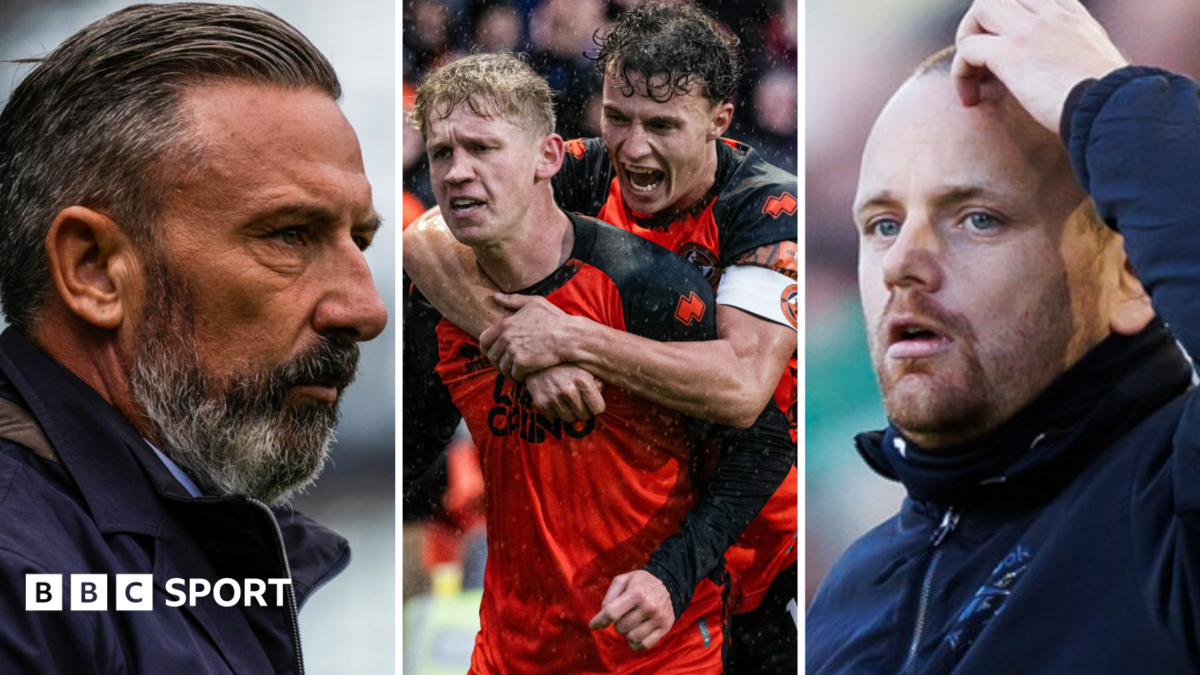
Dundee United are emerging as one of the stories of the season as Jim Goodwin’s side continue to thrive following a radical change in style from their manager.

As a coach, and certainly as a player, expansive, continental-inspired football was never really something associated with Goodwin, a Scottish football veteran who has been part of the furniture for more than 16 years.

But the former Aberdeen and St Mirren boss has said he has taken inspiration from Jens Berthel Askou’s work at Motherwell last season to reshape himself, and his side are lighting up the league after overcoming a difficult start.

An exhilarating 3-2 victory over Aberdeen in chaotic weather at Tannadice extended United’s unbeaten run to five matches, moving them up to fourth.

Now they face the Premiership’s acid test: a trip to Celtic Park.

Goodwin has got the better of the champions in two of his past three encounters with them, but both of those victories came at Tannadice last season.

Staggeringly, Celtic are unbeaten in 51 home games against United in all competitions since a 1-0 league defeat in December 1992.

Goodwin will be wary of the way Martin O’Neill’s men dismantled a bold Hearts side at Parkhead last time out, but the reinvented Irishman is urging his players to embrace a trip to the venue where his life in the Scottish game began.

Source link

Irish Premiership: Loss of Euro spot a ‘significant setback’ – Lawlor

Northern Ireland Football League CEO Gerard Lawlor has said member clubs “cannot continue doing the same things” after falling to 51st in Uefa’s association coefficient rankings.

Iberia 1999’s 1-1 draw at home to Mjallby in the Uefa Conference League on Thursday night moved Georgia’s domestic league up the standings, dropping Northern Ireland out of the crucial top 50.

While NIFL have said that their “final position remains subject to UEFA’s rankings and access arrangements”, as it stands that would mean the Irish Premiership will have only three European spots in the 2028-29 season.

Currently the Irish Premiership’s top two and Irish Cup winners automatically qualify for the next season’s Uefa competitions, while the league’s final spot is decided by an end-of-season play-off.

Lawlor called the expected loss of a European spot “a major concern and a potentially significant setback” for the game in Northern Ireland.

“The reality is that we are now facing the very real prospect of having just three clubs competing in Europe rather than four,” he said.

“European football provides vital opportunities for our clubs, players and supporters, alongside important financial investment that benefits the wider game.

“While we have witnessed some excellent individual European performances, collectively we must acknowledge that our results have not been good enough.”

Places in the Champions League, Europa League and Conference League are allocated on the basis of a five-year performance ranking.

This season, Glentoran, Linfield and Coleraine all fell at the first hurdle, while Larne squandered a two-goal aggregate advantage to lose to Lincoln Red Imps when 90 minutes away from the league phase of Conference League.

Poor showings in Europe are one factor in the ongoing debate over so-called summer football in the Irish Premiership, with 75% of NIFL’s 38 member clubs required to vote in favour of a calendar change.

“We cannot continue doing the same things, in the same way, and expect different outcomes,” said Lawlor.

“This reinforces why NIFL has been challenging clubs to think differently about their future, including seasonality, investment, player development and how we create a more competitive domestic environment.

“We must ask whether our current structures give clubs the best possible opportunity to succeed in Europe. We need to stop measuring ourselves solely against each other domestically and start measuring ourselves against European standards.”

Source link