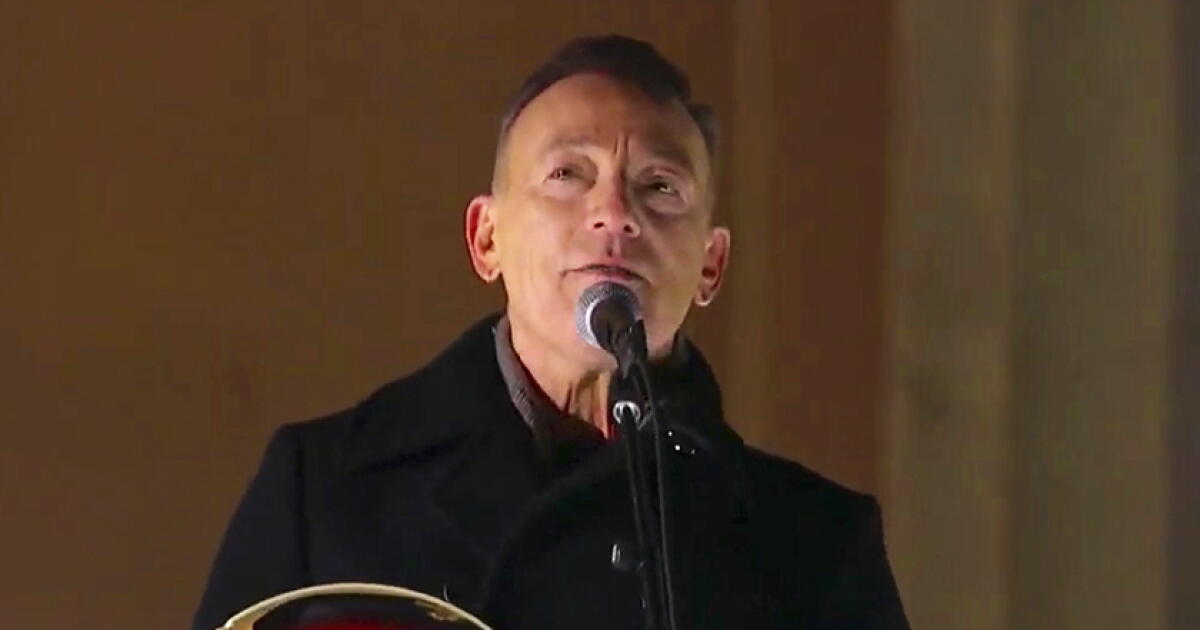
Spring-Nuts, a Bruce Springsteen fan club on Facebook, shut down after the musician endorsed Michigan’s Democratic Senate nominee, Abdul El-Sayed, the first Muslim elected to the U.S. Senate.
Howard and Julie Chazanoff, founders of the private fan collective of nearly 20,000 members and themselves observant Jews, had long upheld a “no-politics” policy to encourage “peaceful interactions” among members, the couple wrote in a Nov. 8 post announcing the shuttering.
“As Bruce became more outspoken about his politics, something we understood and respected as his absolute right, we found ourselves facing a difficult balancing act,” the couple wrote in their lengthy statement, running more than 4,600 words. “So, we decided to modify our no-politics policy and to allow Bruce’s political messages and commentary into the group…. We believed that in modifying our no politics policy, and listening to the passionate voices of our members, we were respecting Bruce’s voice and, in our own way, LETTING FREEDOM RING.”
Posted to his website Nov. 2, Springsteen’s endorsement read, “Dr. El-Sayed is a fighter for our American Constitution, he’s a fighter for our American Democracy, and he’s a fighter against the corrupt, lawless, and anti-American leadership currently in the White House. That’s why I’m in his corner 100%.”
The Chazanoffs said divisions among their large membership over the years had became unmanageable, and Springsteen’s most recent political statement hit a nerve.
“Most disturbing to us was Bruce’s recent endorsement of Senate candidate Abdul El-Sayed, who has strong relationships with people who have open disdain for America and Jews. El- Sayed refused to retract some of his own statements which we believe to be antisemitic and anti-American,” they wrote. “Julie and I were deeply affected by it, too. Not simply as the founders of Spring-Nuts, but on a deeply personal level, as individuals whose principles, convictions, and Jewish identity mean far more to us than any fan group, artist, or political disagreement ever could.”
The Times reached out to Springsteen’s representatives, but did not immediately receive a reply.
While supporting Springsteen and others’ rights to express their own political opinions, the couple expressed dismay about “disrespectful” fan engagement in the Facebook group.
“Although it’s no secret that Julie and I respectfully but vehemently disagree with Bruce’s endorsement of Abdul El-Sayed, particularly given our concerns about El-Sayed’s alignment with some of the individuals he has associated and campaigned with. Obviously, We DO NOT hold Bruce responsible for some of the behavior we’ve witnessed within this group,” they wrote.
Reddit user FlyTheW1988 republished the Chazanoffs’ full statement following the group’s shutdown, prefacing the post with a disclaimer: “Let me be clear, since I’m getting downvoted to oblivion: I didn’t write this and think it’s self-righteousness over the top sanctimonious hot garbage that could have been at most a paragraph. Just sharing in its entirety because I don’t have time to read it let alone cut it down.”
Facebook user Frank Stefanko in a Nov. 9 post defended the Chazanoffs as true fans whose fan site “shared cultures and enjoyed an international commonality and positive energy.” But he took issue with members criticizing the musician for “getting too political,” saying it “doesn’t compute!” when someone claims to like him “then criticizes the very core of who he is.”
“Bruce has always been political. Did you never listen to his lyrics. Bruce has a lot to say on many subjects. He’s a poet, he’s an artist, and most importantly, he’s a passionate true American,” Stefanko wrote. “I question any Spring-nut member who appreciates Bruce Springsteen and then criticizes his right to practice being an American.”
A day after the Democrats swept to victory in the midterms, online right-wing discourse in the aging corners of Facebook turned to calls for an armed conflict with Muslims and socialists.
“Vote from the rooftops” said the caption on an image of a sniper taking aim from a rooftop. The slogan is a euphemism in rightwing subculture that if voting fails, it’s time to take up arms.
Another post warned of a coming civil war with “no one left to protect Muslims and social democrats” if they defund the police.
“I got a feeling that Abdul El Sayid won’t be around too long,” said another post, referring to the Michigan senator-elect, who faced one of the ugliest islamophobic campaigns.
Hate speech and calls for violence online aren’t new. But the problem has grown worse in recent years, experts said, after social media platforms including Meta-owned Facebook and Instagram rolled back content moderation and fact-checking policies over fears of censorship and bias.
Anti-immigration rhetoric, election denialism and health skepticism are recurring themes for violent and false narratives in extreme right-wing online subcultures, weaponized by politicians. Incendiary speech has been further boosted by AI-powered slop that’s worsened an ailing information ecosystem.
In the runup to the midterms, wishes of harm and violent threats targeted at candidates running for office jumped fivefold on Elon Musk’s X, according to the Center for Countering Digital Harm, a non-profit based in Washington DC. The research analysed replies to posts from ten candidates in battleground races from Michigan to Texas, and found hundreds calling for violence.
A similar analysis in June found violent threats and hate against U.S. politicians on Facebook quadrupled after Meta cut its fact checking program in January 2025, according to CCDH. Hate and violent speech targeted at President Trump also doubled during that period.
“These findings point to a continued pattern of platforms’ safeguards failing to proactively remove content that contributes to our increasingly violent political culture,” said Imran Ahmed, chief executive of CCDH, a nonprofit based in Washington.
A spokesperson for Meta said the company regularly issues “public reports tracking violating content on our platforms, and the prevalence of hateful conduct did not increase throughout 2025.” Meta removed content it found to violate its policies, the spokesperson said.
Platforms have long struggled to strike a balance between free expression and censorship. Meta’s Mark Zuckerberg began as a free speech absolutist, but had to beef up moderation and introduce third party fact checking after anti-minority hate speech on Facebook fueled real world violence in Myanmar, Sri Lanka, and Ethiopia a decade ago.
The debate intensified during the COVID 19 pandemic over censoring speech that doubted or joked about the origins of the virus and anti-vaccine content, and culminated in the removal of Donald Trump’s account after inflammatory posts on the day of Jan. 6, 2021, Capitol riot.
Elon Musk’s takeover of Twitter in 2022 changed the moderation landscape even further. As the billionaire railed against “woke” culture, he fired the platform’s moderation and fact-checking teams. Musk replaced it with the crowdsource program known as Community Notes that enables users to fact-check and flag problematic posts.
When Trump returned as President in 2024, the pendulum had swung back. Accused of censoring conservative views, Zuckerberg in public hearings attributed the pandemic-era speech policing to government pressure, and expressed regret over not speaking sooner. In 2025, he said that across Instagram, Facebook and Threads, the company would remove content filters around immigration and gender.
“The reality is that this is a trade-off. It means we’re going to catch less bad stuff, but we’ll also reduce the number of innocent people’s posts and accounts that we accidentally take down,” Zuckerberg said in a video message. He described Trump’s 2024 victory as a “cultural tipping point” to correct the over-censorship, and replaced fact checking with Community Notes.
Now, explicit calls for civil war or posts calling to prepare for the coming fight are on the rise on social media, experts say, especially in the lead up to and days after the midterms.
“So are we wearing camo or what? Sorry, this will be my first ever civil war,” read a Facebook post. Another image with a rifle read: “If it’s time to hide them, then it’s time to use them.”
“Problematic content on Meta platforms, which is primarily Facebook and Instagram, has increased after Meta rolled back its kind of fact-checking and anti-hate speech policies,” said Magdalena Wojcieszak, UC Davis professor of communication.
She pointed to an April study that found that Instagram failed to remove 93% of flagged hateful and extremist content by white supremacist and Nazi accounts.
Wojcieszak’s research showed that Meta’s stricter moderation before the 2020 election reduced misinformation exposure by 72%. However, contrary to popular belief, reducing exposure alone did not alter political attitudes or diminish polarization.
Meta has argued that the greater tolerance of offensive speech has resulted in fewer overall complaints about content takedowns.
“Should we prefer to catch 95% of hateful speech at the cost of mistakenly flagging 1% of unobjectionable content, or is it better to live in a world in which 99% of hateful speech is caught but 5% of unobjectionable content is taken down? There’s no right answer,” said Olivier Boutin, UC Berkeley PhD student, studying political misinformation.
Other platforms also have loosened their rules about policing content. Last year, YouTube also began encouraging its moderators to leave up videos that may break its policies, increasing the threshold for offensive content to half a video, from a quarter.
Zuckerberg had called for the Trump administration’s support to push back against governments in Europe and Latin America pressuring American platforms to censor. Meta has moved its U.S. content moderation teams to Texas out of California, and has taken the stance that it will wait for people to report content before taking it down to reduce censorship.
UC Davis’ Wojcieszak said lasting change is possible only with regulation and penalties for platforms spreading hate.
“Without stricter and overt regulation, I do not think that the ‘blue wave’ will change anything by itself,” Wojcieszak said, referring to the big win by Democrats in the midterms. “Like I cannot imagine that suddenly Musk or other platform CEOs would say, ‘Oh, you know, now the Democrats are my best buddies. Let me change back to stricter moderation policies.’”
Still, many believe the Democrats’ win has set the stage for tougher tech and platform regulation.
Alex Karp, chief executive of Palantir, reasserted his “progressive” credentials earlier this week after playing a key role in Trump’s deportation campaign. Meta’s Washington whisperer, Joel Kaplan, who helped Zuckerberg get close to Trump, will quit after a 15 year stint.
Some argue that there needs to be more consistency to avoid big swings between strict content moderation and free-for-all speech.
“We don’t want this ridiculous pendulum swinging where [tech CEOs are] sucking up to whoever’s in power,” said Ahmed of CCDH. “What the people want is transparency and accountability. So, if they [social media platforms] do contribute to causing real world harm, we should be able to hold them liable for it.”
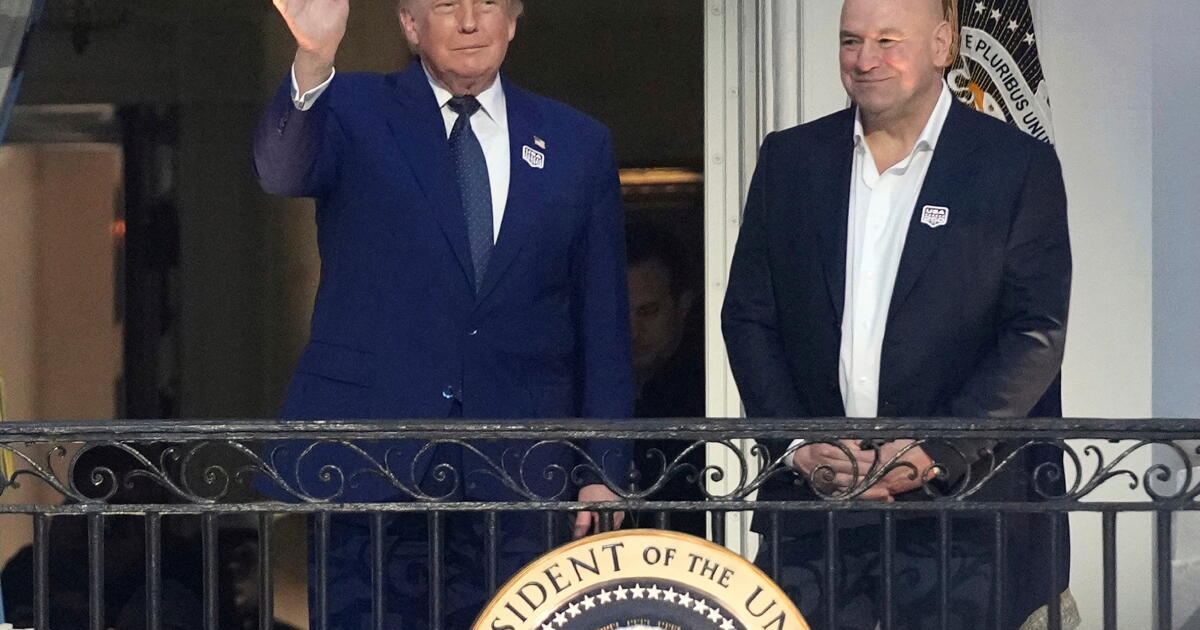
WEST PALM BEACH, Fla. — President Trump said Saturday that he has offered the job of White House press secretary to his friend and UFC boss Dana White, an announcement unconventional even for the norm-busting president and one that nobody in the White House immediately confirmed.
Trump, while he was at his golf club in Florida, posted on social media that he made the offer to “the Great Dana White, a violent Fighter and Warrior” to become the Republican president’s chief spokesperson.
Trump said he requested that White bring along several UFC fighters as “assistants,” adding, “We need these people to defend us against the Lunatic Left. Dana will be a Press Secretary like none other. Dana, please take the job!”
The White House did not respond Saturday to messages inquiring about the president’s social media post.
White was in London on Saturday for a boxing event. A spokesperson for UFC did not immediately respond to messages seeking comment.
The UFC head shared an image of Trump’s post on Instagram, along with an image of White standing behind the lectern in the White House press briefing room with the words “On to the next chapter.”
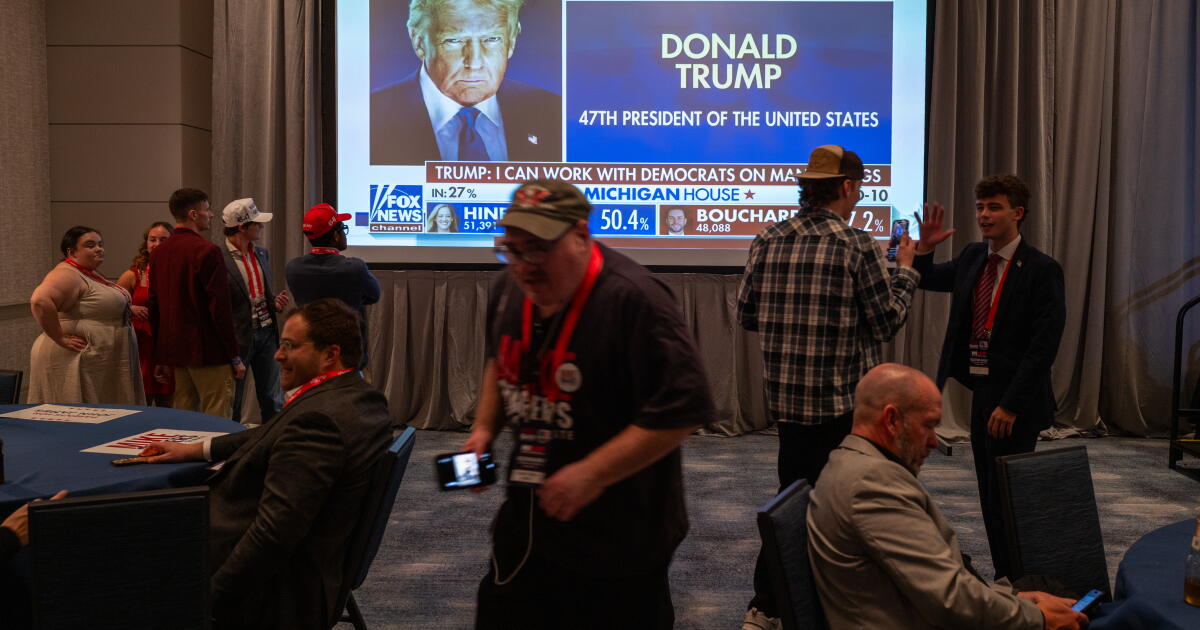
Trump’s post came as his White House is in a period of major transition and struggling with his party’s deep losses in Tuesday’s midterm elections. The historic wins by Democratic candidates, including in areas that Republicans had held for decades, led to the GOP losing control of both chambers of Congress.
Trump on Friday announced he was replacing his longtime advisor Susie Wiles, seen as something of a tempering force on the president’s impulses, as White House chief of staff. He replaced her with Stephen Miller, the chief advisor behind the administration’s hard-line immigration policies and among the most pugilistic of Trump’s inner circle.
The shake-up at the heart of his administration follows the brief but tumultuous week when Trump tried out a new press secretary in Katie Zacharia, who seemed uncomfortable in her sole appearance before reporters left the job after five days amid revelations she had called herself an attorney despite lacking legal credentials.
The post had been vacant since Karoline Leavitt left at the end of August. Trump remains without a chief spokesperson.
Trump is close friends with White and has attended several UFC events with him since returning to the White House in January 2025.
He brought White and the sport to the White House’s South Lawn in June for a celebration of America’s 250th anniversary and the president’s 80th birthday. A wire-mesh octagon was constructed near the executive mansion under “The Claw,” a spaceship-like metal arch fitted with lights, sound equipment and large screens.
“It was an amazing experience. This was a one of one,” said White afterward.
White also spoke at the Republican National Conventions in 2016, 2020 and 2024.
Price writes for the Associated Press. AP writers Daniel Gelston in Philadelphia and Jesse Bedayn in Austin, Texas, contributed to this report.
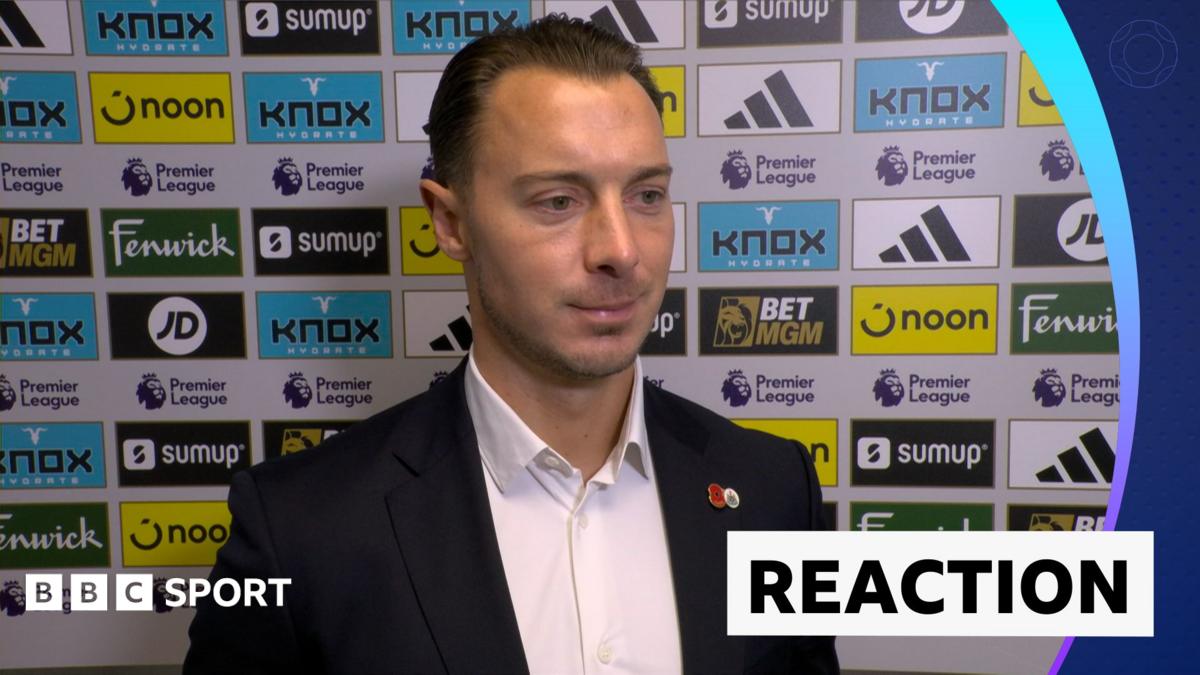
Newcastle United head coach Matthias Jaissle takes issue with referee John Brooks’ decision not to call a “clear foul” on Fabian Schar in the build-up to Thierno Barry’s goal in their loss to Everton in the Premier League.
As California decides whether to slap billionaires with a special tax, the Golden State’s swarm of social media stars is chiming in — and increasingly getting paid to influence voters.
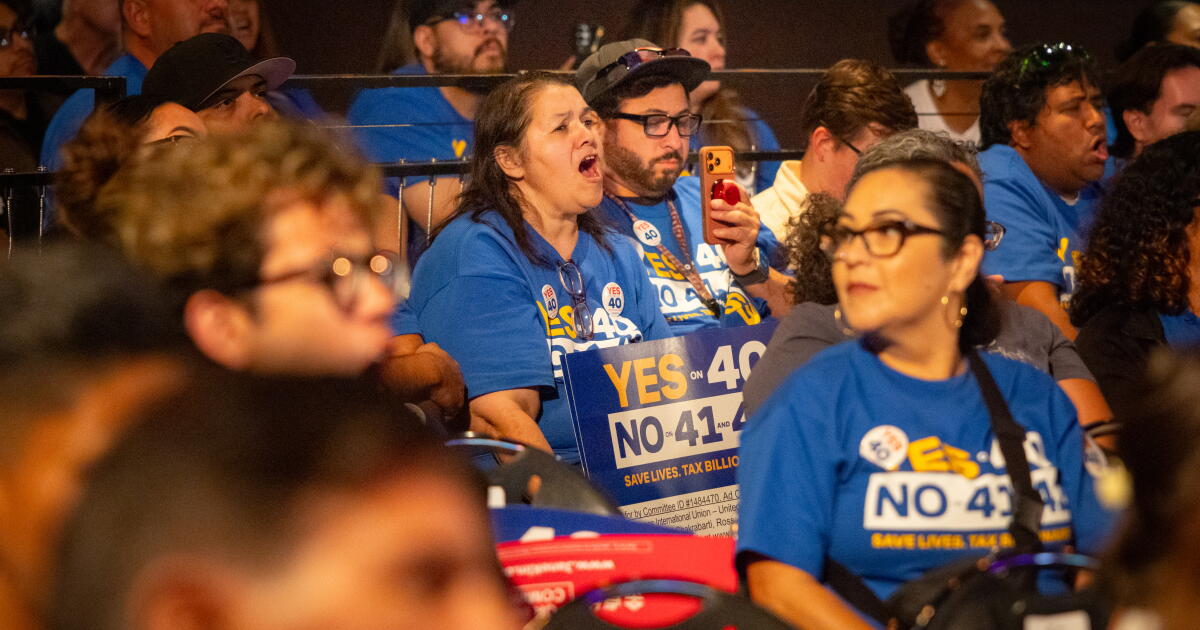
Unlikely influencers, from foodies to mothers to retirees, are weighing in on Proposition 40, a one-time 5% tax on the assets of the state’s roughly 200 billionaires and on other ballot measures created to cancel it.
Campaigns try to team up with and sometimes compensate key content creators, as their endorsements often hit harder than traditional political ads.
Between cheery Instagram videos about budget-friendly trips to a playground, a Halloween house and zoo with her kids, Bartley Chavez posted a video opposing Proposition 40 to her more than 47,500 followers.
“Look, I’m all for trying new things. A new recipe? Sure. A crazy haircut? Go for it. A quirky movie with the kids. Why not? But when we’re talking about California jobs, our family’s financial future, and the state’s economy, that’s not something I want to experiment with,” she says in the October video.
The video’s caption states the campaign opposing Proposition 40 paid her to post.
Getting political online does come with risks. In the video’s comments, one Instagram user said they unfollowed Chavez’s account, and another called her a “sell out.” Others backed her position. Chavez didn’t respond to a request for comment.
Los Angeles author and political influencer Leigh McGowan has built an audience of more than 3.5 million followers on different platforms with her no-nonsense takes on politics and other issues. She was already a supporter of the wealth tax when the Proposition 40 campaign started to pay for some of her posts.
“No one is punishing the rich. They are doing just fine,” she said in a sponsored video on Instagram. “We are simply asking them to pay an outstanding one-time tax that’ll help the rest of us.”
Campaigns have been paying attention to influencers as younger people turn to them for news, said McGowan, who’s known for pontificating from her kitchen. Many people distrust traditional media and want regular people to break down complex topics.
“We don’t know who to believe anymore, and there are just so many lies out there,” McGowan said in an interview. “The people who take the time to say authentically this is what they believe in, that’s who people believe.
In California, political ad spending in the 2026 election cycle is projected to approach $1 billion, more than any other state, according to political advertising intelligence firm AdImpact. Roughly $114 million is expected to go to digital platforms such as Facebook, Google, Snapchat and X.
The campaign opposing Proposition 40 has plenty of money to spend on political messaging in what’s become one of the most expensive ballot fights in California’s history. Billionaires such as Google co-founder Sergey Brin have donated millions to Building a Better California, a group funding ads against the wealth tax proposal. More than $350 million has been contributed to fight the billionaire tax and support two propositions — 41 and 42 — that could block it.
Campaign finance forms show how much groups spend on digital media, but they don’t say how much of that goes to influencers. While the data are limited, campaign leaders and other experts say social media stars are playing a bigger role in how brands and political movements advertise.
“Any modern campaign that wants to win needs to be active in spaces where voters get information — and that’s exactly what the No on 40 coalition is doing,” said Evan Westrup, a spokesman for the coalition opposing Proposition 40.
Some political influencers broadcast their views independently or talk to campaigns without compensation. Others are paid a few hundred dollars or even up to $30,000 per post, according to an October report from the Center for Democracy & Technology and the Communication Technology Research Lab at the University of Pittsburgh.
Influencers will post content for political campaigns to make money, but “genuine belief in political issues or candidates can — and often does — coexist with compensation,” the report said.
One Los Angeles influencer, The Speech Prof, who has more than 1.7 million combined followers on Instagram and TikTok, said he refused money to stop the billionaire tax.
The creator, also known as Professor Chesko, talks about everything from parenting and misogyny to politics. In September, he posted a viral video in which he says he rejected a large amount of money to oppose the billionaire tax.
This month, he posted a new video backing the billionaire tax, noting that the Proposition 40 campaign paid him to make the content. “It’s not nearly as much, but they’re a healthcare union and not corporate oligarchs. Plus I already said where I stand for free,” he said in the October video.
Professor Chesko didn’t respond to a request for comment.
The storm of new voices chiming in on the political debate, delivered through people’s personalized social media feeds, could be causing confusion, said Ramesh Srinivasan, professor of information studies at UCLA.
“If I’m seeing a completely different reality than you, whether it’s through influencers, AI or social media microtargeting,” he said. “Then it’s impossible to have a common basis for making decisions or choices.”
While the anti-billionaire tax war chest is much bigger, groups behind the tax say they’re still winning on social media.
“Despite being heavily outspent, the Prop. 40 campaign has been beating the billionaires on social media content and impact,” said Suzanne Jimenez, chief of staff for the SEIU-UHW, the healthcare union backing the billionaire tax.
She said influencers support the tax even when they’re not paid because they understand that “California needs functioning hospitals and emergency rooms, not more tax breaks for billionaires.”
Some sponsored influencers are avoiding direct criticism of the billionaire tax and instead signaling support for a ballot measure that could nullify Proposition 40 even if voters approve it.
Proposition 42 prohibits new taxes on “retirement holdings, individually-owned assets, and other forms of personal savings,” but it conflicts with the billionaire tax proposal. If voters approve both, the one with the most “yes” votes generally would become law.
Karen Clay-Fenderson, a Los Angeles mom and retired teacher with more than 120,000 Instagram followers, has posted videos about Proposition 42.
“I did my research on 42, and I did see something about the billionaire tax. But I want to keep my retirement and my life savings. I don’t want that taxed,” she said in an interview.
She disclosed that the Proposition 42 campaign paid her for the videos, but didn’t go so far as to tell people how to vote.
“They understand that we have influence, and people listen to what we have to say,” she said. “That’s why I’m very cautious. This is what I’m doing, but you need to make your choice.”
In California, influencers must disclose that they are being paid by a political campaign. In September, Gov. Gavin Newsom signed legislation that would penalize influencers who failed to disclose that they were paid to post political content. Influencers could face fines of up to $5,000 per post.
Social media platforms also have their own rules. Instagram allows paid political ads, but TikTok doesn’t — though enforcement has been an issue.
Nathan Click, a spokesperson for Proposition 42, said their partners disclose they are paid and follow all campaign laws.
“Creators play an important role in the political conversation,” he said. “And campaigns across the country partner with them to ensure their audiences understand what’s at stake in the election.”
As Ohio Republican gubernatorial candidate Vivek Ramaswamy came under fire for releasing an attack ad featuring his Democratic competitor’s estranged mother, a mysterious news site was running a Facebook ad boosting the controversial video.
The Buckeye Bulletin, which bills itself as an Ohio-based news platform committed to “reliable journalism” and “strong editorial standards,” popped up suddenly this spring and began pumping out a steady stream of pro-Ramaswamy content.
The publication’s articles have no bylines. There is no list of staff. The website does not feature digital advertisements, nor does it prompt readers to subscribe, but there is also no disclosure of who is funding it.
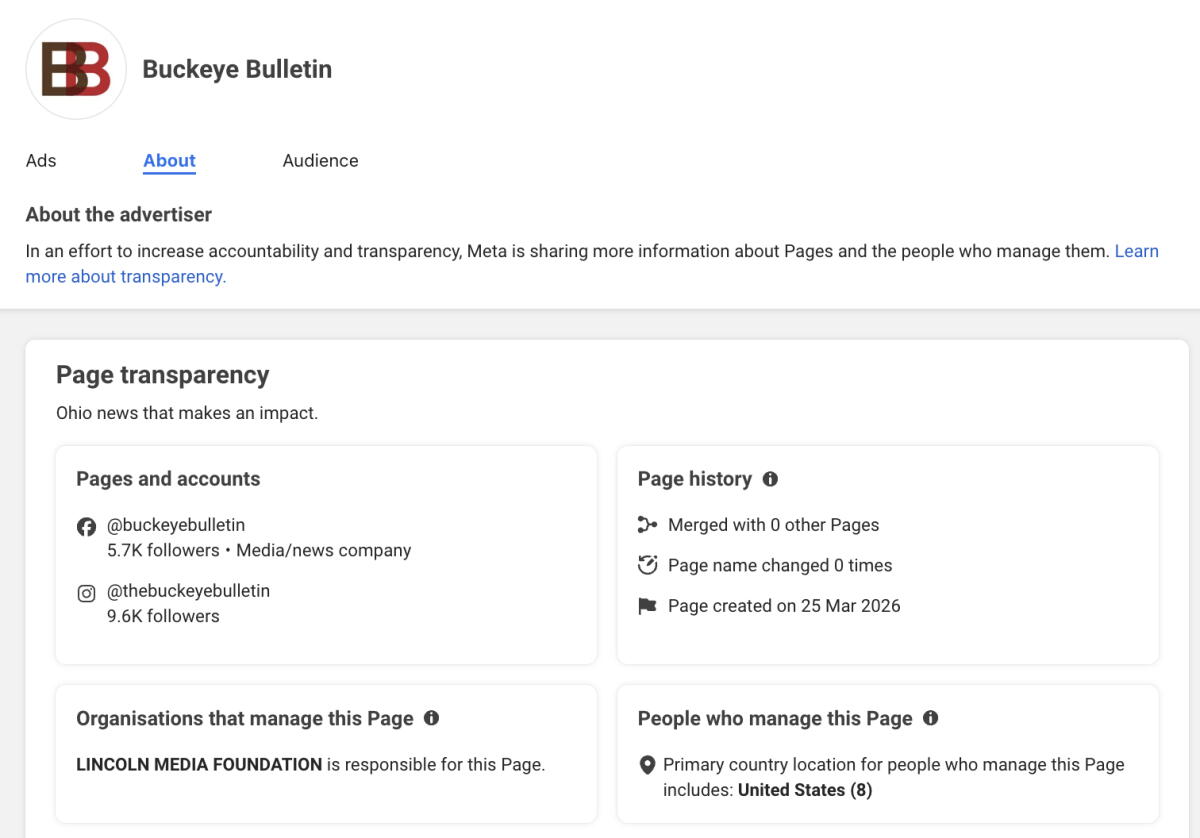
A closer look at the Buckeye Bulletin’s Meta advertising data shows that its Facebook and Instagram accounts are managed by the Lincoln Media Foundation, a nonprofit organization affiliated with the Orange County-based Lincoln Club — the oldest and largest conservative donor organization in California. IRS documents show that the club and foundation are associated organizations and share at least two key executives.
Meta’s advertising data shows that the Lincoln Media Foundation manages the Instagram and Facebook accounts for the Buckeye Bulletin.
(Meta)
The Buckeye Bulletin, Lincoln Club and Lincoln Media Foundation did not respond to requests for comment.
The Bulletin appears to be a partisan site posing as a local news outlet ahead of the midterm elections, a strategy political scientists refer to as “pink-slime” journalism.
This is not the first time a “pink-slime” outlet has been linked to the Lincoln Media Foundation. In 2024 Max Read, director of civic innovation for the Institute for Strategic Dialogue, identified seven such alleged outlets.
With the exception of one Los Angeles-focused site, those outlets all targeted critical states for the 2024 presidential election such as Georgia, Pennsylvania and Wisconsin. Read reported that the media group had spent more than $63,000 on Facebook and Instagram ads, resulting in up to 18 million impressions during the last election cycle.
“[The sites were] very clearly designed to try to influence the information environment ahead of the presidential election,” Read told The Times. “They had all been started early in the year and used advertising on Meta platforms to juice their engagement numbers.”
When asked by The Times to take a look at the Buckeye Bulletin, Read said it appeared to be “pretty much copy and paste the same tactic that they used in 2024, even down to the aesthetics of the Facebook page and Instagram account.”
“It seems like they realized this worked at some level in 2024 and is worth doing again this year,” he said.
Earlier this year, CalMatters identified another outlet tied to the Lincoln Media Foundation called the California Courier, which had been circulating Facebook advertisements criticizing Gov. Gavin Newsom and the statewide redistricting ballot measure Proposition 50.
Since the Buckeye Bulletin’s Facebook and Instagram pages launched in March, the outlet has shared posts touting endorsements of Ramaswamy — a biotech billionaire and former presidential candidate — as well as his platform for addressing Ohio’s healthcare crisis and his stance on religious freedom in schools.
Simultaneously, the outlet’s social media posts have highlighted the refusal of his opponent — Amy Acton, Ohio’s former public health director — to debate, comments on how she “shut down” the state’s economy during the COVID-19 pandemic and a video with a watermark from right-wing political activist Laura Loomer.
This week, the outlet turned attention to Ramaswamy’s controversial campaign ad featuring Acton’s estranged mother, Donna Arthur. In the ad, Arthur calls her daughter a liar and urges voters not to support her.
However, the ad did not acknowledge that Arthur lost custody of her children after their stepfather, Arthur’s husband, was indicted for raping Acton when she was a child — an omission that drew fierce condemnation from Democrats and some Republicans, including Ohio’s Republican Gov. Mike DeWine. Others, including President Trump and Vice President JD Vance, an Ohioan, have defended the ad.
Arthur and her husband fled to Pennsylvania after his 1978 indictment where he died in 2004 without having been brought back to Ohio to face the charge.
Peppered in between political content on the Bulletin’s social media feeds is a smattering of reels related to non-political news, often featuring videos lifted directly from local TV stations. These other posts are used to create a “veneer of genuine local journalism,” Read said.
The language on the Bulletin’s About Us page displays markers of artificial intelligence such as generic mission statements, polished but repetitive phrasing and vague claims about journalistic standards with no details about the publication’s staff.
Of the last 30 posts shared on the Bulletin’s Facebook as of 5 p.m. Friday, 21 were about state or national politics and 10 were about the gubernatorial race. Engagement on the posts dealing with Ramaswamy and Acton is consistently strong for a page with around 5,600 followers.
For example, a Wednesday post on Ohio State Medical Assn.’s PAC endorsing Ramaswamy received more than 770 likes, 260 comments and 150 shares. Another video posted Wednesday with the label “Amy Acton refuses to debate, says mother is lying about her” received more than 4,800 likes, 1,500 comments and 500 shares.
Meanwhile, a non-political Wednesday post on a chemical explosion in Toledo received two likes, no comments and no shares.
The unassuming social media scroller or person who clicked onto the website would have no clue of the Buckeye Bulletin’s apparent connection to a group of wealthy Southern California Republications.
The Lincoln Media Foundation was started by leaders of the historic Lincoln Club, which was founded in 1962 and once counted John Wayne and former President Richard Nixon as members.
Today, the club describes itself as being home to “the most prominent business and thought leaders” in California and says it offers members the opportunity to meet world leaders and “experience their hobbies come to life through a combination of extravagance and leisure.”
The foundation notes that it uses a digital approach to reach communities left out of the national conversation, but its website does not disclose providing funding to any news outlets.
IRS records show that the nonprofit’s financial activities kicked up dramatically in 2024, the latest year for which data are available. The Lincoln Media Foundation reported $3.88 million in revenue in 2024, compared with $738,000 in 2023, $453,000 in 2022 and $415,000 in 2021.
The Buckeye Bulletin’s Facebook and Instagram accounts have spent just over $10,000 boosting posts this year, according to Meta’s ad library.
That’s barely a drop in the bucket in Ohio, where hotly contested races for governor and U.S. Senate have drawn hundreds of millions in spending. But presenting a slanted political view under the guise of local news tends to offer more bang for your buck than traditional advertisements, said Georgia Kernell, an associate professor in the departments of communications and political science at UCLA.
“Voters are so sick of ads; they’re getting tons of clear paid advertisements on the radio, on the television and on their social media feeds now,” she said. “Anything that can kind of look different is going to be more likely to keep their attention.”
Presenting as a traditional news source also increases the likelihood of viewers believing that the information presented is well-researched, she said.
Nik Usher, associate professor of communications at the University of San Diego, said it’s unclear how much influence pink-slime journalism is having on voting behavior, but political strategists are willing to try any new approach to possibly make a difference in tight races.
“This is one strategic effort to throw more spaghetti at the wall, hoping it’ll stick,” Usher said.
Creators of these partisan sites further stand to benefit from the fact that artificial intelligence tools are constantly scraping content from news websites without paywalls.
Researchers at NewsGuard recently found that leading AI chat bots are citing pink-slime websites nearly half the time when users ask questions about candidates and issues in the midterm elections.
Democrats and Republicans have increasingly leveraged pink-slime journalism to influence voters in the past few election cycles.
In 2020, the New York Times identified a network of 1,300 news sites that paid freelance writers to produce biased content for Republican groups and corporate public relations firms. In 2024, the left-leaning Star Spangled Media group used a site called the Morning Mirror to promote down-ballot Democratic candidates, according to research from Columbia Journalism School’s Tow Center for Digital Journalism.
More recently, the evolution of AI has increased the ease with which these websites can be populated with content, eliminating the need to pay writers and automating the production of social media posts.
Usher described pink-slime websites as “explosive bombs for public trust” that take advantage of the gap created by the loss of independent local papers and further diminish expectations for news to be fairly reported.
“Once these sorts of sites are pointed out to the public it further undermines distrust in political institutions, political parties, the news media,” Usher said, “especially when AI is associated with this kind of stuff.”
COLUMBUS, Ohio — Republican Vivek Ramaswamy ’s team confirmed late Tuesday that it produced a controversial advertisement featuring the estranged mother of Amy Acton, and the campaign said it will spend $4 million to promote it despite facing bipartisan rebuke for dredging up the painful childhood of his Democratic opponent in Ohio’s governor’s race.
The decision exacerbates a deeply personal element in one of the country’s most closely watched and expensive campaigns for state office. Questions about the video will likely shadow Ramaswamy, a biotech billionaire who previously ran for president but has never before held public office, in the final two weeks of the contest. Democrats said he was growing desperate at a moment when more than 676,000 people have already cast ballots in Ohio.
The advertisement features Acton’s birth mother, Donna Arthur, calling her “a liar” and insinuating she has mental health issues. Acton, Ohio’s former public health director, has made no secret of facing homelessness and abuse as a child. Arthur lost custody of her children after their stepfather was indicted for raping Acton.
The video’s origins were initially murky when it started circulating online. It first surfaced in a post by an Ohio political blogger, then spread across social media. It did not include the “paid for” tag that is legally required to air on television so viewers can know who produced and paid for it. D.J. Brynes, who blogs as “The Rooster,” told CNN he got the video from a voter who viewed it as part of a poll and recorded it.
Connie Luck, a spokesperson for Ramaswamy’s campaign, said Acton’s mother was not paid for the one-minute video, which she said will stream online and air on television.
Acton spent Tuesday condemning Ramaswamy for the ad even before his campaign confirmed its provenance.
“I won’t normalize somebody who has said that my childhood is just something I’m complaining about, who today just released an ad using my birth mother, who I was removed from at the age of 12 for severe abuse and neglect, and sexual abuse,” she told Spectrum News, a cable news outlet in Ohio.
She said Ramaswamy made similar personal attacks during his run for the Republican presidential nomination two years ago, calling it “a lifelong pattern.”
Ramaswamy’s campaign initially issued a statement that did not address whether he was responsible for the ad or knew who produced it. In the earlier statement, Luck said Acton “has some serious problems with the truth that the public needs to be aware of.”
Democrats and Republicans condemn the ad
Casey Putsch, a car designer and YouTube provocateur who competed against Ramaswamy for the Republican nomination for governor, said on social media that he would be voting for Acton in the wake of the ad’s release. He called the video “pretty damn low.”
Acton’s campaign released a statement from her brother, Philip Stearns, who said the two were removed from their mother Donna Arthur’s custody as children after their stepfather, Arthur’s husband, was indicted for raping Acton as a child. Acton has not seen Arthur, whose last known address was in Pennsylvania, since they were in a courtroom together in 1978.
Later Tuesday, the Acton campaign released a video featuring Stearns, who recalls his older sister taking “the worst” of the abuse they faced as children in order to protect him and disparages Ramaswamy and his allies for exploiting the situation.
According to police and court documents obtained by the Associated Press, Cledith Arthur was arrested and charged with the rape of his stepdaughter, then 12, in July 1978, after Acton’s biological father reported him to authorities. The abuse allegedly happened from December 1976 to April 1978.
Cledith Arthur pleaded not guilty. He was indicted by a grand jury that September, but failed to show at a court hearing and remained a fugitive until at least 1981. He has since died.
High-profile Republicans who back Ramaswamy — including Donald Trump Jr. and influencer Laura Loomer — elevated the video in online posts.
But others joined Democrats in condemning the ad. Meghan McCain called it “dastardly” and Dan Hauser, a strategist for Republican Sen. Mike Lee of Utah, said he deleted his post sharing the video once he realized “the very serious accusations that caused their issues.”
The Democrat running for U.S. Senate in Ohio, Sherrod Brown, described the spot as “disgusting” and said everyone — including his opponent, Sen. Jon Husted — should be willing to condemn it. Husted’s campaign didn’t respond to a request for comment.
Smyth writes for the Associated Press. AP writer Ali Swenson in New York contributed to this report.