The vote in London’s Holborn and St Pancras parliamentary seat tests whether Burnham can restore faith in Labour.
Published On 8 Oct 20268 Oct 2026
Londoners are voting in a special by-election in the electoral district of Holborn and St Pancras, where the Green Party is posing a threat to Prime Minister Andy Burnham’s Labour Party.
Zack Polanski, leader of Britain’s left-wing Greens, was among candidates bidding on Thursday to win the parliamentary seat vacated by the resignation of former Prime Minister Keir Starmer.
Recommended Stories
list of 3 itemsend of list
Labour has held the seat continuously since its creation in 1983. Thursday’s vote is widely considered a two-horse race with the Greens, with thousands of activists from both parties out canvassing in recent weeks.
The vote is seen as a first test of whether Burnham can restore voters’ faith in Labour, which saw its popularity among left-wing voters plunge over the war in Gaza.
The by-election also offers him a chance to rob the Greens of the momentum they have built up under Polanski, the 43-year-old self-styled “eco-populist” who became party leader in September last year.
Green gains in areas of London contributed to Labour’s dismal local election results in May, which helped set in train a process that culminated on July 20 with Starmer’s resignation and his replacement by Burnham.
He has since adopted a tougher position on Israel and seeks to blunt the Greens’ rise by laying out a more left-wing vision for the UK.
Polanski, as the Greens’ candidate, faces Labour’s Sagal Abdi-Wali, a local council leader who arrived in Britain as a child refugee from Somalia in the 1990s and is expected to be declared the winner.
Polls are scheduled to close at 10pm local time (21:00 GMT) and the result is expected to be announced in the early hours of Friday.
The other candidates are: Barmy Brunch of the Official Monster Raving Loony Party; Ewan Cameron, Conservative Party; independent candidate Tom Darwood; Clare Fischer of the Climate Party; George Galloway, Workers Party; Tyler Johnson, Restore Britain; Briony Anne Lonbay Kapoor of Rejoin EU; Peter Newman of Reform UK; Ketankumar Pipaliya, UK VOICE; Jonathan Silberman of the Communist League; Helen Spiby-Vann, Christian Peoples Alliance; Patrick Thomas Stillman, Liberal Democrats; Ben Walker, UKIP.
Some countries, from which Brazilians living overseas are able to vote, have also already released preliminary vote count data.
In China, Lula won 56.63% of the votes, while Bolsonaro came in second with 31.33%. Lula also won in countries including South Korea, New Zealand and Saudi Arabia.
In Israel, however, Bolsonaro won 74.40% of the valid votes. He also won 71.59% of the valid votes in Japan.
Today’s result will also determine the composition of the Senate from February 2027 onwards, as 54 of the Senate’s 81 seats are being contested, representing two-thirds of the chamber.
Currently, the largest bloc in the Senate is Bolsonaro’s Liberal Party (PL), followed by the Social Democratic Party (PSD), which has served in a coalition government under Lula.
In the last election four years ago, Lula narrowly defeated Flávio Bolsonaro’s father, Jair. But the tumultuous aftermath of the election, which saw Jair Bolsonaro convicted of plotting a coup after thousands of his supporters stormed the Brazilian Congress, has had a lasting impact on the nation’s political life and this election.
Jair Bolsonaro is serving a 27-year sentence for plotting a coup and is barred from standing for office.
Because of recurrent health problems, he is currently under house arrest rather than in a cell, but he has been prohibited from posting on social media or making public statements.
Despite these restrictions, there is little doubt that Flávio Bolsonaro has his father’s backing.
Latvia is not expected to shift its pro-Europe and pro-Ukraine trajectory, but coalition negotiations could be complex.
Published On 3 Oct 20263 Oct 2026
Polls have opened in Latvia for an election taking place against the backdrop of perceived security threats from Russia and a nationwide cost-of-living squeeze.
Saturday’s vote is the first electoral test for Prime Minister Andris Kulbergs after coming to power in May this year when his predecessor resigned due to a backlash from stray drone incursions from Ukraine.
Recommended Stories
list of 3 itemsend of list
Kulbergs, whose right-wing United List party is currently polling at about 20 percent, is expected to hold onto his position, but the decline of two allies in his current coalition means he is set for a complicated negotiation over the makeup of any future government.
Polls opened at 05:00 GMT and will close at 17:00 GMT. The results are not expected to change Latvia’s pro-European and pro-Ukrainian course.
A woman holds an election campaign leaflet of the Latvia First party with a picture of the party’s leader, Ainars Slesers, before the general election [File: Ints Kalnins/Reuters]
About 1.5 million people are eligible to vote in the country’s 11th parliamentary election since independence from the Soviet Union in 1991.
Latvian politics are highly fragmented, with parties rarely seeing above 20 percent vote share and coalitions being the norm.
This year, 14 electoral lists are contesting the election, but polls indicate only seven are likely to enter parliament, with the rest expected to fail to meet the minimum 5 percent vote threshold.
Rising living costs, low wages, strains on the healthcare system and long-term population decline have all featured prominently in campaign debates.
Fragmented political parties
Most parties in Latvia are pro-Ukraine; however, the populist Sovereign Power party – which says it wants Ukraine to win but argues money spent supporting Kyiv would be better spent at home – looks likely to become the country’s second-biggest party, with more than 9 percent of the vote. Most other parties have ruled out forming a coalition with Sovereign Power.
Latvia First, a pro-Ukraine and populist nationalist party currently polling at about 9 percent, could be a potential coalition partner for PM Kulbergs.
The Progressives, a pro-European social democratic party, are polling at 6 percent.
Ethnic Russians make up roughly one in four Latvian citizens, but their vote, which has traditionally been cast along identity-based lines, looks set to be made according to economic and social issues.
Latvia is the poorest of the Baltic states, and it has sharply increased its defence spending since Russia invaded Ukraine, now allocating nearly 5 percent of its gross domestic product (GDP) to defence.
Millions of voters went to polls in Morocco on Wednesday to determine the makeup of the House of Representatives, the parliament’s lower house.
Twenty-seven political parties are competing for 395 seats in the country’s 12th legislative election since independence in 1956.
Almost 16 million people are able to vote, with 55 percent residing in urban areas and 45 percent in rural regions, seeing a mix of concerns among voters.
Economic frustrations
While King Mohammed VI will maintain most executive powers, the new government will manage many public affairs for the coming years.
Once the votes are counted, the king will appoint the head of government from the leading party, but they will still need the support of 198 deputies – an absolute majority – to gain parliamentary confidence.
The election comes at a time of mounting challenges for the country, with the economic situation creating discontent and frustration, Mohammed Masbah, head of the Moroccan Institute for Policy Analysis, told Al Jazeera.
“The upcoming elections will have special importance because they come in a context tied to a social and economic crisis, especially high prices and the cost of living on one hand,” Masbah told Al Jazeera.
“On the other hand, there is a state of frustration among broad segments of society, especially the youth. The Gen Z protests last year, as well as the attempt to cross towards Ceuta a few weeks ago, demonstrate this crisis.”
The introduction of a new financial system designed to support candidates aged 35 could encourage more youth participation. But the nearly six million Moroccans residing overseas, many of them younger citizens, will have to appoint a proxy in Morocco to cast their vote.
There is also an upcoming key milestone for the country with the 2030 World Cup, which requires huge investments. What will remain in the minds of most voters is the state of the economy and inflation, which have impacted the living standards of many Moroccans.
“I believe the upcoming elections will produce a government majority whose primary function will be to address these imbalances, especially the economic ones related to the high cost of living in Morocco,” Masbah said.
“Regarding the issues that were raised and discussed by the majority of political parties, whether represented in the government or the opposition, they are the issue of employment and high prices.”
Two of the main parties competing in the election, the National Rally of Independents and the Authenticity and Modernity Party, have put these issues at the front of their campaigns in what has been a heated election.
“Of course, this is the main topic, but in the public debate, we also noticed conflicts, especially between the top two parties currently running the government,” Masbah said. “We noticed mudslinging and accusations of squandering funds and stealing candidates, which may increase voter alienation from voting today.”
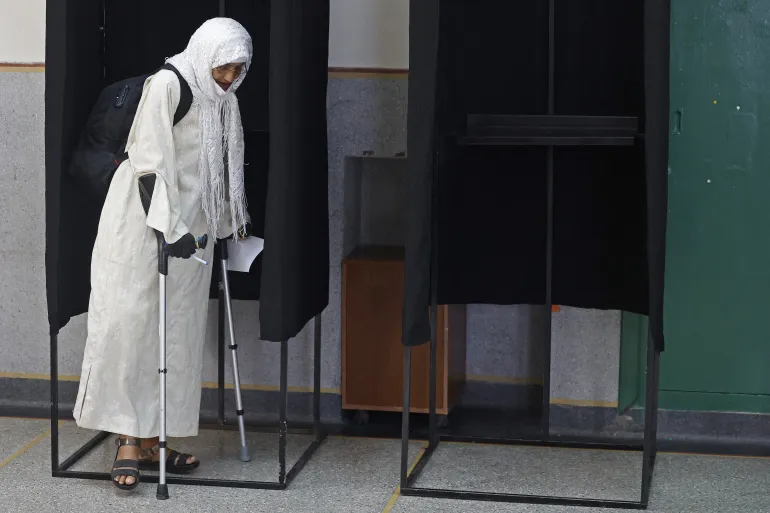
A woman prepares to cast her ballot to vote in Morocco’s legislative elections at a polling station inside a school at the Udayas neighbourhood, Rabat, on September 23, 2026 [AFP]
Despite the tense conditions, Morocco’s Public Prosecution has recorded a significant drop in election-related complaints compared with the 2021 vote.
But legal amendments that criminalise digital offences for the first time – including the dissemination of fake news and false allegations intended to defame candidates or voters – have been introduced. The digital space became the primary arena for violations this year, accounting for 22 complaints.
Masbah said that despite a mood of frustration in Morocco over the government’s inability to manage key economic and social issues, turnout is expected to remain steady, as it has been over the past 20 years, due to structural factors.
“Electoral and voting behaviour in Morocco is not primarily linked to electoral programmes and promises [of parties], as much as it is linked to the stable bloc formed by Moroccan deserts and villages, which relies primarily on a network of notables who have influence and the ability to win voters’ voices through utilitarian voting,” Masbah said.
“I expect that if there is a decline in the voting rate – and this is likely – it will not be catastrophic or a sharp decline, given the consideration I mentioned earlier, which is the focus on notables and traditional elites in winning over voters.”
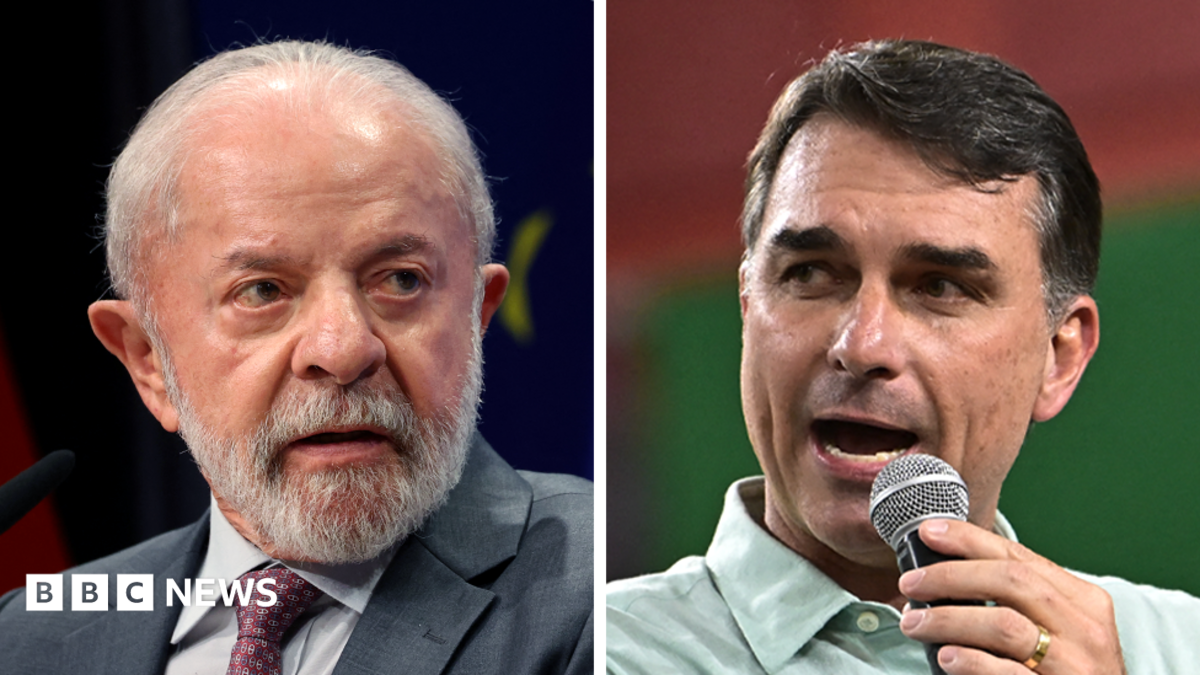
Luiz Inacio Lula da Silva is running in October’s election for a fourth non-consecutive mandate as Brazil’s president.
Published On 22 Sep 202622 Sep 2026
Brazilian President Luiz Inacio Lula da Silva and Senator Flavio Bolsonaro remain deadlocked in the latest polls, with the first round of Brazil’s election less than two weeks away.
Two new polls on Monday showed that the pair are statistically tied in simulated runoffs ahead of next month’s election. If no candidate wins more than 50 percent of valid votes in the October 4 first round, the two frontrunners advance to a runoff on October 25.
Recommended Stories
list of 3 itemsend of list
Lula is seeking a fourth non-consecutive term as Brazil’s president, but faces a challenge from the political right in Flavio Bolsonaro, the son of former far-right President Jair Bolsonaro, an ally of US President Donald Trump.
Brazilian presidential candidate Flavio Bolsonaro speaks at an agribusiness fair as he campaigns in Esteio, Brazil, on September 2, 2026 [Diego Vara/Reuters]
The elder Bolsonaro was ruled ineligible for office after Brazil’s top electoral court found he had abused his power while in office. He was later convicted separately over a plot to overturn his 2022 election loss to Lula.
A Quaest poll released on Monday showed Bolsonaro with 42 percent of voter support in a potential runoff, versus 41 percent for Lula.
Meanwhile, a BTG Pactual/Nexus poll has Lula receiving 46 percent of voter support, compared with 45 percent for Bolsonaro in a potential runoff.
The latest polls mark a narrowing from an earlier Quaest poll on August 5, which put Lula ahead by a wider five-point margin, 44 percent to 39 percent.
New York City Mayor Zohran Mamdani and Brazilian President Luiz Inacio Lula da Silva speak to reporters after a meeting in New York on September 21, 2026 [Dave Sanders/Reuters]
US pressure looms over election
Lula launched his re-election bid on August 2 at the Workers’ Party convention in Sao Paulo, casting himself as a defender of Brazilian “sovereignty” as pressure from the US administration looms over the race.
The US imposed two fresh rounds of tariffs on Brazilian products in July, which Lula denounced as an attempt to influence the elections through economic pressure.
The Brazilian leader is currently in New York, where he is preparing to address the United Nations General Assembly.
Lula met New York City Mayor Zohran Mamdani for the first time on Monday. In a brief statement to reporters after the meeting, the Brazilian president said the two had talked about problems common to both Brazil and the United States, particularly the rising cost of living.
Russian President Vladimir Putin has cast the vote as a test of support for his ongoing war in Ukraine.
Published On 20 Sep 202620 Sep 2026
Polls have closed in Russia’s first wartime parliamentary elections, with the ruling United Russia party on course to win the tightly controlled vote.
The Kremlin wants the elections, the first parliamentary vote since the start of the full-scale invasion of Ukraine in 2022, to showcase popular support for the war and legitimise its action.
Recommended Stories
list of 3 itemsend of list
Russian government officials accused Ukraine of trying to disrupt voting after Kyiv launched hundreds of drones at Moscow and other regions in what the TASS state news agency said was the biggest attack of its kind since the war began.
The drone strikes on Sunday killed at least three people in the Moscow region and two more in the Russian-held part of Ukraine’s Kherson region, including an election official, according to the region’s governor and the election commission.
Initial results showed the United Russia party comfortably ahead, and Russia’s Central Election Commission said turnout at the close of polls stood at 56.66 percent.
The first official results and turnout are expected on Monday morning.
Voting in Russian-held Ukrainian areas
The vote, which began on Friday for 111 million eligible voters, included residents of four Ukrainian regions that Moscow illegally annexed after the war began, but still doesn’t fully control, as well as those in Crimea, the Black Sea peninsula that was illegally annexed by Russia in 2014.
Authorities in Kyiv denounced the voting in the Russian-held areas as illegal and urged foreign governments not to recognise the result. The European Union on Friday called the action a “blatant violation of international law”.
Voters cast two separate ballots, filling half of the lower house’s 450 seats by selecting political parties listed on the ballot. The rest are contested in single-seat constituencies, with voters choosing individual candidates.
The main Kremlin party, United Russia, is widely expected to retain its overwhelming control of the State Duma. Several smaller parties of the “systemic opposition” that vote in sync with Putin’s views on all key issues are also expected to maintain their presence.
A massive state media campaign and tight control over the elections in the absence of genuine opposition all but assure the Kremlin will keep tight control of Russian politics amid mounting economic costs and increasing Ukrainian drone attacks deep inside the country.
The liberal Yabloko party, the only registered political entity that dared to publicly criticise the war, was removed from the ballot last month by Russia’s Supreme Court. It only has a few dozen candidates in the single-constituency races.
Additionally, some anti-war politicians were imprisoned or forced to flee abroad ahead of the campaign.
Russia didn’t invite election observers from the Organization for Security and Cooperation in Europe. The Russian Foreign Ministry has accused the body of “double standards” for its criticism of Russia.
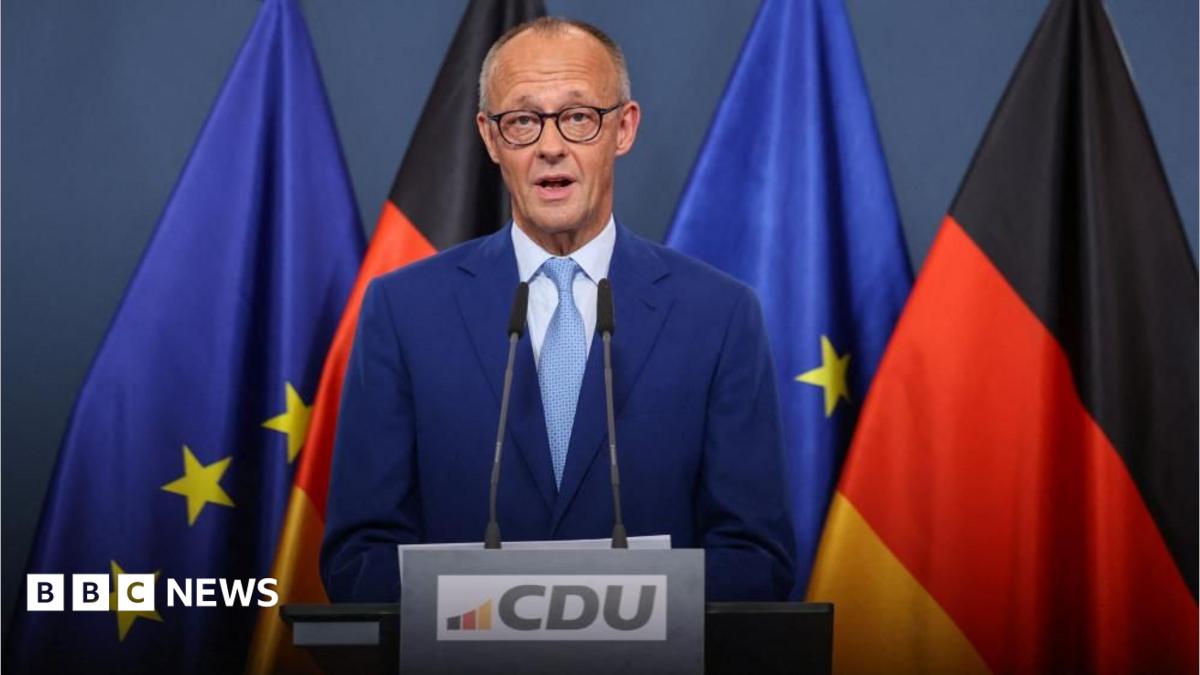
Embattled German Chancellor Friedrich Merz has vowed to stay on despite exit polls in two local elections suggesting damaging defeats for his centre-right Christian Democratic Union (CDU) party.
In the north-eastern state of Mecklenburg-Vorpommern, the party was projected to only just scrape into parliament, while the far-right AfD was on track to win the most votes. Merz called the result “a disaster” for his party.
In Berlin, the ruling CDU was also expected to be beaten by Die Linke (The Left).
Merz is under mounting pressure, with poor approval ratings and rumours he could even be replaced mid-term in a so-called chancellor swap.
Echoing comments he made after that defeat, Merz told reporters at the party’s Berlin headquarters on Sunday that he would forge ahead with his coalition government’s plans to push through a package of economic, tax and welfare reforms.
“The reforms have to come,” he insisted. “I am taking on this responsibility, because I want to move our country forward”.
“What needs to be done now requires backbone, steadfastness and patience,” Merz said. “I will demonstrate this as CDU party chairman and, above all, as chancellor of our country.”
“I would even go so far as to say that these reforms are the antidote to the authoritarian poison that, with the fascination of authoritarianism, is penetrating ever deeper into our society,” Merz added.
Far-right AfD defeated German chancellor’s CDU in recent Saxony-Anhalt state election, casting doubt on his future.
Published On 20 Sep 202620 Sep 2026
Voters in the eastern German states of Berlin and Mecklenburg-Western Pomerania are heading to the polls as far-right and far-left gains threaten to affect the political standing of Chancellor Friedrich Merz.
About 2.5 million people are eligible to vote in the city-state of Berlin, Germany’s capital, and nearly 1.3 million in Mecklenburg-Western Pomerania on Sunday. Polling booths in both states – traditionally seen as more left-leaning – opened at 8am local time (06:00 GMT) and will close at 6pm (16:00 GMT).
Recommended Stories
list of 3 itemsend of list
Pressure on Merz has been mounting after the far-right Alternative for Germany (AfD) delivered a major defeat to his Christian Democratic Union party (CDU) party two weeks ago in the key state of Saxony-Anhalt. The AfD fell just short of an absolute majority, which would have allowed it to govern on its own.
And after just 16 months in power, Merz’s approval ratings have plunged to about 14 percent, the latest polls suggest, as he struggles to push through promised economic and social welfare reforms with his centre-left coalition partners, the Social Democratic Party (SPD), raising doubts among fellow party members whether he can continue to lead.
In Mecklenburg-Western Pomerania, Merz’s party is an onlooker to the main battle between the SPD’s popular state premier Manuela Schwesig and the AfD’s lead candidate, former radio presenter Leif-Erik Holm.
While the AfD was polling at 36 percent against the SPD’s 37 percent, Merz’s CDU, at just 6 percent, was dangerously close to the 5 percent hurdle needed to stay in the state parliament, according to public broadcaster ZDF.
Reporting from a polling station in Schwerin, Al Jazeera’s Dominic Kane said there was “very much all to play for” in Mecklenburg-Western Pomerania.
“The race between the AfD here and the Social Democrat government is very close indeed,” he added, pointing out to the recent opinion polls.
In Berlin, the CDU is running a tight race against the far-left Die Linke (The Left), which promises drastic measures to solve a dire housing crisis and is popular with young people.
Regional elections would not usually draw much interest outside Germany, but the AfD’s success in Saxony-Anhalt, which it sees as the first step towards winning federal elections due in 2029, has sent shockwaves through Europe.
“Saxony-Anhalt was certainly a revolution for the German party system,” Florian Hartleb, a professor of international relations at Modul University in Vienna and an expert on far-right movements, told Al Jazeera.
Hartleb said the AFD had been “fundamentally excluded” from the power system, with the other political parties trying “everything” against it in recent years. “But it didn’t work out,” he said, citing voters’ dissatisfaction over migration, the economy and social inequality.
Merz has reportedly scheduled a crisis CDU meeting and cleared his calendar to deal with potential aftershocks from Sunday’s elections.
AfD’s main candidate for the Mecklenburg-Western Pomerania state election, Leif-Erik Holm, attends an election campaign event in Schwerin, Mecklenburg-Western Pomerania, northeastern Germany, on September 19, 2026 [Danny Gohlke/AFP]


![A woman prepares to cast her ballot to vote in Morocco’s legislative elections at a polling station inside a school at the Udayas neighbourhood, Rabat, on September 23, 2026 [AFP]](https://i0.wp.com/www.aljazeera.com/wp-content/uploads/2026/09/afp_6ab3c71f1ac5-1790166815.jpg?w=640&ssl=1)




![AfD's main candidate for the Mecklenburg-Western Pomerania state election Leif-Erik Holm attends an election campaign event in Schwerin, Mecklenburg-Western Pomerania, northeastern Germany, on September 19, 2026 [Danny Gohlke/AFP]](https://i0.wp.com/www.aljazeera.com/wp-content/uploads/2026/09/AFP__20260919__C8RV2RX__v1__HighRes__GermanyPoliticsStateVote-1789878295.jpg?w=640&ssl=1)