Siegfried Muresan’s loss of the confidence motion increases the prospect for snap elections.
Published On 30 Sep 202630 Sep 2026
Romania’s pro-European Prime Minister-designate Siegfried Muresan has failed to win a parliamentary vote of confidence, prolonging a political crisis seen as a boost for the rising far right.
Muresan, a liberal European Parliament member who was the latest of three designated prime ministers, secured only 182 votes out of the 233 required to secure the confidence motion on Wednesday, according to the official count.
Recommended Stories
list of 3 itemsend of list
The far-right Alliance for the Union of Romanians (AUR) largely boycotted the vote.
The 45-year-old had proposed what he described as a “reform-oriented” governing programme under his centre-right National Liberal Party (PNL), which teamed up with the Save Romania Union party, or USR, and the small ethnic Hungarian UDMR party.
President Nicusor Dan said he would nominate a new prime minister candidate on Monday afternoon, after holding talks with the leaders of the parliamentary parties, to avoid snap elections.
Siegfried Muresan addresses delegates of the Romanian Parliament prior to a vote at the parliament in Bucharest, Romania, on September 30, 2026 [AFP]
Romania saw the collapse of a pro-European coalition government in May, when governing social democrats, together with the opposition far right, ousted liberal Prime Minister Ilie Bolojan in a no-confidence motion at that time.
The far right, which comprises about a third of Parliament, threatened to impeach the president if he does not call early elections once the conditions are met.
Romania, a member of the EU and NATO that borders Ukraine, has not held snap elections since the fall of communism in 1989.
Political analyst Cristian Pirvulescu told the AFP news agency that snap elections would lead to another fragmented Parliament, but with an emboldened far right.
“Early elections mean that, from the moment they are called, it would take four months before a new government could be formed,” Pirvulescu told AFP. “Due to political instability, Romania finds itself in a very complicated economic situation. Four months is already a very long time.”
The country of 19 million has been struggling for months with the highest public deficit and inflation in the European Union.
Supporters of Romania’s far-right politician and former presidential candidate Calin Georgescu, not in picture, cheer as he leaves the Court of Appeal in Bucharest on September 28, 2026, following a new hearing in the case in which he and other defendants are accused of actions against Romania’s constitutional order [AFP]
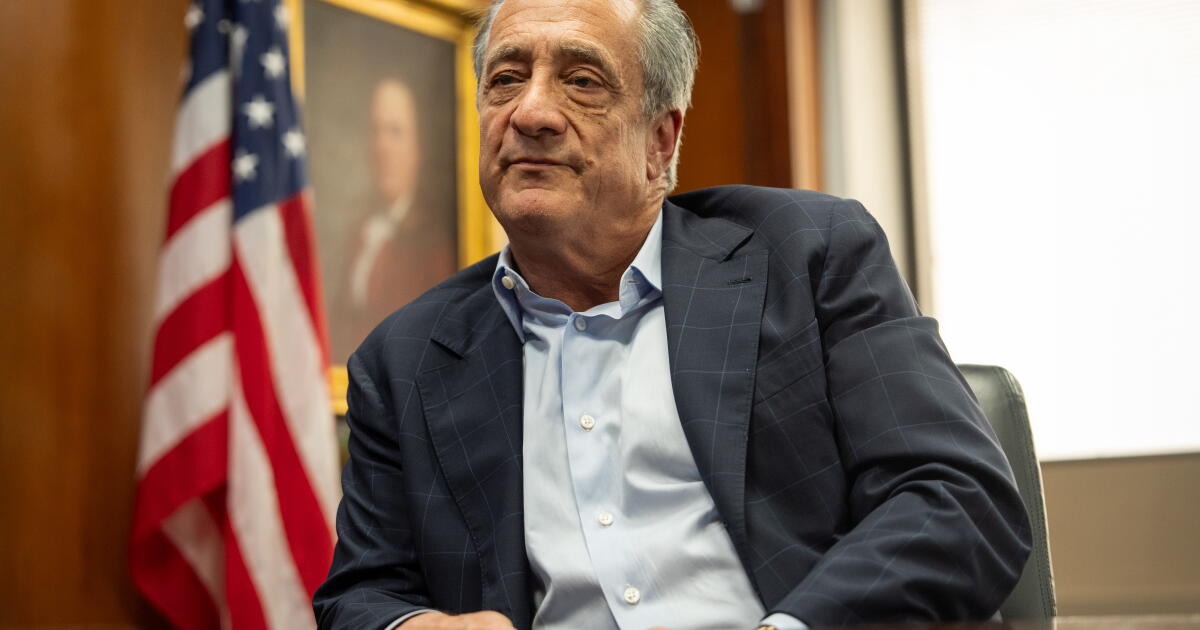
WASHINGTON — Long before he was the top official at the U.S. Postal Service, David Steiner was a corporate executive surfing mid-oughts television when he came across Donald Trump on “The Apprentice.”
He was unimpressed.
“If that is leadership, if that’s what we’re telling people that our culture and our media portrays as leadership, we’re screwed,” Steiner, then the CEO of Waste Management, said during a 2007 speech at the University of Arkansas Clinton School of Public Service. “If that’s leadership, count me out.”
“And for God’s sake,” he added to laughter, “if I have to get my hair to look like that, if I have to do that to be a leader, you can definitely count me out.”
Nearly two decades later, Trump has migrated from reality television to the presidency. And onetime detractors — Vice President JD Vance, Secretary of State Marco Rubio and Sen. Ted Cruz of Texas, for example — now loyally execute his agenda.
Trump’s effort to use the Postal Service as a tool to reshape American elections is testing whether Steiner will follow a similar path.
Independent or a Trump ‘pawn’?
When Trump signed an executive order restricting mail ballots this year, Steiner moved quickly to finalize a rule implementing the measure, arguing he had little choice. But after the U.S. Supreme Court rejected the effort, Steiner told The Associated Press that work had stopped on one of the plan’s most controversial elements, a government portal for voter rolls.
He refused to endorse the Republican president’s order as sound policy, saying he was focused on implementation and letting the courts ultimately decide the matter.
“I don’t get to decide what rules that are put on us that I decide to accept or not accept,” he said. “We are an independent agency of the executive branch.”
The episode prompted fierce criticism of Steiner for allowing Trump to deploy an agency designed to be shielded from politics.
Jena Griswold, Colorado’s Democratic secretary of state, called him a “Trump lackey.” Nevada Secretary of State Cisco Aguilar, a Democrat, recently asked Congress to deploy observers to ensure postal workers can scan envelopes holding mail ballots without disruption, saying the Trump administration “has attempted to weaponize federal agencies to interfere in our elections, and the leadership at USPS is going along with it.”
Sen. Elissa Slotkin, D-Mich., accused Steiner of being a Trump “pawn” during a congressional hearing this summer. Dozens of congressional Democrats have pressed Steiner to reveal his interactions with the White House during the development of the mail ballot rule.
Some Republicans have joined in the criticism. Sen. Josh Hawley of Missouri, incensed by abandoned mail, called for Steiner’s resignation and introduced legislation to block him from receiving a bonus.
During a lengthy interview, Steiner seemed surprised at points by his reception in Washington. He insisted he wasn’t a “political person” and said he had no intention of stepping down despite the criticism. He dismissed heated congressional appearances as “theater” at odds with more substantive private interactions on Capitol Hill.
Steiner was chagrined, however, at the mention of his 2007 remarks on Trump, delivered well before he launched a political career. Steiner recalled speaking at the university but said he didn’t remember his comments, acknowledging a tendency to be “flippant.”
“That’s funny,” he said. “I don’t recall it.”
The White House didn’t respond to a request for comment on Steiner’s remarks or his stewardship of the Postal Service.
Steiner didn’t follow the traditional path to power in Trump’s Washington
The Postal Service dates to Benjamin Franklin, the first postmaster general, whose portrait and bust are displayed in Steiner’s office overlooking the Washington Wharf. The agency has more than 630,000 employees, dwarfing many Cabinet departments.
While the quickest way to top jobs in Trump’s Washington is often by writing big checks, the 66-year-old Steiner doesn’t appear to have followed that course. He has largely donated to Republicans but also gave to John Kerry’s Democratic presidential campaign in 2004. Unlike his predecessor as postmaster general, Louis DeJoy, Steiner was not a major GOP donor or Trump backer.
Born in Oakland, California, as one of eight children to a father who spent his career at Chevron, Steiner worked in corporate and securities law before moving to Waste Management in 2000. He became CEO in 2004 and ran the company for 12 years. He was also a longtime director at FedEx, where board chairman Brad Martin recalled him as “outcome oriented” and rarely political.
“He’s going to follow the rules. He’s going to follow the law,” Martin said. “I don’t recall us ever talking politics.”
By the time a headhunter contacted Steiner about the postmaster general job, he was largely removed from daily corporate life and initially demurred.
“I talked to my wife, and we both agreed I was happily retired,” he said.
He changed his mind, he said, during a visit to the beaches of Normandy, feeling a sense of civic duty.
Now at the Postal Service, he earns about $346,000 in annual salary along with a relocation bonus that amounts to half his salary, far less than the $17 million in compensation he earned during his final year at Waste Management. His current role is designed to exist one layer removed from the political process, reporting to a board of governors that is selected by the president and confirmed by the Senate.
He was hired in 2025 by a board that was made up of five members, three of whom were Democrats. All but one were appointed by President Joe Biden. That makeup could change as four Trump nominees — all Republicans — await Senate confirmation. Steiner can be fired only by the board.
Steiner said he first met Trump along with Commerce Secretary Howard Lutnick at the board’s urging after he was already selected as postmaster general. Since then, he described a minimal relationship with the White House.
“We don’t fly on the radar,” he said.
That is, until Trump revived his effort in March to crack down on mail voting. Steiner said he “wasn’t in on the development piece” of the order and first saw it about a month before it was signed.
“They gave it to us to say, ‘Have your lawyers look at it, and how do you operationalize it?’” Steiner said.
The portal spurred a massive development effort inside the Postal Service while some states criticized it as federal overreach. A whistleblower report released by Sen. Richard Blumenthal, D-Conn., argued the system was hastily built and riddled with errors, though Steiner said he was confident it could have been unveiled around Sept. 15.
“The heavy lifting was clearly, clearly the IT work,” Steiner said.
Challenges ahead for the Postal Service
Though the Supreme Court dispensed with the rule, the dynamics for the Postal Service don’t get easier.
The agency posted a $9 billion net loss last year, and Steiner has warned it could soon run out of cash unless Congress lifts a $15 billion borrowing cap. Political hurdles have prevented potential cost savings from cutting service or closing some post offices.
And while Trump’s executive order won’t take effect, the Postal Service will still play a critical role in this year’s elections. There are mounting concerns that mail ballots could be rejected for late postmarks. Steiner encouraged voters to get their ballots in a week before the election to avoid problems.
The Postal Service is a rare corner of government still viewed favorably with more than half of Americans, 56%, saying it was doing an “excellent” or “good” job in a Gallup poll conducted last year. That could change if the agency is seen as increasingly political.
Steiner, however, said Americans will judge the Postal Service by their experience of it.
“What they care about is when they get that wedding invitation after the wedding or when they send a package and it disappears,” he said. “If we want to have the trust of the American public, let’s be the best service provider. Everything else is noise.”
Rival political rallies have been held in Brazil as campaigns intensify with one week to go until election day. Brazilians head to the polls on Oct 4 to choose between current president Lula da Silva or Senator Flavio Bolsonaro, the son of former far-right President Jair Bolsonaro.
Russia’s parliamentary elections offer an excellent opportunity for a new round in the information war between the West and Russia. Western politicians, experts and journalists have been given yet another convenient occasion to tell their target audiences that democracy has long ceased to exist in Russia; that the federal parliament, like any other representative body, in practice determines nothing in Russian life; and that all genuinely important decisions for the country are made not even by the government but exclusively in the Kremlin, by an extremely narrow circle of individuals accountable to no one.
Therefore, in the view of many critics of the Russian authorities, elections in Russia need not have been held at all: their outcome was predetermined by Kremlin political strategists and, in any event, will have no significant impact on the country’s future.
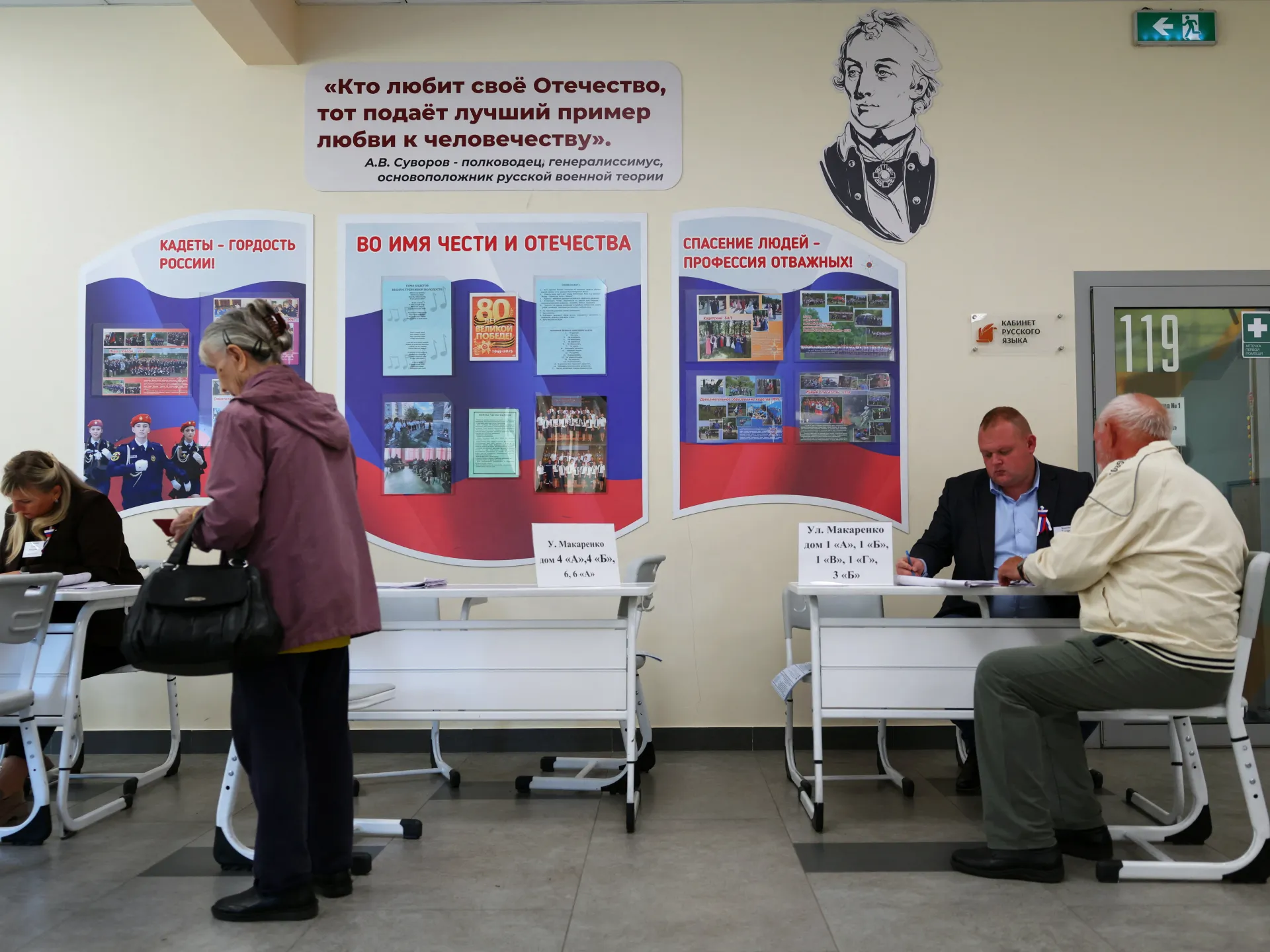
And yet even the most biased outside observer could hardly fail to notice the obvious: the Russian authorities made consistent and persistent efforts to ensure that these elections attracted the highest possible participation and were conducted successfully under current electoral law. For at least the past several months, the country had experienced heightened political activity.
Leading politicians and state officials constantly reminded the electorate of the importance of the coming elections. Governors of politically “problematic” regions were urgently allocated additional subsidies. Payments to certain categories of public-sector employees and pensioners were hastily indexed. And inevitable but unpopular or painful decisions for the public – for example, the forthcoming significant nationwide increase in housing and utility tariffs – were postponed until after the elections.
Even possible shifts in Russia’s position on the conflict with Ukraine and future relations with the West were often linked in public and political discussions to the results of the September elections, which were supposedly meant to “untie the hands” of the Russian leadership, although there were very different, sometimes diametrically opposed, views about how exactly the leadership would use these “untied hands”. In any case, it must be acknowledged that the Kremlin did not take the easy path of its opponents in Kyiv, who simply postponed the 2024 Ukrainian presidential election until better, “postwar” times, despite clear discontent and muted grumbling from part of Ukraine’s political class.
What is going on here? Why should the Kremlin invest so much energy and so many resources in what is often interpreted outside Russia as little more than an unconvincing simulation of genuine political competition? Why launch a new full electoral cycle while a large-scale military conflict has yet to end, when the normal boundaries of peacetime political democracy tend, one way or another, to narrow?
It is difficult to suppose that holding elections in Russia is driven solely by Kremlin strategists’ obsessive desire to impress, at all costs, either their external opponents or their partners abroad. As for the former, they would not change their views about the nature of the Russian political system, even in the hypothetical event that the elections ended in a complete triumph for the radical opposition and a crushing defeat for all pro-Kremlin candidates. Such a scenario would most likely lead to endless speculation about yet another “cunning Putin plan”, intended to mislead a credulous Western public and conceal the consistently authoritarian nature of Russia’s political regime.
As for the latter, it is hard to imagine that the leaders of Iran, North Korea, Belarus or China are seriously concerned about the state or future of Russian democracy. The political systems of their countries, like those of many other foreign friends and partners of Russia, to put it mildly, do not entirely conform to the classical standards of Western liberal democracies. It is doubtful that Kim Jong Un, Alexander Lukashenko or, say, Mohammed bin Salman, or even Donald Trump, would suddenly decide to offer Vladimir Putin wise advice on how to organise polling stations properly and count votes.
It is hardly likely that the Kremlin felt an urgent need to erect elaborate and expensive but not especially durable scenery on the Russian political stage when the reaction of the potential audience to the forthcoming theatrical production was known in advance. It seems more logical to assume that the Russian authorities need elections not as cosmetic decoration for the façade of their political system, designed to attract the indifferent gaze of an outside observer, but as a quite effective and, above all, much-needed mechanism for maintaining dialogue between the authorities and society in the difficult geopolitical and socio-economic conditions of autumn 2026.
First and foremost, the Russian authorities are fighting hard for a high turnout, creating the most comfortable possible conditions for their voters to cast their ballots. This is no accident. A high turnout is convincing evidence of the population’s continued political activity and of the fact that Russian society has not descended into political apathy and wholesale cynicism. The idea of active civic participation is far from an empty phrase for the country’s leadership. In this sense, even a vote against the main “party of power”, United Russia, is clearly preferable to the alternative of a significant part of the electorate conspicuously choosing not to participate in the elections.
No less important, the authorities need the election results as a barometer of current public preferences, something even the most accurate opinion polls or in-depth sociological research cannot replace. Contemporary Russia undoubtedly has its own, albeit relatively narrow, political spectrum of “systemic opposition” parties reflecting the differing interests and expectations of various social, economic, age and regional groups. The constantly changing balance of power between these parties must, one way or another, be taken into account by the authorities when determining the future priorities of their strategy.
For example, relative success for the Communist Party, A Just Russia and candidates from other left-wing parties would be a signal that the authorities should pay more attention to social programmes, the fight against economic inequality and social polarisation, and to countering the many remnants of “wild capitalism” left over from the 1990s. Conversely, a large number of votes cast for the New People party and other right-wing candidates would provide grounds for accelerating structural economic reforms and creating additional opportunities for the private sector, including small and medium-sized businesses. Strong electoral results for the Liberal Democratic Party would indicate growing nationalist tendencies in Russian society. The authorities may respond to such political signals in different ways, but they cannot ignore them and must therefore read shifts in public sentiment correctly.
Moreover, it can be assumed with a considerable degree of confidence that the State Duma elections will, one way or another, lead to substantial changes in the composition of not only the lower house of the Russian parliament but also Russia’s federal government. Following the elections, significant personnel changes are likely to take place in the executive branch – both at the federal level and at other levels. Such personnel changes, in turn, will make room for fresh ideas, innovative programmes, unconventional projects and proposals. There is a clear demand for renewal in Russian society today. Parliamentary elections are one way of responding convincingly to this demand without calling into question the stability of the state’s overall strategy or its senior leadership.
The Duma elections are the first parliamentary elections held during the special military operation, during which Russian society has changed considerably. In a sense, they can be called a large-scale political experiment whose outcome remains difficult to predict with precision. For example, it is still difficult to determine with confidence which political force will be supported by the majority of people who have participated in the special military operation or who remain on the line of contact. No less uncertainty remains regarding the likely political preferences of many residents of the new Russian regions, for whom the September elections will be their first State Duma election in their new status.
Such an experiment probably carries a degree of risk for the Russian leadership. Nevertheless, the leadership appears prepared to take that risk, not without reason viewing elections not only as an important but as an indispensable mechanism for public confirmation of its continuing political legitimacy.
The views expressed in this article are the author’s own and do not necessarily reflect Al Jazeera’s editorial stance.
WASHINGTON — Atty. Gen. Todd Blanche is blurring traditional boundaries between politics and federal law enforcement with recent speeches at political events that mark a sharp departure from norms meant to protect the Justice Department from the appearance of partisan bias.
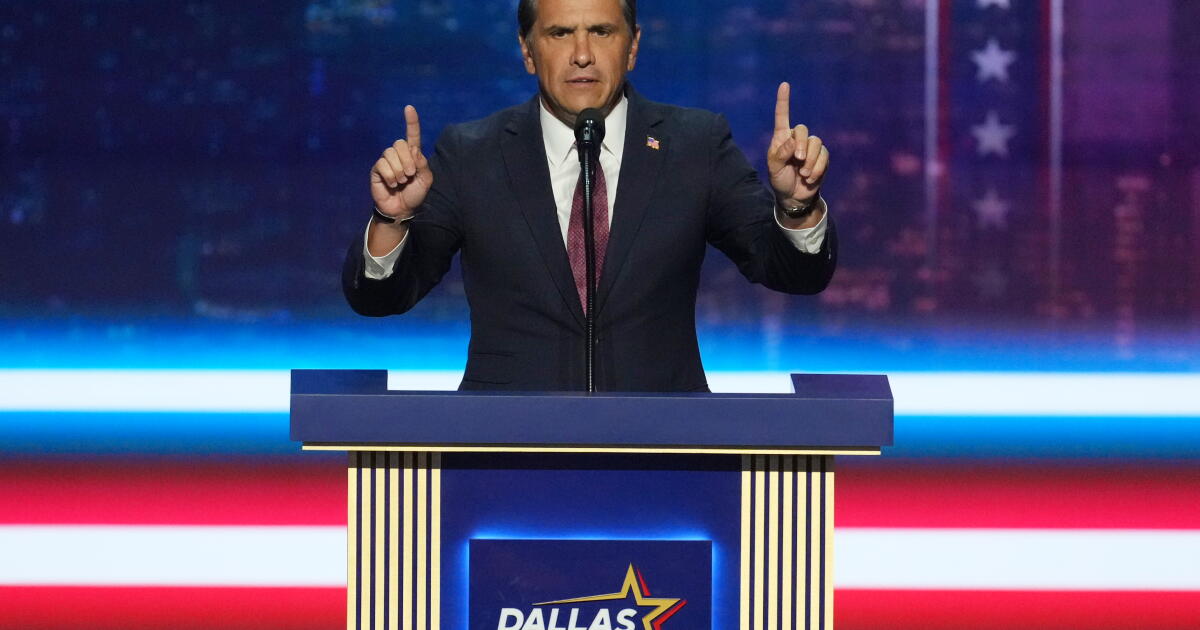
Blanche took the stage this week at an event for a Republican Senate candidate in North Carolina days after speaking at a GOP midterm convention, where he praised Trump and touted the administration’s tough-on-crime approach.
Blanche’s participation at the rallies has drawn scrutiny from critics who say it threatens to undermine public faith in law enforcement decisions that are supposed to be made free of political interference. It has added to critics’ concerns about Blanche’s loyalty to Trump and White House influence on Justice Department matters against the backdrop of investigations into numerous perceived foes of the president.
“It lends credence to the arguments that the Justice Department is hopelessly politicized,” said Richard Painter, who was a White House ethics lawyer in the George W. Bush administration. “And that’s not where we want to be right now.”
Blanche has brushed aside norms
Attorneys general have typically stayed away from political rallies and at arm’s length from the White House to prevent the appearance of law enforcement interference in elections and to protect the perception of impartiality in prosecutions.
Blanche, a former personal lawyer for Trump, has brushed aside such norms and fiercely defended the president’s interests in the department, which brought two criminal cases against Trump under President Joe Biden. Blanche has rejected allegations that the Trump administration has politicized the agency and accusations that the White House is improperly involved in department matters.
Blanche has used his speeches at the rallies to promote the administration’s efforts to bring down violent crime, illegal border crossings and drug trafficking as Republicans put their tough-on-crime policies at the center of the midterm elections. In another unusual move, he held a press briefing at the White House this week, fielding questions from reporters on a host of matters including the Iran war.
At an event Wednesday in North Carolina for Republican Senate nominee Michael Whatley, Blanche told the crowd, “More of your family, more of your friends, more of your community members, more of your loved ones are safer than they were just two years ago.”
“And that’s President Trump and Vice President Vance delivering on a promise that they made to you,” said Blanche, calling Trump “the greatest president of our generation.” His speech also veered into topics outside his law enforcement portfolio such as the stock market, inflation and wage growth.
Blanche says he is not endorsing candidates at political events
The Justice Department said Blanche’s appearances at political events are made in his personal capacity, and noted that his speeches have addressed the administration’s efforts broadly but do not get into agency policies or official business.
“His appearances are reviewed and cleared by the Department’s ethics officials,” spokesperson Kiersten Pels said in an email Thursday. “Travel expenses are reimbursed by the Attorney General in accordance with federal law, regulations, and policies.”
In a recent interview with The Associated Press, Blanche dismissed criticism about his appearance at a Long Island event where Trump sought to boost Republican candidates in closely contested races.
The watchdog group Public Citizen filed a complaint accusing Blanche of violating a law that limits political activity by government workers by participating in that event alongside Nassau County Executive Bruce Blakeman, the Trump-endorsed Republican challenging Democratic Gov. Kathy Hochul.
“I will always say yes to speak when the president of the United States asks me to,” Blanche told the AP last month. “I was there purely thanking cops, law enforcement, for doing their jobs. The idea that that’s turned into somehow criticism is laughable.” Blanche said he was not endorsing political candidates but instead “talking about the great work that President Trump is doing.”
Federal law and Justice Department policy limit political activity
The Hatch Act prohibits government officials from using their official positions to influence elections. That includes supporting candidates while acting in their official capacities. Watchdog groups have long complained that the law isn’t a strong deterrent and enforcement has been inadequate and uneven.
The Justice Department under Biden in 2022 tightened its restrictions on employees’ attendance at political events after then-Massachusetts U.S. Attorney Rachael Rollins attended a fundraiser that featured first lady Jill Biden. Attorney General Pam Bondi, who was fired by Trump in April, later rescinded those restrictions.
Rollins’ attendance at the fundraiser sparked an outcry from Republican Sen. Tom Cotton, who sought an investigation and wrote a letter asserting that U.S. attorneys are supposed to act as nonpartisan law enforcement officials rather than as partisan politicians. Rollins resigned in 2023 after the Justice Department’s internal watchdog accused her of broad misconduct.
Before those changes, longstanding department policy had allowed political appointees — who are hired under presidential administrations rather than making long careers at the agency — to attend political events in their personal capacities if they participated “passively” and obtained prior approval.
Biden’s attorney general, Merrick Garland, barred their attendance at fundraisers and other campaign events altogether, saying it was necessary to ensure that politics “both in fact and appearance” won’t affect how the law is enforced or inquiries are carried out.
A massive explosion tore through the strategic Ali Al-Taher ridge overlooking Nabatiyeh on Thursday night after the Israeli military detonated what it said was a Hezbollah underground complex extending for more than 2 kilometers beneath the heights.
Lebanon’s National News Agency said the blast was felt across Nabatiyeh and surrounding areas. Israel said it had destroyed command centers, weapons stores, living quarters, rockets, missiles, drones and other military infrastructure and had achieved “operational control” of the ridge both above and below ground.
Prime Minister Benjamin Netanyahu and Defense Minister Israel Katz said the operation completed the consolidation of Israel’s self-declared security zone inside southern Lebanon.
For residents of Nabatiyeh below, the destruction gave dramatic new urgency to a political argument that has been building for weeks: Who can actually protect the south?
When Lebanese Army vehicles appeared in greater numbers on the streets of Nabatiyeh, residents welcomed the soldiers with flowers and handfuls of rice.
Lebanese children give flags to a Lebanese soldier at the entrance of the village Adaiseh, in south Lebanon. REUTERS/File
The army had not been absent from the southern Lebanese city, as a security source later stressed. But the enhanced deployment — and its unusual public reception — carried unmistakable political weight.
For decades, Nabatiyeh has been synonymous with the influence of Hezbollah and the Amal Movement. Yet the soldiers arrived a day after more than 400 people signed an appeal demanding that the Lebanese state assume responsibility for the city’s security, deploy the army in and around it, and restore decisions of war and peace exclusively to legitimate institutions.
Known as “Nabatiyeh 2,” as the second of such petitions, the appeal may not prove that Hezbollah’s southern heartland is turning decisively against the organization. Its significance lies somewhere subtler; it suggests that some southerners — long-cast as steadfast Hezbollah loyalists — are beginning to question not their hostility toward Israel, but whom they trust to protect them from it.
Bahjat Mirza, a signatory whose family has been rooted in Nabatiyeh for generations, rejected accusations the initiative was politically motivated.
“These appeals are coming from people of the land — people who are not politically inclined in any particular direction,” he told Arab News.
“This appeal is not politically motivated. It is simply a civil appeal by Lebanese citizens to their government to deploy the army and official security forces on the ground. In my opinion, they should have been there since 1948, since 1969, since 1975.”
Dr. Ali Hassan Wehbe, another supporter of the appeal, is a Lebanese dentist, political and social analyst and former parliamentary candidate who ran in the 2022 elections. His dental clinic in Nabatiyeh has been destroyed three times during successive conflicts — in the 2006 war, again in 2024 and most recently in 2026.
He said the campaign was fundamentally about preventing Nabatiyeh from suffering still greater destruction.
“The appeal is, first and foremost, about removing Israel’s pretext and saving Nabatiyeh,” Wehbe told Arab News, stressing that “Israel bears the primary responsibility for this destruction and this barbarity.”
But he rejected suggestions that calling for state security forces amounted to betrayal.
Smoke billows during Israeli airstrikes in the southern Lebanese city of Nabatiyeh on Oct. 16, 2024. AFP/File
“Has bringing the Lebanese Army and the Lebanese state into Nabatiyeh suddenly become forbidden? Has this become an act of treason against the country?” he said.
“Which is preferable — for the Lebanese Army to enter, or, God forbid, for the Israeli army to enter? Of course, the Lebanese Army should enter. They are our sons.”
The appeal explicitly holds Israel responsible for occupation, killing and destruction. But it also demands accountability from those who controlled security decisions and promised that their weapons could protect southern Lebanon.
Without repeatedly naming Hezbollah, the target of that criticism is clear.
Its most politically charged declaration is that Nabatiyeh must not become “a barricade for any axis” — a challenge to the city’s place in a regional confrontation closely linked to Iran. The appeal also rejects what it describes as the “duality of decision-making” inside Lebanon.
This is not merely a request for more soldiers or better policing. It explicitly demands for the state to become the sole authority responsible for security, and for no armed party outside its institutions to determine when Lebanon goes to war.
“Hezbollah’s position on this is irrelevant,” Mirza said. “Anybody’s position is irrelevant — even if the president of the country disagreed with us. We are asking the Lebanese state to protect its citizens.”
Wehbe put it more starkly.
“We are not a bargaining chip and we are not a negotiating card,” he said. “Nabatiyeh is the artery of the south. It is the heart of Jabal Amel.”
For him, the conclusion is straightforward: “We have no alternative to the state.”
The struggle over Ali Al-Taher
The immediate trigger for the second appeal was the clear and devastating fate of Ali Al-Taher, the strategic heights described as the “gateway to Nabatiyeh.”
The petition argues that an opportunity existed to place the area under Lebanese Army control before Israel claimed operational control of it. For critics, the episode has produced a simple argument: Territory that was not handed to the Lebanese state ultimately fell under Israeli control.
That argument acquired added force on Thursday when Israel detonated the underground complex beneath the ridge, after weeks of bombardment and ground operations. The blast was powerful enough to register as a magnitude-4.1 seismic event about 13 kilometers west-southwest of Nabatiyeh.
The aftermath of an Israeli demolition on the Ali Al-Taher ridge in the southern Lebanese area of Marjayoun, which triggered a magnitude-4.1 tremor (L), and the moment of the explosion (R). AFP/File
The Israeli military said the network contained a central command complex belonging to Hezbollah’s Badr unit as well as weapons storage rooms and facilities that allowed fighters to remain underground for prolonged periods. Israel said its troops would remain in the area to prevent Hezbollah from rebuilding its presence there.
Political writer Sateh Noureddine, who comes from the southern town of Arabsalim, said the loss of the heights was not as recent as Israel’s announcement suggested.
“The Ali Al-Taher hills fell some time ago,” he told Arab News. “The information indicated that Hezbollah’s members had evacuated them weeks ago, not now.”
Noureddine said he did not believe a deal had been responsible for the area falling into Israeli hands. He did, however, question the timing of Israel’s announcement.
“What I find strange, and what raises more than one question, is why Israel announced the fall of Ali Al-Taher now,” he said.
“I believe this indicates that Israel will undertake a military operation more significant than Ali Al-Taher, through which Benjamin Netanyahu will seek to make electoral gains in the Oct. 27 election.”
The second appeal is markedly more urgent than the first. Mirza said it was issued after continued Israeli bombardment of Nabatiyeh and its surrounding villages created a growing fear that the city itself was gradually disappearing.
“It became very clear, with Israel’s dominance and the continued bombing of cultural and historical sites in Nabatiyeh and the surrounding villages, that we felt the city was gradually being destroyed,” he said.
For Wehbe, that fear is intensely personal.
“Since I was 10 years old, I have lived through displacement and wars,” he said. “We do not want to keep mourning our children. We do not want to keep living on memories. We want to live in the present and build the future.”
Residents are no longer debating only a theoretical future danger. They have watched destruction reach the approaches to the city and are contemplating what another escalation could mean for their homes, families and livelihoods.
Hezbollah’s supporters gather around the coffins of militants killed in Israeli attacks during their funeral in the southern city of Nabatiyeh on November 2, 2025. AFP/File
For years, Hezbollah and Iran were associated among their supporters with power, protection and deterrence. Residents are now confronting destroyed villages, lost territory and the possibility of still greater devastation.
That does not necessarily amount to a complete political realignment. But it has shaken some of the assumptions on which Hezbollah’s relationship with its popular base was built.
The political debate was once largely about who represented the south. For some residents, the more urgent question is now whether there will be a south left to represent.
‘Nothing but words and threats’
Ali Al-Amin, editor-in-chief of Janoubia, a news website opposed to Hezbollah, said the party was becoming increasingly defiant as the pressure surrounding it intensified.
“Hezbollah has no options other than to continue attacking the authorities in general, while the circle of protest against the party is expanding in the south amid fears of further Israeli incursions and of the entire south falling under occupation,” he told Arab News.
“Even Hezbollah’s supporters have begun to voice their unease over what the wars in support of Gaza and Iran have produced. Voices are rising even from within Hezbollah’s own constituency because the equation on the ground has become exposed.
“All the evidence has shown that the party says one thing and does another. It has become clear that it possesses nothing but words and threats.”
Al-Amin said Hezbollah’s failure to confront Israeli forces at Ali Al-Taher was particularly damaging because of the importance the organization had previously attached to the area.
“Hezbollah did not resist the Israelis when they advanced toward Ali Al-Taher, even though it had described it as the ‘mother of all battles,’” he said.
He warned that Hezbollah’s response to its growing isolation could eventually transform the purpose of its weapons.
“The danger today is that Hezbollah’s defiance could change the function of its weapons, turning them from weapons intended to resist Israel into weapons used to confront the Lebanese state,” Al-Amin said.
“Hezbollah is trying to find pretexts for not handing over its weapons. But if we observe the trajectory, we find that the party’s argument is weakening and being depleted over time. This is what Israel has done through the escalation of its military operations.
“Today, the testing ground has shifted north of the Litani River, rather than remaining south of it.”
Wehbe, however, framed his challenge to Hezbollah differently. He stressed that many of those behind the appeal had themselves supported or participated in the resistance — Hezbollah’s preferred euphemism — in previous decades.
“My message to Hezbollah’s leadership is this: Deal with this opposition rationally and calmly, because this opposition was itself a stronghold of the resistance,” he said.
He also urged Hezbollah to rein in supporters who had accused the signatories of treason or incited against them.
“Are we no longer allowed to express our pain?” he asked. “Are we no longer allowed to say: Enough displacement?”
Dissent is not new — but its focus may be
Public opposition to Hezbollah and Amal inside Nabatiyeh is not unprecedented.
During Lebanon’s 2019 uprising, protesters in the predominantly Shiite city openly challenged both movements. Those demonstrations broke longstanding taboos and exposed anger over corruption, patronage, economic mismanagement and Lebanon’s sectarian political system.
An Israeli flag flies over the medieval Beaufort Castle, known locally as Qalaat al-Shaqif or Shaqif Arnoun, in southern Lebanon on May 31, 2026. AFP/File
Some of the people supporting the latest appeal may belong to that established opposition constituency. More than 400 signatures, while notable, cannot be treated as representative of hundreds of thousands of people across southern Lebanon. Nabatiyeh has not suddenly ceased to be a major center of Hezbollah and Amal support.
What may be changing is the nature of the criticism.
In 2019, much of the anger focused on governance and economic failure. “Nabatiyeh 2” strikes much closer to Hezbollah’s foundational claim to legitimacy: that its independent arsenal is necessary because it can defend the south more effectively than the Lebanese state.
The appeal asks whether that claim still holds after the scale of destruction inflicted on southern communities and the loss of territory Hezbollah’s weapons were supposed to protect.
Noureddine argued that the growth of public opposition was evidence that the party’s political structure was beginning to disintegrate.
“Hezbollah is on its way to disappearing — its leadership and political bureau alike,” he said. “It is living through its final phase. The party’s political body has begun to disintegrate, and nothing will remain except scattered cells that carry on its path and may disappear underground.”
“The number of people signing the Nabatiyeh appeal is doubling every day,” he added. “This is an indication of growing opposition to a party that is fading away.”
His assessment is among the most categorical offered by Hezbollah’s critics and remains fiercely disputed by its supporters. There is no evidence that the organization has lost its dominant position within its traditional constituency.
Nevertheless, the willingness to make such arguments openly is itself significant in a region where public criticism of Hezbollah’s security role has historically carried a high political and social cost.
Joelle Abboud, a member of the Lebanese Kataeb Party’s political bureau, said the demand for state sovereignty over southern villages had never belonged to one community or political faction.
People stand on the rubble of a destroyed house after returning to the southern Lebanese city of Nabatieh on Apr. 20, 2026. AFP/File
“The voices that have recently risen to demand state sovereignty through the army in southern villages reflect what has always been a national demand across all sects,” she told Arab News.
“The emergence of Shiite voices making that demand today is evidence that Hezbollah’s weapons did not deter Israel, and that the war continued to an Iranian rhythm, with Lebanese youth used as fuel for an Iranian project.”
Abboud said the reception given to the army in Nabatiyeh showed that southerners wanted the state to assume the role long claimed by Hezbollah.
“The welcome received by the Lebanese Army in Nabatiyeh is evidence that southerners are eager to see the state become the alternative to militia weapons,” she said.
“Diplomacy is a difficult path, but it is effective in achieving stability. What is required today is the implementation of the Lebanese government’s decisions to confine weapons to the state.”
For now, “Nabatiyeh 2” — with signatories including doctors, engineers, lawyers, bankers, journalists, academics, writers, activists and MP Firas Hamdan — is not proof that southern Lebanon has turned against Hezbollah. It is evidence that a question once difficult to voice publicly is becoming harder to suppress.
After decades in which Hezbollah presented itself as the indispensable defender of the south, some people within its traditional environment are looking toward the Lebanese Army and asking whether only the state can protect them.
Whether this is simply the cry of a frightened city facing another battle, or the beginning of a deeper transformation in Hezbollah’s relationship with the society from which it draws much of its power, remains unanswered.
But after the explosion beneath Ali Al-Taher shook Nabatiyeh on Thursday night, that question is no longer abstract.
The presidential candidates and the parties are pouring money into campaign advertising at a record-breaking pace, some of it skirting federal laws designed to keep special interests from influencing the election, according to a pair of studies released Tuesday.
Political parties and independent organizations have spent or committed to spending more than $342 million on ads since the 2000 election cycle began in January 1999, already surpassing the entire 1996 cycle, according to the study by the Annenberg Public Policy Center at the University of Pennsylvania.
A separate study by the University of Wisconsin and the Brennan Center for Justice at the New York University School of Law found that the Democratic and Republican parties have combined to spend at least $44.2 million on ads since June. All of the ads featured their presidential candidates and most were paid for with so-called soft money donations.
The party advertising that features presidential candidates has been controversial because federal law prohibits the spending of soft money donations to influence the outcome of the election.
Campaign Finance Laws ‘Are Dead and Buried’
“Looking at these hard facts leaves no room for doubt, the campaign finance [laws] in this country are dead and buried,” said E. Joshua Rosenkrantz, president of the Brennan Center. “The American political parties are engaged in the greatest money-laundering scheme in history.”
The parties interpret the law to mean they can spend soft money on “issue advocacy” ads, which legally aren’t for the purpose of influencing the presidential race.
But according to the Brennan analysis of the largest 75 media markets, the parties have opted to run their ads only in states where the presidential race is competitive.
In fact, the Republican Party has accelerated its ad spending in places such as Florida, a traditional GOP stronghold where Vice President Al Gore has been rising in the polls. The two parties and their candidates are waging their ad war across a battlefield of about 17 states–a field that has essentially left out major media markets such as Los Angeles and New York.
Since the Democrats fired off the first ad in June, the party and Gore have aired their heaviest volume in Flint, Mich., followed by Scranton, Pa., and Pittsburgh. Republicans and the Bush campaign have been running their heaviest volume in Scranton, Cleveland and Columbus, Ohio, according to the Brennan study.
The last two weeks have seen the Bush campaign and Republican Party draw even in spending, pouring in a combined $8.7 million in the two weeks ending Sept. 13, about 18% more than the $7.4 million spent by Gore and the Democrats, the study found.
Data for the study come from the Campaign Media Analysis Group, which tracks ad spending in the top 75 markets.
The Brennan study found that few independent groups have advertised in the presidential race so far.
But the independent groups are deluging congressional and state races with money, according to the Annenberg study. More than 125 different groups are running ads this cycle, more than the last two cycles combined, the study concluded.
The largest segment of the issue ads, about 24%, focuses on health care, followed by the environment and gun control. The independent groups spending the most are backed by major industries–Citizens for Better Medicare, a group founded largely by the pharmaceutical industry, has spent about $34 million on ads, many of them aimed at a half-dozen competitive congressional races.
But there has been an explosion of smaller groups as well. A group called the Republican Ideas Political Committee, for example, said it has raised $70,000 to hit the air in Kansas City, Mo., with a controversial spot in which a harried mother says her son’s public school has “a bit more diversity than he could handle.”
Ads Now Focus on Specific Candidates
More than in the past, the ads are focusing on specific candidates instead of issues. So far this cycle, 52% of the issue ads have mentioned candidates, compared with about 35% at the same period in the 1998 election cycle, the study found.
Since the Annenberg researchers last surveyed issue-ad spending in March, the parties and independent groups have spent or committed an additional $224 million to ads.
Because Annenberg relied on the organizations themselves to provide some spending data, researchers said the numbers may not be precise. But the center has used the same methodology for three elections, so its estimates of the changes in spending should be accurate, officials said.
At this point in the race, “it’s clearer who the targets are,” said Lorie Slass, director of Annenberg’s Washington office. “More groups are entering the fray. They want to get close to election day to spend their money.”
(BEGIN TEXT OF INFOBOX / INFOGRAPHIC)
Presidential Campaign Ads
Television advertising in the presidential campaign has been almost entirely limited so far to 22 states, with the heaviest concentration focused on four of the most competitive areas. Spending reflected in the map combines all of the advertising purchases made in this calendar year by the Democratic and Republican parties as well as the campaigns for George W. Bush and Al Gore. In the state-by-state list, Republican figures include spending by the party and the Bush presidential campaign while Democratic figures include spending by the party and the Gore campaign.
Where the money was spent
ARKANSAS
Republican: $388,113
Democrat: $499,188
CALIFORNIA
Republican: $1,123,700
Democrat: $100
FLORIDA
Republican: $5,177,434
Democrat: $2,772,544
GEORGIA
Republican: $630,578
Democrat: $303,997
IOWA
Republican: $264,538
Democrat: $368,312
ILLINOIS
Republican: $2,419,731
Democrat: $2,381,482
KENTUCKY
Republican: $733,082
Democrat: $923,948
LOUISIANA
Republican: $387,533
Democrat: $516,408
MASSACHUSETTS
Republican: $95,800
MAINE
Republican: $434,389
Democrat: $570,261
MICHIGAN
Republican: $2,778,915
Democrat: $3,941,715
MISSOURI
Republican: $1,704,376
Democrat: $2,249,209
NEW HAMPSHIRE
Republican: $86,400
Democrat: $32,200
NORTH CAROLINA
Republican: $256,750
NEW MEXICO
Republican: $424,576
Democrat: $841,652
NEVADA
Republican: $326,700
OHIO
Republican: $4,485,212
Democrat: $4,795,589
OREGON
Republican: $800,635
Democrat: $1,054,452
PENNSYLVANIA
Republican: $5,776,120
Democrat: $6,648,116
WASHINGTON
Republican: $2,548,695
Democrat: $2,446,475
WISCONSIN
Republican: $1,137,594
Democrat: $1,691,948
WEST VIRGINIA
Republican: $117,500
Democrat: $41,600
Note: Through Sept. 13
Source: Campaign Media Analysis Group (Based on a survey of the nation’s top 75 media markets).
Members of the high court have exchanged accusations after one justice was accused of involvement in a bank scandal.
By AFP and The Associated Press
Published On 11 Sep 202611 Sep 2026
Brazil’s Supreme Court has cancelled a second straight day of deliberations as suspicions of corruption, political bias and police interference loom over several of its members.
Cancellations are rare at the high court. But on Thursday, Chief Justice Luiz Edson Fachin nixed a second consecutive session, calling for the court to reconvene on Tuesday instead.
Recommended Stories
list of 3 itemsend of list
The decision was spurred by an ongoing crisis among the court’s members.
The divisions emerged on September 1, when one justice, Andre Mendonca, unsealed a series of federal police documents that appeared to show a disgraced banker, Daniel Vorcaro, seeking advice from another justice, Alexandre de Moraes.
De Moraes has rocketed to prominence in recent years for his roles in high-profile cases.
He presided over the trial of former President Jair Bolsonaro after prosecutors accused the far-right leader of plotting a coup following his 2022 election defeat. De Moraes also oversaw suspensions of platforms like X and Rumble for failing to abide by court orders, making him a target for Brazil’s right wing.
The document release authorised by Mendonca, a Bolsonaro appointee, contains roughly 30 text messages sent to a phone number associated with de Moraes, allegedly from Vorcaro.
In response, de Moraes has accused Mendonca of abusing his authority on the court for political gains. He requested a probe into whether Mendonca interviewed Vorcaro without the presence of police or prosecutors.
Tuesday’s session will involve the full Supreme Court bench, and 10 of the justices will discuss whether the 11th member, de Moraes, should be investigated over the text messages.
The tit-for-tat on Brazil’s high court is the latest fallout from the Banco Master corruption scandal.
Vorcaro, the head of the Banco Master financial institution, was arrested in November 2025 on accusations he defrauded investors of billions in lost funds, in one of the biggest banking scandals in the country’s history.
The collapse of Banco Master’s private banking arm left behind more than $7bn in debt.
Lawmakers from across the political spectrum have become embroiled in the unfolding scandal as new details emerge.
The turmoil risks affecting October’s general elections, including a pivotal presidential election.
Left-wing incumbent Lula Inacio Lula da Silva is set to compete for the presidency against Jair Bolsonaro’s eldest son, Senator Flavio Bolsonaro.
Both Lula and Senator Bolsonaro have called for investigations into the Supreme Court justices.
The Bolsonaro family itself has been dragged into the Banco Master scandal. In May, the publication Intercept Brasil released a report showing that Senator Bolsonaro petitioned Vorcaro for funds to finance a film about his ex-president father, who is now serving a 27-year prison sentence.
Senator Bolsonaro has denied wrongdoing, claiming he did nothing more than seek private sponsorship for the film, entitled Dark Horse.
But on Thursday, Brazilian police executed dozens of raids related to the Banco Master scandal, including some that targeted two figures involved in the film: Karina Gama, the head of a production company, and Congressman Mario Frias, who served as executive producer.
Senator Bolsonaro has called the probes “attempted political interference” ahead of the elections.
Venezuelan political junkies witnessed an amusing phenomenon in the past few weeks: former presidential hopeful Henrique Capriles embraced a derisive meme about himself that suddenly became popular. Or more precisely, he, too, started joking about his own memefied persona, el manguanguas, the weirdly energetic, repetitive and even creepy politician that appears at your doorstep and, if you let him inside, sits down for hours to hablar de la situación while emptying your family’s coffee reserves.
Capriles is one of the most memeable characters in our universe and the manguanguas moniker is not a rarity. It comes from a 2019, early Juan Guaidó era livestream where he praises Guaidó and rants at Maduro for virtually terminating political competition a year before: “¡Coño, qué manguangua! ¿Ah?” (an indignant “hell, that’s convenient, huh?”).
The whole thing does say a couple of things about our (still overwhelmingly digital) public sphere and the memefication of Venezuelan politics. First, it seems many people were more eager to have a laugh and scroll down the manguanguas rabbit hole than to learn, say, about the US-Nabep deal and the involvement of bolichico king Alejandro Betancourt, a material architect of the crisis that remains the biggest handicap to the quality of life of Venezuelans. To put it another way, el manguanguas was getting an insane amount of attention while the US overlords faced their biggest reputational crisis in Venezuela since January 3.
The meme emerged because Capriles has been touring Miranda while Venezuelan politics become increasingly defined by what a group of gringos in navy blue suits decide to tweet on a Friday evening.
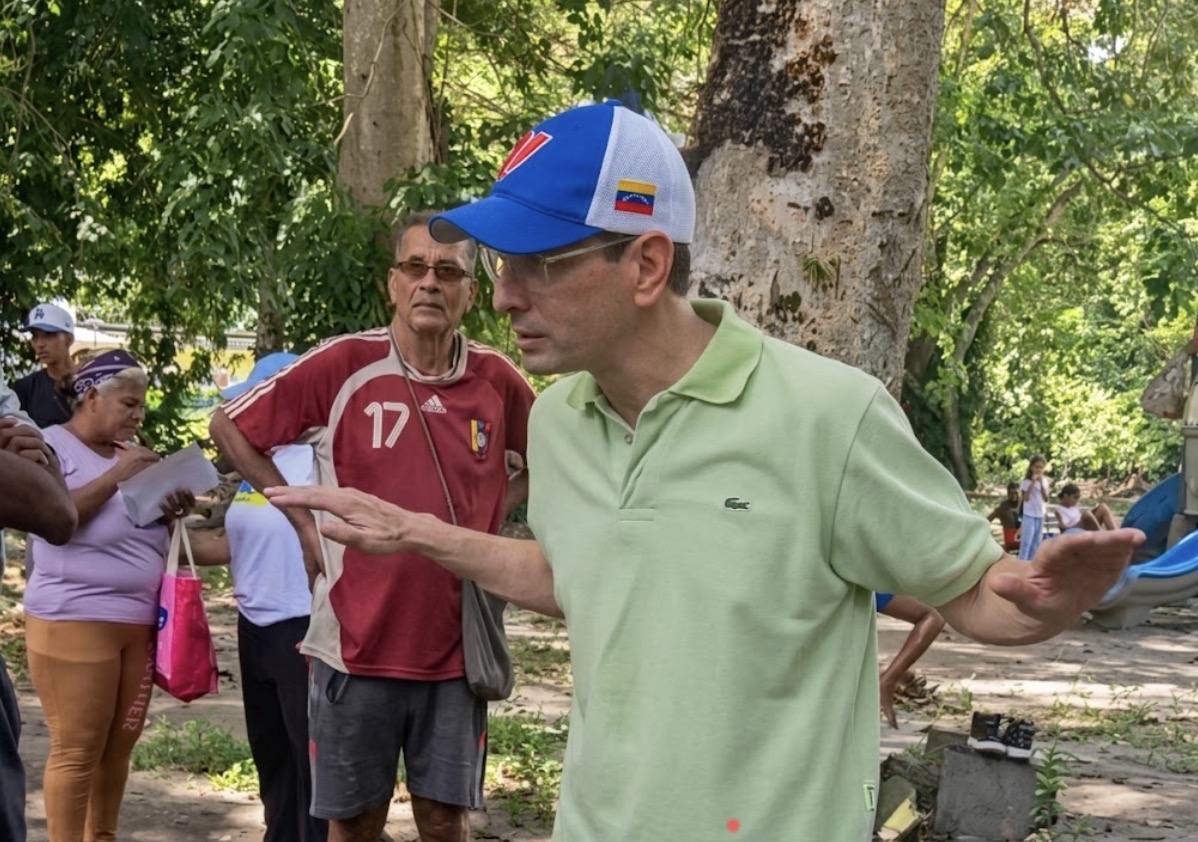
We’re not making a great discovery here—most people know memes can have spectacular traction when it comes to political messaging and campaigning. The Venezuelan jodita, the national propensity to make jokes about everyone and everything even in the midst of tragedy, can make memes an even stronger weapon in our digital sphere. It seems someone made Capriles aware of that: he first reacted by complaining on X, accusing “those who are paying a millionaire campaign in production and publicity” of attacking him on social media. Then he acknowledged it in a friendlier fashion: “They say I visit your homes to steal your coffee,” he said in a September 1 video in Barlovento. “They mock me because they don’t want to see me coming here.” In a later post, he made a toast with other townspeople raising tiny coffee cups: “Por la manguangua!”
Capriles decided to tag his recent posts with #OperaciónManguangua and the whole thing has been helping him—engagement around his account grew and became more positive as a result, though he still doesn’t dare to open the comments section in his X handle. It’s good news for him after a few years of unpopularity, when he formally joined the faux opposition camp. If not for the events of January 3 and a still dim opening of the political arena, Capriles would be flirting with irrelevance, just a washed-up face in the parliamentary seat Jorge Rodríguez gifted him in 2025, begging Iris Varela or Jorge Arreaza for a chance at the chamber’s microphone. We wrote about his acts and decisions extensively—or his lack of courage and effectiveness—in the late Maduro era. But Capriles is not yet irrelevant, at least in my opinion.
The meme emerged in the first place because Capriles has been touring the state of Miranda this summer—a post-Maduro redemption tour, if you will—while Venezuelan political events again become increasingly defined by what a group of gringos in navy blue suits decide to tweet on a Friday evening. A few years ago, Capriles campaigned strongly about “bringing politics back to the country” in a not-so-slight dig at Guaidó, Leopoldo López, and the Trump-backed interim government they led. He now recognizes María Corina Machado as the rightful opposition leader and criticizes her exclusion from the so-called negotiations, so this is not about a plot against her.
Venezuelan politics started to see some interesting movements a few months ago, but these have become less and less intense as the rest of the opposition waits for Machado’s return or the green flag of an election date.
As weak and isolated as he may look, Capriles is one of the few opposition people with actual freedom to call things what they are when it comes to the United States and Venezuela. That is not the case for Machado, Juan Pablo Guanipa, or other figures who might be playing a role behind the scenes. Capriles didn’t have to wait for Marco Rubio’s explanations five days later to make his case about the US-Nabep deal. He was quick to assert that the oil belonged to the people on the day of Trump’s bombastic announcement, and made some sensible questions: What’s the deal’s scope? What’s its legal basis? What do Venezuelans receive, and under which conditions? Elliott Abrams, the GOP hawk and special envoy in Trump’s first term, noted Capriles’ almost lonely stance as a sign of the country’s worrying lack of politicians who are truly independent from Washington (to make his point, the former operative of Ronald Reagan also quoted the Venezuelan Communist Party in his Washington Post op-ed).
Will the manguanguas joke give him an enhanced platform? Maybe for a bit, though Capriles has a habit of messing things up and making people grow tired of him rather quickly. Right now, he is being noisier than at that time he was supposed to run for the 2023 primaries, only to chicken out in the final stretch, knowing he stood no chance against Machado. However, the videos he has been posting of rural communities in the state he once governed do carve out an accurate picture of how the country looks outside a few big cities. In the Barlovento area, Capriles is seen visiting a ramshackle school where the roof looks about to fall down, with a disgusting pile of books and furniture eaten by heat and dust as a library, its walls and windows looking flimsy when not broken. Another post shows a nearby ghost town, Tacarigua de la Laguna, where Capriles records an empty beach in front of him and an abandoned building behind—the only living thing nearby being a baby cat. Mire, aquí lo único que quedó es el gatico, he says.
In March, we wrote that the political heat map of Venezuela was starting to see some interesting movements, but these have also become less and less intense while the rest of the opposition waits for María Corina’s return or the green flag of an electoral calendar to light up the party. Maybe, if the people are kept waiting, angry or disappointed with the Americans as the opposition watches from the dugout, Capriles will remain the only cat making noise. Mire, pues vamos a ver.
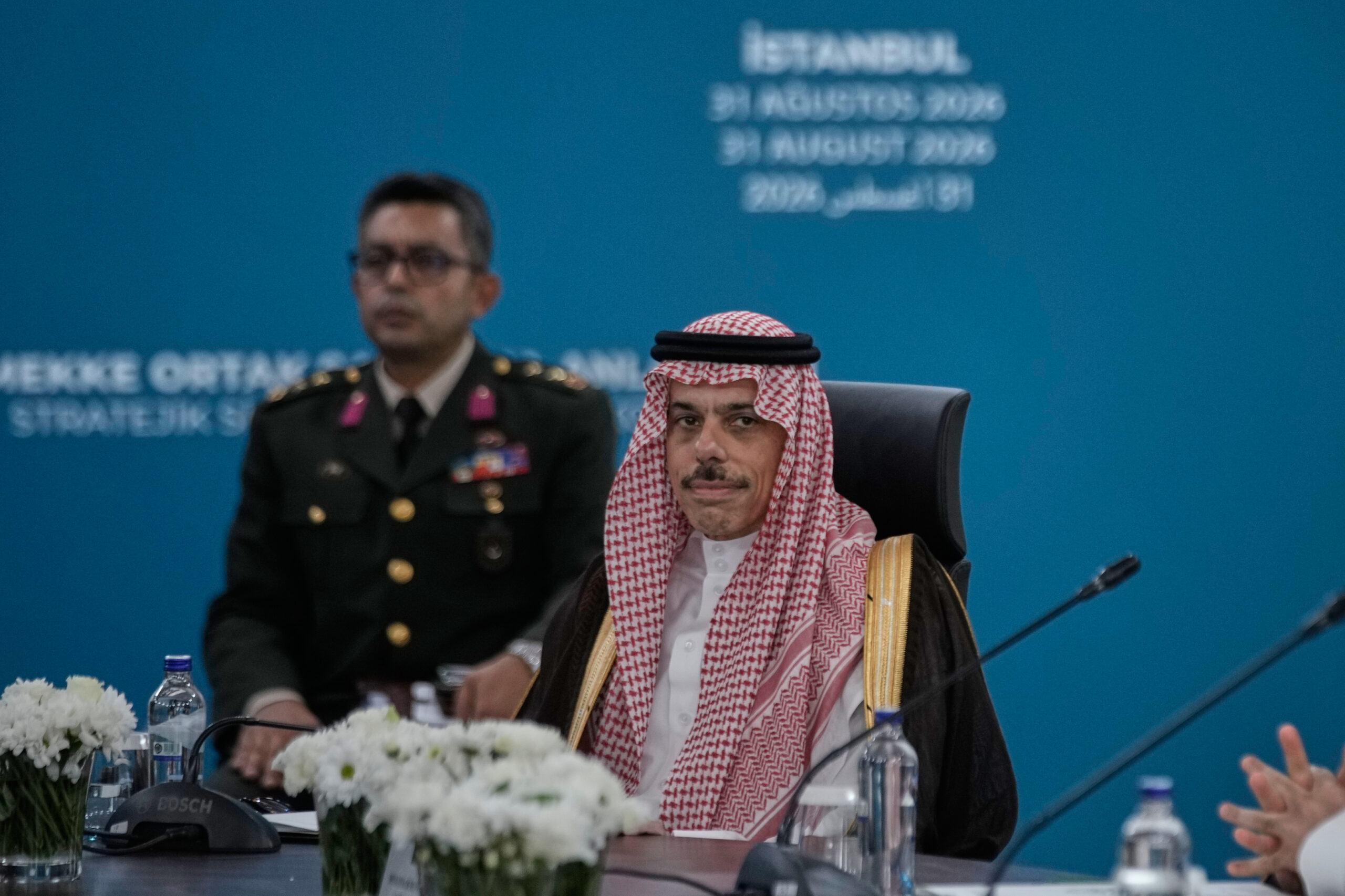
RIYADH: Saudi foreign minister Prince Faisal bin Farhan bin Abdullah received a phone call from Muhammad Ishaq Dar, Deputy Prime Minister and Foreign Minister of Pakistan, official ministry statements said Sunday.
Officials from both countries reviewed the state of bilateral relations and discussed recent regional developments, including the ongoing crisis in the region.
The ministries stated that the conversation addressed efforts to contain the crisis and promote peaceful solutions through dialogue and negotiation, with the aim of reducing tensions and preserving security and stability in the region.
سمو وزير الخارجية الأمير #فيصل_بن_فرحان” rel=”noopener noreferrer”>https://x.com/hashtag/%D9%81%D9%8A%D8%B5%D9%84_%D8%A8%D9%86_%D9%81%D8%B1%D8%AD%D8%A7%D9%86?src=hash&ref_src=twsrc%5Etfw”>#فيصل_بن_فرحان @FaisalbinFarhan” rel=”noopener noreferrer”>https://x.com/FaisalbinFarhan?ref_src=twsrc%5Etfw”>@FaisalbinFarhan يتلقى اتصالاً هاتفياً من معالي نائب رئيس الوزراء وزير خارجية جمهورية باكستان الإسلامية محمد إسحاق دار. pic.twitter.com/puIUe1VwKg


![Supporters of Romania’s far-right politician and former presidential candidate Calin Georgescu, not in picture, cheer as he leaves the Court of Appeal in Bucharest on September 28, 2026, following a new hearing in the case in which he and other defendants are accused of actions against Romania’s constitutional order [AFP]](https://i0.wp.com/www.aljazeera.com/wp-content/uploads/2026/09/afp_6abd16ba6649-1790777018.jpg?w=640&ssl=1)