WASHINGTON — After two years of struggling to slow down the Trump administration agenda under a Republican governing trifecta, Democrats are hoping to capture both chambers of Congress in the upcoming midterms.
All 435 House of Representatives seats are up for election, with 37 considered competitive, 21 of them toss-ups, by the Cook Political Report — a respected polling analysis site. Republicans currently hold a 218-214 edge over Democrats, with two seats vacant and one independent in the chamber.
To control the House, Democrats need a net gain of four seats.
Recent polls have shown Democrats creeping up on or surpassing their Republican opponents as President Trump’s approval rating hovers under 40%, which may offer an opening in unexpected places. But still, in a time when a more progressive wing has risen in popularity on the left, even some moderate Democrats are suffering from associations with the current administration.
Here is a look at five competitive races:
Ohio 7th: Miller vs. Poindexter
Incumbent Republican Max Miller, mired in controversy, will face union ironworker Brian Poindexter in a 7th Congressional District race that went from solidly Republican to a toss-up in the matter of weeks.
Miller, a second-term congressman, is facing a House Ethics Committee investigation after his ex-wife, Emily Moreno — daughter of Ohio Republican Sen. Bernie Moreno — accused Miller of extreme physical abuse, which he has denied.
Miller also faced accusations from former White House press secretary Stephanie Grisham that Miller had abused her during their relationship. An Ohio judge recently ordered both parties to remove social media posts about each other that were considered disparaging.
Brian Poindexter, Democratic nominee for Ohio’s 7th Congressional District, speaks at the Strongsville Democratic Club meeting on Aug. 5 in Strongsville, Ohio.
(Nate Manley / Associated Press)
Poindexter, a relative unknown, has surged in the meantime. According to a Co/efficient poll last month, Poindexter was leading Miller by 14 points, with 86% of respondents claiming they were aware of allegations against Miller.
Poindexter has centered his campaign on strengthening unions, retaining healthcare benefits for retirees and injured workers and raising wages.
Miller has attacked his opponent for a 1998 arrest in which Poindexter, a teenager at the time, allegedly tried to swallow a rock of crack cocaine during a traffic stop. Miller also homed in on an instance of alleged assault at a baseball game in 2013 by Poindexter.
Texas 34th: Gonzalez vs. Flores
Incumbent Democrat Vicente Gonzalez Jr. is attempting to retain his seat against challenger Eric Flores, an Army veteran endorsed by Trump.
Elected in 2016, Gonzalez held the 15th Congressional District for three terms until 2021, when a Texas redistricting shift absorbed his McAllen home into the 34th district. He is currently serving his second term under a new map, which favors Republicans and has shed many of his Latino constituents.
Flores, a political newcomer, made his first national appearance at the Republican National Committee’s midterm convention in Dallas, touting his commitment to border security and accusing Gonzalez of allowing migrants to make the community unsafe.
Immigration looms as an issue in the race. Gonzalez has introduced bills to prevent federal and state immigration enforcement officers from entering homes without an official warrant, and to force agents to wear clear identification. He has publicly criticized raids targeting hospitality, medical and construction workers.
Gonzalez has scored endorsements from several progressive organizations in the state, including LUPE Votes — a subsidiary of La Unión del Pueblo Entero.
In a Barbara Jordan Public Policy Research and Survey Center poll from August, Gonzalez was leading Flores, 45% to 42%, with 8% undecided.
North Carolina 1st: Davis vs. Buckhout
Incumbent Democrat Rep. Donald Davis will have to contend with a district that has grown more conservative to retain his seat against Republican challenger Laurie Buckhout.
North Carolina’s 1st Congressional District was the state’s only swing seat held by a Democrat before last year’s redistricting, which made the area lean Republican. This will be a rematch of the 2024 race, which Davis won by less than 2 points, or around 6,000 total votes.
Laurie Buckhout speaks as President Trump and North Carolina Rep. Jennifer Balkcom look on during a campaign rally at the Gastonia Municipal Airport on Sept. 16 in Gastonia, N.C.
(Matt Kelley / Associated Press)
Cook Political Report ranked this race as leaning Republican, calling Davis “the most vulnerable House Democrat in the country.”
It is unclear whether the gerrymandering effort will have been effective enough to make the district flip to Republican. Trump endorsed Buckhout in March and reiterated his support last week.
New York 17th: Lawler vs. Conley
New York Republican incumbent Rep. Mike Lawler is attempting to fend off a challenge from Democrat Cait Conley, a former White House director of counterterrorism on the National Security Council.
Cook Political Report rankings showed that early this year, the 17th Congressional District race went from likely Republican to a toss-up.
Pete Buttigieg went on the campaign trail last week with Conley to promote the candidate’s bid to unseat Lawler.
“Cait is as serious as it gets about keeping our country safe,” Buttigieg said on a rally stage in Tarrytown, “just like she is serious about bringing down the cost of housing, healthcare and energy.”
Lawler has presented a bipartisan image in Congress, but has come under fire in his purple district for aligning himself with the Trump administration on several issues, including his support for the Iran war.
At the Republican National Committee’s midterm convention, Lawler focused much of his speech on lambasting “socialist” Democrats and attempting to appeal to the more “common sense” wing of the opposition party.
“Radical socialists are winning Democratic primaries,” he said. “They claim to be well-meaning, but there is nothing kind-hearted about protecting criminals at the expense of American families … nothing compassionate about prioritizing illegal immigrants.”
Conley, however, has publicly refused to campaign with New York Mayor Zohran Mamdani or Rep. Alexandria Ocasio-Cortez — without condemning either figure — to avoid the open conflict between establishment figures and the more progressive wing of the party.
A July poll from co/efficient showed Lawler leading Conley 50% to 45%, with a nearly 3% margin of error.
Dr. Amish Shah, shown in July, is a Democrat running in Arizona’s 1st Congressional District.
(Ross D. Franklin / Associated Press)
Arizona 1st: Shah vs. Feely
A Democratic PAC plans to invest nearly $1 million to support Democrat state Rep. Amish Shah against Republican Jay Feely, a former NFL player with close ties to the president.
The 314 Action Fund — which seeks to elect Democrats with backgrounds in science, technology, engineering and mathematics — has made a big bet on the Democrat running in the 1st Congressional District, Arizona’s wealthiest, according to the Arizona Mirror.
Former professional football player Jay Feely, shown in April, is the Republican nominee in Arizona’s 1st District.
(Ross D. Franklin / Associated Press)
Subsequent ads have brought attention to Feely’s close association with Trump and his recent attendance at the Republican National Committee’s midterm convention in Dallas. Trump won the state by five points in 2024.
Elon Musk has also figured in this race, with his America PAC giving $24,000 to Republican candidates Feely in the 1st District and Juan Ciscomani in the 6th District, according to the Copper Courier.
The Cook Political Report called the 1st District “one of the most competitive … in the country.”
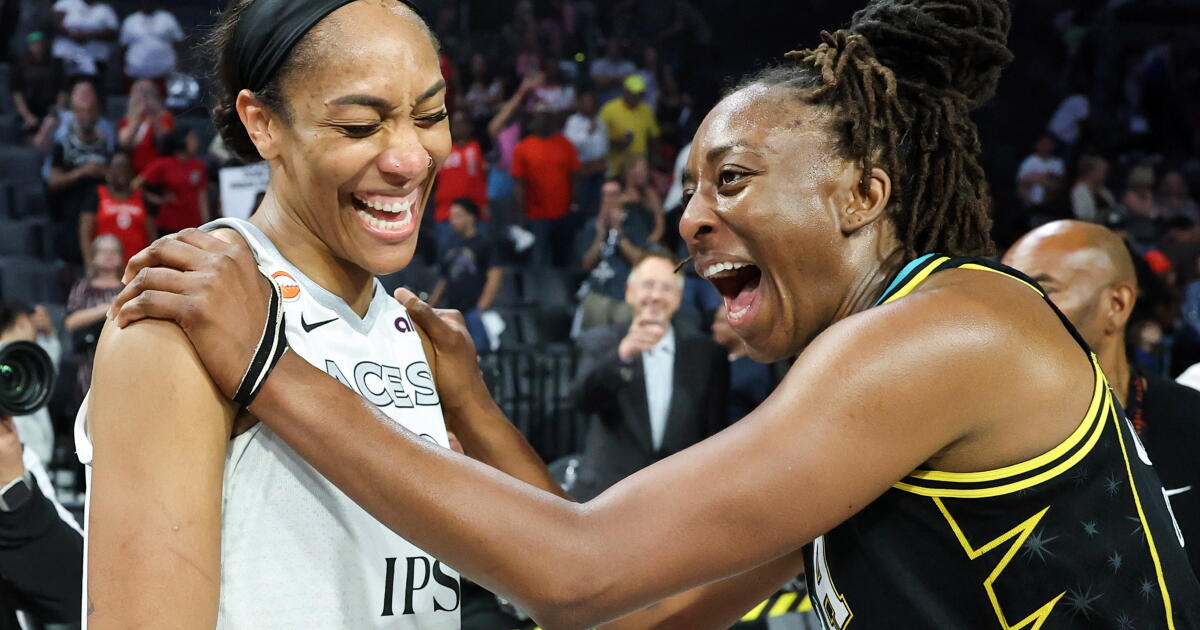
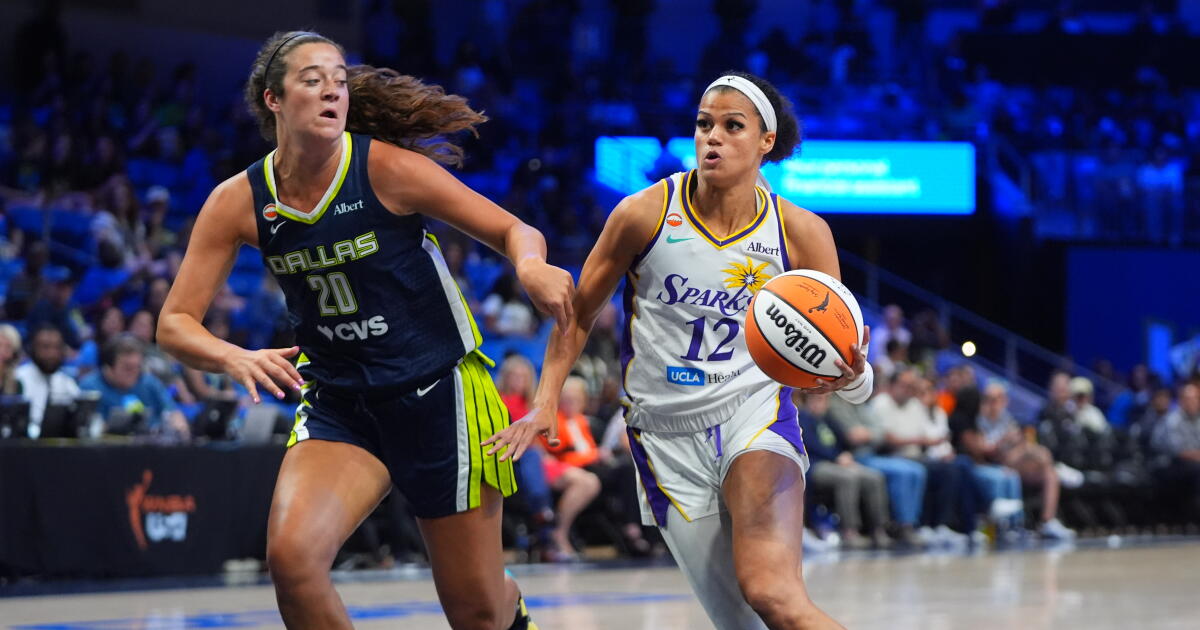
LAS VEGAS — Four-time MVP A’ja Wilson scored 18 points and grabbed 10 rebounds to lead the Aces to an 89-79 victory over the Sparks on Tuesday night and clinch at least a No. 3 playoff seed for Las Vegas.
The Aces (30-13), on a six-game winning streak, will get home-court advantage in the first round of the playoffs, which begin Sunday. If the standings hold, they would face No. 6 seed Washington (27-16) in the best-of-three series.
Chelsea Gray scored 17 points for the Aces, Stephanie Talbot had 14 points and Jackie Young totaled 14 points and 11 assists.
Nneka Ogwumike, who was honored before the game, scored 17 points to lead the Sparks (16-27). Erica Wheeler added 16 points.
The Aces used a 15-point run in the first quarter to take early control, going up 17-5. They led by 17 points when the Sparks went on their own long run, an 11-point spurt in the second period to cut the lead to 35-29.
The Sparks then remained within striking distance, but never closed the gap. Las Vegas’ 10-point run in the third period put the Aces back in control with a 63-45 lead.
The Aces presented Ogwumike, an eight-time All-Star and 2016 MVP, with a flower bouquet before the game. Ogwumike, who announced Aug. 19 she would retire after this season, also received a standing ovation from the crowd. She also is president of the players’ union.
The Sparks played without Dearica Hamby (left knee) and Cameron Brink (right ankle). Hamby, who played in the Aces’ organization from 2015-22, averages 14.4 points and 7.0 rebounds. Brink, the second overall pick in the 2024 draft, averages 9.5 points and 5.0 rebounds.
Nneka Ogwumike answered the same question she’s been facing for almost two months.
Why now? Why leave the WNBA when she still leads the Sparks in scoring and rebounding, has played a central role in helping the league negotiate a transformative new collective bargaining agreement and returned to the city where her pro career began?
Ogwumike is at peace with her decision. And when she steps onto the court in a Sparks jersey for the last time Thursday, she will do it without regrets.
“I’m mostly grateful,” Ogwumike said. “I haven’t really been thinking much else besides just being grateful for the opportunity to have had a 15-year career in the WNBA and also to finish in a Sparks jersey.”
There is a lot for which to be grateful.
Ogwumike entered the WNBA as the No. 1 overall pick of the Sparks in 2012. Now, 15 seasons later, she is leaving the league as one of its most accomplished players — and as the most prolific scorer in Sparks history.
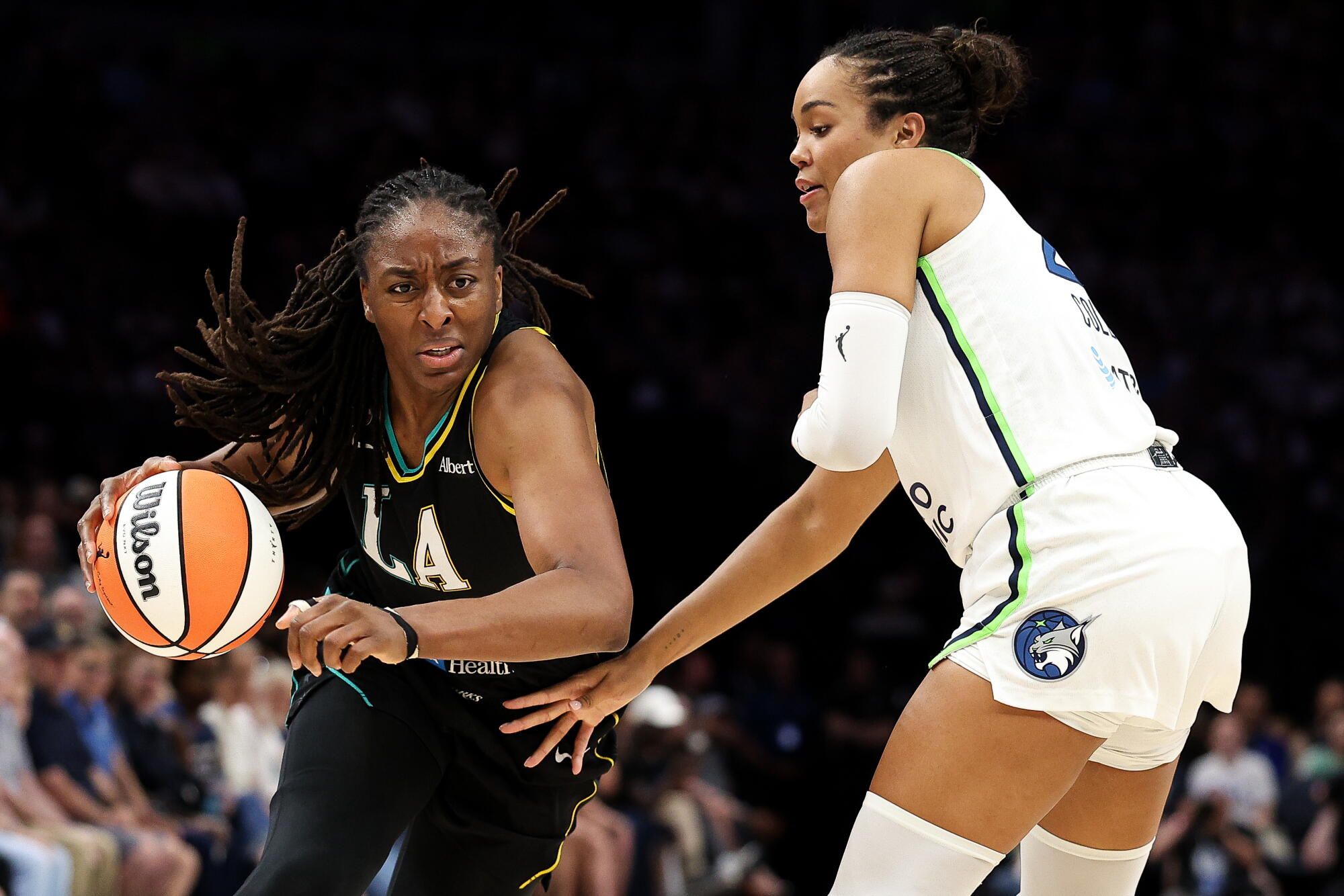
Sparks forward Nneka Ogwumike, left, tries to drive past Lynx forward Napheesa Collier during a game in Minneapolis.
(Matt Krohn / Getty Images)
“It feels freeing,” Ogwumike said of her decision to retire. “It feels like there’s a level of autonomy that I’m able to have, and I’m very happy about that.”
The numbers only begin to tell the story.
Ogwumike was rookie of the year after averaging 14 points and 7.5 rebounds per game. Four years later, she produced the best season of her career, averaging 19.7 points per game, winning MVP and leading the Sparks to their third WNBA championship.
She spent 12 seasons with the Sparks before leaving for Seattle, then returned to Los Angeles this season to finish her career.
Along the way, she established herself among the most productive players in league history. Ogwumike will finish her career fourth all-time in scoring with 8,013 points, behind Diana Taurasi, Tina Charles and DeWanna Bonner. She is third all-time in rebounds with 3,571 and third in steals with 716.
And on July 17, she added one more piece of history to the résumé, passing Lisa Leslie to become the Sparks’ all-time leading scorer.
Sisters Chiney, left, and Nneka Ogwumike pose for a photo at the Bird’s Eye View After Party during WNBA All-Star weekend.
(Daniel Boczarski / Getty Images for Vox Media)
“This is where it all started [for me],” Ogwumike said. “So very happy to be able to share this time, both the beginning and the end of my career in L.A., and I had a majority of my career playing for this organization, so it really does mean a lot to be able to finish in it as well.”
The return, however, did not unfold quite the way Ogwumike or the Sparks had envisioned.
Los Angeles entered the season with playoff expectations after bringing Ogwumike back, signing Erica Wheeler and trading for Ariel Atkins. The Sparks had not made the postseason since 2020, and the hope was that Ogwumike’s return could help change that.
Instead, the season became a struggle. The Sparks will finish 10 games out of a playoff spot, leaving Ogwumike’s final games less about a postseason push and more about what she could leave behind.
“The season is not at all what I expected, but it doesn’t mean that I can’t come out here to do my job and try and be great, and be great as a result,” Ogwumike said. “And as always, playing with my teammates as well.”
That has meant spending time with the young players who will carry the Sparks forward after she is gone.
Sparks coach Lynne Roberts and Nneka Ogwumike talk on the sideline during a win over the Indiana Fever in July.
(Katelyn Mulcahy / Getty Images)
Ogwumike has particularly focused on Cameron Brink, the young forward who represents a significant part of the organization’s future.
“I think right now I’m really spending a lot of my time trying to pour into Cam as well,” Ogwumike told reporters this week. “I really do think that she’s the future of the league. … I’m happy to be able to leave whatever I can before I throw my feet up.”
It is a fitting final role for a player whose career has stretched across generations of the WNBA.
“She’s poured into me since I got into the league,” Dream forward Angel Reese said in August. “Kind of like one of my first vets, always being there for me, always texting me, and also really like educating me on the things that were going on, knowing that it was a big CBA coming up.”
Her final contribution might not be something that appears in a box score. It might be what she passes on.
“She’ll be missed,” said Valkyries forward Gabby Williams, who played with Ogwumike in Seattle the previous two seasons. “As a friend, but also as a fan. I’ll miss watching her in the W.”
Williams knows what Ogwumike’s career has meant to the league, but she also understands what comes next.
“I’m really happy for her,” Williams said. “Happy she gets to take that next step. I know what it means to her. I’m glad her last year was pivotal for the CBA and she’ll always have her name written on that.”
Ogwumike, though, isn’t spending much time looking backward.
She hasn’t thought about what her final moments in the WNBA will feel like, only the gratefulness she feels to have had her 15-year career.
“I haven’t,” Ogwumike said when asked if she has thought about her last moments in the league. “Still just focused on playing.”
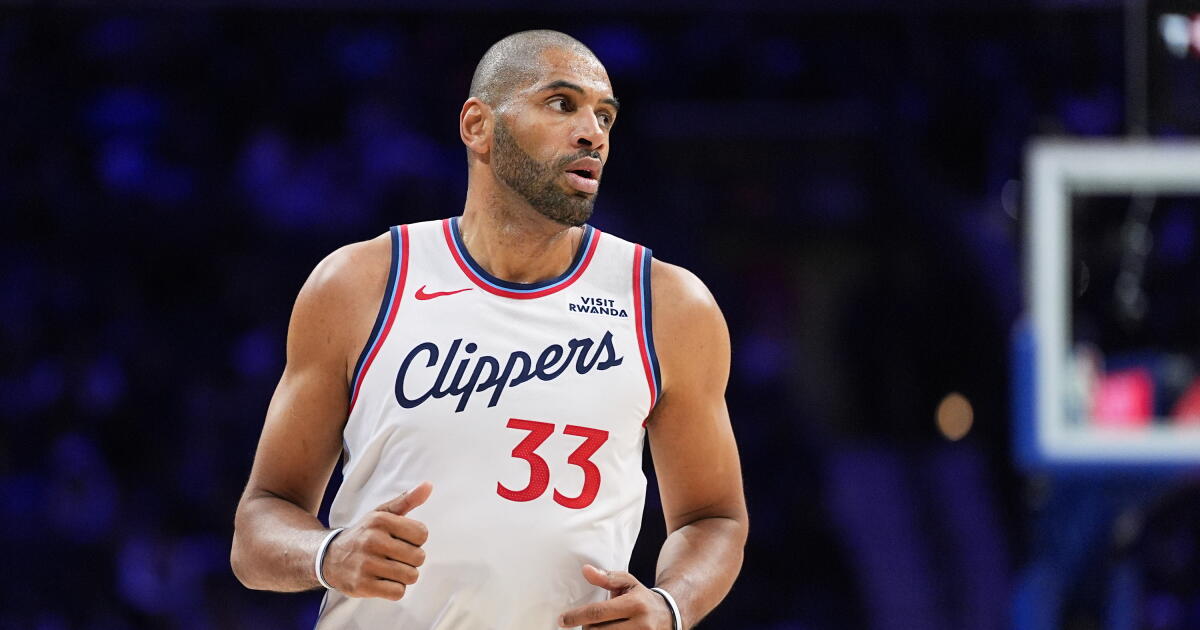
Versatile forward Nicolas Batum is retiring following an 18-year NBA career and a long stint with the French national team.
The 37-year-old Batum announced his retirement in a social media video with his son on Monday.
“I decided to retire from basketball for several reasons,” Batum told 10-year-old son, Ayden, in the video. “I want to come home and be with you. I’m going to take care of you and make room for others. I think I’ve done my time. My time with France ended two years ago. And the NBA is over too. You know, when you’ve played as much basketball as I have, at some point, you have to know when to stop. … I’ve done everything I needed to do.”
Batum played two seasons in the French league before being selected in the first round of the NBA draft by the Portland Trail Blazers. The 6-foot-7 forward spent seven seasons in Portland before playing the next six with Charlotte.
Batum spent most of his final six seasons with the Clippers, with a short stint in Philadelphia in 2023-24. He also was a stalwart on French national teams that won silver medals in the 2020 and 2024 Olympics.
Batum averaged 9.6 points, 4.7 rebounds and 3.0 assists while shooting 37% from three-point range during his NBA career.
WASHINGTON — As Republicans contend with President Trump’s deep unpopularity, Democrats are attempting to seize the opening to take the U.S. Senate in the Nov. 3 midterm elections. Polls have shown Trump with an approval rating consistently below 40%, with no end in sight to the Iran war and voters expressing deep economic anxiety.
Republicans currently hold a 53-47 edge in the Senate, and 35 seats are on the November ballot.
Months of polling indicate that eight Senate seats — six of which are currently held by Republicans — are now up for grabs. Democrats will need to win at least four of them, while holding on to two contested seats currently held by their party, in order to flip the chamber.
Five key races are unexpectedly close, with some polls giving Democrats a better edge than expected, but the outcomes are still in doubt, as swaths of voters remain undecided. The Cook Political Report, a leading forecaster, rates each one a toss-up. Here’s how they are shaping up:
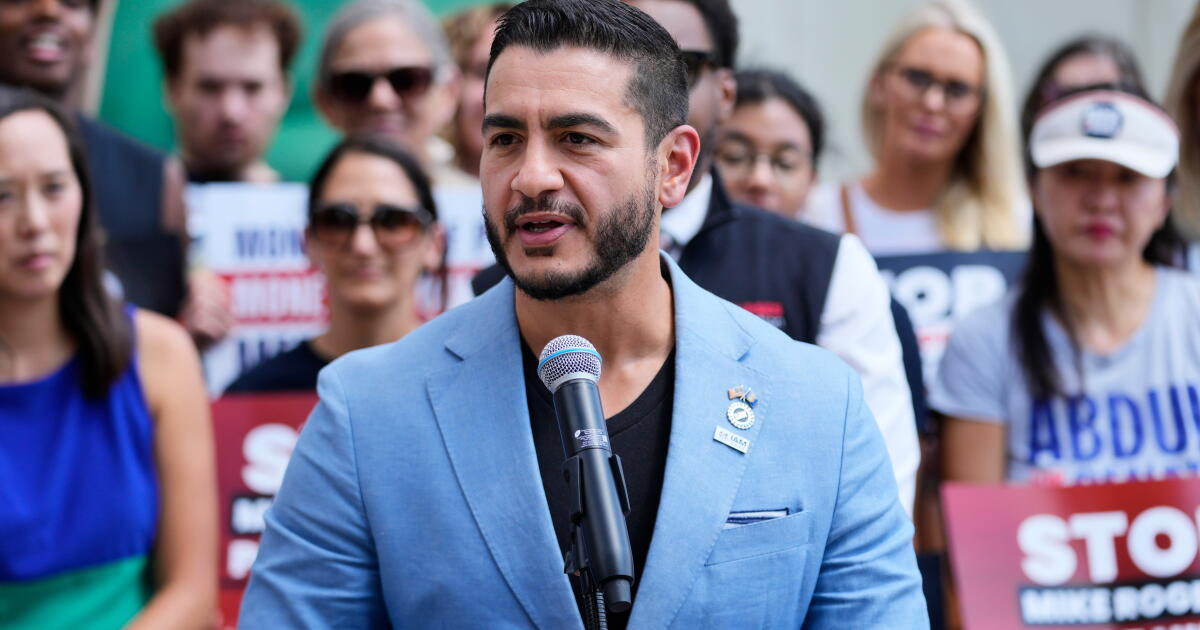
Michigan: El-Sayed vs. Rogers
In perhaps the highest-profile contest, former public health official Abdul El-Sayed is facing Republican Mike Rogers for the seat being vacated by retiring Democratic Sen. Gary Peters.
El-Sayed, aligned with the party’s progressive wing, narrowly defeated moderate Rep. Haley Stevens in a heated Democratic primary. He is looking to rally her supporters as well as disaffected Republican voters.
Rogers is courting independents and a cohort of Jewish Democrats who view El-Sayed’s desire to reduce funding to Israel’s military as a dangerous proposition.
According to a CNN/SSRS poll of likely voters released Sept. 9, El-Sayed led Rogers 47% to 44%, a result within the margin of error. Notably, 26% of respondents said they could still be persuaded to vote for either candidate, leaving the race wide open.
The barbs in this race have become deeply personal, with anti-Muslim rhetoric taking center stage.
In a series of ads and artificial-intelligence-generated images, Republican groups — including the National Republican Senatorial Committee and Front Line Action — have cast El-Sayed as a supporter of terrorism. During speeches and interviews, members of the Trump administration, including the president, have repeatedly referred to the candidate by his full name, Abdulrahman Mohamad El-Sayed.
Rogers has continually drawn attention to a campaign event hosted by El-Sayed that included Hasan Piker — a Los Angeles-based online political commentator who recently drew widespread attention for a 2019 comment that “America deserved 9/11” while discussing blowback against U.S. foreign policy in the Middle East.
El-Sayed has railed against Rogers for refusing to debate and for his endorsement by Trump.
This week, El-Sayed stood alone on the Fox 2 Detroit debate stage after Rogers declined an invitation, dubbing his opponent “Mike Dodgers” on several occasions.
Rogers later accused the moderator of bias toward the Democratic candidate. The candidates have agreed to debate on Oct. 8 and 21.
Texas: Talarico vs. Paxton
State Rep. James Talarico is seeking to become the first Texas Democrat elected to the Senate since 1993.
His Republican opponent, state Atty. Gen. Ken Paxton, received Trump’s endorsement and defeated four-term incumbent Sen. John Cornyn in the primary.
While gaining a seat in Texas has long been a far-off dream for Democrats, Paxton’s controversies have dogged him during the race. A Mason-Dixon Research poll showed the Democrat leading Paxton 46 to 43, in a state that Trump won by nearly 14 points in 2024. Other polls, including one from Insider Advantage, had the margin at a single point.
Paxton is seen as a prominent fixture in the MAGA movement, using his position as attorney general to contest Obama-era clean energy and healthcare acts and launching lawsuits against the Biden administration for its immigration policy.
Talarico has made Paxton’s association with the president a key piece of his campaign, slamming Paxton as “the most corrupt politician in Texas” and spotlighting his impeachment by the Texas House of Representatives in 2023 over allegations of bribery, breach of public trust and misuse of his office to aid a donor. (Paxton survived the impeachment vote and denied wrongdoing.)
Several attack ads on Talarico, launched by Republican political action committees, have focused on his past support for transgender youth and accused him of exaggerating his faith to garner the Christian vote.
Maine: Jackson vs. Collins
Six-term incumbent Republican Sen. Susan Collins is hoping to retain her seat as Democratic challenger Troy Jackson attempts to replicate the grassroots success of former nominee Graham Platner’s campaign.
Jackson, a former state lawmaker, was chosen by Maine Democratic Party delegates to run in place of Platner, who dropped out in July after sexual misconduct allegations against him. A former lumberjack, Jackson shares Platner’s working-class background and is running on Medicare for All and increased taxes for billionaires.
Collins has repeatedly demonstrated her staying power and won reelection in 2020 even as the state went blue in the presidential race. Her willingness to stand up to Trump could become a deciding factor this time around; Collins is working to highlight her votes to block Trump’s $1.8-billion Department of Justice anti-weaponization fund and against the Iran war.
She has mostly stuck to promoting her decades-long record on the campaign trail, which has recently focused on increased healthcare access for seniors, workforce development and Social Security benefit increases.
She has faced criticism from Jackson and others over her vote to confirm Supreme Court Justice Brett M. Kavanaugh, who faced sexual assault allegations, which he denied, and later voted to strike down Roe vs. Wade, which had granted a constitutional right to choose an abortion.
Jackson has had difficulty generating the same enthusiasm among voters as his predecessor, Platner, who consistently held town halls across the state and had a viral social media presence. Over Labor Day weekend, Jackson hosted at least a dozen events up and down Maine to make his first public introductions to voters deep into the cycle.
A recent poll from YouGov shows Jackson narrowly leading the incumbent, 46% to 44%, with a crucial 9% undecided.
Alaska: Peltola vs. Sullivan
Former Democratic Rep. Mary Peltola and incumbent Republican Sen. Dan Sullivan are leading a field of candidates — including another Dan Sullivan — ahead of a ranked-choice general vote.
Alaska hasn’t elected a Democratic senator since 1995, giving Peltola an uphill battle in a state that Trump won by 13 percentage points in 2024.
A late July poll by Change Research showed Peltola in the lead by six percentage points. A more recent poll from Alaska Survey Research had the race within 1 point in favor of Peltola.
Much of the media attention surrounding this race, however, has focused on the third-place candidate, who only received 2.5% of the primary vote — and also happens to be named Dan Sullivan.
Dan J. Sullivan, a retired teacher who made the top four in ranked-choice voting, has been accused by Republicans of being a Democratic plant that could potentially confuse voters. Sullivan has denied these accusations and the Alaska Supreme Court decided to keep him on the ballot.
If none of the candidates receive over 50% of first-place ranked-choice votes — which is likely in this race — the last-place candidate will be eliminated, with their vote distributed to their next choice until one candidate receives a majority of the total.
Iowa: Turek vs. Hinson
In a race that has seen the candidates trade political jabs in separate speeches on the same state fairgrounds, Republican Rep. Ashley Hinson and Democratic state Rep. Josh Turek are nearly neck and neck.
According to a Suffolk University poll, Hinson is leading Turek 45% to 40%, in a state where Trump won by 13 points in 2024. A poll conducted by YouGov, however, has Turek in front by a single point.
GOP incumbent Sen. Joni Ernst elected not to run this year, leaving the seat open for a potential flip.
Turek, a two-time Paralympics gold medalist, has attacked Hinson for past campaign ads in which she said: “I don’t trade stocks, and no one else in Congress should either.” Tucker pointed to the fact that Hinson purchased and sold stocks in Amazon, Tesla and insurance firms after she was elected, according to financial disclosure forms.
In return, Hinson criticized Turek for missing over half of his state Legislature floor votes, and labeled him an “anti-ag” activist.
Leslie, a two-time WNBA champion and member of the Naismith Memorial Basketball Hall of Fame, became the first female professional athlete to receive a statue outside of Crypto.com Arena on Sunday. After the ceremony, the Sparks earned a 105-84 win over the Portland Fire.
Leslie’s friends and family gathered outside the arena for the unveiling of the statue Leslie dubbed “The First Lady,” celebrating her 12-year pro basketball career in Los Angeles. Many speakers, including former Sparks coach Michael Cooper and Lakers legend Magic Johnson, noted Leslie’s accomplishments while also saluting her as a kind person.
Leslie became the second WNBA player to be honored with a bronze statue outside of a U.S. pro basketball arena, joining the Seattle Storm’s Sue Bird.
Lisa Leslie celebrates on stage after her statue is unveiled outside Crypto.com Arena on Sunday.
(Jason Armond / Los Angeles Times)
“We know there is a low percentage of women who have statues in our country,” Leslie said. “I just feel like we are just starting to get our flowers and reap some of the benefits of hard work, blood, sweat and tears that we put into it.”
Leslie sat courtside with her family watching her former team beat the expansion Fire. Rae Burrell led the Sparks with 20 points and added two assists. Nneka Ogwumike finished with a double-double and Ariel Atkins had 14.
Burrell led the team with 13 first-half points. The Sparks led by as many as 20 points in the third quarter, during which several Sparks reached double-figure scoring.
The Sparks kept their foot on the gas in the fourth quarter despite playing without Cameron Brink, Dearica Hamby and Aaliyah Nye.
Many Sparks said they felt blessed to have formed relationships with Leslie. Burrell said Leslie has been a big help during her career. The retired star has responded when players around the WNBA have sought advice.
Ogwumike said the team was happy to attend the pregame statue reveal.
Sparks legend Lisa Leslie takes photos with family and friends at her statue unveiling outside Crypto.com Arena on Sunday.
(Jason Armond / Los Angeles Times)
“That’s history, you know? I am very adamant about players coming in and knowing their history,” Ogwumike said. “That’s something you can’t let go of. I think we can see, especially in the NBA, where they are honoring these legends and they are coming back. I think we’re entering an era where there is so much history.”
Leslie grew up in Compton. During the ceremony, she spoke about watching her siblings whenever her mother went to work as a truck driver. She said she pushed to make good things happen for her siblings and didn’t quit or make excuses when life was difficult. She embraced challenges and often challenged herself.
Cooper said Leslie would go head-to-head with some of the Lakers players during practice to give herself a bigger challenge and it was impressive to watch her hold her own. Leslie was determined to be the first player in the WNBA to dunk, which helped redefine what was possible in women’s basketball.
The statue outside of Crypto.com Arena depicts her dunking a basketball.
Lisa Leslie and her family celebrate as her statue is unveiled outside Crypto.com Arena on Sunday.
(Jason Armond/Los Angeles Times)
“I hope they see themselves out there. I hope you can find a girl that looks like you, whether she has long hair or short hair,” Leslie said. “That’s the key for kids in general. You have to see yourself. If you see it, then you also start to dream and believe that you can be it.”
Leslie recalled walking around Los Angeles as a child. Her affection for the city receiving a statue here more meaningful.
“I also feel a certain level of pride,” she said. “I feel like we are such good people in L.A.”
Leslie’s statue stands next Lakers Hall of Famer Kobe Bryant and his daughter, Gigi Bryant. Leslie called Kobe her younger brother during the ceremony and is happy to be close to him again.
Leslie’s career will be hard to repeat, but she sees it as a blueprint WNBA players can follow.
She said she is pleased with the direction the WNBA is heading, leaps and bounds ahead of her experience joining the league in 1997. She said it’s been great to see sponsors pouring in and helping the game grow.
“I am so proud of where the women’s game is,” Leslie said. “But the dream was always that we hoped that our USA, everybody across the board, could see the beauty in us, could see the strength in us and our resilience. I am so proud of the product that’s on the floor.”
Sir Tom Jones proved he’s “still got it” on The Voice UK tonight with an impromptu rendition of It’s Not Unusual.
Hayley Anderson Screen Time TV Reporter
21:29, 19 Sep 2026Updated 21:32, 19 Sep 2026
ITV The Voice UK fans say axing Sir Tom Jones is a ‘huge mistake’ (Image: ITV)
The Voice UK fans slam ITV’s “huge mistake” in getting rid of Sir Tom Jones as he shares heartwarming story about his career.
ITV’s hit singing contest The Voice UK returned tonight, Saturday, September 19, as the judges continued to blindly listen to singers hoping one of stars would give them a chance.
As always was veteran The Voice UK icon Sir Tom Jones who recalled when he first realised the moment he “made it” in his music career, after he was asked by Will.i.am.
“It’s Not Unusual I did in 1964 so that was 61 years ago”, Tom said.
“My band and myself were driving back to London and It’s Not Unusual came out on the Friday but I didn’t know until I picked up the Sunday paper in a transport cafe, and there it was, It’s Not Unusual, number 10.
“There were truck drivers there right and I was like ‘You see this!’ And they were like ‘yeah, yeah, yeah yeah!’
“And just seeing my name at number 10 I thought ‘This is it. It was a tremendous feeling.’
This story then prompted the audience to ask for him to sing It’s Not Unusual which Sir Tom happily obliged with many fans impressed by his performance.
However, it also angered viewers as they were reminded that the 86-year-old will not be returning for The Voice UK next year as he will be replaced by former Girls Aloud star Cheryl.
“To the powers that be at The Voice UK this is the legend you dropped!”, someone angrily wrote.
A second agreed: “ITV making a very big mistake getting rid of Sir Tom Jones, idiots.”
Another agreed: “It was such a huge mistake axing Tom Jones”, with another writing: “Still can’t believe they fired THE Tom Jones. He’s amazing.”
While a fellow viewer added: “Don’t care what anyone says Sir Tom Jones has still got it!” Silliest move to let this frigging legend go..shame on you producers who make stupid decisions on The Voice UK.”
Sir Tom has also shared that it wasn’t his decision to go, explaining on social media: “The reason given is because of a financial difficulty with insurance.
They now say in the press they wanted to ‘refresh’ the show, and with a new coaching line-up there wouldn’t be a chair for me.”
He has instead been offered a reduced role in the series, something that Sir Tom isn’t “thrilled” about.
The Voice UK continues every Saturday on ITV and ITVX
ARLINGTON, Texas — Paige Bueckers scored 19 points, Jessica Shepard had her fifth triple-double of the season with 13 points, 11 rebounds and 12 assists, and the Dallas Wings beat the Sparks 97-77 on Thursday night for their fifth straight victory.
Both teams were returning from the break for the FIBA World Cup in Germany, where Bueckers helped lead the United States to the title.
Dallas (25-16) tied the franchise record for wins in a season set by the 2003 WNBA champion Detroit Shock (25-9). The Wings have three games remaining in the regular season.
Shepard has the third-most triple-doubles in a season in WNBA history, trailing Alyssa Thomas’ six in the 2023 and eight in 2025.
Maddy Siegrist added 12 points and Arike Ogunbowale had 11 for Dallas. Kitija Laksa and Aziaha James each scored 10 off the bench. Odyssey Sims did not play in the fourth quarter after injuring her right knee late in the third.
YOUNGSTOWN, Ohio — In the wood-paneled basement of a union hall, retirees sat in folding chairs last week as they recalled how miles of steel mills and plentiful jobs had slowly disappeared.
“We told our children to get your education, get out, and don’t come back,” said Al Antonelli, who has been a member of Ohio Laborers’ International Union of North America Local 125 for nearly 50 years. “Because there’s no future here, especially blue collar.”
Versions of Youngstown’s story played out across the industrial Midwest, where disappearing jobs and frustration in longtime Democratic strongholds helped fuel Donald Trump’s political rise. When Trump visited as president in 2017, he promised the jobs that had left Ohio were “all coming back.”
“Don’t sell your house,” one of the retirees recalled Trump saying during his Youngstown visit.
Nearly a decade later, the old industrial economy Trump promised to revive has not returned, and Democrats hope the political tide is shifting again. Two years after Democrat Sherrod Brown lost his Senate seat, he’s attempting a comeback by trying to win back some of the same voters who turned on his party. Brown wants to harness dissatisfaction with the economy, the war in Iran and the expansion of artificial intelligence data centers to dislodge Republican Sen. Jon Husted in November.
Brown’s chances of returning to Washington depend largely on whether he can win again in parts of the state that have spent years drifting away from Democrats. His race is also part of a much broader challenge for Democrats, who need to make inroads in Republican-leaning states like Ohio, Iowa, Alaska and Texas if they are to win control of the chamber in November.
Brown outlasted Democrats’ decline in Ohio — until he couldn’t
For years, Brown was able to outrun the Democratic Party’s decline in Ohio. His pro-labor populism resonated with enough swing voters to deliver decades of victories from the statehouse to Congress.
Trump carried Ohio by 8 points in 2016, four years after Barack Obama won it. Yet Brown won his third term in the Senate two years later, in part by continuing to perform well in places like Mahoning County, anchored by Youngstown.
By 2024, even Brown could no longer hold on, losing his reelection campaign to Republican Bernie Moreno by 3.5 percentage points.
Trump carried Mahoning by more than 10,000 votes, a remarkable reversal in a previously loyal Democratic county that Obama had won by nearly 30 percentage points just 12 years earlier. With Trump’s endorsement, Moreno won the county by just 220 votes.
The transformation extends across the Mahoning Valley. Neighboring Trumbull County went from backing Obama by 23 points in 2012 to Trump by nearly 17 points in 2024.
“The Mahoning Valley has struggled with deindustrialization, job loss for years, and the politicians in power have seemed to understand that, but it doesn’t seem like they were doing enough about that,” said Cryshanna Jackson Leftwich, a politics professor at Youngstown State University. “So at some point, 20, 30 years of supporting the candidates, people are gonna say, well, look, this has never worked for us, right?”
Trump and other Republicans offered voters something different, Leftwich said.
“Did they keep their promises? Not at all. Is the county still poor? Absolutely,” she said. “But they at least said they were going to do something different.”
Brown faces a much different environment this year
Democrats’ bid to flip the Senate requires them to net four seats, including by competing deep in Republican territory.
Two months from the end of midterm campaigns, high gas prices stemming from the war in Iran have compounded discontent with the economy.
Trump has also escalated a trade war with neighboring Canada, a fight with particular implications for Ohio. The state exported $17.5 billion in goods to Canada in 2025, or nearly a third of the state’s total exports, according to federal statistics.
Tension from the economic strain is visible in Parma, a working-class Cleveland suburb that split its ticket in 2024, backing both Trump and Brown. At a watch party for the Republican midterm convention in Dallas, supporters who stayed late into the evening cheered Trump but acknowledged that other issues would most likely determine the midterms.
“The real thing that’ll move the needle is going to be economics. Gas prices, grocery prices,” said Parma City Councilor Kevin Kussmaul. “That’s really what’s going to help.”
Parma Republican Party President Doris Peters said similarly that “everyone’s concerned about the high gas prices.”
“It’s all about the economy,” she added. “People remember how much money’s in their wallet and how much is not in their wallet.”
Sen. Jon Husted (R-Ohio) speaks at the Republican convention in Dallas.
(Julia Demaree Nikhinson / Ap Photo/julia Demaree Nikhinson)
The limits of a Democratic rebound in Ohio
Husted presents a different opponent than the one Brown faced two years ago. His restrained demeanor contrasts with Moreno, the brash former car dealer who entered politics as an outsider. Husted spent nearly 25 years in Ohio politics, as a state lawmaker, House speaker, secretary of state and lieutenant governor, before being tapped to fill Vance’s Senate seat.
But Husted may not need to generate much enthusiasm of his own. Except for Brown and candidates for the Ohio Supreme Court, a Democrat hasn’t won a statewide race for state office in Ohio since 2008.
Adam Radogna, 37, who hosted the watch party Wednesday for Parma Republicans at his Italian restaurant, has attended more than 80 Trump rallies and remains an ardent Trump supporter. But Husted is not someone he’s followed closely.
“I don’t know him at all,” Radogna said of Husted. “But I mean, I will vote for him.”
Brown faces enthusiasm problems of his own as he asks voters to return to a 73-year-old former senator whom they rejected just two years ago.
Ellen Zban, 67, a longtime Youngstown resident who said she leans Democratic but has voted for Republicans, said she won’t support Husted because she doesn’t believe he has listened enough to the community.
“I really don’t think he’s done anything for us,” she said. “We never hear from him.”
But Brown isn’t necessarily the candidate she wishes Democrats were offering either.
“He’s my best option,” Zban said. “But I’d like to see younger people running.”
The race is being flooded with money as both sides try to drum up enthusiasm and define the choice for voters. Husted and allied Republican groups have already spent more than $80 million with $86 million more reserved through Election Day, according to AdImpact. Brown and Democratic groups have spent $69 million, with $67 million reserved.
Elon Musk has also waded into the race through his America PAC, which is running online and streaming ads attacking Brown over transgender issues.
“Billionaires are lying to try and bail out their ‘Golden Boy’ because Jon Husted has always put special interests ahead of Ohio,” Brown’s campaign manager, Patrick Eisenhauer, said in a statement.
Brown has attempted to make data centers central to the race, an issue that has seen bipartisan outrage in communities across the country. Brown’s allies have called Husted the face of Ohio’s data center boom, blaming the massive facilities for contributing to rising electricity costs. Husted helped promote Ohio as a destination for data centers while serving as lieutenant governor.
The ads and backlash have generated enough concern among Republicans that an internal party memo described data centers as an “anchor” around Husted in the race.
“Thirty-two years in Washington turned Sherrod Brown into a liar,” Amy Natoce, a spokesperson for Husted, said in a statement. “Jon Husted is fighting to lower costs and help Ohioans keep more of what they earn. Sen. Husted introduced legislation requiring data center companies to pay for the power they use and return excess electricity to the grid.”
The state’s politics could shift again
In Youngstown, the union retirees who watched the Mahoning Valley shift toward Republicans aren’t convinced the movement is permanent.
Rich Troisi, business manager of Laborers’ Local 127, said Republican candidates in recent elections could win support in the area largely by aligning themselves with Trump. This year, he said, that dynamic may not hold.
“I don’t think Donald Trump’s endorsement is going to be what it was,” he said.
Antonelli, the longtime union worker, pointed to independent voters, who he said tend to move with their economic circumstances.
“My dad used to say, it depends on how tight your shoes are. Tight meaning, how’s the money?” he said. “Right now, the shoes are pretty tight, no matter who you are.”
Cappelletti writes for the Associated Press. AP reporter Julie Carr Smyth contributed to this report from Columbus, Ohio.
Fans were left stunned by the penultimate episode when DC Neil Brenton (played by Tom Glenister) was fatally shot as he tried to track down DS Helen Morgan (Natalie Simpson) on his own.
Now, Expo Lana Washington (Vicky McClure) “must fight against the ticking clock to save thousands – perhaps even hundreds of thousands – of lives.”
But as the explosive final airs this evening, ITV has already confirmed what will be taking its place next week.
ITV thriller The Blame will be making its debut on Sunday, September 20, at 9pm, with its second episode airing the following night, Monday, September 21.
The official synopsis for the upcoming drama reads: “While investigating a murder, detectives Emma Crane and Tom Radley find evidence of serious misconduct within Wakestead police, uncovering a web of lies, institutional cover-ups and moral compromise.”
Based on the novel of the same name by author Charlotte Langley, The Blame stars Coronation Street and Our Girl star Michelle Keegan as Detective Emma Crane.
She is joined by The Sandman’s DI Tom Radley, Shetland star Ian Hart as DCI Kenneth Walker and House of the Dragon’s Gavin Spokes as DC Joel Stevens.
The Blame will consist of six episodes with two episodes airing every week on Sundays and Mondays.
Once the series premieres, the entire boxset will be ready to binge-watch on ITV’s streaming service ITVX.
But before The Blame can begin, there is Trigger Point’s grand finale to get excited about.
Its description continues: “Entering a space filled with enemies and the potential for devastating collateral damage, Lana is pushed beyond her limits to stop the bombers’ final plan from reaching a shocking conclusion.”
Trigger Point is available to watch on ITV and ITVX.
The Blame debuts on Sunday, September 20, at 9pm, on ITV.
Vandals spray red paint on Charlie Kirk statue days after its unveiling to mark one year since his death.
Published On 14 Sep 202614 Sep 2026
A new memorial statue of the slain right-wing activist Charlie Kirk has been vandalised days after it was installed outside Turning Point USA’s headquarters, the youth-focused organisation he co-founded.
Turning Point chief operating officer Tyler Bowyer said on Sunday that the bronze statue, alongside an accompanying sign, was defaced with red spray paint in Phoenix, Arizona.
“This morning we woke up to radical criminals vandalizing our Headquarters. Crossing over Charlie’s face, scratching out Jesus and the Cross & spraying red paint on his neck,” Bowyer wrote on X.
The statue was unveiled on Thursday to mark one year since Kirk’s death. Kirk, a co-founder of Turning Point and staunch ally of US President Donald Trump, was fatally shot while speaking to students at Utah Valley University.
The man accused of killing Kirk, Tyler Robinson, faces a possible death penalty after pleading not guilty to murder charges earlier this month.
Phoenix police said they received calls on Sunday morning about a vandalised memorial outside Turning Point’s headquarters.
Turning Point accused the vandals of intentionally spraying the statue’s neck, the spot where Kirk was shot in the attack, which was captured on video.
“We will restore the statue and replace the signs, but we are also reviewing the footage of the incident and are working with law enforcement to identify who did this and hold them accountable,” Turning Point said in a post on X.
On Monday, the Bangsamoro Autonomous Region in Muslim Mindanao (BARMM) in the Philippines will hold its first parliamentary election since it was established in 2018. The vote will officially mark the end of the transition period under the Bangsamoro Transition Authority (BTA), an interim regional government appointed in 2019.
The election is a significant milestone in the Bangsamoro struggle. It is the outcome of decades of armed conflict and negotiations between the Moro Islamic Liberation Front (MILF) and the government of the Philippines.
The vote will test the Philippine government’s commitment to the peace process and the MILF’s commitment to the democratic process.
The struggle for self-determination
BARMM is located on Mindanao, the second-largest island in the Philippine Archipelago, and it covers roughly the territories inhabited by the Moro people, a native Muslim-majority group. For centuries, the Moro enjoyed self-governance in independent states and resisted Spanish colonialism. Following the Philippines’s independence in 1946, they continued their struggle for self-determination.
In 1989, the Autonomous Region in Muslim Mindanao (ARMM) was created by Manila to give some devolved rights to the Moro. However, ARMM largely failed to address local grievances and demands due to its weak structural power. It was given limited autonomy in political and fiscal decision-making, but it did not manage to improve socioeconomic conditions in the region. The MILF continued the armed struggle.
In 2012, President Benigno Aquino III recognised the ARMM as a “failed experiment”. Under his administration, the Framework Agreement on the Bangsamoro was signed between the government and the MILF, paving the way for a new political entity.
Six years later, under President Rodrigo Roa Duterte, the Organic Law for the Bangsamoro Autonomous Region in Muslim Mindanao was promulgated. This legislation granted the region greater fiscal autonomy, a regional government, a parliament, and a justice system.
Then the Comprehensive Agreement on the Bangsamoro was concluded to outline the mechanism of transition from ARMM to BARMM and set up the MILF-dominated BTA to lead it. All of this is culminating in the parliamentary election, which will determine the makeup of the region’s first legislative body.
A contested election
The vote comes at a time of heightened tensions in BARMM and internal divisions within the MILF. Two camps have emerged within the movement – one loyal to MILF Chair Al Haj Murad Ebrahim and another supporting Chief Minister Abdulraof Macacua.
Last month, Macacua joined the newly formed Bangsamoro Federalist Party (BFP), which will compete in the elections against the MILF’s political wing, the United Bangsamoro Justice Party (UBJP). Shortly after, his convoy was attacked, but he survived unscathed.
In early September, Macacua and 40 commanders were dismissed from the MILF’s military wing for alleged insubordination.
These tensions have prompted increased public anxiety about possible post-election unrest. There are other factors that could overshadow the vote.
In past elections, vote-buying was widespread, election-related violence was rampant, and electoral fraud and manipulation were pervasive. If these practices repeat at a large scale, the electoral outcome may not necessarily provide a straightforward measure of the will of Bangsamoro’s people. It may also not be an accurate reflection of whether they are satisfied with the transitional government or not.
The MILF presents itself as a champion of moral governance. If it is to retain this label, it should not give in to widespread vote-buying and electoral manipulation. It should also not let internal rivalries turn violent.
But there are already some alarming signs. Prominent MILF figures have conveyed that if the UBJP, the front’s political wing, sees manipulation and fraud, its members are ready to fight. They have also suggested that since the MILF led the transition, it should remain in power. On social media, some citizens have condemned the MILF camp’s threats, calling such tactics un-Islamic.
Before the vote, Manila has deployed military forces in key areas. This has heightened people’s fears that fighting with the MILF may erupt. The tense situation might lead to a low voter turnout.
Under these circumstances, the future of the Bangsamoro is riddled with uncertainties.
Whatever happens in the election, we must remember that the future of BARMM is a shared responsibility. The Philippine government and the Bangsamoro parties are duty-bound to honour the peace agreement. In addition, the people must exercise their civic rights and responsibilities to help sustain the peace achieved after a long and painful armed conflict and to move toward a prosperous Bangsamoro land.
The views expressed in this article are the author’s own and do not necessarily reflect Al Jazeera’s editorial stance.
By that point, Ohio State had just blown a 20-point, fourth-quarter lead to Texas, and Oregon had, hours earlier, been stunned by Oklahoma State. The path to the top of the Big Ten suddenly seemed open as ever, just as the Trojans’ tremendous freshman caught the punt and took off in search of an opening himself.
With his stunning start to the season, no one player at USC — and perhaps in all the nation — had manufactured more hope through two games. While the conference’s other top teams spent the day licking their wounds, here, once again, was Mosley weaving joyfully through the open field and conjuring the very same magic from thin air. He shook off one tackle, then another. Soon enough, he was gone for an 86-yard punt return, and the No. 14 Trojans were rolling, comfortably on their way to a 49-30 win over Louisiana.
The second half didn’t feel quite as hopeful, as the Trojans let up and let Louisiana linger around through a victory that coach Lincoln Riley deemed “up and down.”
Still, the win was USC’s 10th straight at home, going back to the 2024 season, and gives the Trojans’ a spotless nonconference slate in 2026 — not that anyone would confuse their early-season schedule for a murderer’s row. There won’t be any easy home wins from here, though, with USC’s next three games against Oregon, Washington and Ohio State.
“It’s been good getting adjusted to this,” Mosley said. “But now we go on the road, so that’ll be a new adjustment.”
USC has, in glimpses this season, looked like a team that belongs among those Big Ten behemoths. And the most encouraging of those moments have largely come from the Trojans’ talented freshman class.
Mosley, who also had an acrobatic receiving touchdown Saturday, wasn’t the only one who made his presence felt. Tight end Mark Bowman had his eagerly anticipated breakout game, as he exploded for six catches, one of which he capped by hurdling two defenders. He finished with 83 yards and two touchdowns, all in the first half. Defensive tackle Luke Wafle, meanwhile, continued his streak of early dominance by tallying a team-leading seven tackles.
USC tight end Mark Bowman hurdles over Louisiana safety Kody Jackson during the first half Saturday.
(Kevin Terrell / Getty Images)
“I feel like our peak, our trajectory should be even higher because of how many young guys are playing,” Riley said.
The win wasn’t nearly as dominant an effort for the rest of USC’s defense, which was coming off of a shutout of Fresno State. Louisiana averaged 7.6 yards per play and scored 20 points in the second half, led by dual threat quarterback Lunch Winfield, who scampered to 91 rushing yards.
“We’re just gonna take this as a learning moment,” defensive tackle Jide Abasiri said. “I just feel like sometimes we’ll get comfortable or complacent, then that’s something we need to, going forward, fix when adversity hits.”
It wasn’t the sharpest night for the Trojans’ offense, either. Though, you wouldn’t know it from the box score. While USC rushed for 214 yards, nearly 100 came in the fourth quarter, with the game well in hand. Quarterback Jayden Maiava put up numbers once again, as well, completing 19 of 29 passes for 261 yards and five touchdowns.
USC receiver Trent Mosley makes a touchdown catch under pressure from Louisiana safety Maurion Eleam Saturday at the Coliseum.
(Mark J. Terrill / Ap Photo/mark J. Terrill)
The five passing scores tied a career high. But Maiava said after the game that it “definitely didn’t feel like” that strong of a performance.
Through two games, Maiava had accounted for as many touchdowns (six) as he had incomplete passes entering Saturday’s game. But on Saturday, he missed his first three passes, the third of which went directly to a Louisiana defensive back.
The interception was Maiava’s first of the season, and it led to a Louisiana field goal, giving the Ragin’ Cajuns (1-1) an early lead. It was also the first time the Trojans trailed this season.
USC (3-0) and its quarterback settled down after that. The Trojans mounted a 12-play scoring drive on the ensuing possession, and Maiava found Bowman for a five-yard score. Then, they mounted a 10-play drive, and Maiava found Bowman again.
By that point, USC’s offense had piled up almost 200 yards, while Louisiana had scraped together just 18.
But the Ragin’ Cajuns refused to go away — for the moment, at least. They marched the length of the field and scored, cutting USC’s lead to 14-10.
That was the closest they’d get. The Trojans mounted a third straight drive of 10 plays or more, and this time, Maiava fired a touchdown pass through the hands of a Louisiana defensive back on its way to freshman Kayden Dixon-Wyatt.
The knockout blow came soon after that. After its follow-up drive went nowhere, Louisiana made the mistake of punting to Mosley, who took off sprinting to his right and didn’t stop until he reached paydirt.
The punt return was his fourth score of the season. He added a fifth before the final buzzer sounded.
The rest of the night wouldn’t go nearly as smoothly. The intensity, Riley said, “dipped a little bit.” Louisiana would linger, well into the fourth quarter.
But by then, the Trojans could safely coast their way to a clean non-conference sheet, knowing the trust test of their season – and their stellar true freshmen – is still to come.
RIYADH: The final matchday in the opening stretch of the Saudi Pro League season before the international break kicked off in dramatic fashion with Al-Qadsiah and visiting Al-Ettifaq meeting in what is expected to be the last Eastern Derby at the Prince Mohammed bin Fahad Stadium in Dammam, as Al-Qadsiah’s new Aramco Stadium is set to open in the near future.
It turned out to be a fitting farewell derby for the stadium to host, with three goals in each half as the teams shared the spoils in a 3-3 draw.
Yet, when Al-Qadsiah took a 2-0 lead inside the first 15 minutes, few would have expected anything other than a comfortable home victory was in the cards. Recent Ballon d’Or nominee Julian Quinones returned to scoring form in the 12th minute, after latching onto a pass from right wing-back Mohammed Abu Al-Shamat, who now has six goal contributions in seven games.
Left wing-back Christopher Bonsu Baah also claimed an assist, three minutes later, after getting on the end of a line-breaking Quinones diagonal run. Mateo Retegui positioned himself inside the box to receive Baah’s pass and launched a powerful finish into the top corner to double the lead.
Al-Ettifaq responded 11 minutes later, immediately after the hydration break, when Abdoulaye Kante won possession in Al-Qadsiah’s midfield and threaded a pass through the gap behind the pressing Nacho to release Bersant Celina, who finished calmly past Koen Casteels to pull one back.
That vulnerability in behind was an ongoing problem for Al-Qadsiah, who were without the rested Julian Weigl in the defensive midfield. He was replaced by the returning Nahitan Nandez, who operated in a higher midfield role while Tijjani Reijnders, who scored a brace from that position against Al-Ahli last week, was shifted to the deepest role.
That gamble did not pay off for head coach Brendan Rodgers, whose side paid the price when opposite number Arthur Papas made a few bold calls of his own. The trio of Moussa Dembele, Alvaro Medran and Jordan Larsson started on the bench for Al-Ettifaq and were introduced at staggered intervals in the second half as their team’s grip on the game gradually tightened.
Just over an hour in, with the fans perhaps wondering why Medran had not been selected to start, Papas’ decision-making was vindicated when the Spaniard received the ball ahead of Al-Qadsiah’s midfield, turned and unleashed a wonderful curler from range that Casteels had no chance of keeping out, making it 2-2.
Al-Qadsiah’s own substitutions yielded their third goal in the 81st minute when Turki Al-Ammar slipped the ball to Mohammed Al-Qahtani in behind the Al-Ettifaq defense for his first goal of the season.
But that trio who began the match on the bench had the last laugh when, in the 85th minute, Dembele won possession in Al-Qadsiah’s half, his pass found Medran, who played a first-time through ball to the oncoming Larsson, who composed himself before slotting the ball past Casteels for the equalizer.
The draw moved Al-Qadsiah into second place in the table, at least temporarily, on 16 points, one ahead of Al-Nassr and Al-Hilal, both of whom play on Saturday. Al-Ettifaq are in eighth place on 11 points.
Al-Ittihad cruised to a 3-1 away victory against Al-Faisaly, with Steven Bergwijn opening the scoring in the 28th minute, before a brace from Youssef En-Nesyri either side of halftime confirmed the victory. The in-form George Ilenikhena did not score but provided two assists for his strike partner as Al-Ittihad moved top of the table on 17 points from seven games. Theo Bongonda grabbed the late consolation for Al-Faisaly, who remain stuck second-bottom of the table on three points and yet to record a win this season.
In Jeddah, Al-Ahli came from behind after conceding the fastest goal in their SPL history when Ahmed Al-Nakhli struck for visiting Al-Hazem after just 74 seconds. But Francisco Trincao grabbed the equalizer in the 21st minute and then Ivan Toney added a first-half brace to take his tally to 10 goals in seven league games and give the home side a 3-1 victory. Al-Ahli moved into fifth place on 12 points, while Al-Hazem are in 10th on eight points.
On Saturday, Al-Hilal look to bounce back from their 2-0 home defeat by Neom on Monday when they visit Al-Taawoun; Al-Khaleej host Al-Nassr; and Al-Shabab are at home to Al-Fayha.
MOSCOW: Russia said on Friday it would aim its nuclear warheads at Lithuania if the Baltic state hosted any weapons from the nuclear arsenals of its NATO allies on its territory.
Lithuania is moving to lift a constitutional ban on having nuclear weapons stored in the country, part of an effort to boost its security posture amid Russia’s offensive on Ukraine.
The decision is currently working its way through parliament — where it needs a two-thirds majority to pass and has the support of the president and major parties — and could come into force this winter.
It would be “a very serious turn in terms of escalating tensions”, Kremlin spokesman Dmitry Peskov told state TV when asked about the plan.
“If there are nuclear weapons on the territory that are aimed at us, accordingly, the territory of that country will fall into the crosshairs of our own nuclear weapons,” he said.
Lithuania’s President Gitanas Nauseda had announced the plans in July, saying his country wanted to be an “integral part of this nuclear deterrence”.
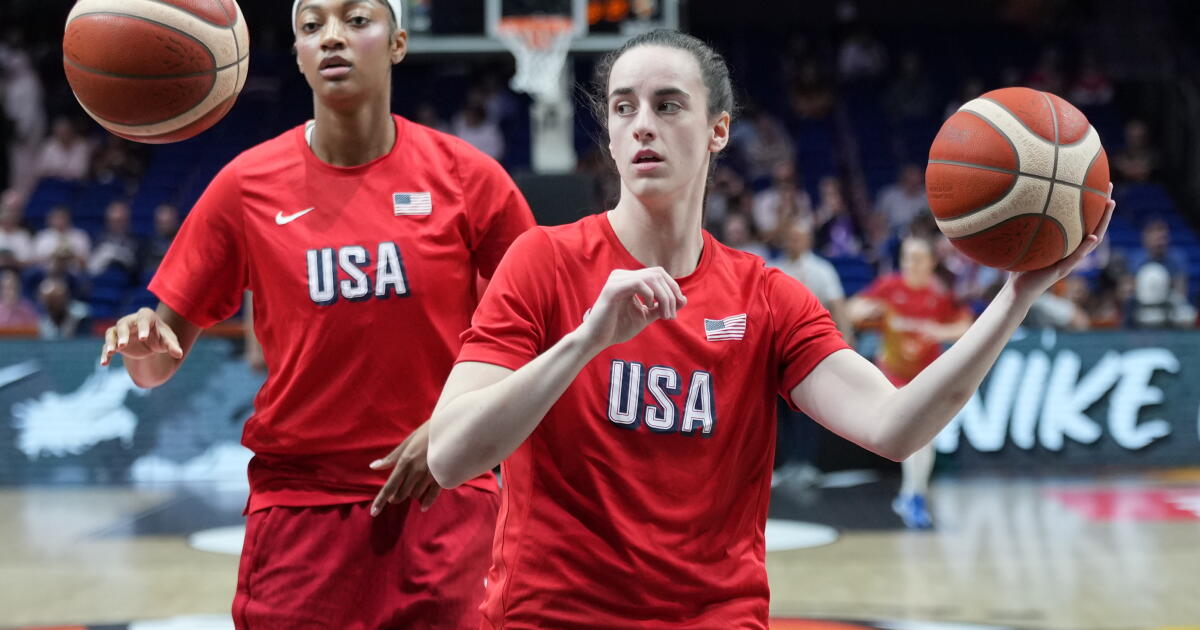
The college rivals turned teammates on the U.S. national team showed off their growing chemistry in Team USA’s blowout victory against Hungary on Thursday in Berlin. The Americans knocked out their quarterfinal opponents 108-56, notching the team’s 34th consecutive win in World Cup play since 2006.
“We’ve played against each other so many times, so I’m sure we know each other’s game like the back of each other’s hand,” Reesesaid when asked after the game about playing with Clark. “Just easily dishing it off to her. She dishes it off to me. She knows my spots. I got one to her today, maybe two. So it’s fun. We just continue to build chemistry because we know we’re gonna be USA teammates for a while.”
The strength of Clark and Reese’s two-person game was on full display Thursday. Clark assisted on six of Reese’s nine points, and Reese returned the favor during the third quarter. After securing a steal, she hit Clark for an easy transition layup.
Reese ended the game with nine points, six rebounds, three assists and two steals. Clark finished just shy of a double-double with 10 points, nine assists, three rebounds and two steals.
Clark also has complimented Reese as a competitor and teammate during the tournament.
“We’re both fiery, fiery competitors and we want to win and it’s one of the things I really admire about her game,” Clark told the Associated Press in an interview published Wednesday. “She’s competitive and she has a tremendous motor; like, she has one of the best motors in the league. She works just as hard as anybody on the court. So, it’s been fun to to be able to play with her.”
Clark, who set records at Iowa, and Reese, who won an NCAA championship at Louisiana State, have been household names since their college matchups. Thanks to their intensely loyal — and often vocal — fan bases, that rivalry has been carried into their WNBA careers, where every matchup and interaction invites heightened scrutiny, especially online.
Clark told the AP that many of these stories about her and Reese’s relationship are “false takes.”
“No matter what, there’s always going to be people that create those narratives and say whatever they want to say,” Clark said. “There’s definitely no stopping that and they’re always going to be there.”
Reese and Clark are among Team USA’s young core, dubbed the “young and turnt” crew by teammate Paige Bueckers during training camp in December. The World Cup marks the first major international competition for six of those players: Bueckers, Clark, Reese, Aliyah Boston, Sonia Citron and Kiki Iriafen.
Team USA is set to play Spain in the semifinals on Saturday.
Sanctions announced by the British government on Tuesday targeting West Bank settlements have upended the UK’s decades-long balancing act and provoked furious condemnation from the Israeli government that has all but severed relations between the two.
Coming a year on from recognizing Palestinian statehood, the Labour-led UK government confirmed it was tightening restrictions on arms exports to Israel and was placing bans on the import of all goods from settlements and on some services, including construction, financing, infrastructure, real estate, and settlement advertising.
Addressing Parliament, Foreign Secretary Ed Miliband, who is of Jewish heritage and lost multiple members of his family during the Holocaust, labeled the settlers “terrorists” who had received tacit support for their practices by an Israeli government.
UK Foreign Secretary Ed Miliband announces the policy in the British Parliament. (AFP)
“There is ethnic cleansing of Palestinians in areas of the West Bank perpetrated by settler terrorists, and all too often, the Israeli government has turned a blind eye to this, and worse, members of it have made statements and taken actions to support the forced displacement of Palestinians,” Miliband added.
The move marks part of a broader international pushback on settlement activity, with Canada and France also announcing on Tuesday they would join Belgium, Denmark, Finland, Iceland, Ireland, Norway, Poland, Portugal, Spain, Sweden, and the UK in enacting bans.
Against a backdrop of looming Israeli elections, questions are now being asked: Does the news out of London mark a long-term structural shift in its relationship with Israel, or is it part of a coordinated effort to put pressure on the government of Prime Minister Benjamin Netanyahu ahead of elections in late October?
In Israel, early political response was definitive, with National Security Minister Itamar Ben-Gvir leaning into a global call by right-wing governments as he urged the country to “publicly recognize that the Malvinas Islands (Falklands) are Argentine territory under occupation.”
He added: “The British are not content with merely occupying the territory; they also carry out oil drilling there and steal money from the Argentine people.”
Israel’s Finance Minister Bezalel Smotrich, meanwhile, claimed “we will not be a doormat trampled by an antisemitic government, in a country conquered by radical Islam, trying to save itself from economic and social decline.”
Addressing the media shortly after Miliband’s announcement, Israeli Foreign Minister Gideon Saar stated plainly that the UK was engaging in election interference as he warned that the Israeli population “emphatically” rejected Palestinian statehood.
Smotrich speaks during the official inauguration ceremony of a new Israeli settlement in the occupied West Bank. (AFP file)
Announcing countermeasures, Saar said Israel would close the British Consulate in Jerusalem; remove British representatives from the International Gaza Support Center in Kiryat Gat in southern Israel; terminate the UK’s role in training Palestinian Authority forces in the West Bank; and deny 12 elected officials entry to Israel.
These include former Labour leader Jeremy Corbyn, Zarah Sultana, Fahad Ansari, director of Riverway to the Sea, Naz Shah, Diane Abbott MP, Hannah Spencer, Carla Denyer, Sian Berry, Ellie Chowns, John McDonnell, Richard Burgon, and Adrian Ramsay.
Chris Doyle, director of the Council for Arab-British Understanding, said that Ben-Gvir and Smotrich’s history of offensive comments would likely mean these remarks were not “seen as serious” in and of themselves, but warned that they could not be wholly ignored.
“They (Gvir and Smotrich) are viewed with the sort of contempt that is necessary. It’s one of the many reasons that they are sanctioned,” Doyle told Arab News.
“But clearly, the concern will remain that somehow whatever they say could become official Israeli government policy, not least in an election cycle.”
Burcu Ozcelik, senior research fellow at the Royal United Services Institute, told Arab News the real threat from Israel surrounded the potential that it could downgrade aspects of intelligence-sharing and defense cooperation with the UK.
Doing so, Ozcelik said, would prove “significant” and was “exactly why” she expected to see the UK go to great pains in the days and weeks ahead to “telegraph that the settlement trade ban is legally and diplomatically defensible because it is consistent with its recognition policy, but that the UK seeks to preserve substantial security and economic ties with Israel.”
However, according to observers who spoke to Arab News, the UK appears to have reached a point at which it is willing to take that gamble, with Doyle noting that after meeting with Miliband on Monday, he was convinced the ban was indicative of a broader structural shift.
“I’m quite convinced that Ed Miliband is genuine when he says that this will be a reset in relations with Israel,” said Doyle.
“It’s a phrase he’s used in public and repeated. So I think that imposing a ban on trade with settlements is certainly part of that. But I think that there needs to be other measures, and I expect that there will be.”
Concurring, Husam Zomlot, the Palestinian ambassador to the UK, described the decision as “long overdue,” writing on X that the sanctions marked a “turning point in UK-Palestine relations,” with Britain moving “from condemnation to consequences, from words to action.”
Protesters march through central London to oppose the war in Gaza. (AFP file)
Stressing that the development marked neither a “wholesale rupture with Israel” nor a “blanket trade ban” with Israel, Ozcelik said the Labour government was adding consistency to last September’s recognition of Palestine and the country’s “continued commitment to a two-state solution.”
“It is distinguishing between Israel’s legitimate security concerns, which the UK fully recognizes, and the settlement expansion in the West Bank, which the UK considers illegal under international law,” Ozcelik said.
“The UK government’s calculation is that if it recognizes a Palestinian state while taking no action against settlements that undermine the territorial viability of a future state, there is an obvious credibility gap. These measures need to be read as an attempt to give practical meaning to the UK’s support for a two-state solution.”
Ben-Gvir wants Israel to “publicly recognize that the Malvinas Islands (Falklands) are Argentine territory under occupation.” (AFP file)
Public support for a ban has been steadily climbing since a recommendation for one last July from the Foreign Affairs Select Committee, with an August YouGov poll pointing to 50 percent support, with just 16 percent opposed, while Caabu research noted 246 MPs were in favor.
Trustee of the Britain Palestine Project, which seeks equal rights for Israelis and Palestinians, and former UK Consul-General to Jerusalem Sir Vincent Fean said that with “no peace process” and a “genocide in Gaza and apartheid, state-controlled settler violence and ethnic cleansing in East Jerusalem and the rest of the West Bank,” action was necessary.
“This is a necessary reset of UK government policy, wholly consistent with UK recognition of the State of Palestine on Sept. 21, 2025, and respect for international law, which the Labour government came into office committed to uphold,” Fean told Arab News.
“It exerts UK leverage over Israeli illegal settlements for the first time. The UK has joined the international virtual consensus in condemning settlements as illegal, undermining prospects for peace. But nothing was done to stop them.
“With this policy step change, the UK is giving a lead to like-minded partners. The UK is not powerless in this regard.”
Noting that the UK move was “inevitable” amid a “deterioration of the security situation in the West Bank,” which followed the Israeli government overturning a 20-year settlement ban in Jenin, Yossi Mekelberg said he wanted to see words matched with action.
Settler violence has escalated in the West Bank since the Oct. 7, 2023, attack on Israel triggered the war in Gaza. (AFP file)
“Taking measures against the trade with the settlements is one thing, but we also need to see a drive toward a two-state solution,” Mekelberg, a senior consulting fellow on the Middle East and North Africa program at Chatham House, told Arab News.
“Do you support the two-state solution on both sides? Do you support the process? If so, you need to fill it with content, with substance.”
Asked to provide a metric for measuring the ban’s success, Ozcelik said this would ultimately be measured in whether it deters implementation of the contentious E1 plan, which critics say will sever Palestinian territory in such a way that a contiguous state is no longer possible.
Kit Harington’s self-loathing lawyer is drawn into a perilous cross-Channel love triangle and political turmoil in the first major screen adaptation of Charles Dickens’ French Revolution classic in the 21st century,
Even had you never read Charles Dickens’ “A Tale of Two Cities,” or even known of its existence, the odds are good that you have somewhere encountered its much quoted opening and closing lines: “It was the best of times, it was the worst of times” and (spoiler) “It is a far, far better thing that I do, than I have ever done; it is a far, far better rest that I go to than I have ever known,” respectively, the latter possibly in the course of a Ronald Colman imitation. (Please do not ask who Ronald Colman is.)
Reckoned to be Dickens’ most popular novel, it has been several times filmed for the big and small screens, going back to 1911 — the big-budget Colman version came in 1935 — but has not been mounted in this century, until now, with a four-part adaptation premiering Sunday on MGM+ in a co-production with BBC One. It stars Kit Harington, whom “Game of Thrones” people know as Jon Snow, as Sydney Carton, a disheveled, cynical, self-loathing, alcoholic, yet clever London lawyer. London is one of the two cities whose tale this is. Paris, before and during the Revolution, is the other.
Daniel West’s adaptation hits the major plot points and select lines of dialogue, but has typically, unavoidably, been streamlined and compressed. Characters disappear, or have their attributes and actions assigned to different characters. But much has been added as well. Most of these alterations are trivial, although one major change, coming near the end, is a very bad idea. I can’t tell you what it is, though.
Francois Civil, left, and Kit Harington in “A Tale of Two Cities.”
(Marcell Piti / MGM+)
Other than that, the most substantial changes are to Lucie Manette (Mirren Mack), the female lead, in order to give her a more active, heroic role in the story, this being 2026. (Not that Dickens didn’t write a heroine or two.) So we meet her, a Frenchwoman raised in England, sneaking out at night to dissect corpses in a sort of one-woman underground medical school — knowledge that will come in handy when Charles Darnay (François Civil), a Frenchman living in London, shows up at the place where she lives, dying from a knife wound acquired in the process of chaperoning into England a young woman in danger from the French ancien régime (the king is still in his counting house); laying him out on the dining room table, she cauterizes the wound.
Darnay has also been tasked with delivering the message “Recalled to life,” which refers to the fact that the father Lucie believed dead has merely been languishing in the Bastille for 18 years and is now out. In the novel, he is simply released, but here he has escaped — or rather, has been escaped, since he is something of a wreck, as you might imagine — and is being hidden at the wine shop of the pre-revolutionary Defarges, Ernest and Thérèse. Like the novel’s first and last lines, Madame Defarge (Roxane Duran), with her knitting needles, has transcended the text into folklore.
“A Tale of Two Cities”
(Marcell Piti / MGM+)
But before a recovering Darnay can clear any of this up, he’s dragged away by English police, accused of spying for the French for the benefit of the Americans — our own revolution is in progress at this point — and put on trial. Lucie, having exhausted all other possibilities, and needing Darnay in order to find her father, hires a very reluctant Carton, who in a trick worthy of Perry Mason, gets him off when a witness cannot tell him and Darnay apart. (Make a note of their resemblance; it will be important later.) By this time, both men are in love with Lucie, which, historical action scenes and social commentary aside, is the real point of the story, which might as easily be titled “A Tale of Three Citizens.”
All this gets the miniseries off to an energetic start. After this, there will be a lot of going back and forth across the Channel; crimes of the aristocracy; Darnay’s own Big Secret revealed; more trials, more imprisonments. Still, though it wakes up when we get to the storming of the Bastille, economically but effectively rendered, and, later the Reign of Terror, in between it can turn into a murky, mopey slog. It is often dark, visually and temperamentally; the music tends to moodiness. The actors speak quietly, as if fearful of being overheard, whether or not there is anyone around to hear, and often regard one another with pained or stunned expressions. It’s not necessarily inappropriate — there’s a lot of death in the book, and in a love triangle, someone is bound to lose, at least in the pre-polyamorous 19th century. But this “Two Cities” does lean into the worst of times.
Nevertheless, as Lucie, Mack makes a consistently vital impression — one can see why everyone’s in love with her. (Harington, the big name here, is less vivid; he’s more interesting before Carton falls for Lucie, when he’s still a bit of jerk and not simply sad most of the time.) And as Madame Defarge , who will become the symbol of the revolution’s bloodthirsty overreach, Duran is splendid; she’s a monster, finally, but layered and human. She has her reasons.
DES MOINES — Alongside the familiar sounds of roosters crowing and thrill seekers screaming on rides at the recent Iowa State Fair, there was a chorus of boos from Turning Point Action activists who were heckling Democratic politicians making their way through the crowds.
Videos of the confrontations got hundreds of thousands of views on social media, a burst of attention for a conservative youth organization that is charting its next chapter after last year’s fatal shooting of its leader Charlie Kirk. But the true test of Turning Point Action’s clout was unfolding inside the exhibition center, where staff members were registering voters, handing out buttons and signing people up for social events.
“Building the foundation for 2028,” said one of the fliers.
While Democrats have punted Iowa from the top of its presidential primary calendar, the state’s caucuses will still kick off Republicans’ next nominating process. Turning Point Action is positioning itself to shape that contest, a reminder that preparations for the next White House campaign are already in motion even though no candidates have announced and the midterm elections are still two months away.
Turning Point Action wants at least one staffer in each of Iowa’s 99 counties to mobilize the conservative grassroots.
“It is important to us to see high voter participation in the caucuses,” said Tyler Bowyer, the organization’s chief operating officer. “That’s your measuring stick.”
In addition to Iowa, Turning Point Action grew its footprint in New Hampshire and Nevada for this year’s midterms, which could also help in 2028.
The likely beneficiary of this initiative would be Vice President JD Vance, who is widely expected to launch a presidential campaign. Turning Point leaders including Erika Kirk, Charlie’s widow, have been clear they’re ready to throw their support behind Vance if he jumps in.
More than a dozen Republican officials, activists, lawmakers and strategists in Iowa said Turning Point’s imprint in the state was visible but still something of a mystery, and some privately question whether the organization’s impact will match the buzz it generates online.
But others have eagerly welcomed the organization to the state.
“A year ago, Iowa was virgin — no Turning Point. And many of us complained,” said Kelley Koch, a former Dallas County Republican chair, to a gathering of MAGA Nation Iowa, the grassroots organization she founded. “Finally, Turning Point Action listened to us.”
Early state investments could benefit Vance
When asked about his 2028 ambitions, Vance demurs and says he’s focused on his current job, but he’s expected to be an immediate Republican front-runner if he decides to seek the presidency. Bowyer said Turning Point Action wants to be supportive without “being pushy.”
“We haven’t officially endorsed as an organization yet because no one’s announced, right? But, you know, depending on who announces and when we endorse — yeah, of course we’ll be out campaigning on behalf of who we endorse,” he said.
Bowyer said Vance can bridge the gap between the Make America Great Again movement, which President Trump launched more than a decade ago, and younger voters who were attracted to Charlie Kirk’s brand of conservatism.
“It’s a natural fit,” he said.
Bowyer acknowledged that Turning Point Action’s growing infrastructure in early primary states could cause some agitation on the right if it is seen as throwing its weight behind one candidate. But, he said, “that’s not why we do it,” describing the goal as boosting turnout in the Iowa caucuses to send a strong signal heading into the general election.
Other potential candidates include Marco Rubio, Trump’s secretary of State. Rubio, however, has said he wouldn’t run against Vance.
Sen. Ted Cruz of Texas has not announced a campaign, but he has already made several visits to Iowa this year and said in a recent podcast hosted by Texas Lt. Gov. Dan Patrick that “it’s no secret that I want to be president.”
Looking to grow the grassroots
Although Iowa has shifted rightward over the last decade, it’s considered a political battleground in this year’s midterm elections because of Trump’s sagging approval ratings, declining access to healthcare and tariff-driven turmoil in the agricultural industry.
Sen. Joni Ernst and Gov. Kim Reynolds, both Republicans, are retiring, and there are fiercely contested races to replace them. Democrat Josh Turek and Republican Ashley Hinson are seeking the Senate seat, while Democrat Rob Sand and Republican Zach Lahn want to be governor. Two battleground congressional districts will help determine control of the House as well.
The spotlight on Iowa this year is an opportunity for Turning Point Action to demonstrate its clout.
The organization said it hired four staffers on the ground last year. After Lahn’s surprise win over Trump-endorsed Rep. Randy Feenstra, Turning Point Action said it would double its staffing in the state before the midterms.
Young activists regularly post on social media from county fairs and Republican committee meetings. They upload selfies on sidewalks or stoops to show days spent knocking on doors.
“We’re newer in Iowa,” a Des Moines-based senior field staffer, Kylie Kloewer, told a visitor who stopped by Turning Point Action’s booth at the state fair.
The booth featured signs declaring that there are only two genders and one that said “men can’t get pregnant,” the kind of confrontational culture war messaging that Charlie Kirk practiced on college campuses. Some people nodded and chuckled, while others raised their eyebrows as they wandered by.
Those who walked up to the table could sign up for social clubs that host events, including barbecues and volleyball games.
“Any involvement is success,” said Kelsey Newberry, who is based in the organization’s Phoenix headquarters and was helping at the Iowa State Fair. “You’re bringing people together as a community. The more you talk to your neighbors, the better.
“And even if they’re not ready to get activated now,” Newberry added, “being around like-minded people might encourage them in the future.”
Fingerhut and Price write for the Associated Press. Price reported from Washington.
Orange Lutheran High does not have an easy game on its schedule. MaxPreps ranked the school’s schedule as the toughest in the nation, as it faces off against five opponents in the website’s preseason national top 25 rankings.
The first three weeks have been a true gauntlet.
It started with an away game in Florida against Miami Central High, the seventh-best team in the state, according to MaxPreps. Orange Lutheran only lost by one point.
After beating the 15th-best team in California, San Diego Cathedral, last week 38-24, the Lancers faced its biggest test yet: Chandler (Ariz.) Basha, the No. 1 team in Arizona, and ranked 12th nationally. Orange Lutheran is the eighth-ranked team in California and 61st nationally.
A 30-24 loss to Basha last season still hung in the air around Orange Coast College on Friday night, and it looked like Orange Lutheran would be in for another one after Basha senior quarterback and Princeton commit Jake Rogers threw a 62-yard touchdown pass to senior wide receiver Jaden Baldwin on the third play of their first drive.
However, because they didn’t make this season about themselves, Orange Lutheran has a prime directive to make things as hard as possible on opponents. A 23-17 win Friday suggested they followed through on that goal.
After the first quarter, Basha was not able to do anything effective on offense.
Every possession in the third quarter was a three-and-out, with one resulting in a punt out of the end zone. Basha had a bad snap, giving Orange Lutheran two points.
Beyond that, twin brothers and juniors Anhor The Great Johnson and King Rich Johnson swarmed everything that Basha tried to do.
It started with a 75-yard pick-six from King Rich on a snaking sideline return that gave Orange Lutheran a lead they never conceded.
Anhor The Great had so many pass breakups that counting would’ve been a fool’s errand.
Defensive line bat downs and sacks haunted Rogers, who finished the game with 192 yards passing and two touchdowns with two interceptions as well as a less than 50% completion on passes and two interceptions.
Senior lineman Lucas Rhoa got to watch this all unfold from the sidelines, and he was truly in awe after the game.
“One of the best defensive games I’ve seen,” he said. “Really, two big plays and three other points [is all Basha got]. We couldn’t do it without them, because we only put up 23 points.”
The only score given up in the second half was a 30-yard pass from Rogers to senior running back Noah Roberts. It gave the Bears life for the first time since the half. It was also Roberts only big play on a night where he averaged less than two yards per carry.
It was senior night for Orange Lutheran, with emotions flowing around Orange Coast College stadium all night, but it was a sophomore running back who had the most explosive performance.
Ryan Christianson finished with 151 yards rushing and one touchdown on 31 rushes. He was buoyed by Rhoa and a strong offensive line performance.
“Our running back is amazing, he did amazing things,” he said. “I’m proud of the way we played tonight, but there’s so much more we could clean up. So many points were left on the board. If we clean it up we’re going to be very good.”
First year head coach Ray Fenton inherited this insane schedule, but he probably would’ve booked the same battles. Many of his players will be playing Division I football on Saturdays, so why not test them now?
Plus, Orange Lutheran plays in the Trinity League. With highly ranked schools such as St. John Bosco, Mater Dei and Santa Margarita on the schedule, playing weak schools in nonleague games does nothing but harm Orange Lutheran’s talented roster.
“We can’t hide from our league, it’s like the SEC of high school football,” Fenton said.
U.K. artificial intelligence cloud computing firm Nscale is looking to raise $3.5B in new financing, with Nvidia (NVDA) and hedge fund Third Point likely participating, Bloomberg reported.
Nscale could sell as much as $1.5B in convertible notes, and Third Point, which is run
Mission Viejo High’s offensive line did not want to be on the field against St. Paul on Friday night. This was evident by their first two plays.
The Diablos’ opening drive began with a 60-yard rushing touchdown, created by a massive gap on the left side of the offensive line. Senior running back Carson Vandermade wasn’t close to being touched by a defender on his way to the end zone.
A 60-yard passing touchdown immediately ensued on the next possession. Of course, the offensive line made sure sophomore quarterback Brett Burnor had more than enough protection to launch one deep to a wide receiver
Coach Chad Johnson knows the level of skill he has on his hands. He’s never had a more talented and cohesive line in his two-plus decades of coaching high school football.
“It’s abnormal for us to have a line like this, and I’m really enjoying it,” Johnson said after Mission Viejo’s 77-12 victory.
The reason for that rarity is a simple one: every single starting lineman this season is a returning player. Nobody lost to graduation. No transfers. Johnson said he doesn’t recall that ever being the case.
Mission Viejo High offensive linemen (starting second from left) Tyler Johnson, Dylan Felli and Noah Lee in their custom-made jerseys they put on after the Diablos built a huge lead against St. Paul and they were pulled from the game.
(Caleb Otte / For The Times)
In addition, four of the five starting lineman have NCAA Division I offers.
Senior left tackle Dylan Felli has offers from the University of San Diego and Montana. The guy who helped him create the first touchdown of the game, senior left guard Amaziah Siale, is committed to Louisiana State. Center Max Davidson, who is a junior, has an offer from Northern Arizona, and senior right tackle Tyler Johnson is committed to Cornell.
If the experience and college offers aren’t enough to prove their stature, their size should. Davidson and Felli are listed at 6 feet 4. Siale is 6-7 inches tall and weighs 345 pounds, while Johnson is 6-6 and nearly 300 pounds.
They wouldn’t look out of place lining up across from USC or UCLA. Standing near them is staggering. Trying to out muscle them is nearly impossible.
Johnson said that his team finally has a threatening run game because of the gaps the linemen create.
“Usually we have to throw the ball to get [opponents] to back off, and then we can run it,” he said. “This year, we’re gonna run the ball until they commit everybody and then we’ll throw it.”
There are two other linemen who also play key roles: senior right guard Noah Lee and senior Baxter Middagh.
Lee is the smallest guy in the group. At 5-10, he looks out of place standing next to the big boys. Once he is on the field, however, the size difference is forgotten.
At 295 pounds, with a low center of gravity, Lee can’t be moved. It’s why he has earned his starting position over the last two seasons despite competing with potential DI players. He might not have any offers, but he doesn’t drag the rest of the group down. In fact, he’s often the leading voice on the sideline.
As for Middagh, his role is adding a new wrinkle to the offensive scheme this season. Last year he was playing on the line. Against St. Paul, he was deployed at tight end. His blocking expertise and size — 6-6 and 295 pounds — allow him to still help in pass and run protection, but now his impact can be felt with the ball in his hands.
Case in point, Middagh scored a touchdown on a screen pass Friday. He was surprisingly fast, making it even harder to tackle him. Opponents will struggle if Mission Viejo can get Middagh, who is committed to Idaho, into open space.
Johnson said he might rotate who plays on the line based on what a possession needs, but that their best 11 includes Middagh on the field.
“He is super athletic and can catch the ball really well,” Johnson said. “The catches he makes are insane, some one-handed, and he runs a 5.3 [second] 40-yard dash at 300 pounds.”
Off the field, the mountainous young men turn into humble and funny teenagers. After being taken out at halftime, all six players cheered on the backups and joked with each other about everything and nothing.
At one point, Middagh’s family came down to the sideline and he went over to hug everybody and chat. There was no embarrassment by their presence near his teammates and friends, just an appreciation for those who love and support him.
Siale also sheepishly waved to his family in the stands, getting a slight grin on his face when they yelled back down to him. Late in the fourth quarter, the public-address announcer credited Siale with a block on a big run play even though the big man hadn’t touched the field all half. He just laughed and high-fived some teammates who were offering sarcastic congratulations.
Despite their talent, cohesiveness and positive personalities, Johnson said that his offensive line isn’t perfect. In Mission Viejo’s 55-17 win against Chaparral in the season opener, they made some silly penalties for unnecessary roughness after the play ended, which negated big gains. Johnson wants that cleaned up moving forward.
“You don’t play up to a good team and down to a team that is not as good. You stay consistently great,” he said.
His team obliged. Whenever the offensive line gives the quarterback time to pass and the running backs space to run, there isn’t much complaining a coach can do.
“I’m going to try to take it all in and soak every game up, because I know at some time the curtain is going to call and they’re going to graduate,” he said.
Two guys standing on Mission Viejo’s sideline were wearing custom made shirts of the offensive line. It was a picture of them all standing together, with the words “Higher Council” printed below. The message is clear.
Siale succinctly said what everybody else was dancing around.
“We’ve got the number one offensive line in the nation,” he said.
That claim will be put to the test against one of California’s best teams next week, when Mission Viejo travels to Sacramento to play Folsom High. Northern California will meet the Higher Council.