Contributor: Who can afford Trump’s economy? Americans are feeling Grinchy
The holidays have arrived once again. You know, that annual festival of goodwill, compulsory spending and the dawning realization that Santa and Satan are anagrams.
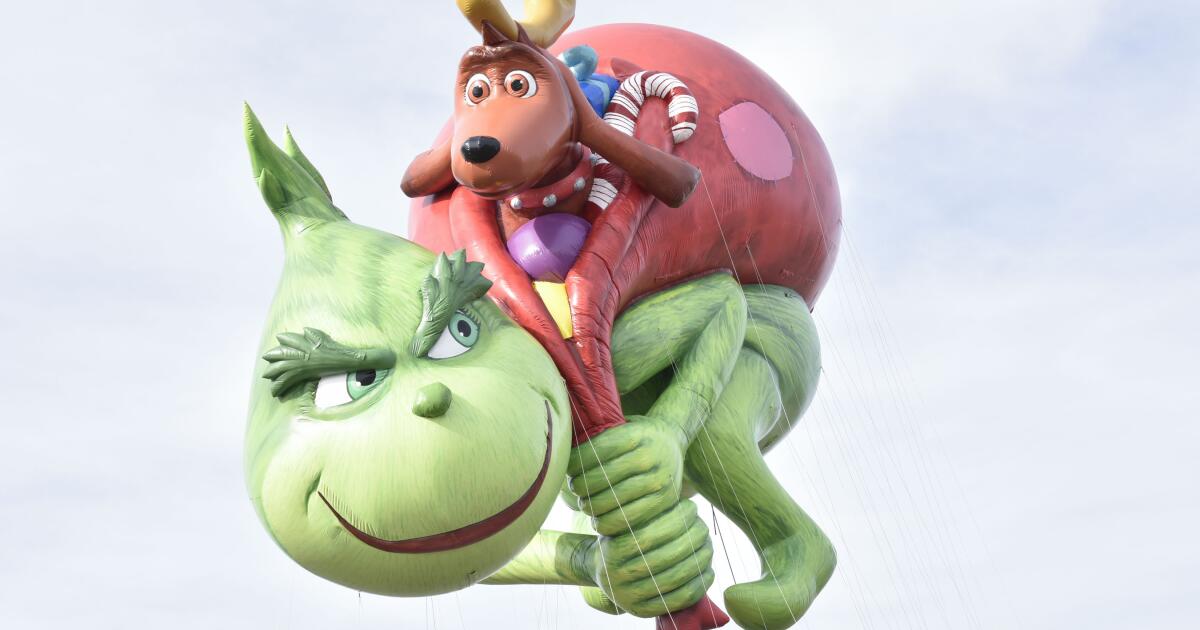
Even in the best of years, Americans stagger through this season feeling financially woozy. This year, however, the picture is bleaker. And a growing number of Americans are feeling Grinchy.
Unemployment is at a four-year high, with Heather Long, chief economist at Navy Federal Credit Union, declaring, “The U.S. economy is in a hiring recession.” And a new PBS News/NPR/Marist poll finds that 70% of Americans say “the cost of living in the area where they live is not very affordable or not affordable at all.”
Is help on the way? Not likely. Affordable Care Act subsidies are expiring, and — despite efforts to force a vote in the House — it’s highly likely that nothing will be done about this before the end of the year. This translates to ballooning health insurance bills for millions of Americans. I will be among those hit with a higher monthly premium, which gives me standing to complain.
President Trump, meanwhile, remains firmly committed to policies that will exacerbate the rising cost of getting by. Trump’s tariffs — unless blocked by the Supreme Court — will continue to raise prices. And when it comes to his immigration crackdown, Trump is apparently unmoved by the tiresome fact that when you “disappear” workers, prices tend to go up.
Taken together, the Trump agenda amounts to an ambitious effort to raise the cost of living without the benefit of improved living standards. But if your money comes from crypto or Wall Street investments, you’re doing better than ever!
For the rest of us, the only good news is this: Unlike every other Trump scandal, most voters actually seem to care about what’s happening to their pocketbooks.
Politico recently found that erstwhile Trump voters backed Democrats in the 2025 governor’s races in New Jersey and Virginia for the simple reason that things cost too much.
And Axios reports on a North Carolina focus group in which “11 of the 14 participants, all of whom backed Trump last November, said they now disapprove of his job performance. And 12 of the 14 say they’re more worried about the economy now than they were in January.”
Apparently, inflation is the ultimate reality check — which is horrible news for Republicans.
Trump’s great talent has always been the audacity to employ a “fake it ‘till you make it” con act to project just enough certainty to persuade the rest of us.
His latest (attempted) Jedi mind trick involves claiming prices are “coming down tremendously,” which is not supported by data or the lived experience of anyone who shops.
He also says inflation is “essentially gone,” which is true only if you define “gone” as “slowed its increase.”
Trump may dismiss the affordability crisis as a “hoax” and a “con job,” but voters persist in believing the grocery scanner.
In response, Trump has taken to warning us that falling prices could cause “deflation,” which he now says is even worse than inflation. He’s not wrong about the economic theory, but it hardly seems worth worrying about given that prices are not falling.
Apparently, economic subtlety is something you acquire only after winning the White House.
Naturally, Trump wants to blame Joe Biden, the guy who staggered out of office 11 months ago. And yes, pandemic disruptions and massive stimulus spending helped fuel inflation. But voters elected Trump to fix the problem, which he promised to do “on Day One.”
Lacking tangible results, Trump is reverting to what has always worked for him: the assumption that — if he confidently repeats it enough times — his version of reality will triumph over math.
The difficulty now is that positive thinking doesn’t swipe at the register.
You can lie about the size of your inauguration crowd — no normal person can measure it and nobody cares. But you cannot tell people standing in line at the grocery store that prices are falling when they are actively handing over more money.
Pretending everything is fine goes over even worse when a billionaire president throws Gatsby-themed parties, renovates the Lincoln Bedroom and builds a huge new ballroom at the White House. The optics are horrible, and there’s no doubt they are helping fuel the political backlash.
But the main problem is the main problem.
At the end of the day, the one thing voters really care about is their pocketbooks. No amount of spin or “manifesting” an alternate reality will change that.
Matt K. Lewis is the author of “Filthy Rich Politicians” and “Too Dumb to Fail.”