pocket

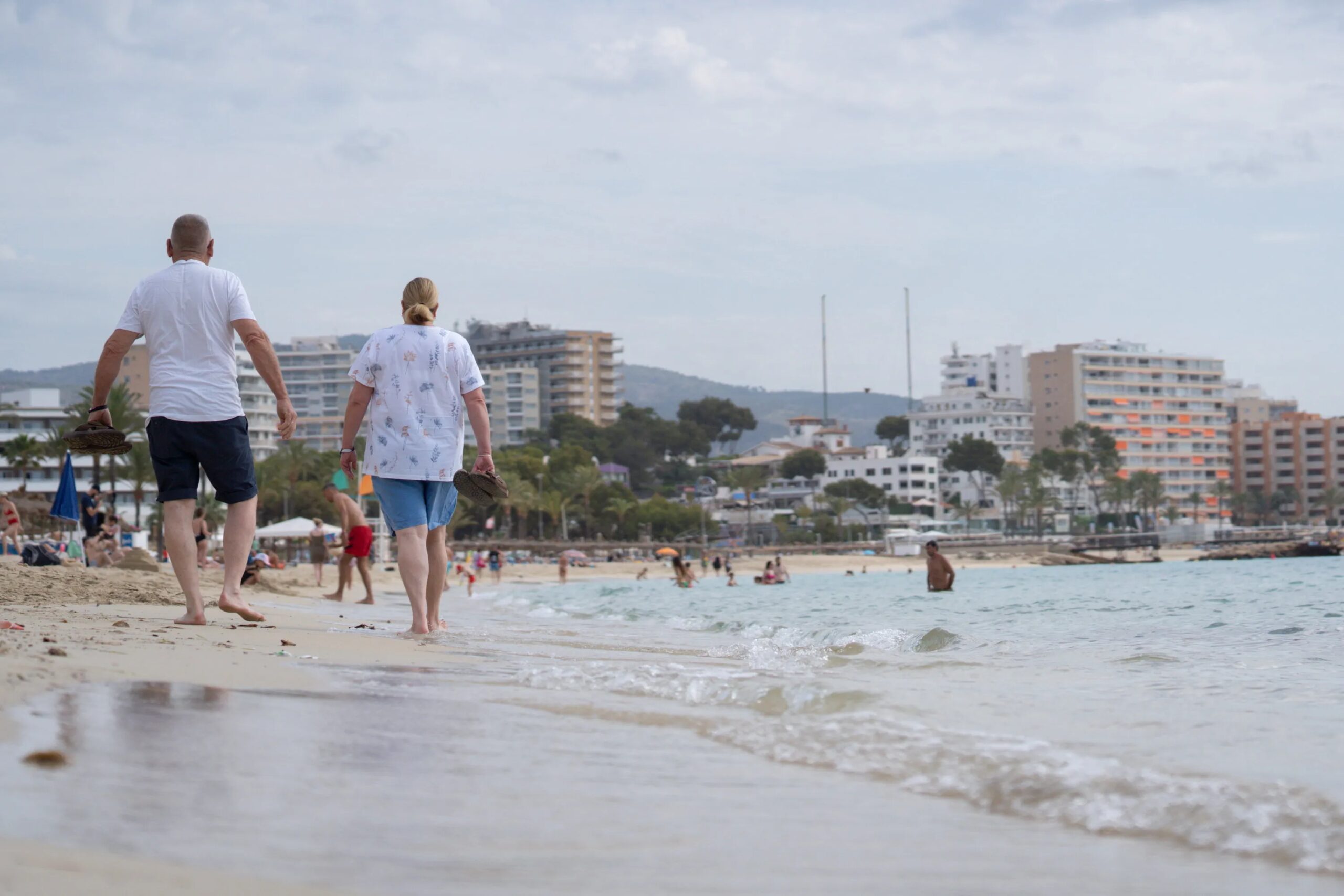
Brits warned popular beach activity could leave you £80,000 out of pocket

If you’re heading to the beach you may see this fun-looking activity on offer, but tourists are being warned that taking part could invalidate your insurance – and other surprising things can also see your insurer refuse to pay out

When you’re on a sunny holiday overseas, it’s likely you get more adventurous and trying some new activities or sports can look more appealing, especially after a few drinks.

But holidaymakers are being warned that taking part in a variety of activities can invalidate your travel insurance, meaning that an accident could leave you up to £80,000 out of pocket.

The travel insurance team at Quotezone.co.uk listed seven holiday activities that could interfere with your travel insurance coverage, and many of them are popular in holiday hotspots. According to its study, 36% would like to try an activity-filled holiday, and 35% said they can’t relax when they are just sunbathing, meaning lots of Brits would be tempted to try out one of these high-octane activities when bored.

Banana boats were among the activities that Quotezone cautioned Brits against. It said: “Whilst most standard travel insurance policies do include banana boats under general water sports, it’s important to do so safely. Not wearing a life jacket, being under the influence of alcohol, or going on a boat that isn’t run by a licensed operator could all result in a rejected claim should you get injured.”

Another thing to look out for on the beach is organised sports events. With the popularity of fitness breaks growing, many Brits now take part in organised sports activities as part of their holiday, but physical strain and injuries might not be covered under your travel insurance in these cases.

Water sports such as scuba diving and jet-skiing can also be risky and may need specialist cover. Some policies cover scuba activities, but only up to a certain depth, and if you don’t dive with a qualified instructor or neglect to follow local laws, you may not be covered in an accident.

Back on dry land, any activities with wheels can be a danger, from hiring a scooter or motorbike to go karting, especially if you don’t wear a helmet or follow local laws. Quad biking is another activity that’s rarely covered by standard insurance policies, but an accident can be extremely costly. A quad biking accident in Greece, for example, that includes surgery and medical repatriation could carry costs of over £80,000 for someone without adequate insurance.

Helen Rolph , travel insurance expert at Quotezone.co.uk said: “Many Brits don’t realise that popular holiday activities like jet-skiing or quad biking could leave them thousands of pounds out of pocket if they’re not properly insured.

“Even if coverage is in place, claims can still be rejected if local safety laws are broken, the holidaymakers don’t wear a helmet or are found to be under the influence of alcohol.

“When heading abroad, people often think activities like banana boating and go karting, popular with young travellers, stag and hen parties – are included as standard, but this is rarely the case and could leave thrill-seekers at risk.”

Have a story you want to share? Email us at webtravel@reachplc.com

Source link

Freddy Brazier’s nan Jackiey struggles to control her own dog after being attacked by son’s pocket bully

FREDDY Brazier’s grandma Jackiey Budden was spotted struggling to keep control of her dog days after his dog attacked the both of them.

Jackiey — who is the mum of late Big Brother star Jade Goody — was seen in south east London with her Pitbull cross XL Bully called Echo.

Jackiey Budden spotted in South East London struggling to keep her dog under control Credit: Splash
The Pitbull cross XL Bully even got agro with another dog on the walk Credit: Splash

She wore a red vest and green top as the large dog dragged her down the street and at one point Echo was seen barking aggressively at another dog on the walk.

Jackiey appeared to be struggling to keep the dog under control just days after the dog of Jade’s son, Freddy, went on a rampage and bit her.

Freddy spent around eight hours in hospital on Monday getting stitches after his dog attacked Jackiey twice in four days.

The alarm was first raised during an attack on July 16 by a concerned neighbour who heard screams of agony as the Pocket Bully, Pablo, gripped onto Jackiey, 68, leaving her requiring medical treatment. The fire brigade was also called out.

ON THE MEND

Freddy Brazier’s nan seen for first time since being bitten by his pocket bully


BRAZIER GRAN MAULED

Freddy Brazier’s pocket bully attacked gran twice days before him

Jackiey lives in Bermonsdey, South East London Credit: Splash
The walk comes after her grandson Freddie Brazier’s dog attacked the both of them Credit: Splash
Freddy recently moved in with his nan and brought his dog Pablo Credit: Getty
The bully names Pablo attacked Jackiey twice and Freddy ended up going to hospital with injuries Credit: Instagram/pablothepocket_

But just four days later the dog struck again, in a more severe attack. Freddy had returned to help his frantic gran before he, too, was launched upon by Pablo.

Troubled Freddy has now moved back in with Jackiey at her flat in Bermondsey, London, following a string of family disputes including a fiery war with his father, TV presenter Jeff Brazier.

He got the dog last summer, and the pup went on to cause him and his now ex- girlfriend problems.

Freddy reportedly dumped his ex Holly Swinburn, 22, after their on-and-off relationship ended in a row involving his dog.

He is said to have called it quits with the blonde before she “tried to take his dog from him” in a furious argument.

Freddy and Holly welcomed a baby daughter in March.

Source link

Freddy Brazier’s pocket bully attacked gran Jackiey twice days before he was left needing stitches after being mauled

POLICE have been called to Jade Goody’s mum’s home after her son Freddy’s dog viciously attacked her twice in four days – before turning on the model.

Freddy Brazier spent around eight hours in hospital yesterday, getting stitches, following the second terrifying attack.

Freddy Brazier spent around eight hours in hospital yesterday after being attacked by his gran’s dog Credit: CLICK NEWS – SPLASH
Jackiey Budden required medical treatment after an attack from the dog days earlier Credit: Doug Seeburg

The alarm was first raised during an attack on July 16 by a concerned neighbour who heard screams of agony as the Pocket Bully, Pablo, gripped onto Jackiey, 68, leaving her requiring medical treatment. The fire brigade was also called out.

But just four days later the dog struck again, in a more severe attack. Freddy had returned to help his frantic gran before he, too, was launched upon by Pablo.

There are now questions over whether the dog could face questions over safety – following a growing concern over illegally bred dogs including the now infamous XL Bully which has since been outlawed – and is a similar sort of animal to Freddy’s.

Last night a source said: “It’s been a shocking few days.

READ MORE ON FREDDY BRAZIER

FRED AGAIN

Freddy Brazier breaks silence on break-up & ditching family reality show


DONE & DUSTED

Freddy Brazier SPLITS with girlfriend Holly again 3 months after baby

Bulldog Pablo attacked Jackiey before turning to Freddie when he tried to help Credit: Instagram/pablothepocket_
Freddie is the son of TV presenter Jeff Brazier and Big Brother icon Jade Goody Credit: Getty

“During the first incident Jackiey home alone and she was mauled – on this occasion one of her panicked neighbours raised the alarm.

“Both the police and the fire brigade attended, but fortunately it wasn’t too serious – and they agreed not to pursue criminal charges.

“But a few days later the incident was repeated, and this time it was worse.

“Jackiey has been very upset – she is devastated as she views that dog as a grandson.

Freddie had a row with his ex Holly Swinburn over the pet bulldog Credit: Instagram/hollyswinburnx
In the first attack Jackiey was mauled by the dog before neighbours raised the alarm Credit: Doug Seeburg – The Sun

“Freddy came back to take Pablo but caught up in it all as the dog was clearly still frenzied.

“Freddy went to A&E immediately, but discharged himself after complaining that the waiting time was too long.

“But yesterday he was forced to return and his injuries couldn’t be ignored. He was still night was still in hospital receiving significant treatment.

“It’s been an awful view days and Freddy is devastated as he absolutely adores that dog and Pablo is a huge part of the family.”

Freddy moved in with gran Jackiey after clashing with dad Jeff Credit: Instagram
Jackiey is said to be devastated by the attack from the loved family pet Credit: Rex Features

Troubled Freddy has now moved back in with Jackiey Budden at her flat in Bermondsey, South London, following a string of family disputes including a fiery war with his father, TV presenter Jeff Brazier.

He got the dog last summer, and the pup went on to cause him and his now ex- girlfriend problems.

He reportedly dumped his ex Holly Swinburn, 22, after their on-and-off relationship ended in a row involving his dog.

He is said to have called it quits with the blonde before she “tried to take his dog from him” in a furious argument.

Source link

Family left £2,000 out of pocket and miss flights home as European airport queues to ‘hit six hours’ this summer 

ANOTHER family missed their flights home and were forced to spend nearly £2,000 due to massive airport queues abroad.

Matthew Wilson, his wife and their son were travelling home to Manchester from Milan back in April.

The Wilsons missed their flights home after long queues at EES Credit: Getty

They were returning to the UK after a nine-night holiday when they got stuck huge passport queues due to the new European entry rules.

Talking to the iPaper, Matthew said that despite easily getting through security, they were then stuck in another queues for 90 minutes, in which they only moved about 10m in that time.

Frustratingly, he family were then told by ground staff that their luggage had been removed from the plane as the flight was going to depart while they still stuck in the queue.

They were then forced to wait three hours before easyJet, who the family were flying with, offered the family a flight back home – but this was six days later than the original flight.

DIVE IN

Inside the £9.50 holiday park with a £10m upgrade – with a NEW waterpark and lido


COAST EFFECTIVE

Best UK family theme & waterparks with cheap stays from just £3pp a night

Rather than waiting, Matthew spent £1,969 on new flights from Barcelona, taxis, food and accommodation.

This was on top of the money they had already paid on the flight they missed which had cost £377.

Not only that, but their travel insurance provider also said they were unable to recuperate his costs.

Matthew said: “It was very stressful – we will think twice before travelling in Europe again.”

The family then spent £2,000 to get home after the delays Credit: Alamy
The operator of Milan Airport apologised saying EES ‘requires longer processing time’ Credit: Getty

The airport operator apologised, adding that EES “requires more complex operations than before and longer processing times”.

Not only that, but it said that on the day the Wilsons were due to fly home (April 12), there were malfunctions at the automatic gates due to issues connecting to the border systems.

This resulted in “particularly long waiting times” as passengers had to be manually checked at passport control.

The Wilsons weren’t the only ones to miss their flight on this day – in fact 100 easyJet passengers were left behind in Milan Linate Airport.

The flight to Manchester had been held for nearly an hour “but it had to then depart due to crew reaching their safety regulated operating hours”, explained easyJet.

There have been warnings over wait times because of EES – and it’s only set to get worse.

Rafael Schvartzman – the vice-president for Europe at the International Air Transport Association (Iata) – warned queue times could stretch to as much as six hours this summer.

Mr Schvartzman said: “What we are seeing is a very hard risk of really challenging times or waiting times, talking about expectations of three, four, five, six hours which is unacceptable.

“We know for a fact there are many cases where people have lost flights or their connectivity.”


Source link

Brits left £1,000s out of pocket as UK travel company announces ‘gut-wrenching’ closure

STUDENTS have been left thouands of pounds out of pocket after a UK travel company unexpectedly went bust.

Customers have called the news “gut-wrenching”, as bosses say they “deeply regret” the decision to shut close after nearly three decades.

Global Vision International (GVI) has been plunged into liquidation after 28 years Credit: Getty – Contributor
Now, those who booked holidays with the company are unsure if they will get their money back Credit: GVI

UK gap year students may lose thousands after volunteer travel company, Global Vision International (GVI), cancelled all its holidays.

The Exeter-based company offered a range of conservation and “voluntourism” placements all over the world, becoming especially popular with school leavers and gap year students who paid to take part.

On July 1, after 28 years, the company was plunged into liquidation in a move that bosses say they “deeply regret”.

CEO of GVI, Andrew Valentine, said in a statement: “It is with an incredibly heavy heart that I write to share that GVI is today closing its doors.”

HOLS OFF

Another travel company with holidays abroad forced to close after 28 years


TURK IT IN

The beautiful Turkish island where locals escape the crowds & tickets are £2.50

“I deeply regret the effect that GVI’s closure will have on staff, projects and customers, and we are committed to providing clear information to those affected as GVI goes through a formal liquidation process.”

GVI states on its website that “all current and future GVI programs have been cancelled”.

It continues to inform customer that “all impacted participants will receive formal correspondence detailing the liquidation process and instructions on how to lodge a claim”, and how to get their money back.

Amy Taylor, 21, a wildlife conservation and zoo biology student from Manchester, told BBC Newsbeat that GVI’s closure was “gut-wrenching”.

The student forked out £4,000 to pay for her once in a lifetime South Africa internship, hoping it would help her “stand out” on the job market -but now she is just filled with “disappointment”.

Linus Rowland-Bell, 23, from Liverpool worked two days a week alongside his university studies to pay for a programme in Peru.

Advertised as an internship in the Amazon rainforest, he found out about it through his university careers fair, paying £2,258 in total for his trip.

“The thought of all that money, all that time that I’ve saved up, that excitement completely vanishing into the ether, it was terrifying,” he told Newsbeat, after receiving the news of the liquidation.

GVI focussed on offering conversation excursions in locations such as South Africa and Peru Credit: GVI
Customers are now having to deal with the liquidators to help get their money back Credit: GVI

Rowland-Bell received a full refund, but many more are waiting for more information from the liquidators.

Taylor further said she was relying on her bank to reclaim the money, as her insurance was booked through GVI.

“If I don’t get the money back, I can’t go anywhere else and I don’t really trust anyone at the moment to be able to go anywhere else.

“It didn’t seem like they were struggling – everything looked professional.”

The Sun reached out to RG Insolvency, who are overseeing GVI’s liquidation, that declined to comment.

Source link

Woman banned from Ryanair flight and left £700 out of pocket because of ‘petty’ passport reason

Ryanair low cost airline in Eindhoven, Netherlands

A BRIT has been left devastated after she was refused boarding her flight to Spain due to a simple mistake.

Rachael Norton-Voysey, 33, was stopped before boarding her Ryanair flight from Birmingham to Lanzarote.

A British passport with a ripped section near the top binding, highlighted by a yellow circle.
A woman has warned about travelling with a damaged passport Credit: Kennedy News
Collage of travel items including a plane, sunscreen, passport, suitcase, and plane tickets, advertising The Sun's travel Instagram account.

The Brummie-based woman had a 1.5cm rip in her passport, though she claimed it did not impact any of the details in her passport or her photo page.

Rachael said: “We got to the gate and handed in my passport at that point to get onto the plane and he said it was ripped and they wouldn’t let us through.

“It was horrible – that feeling where your stomach just drops knowing we wouldn’t be going on holiday at that point.

“There’s no arguing with them once they do that.”

Read more on travel inspo

STAYCAY

Our travel experts’ best-kept-secret UK holiday spots for summer – from £37 a night


BOOK IT

UK fairytale villages that look like children’s picture books with stays from £20

Rachael and her friend were due to spend five days in Lanzarote, having spent £700 on the holiday but instead they both ended up heading home.

The duo were made to wait though, until the entire plane had boarded before they were escorted out of the airport.

Rachael added how she had travelled several times on the passport without an issue before.

She added: “I understand where they’re coming from but it is really petty in my opinion.”

She noted that when they went back through the airport, even the immigration officer mentioned it was harsh.

The UK Government’s website states: “If your passport is damaged you must replace it. You may not be able to travel with it.

Ryanair low cost airline in Eindhoven, Netherlands
Ryanair said they were following the official guidelines regarding damaged passports Credit: Getty

“HM Passport Office will consider your passport damaged if: there are stains on the pages (for example, ink or water damage); you cannot read any of your details; any of the pages are ripped, cut or missing; there are holes, cuts or rips in the cover or the cover is coming away.”

“You may not be able to travel with it.”

Rachael is now hoping that her experience will warn other Brits to check their passports before travelling, and also calling out Ryanair to be clearer on the rules around damaged passports.

A spokesperson for Ryanair said: “This passenger was correctly refused travel from Birmingham to Lanzarote as her passport was damaged and therefore not valid for travel.”


Source link

Pocket Fleet Of Unseen MQ-1 Predators Still Flying In Specialized Role

The U.S. Navy continues to make use of MQ-1 Predators as test and training assets, eight years after the U.S. Air Force retired the iconic drones. TWZ was first to report that the Air Force was looking at transferring some of its remaining Predators to the Navy back in 2019, but it was unclear what came of those discussions in the end. Now we know.

The Air Force officially retired the MQ-1 in 2018. At that time, the service still had dozens of these drones in its inventory. More than 50 Predators were heavily cannibalized for parts they shared with their newer cousin, the MQ-9 Reaper. A number of demilitarized examples were also put on display. Today, 15 MQ-1s remain in storage at the boneyard at Davis-Monthan Air Force Base in Arizona, and are technically the property of the National Museum of the U.S. Air Force. Then there’s the matter of the MQ-1s that went to the Navy.

A US Air Force MQ-1 Predator, at right, and an MQ-9 Reaper, at left, seen taxiing at Kandahar Airfield in Afghanistan in 2014. USAF

“In 2019, Naval Air Warfare Center Weapons Division (NAWCWD) received 20 MQ-1 aircraft from the U.S. Air Force,” a spokesperson for NAWCWD, part of the Navy’s Naval Air Systems Command (NAVAIR), confirmed to TWZ. “These aircraft were redesignated as NMQ-1Bs to support our mission.”

The new nomenclature here is notable. In the U.S. military’s joint service designation system for aircraft and missiles, the prefix “N” refers to platforms that have been modified in some way, typically for testing purposes, that are not readily reversible. One of the better-known examples of this is the Air Force’s secretive NT-43A radar cross-section measurement platform, a heavily modified Boeing 737-200 with a completely new and enlarged nose, as well as a huge radome extending from the tail. Other “N” aircraft that various branches of the U.S. military have operated over the years have had far less dramatic modifications. How exactly the NMQ-1B configuration differs from a typical MQ-1B is unclear.

A stock picture of an MQ-1 Predator in US Air Force service. USAF

“NAWCWD is an RDT&E [research, development, test and evaluation] command and the platforms were acquired to support our targets department,” they added when asked for more information. “The NMQ-1B platform is being used for test and training. We have nothing further to provide at this time.”

TWZ had reached out to the Navy for more details after the Air Force had also confirmed the transfer of the MQ-1s. We had asked the Air Force about the status of any Predators still in its inventory after U.S. Central Command (CENTCOM) confirmed the loss of an “MQ-1” to Iranian fire at the end of May. By all indications, what Iran shot down was actually a U.S. Army MQ-1C Gray Eagle, a design that evolved from the Predator, but that is distinctly different.

When the Air Force retired the MQ-1, the service still had dozens of airworthy examples. TWZ pointed out at the time that at least a portion of them could end up as targets for air-to-air and surface-to-air weapons, as well as sensor testing and other weapons testing. The fact that NAWCWD says it is still using the drones today would seem to point more to the latter than the former, though anti-air missile testing does not necessarily have to entail the destruction of the target.

For instance, certain kinds of testing of some missile seekers can be done without it ever leaving a rail on an aircraft or a launcher on the ground. The Navy and Air Force test communities also use specialized podded systems to support the development and evaluation of new and improved seekers for anti-air missiles, something we have explored in detail in the past. Even live fire tests do not always result in the target being destroyed if that is not the intended outcome. Just by removing the warhead, missiles will still pass within lethal distance with their proximity fuzes being triggered to confirm a simulated kill. The missile will fly on, and the target will survive to live another day.

As noted, at least based on the NMQ-1B designation, the Navy’s Predators have been altered in some significant way. One possibility is that they have been modified to be able to mimic an array of different radar, infrared, and/or other signatures. In this way, a Predator could offer a lower-cost and long-endurance flying asset capable of replicating a variety of aerial threats to support testing and training requirements. The U.S. military already uses smaller crewed aircraft as surrogates for cruise missiles and long-range kamikaze drones, as can be seen in the TWZ video below. This is in addition to target drones specifically built for this purpose.

These aircraft masquerade as enemy Shahed-136 drones during U.S. military war games thumbnail

These aircraft masquerade as enemy Shahed-136 drones during U.S. military war games


The NMQ-1Bs could also be modified in a variety of other ways to support more specific NAWCWD requirements, or to make them more adaptable to meet changing demands. The standard MQ-1B variant also features two underwing hardpoints that could be used to carry various stores, such as countermeasures and small munitions. This would further expand the Predator’s flexibility as a test and training asset from one sortie to the next. Being able to more readily modify or swap out the drone’s internal systems, as well as the software running them, would also be a boon for its current role.

Despite being housed within NAWCWD’s targets department, depending on their current configuration, the NMQ-1Bs could also help monitor missile and other test activities, or even act as signal relays. Before armed MQ-1 versions arrived, RQ-1 Predators were already flying surveillance and reconnaissance missions using infrared and electro-optical full-motion video cameras in turrets under their noses. The drones could also be fitted with small radars with synthetic aperture modes capable of capturing still imagery, even through cloud cover, smoke, and dust, and at night.

An early variant of the Predator drone flies near the U.S. Navy’s Nimitz class aircraft carrier USS Carl Vinson during a test in 1995. U.S. military

News that the Navy is still using Predators for testing and training purposes certainly comes at a time when drone threats at home and abroad have become firmly top of mind for the U.S. military. For American authorities, the ability of long-range kamikaze drones, in particular, to hold prized assets at risk was just highlighted by the latest conflict with Iran. Russia’s ongoing war against Ukraine, as well as other conflicts globally in recent years, have also underscored this reality. For years now, TWZ has been calling attention to the dangers that various tiers of uncrewed aerial systems pose, which are only set to continue to expand in scale and scope.

Confirmation that NAWCWD continues to operate a fleet of NMQ-1Bs also comes amid a surge in U.S. military flight testing activities, and commensurate demand for supporting test assets. This is being driven heavily by a flurry of next-generation aircraft and missile developments, as well as efforts to modernize existing platforms to keep pace.

Around their retirement, there were rumors that the remaining MQ-1 fleet could be used to test cooperative swarming capabilities, including hardware, software, and communications networks. There is no hard proof that this occurred, but it seems quite plausible considering the timing and how well-known and adaptable the Predator was at the time.

Using surrogate drones in the development of autonomy agents, teaming architectures, and swarming capabilities is now a very well-established practice. The big question is that if these Predators are still flying, or at least have been since their retirement, how is it that we have not caught a glimpse of them? One answer would be that this work was done at clandestine test facilities like Area 51 or even less secretive but still somewhat remote locales. If this is the case, these aircraft likely have historic significance, paving the way to the autonomous air combat revolution currently underway.

Overall, how much longer the Navy might continue to make use of the NMQ-1Bs remains to be seen. The service’s test community has already given the iconic Predator nearly a decade of extra life.

Contact the author: joe@twz.com

Joseph is TWZ’s Deputy Editor, helping to oversee the site’s highly experienced and dedicated team, while also writing informative and impactful defense and national security content. He lives right in the thick of it in the Washington, D.C. area.


Howard is a Senior Staff Writer for TWZ. He writes frequently about conflict, focusing heavily on the Middle East and Ukraine, and interviews with military and intelligence officials and industry leaders from around the globe. He lives near Tampa, Florida, home of U.S. Central Command, U.S. Special Operations Command.


Source link

Mum blocked from easyJet flight and left £700 out of pocket after passport mistake

What should have been the start of an exciting family holiday to Greece turned into a nightmare, after a mother of three was unable to board the plane due to a passport mistake

A mum was banned from boarding an easyJet flight with her family and was left £700 out of pocket after being caught out by a crucial passport rule.

Bolaji Omisade, 35, was filled with excitement as she headed to London Gatwick Airport with her husband and three sons ahead of their family holiday to Greece. But on arrival at the airport, she was told by easyJet staff that she wouldn’t be allowed to board the plane.

Confused by the situation, the social worker and content creator from Rainham in Essex was told at check-in that while her passport had not expired, it had been issued more than 10 years earlier, meaning it did not meet EU entry requirements. “Until that moment, I had absolutely no idea this rule existed,” Bolaji told creatorzine.com.

All UK passports must have been issued less than 10 years before the date of entry when travelling to most European countries under post-Brexit travel rules. Bolaji checked that her passport hadn’t expired before heading to the airport, but wasn’t aware of the crucial rule regarding the issue date.

It was a devastating moment for Bolaji as the reality of not being able to go on holiday with her husband and their three sons hit home. “I had to hold back my emotions because my children were watching everything unfold,” she said. “As a parent, that was one of the hardest parts. They were so disappointed.”

With no refund option and their planned departure time approaching, the family decided that Bolaji would return home with their youngest son, while her husband and two older boys would board the easyJet flight to Greece. Amid the holiday nightmare, Bolaji said she saw another holidaymaker being turned away at the airport for the same reason. “That was the moment I realised this wasn’t an isolated incident,” she said.

In an attempt to salvage the holiday, Bolaji swiftly booked an appointment to secure a new passport by using the one-day premium service through His Majesty’s Passport Office. While there were no suitable appointments available in London due to the bank holiday weekend, the mum managed to secure a 9.30am slot in Newport, Wales, and travelled up the night before.

After waiting several hours, Bolaji was finally issued a fresh passport, and she booked new flights. Bolaji and her youngest son joined the rest of the family in Greece on Thursday, but it meant they had only two days left of the holiday before flying home on Saturday.

While it was a stressful time for the family, it also resulted in an expensive mistake. With the cost of the emergency passport, hotel stay in Wales, travel expenses, and extra flights, the family ended up spending an additional £700 on top of their already prebooked getaway.

Since the ordeal, Bolaji has shared her experience on social media, warning other travellers and urging booking platforms to clarify the rule. “I believe airlines and booking platforms could do much more to highlight this rule,” she said. “If sharing my story helps even one family avoid being turned away at the airport, then something positive will have come from what was a very upsetting experience.”

To renew or replace your passport, online or at the HM Passport Office, visit the government website.

EasyJet has a dedicated page on its website to warn passengers of passport rules and requirements, including for the EU. As part of these warnings it explains: “Please check your passport’s expiry and issue date before you travel. If you’re a UK passport holder travelling to the EU (except Ireland), or Iceland, Liechtenstein, Norway, Andorra, Monaco, San Marino, the Vatican City or Switzerland, your passport will need to meet the following criteria:

  • It must be valid for at least three months after the day you plan to depart from the EU or above countries*
  • It must be no more than 10 years’ old on the date of travel to the EU or above countries.

“Visit the UK government’s advice page for more information.

“Citizens of the European Union, European Economic Area and Switzerland may travel within Europe using a valid EU/EEA/Swiss National Identity Card or Passport Card.”

Do you have a travel story to share? Email webtravel@reachplc.com

Source link