Han vows weekly plenary sessions amid legislative push

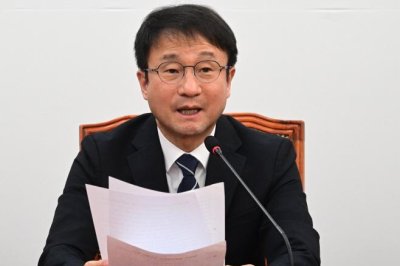
Han Byung-do, floor leader of the Democratic Party of Korea, speaks during a policy coordination meeting at the National Assembly in Seoul on Feb. 26. Photo by Asia Today
March 3 (Asia Today) — Han Byung-do, floor leader of the Democratic Party of Korea, said Monday that his party will maintain an emergency legislative posture in March and convene plenary sessions every Thursday to advance key bills.
Speaking at a party strategy meeting, Han said the March session of the National Assembly begins Wednesday and that the party will focus on livelihood- and reform-related legislation to support President Lee Jae-myung’s policy agenda.
“We will operate all standing committees and hold plenary sessions every Thursday to ensure there is no shortage of bills ready for passage,” he said.
Han also addressed delays in passing an administrative integration bill, which has stalled amid disagreements with the opposition People Power Party.
He accused the conservative party of blocking the bill’s submission to the plenary session while claiming that the Democratic Party opposes integration of Daegu and North Gyeongsang Province. Han argued that integration efforts involving Daegu and North Gyeongsang as well as Daejeon and South Chungcheong Province should move forward together, calling administrative consolidation a “century-long national plan.”
Han criticized the People Power Party for staging a public march to the presidential office in protest of three judicial reform laws passed by the Democratic Party majority, including measures creating a crime of judicial distortion, allowing constitutional complaints against court rulings and expanding the number of Supreme Court justices.
“The march is not about judicial justice but about appealing to far-right street forces,” Han said. “Public sentiment lies not on the asphalt but in people’s everyday lives.”
He added that the party would work with the government to respond to what he described as a “global complex crisis” stemming from escalating tensions in the Middle East, including developments involving Iran.
“Rising oil prices and broader instability could affect the real economy, financial markets and security,” Han said. “We will closely monitor the situation with the government and seek to prevent excessive anxiety from spreading.”
— Reported by Asia Today; translated by UPI
© Asia Today. Unauthorized reproduction or redistribution prohibited.
Original Korean report: https://www.asiatoday.co.kr/kn/view.php?key=20260303010000481