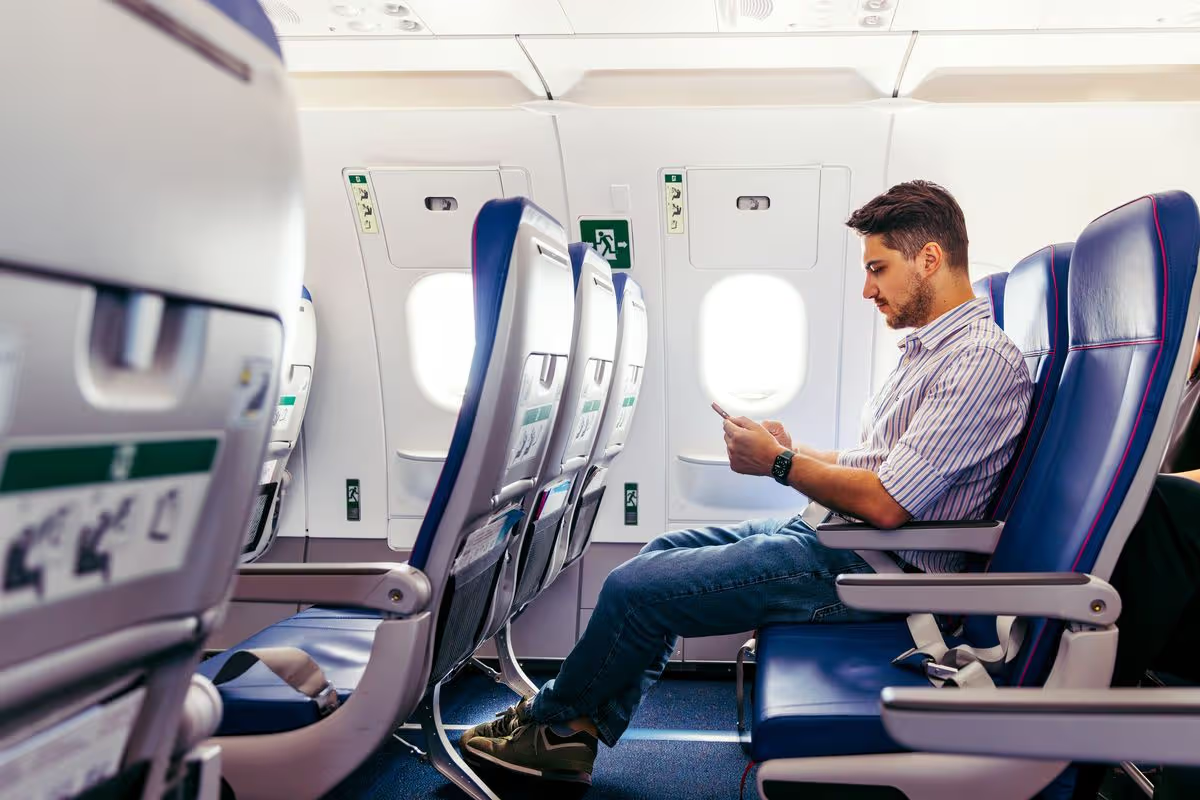
Planes

Passport holders told to stop wearing 1 item of clothing to travel on planes

Passport holders have been urged to avoid wearing a common item of clothing when flying. When travelling on planes, there are certain items you should never wear

Every day, thousands of individuals globe-trot, but passport holders are now being advised to steer clear of a certain popular garment. When jetting off to sunnier climes, it’s only natural to adjust your wardrobe accordingly and prepare for the balmy weather; however, there’s a particular item you should avoid donning when boarding a plane.

You might be surprised to learn that your choice of attire can significantly influence both your travel experience and your safety. That’s why travellers are being urged to refrain from wearing this specific item when embarking on a flight in future, and it’s advice everyone would do well to heed.
The issue was recently spotlighted by Polly Ann, who goes by the handle Travel with Polly Ann on Instagram, and regularly imparts valuable travel tips to her multitude of followers. Unbeknownst to many, certain items of clothing are best stowed away in your suitcase when flying.

Polly Ann enumerates several garments she personally avoids, but one stands out as crucial from a travel safety perspective. It could have serious implications in the event of an emergency.

She divulged what people need to know in a frank post. It’s advice worth heeding, as it could greatly affect your travel experience.

Imparting wisdom to passport holders, she stated: “Things never to wear on a plane. Open-toed shoes.

“Sandals and open-toed footwear are discouraged because aircraft floors and bathrooms aren’t very clean and they don’t protect your feet in case of an emergency.

“Offensive clothing. Anything with profanity, lewd graphics or offensive messaging could lead to being asked to change or even denied boarding under some airline dress codes.”

She proceeds to mention several other items she’d steer clear of but, regarding safety, footwear is particularly crucial. Whilst they’re not typically prohibited on aircraft, travellers are actually discouraged from wearing sandals.

There are several reasons why it’s advisable to avoid them when flying. You might never have considered they can actually present hazards.

Why should they be avoided?

Experts generally recommend passengers avoid wearing sandals or open-toed footwear on flights due to safety risks during an emergency evacuation, the possibility of foot injuries from falling objects and hygiene issues.

If you do choose to wear them, it’s recommended you also wear socks. There are multiple reasons behind this guidance.

During an emergency, such as an evacuation, sandals can slip off, making it challenging to run or walk across harsh surfaces like tarmac, broken glass or wreckage. Additionally, aircraft floors are frequently dirty and chilly, meaning wearing sandals leaves your feet vulnerable to bacteria.

Aeroplanes are typically cold, and feet have a tendency to swell during lengthy flights, rendering the footwear increasingly uncomfortable. You may also be required to remove sandals at security checkpoints, which could extend your time getting through the airport.

Hence, it’s simpler all around if you refrain from wearing them. There are a few reasons why they could land you in a bit of trouble.

Source link

Passengers told ‘never use seat back pocket on planes’

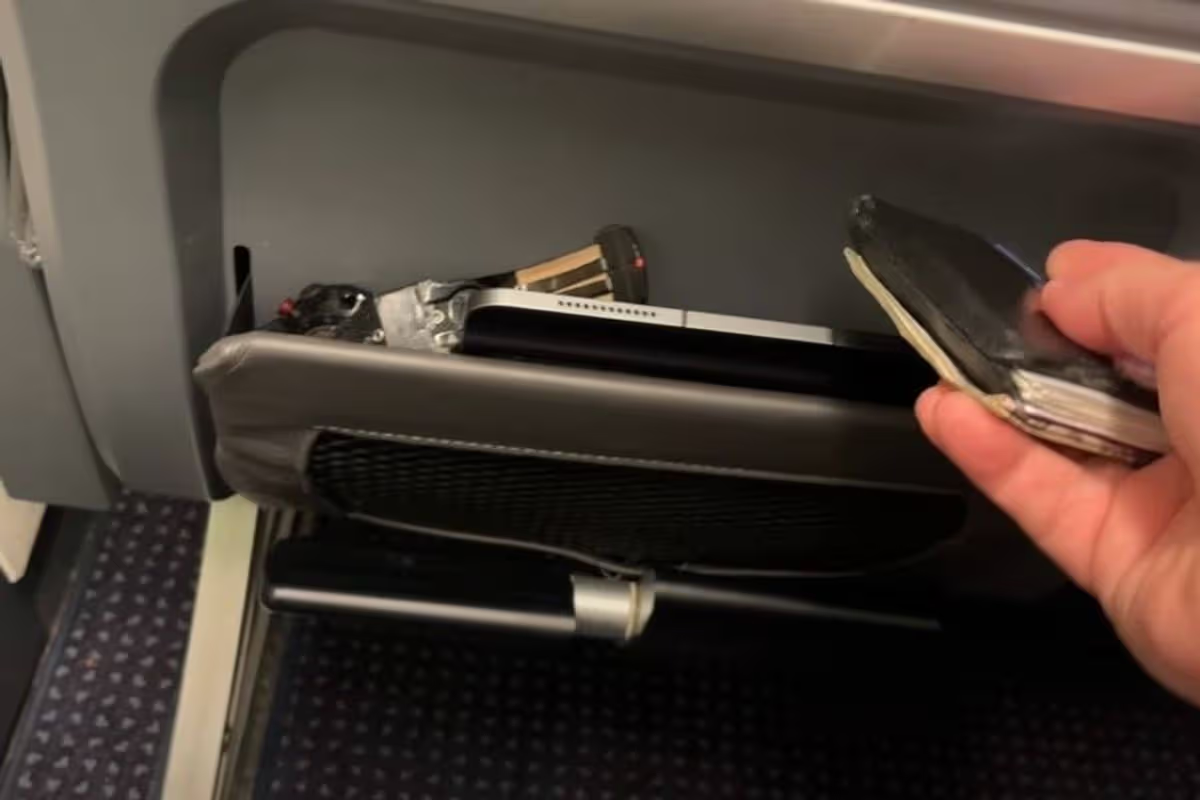
American Airlines pilot Captain Steve Scheibner has shared crucial travel tips for passengers – warning them to avoid the seat back pocket he calls a “black hole of despair”

An airline pilot has issued a stark warning to passengers never to stash their personal belongings in the rear pocket of plane seats for one straightforward reason.

Captain Steve Scheibner is an American Airlines pilot widely recognised by his huge YouTube following as Captain Steeeve. He revealed the advice in a recent video where he offered a string of travel tips for air travellers.

He regularly encounters people at the agent’s desk because of their use of the rear pocket during their journey, experiencing a “fingers crossed” situation where they face “diminishing” chances.

Captain Steve labelled the pocket the “black hole of despair” and cautioned people against placing anything valuable in it whilst they’re flying unless they “don’t ever want to see it again”.

He stated: “Stop putting personal items in the seat back pocket in front of you. If you want to lose it and never see it again, put it in that dark hole that is the seat back pocket in front of you.”

Captain Steve revealed he’d encountered numerous passengers who’d disembarked the aircraft but abandoned personal items in the seat pocket, and were subsequently unable to return to the flight to retrieve them.

He continued: “If the airplane is still at the gate, fingers crossed that somebody who cares can go out there and find the thing that you left in that seat back pocket.

“But the odds are diminishing with every minute that ticks by after you leave that seat and you leave it in that black hole of despair. So, my friends, do not put your personal items in that seat back pocket, unless of course, you don’t ever want to see it again.”

This comes as reports suggest budget airline passengers could soon experience a peculiar new way of flying – standing-only seats. The novel upright seats, allegedly designed for flights lasting under two hours, would allow passengers to lean rather than sit.

Initially unveiled by Italian company Aviointeriors back in 2018, the ‘Skyrider’ seats would enable airlines to “increase the passenger number by 20%”, resulting in “increased profits”, according to a company spokesperson.

They also maintained that the seats would provide an “increased upright passenger position” whilst ensuring “adequate comfort”. Nevertheless, one expert believes the seats could pose a challenge regarding “perception”.

Dr Akhil Bhardwaj, a former engineer and senior lecturer at the University of Bath’s School of Management, told the Express that such a development would demand “very strict oversight”.

Dr Bhardwaj stated: “The idea of a flying bus that packs passengers might seem appealing, but it might undermine the perception of how the industry thinks about safety. At the very least, such a move requires a very strict oversight and a very clear explanation to the flying public why this is safe.”

Source link

Flight attendant’s 4 personal rules she follows on planes – and why you must do the same

She warned she’s seen ‘diabolical things’ on planes

An experienced flight attendant with 11 years under her belt has divulged her personal tips for ensuring the best possible experience when travelling by plane. She cautioned that she’s witnessed some truly “diabolical things” during her time in the air.

Not everyone enjoys flying. It can be expensive, exhausting, and even anxiety-inducing.

With this in mind, one expert has shared her own set of guidelines that she adheres to whenever she takes to the skies. In a video posted on TikTok, flight attendant and US reality TV star Charity Nelms stated: “These are things that you’re not doing on an aircraft that you should do.

“I’m an 11-year flight attendant and I do all of these things when I travel on my own personal time because I’m an expert. This ain’t my first Rodeo.”

Content cannot be displayed without consent

Wiping seatbelts

If you’re the type to bring antiseptic wipes on board, you might be focusing your efforts in the wrong place, according to Charity. She explained: “Number one, you guys all come on board with your little Clorox wipes and your little disinfectants, and you start wiping everything down: that little tray table in front of you, the back of the seat.

“I don’t really get why you’re wiping the back of the seat, because if you’re wearing clothes, nothing really touches that.”

Instead, she advised: “What you should be wiping, that nobody wipes is that seatbelt. The metal part, because everybody touches it.

“And also you should be wiping the fabric part of the seatbelt because everybody pulls on that. The amount of throw up, baby vomit, bodily fluids, liquids that have spilled, random stuff that end up on those seatbelts.

“Wipe them down. I do.”

Wearing full-length trousers

This is the most effective way to avoid direct contact with your seat. She went on: “Second thing you’re not doing is you’re not wearing full pants [trousers].

“I am letting you know from a flight attendant, the amount of things I have seen on the seat.Wear pants. Shorts, skirts, dresses – absolutely not. Wear full pants.

“None of your skin should be touching that seat. I don’t care if you come on board and you disinfect it. Nope, nope, nope.

“Wear full pants. Trust me, I have seen some diabolical things.”

Hand hygiene

According to Charity, cabin crew can tell if you haven’t washed your hands after using the in-flight loo. “Third thing that none of you are doing, you are not washing your hands after you use the lav,” she stated.

“You’re also not flushing the toilet. Did you know that your flight attendants know if you flush the toilet and wash your hands?”.

“We literally know from outside. You’re also not closing the door when it comes to using the lavatory.

“This is what you do. Flush the toilet, you wash your hands, you come out and you close the door with your elbow. Please start doing that.”

Footwear

She encouraged travellers to keep their footwear on when using the lavatory. “Fourth, and also having to do with the lav, you’re not wearing shoes,” Charity stated.

“It is never, ever water on the floor in the lav. And your socks are like two big sponges.”


Source link

Brits urged never to pack plug adaptors in checked luggage

A travel expert has shared important advice for British holidaymakers about packing plug adaptors in carry-on bags instead of checked luggage to avoid ruining your trip

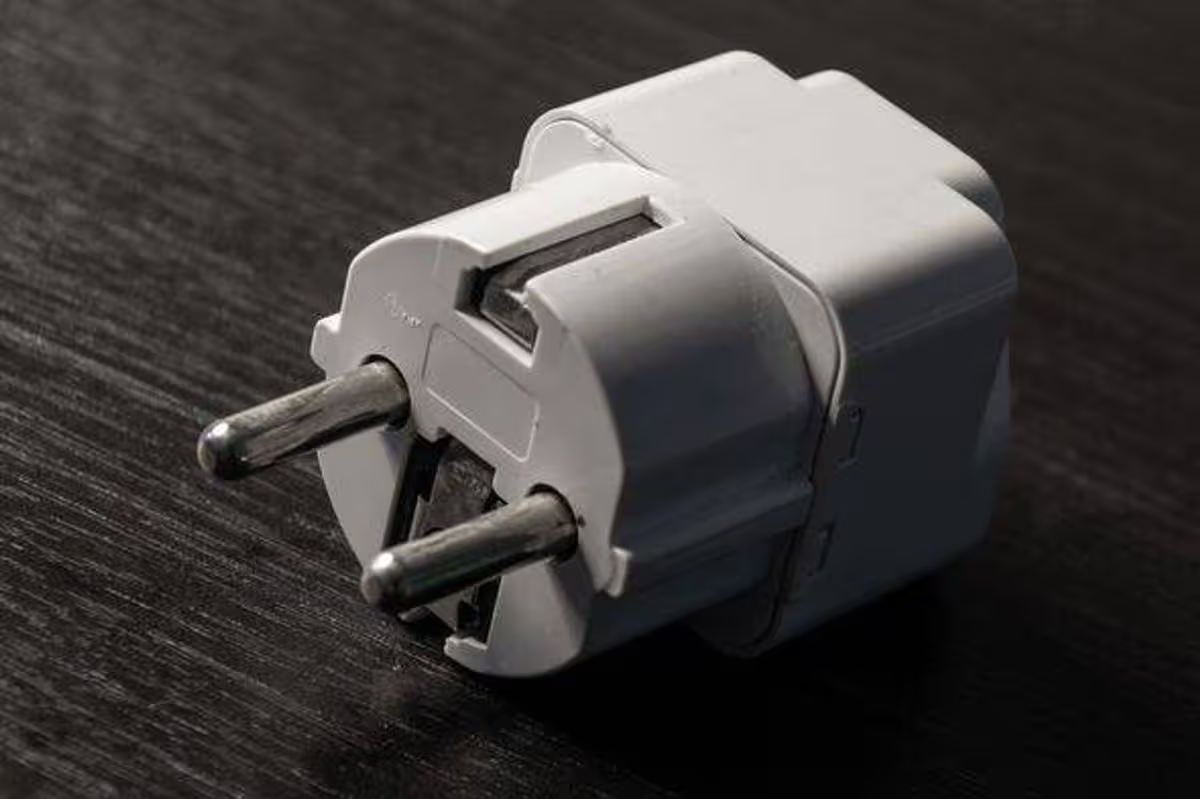
When preparing for a short or long-haul journey, there’s an important reason why you ought to think twice about stowing plug adaptors in your checked luggage. Taking to TikTok, The Points Guy – whose mantra is “spend smarter, travel better” – highlighted the items you should “never put in your checked bag”, with plug adaptors featuring prominently on the list.

He pointed out that this everyday essential is far better suited to your carry-on bag, as checked luggage runs the risk of going astray. Beyond that, if you’re travelling to distant destinations, there’s also the chance that tracking down an appropriate plug adaptor could prove challenging – even within the airport itself.

Another everyday must-have (particularly if you’re heading somewhere sunny) is sunscreen, which is likewise best tucked into hand luggage.

Further items worth considering for hand luggage include a spare change of clothes, toiletries, eyewear, and medication.

The travel expert explained: “You may be able to get a doctor to call in your prescription, but that becomes trickier if it’s a weekend or a holiday or if your medication doesn’t allow for refills before the previous prescription runs out.”

Any precious belongings, such as jewellery, cash, and items of sentimental significance, are also ideally packed into hand luggage, space permitting.

This is down to the risk of luggage going missing, being pinched, or mistakenly grabbed by another passenger at the baggage carousel.

Following the travel advisory, people rushed to the comment section on the TikTok video. One user commented: “Everything important goes into my carry-on. Meds, contacts, electronics in particular.”

A second traveller added: “I only have clothing and shoes in checked bags. Everything else is in my carry-on.”

Whilst another remarked: “Scary that this has to be explained to people.

Source link

World’s longest flight is over 12,000 miles as passengers in their seats for 29 hours

The mammoth journey is now flown twice a week and spans three continents

The world’s longest flight record was set last year with the launch of a new 29-hour route. It is now the longest in the world, spanning almost 20,000km, which is 12,427 miles.

The route is so long that the plane even needs to stop off to refuel. Passengers are in their seats for over a day as the plane travels from Shanghai, China, to Buenos Aires, Argentina.

It is flown twice a week by China Eastern Airlines. Due to the distance, the plane stops at Auckland Airport, New Zealand, to refuel.

Staff also get swapped around whilst at the stop, yet the passengers carry on. At almost 20,000km, the route is used to ship supplies between China, New Zealand and South America, as well as passengers.

It was launched on December 4 last year. The route from China to Argentina takes more than 25 hours, while the return leg takes an additional four.

Ensure our latest lifestyle and travel stories always appear at the top of your Google Search by making us a Preferred Source. Click here to activate or add us as your Preferred Source in your Google search settings.

“This new route fills the gap in direct flights between Shanghai and major South American cities,” China Eastern Airlines said at the time of the first flight.

“It opens a ‘southbound corridor’ connecting opposite ends of the Pacific and reshapes air travel between three continents.” The staggering journey sees passengers board a jumbo 316-seat Boeing 777-300ER.

Before the launch of the route last year, the quickest available journey from Shanghai to Buenos Aires took 31 hours. It involved non-direct flights with a layover.

It is a popular route, as more than 55,000 people born in China live in the South American country, according to data from Simply Flying.

Data also showed that 96,000 passengers flew between China and Buenos Aires in the 12 months to September 2025, before the new route existed.

The flight has set the record for the longest commercial flight route in the world, yet it can’t secure the world’s longest direct flight route title because it makes a stop.

The title of the longest non-stop flight is currently held by Singapore Airlines. It takes 19 hours to travel from Singapore to New York.

However, it isn’t set to hold the record for long as Qantas is set to launch a new non-stop route next year. It is planning a 22-hour nonstop flight from Sydney, Australia, to London in 2027.

Thanks to a 20,000-litre fuel tank, the plane wouldn’t need to stop to refuel. It will travel 10,573 miles and has been labelled “the final frontier of long-haul travel” by Qantas.

Source link

I visited ‘paradise’ 3 hours from UK with 23°C weather and flights from £23.99 in March

I swapped grey British skies for 23°C sunshine in a beautiful city this February

I visited a paradise 3 hours away

February in Britain typically brings relentless grey skies, persistent rain and blustery conditions whilst we eagerly await the arrival of spring. The dreary weather and bitter temperatures can make winter seem interminable. Yet just three hours away, I discovered myself soaking up 23°C sunshine in a destination many describe as “paradise.”

Determined to unwind beside a pool, I traded my heavy winter coat for summer dresses and sunglasses during my visit to Marrakech, Morocco. With quieter tourist numbers, exciting excursions, affordable accommodation and flights available from just £23.99 in March through Easyjet, here’s why you ought to consider a trip yourself.

Why it’s called paradise

When journeying to Morocco, fellow travellers may advise “you must stay in a riad” rather than a hotel to experience authentic Moroccan hospitality. The term riad means “garden” or “paradise” in Arabic.

“Moroccan riads were meant to represent the Muslim vision of paradise,” reported Moroccan Zest. “They were built and decorated by the best craftsmen from all over the Mediterranean area and enriched by Andalusian art to become the Moorish-style palaces we know today.”

My family and I ultimately chose a five-star establishment called El Olivar Palace in Marrakech, which featured private sections functioning as miniature riads, and it truly was paradise. The architecture was utterly stunning, whilst the entire hotel grounds radiated luxury and tranquillity.

This hotel provided an all-inclusive package featuring unlimited buffet dining with breakfast, lunch, dinner, and pudding. Despite being situated in a Muslim nation, the establishment continued to serve alcoholic beverages in the restaurant and at the outdoor bar.

The hotel boasts three swimming pools: two outdoor and one indoor, all surrounded by comfortable sun loungers. In the evenings, entertainment takes place in their indoor lounge, though throughout this quieter season it tends to be more peaceful, with reduced visitor numbers.

Moroccan tradition places great importance on warmth and hospitality. The hotel team were outstanding, incredibly friendly, and helpful. For most of our stay, we hardly needed to do anything as the staff attended to our every need as though we were VIPs.

Not only was our accommodation remarkable, but Morocco itself feels like an exotic haven wherever you venture. Despite the bustling streets of Marrakech, the city brimmed with vibrant culture and stunning views.

My preferred element was strolling past orange and olive trees, when suddenly you’d spot a lorry with a flock of goats or a donkey transporting merchandise. There were countless horses, cats, monkeys and snake charmers simply present in the town centre whilst motorbikes and scooters whizzed through the crowds.

When the sun starts to descend and the golden hour arrives, the country truly shines at its finest. The sky becomes the most magnificent sight to behold as its blue and orange shades blend together.

As the cotton-candy-like Atlas Mountains become increasingly visible, the large, luminous moon begins to appear. Once darkness falls, the sheer number of stars in Marrakech’s sky instils a tranquil serenity unmatched by any other location.

Morocco is also known as Al-Maghrib, translating to ‘the place in the West’. “In its simplest definition, the Arabic word maghrib means sunset,” as per The National News – an apt descriptor for this nation indeed.

Here’s my 72-hour itinerary

Like any holiday, venturing into a new country, it’s best to divide your time between adventurous pursuits, delving into the history and culture, and a day of relaxation. We spent five days in Marrakech, but this itinerary could easily be condensed into 72 hours.

For the first day, or rather the sunniest day of your trip, I’d suggest embarking on the desert excursion. We arranged this through Get Your Guide and paid a mere £15 for four activities spanning the entire day.

This included a visit to an Argan Oil Women’s Cooperative, where we savoured tea and bread with a variety of scrumptious dips (do try the peanut butter, it’s life-changing), followed by a tour and informative talk on the benefits of argan oil.

Next, you’ll embark on a camel ride; this was an utterly surreal and exhilarating experience, akin to riding a towering horse that moves like a seesaw. I’d recommend investing in a headscarf, as the sand can infiltrate your system.

Following that, you’ll team up for an exhilarating quad biking adventure, which proved an absolute thrill and a brilliant opportunity to bond with fellow travellers. Afterwards, you’ll tuck into a sumptuous three-course feast showcasing authentic Moroccan dishes.

To cap off the evening, you’ll witness a captivating, mesmerising fire performance that I promise will stay with you forever. For day two, I’d suggest taking things at a gentler pace. You ought to experience a hammam, an age-old, customary steam bath centred on purification and renewal.

This might sound extraordinary, but you’re instructed to undress entirely and provided with merely a modest cloth to preserve your modesty and a plush bathrobe that remains so toasty it feels freshly tumble-dried each time you slip it on. You’ll subsequently be bathed and thoroughly exfoliated before unwinding in the steam chamber.

Afterwards, you’ll be served tea and treated to a massage. I emerged from this experience feeling utterly refreshed, spotless and at peace.

Most residents indulge in this ritual weekly, and I completely understand why it’s become such a cherished custom. Next, make your way to Henna cafe for a stunning temporary hand design (resist anyone approaching you on the street offering it; visit a legitimate establishment to ensure you receive organic, genuine henna).

Finally, on your closing day, embark on a city tour and discover the captivating history of Marrakech. My personal highlight was the Bahia Palace.

Afterwards, wander through the souks, but stay alert to avoid being overcharged; negotiate firmly if you’re tempted to purchase anything! I spent £20 on a small kitchen bowl, and I’m still annoyed with myself for not insisting on a better price.

Three words: Morocco is paradise

I’ve never felt so calm and revitalised before, and I came back to a somewhat dreary UK looking radiant and recharged. February proved the ideal time to visit as there weren’t excessive numbers of tourists and the climate was favourable.

There were spells of rain as anticipated, but it felt crisp and pleasant after landing on a warm, sunny day. According to BBC News, this week the city is experiencing temperatures of 26°C, and it’s expected to climb higher as days progress.

I’d suggest packing a jacket, as evenings can turn cool, but I predominantly enjoyed wearing modest dresses and sandals.

Reflecting on our trip, my cousin Keisha remarked, “It was paradise, everything about it felt perfect, even the rain. Being there felt surreal and beautiful. Definitely worth another visit in the future.”

Source link

Pilot explains what actually happens when passengers don’t use airplane mode

A pilot has explained the real reason passengers need to switch their phones to airplane mode during flights, and it’s not just a formality

Flying remains one of the safest ways to travel, largely due to meticulously crafted safety protocols. Whilst some procedures might appear mundane or superfluous, each serves a vital purpose in safeguarding passengers and crew alike.

However, a pilot (@PerchPoint) has taken to TikTok to clarify whether one specific procedure genuinely needs following. Whether through absent-mindedness or simply not knowing better, switching your phone to aeroplane mode matters – and it’s not “a conspiracy theory,” the pilot cautions.

But what actually occurs if you don’t bother? In the video, the pilot explained: “This is just a friendly PSA, that the airplane mode button is not a conspiracy.

“If you forget to put your phone on airplane mode, no, it’s not the end of the world, the plane will not fall out of the sky, and it won’t even mess with the systems on board.”

However, does this mean passengers can disregard the procedure? “If you have an aircraft with 70, 80, or 150 people on board and even three or four people’s phones start to try and make a connection to a radio tower for an incoming phone call, it sends out radio waves.

Content cannot be displayed without consent

“There’s a potential that those radio waves can interfere with the headsets that the pilots are using.”

He proceeded to describe his own encounter with this interference whilst attempting to land safely, noting there was an irritating noise in the headset that “sounded like a mosquito.”

The pilot explained: “No, it’s not the end of the world, but it’s pretty annoying when you’re trying to copy down instructions and it sounds like a wasp or something flying around you. So if you’re ever curious why you need to put on airplane mode, that’s why.”

According to Travel and Leisure, it goes beyond mere irritation. Pilots frequently operate with restricted visibility, meaning they depend heavily on information relayed from ground control, particularly during takeoff and landing – the phases when most aviation incidents take place.

Consequently, it’s vital that they remain focused and their communication isn’t compromised.

Rule or courtesy?

Per Federal Aviation Administration (FAA) regulations, all passengers must enable airplane mode during flight to avoid potential signal interference.

It’s also a straightforward gesture of consideration that contributes to a seamless journey for all passengers, according to Booking.com.

“When smartphones and devices were first introduced, it was found that cell phones that aren’t in flight mode can overload the networks on the ground, especially during takeoff and landing, as phones try to connect to multiple towers at once.

“How much phones affect aviation technology hasn’t been studied in-depth, but pilots say they can hear background noise and interference from phones while flying, especially when they’re landing, and mobile phones begin to make contact with towers again.

“So, while your phone may work at times during flight, do you really want to distract your pilot while they’re speaking with air traffic control to execute a safe landing?”

Why are flight crew permitted to use devices?

According to Lovely Planet, pilots and flight attendants are seen with devices right in the cockpit, which gives them access to digital charts and documents.

However, unlike passenger devices, this equipment has undergone rigorous testing to guarantee it won’t disrupt the aircraft’s systems.

Source link