plaintiff

Judge blocks Nexstar-Tegna deal, throwing $6.2-billion merger into doubt

A federal judge has blocked Nexstar Media Group’s $6.2-billion acquisition of its rival, upending the already consummated union of the nation’s two largest television station groups.

U.S. District Court Chief Judge Troy L. Nunley on Friday issued a preliminary injunction that forbids Nexstar, which owns KTLA-TV Channel 5 in Los Angeles, and its takeover-target, Tegna Inc., from combining operations amid a legal dispute with California Atty. Gen. Rob Bonta and seven other state attorneys general.

The order takes effect Tuesday.

“Nexstar must permit Tegna to continue operating as a separate and distinct, independently managed business unit from Nexstar,” Nunley wrote in his 52-page order. “And Nexstar must put measures in place to maintain Tegna as an ongoing, economically viable, and active competitor.”

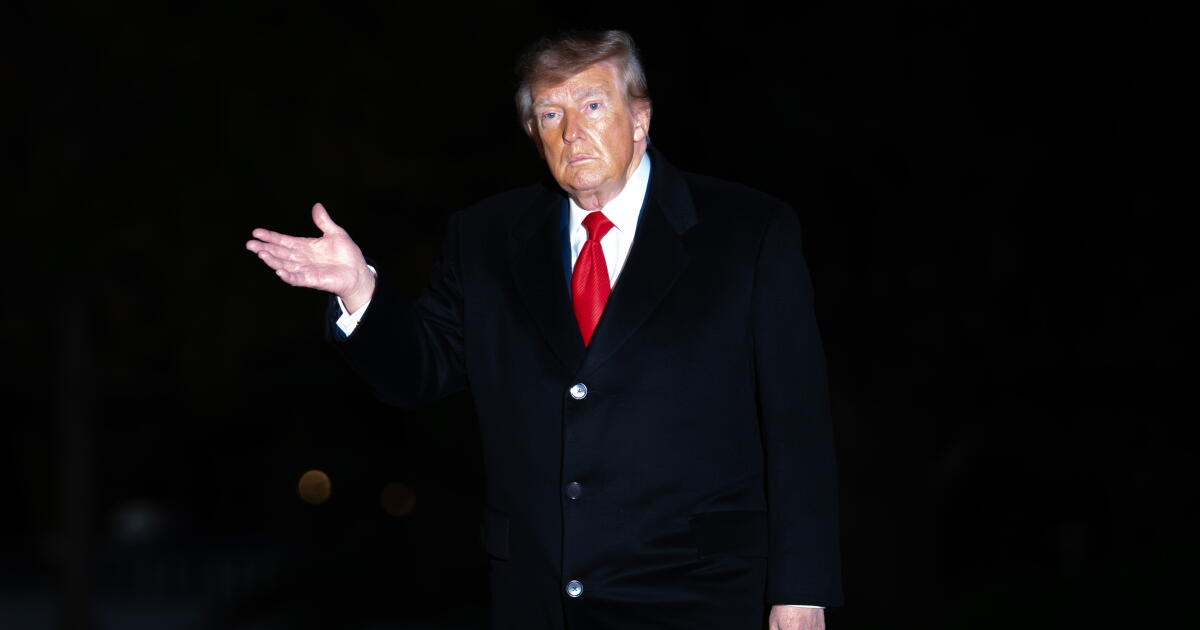
The injunction is Nexstar’s latest setback in the controversial deal championed by President Trump.

Bonta and the others are opposed to the merger, arguing it violates a 112-year-old U.S. antitrust law by knocking out a major competitor. The deal would give Irving, Texas-based Nexstar control of 265 television stations across the country, up from 164. And, in dozens of markets, including San Diego and Sacramento, Nexstar would own multiple TV network affiliates.

That duplication has raised concerns about staff consolidations and widespread newsroom layoffs.

“This is a critical win in our case,” Bonta said in a statement. “This merger is illegal, plain and simple. The federal government may have thrown in the towel, but we’ll keep fighting for consumers, for workers, for affordability and for our local news.”

Nexstar, in a statement, said that it will appeal the ruling, but that it has taken steps to comply with the court order.

“For nearly thirty years, Nexstar has provided free over-the-air access to all its broadcast stations — local news, weather, and community-focused programming alongside major network programming,” Nexstar said. “This procompetitive transaction will make local stations stronger and support continued investment in local journalism and fact-based news.”

Bonta and other state attorneys general sued to block the merger March 18. The state officials, all Democrats, alleged the union would create “a broadcast behemoth” with the “power to raise prices for television consumers” and diminish “local news and sports,” their lawsuit stated.

El Segundo-based DirecTV separately sued. It alleged the merger would dramatically tilt the pay-TV playing field, forcing DirecTV to pay dramatically higher fees for the rights to carry Nexstar-Tegna station programming, including local news and NFL football. Those costs, DirecTV said, would be passed along to its 10 million customers.

Trump had been agitating for the deal, writing in a February social media post: “GET THAT DEAL DONE!”

On March 19, the day after the lawsuits, the Trump administration approved the deal. The U.S. Justice Department terminated its antitrust review and the Federal Communications Commission’s Media Bureau authorized the transfer of Tegna’s station licenses to Nexstar.

Within an hour, Nexstar announced that it had finalized the purchase of its McLean, Va.-based rival.

Tegna was dissolved and its stockholders were paid out — raising questions about the fate of Tegna’s stations.

“Nexstar must not influence the management of the held-separate TEGNA business unit,” Nunley wrote. “Tegna personnel must maintain control over Tegna’s decisionmaking, including … negotiations [with pay-TV partners], newsroom personnel, operations and programming, product and service offerings, product development, advertisement sales, and personnel.”

Nexstar has complained about the unusual nature of blocking a transaction after-the-fact. But the plaintiffs noted that Nexstar had been aware of the state attorneys general concerns since at least March 10 — more than a week before DirecTV and the state regulators sued.

Colorado, Connecticut, Illinois, New York, North Carolina, Oregon and Virginia have joined California in the lawsuit.

The merger was not approved by the full FCC commission, prompting two U.S. senators — Ted Cruz (R-Texas) and Maria Cantwell (D-Wash.) — to question the FCC’s handling of the matter.

“This decision raises serious concerns about the Commission’s use of delegated authority in matters involving significant legal, policy, and economic consequences,” the two lawmakers wrote in a March 30 letter to the FCC. “The transaction is unprecedented in scale, resulting in the largest local broadcast television group in U.S. history.”

Nexstar has built itself into a colossus through a series of acquisitions, including its $6.2-billion takeover of Tribune Broadcasting, the longtime owner of KTLA, in 2019 — during the first Trump term.

Opponents have argued that Nexstar’s proposed purchase of Tegna gives Nexstar stations in 44 states covering 80% of the U.S. population — exceeding a 39% ownership cap set by Congress.

DirecTV has argued that the combination of the nation’s two largest television station groups could harm its pay-TV business by raising prices for consumers and potentially increasing programming blackouts.

The judge late last month combined the two lawsuits.

During a two-hour hearing earlier this month, Nexstar attorneys argued against the injunction, saying it had obtained the necessary federal approvals to take control of the Tegna stations.

“Setting aside the unusual FCC clearance process here, the Court does not find Defendants’ arguments persuasive,” Nunley wrote.

Nexstar contends the deal would strengthen TV station economics, allowing stations to bolster their news gathering and expand the number of newscasts. But DirecTV countered that in markets where Nexstar owns two stations, it relies on just one newsroom to program both channels.

“We commend the Court’s decision, which reinforces the coalition of states’ and our shared belief that unchecked station consolidation will force consumers to pay more for less by reducing the quality and variety of local news coverage,” DirecTV said in a statement.

Nexstar attorney Alexander Okuliar said the plaintiffs failed to demonstrate that the merger posed an immediate threat to the public.

Nunley, who was appointed by former President Obama, wrote in his order that the plaintiffs demonstrated they had a path to prevail at a trial due to the merits of their arguments.

Nexstar had asked the judge to require the plaintiffs to post a $150-million bond to compensate it for damages it would suffer from any delays in closing the deal.

But the judge denied that request, writing that Nexstar did not offer a “financial analysis or documentary evidence to support a bond in this amount” or any evidence that it would incur financial losses should the injunction be overturned.

Source link

Federal judge could halt Nexstar-Tegna TV station merger

A federal judge appears willing to block a $6.2-billion merger of two large TV station groups as he evaluates whether Nexstar Media Group’s takeover of a rival violates U.S. antitrust laws.

At the conclusion of a two-hour hearing in Sacramento on Tuesday, U.S. District Court Chief Judge Troy L. Nunley signaled he was preparing to issue a preliminary injunction that would prevent Nexstar and Tegna from combining operations amid an ongoing legal challenge.

Nunley said he would draft a written order, which is expected by Friday.

Previously, Nunley had issued a temporary restraining order to pause the merger.

Last month, Nexstar raced to finalize its blockbuster purchase of Tegnadespite a lawsuit filed by California Atty. Gen. Rob Bonta and seven other state attorneys general. The state officials, all Democrats, claimed the massive merger would give Nexstar too much control over local TV stations, ultimately hurting consumers by diminishing the diversity and quality of their newscasts.

California Deputy Attorney General Laura Antonini argued that when news consolidates, it results in a loss of diverse viewpoints.

“That’s extremely harmful to democracy and to the citizens of this state,” she said at the hearing.

President Trump has championed the Nexstar-Tegna merger, suggesting it would diminish the clout of the major TV networks, including those he often gripes about: ABC and NBC. Nexstar, based in Irving, Texas, owns dozens of network affiliate stations.

Nexstar, which also owns KTLA-TV Channel 5 in Los Angeles, already is the nation’s largest station group. The deal was expected to reshape the local television industry by extending Nexstar’s reach to 265 television stations, up from 164.

If the acquisition is finalized , Nexstar stations would cover 80% of the U.S. population, exceeding a 39% ownership cap set by Congress.

El Segundo-based DirecTV separately sued, alleging the combination of the nation’s two largest television station groups would do irreparable harm to its pay-TV business by raising prices and potentially increasing programming blackouts.

Representatives of Nexstar, DirecTV and Bonta’s office declined to comment after Tuesday’s hearing.

During the hearing, Nexstar attorney Alexander Okuliar, argued against an injunction, saying the plaintiffs had failed to demonstrate that the merger posed an immediate threat to the public. He said DirecTV and the attorneys general had only offered proposed financial harms.

In court documents, the state attorneys general and DirecTV alleged the deal would give Nexstar multiple TV stations in dozens of markets. That raised concerns about layoffs in an industry that has sustained significant downsizing in recent years as viewers and advertisers migrate to streaming options and social media platforms like TikTok.

Nexstar could “shut down local newsrooms in dozens of markets, reducing the amount, variety, and quality of local broadcast news that Americans rely on for trusted information about their communities,” DirecTV alleged.

For example, Nexstar owns the Fox station in Sacramento, while McLean, Virginia-based Tegna owns the ABC affiliate.

Okuliar pushed back, saying there was no evidence that local newsrooms would be shuttered.

“One of the reasons for this deal is to protect local broadcasters, to protect local journalism,” he told the judge.

Nexstar contends the deal would strengthen TV station economics, allowing stations to bolster their news gathering and expand the number of newscasts. The company cited dozens of awards won by Nexstar journalists, including in Oklahoma City.

In addition to Bonta, the plaintiffs include state attorneys general in Colorado, Connecticut, Illinois, New York, North Carolina, Oregon and Virginia.

Nearly two dozen lawyers attended the hearing on behalf of the other plaintiffs. Eight lawyers represented Nexstar and Tegna.

Nexstar Chief Executive Perry Sook and Chief Operating officer Michael Biard also attended.

In its complaint, DirecTV argued that it would suffer financial harm because Nexstar would use its increased heft to demand significantly higher fees for the rights to carry its network-affiliate stations, which carry local news, primetime shows and professional sports, including NFL football. Such programming disputes can lead to blackouts which infuriate customers.

Nexstar’s lawyers disputed such allegations, telling the judge the merger would ultimately increase the value of content. The company suggested the deal could lower prices for distributors like DirecTV, which has about 10 million customers nationwide.

Nunley recently combined the DirecTV and state attorneys general lawsuits into one.

The judge, who was elevated to the federal bench by President Obama, had already expressed concerns about the merger.

In his March 27 order granting the temporary restraining order, Nunley said DirecTV had demonstrated that it could prevail at a trial due to the merits of its arguments.

He then instructed Nexstar to “immediately cease all ongoing actions relating to integration and consolidation of Nexstar and Tegna.”

Instead, the Tegna unit must continue to operate independently as “an ongoing, economically viable, and active competitor,” the judge wrote.

The Nexstar-Tegna merger took on political overtones in early February after Trump threw his weight behind it, writing in a post on Truth Social that the proposed union was among the “good deals,” because it would provide competition against “THE ENEMY, the Fake News National TV Networks.”

“GET THAT DEAL DONE!” Trump wrote.

The state attorneys general sued to block the merger on March 18, when the transaction was still pending at the U.S. Justice Department, which is tasked with conducting anti-trust reviews, and the Federal Communications Commission, which oversees TV station licenses.

The DOJ and FCC blessed the deal the following day.

Within an hour, Nexstar announced that it finalized the transaction and that Tegna had been disbanded.

“It’s very rare to do what Nexstar did here,” DirecTV’s attorney Glenn Pomerantz said.

Nexstar had asked the judge to require the plaintiffs to post a $150 million bond to compensate it for damages it would suffer from any delays in closing the deal.

Source link

Judge rules that HUD effort to change criteria for homeless funding is unlawful

A federal judge in Rhode Island ruled on Tuesday that the Trump administration’s effort to dramatically change the criteria to get tens of millions of dollars in funding to aid homeless people was unlawful.

Several nonprofits filed a lawsuit last year accusing the U.S. Department of Housing and Urban Development of changing the rules for receiving $75 million to build housing for homeless families and individuals. The plaintiffs accused the Trump administration of issuing a new Notice of Funding Opportunity, or NOFO, for the Continuum of Care program to better align with its social policies.

U.S District Judge Mary McElroy, nominated by President Trump, said the department’s “slapdash imposition of political whims” was unlawful and she ordered it to scrap the new policy.

“Once again, this Court is faced with a case in which an executive agency has made a last-minute decision to make major, disruptive changes to grants within its purview, all for the express purpose of accomplishing the current administration’s policy objectives,” McElroy said in her ruling that the NOFO violated the Administrative Procedure Act, a law governing how federal agencies develop and issue regulations.

A spokesperson for HUD did not immediately respond to a request for comment.

Advocates for plaintiffs welcomed the ruling.

“For more than three decades, the federal government has supported housing providers and communities through HUD’s programs to help people experiencing homelessness move into stable housing,” Skye Perryman, president and chief executive of Democracy Forward, co-counsel for the plaintiffs, said in a statement. “We are pleased that the court has stopped the Trump-Vance administration from holding life-saving funding hostage to a political agenda.”

Ann Oliva, chief executive of the National Alliance to End Homelessness, said the ruling was “a victory for people across this nation who have overcome homelessness and stabilized in HUD’s permanent housing programs.”

“Today’s news reinforces a fundamental truth: that the work to end homelessness is not partisan, and never should be interfered with for political means,” Oliva said in a statement.

Plaintiffs argued the Trump administration was aiming to upend polices in place for decades to satisfy its political considerations, including whether jurisdictions “support sanctuary protections, harm reduction practices, or inclusive policies for transgender people.”

The Alliance and the Women’s Development Corporation argued that HUD lacked the authority to make the changes, adding that the new award process was “shockingly unlawful” and would “irreparably injure qualified applicants for these funds and the communities they serve.”

In its court filings, HUD argued the new criteria was an effort “to ensure the availability of funding to protect our Nation’s most vulnerable individuals and families from the trauma of homelessness while simultaneously promoting self-sufficiency.”

“Defendants acted reasonably and prudently because the NOFO conditions, focusing on public safety, cooperation with law enforcement and prohibitions on illegal drug use, are sufficiently related to the funding goals of self-sufficiency and reduction of trauma,” HUD wrote.

Casey writes for the Associated Press.

Source link

‘Sled head’: Lawsuits against USA Bobsled/Skeleton allege brain injury

Comic and television host Stephen Colbert knows the feeling William Person recounts in his new lawsuit alleging that USA Bobsled/Skeleton was negligent by concealing knowledge that the repeated sub-concussive blows sledders endure could cause permanent brain damage.

Shortly after taking a bobsled run with Team USA in Lake Placid, N.Y., in 2009, Colbert described the experience.

“It felt like I was being hit in the head with ice hammers,” he said . “It was like losing the worst snowball fight of your life.”

Person can relate, according to his attorneys, who wrote in the suit filed Tuesday in Los Angeles County Superior Court that the symptoms of brain injury have a name among bobsled and skeleton athletes : “Sled Head.”

“This action seeks justice for a decorated American athlete who, in his pursuit of Olympic glory, was knowingly sacrificed to a silent epidemic of brain injury,” the court filing said.

Person says he experienced chronic headaches, migraines, fogginess, vertigo and blackouts during his career.

“[He] currently suffers from traumatic brain injury and latent neurodegenerative disease,” the filing said. “Memory loss, cognitive decline, emotional instability, and chronic pain. These injuries have required, and will continue to require, extensive medical care.”

The action is the second brought on behalf of Person, who competed internationally for the United States from 1999 to 2007. He filed a lawsuit in December 2021 that asked USA Bobsled/Skeleton to implement a medical monitoring system to identify and treat sledders with sled head symptoms.

That lawsuit, which languished in court for five years, included a class-action component and accumulated several hundred plaintiffs. Person’s new lawyers, Kamau Edwards and Christopher Perry, are taking a different approach. They plan to file separate lawsuits and seek monetary damages for each plaintiff based on their circumstances and diagnosis.

Edwards and Perry also added new defendants. In addition to USA Bobsled/Skeleton, the United States Olympic and Paralympic Committee, Anschutz Southern California Sports Complex and former bobsledding supervisor Tracy Lamb are named.

Anschutz owns the Home Depot Center, where the U.S. bobsled and skeleton teams train. The lawsuit says the venue is responsible for premises liability and Lamb for negligent hiring and supervision.

The defendants have yet to be served with the lawsuit and declined to comment. Once served, they will have 30 days to respond through the court.

Edwards and Perry also filed personal injury lawsuits last week on behalf of two other former USA sledders — Joe Sisson and Rick Baird. Through their court filings, both recount head injuries sustained while sledding and lingering symptoms.

The New York Times published stories several years ago about former bobsled and skeleton athletes who struggled with symptoms similar to what Person, Sisson and Baird describe. A handful were posthumously diagnosed with chronic traumatic encephalopathy, the progressive, degenerative brain disease found in people with a history of repetitive head impacts.

Dr. Ann McKee, director of Boston University’s CTE Center, studied the brain of former Olympic bobsledder Pavle Jovanovic, who killed himself in 2020 at 43, and determined he had CTE.

Jovanovic wasn’t the first elite bobsledder to commit suicide. Steven Holcomb, who piloted the American bobsled known as the “Night Train” to the Olympic gold medal in 2010, was found dead in Lake Placid, N.Y., in 2017 from an apparent overdose of alcohol and sleeping pills.

Also, Sisson’s sledding mentor Travis Bell killed himself in 2012 at 27 after experiencing years of debilitating symptoms that Sisson believes stemmed from his career as a driver on the U.S. bobsled team.

“I’ve got survivor’s guilt big time,” Sisson told the New York Times in 2022.

Person’s lawsuit alleges that Lamb and USABS coaches witnessed his symptoms during training sessions but failed to intervene.

“They did not pull [Person] from the sled. They did not refer him for a neurological evaluation. They did not institute a concussion protocol,” the lawyers wrote. “Instead, fostering a culture of silence, they encouraged [him] to continue training through the injury, exacerbating the damage to his brain.”

The lawsuit asserts that the link between sledding and brain injury has been known since the 1980s and that officials intentionally concealed the information because “a full disclosure of the risks of CTE and permanent brain damage would deter top-tier athletes like [Person} from competing,” the suit said. “By suppressing this information, they robbed [him] of his ability to make an informed choice about his own life and health.”

Person was a track and field athlete at Weber State in Utah when he was recruited by USA Bobsled/Skeleton. He represented the United States in the America’s Cup, World Cup, Olympic Trials and World Championships from 1999 through 2007.

The dangers of sliding sports took center stage at the 2010 Vancouver Winter Olympics when 11 crashes occurred in two days of bobsled training ahead of the Games. Gold medal bobsled favorite Beat Hefti of Switzerland suffered a concussion and luger Nodar Kumaritashvili died after being ejected from the track at nearly 90 mph during the final training run.

Source link