pioneer league

Can a new minor league team compete with Angels, attract fans?

The checklist to launch an independent minor league baseball team is long and daunting. Can you find a place to play? How do you find enough players, and make enough money to pay them? How can you persuade a community to support a home team?

Here’s a new one: If minor league baseball is all about affordability, how do you compete against a nearby major league team that might undercut you on pricing?

This astounding dilemma is brought to you by the Angels, and their combination of a consistent focus on affordability and a consistently bad team.

Zach Neto is the best player the Angels have drafted and developed since Mike Trout — that is, in the past 17 years — and the team is considering whether to trade Neto ahead of next week’s trade deadline. That might make the team better in the long run, but almost certainly not next year.

And, next year, the Angels will have competition for the Orange County baseball dollar, a few exits down Interstate 5. On Tuesday, the Irvine City Council approved a five-year agreement under which a yet-to-be-named minor league team would play at the sparkling ballpark within the city’s Great Park, starting next May.

“We might not, on certain days, be the cheapest ticket in town,” said Paul Freedman, co-founder of Innovation Baseball Partners, the company for which the Irvine team is the fourth in its portfolio of minor league teams, all based in California and all competing in the Pioneer League, where players are limited to no more than two years of professional experience.

No ticket prices have been announced for the Irvine team. Jamie Rosenberg, another IBP co-founder, told the Irvine City Council that the IBP team in Long Beach charges roughly $10 to $15 for general admission, with a $2 special every Tuesday.

“The idea is to make this an accessible, affordable entertainment option for the community,” Rosenberg said.

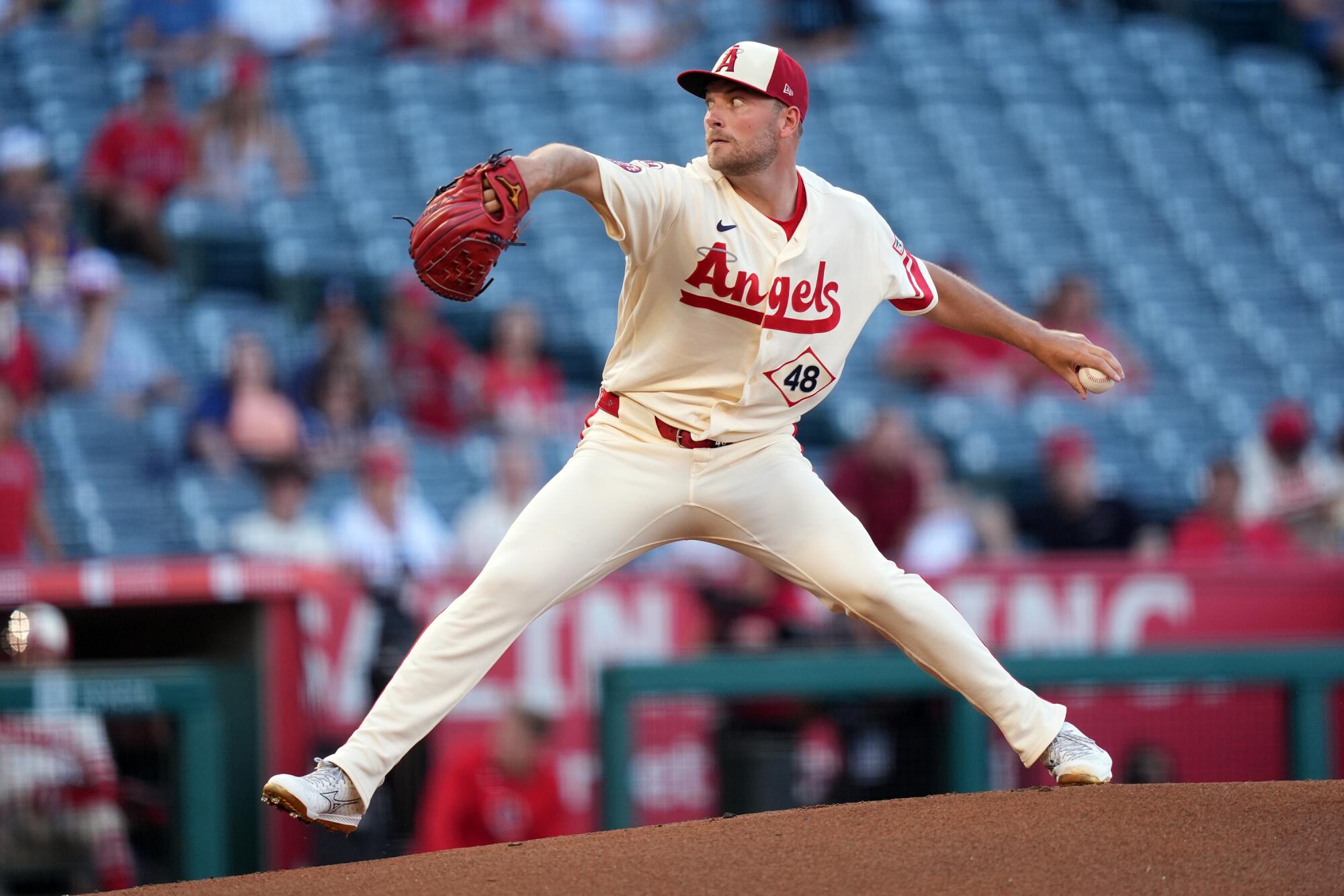
Angels pitcher Reid Detmers throws from the mound against the Houston Astros in front of a sparse crowd.

Angels pitcher Reid Detmers throws from the mound against the Houston Astros in front of a sparse crowd Tuesday at Angel Stadium.

(Scott Strazzante / Associated Press)

On Tuesday, three hours after Rosenberg spoke, the Angels played the Houston Astros at Angel Stadium. On StubHub, you could buy a ticket for $2.

“I think Angel fans would hope the team gets better and maybe those prices would go up,” Freedman said, “but what we’re confident in is that we’re going to have a value experience.”

On Tuesday and every other day at Angel Stadium, the Angels proudly display a sign advertising a collection of what the team calls its “family value merchandise.” A T-shirt or a cap can be yours for $9.99, and a souvenir baseball with the team logo sells for $7.99.

“We really focus on a family of four,” Freedman said. “Can a family of four afford a night out?”

The Angels offer a family package — four tickets, four hot dogs, and four drinks — for $44.

You may remember what Angels owner Arte Moreno said in spring training: “The number one thing fans want is affordability.”

That infuriated Angels fans, of course, since their team has baseball’s longest playoff drought — 12 years, counting this one. Freedman says the fans of his teams want affordability too, but he cautioned against stretching the comparison too far.

For one, Trout plays in Anaheim. You can see a future Hall of Famer there all summer, and stars from around the league, and you can see the Yankees and Red Sox and Dodgers every year.

“We’re not ever going to replace the majesty of going to see the Dodgers with Shohei [Ohtani] playing,” Freedman said, “but we can create an environment that’s more fun.”

For two, whatever $2 tickets you might find in Anaheim put you in the vicinity of the top of a foul pole. All the tickets in Irvine put you right behind home plate, because there are barely 1,000 seats.

And, for fun, Freedman and his partners are planning to become the first American team to integrate elements of the Asian fan experience into the game presentation.

“We want to be doing things you haven’t seen in an American baseball game before,” he said, “and we want to put a fair price on that, one that is reasonable and allows us to operate our business.”

The traditional minor league team operates far from the shadow of a major league team. The Pioneer League, for instance, has teams in the California towns of Modesto and Marysville, and in Idaho Falls and Missoula, Mont.

The Irvine launch will be different and challenging — and, yes, fun. But success depends on paying customers, and nothing attracts customers like a trial offer.

And it just so happens that major league owners could still be locking out players by the time the Irvine team opens play next May.

“It would be terrible for the game,” Freedman said.

“As a baseball fan, it would break my heart. But it could be good for business.”
Source link

Asian baseball fan culture is coming to Irvine’s new minor league team

Would he get his own song?

Lars Nootbaar grew up in Southern California, playing for USC and attending games at Dodger Stadium. His mother is from Japan, so he played with Shohei Ohtani on Team Japan in the 2023 World Baseball Classic.

In Japan, fans come up with a song for each player and sing it happily and relentlessly. Nootbaar played in the major leagues, not in the Japanese league, so he was not sure he would get a song until he came up to bat.

“I don’t know how everybody in the stadium knew how to do it,” the St. Louis Cardinals outfielder said Wednesday at Angel Stadium. “Everybody was chanting it. It was pretty awesome.”

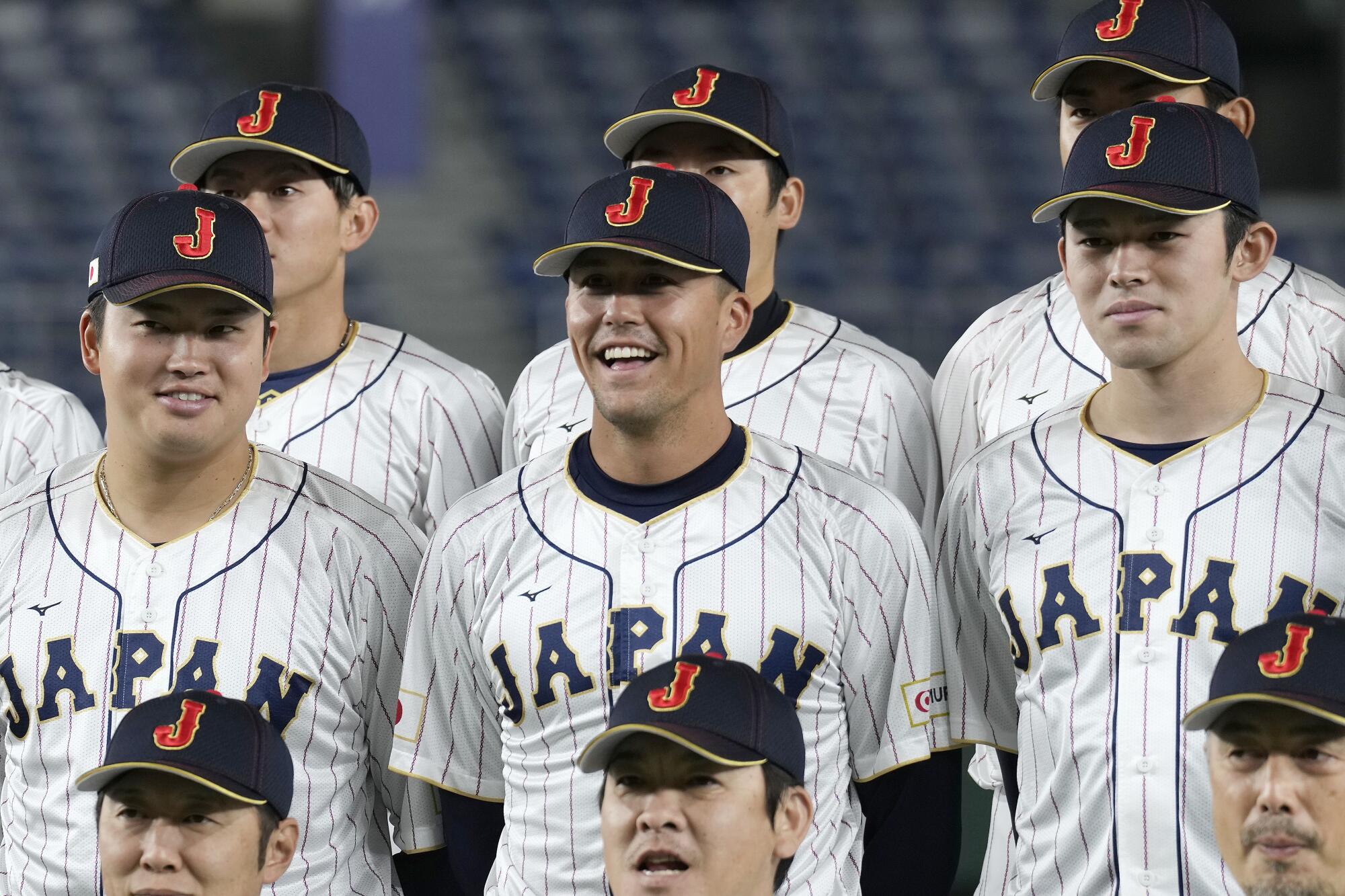
Japan's Lars Nootbaar, center, smiles as he attends a group photo session prior to a World Baseball Classic practice in Tokyo

Japan’s Lars Nootbaar, center, played for Team Japan in the 2023 World Baseball Classic.

(Eugene Hoshiko / Associated Press)

In Japan, baseball games are nine innings of songs and chants, drums and noise sticks. No excessively caffeinated in-game hosts. No scolding video commands to make some noise. The joyful sounds are organic, and they come from the fans.

Nootbaar attended Yoshinobu Yamamoto’s last game in Japan and absolutely raved about the energy in the stadium. Does he believe that kind of fan experience would translate to an American ballpark?

“I don’t see why not,” Nootbaar said. “It would probably have to start small, but it would be cool to integrate that.”

We’re starting small, and soon. A minor league team plans to launch in Irvine next year, and the entrepreneur behind it is pitching it as a way to provide fans with a taste of Asian baseball.

“We’re going to really lean into some of the innovation in fan experience that you’ve seen in Korea and Japan,” said Paul Freedman, co-founder of Innovation Baseball Partners.

“We’ll be the first, to our knowledge, to bring that as the fan experience of an American baseball team.”

The team would play in the Pioneer League, the independent league in which Freedman and his partners previously launched teams in Oakland and Long Beach. In Oakland, the ballpark is a pop-up. In Long Beach, the team plays at 70-year-old Blair Field.

Irvine hits the sweet spot: a glistening new community ballpark in as targeted a demographic as an Asian-themed team could want. In Irvine, which has about 320,000 residents, 44% of the population is Asian.

The defending champions of Korea’s league last year held spring training in Irvine. More Koreans live there than in any city in the United States besides New York or Los Angeles.

Asian food will be available at the games, as will hot dogs.

On Tuesday, the Irvine City Council is scheduled to consider a five-year contract with Innovation Baseball Partners, under which the team could sell naming rights to the Great Park stadium and would split the revenue with the city 50-50. The agreement also provides a framework for potential expansion of the stadium from 1,300 to 3,000 seats.

Don Wakamatsu, who runs baseball operations for Freedman’s teams, was the first Asian-American manager in major league history and managed Hall of Famer Ichiro Suzuki with the Seattle Mariners.

Ichiro won’t be playing in Irvine — the Pioneer League limits players to no more than two years of professional experience — but Wakamatsu plans to tap into his network to ensure the team has an Asian manager or coach and a nucleus of Asian players.

Wakamatsu described Freedman’s model of minor league teams as “somewhere between conventional baseball and the Savannah Bananas” and believes the Asian style could take hold in Irvine.

“If we can truly capture some of that excitement and fan interaction,” Wakamatsu said, “I think we’ll get a deeper connection with the players.”

To help launch the Irvine team, Freedman tapped two Korean-Americans: Martin Kim, a onetime interpreter to former Dodgers pitcher Hyun-jin Ryu and international business development executive with the Dodgers and Major League Baseball; and Yugina Yun, an Orange County-raised sports executive that said she “begged” to join the team as its operations director.

“The element that we’d really like to bring forth is the idea that fans in the stands can impact a team,” Yun said. “We want them to feel like they’re a part of the culture from the ground up.

“We’re not manufacturing the experience. They are.”

If you watched the World Baseball Classic, or for that matter the World Cup, you don’t have to be sold on this. On the night before the World Cup final, Argentinian fans took over Times Square, singing and chanting and waving banners.

A sign outside this year’s WBC finals in Miami listed 16 “permissible instruments” (bongos, cowbells and tambourines welcome) and eight “prohibited instruments” (no airhorns, please). In Tijuana, where Dodgers icon Justin Turner is playing this season, airhorns buzz constantly, and games feature skits between innings.

“I think there is a lot of attention to how different cultures have taken America’s pastime and created experiences around it that are different than we have here,” Freedman said. “We’re excited to bring some of that back home.”

Source link