Arab News | Wadi Al-Usaylah reveals traces of early Islamic pilgrimage routes

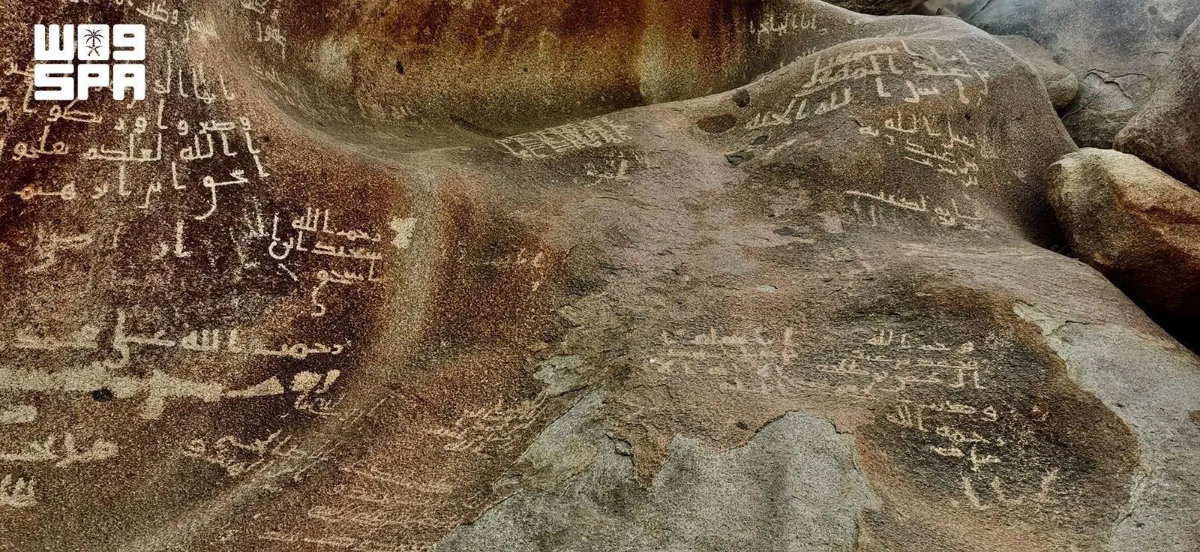
MAKKAH: More than 60 early Islamic inscriptions and two historic wells in Wadi Al-Usaylah, northeast of Makkah, are providing archaeologists with a record of early Arabic writing and the pilgrimage routes used by caravans traveling to the holy city.
The six-kilometer-long, two-kilometer-wide valley was historically an important passage for travelers and pilgrim caravans arriving from Iraq and surrounding regions, according to a report by the Saudi Press Agency, or SPA.
The inscriptions, carved into mountain rock faces, date to the seventh and eighth centuries — corresponding to the first and second centuries of the Islamic calendar. They include references to figures from the early Islamic period and offer scholars tangible evidence of changes in the form, structure and aesthetic development of early Arabic script.
Water was also essential to sustaining travelers crossing the arid landscape. Successive Islamic rulers established water infrastructure along the route, with two of the valley’s four original historic wells still surviving near the inscribed rock faces. Some of the wells are believed to date to the Abbasid Caliphate.
The Royal Commission for Makkah City and Holy Sites is carrying out a comprehensive preservation program along the corridor to protect the inscriptions and wells from erosion. The effort forms part of wider initiatives under Saudi Vision 2030 to preserve the Kingdom’s archaeological heritage while developing sustainable cultural destinations, SPA reported.
The Wadi Al-Usaylah findings add to a growing body of archaeological evidence documenting the development of writing and human settlement across Saudi Arabia.
In a July 2026 report, SPA said the King Salman bin Abdulaziz Royal Reserve contains thousands of archaeological inscriptions and rock carvings, including Thamudic and Nabataean writings as well as depictions of animals, hunting scenes and aspects of daily life. More than 400 archaeological and historical sites have been documented across the reserve, with some remains dating as far back as 8,000 BC.
Najran provides another extensive record of the evolution of writing in the Arabian Peninsula. In a September 2024 report, SPA described the UNESCO-listed Hima Cultural Area as a vast outdoor museum containing rock carvings and inscriptions in Ancient South Arabian, Thamudic and Islamic scripts.
Archaeological surveys in Najran have documented inscriptions from different periods, including tribal markings and writings in Thamudic, Sabaean, Himyarite and early Islamic scripts. The accompanying rock art depicts people, camels, horses, ibexes, hunting scenes and battles, offering clues to ancient communities and their material culture, SPA reported.
The continuity and development of Arabic writing are also illustrated by a bilingual inscription discovered and documented in 2024 in Alqan village in the Tabuk Region. According to an SPA report, the inscription dates to the fifth century AD and contains two lines in Thamudic script and one in early Arabic.
The Heritage Commission said the Tabuk discovery provided evidence that Thamudic writing continued to be used alongside early Arabic during the fifth century. It also offered new insights into the coexistence of the two writing traditions and the development of Arabic letter forms.
Together, such discoveries underscore the archaeological value of Saudi Arabia’s mountains, valleys and desert landscapes as repositories of written history. They also highlight the importance of systematic documentation and preservation to protect inscriptions and other remains from erosion and other threats while making them accessible for scientific research and cultural tourism.
For Wadi Al-Usaylah, the combination of early Islamic inscriptions and surviving water infrastructure provides a particularly important glimpse into the networks that connected travelers and pilgrims with Makkah during the formative centuries of Islam.