



A whole host of new faces are joining the crew for the adventure
The second season of Netflix’s critically acclaimed live-action adaptation of a beloved manga series is finally here.
Brand new episodes of One Piece are now available to stream as of today (March 10). Fresh instalments adapt several story arcs from the original source material which was previously turned into a popular anime.
The first season of the live-action version debuted exclusively on the streaming service back in August 2023. It means fans have been eagerly awaiting the continuation of the Straw Hat crew’s adventures.
Based on the Japanese manga series by Eiichiro Oda, One Piece follows Monkey D. Luffy on his journey to find the legendary treasure, the One Piece, in his quest to become King of the Pirates. The second season is subtitled Into The Grand Line.
Who is in the cast One Piece Season 2 on Netflix?
All members of the Straw Hats crew return for the live-action series’ second outing. They are lead by Iñaki Godoy as Monkey D. Luffy, a young pirate bestowed with the power of stretching from eating a Devil Fruit as a child.
His ultimate goal is to find the One Piece and become the next King of the Pirates. Mexican actor Godoy has previously appeared in The Imperfects on Netflix.
Emily Rudd also returns as Nami, a cat burglar and expert cartographer. Rudd has previously starred in Fear Street Parts Two and Three as well as thriller series Hunters.
Mackenyu stars as swordsman Roronoa Zoro, an ex-bounty hunter who becomes Luffy’s first mate shortly after their first encounter. He trains regularly to become the world’s greatest swordsman. Mackenyu previously appeared in Pacific Rim Uprising and recently voiced Gennojo in the game Assassin’s Creed Shadows.
Jacob Romero Gibson plays Usopp, master storyteller and estranged son of an infamous pirate. He aspires to be a brave warrior of sea. He has also appeared in episodes of Grey’s Anatomy and The Resident.
Get Netflix free with Sky

Sky is giving away a free Netflix subscription with its new Sky Stream TV bundles, including the £15 Essential TV plan.
This lets members watch live and on-demand TV content without a satellite dish or aerial and includes hit shows like Stranger Things and The Last of Us.
Taz Skylar also returns as Sanji, the master chef and martial artist who only fights with his legs to protect his hands for cooking. He is searching for the All Blue, a mythical connection point of the Four Seas. Spanish-British actor Skylar, is also known for Boiling Point and The Lazarus Project.
The newest member of the Straw Hats for Season 2 is Tony Tony Chopper. They are a reindeer capable of walking and talking like humans after consuming a Devil Fruit, who also happens to study as a medical practitioner. Providing Chopper’s voice is Mikaela Hoover, known for turns as Cat Grant in 2025’s Superman while she’ll also appear in the new season of Beef on Netflix.
Aside from the main crew, they have a number of familiar adversaries on their tail. It includes Koby, the former cabin boy of the Alvida Pirates Luffey rescued back in the first episode. He has since become a Marine in his tracking his former pal down. He is once again played by Morgan Davies whose recent credits include Evil Dead Rise.
Marine Vice Admiral Garp is also on the Straw Hats’ tail. He was also revealed during season one to be Luffey’s estranged Grandfather. He’s played by Welsh actor Vincent Regan, whose credits include Shetland, House of the Dragon, The Bay and Poldark to name a few.
Also confirmed to return is Jeff Ward as Buggy the Clown, the circus-themed captain of the Buggy Pirates. Buggy has the power to split his body into pieces and control each part remotely. Like Luffey, his unique ability comes from eating a Devil Fruit. Ward has previously appeared in Hacks and Agents of Shield.
Who are in the Baroque Works?
There are not the only ones our heroes need to worry about though. A brand new faction is introduced and causing trouble on the Grand Line. Namely, a mysterious group of assassins who call themselves Baroque Works.
Their leader is the mysterious Mr. O, played by Joe Manganiello. The actor is easily recognisable for his turns in True Blood and his uncredited appearance as Deathstroke in Zac Snyder’s Justice League.
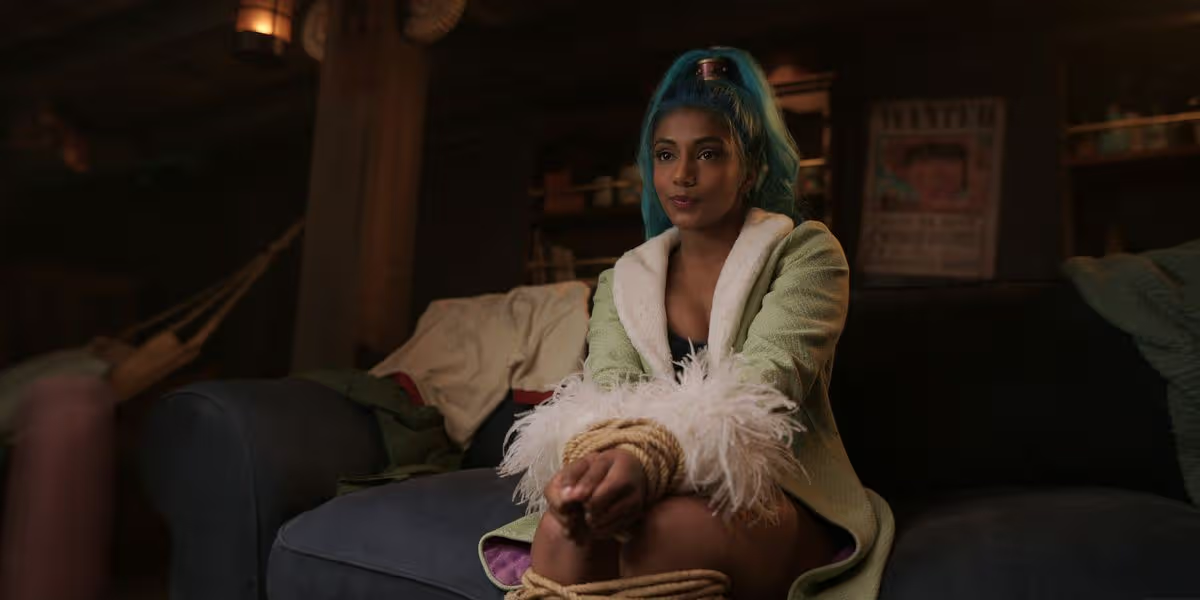
Bridgerton star Charithra Chandran is also part of the group as Miss Wednesday while she also has her own agenda. Her partner is Mr 9, played by Raised by Wolves actor Daniel Lasker.
David Dastmalchian stars as Mr. 3 described as “creepy artist serial killer of Baroque Works.” Dastmalchian previous roles include Oppenheimer, Ant-Man, The Suicide Squad and Late Night With The Devil.
The OA actor Camrus Johnson is Mr 5, while Lioness star Jazzara Jaslyn plays Miss Valentine. They are joined by Exterritorial’s Lera Abova as Miss All Sunday alongside The School for Good and Evil’s Sophia Anne Carusoas as Miss Goldenweek.
One Piece is streaming on Netflix.
For the latest showbiz, TV, movie and streaming news, go to the new ** Everything Gossip ** website.