THERE are some destinations around the world that are so beautiful, they don’t look real.
The pretty fishing village of Cudillero in Spain is one of those, having even been called ‘staged’ it’s so perfect.
Sign up for the Travel newsletter
Thank you!
Cudillero has been called so beautiful that it looks ‘staged’Credit: AlamyThe fishing village has bright-coloured stacked housesCredit: Alamy
The village is in the north of the country looking out directly over the Bay of Biscay and sits in a horseshoe shape at the bottom of the Cantabrian Mountains.
It’s known for its brightly-coloured stacked houses at the front of the harbour that have led visitors to describe it as ‘charming’ and even ‘staged’.
One even called it “the most beautiful village in Spain” and like “stepping back in time”.
The village dates back to the 13th century and is well known for its fishing, which it continues with today.
You’ll even see the traditional methods being used like hanging fish out to dry in the streets.
But thanks to this, there are plenty of seafood restaurants to explore like Casa Julio and Sidrería El Remo which have been recommended by visitors.
Not only is fish popular here, but it’s also known to serve the region’s speciality cider which is a little different to what you’ll find in the UK as it isn’t bubbly.
Lots of restaurants will serve local cider and pour it traditionally as well.
They use a technique called ‘escansiado’ which translates to ‘throwing’.
The drink is poured from a height, often above the waiter’s head into a glass held near their waist.
Cudillero has a ‘charming’ horseshoe-shaped harbourCredit: Alamy
Thanks to its surrounding hills and mountains, a popular activity to do in Cudillerois hike to one of its viewing points.
One of the most popular is Mirador de la Garita where hikers can see over across the village to the lighthouse.
Many say it’s a ‘must-do’ whilst in Cudillero, not to mention it’s the perfect spot for photos.
Being a harbour town, Cudillerodoesn’t have beaches of its own, but there are some nearby.
Playa de Aguilar is a 10-minute drive away and is a long-stretch of golden sand, but don’t expect the sea to be too warm as its in the north of the country.
It’s described as a family beach as it’s got fine sand as well as lifeguards during peak summer periods.
Playa de Aguilar is a nearby family-friendly beachCredit: Alamy
If you’re visiting on June 29 then you will get caught up in Cudillero’s annual festival where there are fanfares, street parades and bands.
It celebrates the village’s maritime history and it’s completely free to go down and see the live events.
A visit doesn’t have to cost a lot either, Sun Travel found a one-night stay in July at Pensión El Pozo from £30pp.
The room has a private bathroom with mountain views and there’s even a picnic area.
To get to Cudillerofrom the UK, the quickest way would be to fly directly to Santander.
Flights depart from London Stansted, Manchester, Birmingham and Edinburgh – which you can do for as little as £16 each way.
Then drive just over two hours along the coast to Cudillero.
The residents of this village fled in 1943 and never came back, leaving abandoned buildings that have been suspended in time, and access to this spooky area is still restricted during certain times
15:45, 03 Jun 2026Updated 15:50, 03 Jun 2026
The village is full of incredible relics from the past(Image: Getty Images/iStockphoto)
Imagine waking up one day to a letter telling you that your home is being turned into a military zone and that you need to leave within a month. It’s a fate that befell the 225 residents of Tyneham one winter morning.
In November 1943, Britain was still in the depths of World War 2, and needed a strategic location for military testing. The idyllic Dorset village was close to a military firing range, and its peaceful rural location was deemed perfect for D-Day preparation.
Letters were sent to the 102 occupied properties giving them just a month to move out, with the deadline set just before Christmas, with assurances were made that the evacuation was just a temporary measure.
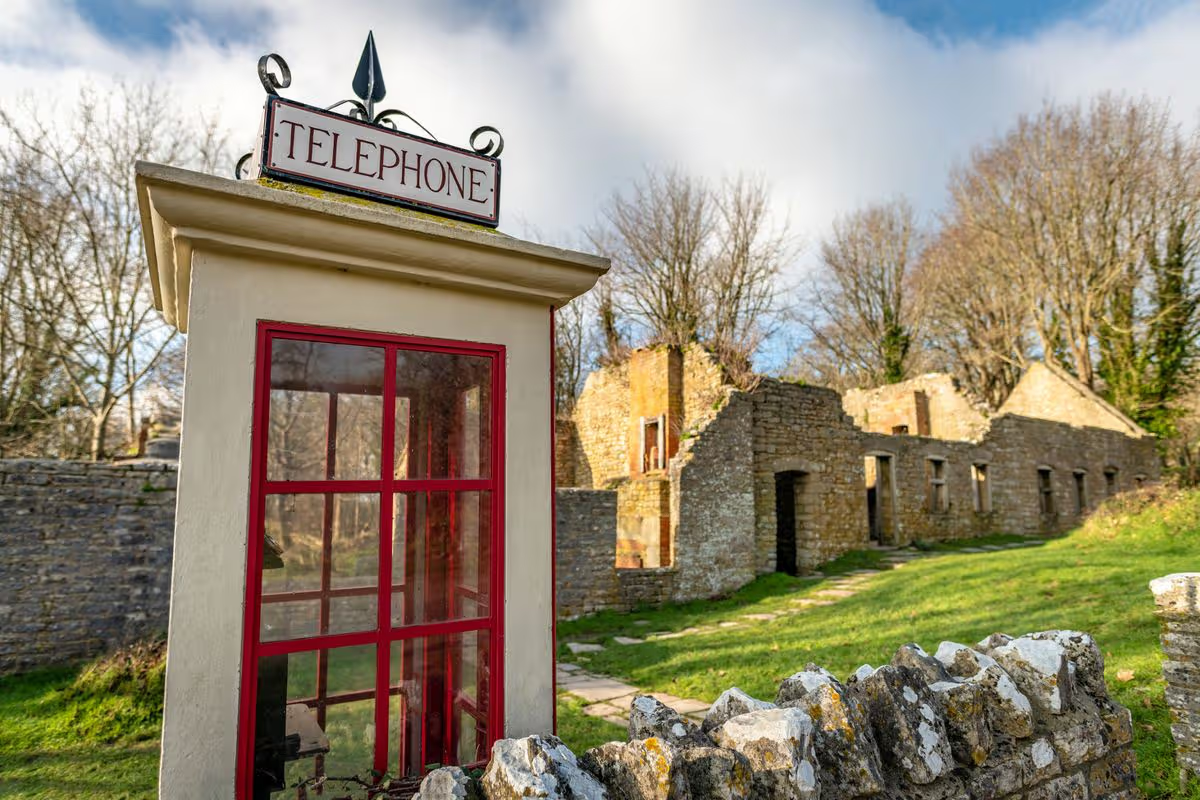
But, decades later, the village is still uninhabited, and increasingly being lost to nature, as its stone cottages and buildings crumble. You can still visit Tyneham to see this old homes up close, but there are restrictions that still need to be followed to this day.
The village is still owned by the Ministry of Defence and is close to an active military firing range, making it inaccessible at certain times. Walkers will need to check the Gov.UK website to see closure dates, and keep in mind that the village is only available to explore from 9am until dusk.
While many of its buildings have fallen into ruin, the church and school were preserved and have become museums dedicated to telling the unique story of Tyneham. You can see photos of the residents and find out about the families who lived in this village through the years.
Tyneham Farm, which was abandoned for many years, is also in the process of being restored, and you can see the remains of the humble cottages where labourers and shepherds once lived in this peaceful, rural spot. However, the reminders of the end of the idyll are all around; some buildings have bullet holes and shell damage scarring their solid stone walls.
About a 20-minute walk away is Worbarrow Bay, an unspoilt shingle beach on the sweeping Jurassic Coast. It has clear, deep blue waters, making it popular with wild swimmers and snorkellers. At low tide, rock pools full of sea creatures can be explored.
At times such as weekends and school holidays, you can often explore Lulworth Ranges which lie within an Area of Outstanding Natural Beauty overlooking the coast. Carry on along the iconic South West Coastal Path and you’ll reach Flower’s Barrow Hillfort, which was built during the iron age. You can still see hut circles where these settlements used to lie.
Nearby, Pondfield Cove is a hidden gem with sand and shingle shores covered in lush green marine vegetation. The sea here is calm and clear, although the sudden depths mean only experienced wild swimming enthusiasts take to the water. However, it’s the perfect place to visit for peaceful fossil hunting away from the crowds.
Have a story you want to share? Email us at webtravel@reachplc.com
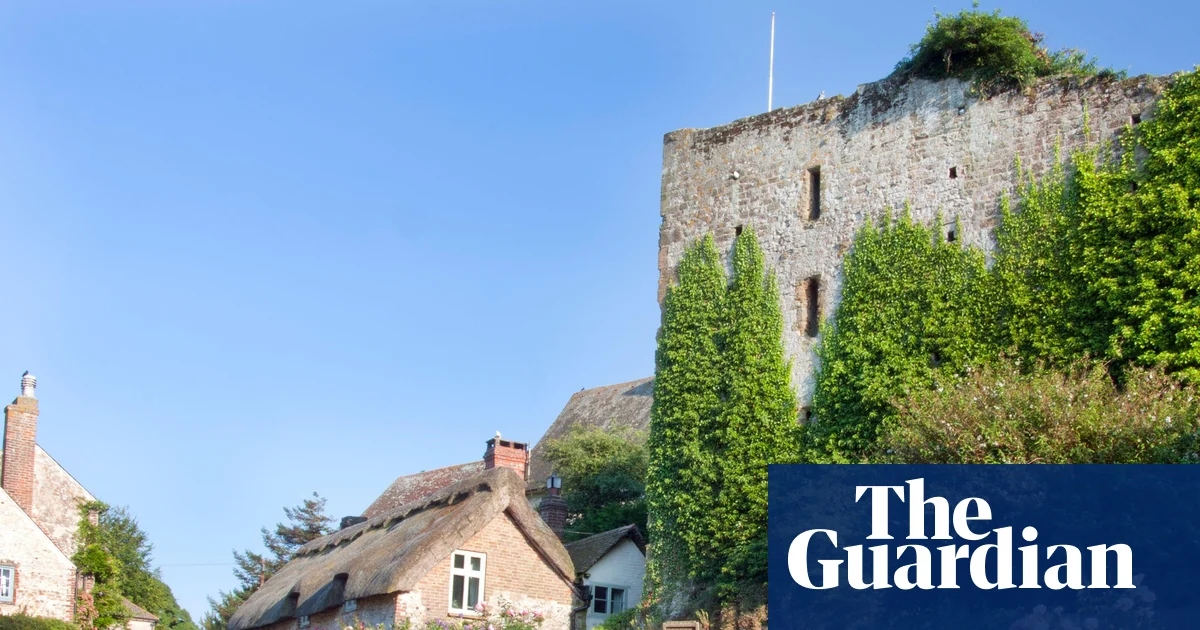
Wisteria and clematis hang from weathered cottage walls. Tulips and pink apple blossom spill out of several gardens. Thatched animals decorate the rooftops. There’s a Norman church, a medieval castle and an 80-hectare (200-acre) nature reserve. Amberley is the kind of place people assume you can only reach by car, but the village has its own railway station with regular direct trains, along the scenic Arun Valley line, from Bognor, Horsham and London Victoria.
This spring, the Black Horse pub reopened in Amberley. The new owners are the gourmet Gladwin brothers, Oliver and Richard, returning to their Sussex roots near Nutbourne Vineyards. Having founded five Local & Wild restaurants in London, the Black Horse is their first country pub and first place with rooms.
I’ve walked through Amberley numerous times, but never stopped to explore. It’s the midpoint of the South Downs Way, a 100-mile route from Winchester to Eastbourne, with views for much of its length in both directions: north across the Weald and south towards the sea.
Black Horse pub in Amberley. Photograph: Dave Watts
Trains leave London every half an hour and take about 1hr 20mins to get to Amberley. The scenery outside gets steadily lovelier, passing blackthorn-bordered fields and bluebell woods. Beyond Pulborough, the railway enters the South Downs national park. There are herds of deer, chalk-hill views and the winding River Arun.
My first stop is Amberley Museum (two for the price of one with a voucher if you travel by train). Sprawling across more than 14 hectares (36 acres) of former chalk pits, it has impressive disused lime kilns and demonstrations of everything from broom-making to printing.
It’s right opposite the railway station and I’m planning a 45-minute whiz round before strolling into the village. Three hours later, I’m still there, riding the narrow-gauge railway and chatting to volunteers with encyclopedic enthusiasms for various traditional crafts. Visitors can hear the rattle of old machines and smell the printers’ ink, pine shavings, brick dust and engine oil. There’s a whole building about communications through time, from horse-drawn post carts to fibre-optic cables. The Tools & Trades History Society has intricate displays involving bee-smokers, hoop drivers, moulding planes, straw splitters and spindle grinders.
Above the museum’s main site, a nature trail leads up, through banks of bluebells and primroses, to a hilltop bench. Across the chalk cliffs of the old quarry and tall sycamores with their nesting rooks are views of the fortified walls of Amberley Castle, a bishops’ residence dating mainly from the 14th century.
I pass the castle on my 20-minute amble into the village and stop off at neighbouring St Michael’s church to admire the zigzagged Norman arch, oak leaf-carved doorway and graveyard cowslips. I check into the Black Horse, then head out again to explore Amberley Wildbrooks nature reserve, an area of boggy woods and tussock-sedged wetland, which starts two minutes’ walk away from the pub.
A pair of birders with a proper scope show me their photo of the resident white-tailed eagle, then I stroll through golden evening shadows serenaded by linnets and skylarks. No sign of the eagle, but I’m happy to hear warblers in the reedbeds and a woodpecker drumming for bugs. (Next day, I learn one of the area’s best eagle-spotting sites is The Sportsman, Amberley’s community pub, with binoculars on its terrace). I walk for miles along the single boggy track, following the Wey-South Path, a 34-mile (55km) route to Guildford mostly along canal towpaths, before finally heading back.
With bedrooms offering real milk and coffee, Amberley pottery and homemade biscuits, the Black Horse is hospitable. There are wooden beams, hilly views and fresh flowers. Plenty of pubs claim to be haunted by a “grey lady”; the Black Horse reports sightings of a spectral “woman in lavender … fleeting as the mist that settles over the Downs”.
Arundel Castle and the River Arun. Photograph: Adam Burton/Alamy
The renovated pub’s wood-panelled restaurant has an emphasis on local, foraged and sustainable food. Wild garlic season is ending and local asparagus has arrived. Grilled green spears in lemon with purple onion flowers look beautiful and taste better. Salad is dressed with gingery magnolia. There’s squid from Worthing, free-range lamb from the third Gladwin brother and farmer, Gregory, and wines from the family vineyards five miles north.
Many of the diners live locally (some on their second or third visit), while the early breakfasters next morning are mostly hiking the South Downs Way. The chalky hills look tempting in the spring sunshine, but I have other plans. In Arundel, four minutes’ journey south by rail, the nearly 1,000-year-old fortress (£17, gardens only) is hosting its huge annual tulip festival when I visit, having planted more than 1.4m bulbs over the past decade and won Historic Houses’ garden of the year in 2025, among other awards.
From pretty Arundel station, a bee-friendly path leads cyclists and walkers under the railway and beside a field to a safer stretch of pavement. Local community group Greening Arundel has won awards for this path, which is lined with celandines, murals and bug hotels.
Arundel Castle’s gardens. Photograph: Jesus Maria Erdozain Gomez/Alamy
There’s a queue to get into the castle gardens, but it’s easy to see why people come here. With fountains, thatched gazebos and historic walls as a backdrop, there are sweeping beds of multicoloured blooms, banks of scarlet by the moat, lush tubs of peony-style doubles, elegant lily-flowered cultivars and striped Rembrandts among a soft haze of forget-me-nots and the last of the narcissi.
Included in garden entry is the monument-filled 14th-century Fitzalan chapel, where pairs of marble knights and ladies lie side by side. On one of my teenage South Downs’ hikes, I spent hours with a friend searching every church in town for the stone effigies featured in Philip Larkin’s 1956 poem An Arundel Tomb, only to find them later in Chichester Cathedral.
After walking around the gardens, I climb the narrow-stepped Norman keep for views that stretch to the sea. There’s plenty to look at inside the castle, too: paintings by Van Dyck and Canaletto, rooms full of crossbows and rapiers, lion pelts in the Great Hall, antlers in the corridors.
From Arundel station, I can see the hilltop church and castle, framed by woods and marshes. The scene is up there with England’s other great views from railway stations, such as Durham Cathedral or St Michael’s Mount. Rich in history and wildlife, the trip feels longer and more rewarding than a simple overnight break. Outside the train windows, herons guard the waterways and swans are nesting in the reeds.
Accommodation was provided by the Black Horse pub, doubles from £110 room-only. Train travel was provided by Southern