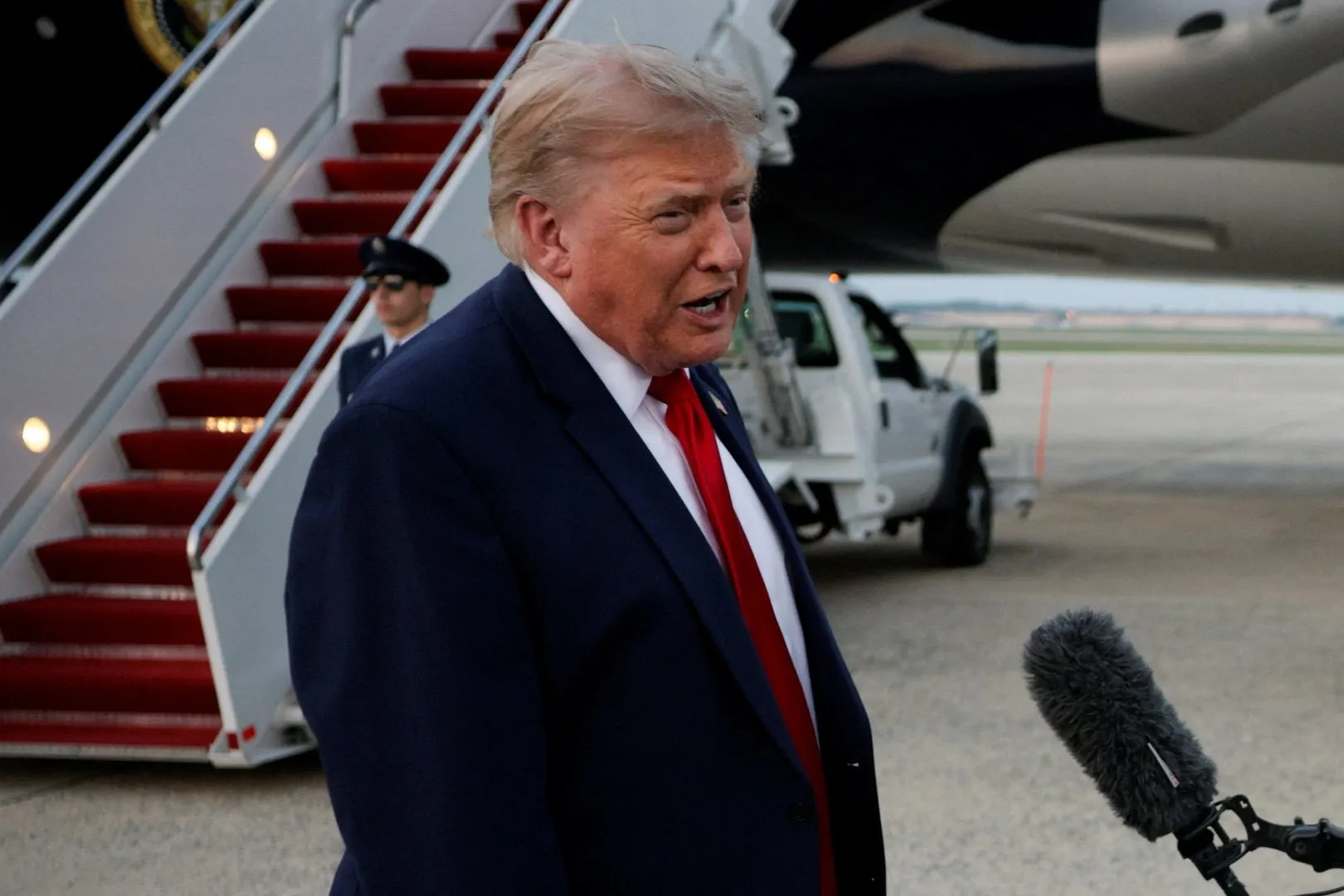
US President Donald Trump said the latest strikes on Iran, now in their ninth consecutive night, were carried out ‘in honour’ of American military personnel killed in Jordan and Iraq. The latest casualty figures bring the total number of US service members killed since the war began to 17, with more than 420 others wounded.
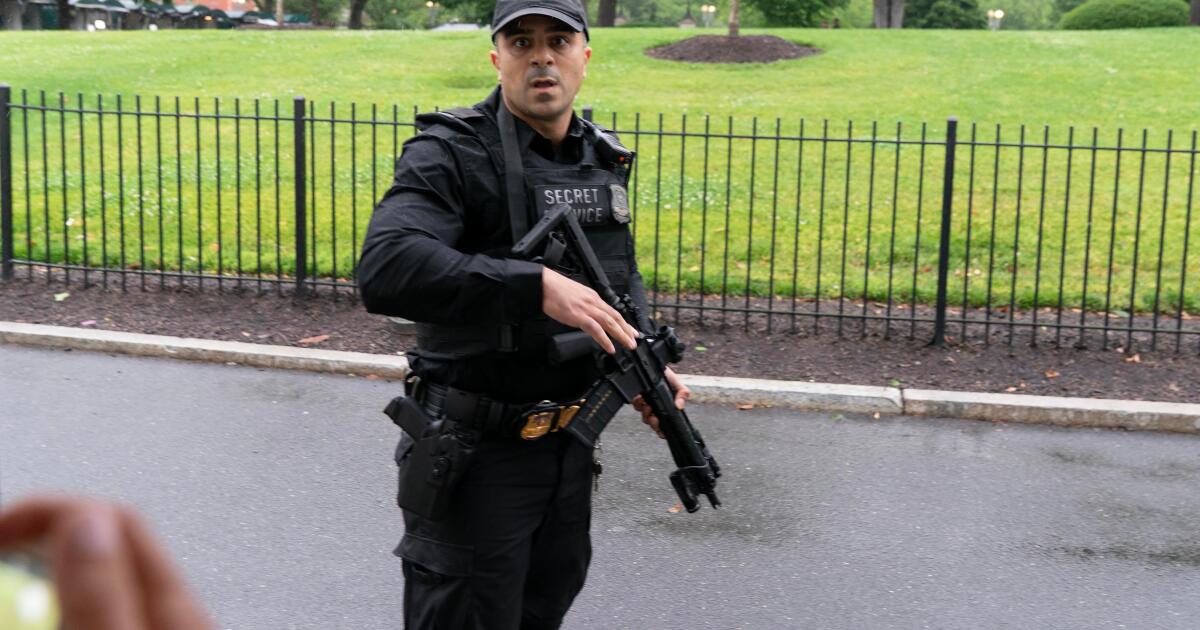
WASHINGTON — The U.S. Secret Service shot a person near the White House on Saturday, and a bystander also was shot, a law enforcement official said.
Both individuals were said to be in critical condition, according to the official, who spoke on condition of anonymity because they were not authorized to discuss the investigation.
Journalists working at the White House on Saturday reported hearing a series of gunshots and were told to seek shelter inside the press briefing room.
On X, the Secret Service said it was “aware of reports of shots fired near 17th Street and Pennsylvania Avenue NW” — one block from the White House — and was “working to corroborate the information with personnel on the ground.”
In a social media post, FBI Director Kash Patel said officers were responding to shots fired and said he would “update the public as we’re able.”
President Trump was inside the White House at the time.
Evidence of the shooting was visible on a sidewalk just outside the White House complex, where yellow crime scene tape snaked across the pavement and Secret Service officers placed dozens of orange evidence markers on the ground. Medical material, including what appeared to be purple surgical gloves and kits typically used by emergency medical personnel, were also seen.
In a post shared on X, Selina Wang, the senior White House correspondent for ABC News, shared video of the moment she said she heard what “sounded like dozens of gunshots” and ducked for cover. Writing that she had been performing an ordinary task that reporters at the White House do every day — filming themselves on a cellphone, for a social media post — Wang’s video shows her speaking for a few seconds about Trump’s statements earlier Saturday about a potential Iran deal.
As the sounds of gunfire are heard in the background, Wang’s eyes grow wider, and she ducks down in the media tent, which is among those situated in a line along the White House driveway where broadcasters film their reports. On X, Wang’s video had been shared thousands of times as of Saturday evening, and viewed at least 3 million times.
The Metropolitan Police Department said on its X account that the Secret Service was working the scene and cautioned people to avoid the area. The scene is near where a gunman ambushed two members of the West Virginia National Guard in November.
U.S. Army Spc. Sarah Beckstrom, 20, died from her wounds. Andrew Wolfe, then 24, was critically wounded. Rahmanullah Lakanwal has been charged in that incident.
The gunfire Saturday comes nearly a month after what law enforcement authorities said was an attempted assassination of the president on April 25 as he attended the annual White House Correspondents’ Assn. dinner at a Washington hotel. Cole Tomas Allen of Torrance recently pleaded not guilty to charges that he attempted to kill Trump and remains in federal custody.
Following that scare, Secret Service officers shot a suspect they said had fired at officers near the Washington Monument, also near the White House. Michael Marx, 45, of Midland, Texas, was charged in a complaint filed in U.S. District Court in connection with the May 4 shooting. A teenage bystander was wounded in that incident.
Superville and Durkin Richer write for the Associated Press. AP photojournalists Jose Luis Magana and Alex Brandon andwriters Gary Fields, Meg Kinnard and Matthew Daly contributed to this report.
Weekly insights and analysis on the latest developments in military technology, strategy, and foreign policy.
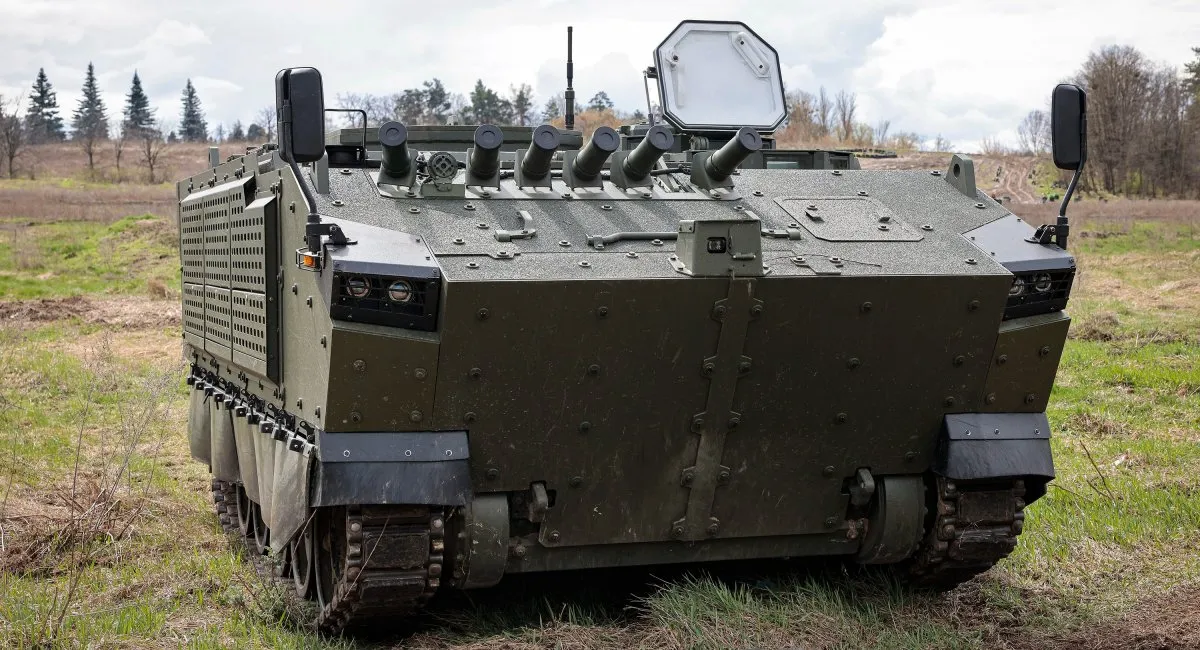
Ukraine has begun testing a new homegrown armored personnel carrier, a tracked vehicle named Skif (Scythian, an ancient warrior tribe that also lived in parts of modern Ukraine). The development underscores the fact that, despite extensive losses of legacy tracked APCs, this is a class of vehicle that the Ukrainian Armed Forces still prioritizes as it tries to hold off the Russian invasion.
According to reports, UkrArmoTech has begun factory testing a prototype of the Skif, which has apparently been developed in direct response to the requirements of the Ukrainian Armed Forces, drawing from lessons learned since the full-scale Russian invasion in February 2022.
The first prototype of the Skif. UkrArmoTech
UkrArmoTech is among the leading developers and manufacturers of armored vehicles for the Ukrainian Armed Forces, but has, to date, focused on wheeled models such as the Desna, Gyurza, and Tisa. With that in mind, the Skif marks a new direction for the company.
“First and foremost, we relied on our contacts with the military, our understanding of their needs, and our experience with the use of wheeled vehicles on the battlefield,” UkrArmoTech CEO Hennadii Khirhii told the Ukrainian Defense Express website. “Active combat operations in Ukraine have demonstrated the need for a significant number of armored vehicles to ensure and maintain the mobility of units and formations of the Armed Forces and Defense Forces.”
The design of the Skif is heavily influenced by the U.S.-developed M113, a Cold War-era tracked APC, many hundreds of which have been supplied to Ukraine since February 2022.
Ukrainian soldiers ride on M113 armored personnel carriers in a column after live-firing exercises in July 2023 in the Donetsk region, Ukraine. Photo by Viktor Fridshon/Global Images Ukraine via Getty Images VIPAVLENKOFF
Despite its age, it seems the M113 has been a success in Ukrainian hands, offering a useful combination of reliability, maintainability, troop-carrying capacity, and off-road mobility.
The designers of the Skif were therefore instructed to produce a vehicle that matched the M113’s mobility while improving on its levels of protection and firepower.
According to reports, the Skif makes use of off-the-shelf components and assemblies from foreign manufacturers involved in the production of armored vehicles that are “descendants” of the M113.
The first prototype of the Skif alongside a U.S.-made Humvee. UkrArmoTech
It’s unclear if this implies that the Skif uses components from Western manufacturers that have built the M113 and its derivatives, or if the Ukrainian vehicle employs parts from other Western-made APCs. Noteworthy is the fact that members of the broader M113 family have been built under license in Belgium, Germany, Italy, the Netherlands, and Turkey, as well as several other countries outside Europe.
Reportedly, 60 percent of the vehicle’s components will initially be imported, and these will include the engine, transmission, suspension components, transfer case, and tracks. If production is launched, an increasing proportion of the components will be made locally.
In its basic form, the Skif is intended to transport soldiers from mechanized units across the battlefield and to provide them with fire support. As well as three crew (driver, commander, and gunner), located in the front section behind the power module, the Skif can accommodate eight soldiers in the rear troop compartment. The troops enter and exit via a rear ramp, as on the M113.
The Skif prototype with the rear ramp open. UkrArmoTech
The prototype of the Skif has an aluminum hull, reportedly the first time this has been used on a Ukrainian combat vehicle. However, a series-production version will likely feature an armored steel. While steel offers better ballistic resistance and is easier to repair in the field, it comes with a significant weight penalty.
With the aluminum hull, the Skif weighs around 15 tons and is driven by a 360-horsepower diesel engine. The modular design means that different engines can be installed, for example, if more power is needed for a steel hull, or when fitted with heavier weapons.
In its basic form, the Skif has a Ukrainian-made remotely controlled combat module on the hull roof. This can be armed either with a 12.7mm or 14.5mm heavy machine gun paired with a 7.62mm auxiliary machine gun. As seen in the photos, the prototype does not currently have the combat module fitted.
A diagram of the Skif with the remotely controlled combat module on the hull roof. UkrArmoTech
Armor protection is in line with NATO STANAG 4569 Level 4 over the frontal section (withstanding, for example, 14.5mm machine gun fire, or a 155mm artillery projectile detonating at 25 meters), and Level 3 on the sides and rear (resistant to 7.62mm gunfire, or a 155mm artillery projectile detonating at 60 meters). Mine protection below the hull is rated at Levels 3a and 3b. The vehicle is expected to withstand the detonation of around 13 pounds of explosives under the hull or tracks.
It’s unclear what kinds of protection are provided against the threat of attack drones, but some type of electronic warfare gear is included; it would also be expected that the vehicle receives a purpose-designed ‘cope cage’ of the kind that has appeared on most Ukrainian and Russian combat vehicle types during the conflict. Otherwise, the Skif is equipped with communications, navigation, situational awareness, and fire-control systems of Ukrainian origin. A bank of smoke grenade launchers is fitted across the front of the hull on the Skif prototype.
Soldiers of the Połk Kalinoŭskaha (Kastuś Kalinoŭski Regiment) operate an M113 at night in November 2025. The vehicle is equipped with cage-type protection against drones. Photo by Sushchyk Kanstantsin/Global Images Ukraine via Getty Images Global Images Ukraine
The modular design means that the Skif can be adapted for other missions. These are likely to include vehicles equipped for command and control, reconnaissance, anti-armor, mortar carrier, medical evacuation, and more.
With the continued debate over wheeled versus tracked combat vehicles, it is interesting to note that Ukraine, after focusing on the local production of wheeled fighting vehicles, continues to see the necessity for tracked APCs. While heavier, more complex, and more costly, they are better able to deal with the brutal mud that is a feature of Ukrainian winters. They are also generally better in terms of armor protection.
A Ukrainian Kozak wheeled armored vehicle gets stuck in black soil mud, in Sumy, Ukraine, during the cross-border operation into the Kursk region of Russia, in January 2025. Photo by Scott Peterson/Getty Images Scott Peterson
For that reason, the aging M113 and the Soviet-era MT-LB remain popular choices for the Ukrainian Armed Forces.
Two Ukrainian Army mechanics repair a broken MT-LB armored multi-purpose vehicle in the Donetsk region in Kharkiv, Ukraine, in October 2024. Photo by Fermin Torrano/Anadolu via Getty Images Anadolu
According to the Oryx open-source tracking group, since the start of the current conflict, more than 500 Ukrainian M113s and more than 150 MT-LBs have been confirmed destroyed or damaged. The actual figures are certainly higher, as Oryx only tallies losses that are confirmed with visual evidence.
Despite the need for a vehicle in this class, there remain significant challenges in getting it into production. Very likely, Ukraine will have to rely heavily on foreign funds and expertise if it is to put the Skif into quantity production. Should that prove realistic, Ukraine will likely also seek to sell the Skif to foreign customers, too.
The rear view of the Skif prototype during factory trials. UkrArmoTech
Continued factory testing of the Skif prototype should provide a practical assessment of the new platform’s design maturity, including whether its mobility and running performance meet local requirements. Certainly, the new tracked APC is a bold venture for Ukraine’s war-ravaged industry, but it represents a class of vehicle for which there is a near-insatiable local demand.