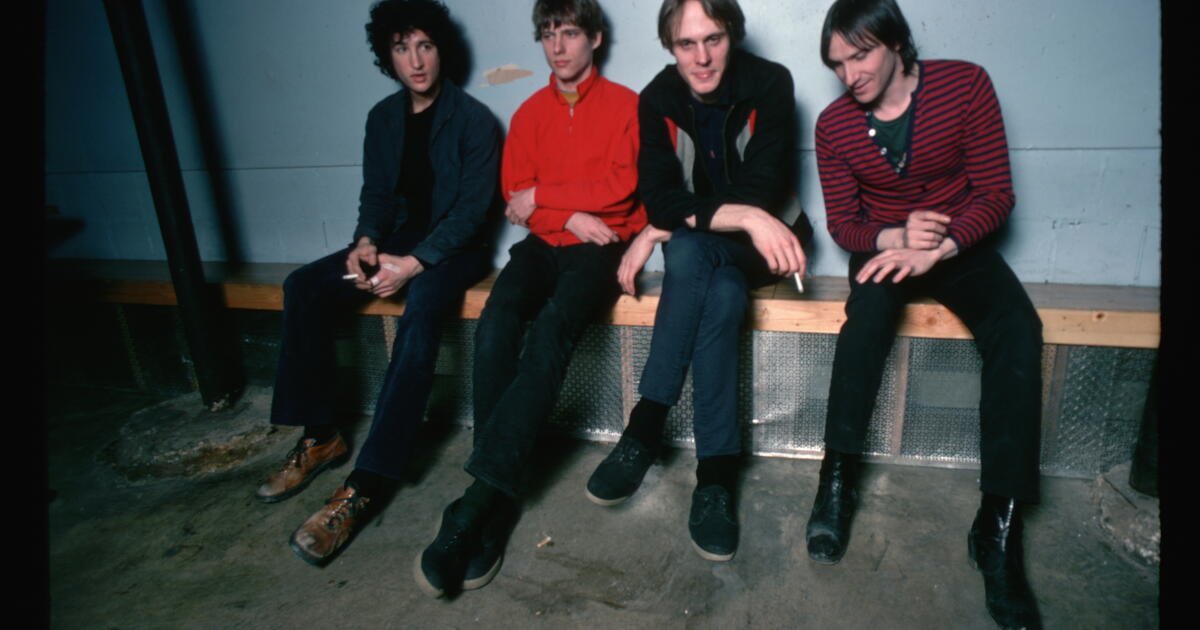
Richard Lloyd, guitarist for NYC rockers Television, dead at 75
Richard Lloyd, the fiery guitarist of the influential New York rock band Television, has died. He was 75.
Lloyd died on Saturday in Chattanooga, Tenn., from cholangiocarcinoma, a bile duct cancer, according to a statement from Lloyd’s family to the New York Times.
Lloyd’s contributions to Television — a proto-punk band with intricate hailstorms of guitar — helped make them one of the city’s most important if briefly tenured bands. In a time when peers such as the New York Dolls and Velvet Underground were upending rock and roll with glamour and arty disaffection, Television fulfilled the genre’s promises of both swaggering virtuosity and restless reinvention.
Lloyd, born Richard John Alt in Pittsburgh, moved to New York City with his mother and grew up in Greenwich Village. He attended Manhattan’s acclaimed Stuyvesant High School, but dropped out to pursue music.
Television formed in 1973 after Lloyd met front man Tom Verlaine, then-bassist Richard Hell and drummer Billy Ficca through Terry Ork, an Andy Warhol scenester who managed the legendary film bookstore and memorabilia shop Cinemabilia, where Verlaine and Hell worked. The band was an outlier at the grimy local country and bluegrass dive bar CBGB (the members had to convince owner Hilly Kristal to book them). Yet the group would help transform that club and Max’s Kansas City into hubs for punk bands and the avant-garde such as Blondie, the Ramones and Talking Heads.
While sharing little in common with dueling-guitar acts such as the Allman Brothers Band or ’70s contemporaries the Eagles and Fleetwood Mac, Television also drew its power from the preternatural rapport between Verlaine and Lloyd’s instruments. With its oblique lyricism and jazz-infused chords, layered over a twitchy rhythm section and 10-minute-long jams, Television was unlikely to be a commercial hit.
Yet the band impressed peers such as Lou Reed and David Bowie, and signed to the major label Elektra. Its 1977 debut LP “Marquee Moon” is universally considered a rock masterpiece, landing at No. 107 on Rolling Stone’s ranking of the top albums of all time. The dramatic trills of “Venus” and moaning peals of “Torn Curtain” showcased Lloyd’s natural guitar language with Verlaine, adding up to an unmistakable and irreplaceable sound.
The band released one follow-up, 1978’s “Adventure.” But Lloyd, who had long struggled with mental health issues, was also suffering from drug addiction, and conflicts with Verlaine led to the band’s breakup.
Lloyd would go on to have a robust solo career, with nine albums under his own name, and performances on records by Matthew Sweet and John Doe of the punk band X. Television briefly reunited to perform at the 1992 Glastonbury Festival, and released a new self-titled album the same year.
Beyond its own career, Television became a key inspiration for Sonic Youth and Geese, which shared Television’s downtown panache and coils of guitar noise.
Lloyd’s survivors include his wife, Sheila, his brother, Eric and his son, Dylan.