USDA to Boost Food Exports to Venezuela as Local Campesinos Protest Unfair Competition
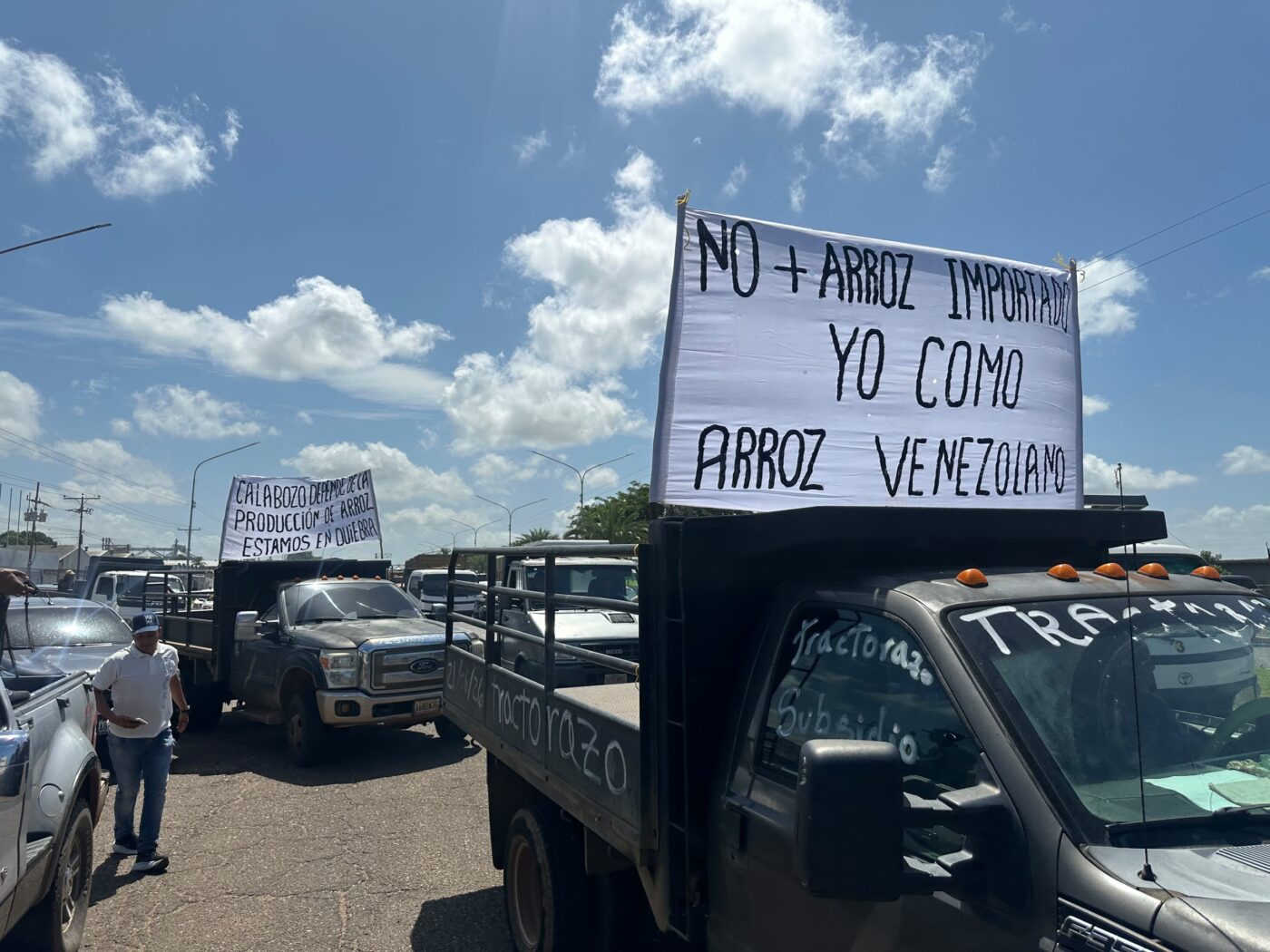
“No more imported rice” sign at a recent protest. (Archive)
Caracas, September 14, 2026 (venezuelanalysis.com) – The US Department of Agriculture’s (USDA) Foreign Agricultural Service announced a package of measures to boost US agricultural exports to Venezuela amid growing concerns about the South American country’s national production.
According to the USDA, the plan will facilitate Venezuelan corporations’ purchase of US food products and agricultural commodities through government-backed credit and will include the delivery of food assistance and training for Venezuelan technicians.
“The Trump administration is committed to Venezuela’s economic prosperity, and USDA is leveraging its export financing, market development programs, technical scholarships, and food assistance initiatives to address this situation,” said Under Secretary for Trade and Foreign Agricultural Affairs Luke J. Lindberg.
Lindberg added that he “looks forward to positioning US agriculture to help meet needs and build lasting trade relationships.” The US official visited Venezuela as part of an official delegation in early July.
Washington’s credit program for food exports will be provided through the reactivation of the GSM-102 guarantee program. The mechanism offers guarantees to exporters that reduce the risk for financial institutions backing the transactions in case importers fail to meet their commitments.
The Agriculture Department also announced that it will lift restrictions to allow foreign banks to back Venezuela-related transactions.
A USDA report had already estimated that Venezuela would need to import 1.5 million metric tons of wheat during the 2026-2027 marketing year. Corn and soybeans are likewise identified as key staples to be exported to the Caribbean nation. The latest initiative
The Trump administration also lifted restrictions under its Feed the Future Agricultural Resilience Mission Initiative and plans to include Venezuela in a regional agribusiness trade mission scheduled for early 2027.
A bigger influx of US farm products will place an additional strain on Venezuelan food production, with local campesinos increasingly protesting against imports from agribusiness corporations that seek to drive crop prices down.
On September 9, rice growers from Guárico and nearby states organized a “tractorazo,” blocking a major highway in Calabozo with trucks and tractors to demand that the government halt the entry of imported rice during the domestic harvest season and ensure that agroindustrial companies adhere to established prices.
Protesters complained that imports from countries where food production is subsidized, including the US, create unfair competition and risk driving Venezuelan campesinos bankrupt. The latest mobilization was sparked by the reported arrival of a shipment of 355 thousand tons of rice, more than half of the Venezuelan production in 2025.
Rural organizations have likewise denounced the exoneration of tariffs and import taxes as another factor putting national production at a disadvantage. Venezuelan authorities, including the National Assembly and the Agriculture Ministry, have vowed to review the import issue but have offered no measures to date.
In the Calabozo protest, producers denounced that imported rice had saturated silos and storage facilities during the 2025-2026 winter-summer crop cycle, forcing them to sell below production cost or lose their crops altogether. Demonstrators demanded a $0.25-per-kilogram subsidy from the state to compensate for the losses incurred and vowed to take the protests to Caracas if they receive no response from authorities.
The September 9 “tractorazo” was the latest in a series of mobilizations in recent months in Venezuela’s main agricultural states. Rice growers have complained about high fuel and input costs and urged the government to establish and enforce fair crop prices.
According to agriculture lobby FEDEAGRO, more than 2.2 million metric tons of white corn, yellow corn, and rice have entered the country so far in 2026, more than triple the recent combined high of 709,000 metric tons in 2023.
“We cannot continue depending on a neighbor’s pantry. That is a failure. In Venezuela, we have the land, a committed agricultural sector, and people investing in farming, but excessive imports place us at a dramatic disadvantage,” stressed FEDEAGRO President Osman Quero.
Quero stressed that foreign producers have access to credit programs, fuel and fertilizer subsidies, and better infrastructure, while Venezuelan farmers face inflation and a lack of financing programs.
Edited by Ricardo Vaz in Lisbon, Portugal.