paychecks

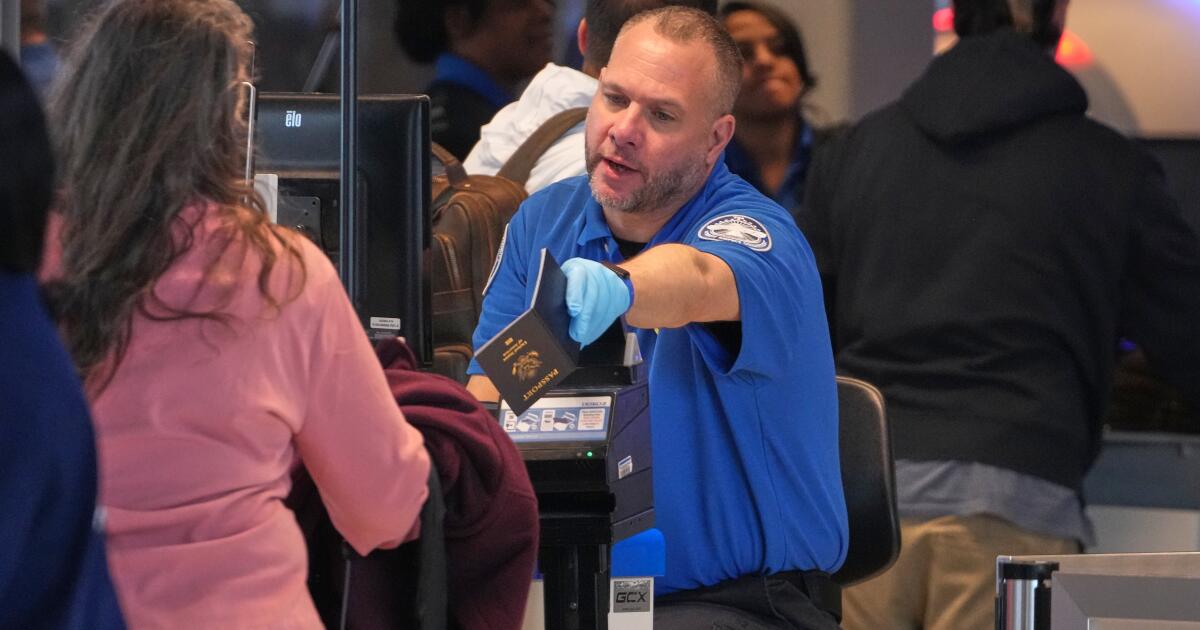
Some wait times at airport bottlenecks are easing with TSA paychecks promised

After weeks of chaos in U.S. airports, the Transportation Safety Administration said the first paychecks in weeks are being sent as early as Monday to its workers, giving the beleaguered aviation system a boost of optimism.

Wait times at some TSA security bottlenecks, such as the airport checkpoints in Atlanta and Houston, improved significantly Monday morning.

But how long it will take for long security lines to consistently return to normal — and how long federal immigration officers will stay in airports — remains unknown as the busy spring break travel season continues.

The DHS shutdown has resulted in not only travel delays but also warnings of airport closures as TSA workers missing paychecks stopped going to work. Those workers were just recovering financially since last fall’s extended government shutdown.

Wait times still pushed beyond two hours at New York’s LaGuardia Airport Monday morning. Baltimore-Washington International Airport had minimal wait-times Monday morning, but continued to advise travelers to arrive three hours before their scheduled departure.

President Trump on Friday ordered the Department of Homeland Security to pay TSA officers immediately to ease the lines plaguing airports. The move came after Trump rejected bipartisan congressional efforts to fund the TSA while negotiations continue with Democrats, who have refused to approve more funding without restraints on Trump’s immigration enforcement and mass deportation operations.

Democrats are demanding better identification for the officers, judicial warrants in some cases and for agents to refrain from conducting raids around schools, churches or other sensitive places. Republicans and the White House have been willing to negotiate on some points, but the sides have yet to reach a final agreement.

On Monday, there were few signs of progress on Capitol Hill, where the Senate held a short session without considering the House bill and resumed its two-week break. GOP Sen. John Hoeven of North Dakota said afterward that Senate Republicans are talking with Democrats and also the House as they try to find a way to funding DHS.

TSA employees had gone without pay since DHS funding lapsed in February. The department’s shutdown reached 44 days on Sunday, eclipsing the record 43-day shutdown last fall that affected all of the federal government.

The DHS shutdown has resulted in not only travel delays but also warnings of airport closures as TSA workers missing paychecks stopped going to work. Those workers had already endured the nation’s longest government shutdown last fall. Multiple airports experienced greater than 40% callout rates, and nearly 500 of the agency’s nearly 50,000 transportation security officers quit during the shutdown.

Trump deployed Immigration and Customs Enforcement agents to some airports a week ago to help with security as TSA callouts rose nationwide. How long they stay, White House border czar Tom Homan said, depends on how quickly TSA employees return to work. A TSA statement said the agency “has immediately begun the process of paying its workforce,” with paychecks arriving “as early as Monday.”

The overall absentee rate among TSA officers scheduled to work dipped slightly on Sunday, according to DHS. The highest were concentrated at major airports that have seen consistently elevated absences lately.

Those included BWI, both of Houston’s main airports; Louis Armstrong International Airport in New Orleans; Atlanta’s Hartsfield-Jackson International Airport; and John F. Kennedy International Airport in New York.

Funk and Seewer write for the Associated Press. AP reporters Rio Yamat in Las Vegas and Mary Clare Jalonick in Washington contributed to this report.
Source link

Missed paychecks and airport delays: Pressure mounts on Congress to end the funding shutdown

Pressure is mounting on Congress to end the funding shutdown that has resulted in travel disruptions, missed paychecks and even warnings of airport closures, but lawmakers have yet to resolve the underlying issue of reining in President Trump’s immigration enforcement operations.

Senators intend to vote Thursday on a Republican proposal that would fund the Transportation Security Administration and much of the Department of Homeland Security, except the enforcement and removal operations conducted by U.S. Immigration and Customs Enforcement. That plan is expected to fail.

Democrats argue it does not go far enough at putting guardrails on officers from ICE, Customs and Border Protection and other federal agencies who are engaged in the immigration sweeps, particularly after the deaths of two Americans protesting the actions in Minneapolis.

Trump, who has largely left the issue to Congress to resolve, threatened to send the National Guard to airports, in addition his deployment of ICE agents who are now checking travelers IDs — a development drawing concerns.

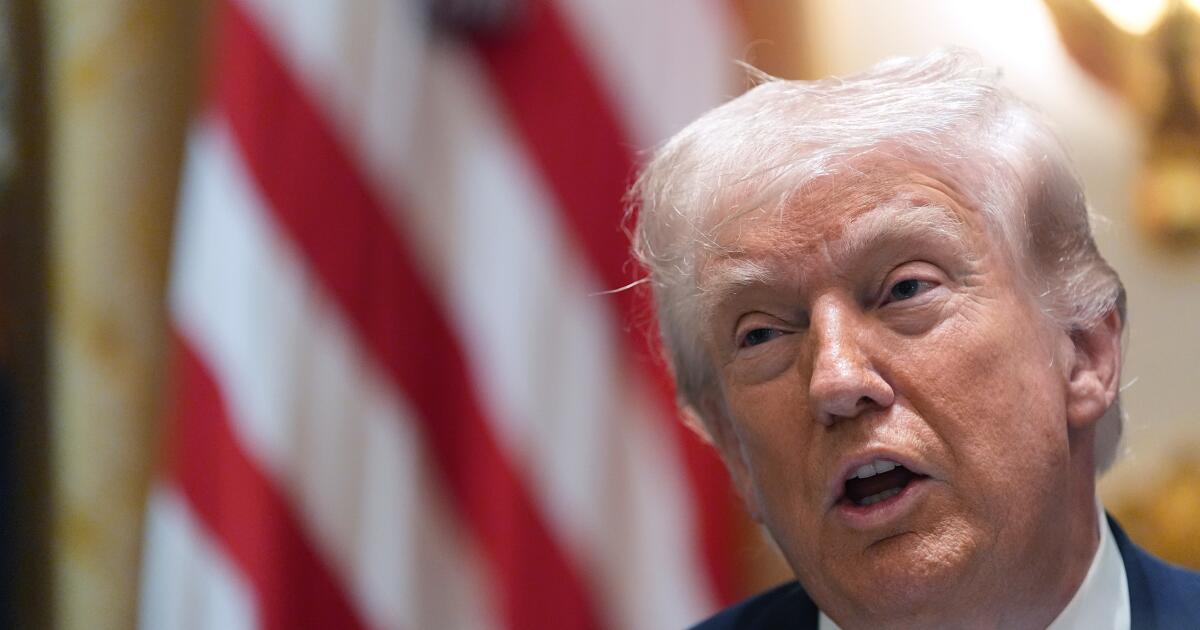
“They need to end this shutdown immediately or we’ll have to take drastic measures,” Trump said Thursday during a Cabinet meeting at the White House.

With Congress set to leave town by week’s end for its own spring break recess, calls are intensifying for an end to the 41-day stalemate that’s put the livelihoods of TSA officers at risk as they provide airport security without pay.

Multiple airports are experiencing greater than 40% callout rates of TSA workers and more than 480 of its nearly 50,000 transportation security officers have now quit during the shutdown. Nationwide, nearly 11% of TSA workers — more than 3,200 on a single day — missed work.

Trump stays out of the fray

The Republican president initially signed off on the plan the GOP senators brought to him late Monday. By Tuesday, he said he would not be happy with any deal.

Trump did not directly address the status of negotiations late Wednesday evening during an annual fundraising dinner for the House Republicans’ campaign committee as Speaker Mike Johnson, R-La., works to keep majority control of the chamber in the November elections.

But Trump criticized Democrats for refusing to settle their demands on immigration changes. On Thursday, he revived his campaign for senators to end the filibuster as a way to overpower opposition to GOP policies, something most Republican senators do not want to do.

The GOP’s big tax cuts bill that Trump signed into law last year funneled billions to DHS, including $75 billion for ICE operations, ensuring the money is flowing for his immigration and deportation agenda even with the funding shutdown. ICE and other immigration officers are still being paid.

The situation is partly of Trump’s making, a strategy the president put in place last fall when he cut a deal with Democrats to end a previous federal shutdown. At that time, Trump agreed to fund the federal government, except for DHS, which was then put on temporary funding that has expired.

A stopgap measure

The Republican offer added one new restraint on immigration officers, funding the use of body cameras that had previously been agreed to. It excluded other policies that Democrats have demanded, such as that federal agents wear identification, remove their face masks and refrain from conducting raids around schools, churches or other sensitive places.

Senate Democratic leader Chuck Schumer of New York said they needed to see real changes. “We’ve been talking about ICE reforms from day one,” he said.

Democrats had been in several days of talks with the White House, including with border czar Tom Homan, that appeared to be making progress toward a deal. The White House presented its own offer with several items Democrats had been demanding, including officer IDs and training.

But those negotiations broke down over the weekend.

Republicans say Democrats are putting the country at risk. They say the Trump administration has already made strides to meet Democrats’ demands and has shown a new approach to its immigration operations, swearing in Oklahoma Sen. Markwayne Mullin as the new homeland security secretary to replace Kristi Noem.

But conservative Republicans also panned the proposal, demanding full funding for immigration operations and skeptical of the promise from GOP leaders that they would address Trump’s proof-of-citizenship voting bill in a subsequent legislative package.

Senate Majority Leader John Thune, R-S.D., said late Wednesday that if Democrats put a “more realistic offer on the table, we’ll be back in business.”

Asked if Congress would consider a stopgap measure to temporarily fund the department, Thune said: “We’ll see.”

Airport lines grow as TSA workers endure hardships

Passengers are facing more four-hour waits to clear security at George Bush Intercontinental Airport in Houston.

The airport’s website said Thursday morning that travelers should expect to wait two hours, 30 minutes in the security line at one of its open terminals and four hours at the other.

Lines and wait times are expected to grow Thursday and Friday because of “significantly higher passenger traffic,” according to an update on the airport’s website.

“This is a dire situation,” the acting TSA administrator, Ha Nguyen McNeill, testified at a House hearing Wednesday.

She described the multiple hardships facing unpaid TSA workers — piling up bills and eviction notices, even plasma donations to make ends meet — and warned of potential airport closures if more employees refuse to come to work.

“At this point, we have to look at all options on the table,” she said. “And that does require us to, at some point, make very difficult choices as to which airports we might try to keep open and which ones we might have to shut down as our callout rates increase.”

She cited the growing financial strain on the TSA workforce.

“Some are sleeping in their cars, selling their blood and plasma, and taking on second jobs to make ends meet,” she said.

McNeil also said TSA officers working at the nation’s airports have experienced a more than 500% increase in the frequency of assaults since the shutdown began.

“This is unacceptable, and it will not be tolerated,” McNeill said.

Mascaro and Freking write for the Associated Press. AP writers Rebecca Santana and Ben Finley in Washington; Wyatte Grantham-Philips in New York; Rio Yamat in Las Vegas; Russ Bynum in Savannah, Ga., and Gabriela Aoun Angueira in San Diego contributed to this report.

Source link