Paul Friedman

Judge again orders Pentagon to restore journalists’ access

April 10 (UPI) — A federal judge has again ordered the Pentagon to restore access to credentialed journalists, ruling the Trump administration was attempting to flout his previous order by disguising it as an interim rule.

“The Department cannot simply reinstate an unlawful policy under the guise of taking ‘new’ action and expect the court to look the other way,” U.S. District Judge Paul Friedman said in his Thursday ruling, obtained by Courthouse News.

The Department of Defense has said it intends to appeal.

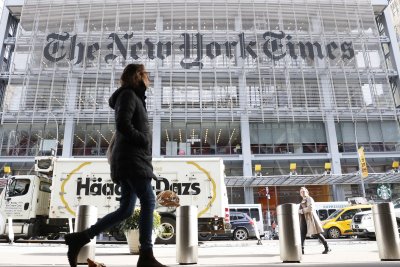
The ruling comes in a case filed by The New York Times challenging a policy instituted by the Department of Defense in October requiring all journalists with access to the Pentagon to sign a form acknowledging they could have their credentials revoked for collecting unauthorized information.

Most Pentagon reporters declined and surrendered their credentials.

Last month, Friedman ruled the policy was unconstitutional and ordered the Pentagon to reinstate the credentials of seven journalists with The Times.

As the Defense Department said it planned to appeal the ruling, it unveiled a new revised policy that moved their office space outside the Pentagon building and required credentialed journalists to be escorted by Defense personnel at all times within it.

The Times again challenged the new, revised rule, accusing it of being a Trump administration attempt to defy Friedman’s order.

Friedman on Thursday agreed, finding that instead of returning the credentials to the Times’ journalists and restoring their access to the Pentagon, the Trump administration instead cut off access to all journalists.

“The court cannot conclude this opinion without noting once again what this case is really about: the attempt by the secretary of defense to dictate the information received by the American people, to control the message so that the public hears and sees only what the secretary and the Trump administration want them to hear and see,” Friedman, an appointee of President Bill Clinton, wrote in the 20-page ruling.

“The Constitution demands better. The American public demands better, too.”

After the court rejected the Pentagon’s attempt to restrict the First Amendment freedoms of The Times’ reporters, it invoked a new policy with only slightly different language from the one that was struck down in order to achieve the same unconstitutional end, he said.

“The curtailment of First Amendment rights is dangerous at any time, and even more so in a time of war,” Friedman said. “Suppression of political speech is the mark of an autocracy, not a democracy — as the framers recognized when they drafted the First Amendment.”

Charlie Stadtlander, a spokesperson for The Times, cheered Thursday’s ruling, saying it upholds the paper’s constitutional rights while sending a clear message to the Pentagon.

“Compliance with a lawful order of a court is not optional; it is required in a democracy committed to the rule of law,” Stadtlander said in a statement.

“We are pleased that Judge Friedman saw the revised policy issued by the Pentagon after his last decision for what it was: a poorly disguised attempt to continue to violate the constitutional rights of The Times and its journalists.”

In announcing the Pentagon’s intention to appeal, Sean Parnell, assistant to the secretary of defense for public affairs, argued that they have at all times complied with the court’s original order, saying the revised policy addressed all concerns raised in Friedman’s March 20 opinion.

“The department remains committed to press access at the Pentagon while fulfilling its statutory obligation to ensure the safe and secure operation of the Pentagon Reservation,” he said in a statement.

The Trump administration has been repeatedly accused by critics of taking actions aimed at influencing media coverage, from the October memorandum concerning Pentagon reporters to restricting access to outlets over editorial decisions and seizing control of the White House press pool.

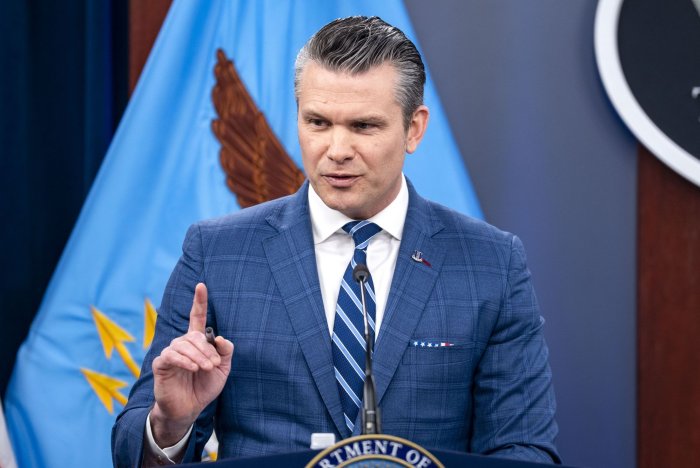
Secretary of Defense Pete Hegseth speaks during a press briefing at the Pentagon on Wednesday. Yesterday, the United States and Iran agreed to a two-week ceasefire, with the U.S. suspending bombing in Iran for two weeks if the country reopens the Straight of Hormuz. Photo by Bonnie Cash/UPI | License Photo

Source link

Court rules for N.Y. Times, orders Pentagon credentials restored

March 21 (UPI) — A federal judge struck down the Department of Defense’s policy that led to the ouster of most journalists from the Pentagon last fall and replaced them with those who agreed to the department’s new rules.

Judge Paul Friedman of the U.S. District Court for the District of Columbia ruled in favor of The New York Times, which sued the Department of Defense over the policy. Friedman ruled that the policy is unconstitutional and ordered the department to give back the credentials of the seven Times journalists who cover the Pentagon.

Though he didn’t order the restoration of other reporters’ credentials, he voided the policy that they refused to sign, allowing them to get credentialed again.

Pentagon spokesperson Sean Parnell wrote on X: “We disagree with the decision and are pursuing an immediate appeal.”

In October, the Defense Department required that all credentialed journalists sign the policy. Signing it gave the Pentagon the ability to label the journalists “security risks” and revoke their credentials if the department decided they had endangered national security. They had to pledge to only publish approved information.

Most news outlets refused to sign, losing their press passes and desks inside the Pentagon. They were replaced with news outlets and people friendly to the administration. The Times then sued the department over its First Amendment rights.

“A primary purpose of the First Amendment is to enable the press to publish what it will and the public to read what it chooses, free of any official proscription,” Friedman wrote in his opinion.

“Those who drafted the First Amendment believed that the nation’s security requires a free press and an informed people and that such security is endangered by governmental suppression of political speech,” Friedman added. “That principle has preserved the nation’s security for almost 250 years. It must not be abandoned now.”

First Amendment attorney Theodore Boutrous, who is representing The Times in the suit, told CNN: “The district court’s decision is a powerful rejection of the Pentagon’s effort to impede freedom of the press and the reporting of vital information to the American people during a time of war.”

“The district court’s opinion is not just a win for The Times, [Times reporter] Mr. [Julian E.] Barnes, and other journalists, but most importantly, for the American people who benefit from their coverage of the Pentagon,” Boutrous said.

Friedman also agreed with the Times that the policy violated its due process rights because it was vague and could be accidentally violated by reporters. Part of the policy prevented reporters from asking certain questions.

“A primary way in which journalists obtain information is by asking questions,” he wrote. “Under the policy’s terms, then, essential journalistic practices that the plaintiffs and others engage in every day — such as asking questions of department employees — could trigger a determination by the department that a journalist poses a security or safety risk.”

First Amendment advocates said they support the decision.

“The court affirmed that our security and liberty rely on the press’s freedom to publish and the public’s ability to access news about government affairs free from state control,” said Gabe Rottman, vice president of policy at the Reporters Committee for Freedom of the Press, in a statement.

Seth Stern, chief of advocacy at Freedom of the Press Foundation, said the ruling is especially important right now.

“It’s unfortunate that it took this long for the Pentagon’s ridiculous policy to be thrown in the trash. Especially now that we are spending money and blood on yet another war based on constantly shifting pretexts, journalists should double down on their commitment to finding out what the Pentagon does not want the public to know rather than parroting ‘authorized’ narratives,” Stern said in a statement.

Source link