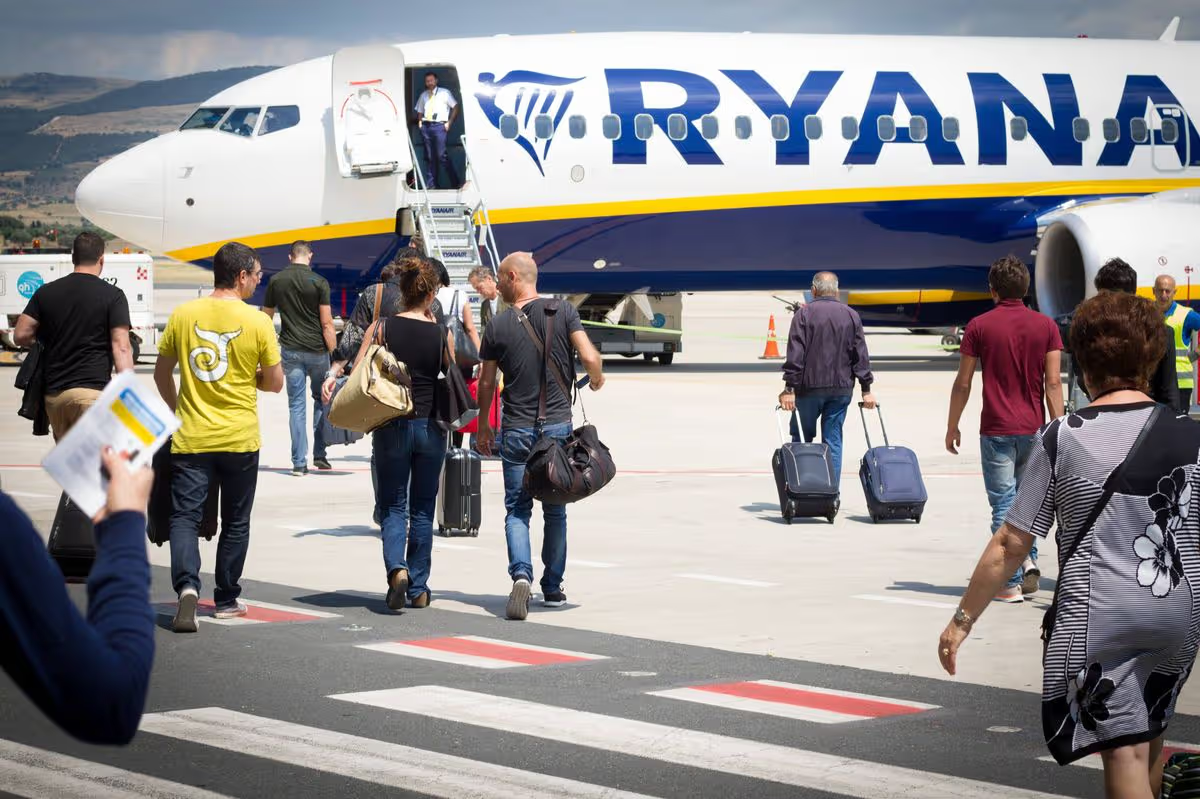
passengers

Another English airport introduces hugely unpopular charge for passengers

ANOTHER airport is introducing a new drop off fee from next month and travellers are fuming.

From March, London Southend Airport in Essex will charge passengers £8 for up to 10 minutes drop off.

London Southend Airport has created a new Express Lane drop-off and pick-up areaCredit: Instagram/londonsouthendairport

It comes as the airport has opened a new drop-off and pick-up area at the airport, called the ‘Express Lane’.

Announcing the new fee, the airport said that it “has been designed to improve traffic flow, reduce congestion and create a smoother experience for drivers and passengers alike”.

The airport added that the fee is in line with other airports across the UK.

The Express Lane will be in the short-stay car park, opposite the terminal.

Read more on travel inspo

GO ON

All the little-known websites for cheap or FREE tickets to gigs, theatre & festivals


CHEAP BREAKS

UK’s best 100 cheap stays – our pick of the top hotels, holiday parks and pubs

Drivers will be able to stop for up to 10 minutes; no ticket is needed, and there are no barriers for entry or exit.

The £8 charge must then be paid online within 24 hours of exiting the Express Lane.

According to the BBC, a spokesman for the airport said: “Our existing paid pick-up and drop-off parking facility successfully operates and is in line with arrangements at other airports across the UK.

“In March, we are launching an improved and more convenient express lane, as well as doubling the dwell time available to passengers.

“As a privately owned airport, London Southend must generate its own revenue to operate and continue to support our airline partners, maintain operations and reinvest in facilities to improve our easy, speedy, friendly experience for passengers across Essex, London and East Anglia.”

However, a lot of people have taken to social media to express their disappointment with the new fee.

One person said: “Probably the only thing I disagree with at the airport.

“Extortionate fees for dropping off passengers.”

Another person said: “Another money-making mechanism instead of actually improving the situation and traffic flow…”

It will officially open on March 1 and travellers will be charged £8 for 10 minutesCredit: Getty

“Instead of charging, why can’t there be a penalty fee if someone stops for over 10 minutes?

“Then, people will be in and out even faster!”

The BBC added that Liberal Democrat councillor James Newport, who is the former leader of Rochford District Council, commented that the charges are a “rip-off” and that he raised the issue in a committee meeting “as soon as I was made aware”.

He said: “It’s not acceptable that the airport should be trying to fleece not only our residents but also local taxi drivers who are also impacted by these charges.”

The fee comes as a number of other airports across the UK have either introduced drop-off and pick-up fees or raised them.

For example, earlier this month, Glasgow and Aberdeen Airports increased their fees to £7 for up to 15 minutes.

This meant that Glasgow Airport increased its fee by £1, and Aberdeen increased its fee by £5.50.

And in January, London Gatwick Airport raised its drop-off fee to £10.

The £3 increase applies to all drivers using the drop-off zone, except for Blue Badge holders.

At the time, the airport commented that it was “not a decision they took lightly”, but that the “doubling of business rates” was one of the reasons for the increase.

In other airport news, a major UK airport is launching 12 new routes to popular destinations with eight new airlines.

Plus, a new parking crackdown has been rolled out at a major UK airport after dozens of cars were abandoned and families left stranded.

It comes as a number of other airports across the UK have either introduced or increased drop-off feesCredit: Alamy

Source link

Ryanair and easyJet passengers warned not to pack three items to avoid baggage fees

Travel experts reveal the three types of items you should avoid packing in your cabin bag when flying with budget airlines like Ryanair and easyJet

Travellers who choose to fly with budget carriers such as Ryanair and easyJet can take advantage of remarkably low fares if they travel with hand luggage only. However, these airlines, like numerous other low-cost operators, require passengers to pay additional fees for larger cabin bags or checked luggage.

Should you turn up at the airport with more than your permitted luggage allowance, you could be stung with substantial excess charges. Matthew Corrigan, CEO of Trtl Travel, recommends that one of the most effective ways to maximise your luggage allowance and sidestep extra costs is to pack cleverly.

He said: “Airlines such as Ryanair, British Airways, easyJet and Jet2 are cracking down on hand luggage passengers.”

In recent years, numerous airlines have tightened restrictions on the amount of hand luggage passengers can bring aboard. For example, Ryanair now only permits passengers to bring one small item of luggage per person free of charge.

Matthew said: “One of the main downsides of travelling with only a carry-on bag is significantly less space for your belongings.

“Whilst this may seem like a deal-breaker, there are some simple ways to maximise the space in your hand luggage.”

According to the specialist, this means leaving certain everyday essentials behind that could be taking up considerable space or adding unnecessary weight.

Travel guru Matthew has some shrewd advice to banish your packing headaches for good. He suggests: “Avoid packing items that will be provided by the accommodation – such as hairdryers, towels, and toiletries. Only bring items you know you’ll use, and try to share phone chargers and other technology wherever possible.”

Before you start packing those bulky bottles of shampoo or a hefty hairdryer, check with your hotel first; there’s a good chance they’ve got you covered. And let’s face it, you can pick up toiletries at your destination if needed.

Heading somewhere chilly? Matthew’s tip: wear your coat and chunky knits on the plane instead of cramming them into your bags.

Walk through departures in your winter wear, he says, because after all, you can throw your coat over your arm if you warm up. Plus, it won’t count against your cabin baggage allowance and you’ll avoid the shivers mid-flight.

He added: “It’s best to wear large items such as jumpers and coats onto the plane rather than packing them. This frees up space and ensures you don’t get cold during the flight.”

Source link

Pilot explains what actually happens when passengers don’t use airplane mode

A pilot has explained the real reason passengers need to switch their phones to airplane mode during flights, and it’s not just a formality

Flying remains one of the safest ways to travel, largely due to meticulously crafted safety protocols. Whilst some procedures might appear mundane or superfluous, each serves a vital purpose in safeguarding passengers and crew alike.

However, a pilot (@PerchPoint) has taken to TikTok to clarify whether one specific procedure genuinely needs following. Whether through absent-mindedness or simply not knowing better, switching your phone to aeroplane mode matters – and it’s not “a conspiracy theory,” the pilot cautions.

But what actually occurs if you don’t bother? In the video, the pilot explained: “This is just a friendly PSA, that the airplane mode button is not a conspiracy.

“If you forget to put your phone on airplane mode, no, it’s not the end of the world, the plane will not fall out of the sky, and it won’t even mess with the systems on board.”

However, does this mean passengers can disregard the procedure? “If you have an aircraft with 70, 80, or 150 people on board and even three or four people’s phones start to try and make a connection to a radio tower for an incoming phone call, it sends out radio waves.

Content cannot be displayed without consent

“There’s a potential that those radio waves can interfere with the headsets that the pilots are using.”

He proceeded to describe his own encounter with this interference whilst attempting to land safely, noting there was an irritating noise in the headset that “sounded like a mosquito.”

The pilot explained: “No, it’s not the end of the world, but it’s pretty annoying when you’re trying to copy down instructions and it sounds like a wasp or something flying around you. So if you’re ever curious why you need to put on airplane mode, that’s why.”

According to Travel and Leisure, it goes beyond mere irritation. Pilots frequently operate with restricted visibility, meaning they depend heavily on information relayed from ground control, particularly during takeoff and landing – the phases when most aviation incidents take place.

Consequently, it’s vital that they remain focused and their communication isn’t compromised.

Rule or courtesy?

Per Federal Aviation Administration (FAA) regulations, all passengers must enable airplane mode during flight to avoid potential signal interference.

It’s also a straightforward gesture of consideration that contributes to a seamless journey for all passengers, according to Booking.com.

“When smartphones and devices were first introduced, it was found that cell phones that aren’t in flight mode can overload the networks on the ground, especially during takeoff and landing, as phones try to connect to multiple towers at once.

“How much phones affect aviation technology hasn’t been studied in-depth, but pilots say they can hear background noise and interference from phones while flying, especially when they’re landing, and mobile phones begin to make contact with towers again.

“So, while your phone may work at times during flight, do you really want to distract your pilot while they’re speaking with air traffic control to execute a safe landing?”

Why are flight crew permitted to use devices?

According to Lovely Planet, pilots and flight attendants are seen with devices right in the cockpit, which gives them access to digital charts and documents.

However, unlike passenger devices, this equipment has undergone rigorous testing to guarantee it won’t disrupt the aircraft’s systems.

Source link

World’s longest direct train journey where passengers are in their seats for almost 7 days

One train journey takes a staggering 167 hours to complete, with the railway spanning eight time zones to make it the longest in the world

The longest direct train journey in the world stretches a staggering 5,771 miles and takes almost a week to complete. Passengers on board the train undertake a mammoth journey through eight time zones.

The Trans-Siberian Railroad claims the title of the longest single rail system in the world. It connects east and west Russia, running from Moscow to Vladivostok.

To travel the length of the railway, it takes approximately 167 hours and requires no passenger changes. Heading east from Moscow, the train crosses the country to the Pacific Ocean.

There are even non-stop train options, so all passengers remain on board throughout the seven days. If you prefer to get off and explore the local surroundings, passengers can opt for the stopping service.

However, this takes between 14 and 20 days to complete. The Trans-Siberian railway runs through cities such as Moscow, Yaroslavl, Chelyabinsk, Omsk, Novosibirsk, Krasnoyarsk, Irkutsk, Ulan-Ude, Chita, Khabarovsk, and Vladivostok.

There’s also the Trans-Manchurian line, which runs through northern China to Beijing, and the Trans-Mongolian, which heads to Beijing but passes through Ulan Bator.

A famous train on the Trans-Siberian railway is Rossiya (the Russia), which has second-class sleepers, third-class open-plan sleeper bunks, and a restaurant car.

Passengers can pay for four tickets to ensure sole occupancy of a four-berth compartment, even if they’re the only ones travelling. The bunks convert to seats during the day, with toilets and washrooms at the ends of the corridors.

Many tourists who travelled the route chose not to start or end their journey in Russia. Tourists once began in London and made their way to Moscow before boarding the Trans-Siberian Railroad.

Once in Vladivostok, tourists could then head to Korea, Japan, or China without taking a plane. National Geographic also ran tours along the route, offering tourists the chance to travel on “one of the world’s most legendary railways.”

They described the journey: “Set out on an epic train journey across one-third of the world, travelling from Vladivostok, Russia to the heart of Moscow along the legendary Trans-Siberian Railway.

“From the Mongolian steppe to Lake Baikal’s remote shores to the snow-capped Ural Mountains, trace the history of tsars, exiles, and Mongols in the comfort of our luxury train, the Golden Eagle Trans-Siberian Express. Encounter remote cultures and the unique architecture of Siberia’s wooden cottages and Moscow’s onion domes.”

Tours like these have been halted, yet the train is reportedly still being used by Russians. The UK Government warn against all travel to Russia.

Official advice from the Foreign, Commonwealth & Development Office says: “FCDO advises against all travel to Russia due to the risks and threats from its continuing invasion of Ukraine, including security incidents, such as drone attacks, and Russian air defence activity, lack of flights to return to the UK and limited ability for the UK government to provide support.”

Source link

Cruise ship worker warns of four things staff ‘hate’ passengers doing on holiday

A seasoned cruise ship worker has shared the four things that crew members really hate about passengers

Cruising should be an enjoyable and tranquil getaway, but certain passenger behaviours can seriously spoil the atmosphere for everyone involved. Lucy Southerton, a veteran crew member with nine years under her belt working aboard cruise ships, has revealed some of the biggest gripes shared amongst her colleagues.

Boasting a loyal following of more than 65,000 subscribers on her YouTube channel Cruising as Crew, Southerton provides insider perspectives and practical guidance for cruise aficionados. In a recent upload, she explored the irritations encountered by crew members, from dishevelled cabins to inappropriate advances.

Here are four behaviours passengers ought to steer clear of to guarantee a more pleasant voyage for all, reports the Express.

1. Dishevelled Cabins

According to Southerton, crew members, especially those in housekeeping and stewarding roles, become exasperated by passengers leaving their cabins in complete chaos.

She stressed that their role involves cleaning and sanitising the accommodation, not picking up after guests.

“It’s crazy to think they’re only on board for five days because of the amount of stuff that’s everywhere,” Southerton remarked. She appealed to passengers to show consideration and respect for crew members’ duties whilst occupying their cabins.

2. Inappropriate Advances Towards Crew

Southerton warned passengers against making unwanted romantic or flirtatious overtures to crew members, describing it as a form of sexual harassment.

She shared accounts from male cabin crew who felt uneasy and irritated when travellers overstepped the mark. “It’s hard when they take it another way and they think that they have a chance with you just because you’re a sexy crew member,” Southerton explained.

3. Lack of Manners

Among the most frequent complaints from cabin crew is passengers’ failure to display basic courtesy. Southerton emphasised the significance of simple pleasantries like saying “please” and “thank you.”

She recalled occasions where travellers would bark orders without a shred of politeness, underlining the necessity for respectful conduct, particularly whilst on holiday.

4. Bragging

Finally, she voiced her frustration with passengers who show off, particularly those who parade their wealth in front of less privileged individuals.

She encouraged passengers to be conscious of their surroundings and avoid boasting, especially to crew members grafting hard to provide for their families.

“Brag to people who are on a similar level to you,” Southerton advised, emphasising the need for consideration and compassion.

By remaining mindful of these behaviours, passengers can help create a more enjoyable and considerate atmosphere aboard cruise ships, encouraging positive exchanges between travellers and crew members alike.

Source link

Massive new mega airport set to be one of Asia’s biggest will welcome 120million passengers a year

ONE of Asia’s biggest airport projects is underway and it will make it so much easier to travel to one of the country’s most famous landmarks.

Travellers will be able to get to the beautiful Taj Mahal so much quicker – in half the time – once building work is completed.

A new, huge airport is under construction in IndiaCredit: Noida International Airport
Noida’s International Airport will have lots of natural light, shops and restaurantsCredit: Noida International Airport

Noida International Airport is being built near Jewar in India and once fully constructed, will be one of Asia’s biggest airports.

The first phase will include the building of one terminal and one runway -which will handle 12million passengers each year.

The long-term masterplan could see it expand to accommodate up to 120million passengers per year with multiple terminals and up to six runways.

This would make it rival Asia’s other biggest and busiest airports including Beijing Daxing and Dubai International Airport.

FEB-ULOUS TIME

February half term days out for UNDER £10, including free and £1 attractions


DREAMY DEALS

Our pick of the best long haul holidays for short haul prices

Inside terminal one will be automated check-in kiosks, contactless boarding systems, spacious lounges and waiting zones.

The design of the airport is to make it easy for passengers to move about which it has done by separating the arrivals, departures and baggage areas.

There will be lots of seating too in zones between check-in, security and boarding.

The waiting areas will be air-conditioned, there will also be Wi-Fi, prayer rooms and child care areas.

As for its aesthetic, the terminal will be light and airy with a white and see-through roof that is wavy to mimic the flow of a river.

There’s a central courtyard where travellers can get some fresh air – it also has plenty of greenery and shaded areas.

Designs show escalators on the outside and inside, along with shops, restaurants and cafes.

The airport will sit in Jewar, which will make it easier for travellers heading to Agra where the Taj Mahal is.

The new airport will be light, airy and could see up to 120million passengersCredit: Noida International Airport
The new airport will be two hours from Agra, the home of the Taj MahalCredit: Getty Images

The mausoleum that sits on the bank of the river Yamuna in Agra sees up to eight million visitors every year.

Until the airport is up and running, travellers have to fly into New Delhi before heading almost four hours south by car.

The location of Noida International Airport will cut that travel time in half – from Jewar it will take just over two hours.

As for when the new airport will open, there is no date yet although local reports suggest it could be as early as next year.

Both IndiGo and Akasa Air have confirmed they will operate at the airport, although these will be for mainly domestic destinations.

When it comes to Brits, international routes are yet to confirmed if they will be to the UK, with destinations mentioned including Zurich and Dubai.

Current UK-India routes are operated by British Airways and Virgin Atlantic.

The original target opening was two years ago in September 2024, however construction is still ongoing.

The airport covers around 5,000 hectares, making it one of the largest airport sites in India once fully built.

Currently, the largest in the country by land area is Rajiv Gandhi International Airport in Hyderabad which covers over 5,500 acres.

Here’s more on what will be the biggest airport in the world…

One airport in Saudi Arabia will become the biggest in the world once finished

King Salman International Airport is set to surpass all other airports in size, including the current biggest airport in the world which is also in the country.

The 22sqm airport will feature six runways – up from two – parallel to each other and will be built around the existing King Khalid International Airport.

It will approximately be the same size as Manhattan in New York – or twice the size of the city of Bath, in the UK.

And now the airport has moved into its construction phase.

The airport will be designed by Foster + Partners, a UK firm which is behind London‘s famous Gherkin.

Inside, travellers will be able to explore 4.6sqm of shops.

A lot of features in the airport are set to include high tech, such as climate-controlled lighted.

Travellers will have plenty of seating, indoor and outdoor spaces with greenery and vast glass windows, ideal for a bit of plane spotting.

The airport was announced back in 2022 and is part of Crown Prince Mohammed bin Salman‘s Saudi Vision 2030 – which is set to make Riyadh into a major hub for transport, trade and tourism.

It will eventually accommodate up to 120million passengers each year, which is then expected to rise to 185million by 2050.

And the number of aircraft takeoffs will rise from 211,000 per year to over one million.

For more on new airports, this new £7.8billion airport is set to be built in pretty European city after a 50-year delay.

And this new £25billion mega airport wanting to take on Heathrow and Dubai reveals latest opening update.

Once completed it will be one of the biggest airports in AsiaCredit: Unknown

Source link

Airlines could accept expired passports from more than 1million passengers ahead of huge new rule change

NEW passport rules being introduced next week are set to affect 1.26million people – but airlines could allow passengers to avoid them.

Currently, dual citizens in the UK, whose other nationality is from a country not subject to a UK visa requirement, can travel into Britain using their foreign passport.

The rules for entering the UK for those who hold dual citizenship will change in FebruaryCredit: Alamy
The Home Office has now said that expired British passports could be acceptedCredit: Alamy

These rules are set to change from February 25, 2026.

From next Wednesday, dual citizens will need to show either a valid British passport, or a new digital certificate of entitlement to attach to their second nationality passport.

Without one of those, travellers could face being denied travel back to the UK.

Getting a British passport costs around £100 for an adult and on average takes between three and 10 weeks to obtain.

DREAMY DEALS

Our pick of the best long haul holidays for short haul prices


FEB-ULOUS TIME

February half term days out for UNDER £10, including free and £1 attractions

Meanwhile, the certificate of entitlement costs £589 and can take three to eight weeks to get.

As many as 1.26million people in England and Wales hold more than one passport and are expected to be affected.

However, the Home Office has now said that travellers may be able to enter the country with an expired British passport.

Due to the tight turnaround of the change in rules, the Home Office has now said that an expired British passport could be used as “alternative documentation.”

A Home Office official told Sun Travel: “We recognise that this is a significant change for carriers and travellers, but we have been clear on requirements for dual British citizens to travel with a valid British passport or Certificate of Entitlement, in line with those for all British citizens.

“At their own discretion, carriers can accept an expired British passport as alternative documentation. Separately, individuals who have previously had a British passport can apply for an emergency travel document if they urgently need to enter the UK.

“In line with current practice, on arrival at the UK border, Border Force will still assess a person’s suitability to enter the UK and conduct additional checks if required.”

The Home Office do “strongly recommend” travellers obtain a British passport or the Certificate of Entitlement for the “smoothest travel experience.”

One airline has heavily hinted that it will accept an expired passport as a form of ID.

Ryanair has suggested it may allow dual nationals to board if they can show other forms of proof that they are British.

No airline has confirmed it will accept an expired passport as a form of IDCredit: Alamy

It told The Independent that they had been advised by the government that “documents that can be accepted” include an expired British passport.

The airline also told The Times that they “will allow” a passenger to board a UK flight if they are “satisfied” that they are a British or Irish national – or other UK status.

This includes “passengers who hold an old stamp/vignette with indefinite leave to remain.”

Sun Travel has gone to Ryanair for additional comment.

On the GOV.UK website it says that valid documentation should be obtained before travelling to avoid problems like “being denied boarding” when travelling to the UK.

It adds that dual British citizens who don’t have valid British passport or certificate of entitlement will undergo “additional identity checks” and “will not be able to go through UK passport control until their British nationality is verified.”

On the same day of these new rules, ETAs will also become essential.

However British nationals and dual citizens with British or Irish citizenship are exempt from needing an ETA.

Here’s more on ETA rules and who is at risk from being banned from flights.

And here is the big difference between EES and ETIAS – along with everything you need to know about the new travel rules this year.

Dual citizens will be required to have a valid passport or certificate of entitlementCredit: Alamy

Source link

Ryanair flight attendant says passengers should ‘avoid’ these two plane seats

Former Ryanair cabin crew member Eleanor has shared which seats to avoid when booking with the budget airline, while also revealing the best row to be in, especially if you want a quieter tirp

A former Ryanair cabin crew member has issued a warning to travellers about two seats they should swerve when making their bookings. Eleanor, who was stationed in Marseille, France, clocked up significant flight hours with the no-frills carrier and has pinpointed the seats that could seriously dampen your journey.

The 25-year-old content creator revealed to the Manchester Evening News: “I can only say to avoid 11A. That’s supposed to be a window seat – but it doesn’t have a window! You won’t be able to see outside.”

Eleanor isn’t the first member of cabin crew to sound the alarm about the infamous 11A seat, previously dubbed “Europe’s most hated”. It’s widely recognised as the sole ‘A’ seat on a Boeing 737 that’s missing an actual window.

But Eleanor didn’t stop there. Having previously documented the highs and lows of working for Ryanair on her YouTube channel, she went on to share additional guidance on seating choices.

Following her 11A caution, she added: “Also avoid row 32 on the 737 MAX, an aircraft that Ryanair has only in some bases. That has emergency exits at the wings, and a crew seat near them that faces the passengers.

“So, if you sit in that row, you’ll have the flight attendant stare at you during take off and landing, and you’ll have to move every time they have to pass. It was very uncomfortable as a flight attendant, I imagine it is as a passenger also.”

However, she stressed that on the whole, seat selection on Ryanair isn’t terribly crucial. This is largely down to the fact that flights tend to be relatively brief and there’s no complimentary meal service on offer, meaning your seating position won’t guarantee you’ll receive your food first, as it might with other carriers.

Eleanor suggested it ultimately boils down to individual preference, noting: “Another thing I can say is to avoid sitting at the rear of the aircraft, most because sometimes, although not often with Ryanair, only in some airports, you will have a bridge from the front and you’ll be the last one to disembark if you’re sitting at the back.

“And also because in case of ditching (controlled emergency landing onto water), that’s the first part that goes in the water, and you won’t be able to open the doors at the back, so you’re less likely to make it in case of a landing in water.”

For those keen to be more selective during booking, Eleanor, an Italian now based in New Zealand, reckons certain seats provide optimal comfort and are even guaranteed to be child-free zones.

She disclosed: “I would say usually it’s better to sit at the emergency exits in the middle of the aircraft, usually around row 17 for safety reasons. You have more space and also because children under 16 can’t sit at the emergency exits and infants under two can’t even be in the two rows before and ahead of the emergency exits.

“So these and row 1 are basically the only seats where you can be sure you won’t be spending your flight with crying babies next to you.”

Source link

World’s longest flight where passengers are strapped in for 19 hours

The flight covers 9,537 miles but doesn’t have economy cabin

The world’s longest flight connects America to Asia, with travellers spending nearly 19 hours in the air. Singapore Airlines currently holds the record for the lengthiest long-haul journey, operating between New York’s JFK Airport and Singapore Changi.

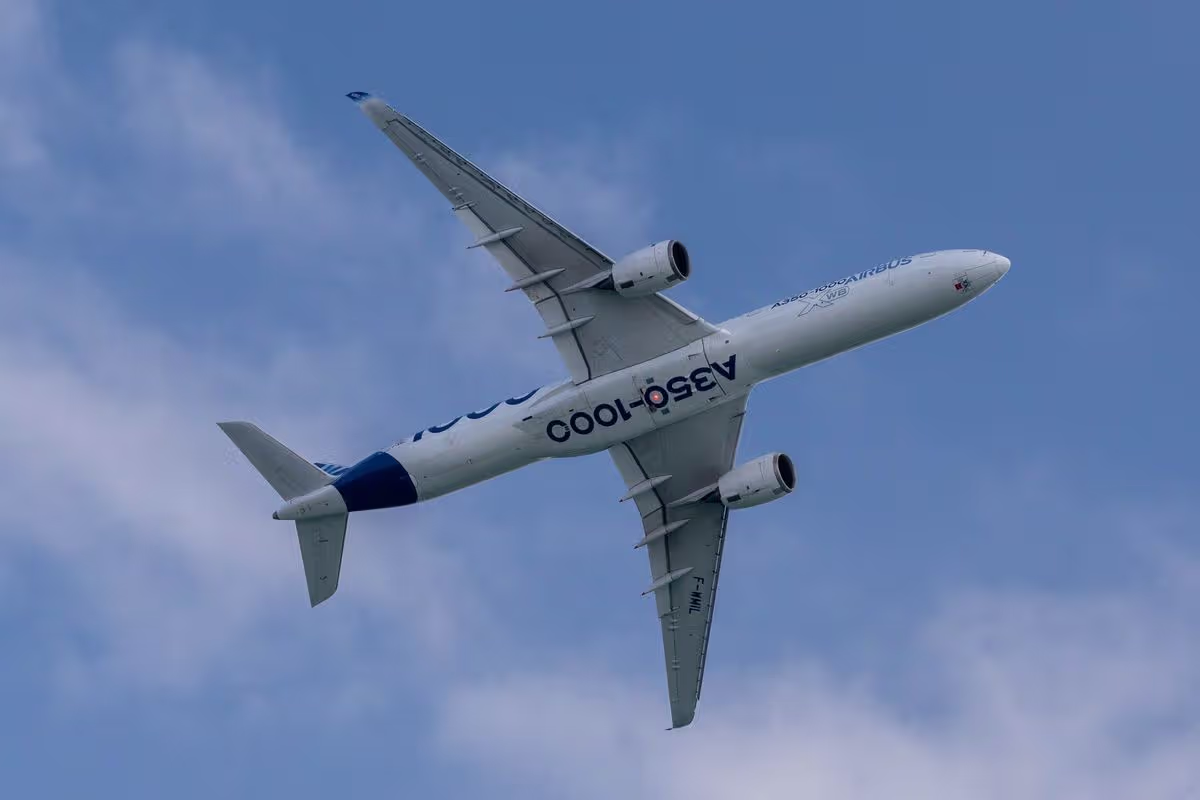
Covering a staggering 9,537 miles, the marathon trip takes 18 hours and 50 minutes and has been running since the airline launched it in 2018. Singapore Airlines deploys its latest Airbus A350-900ULR on the route, an aircraft capable of remaining airborne for more than 20 hours without refuelling.

The plane achieves these extraordinary flight times thanks to an enhanced fuel system, which increases the aircraft’s total fuel capacity to a remarkable 24,000 litres.

That said, the journey isn’t available to everyone, as Singapore Airlines has ditched economy class on this particular route. Instead, the airline offers 67 Business Class seats and 94 Premium Economy Class seats.

Premium Economy travellers can enjoy the benefits of extra legroom, a footrest, and an adjustable headrest. They also have access to noise-cancelling headphones and WiFi for the duration of their flight, reports the Express.

Those in Business class get maximum privacy, with their seats converting into fully flat beds for a proper kip whilst travelling.

The aircraft features a host of luxury amenities including higher ceilings, larger windows and bespoke lighting engineered to reduce jetlag. The carrier claims that the plane’s cutting-edge carbon composite airframe also allows for superior air quality.

Anyone hoping to secure a seat will need deep pockets, with tickets routinely costing well into five figures. Singapore Airlines’ Chief Executive, Mr Goh Choon Phong, has previously described the new route as the “fastest way” to journey between the two metropolitan hubs.

He said: “Singapore Airlines has always taken pride in pushing the boundaries to provide the best possible travel convenience for our customers, and we are pleased to be leading the way with these new non-stop flights using the latest technology, ultra-long-range Airbus A350-900ULR.

“The flights will offer our customers the fastest way to travel between the two cities – in great comfort, together with Singapore Airlines’ legendary service – and will help boost connectivity to and through the Singapore hub.”

Singapore Airlines’ aircraft is undoubtedly impressive, but the world’s largest plane remains the Antonov An-225 Mriya, which can transport “52 mature elephants”.

Source link

UK’s busiest train station with 100million passengers FINALLY gets go ahead for controversial £1.2billion expansion

A MASSIVE expansion of the UK’s biggest train station has finally been given the green light after years of controversy.

London Liverpool Street Station welcomes nearly as many as 100million passengers a year.

The UK’s busiest train station has been given the green light to expandCredit: City of London
The plans were first announced back in 2023Credit: City of London
London Liverpool Street will be transformed over the next ten yearsCredit: City of London

However, for years there have been plans to upgrade some of the station’s dated features as well as make it larger after record passenger numbers.

And the City of London Corporation has now approved plans for the redevelopment of Liverpool Street Station.

It confirmed that it would “improve central London’s connectivity to the rest of the country [and] make the local area a much more enjoyable place to visit, work in and travel through.”

The new plans – predicted to cost £1.2billion – include more shops and cafes, as well as better pedestrian and cycle paths and parks.

Read more on train stations

SEA YOU THERE

I stayed at the affordable seaside hotel right by the train station


MAKEOVER

UK’s first seaside town reveals £14m transformation of historic train station

More office spaces will be part of a new 318ft tower block being built over the main concourse.

Upgraded facilities such as more ticket barriers, lifts, escalators and toilets, and wider train platforms, are also part of the plans.

It hopes it will eventually double in capacity, with up to 200million passengers.

It won’t be anytime soon, however – works could start by 2029, and be finished by 2036.

Chairman of the City of London Corporation Planning and Transportation Committee, Tom Sleigh, said: “Everyone likes an upgrade, and this astonishing improvement to Britain’s busiest train station is just that; a major improvement by every measure.

“The soaring Brick arches and bold architecture will cement Liverpool Street’s status as a modern temple to transport.”

Policy Chairman of the City of London Corporation, Chris Hayward, added: “This redevelopment of Liverpool Street station is a major step forward for the Square Mile.”

If the proposals go ahead, work would start at the beginning of 2029 and last seven years, with the new station completed by mid-2036.

The long-discussed plans have caused controversy in the past, with previous plans even including a rooftop pool although this has now been scrapped.

And there are fears that the upgrade works could cause a “decade of chaos” due to closed platforms.

New cafes and shops are also part of the plansCredit: City of London
There are fears there will be years of chaos with closed platformsCredit: City of London

This would affect passengers travelling to airports like London Stansted, as well as those using the Elizabeth Line.

London Liverpool Street Station is the UK’s busiest, recording a record 98million passengers from 2024/25.

In second is London Waterloo, which has nearly 28million fewer passengers.

It’s not the only huge train station expanding – London St Pancras plans to double passenger numbers to 60million.

The station is home to the Eurostar, and will eventually welcome Virgin’s European trains when they launch as well.

And here’s a large train station in the UK that was inspired by Italy – and has been named one of the best.

The plans have changed over the years, with elements such as a rooftop pool scrappedCredit: City of London
Works might not be able to start until 2029Credit: City of London
Until then, the train station remains fully openCredit: City of London

Source link

Ryanair and Jet2 say these passengers need extra document to fly

Jet2 and Ryanair have similar policies

Certain passengers flying with Ryanair and Jet2 will need an extra document to board their flights, according to similar terms and conditions published on both airlines’ websites.

NHS guidance states that most women can fly safely “well into their pregnancy, with the proper precautions such as travel insurance”. And travellers are urged to “make sure your travel insurance covers you for any eventuality, such as pregnancy-related medical care during labour, premature birth and the cost of changing the date of your return trip if you go into labour.”

While airlines typically adopt similar positions regarding pregnant passengers at different stages, each carrier has its own specific guidance. For instance, beyond a particular point in pregnancy, women travelling with Ryanair and Jet2 must provide medical documentation – or they risk being denied boarding.

Ryanair’s guidance states that “you may fly up to 28 weeks of pregnancy” and once the 28-week mark is reached “you will need to carry a completed ‘fit to fly’ letter from your doctor/midwife”. Its website further explains: “If you have a single pregnancy, travel is not permitted beyond the end of the 36th week of your pregnancy; For a twin/triplet pregnancy, a ‘fit to fly’ letter is required between 28-32 weeks, and travel is not permitted beyond the end of the 32nd week of pregnancy.

“If you have any doubts about your suitability to fly or if you have had any complications while pregnant, please consult your doctor before booking your flights.”

Jet2 has a similar policy, and information on its website reads: “We are not able to carry expectant mothers after: the end of the 35th week of pregnancy in the case of a single pregnancy; or – the end of the 33rd week of pregnancy in the case of multiple pregnancies (for example twins).

“After the end of the 27th week of pregnancy, expectant mothers must provide us with a doctor’s certificate confirming their stage of pregnancy and that they are fit to fly, failing which we reserve the right to refuse carriage. This certificate needs to be dated within 7 days of the outbound date of travel and 16 days of the inbound date of travel.”

Elsewhere, easyJet advice suggests that “you are able to travel until quite late into your pregnancy” but adds: “If you have experienced any complications during your pregnancy, you should consult your medical practitioner before flying with us.

“You can travel up to the end of the 35th week for single pregnancies. If you are expecting more than one baby you can travel up to the end of the 32nd week”.

Source link

Fighter jets intercept Wizz Air plane after ‘passenger’s sick choice of WiFi name’

There was choas on board a Wizz Air flight from Luton to Tel Aviv when a passenger started messaging someone else on board having changed their WiFi name to ‘terrorist’

Fighter jets were forced to to intercept a flight from the UK after being alerted that a passenger on board changed their WiFi name.

The planes arrived after a person reported ‘threatening messages’ were being sent to people on the Wizz Air flight from Luton, which was due to land at Ben-Gurion airport in Tel Aviv, Israel. The ‘security incident’ unfolded when crew notified security officials in Israel of a potential threat.

Authorities believe a traveller changed their WiFi account name to ‘terrorist’ and started directly messaging fellow passengers. They raised the alarm and the fighter jets were given the order to circle the skies before the plane eventually landed safely in Israel.

READ MORE: Bermuda triangle of the sky where satellites mysteriously die in growing weak spot in earth’s magnetic fieldREAD MORE: Boeing 737 declares mid-air emergency after ‘serious passenger interference’

The Airports Authority said: “Due to suspicion of suspicious behaviour on the plane, security forces acted according to the procedures for such a case. The incident ended. The plane landed and it was found that there was no actual incident.”

N12 News reports that this isn’t the first time those in charge at the airport have been forced to act. Three years ago, during a flight of the Turkish airline Anadolu Jet, passengers were airdropped pictures and videos of planes crashing on their mobile phones.

There is no blame on the airline, but analysis of the latest data from the Authority shows that Wizz Air had the highest number of complaints per million passengers flown, beating Ryanair to the bottom spot. In fact, the Hungarian airline romped home with the prize.

It received 10,548 customer complaints from mid-2024 to March 2025, or 918 complaints per one million passengers. That means for every customer who flew, just under 1,000 registered a complaint during that period.

In Wizz Air’s favour is the relatively low ‘complaint upheld’ rate during that time, at 47%. It paid out £1,482,183 as a consequence, or £651 per customer on average.

The airline said: “At Wizz Air, every minute matters and customers are at the heart of everything we do. Since 2024, we have made significant investments across every part of our operations, including our Customer First Compass initiative – a £12 billion framework launched in 2025 to ensure we deliver the best possible service for our customers.

“This investment is already delivering results. In 2025, our UK flight completion rate was 99.8% – one of the best in the entire industry, while our on-time performance also improved by 14.23% compared to 2024. As a result, in 2025 customer satisfaction ratio already increased by 7% point year-on-year.

“We recognise that disruption does occasionally occur, on many occasions due to factors outside of our control. We are focused on responding quickly and effectively when it does. Our automated Chatbot, Amelia AI, is available 24/7 to address most customers’ enquiries and needs.”

Meanwhile, British Airways had a far lower complaints rate (192/one million customers), but 83% were upheld. BA paid out £6,238,378 in total, or £837 per customer.

Ryanair’s complaints-per-million-customers rate was 188, with a low complaints upheld rate of 28% and an average award of £694.

Source link

Ryanair tells all plane passengers to stop packing 1 item in suitcases

Ryanair has told plane passengers to stop placing a simple item in their suitcases. Little you may know, it should never be packed away when travelling to a different country

Jetting off on holiday is always a nice thought, but packing can be stressful when there are so many different rules to follow. In fact, you need to take another piece of expert advice on board, as Ryanair has issued a key piece of essential travel wisdom.

It turns out, there’s a specific item you should never pack in your suitcase, and it’s something you need to know about before you board a plane. When it comes to air travel, there are very specific rules you should follow, and this is one that needs to be adhered to for a super important reason.

This isn’t the only key piece of advice the airline has shared recently either. Just weeks ago, it also told passengers to stop packing a key item in their hand luggage too.

The topic previously came up on Reddit, when one person asked: “So I bought a lighter and I’m wondering if it’s legal to go from Italy to the UK via plane with it. Googled it and got no result apart from one Reddit question, but it wasn’t specified where they were going, and I’m wondering about going from Italy to the UK.”

The question got a lot of people talking, and they were quick to respond with answers too. Many seemed to have different ideas.

One person said: “If it’s an ordinary lighter, you can bring it in your hand luggage (not checked), with no issues.” Another added: “The only time I had an issue was when I had more than one lighter on me. I was told I can only carry one.”

A third also replied: “I do it all the time without any problems.” However, when travelling on planes, there are actually important rules you need to follow when carrying lighters.

It’s always best to check the airline’s guidance before you travel, but Ryanair has some vital information for customers to follow. There are some things travellers need to be aware of.

What does Ryanair say?

The Ryanair website states: “The following items are strictly prohibited on board and in checked baggage. Guns, firearms and other devices that discharge projectiles. Devices capable, or appearing capable, of being used to cause serious injury by discharging a projectile.

“Stunning devices. Devices designed specifically to stun or immobilise. Explosives and incendiary substances and devices. Explosives and incendiary substances and devices capable, or appearing capable, of being used to cause serious injury or to pose a threat to the safety of aircraft, including lighters and firelighters with a flammable liquid reservoir containing unabsorbed liquid fuel (other than liquefied gas), lighter fuel and lighter refills.”

It also listed all the other items that shouldn’t be placed in checked luggage, but there are some things you need to know about carrying lighters. Generally, you cannot pack lighters containing fuel in checked luggage, as they are considered a fire hazard in the cargo hold.

The safest and standard rule is to carry no more than one lighter on your person (in your pocket). Sometimes disposable or Zippo lighters without fuel are permitted in checked bags, but you should check what your airline’s rules are before flying.

Almost every airline bans lighters being packed in checked baggage, as the safety risk is considered too high. Torch or jet flame lighters are strictly prohibited in both checked and carry-on bags.

Another common item that’s generally banned is matches. You always need to be extra cautious when packing your suitcase.

Source link

Ryanair tells all plane passengers to stop packing 1 toiletry in hand luggage

Ryanair has told passengers to stop packing a popular toiletry in their hand luggage. If you make the mistake, it could cause a few problems at airport security

There’s nothing like jetting off to a hot location during the winter months, but you need to ensure you pack your belongings in the right cases. In fact, airline Ryanair has told passengers they need to avoid placing a popular toiletry in their hand luggage if they want to travel through airport security with ease.

It’s worth paying attention to as, if you fail to follow the expert advice, it could land you in a spot of bother. In fact, it was recently brought up on Reddit after a traveller was left a little confused about the rules as to what he could carry in his hand luggage.

This isn’t the first time vital air travel information has been brought to people’s attention either. Back in December, a travel expert also shared the airport rule that all passengers should follow.

On Reddit, a social media user posted: “I recently started using safety razors and I was wondering if I could carry mine with one blade inside or a packet of blades. I don’t have a checked bag, only the carry-on.

“Previously I was always able to bring disposable razors with the blades stored in the plastic compartment. In the General terms & Conditions, Ryanair says safety razors are allowed but, I asked the support and, even though he wasn’t anywhere specific to answer my query, he said that sharp objects are not allowed.

“So, if I bring the safety razor with me with a blade in it, the worst that can happen is they are just going to remove the razor and give me the head/handle (enclosure thing) back?”

The question got a lot of people talking, as one person replied: “Safety razor will be fine. Really comes more down to the airport you are going through, not the airline, and even then it also comes down to the individual person you deal with.”

Another added: “OP (original poster) is not asking about safety razors per se. He’s asking about the blades, which are definitely prohibited items. Someone intent on causing harm could quite easily unscrew the razor and use the blade or spare blades as weapons.”

A third also replied: “NO, you cannot. Razor blades, including straight razor blades and replacement blades, are prohibited items because they could be used as weapons.

“However, as you said, fixed cartridge razors (disposable razors) generally are allowed in carry-on luggage. Safety razors (with blades in a plastic head) also are usually permitted in carry-on luggage. But NOT the type where you can unscrew the head and extract the blade.”

If you usually carry razors with you when you travel, which a lot of people do, it turns out there are some rules you need to follow. All you need to know is detailed on the Ryanair website.

What does Ryanair say?

The website reads: “The following items must not be carried on board, but may be carried as part of your checked baggage. Objects with a sharp point or sharp edge capable of being used to cause serious injury, including razors and razor blades (except safety or disposable razors with enclosed blades and razor heads held in plastic compartments).”

It also detailed all the other items that are banned in carry-on luggage. While each airline may differ slightly when it comes to its regulations, generally there are some rules you should follow.

Even though all razors aren’t banned in carry-on luggage, certain types are prohibited. Some airlines allow disposable razors, cartridge razors and electric shavers/epilators to be carried in hand luggage.

However, traditional safety razors, straight razors and loose razor blades are usually not allowed in the cabin and must be packed in checked luggage. This is due to the fact that they are so sharp.

If deemed dangerous, security can confiscate them and the mistake could see you facing delays at the airport. In a nutshell, it’s a packing mistake that’s really not worth making.

Source link

British Airways passengers’ ‘rude’ behaviour amid Jamaica flight divides opinion

Passengers on a busy British Airways flight from London Heathrow to Jamaica divided opinion with their behaviour, which some described as “inconsiderate” and “rude”

Some British Airways passengers divided opinion online after footage emerged of them chanting and preaching during a flight.

Clips posted on social media show a woman standing in the aisle and singing while waving and shouting at fellow passengers until they join in and clap along during the journey from London Heathrow to Jamaica this month. Further footage captures a man loudly preaching while standing at his seat until staff announce the seat belt signs have been turned on and he sits back down.

Maxine Munroe, who was on the flight and shared a clip on TikTok, described her bizarre experience as “almost like being in church,” and fierce debate followed on the social media platform. Maxine, a 56-year-old nurse, said the antics early into the flight and continued for nearly three hours.

“It was almost like we were at church…. I think I was just surprised that this was happening 40,000ft in the air. At some point I was thinking we need to settle down and we need to rest. There were a lot of people (online) who say they don’t think they could cope on a flight like that,” Maxine, who is from Croydon, south London, said.

READ MORE: Frequent Ryanair flyer turns heartbreak into comedy with ingenious tattoo fixREAD MORE: TUI tourist denied boarding Thailand flight due to ‘stamp smudge’ on passport

Indeed, some online who blasted the behaviour, describing it as “inconsiderate” and “rude”. One Tiktoker posted: “I’d have found this so rude, they’re making a show of themselves and not thinking of others at all.” Another said: “As a nervous flyer this would send me over the edge.”

The clips show no obvious backlash from other passengers onboard the flight. Maxine, who regularly visits family in Jamaica, continued: “You will be on flights and people will pray before the flight takes off or if there’s turbulence you might hear somebody pray but not to that scale… It was fine while it lasted but it’s got its limit and I can understand when someone says that it is too much.

“I did think how long it would be until the crew had had enough. They need to be able to do their job and have the flight under control and it was a bit of an obstacle.

“A lot of people thought alcohol was related and actually there was no alcohol involved. It was more high on the godly spirit than they were on the alcohol, which is why I don’t think it affected the flight attendants as much as people drinking and being rowdy.”

British Airways has not faced direct criticism online following the emergence of the videos. Social media users were, though, angry at the passengers themselves for their decisions. One said: “Looks a nightmare.” Another stated: “It’s inconsiderate. I would’ve been so cross.”

But others were entertained and applauded the joyful tourists. One TikToker posted: “It was a lovely thing to see and f**k what anyone else says.” Another shared: “This would be the best flight. I like it when people are happy.” The Mirror has contacted British Airways for comment.

Source link

Ryanair tells all passengers to stop packing 1 item in hand luggage from January

Ryanair has told all passengers to stop putting a popular item in their hand luggage from January. It turns out, it should never be stored there and could cause problems at security

With the UK being so wet and dreary at this time of year, it’s no wonder people dream of escaping to other parts of the world, but there are some things you need to know if you’re preparing to hop on a plane. When it comes to packing, there are some important rules you need to follow to ensure your airport experience goes smoothly.
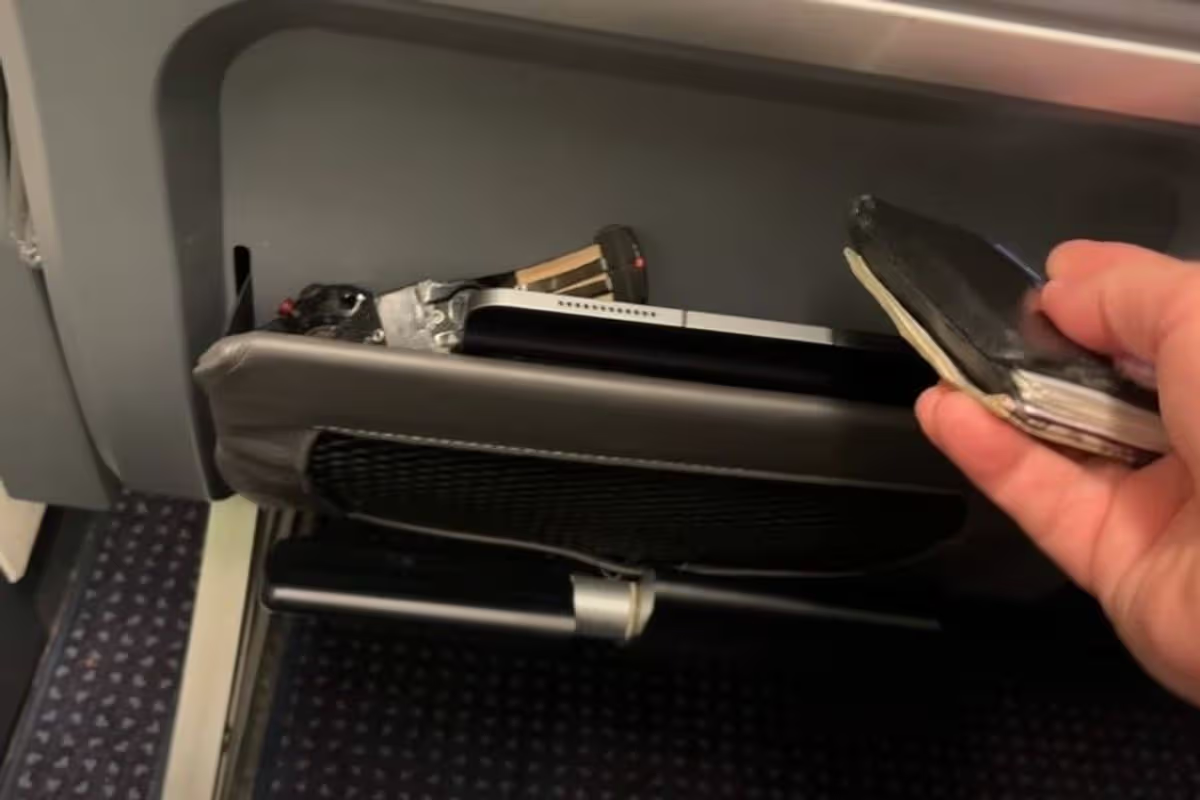
According to Ryanair, certain items should never be packed in your hand luggage, and one of them is super popular at this time of year. From January, you may want to think a little more about how you’re preparing to travel.

The thought of jetting off abroad may be lovely, but air travel comes with its stresses. There are some key guidelines you need to follow when it comes to your hand luggage.

Previously, the topic came up on Reddit when a social media user asked: “Looking for a trekking pole to buy. Which kind of pole (collapsible/telescopic) would be better so that it could be brought as a carry-on bag on Ryanair/Iberia?”

It got a lot of people talking, and they were quick to point out an essential piece of information, and it’s worth noting if you’re planning on going skiing any time soon. One person replied: “I don’t think it really matters what airline you fly. You have to get past security with them, and they are usually not allowed.”
Another wrote: “You will always be taking a risk unless you put them in a checked bag.” A third also replied: “Trekking poles are not allowed in your carry-on. This rule is not always enforced, but that is the rule.

“One time I flew to a location with my poles in my carry-on, but they wouldn’t let me on the flight to come back with those same poles in my carry-on (same airline).”

However, according to Ryanair, this isn’t the only thing you need to be aware of. If you’re going skiing any time from January, you need to stop packing poles in your carry-on luggage too.

What does Ryanair say?

According to the airline, various items are prohibited in carry-on luggage, and all of these are detailed on the website. However, when it comes to poles, it offers specific advice.

It reads: “The following items must not be carried on board, but may be carried as part of your checked baggage. Objects with a sharp point or sharp edge capable of being used to cause serious injury.”

Ski poles and hiking poles feature in the list, so it’s important you don’t take them in your hand luggage. Generally, they need to be checked in, as they are deemed too sharp to carry through airport security.

Due to their length and sharp tips, they are considered potential weapons. While some travellers may find success with collapsible poles tucked away, security agents typically require them to be checked.

Though some airline guidelines may differ, the safest option is to put them in your checked luggage. This will help avoid any problems or delays at airport security.

If you opt to try and take them through, you risk having to surrender them at airport security. It’s a gamble that’s really not worth taking when you travel.

Source link

Only some passengers returned on the UK’s creepy ‘death railway’

Only a few parts of this long-forgotten railway line remain standing, but it once carried up to 2,000 people a year on their final journeys along with their mourning loved ones clad in black

The Victorians have a reputation for dealing with death in strange ways, from photographing the dead to their obsession with Memento Mori objects, reminding them of the inevitability of death. But one almost forgotten part of Victorian history is particularly creepy and involves a long-abandoned railway line.

Early into Queen Victoria’s reign, the city faced a horrific problem. It had doubled in size thanks to the Industrial Revolution, bringing the population up to 2.5 million, many of whom lived in crowded, unsanitary conditions, causing outbreaks of conditions such as Cholera. London was the largest city in the world, but it also had insufficient sewage facilities and poor water quality, leading to disease and death. A Londoner born in the 1840s had an average life expectancy of just 36.7 years.

London’s churches soon found their graveyards were full to capacity, leading to the horrific practice of exhuming the recently deceased to make way for newer burials. As a solution, a huge new cemetery was planned in Brookwood, Surrey, but the plodding horse and carriages of the time would have taken hours to transport a body to this location. Therefore, the idea for the London Necropolis railway was formed.

The London Necropolis railway station was built next to Waterloo, and had a beautiful, ornate exterior typical of Victorian architecture. Here, the bodies of people of all ages and social classes were readied for their final 23-mile journey to the new Brookwood Cemetery in leafy Surrey, a world away from the grubby streets of London.

Coffins were issued a one-way ticket, while the mourners accompanying them would get a return ticket to take them back into the city after the service. Once the trains arrived in Brookwood, they made two stops in the Anglican and Nonconformist parts of the cemetery, depending on the religion of the deceased.

While all sorts of people were laid to rest in Brookwood, the rich, of course, enjoyed a better class of funeral than the Victorian poor. A first-class funeral came with a choice of burial plots and the ability to erect a permanent memorial. Those who chose a second-class funeral could put up a gravestone or other memorial for an additional cost, but if they failed to do so, the grave could end up being reused.

In third class were people who had a pauper’s funeral, paid for by their local parish. While these people weren’t given their own gravestone, they did get separate graves, which were much more dignified than the horrific burial practices going on at London’s graveyards at the time. The London Necropolis Company (LNC) carried out the burials, and about 80% of the funerals it held were third class, for those whose families couldn’t afford a service.

First and second class passengers had a separate waiting area, and their loved ones’ names were announced as their coffins were carried onto the train, a ceremonial touch not afforded to those headed to unmarked graves.

As London grew, and with the building of the London Underground, proper sewage systems, and overground railways, many churchyards stood in the way. The Necropolis Railway took on a huge new project, relocating the bodies from 21 churchyards across the city to the Surrey cemetery

Trains ran daily, and Sundays were a particularly busy day for funerals. It was the only day of the week when many workers had off, and by scheduling their loved ones’ funerals, they could avoid taking an extra day off.

The London Necropolis Railway ran until 1941, when a World War Two bomb destroyed the London station and track. By that point, funeral directors were increasingly using motorised hearses, and in the post-WW2 reconstruction of the city, the destroyed funeral train service wasn’t seen as a priority.

READ MORE: Weather turns on Champagne-sipping passengers as Antarctic cruise ship gets stuckREAD MORE: Cruise packing mistake as passengers warned 1 common item in luggage will be confiscated

Visit Westminster Bridge House and you can still see some of the façade of the old station building, although the old sign is boarded up. However, in Brookwood Cemetery, the remains of this unusual chapter of history are still on display. You can still see parts of the track, and plaques commemorate the 200,000 people who reached their final resting place on this unique train line.

Have a story you want to share? Email us at webtravel@reachplc.com

Source link

Flight attendants’ secret code for identifying rude passengers on a plane

A flight attendant has shared the tell-tale signs that a passenger is a nightmare aboard the aircraft

The role of a flight attendant appears simple and glamorous – jetting off to exotic locations, while their main duty involves upholding health and safety standards and providing top-notch service. However, cabin crew frequently deal with entitled and discourteous passengers.

In an exclusive interview with Express.co.uk, an anonymous British flight attendant revealed how certain passengers’ disruptive behaviour would disrupt operations and cause problems for staff. This specific type of traveller would be identified using a simple code word.

The cabin crew member explained: “There are a lot of things and icks from passengers that we can overlook, but if we say the word ‘precious’ it generally means that they’re acting like a ****.”

The “precious” passenger will be identified among the entire crew, which may affect the level of service that the individual receives.

However, the anonymous employee stressed that alternative codes might exist across different airlines that she’s never used with her colleagues.

For instance, speaking to The Sun, one flight attendant disclosed: “If you’re labelled a ‘Philip’ then you’ve done something wrong and should probably expect to get bad service for the rest of the flight.

“That name originated from the term PILP – Passenger I’d Like to Punch – but has changed over time to become slightly more subtle.”

Another discreet signal concerns crew members noticing an attractive passenger. The flight attendant, who boasts two years’ experience, disclosed: “This is an old one I’ve heard, but if we find you attractive, we would say ‘cheerio’ when you’re leaving instead of goodbye.

“Obviously, we have to be discreet and can not outwardly be like ‘hey, you’re hot’, but that’s a fun way to secretly flirt.”

The cabin crew member explains that countless codes exist chiefly for operational efficiency. While there are different ways to identify passengers for various reasons, staff will never refer to you by your real name.

She clarified: “If we are referring to passengers, we do not use your name; we use your seat number. So if someone wanted something, we wouldn’t say ‘Mary, sat in row 50, wants a coffee’. We would say, ’50 Delta, 50 Kilo or 50 Charlie’. We use seat numbers and the phonetic alphabet; it’s just easier.”

This shouldn’t spark any concern or intrigue, as cabin crew are simply working out how best to assist you without causing any commotion or gossip. However, do pay attention if you’re being branded a “precious Philip” – you might want to apologise for your behaviour.

Source link

Weather turns on Champagne-sipping passengers as Antarctic cruise ship gets stuck

The Scenic Eclipse II had to call on the help of Us Coast Guard, Polar Star, to help after it became trapped in pack ice in the Ross Sea

A cruise ship was rescued by a 50-year-old US Coast Guard vessel after it reportedly became trapped in pack ice in Antarctica – as those onboard sipped Champagne and watched the action.

The Scenic Eclipse II sent a distress call out at around 11pm local time on Friday, January 16, after it became stranded in the Ross Sea near McMurdo Sound, approximately 810 miles from the South Pole, it has been reported.

The cruiser liner – which was launched in 2023 and carries 200 guests and around the same number of crew in 114 suites – was freed by the coast guard and escorted for four hours to open water, Cruise Industry News reported.

READ MORE: Seven ‘red list’ destinations Brits should not travel to in 2026

Author avatarMilo Boyd

Its passengers were given Champagne and guided onto the observation deck so they could get a first-hand view as the ice was cleared.

The ship and its passengers are currently on a 23-day one-way trip from Hobart, Tasmania, in Australia to Dunedin in New Zealand, calling in at the Balleny Islands and Ross Island in Antarctica on the way.

As a Polar Class 6 vessel, Scenic Eclipse II is well able to handle Antarctic ice, but due to pack changes during the day, the captain requested help to avoid a longer sailing pace at a reduced speed.

The natural movement of the ice changed the following day and the ship was able to carry on as normal. According to a Jan. 23 press release detailing the incident, the U.S. Coast Guard helped “free and escort” the cruise ship that was “trapped in pack ice.”

Thanking the USCG Polar Star for their help, Captain James Griffiths, Scenic Group’s General Manager Ocean Operations said: We were grateful for the professionalism and co-operation of the crew of USCG Polar Star during our operations in the Ross Sea. While Scenic Eclipse II was never in need of rescue services, the co-ordination between both vessels ensured we could navigate the changing pack ice safely and efficiently.

“This is a great example of the practical, respectful co-operation that exists in the polar regions, where safety, seamanship and shared responsibility always come first.”

The Polar Star is the USA’s only active heavy icebreaker and has been in service for five decades.

Commander. Samuel Blase, Polar Star’s executive officer said: “At 50 years old, Polar Star remains the world’s most capable non-nuclear icebreaker. That’s a testament to the crews that have maintained it over the decades. With years of service left to give, Polar Star will continue to guide the way in the high latitudes well into the future.”

Despite passengers paying large sums of money to travel to the world’s least visited continent, Antarctica cruise lines rarely give detailed itineraries as the harsh weather conditions and propensity of the sea to suddenly freeze means they are difficult to stick to.

Scenic has been contacted for comment.

Source link

Cruise packing mistake as passengers warned 1 common item in luggage will be confiscated

Travel enthusiast Laurie has warned cruise passengers about one common item that will be taken from you at boarding as it poses a big fire risk if you use it onboard the ship

Whilst packing may not be the most thrilling aspect of a holiday, it certainly builds anticipation as you decide what essentials to take along on your travels.

For those embarking on a cruise in particular, it’s crucial to familiarise yourself with the varying regulations each cruise line enforces to ensure passenger safety whilst at sea. Typically, this involves each vessel maintaining a list of forbidden items that passengers are not allowed to bring aboard.

To help fellow holidaymakers in knowing what to leave behind, travel enthusiast Laurie – who goes by ‘traveltipsbylaurie’ on Instagram where she boasts 312,000 followers – has shared her expert advice on cruise packing.

In a recent video, she highlighted one specific item that’s banned from all cruise ships and will be confiscated upon boarding due to the risks associated with it.

“Do not get kicked off your ship by doing this one travel tip for the electronics that you bring to the ship,” Laurie warned at the beginning of her clip. “Just save yourself the stress by doing this one travel tip.”

Content cannot be displayed without consent

“In our room with two twin beds, there is only one outlet section on one side, so get a powerstrip that is non-surge protecting, this one’s from Amazon,” she told viewers.

In the caption accompanying her post, she clarified that standard power strip towers or extension leads won’t make it past cruise ship security as staff will seize them as soon as you board.

The reason? Their surge protection elements pose a substantial fire risk. Cruise vessels operate on different electrical systems to residential properties, and when surge protectors interact with the ship’s power network, they can trigger overheating, flip circuit breakers, and create genuine safety concerns.

That said, you’re permitted to bring aboard a “non surge protector” power strip, which typically gets the green light on cruise ships. Multi-port USB chargers (without high-voltage sockets) generally pass muster too.

But, it’s wise to double-check with your specific cruise line before you embark, so you know what the rules are beforehand.

Should your power strip be confiscated when you step onto the vessel, crew members will tag it and ensure its return when you disembark.

The comments section quickly filled with responses, as numerous people were caught off guard by this stringent cruise ship policy.

“Oh I had no idea,” one individual remarked.

Another shared: “I brought one a few years ago and it was taken right away. I got it as I exited the cruise ship. You are absolutely right!!!”.

A third person said: “Royal [Caribbean] doesn’t allow any power plugs with a cord. They are only allowing non surge protectors that plug directly in. I thought Celebrity (owned by same company) had been doing this, too.”

Source link