partial government shutdown

TSA says PreCheck still operational

The Transportation Security Administration said Sunday that its PreCheck program would remain operational despite an earlier announcement from the Department of Homeland Security that the airport security service was being suspended because of the partial government shutdown.

“As staffing constraints arise, TSA will evaluate on a case by case basis and adjust operations accordingly,” the agency said in a statement.

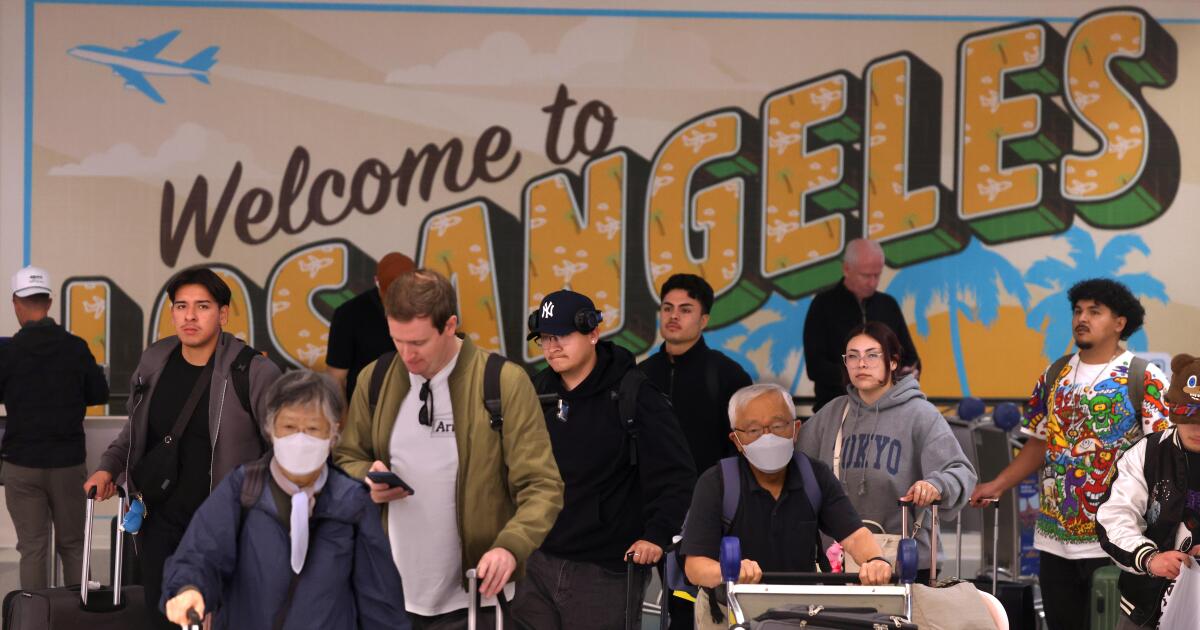
Airport lines seemed largely unaffected through midday Sunday, with security check line wait times listed as under 15 minutes for most international airports, according to TSA’s mobile app.

Amy Wainscott, 42, flew from the Destin-Fort Walton Beach airport in Florida to Dallas Love Field on Sunday and said she didn’t hear about the announced suspension until she had already gone through TSA’s PreCheck.

“When we got to the airport this morning everything was working like usual,” she said. “It didn’t seem like anything had changed.”

Jean Fay, 54, said she had no issues going through TSA PreCheck at the Baltimore airport for her 6 a.m. Sunday flight back home to Texas. She didn’t hear about the suspension announcment until she was changing planes in Austin on her way to Dallas Love Field.

“When I landed in Austin I started getting the alerts,” she said.

It was not immediately clear whether Global Entry, another airport service, would be affected. PreCheck and Global Entry are designed to help speed registered travelers through security lines, and suspensions would probably cause headaches and delays.

Since starting in 2013, more than 20 million Americans have signed up for TSA PreCheck, according to the Department of Homeland Security, and millions of those Americans also have overlapping Global Entry memberships. Global Entry is a U.S. Customs and Border Protection program that allows preapproved, low-risk travelers to use expedited kiosks when entering the United States from abroad.

The turmoil is tied to a partial government shutdown that began Feb. 14 after Democrats and the White House were unable to reach a deal on legislation to fund the Department of Homeland Security. Democrats have been demanding changes to aggressive federal immigration operations, central to President Trump’s deportation campaign, which have been widely criticized since the shooting deaths of two people in Minneapolis last month.

The security disruptions come as a major winter storm hit the East Coast from Sunday into Monday. Nine out of 10 flights going out of John F. Kennedy International Airport, LaGuardia Airport and Boston Logan Airport on Monday have been canceled.

Homeland Security previously said it was taking “emergency measures to preserve limited funds.” Among the steps listed were “ending Transportation Security Administration (TSA) PreCheck lanes and Customs and Border Protection (CBP) Global Entry service, to refocus Department personnel on the majority of travelers.”

“We are glad that DHS has decided to keep PreCheck operational and avoid a crisis of its own making,” said Geoff Freeman, president and CEO of the U.S. Travel Assn.

Before announcing the PreCheck shutdown, Homeland Security Secretary Kristi Noem said in a statement Saturday night that “shutdowns have serious real world consequences.”

One group of fliers will definitely be affected, according to TSA.

“Courtesy escorts, such as those for Members of Congress, have been suspended to allow officers to focus on the mission of securing America’s skies,” the agency said.

Airlines for America, a trade group representing major carriers, said Saturday night that “it’s past time for Congress to get to the table and get a deal done.” It also criticized the announcement, saying it was “issued with extremely short notice to travelers, giving them little time to plan accordingly.”

“A4A is deeply concerned that TSA PreCheck and Global Entry programs are being suspended and that the traveling public will be, once again, used as a political football amid another government shutdown,” the organization said.

Democrats on the House Committee on Homeland Security criticized the Department of Homeland Security’s handling of airport security after the initial announcement Saturday night. They accused the administration of “kneecapping the programs that make travel smoother and secure.”

Sen. Andy Kim, a New Jersey Democrat, said Noem’s actions are part of an administration strategy to distract from other issues and shift responsibility.

“This administration is trying to weaponize our government, trying to make things intentionally more difficult for the American people as a political leverage,” he said Sunday on CNN. “And the American people see that.”

Swenson writes for the Associated Press.

Source link

Shutdown nears as lawmakers brace for next round of ICE negotiations

A budget impasse in Congress is poised to halt large swaths of federal operations early Saturday as lawmakers in Capitol Hill turn to the next flashpoint in negotiations to reopen the government: whether to impose new limits on federal immigration authorities carrying out President Trump’s deportation campaign.

Over the next two weeks, Democrats and Republicans will weigh competing demands on how the Department of Homeland Security should carry out arrests, detention and deportations after the fatal shootings of two U.S. citizens by federal immigration agents this month in Minnesota.

Seeking to rein in the federal agency, Senate Democrats late on Thursday were able to strike a deal with the White House that would temporarily fund the Department of Homeland Security but fund the Pentagon, the State Department, as well as the health, education, labor and transportation agencies through Sept. 30.

The agreement is intended to give lawmakers more time to address Democratic demands to curb ICE tactics while averting a partial government shutdown.

The Senate finalized the deal Friday evening on a 71-29 vote, hours before a midnight deadline to avert a government shutdown. Passage of the deal was delayed by Sen. Lindsey Graham (R-S.C.), who objected to parts of the package.

The House expected to take up the legislation as early as Monday. The partial government shutdown will occur until the measure clears the House and Trump signs it into law.

The president supports the deal, which came after Senate Democrats said they would not vote to fund Homeland Security unless reforms for the agency were approved. Among the demands: banning federal agents from wearing masks, requiring use of body cameras and requiring use of judicial warrants prior to searching homes and making arrests.

Democrats have also demanded that local and state law enforcement officials be given the ability to conduct independent investigations in cases where federal agents are accused of wrongdoing.

The deal, however, does not include any of those reforms; it includes only the promise of more time to negotiate with no guarantee that the new restrictions will be agreed to.

Both of California’s Democratic senators, Adam Schiff and Alex Padilla, voted against the Senate deal. They both opposed giving more funding to Homeland Security without reforms in a vote Thursday.

Schiff voted no because he said he promised to not “give another dime for ICE until we saw real reforms — and not just promised reforms but statutory requirements.”

“I want to see those reforms before I am prepared to support any more funding for these agencies,” Schiff said in a video message posted on X, and added that he did not see the White House acting in “good faith. “I want it in writing and statute.”

After voting against the measure, Padilla said in a statement: “I’ve been clear from the beginning: No more money for ICE and CBP without real oversight and accountability.”

House Minority Leader Hakeem Jeffries (D-N.Y.) told reporters Friday morning that Democrats will find out whether two weeks is enough time to reach a compromise.

“We will evaluate whether that is sufficient time,” Jeffries said. “But there is urgency to dealing with this issue because ICE as we have seen is out of control.”

Meanwhile, the absence of reforms in the Senate deal has already drawn concerns from some progressives, who argue the deal falls short of what is needed to rein in federal immigration enforcement.

“First of all, I’m actually disappointed that Senate leadership is not right now demanding more,” Rep. Robert Garcia, a top-ranking House Democrat from Long Beach, told reporters Friday. “This idea that we’re somehow going to continue to fund this agency and somehow just extend the pain, I think is absolutely wrong.”

Garcia said it was “outrageous” that the Senate deal would extend funding for Homeland Security for two weeks without any new requirements.

“This idea that we’re somehow not demanding immediately the removal of masks and body cameras and all the other reforms while eliminating this agency that’s causing harm, I think, is outrageous,” Garcia said.

Democratic Rep. Judy Chu of Pasadena said in a statement that she had not yet decided whether to support the Senate deal once it reaches the House floor.

But, Chu added: “I cannot support legislation that increases funding to this agency while delivering no accountability measures.”

Rep. Kevin Calvert (R-Corona) said in a statement that it is “critical” for lawmakers to pass the bipartisan spending package, in part because it included funding for the U.S. military.

“As Chairman of the [House] Defense Appropriation Subcommittee, I’m especially concerned about the negative impacts of a shutdown at a time when we have a buildup of American military assets in the Middle East,” Calvert said.

Calvert added that Homeland Security operations will continue even in the shutdown because lawmakers provided an influx of funding for the agency in last year’s “One Big Beautiful Bill.” But he said he worried that any lapse in funding would affect other operations by the agency, including disaster funding and security assistance for major events, such as the upcoming World Cup.

“We need to get these priorities funded,” he said.

Other Republican lawmakers have already signaled the possible hurdles Democrats will face as they try to rein in ICE.

Graham held up consideration of the Senate deal, in part because he wanted the Senate to vote to criminalize local and state officials in sanctuary cities — a term that has no strict definition but that generally describes local jurisdictions that limit cooperation with federal immigration authorities.

“You can convince me that ICE can be better, but I don’t think I will ever convince you to abandon sanctuary cities because you’re wedded to it on the Democratic side,” Graham said.

Graham also delayed passage of the deal because it included a repeal of a law that would have allowed senators — including himself — to sue the government if federal investigators gained access to their phones without notifying them. The law required senators to be notified if that were to happen and sue for up to $50,000 in damages per incident.

“We’ll fix the $500,000 — count me in — but you took the notification out,” Graham said. “I am demanding a vote on the floor of the United States Senate.”

Other Senate Republicans also expressed concern with Democrats’ demands, even as Trump seemed to try appease them.

Sen. Eric Schmitt (R-Mo.) said the demand for federal agents to remove their masks during operations was a “clear and obvious attempt to intimidate and put our federal agents in harm’s way.”

“When enforcement becomes dangerous for enforcers, enforcement does not survive,” Schmitt said in a Senate floor speech. “What emerges is not reform, it is amnesty by default.”

Despite the GOP opposition, most Senate Republicans were poised to join Democrats on Friday and vote for the deal. But there is no certainty that they will join the minority party when negotiations resume in the coming weeks.

Recent history suggests that bipartisan support at the outset does not guarantee a lasting deal, particularly when unresolved policy disputes remain. The last government shutdown tied to a debate over healthcare exposed how quickly negotiations can collapse when no agreement is reached.

In November, a small group of Democrats voted with Republicans to end the longest government shutdown in U.S. history with the promise of negotiating an extension to healthcare tax credits that were set to expire in the new year.

Rep. Nancy Pelosi (D-San Francisco), a former House speaker, reminded the public on Friday that Democrats were unable to get Republican support for extending the tax credits, resulting in increasing healthcare costs for millions of Americans.

“House Democrats passed a bipartisan fix, yet Senate Republicans continue to block this critical relief for millions of Americans,” Pelosi wrote in a post on X.

Times staff writer Seema Mehta contributed to this report.

Source link