

parent

Judge grants asylum to woman adopted by a U.S. veteran from Iran after deportation threats

A federal immigration judge has granted asylum to a woman orphaned in Iran in the 1970s and adopted by an American war veteran, whom immigration officials threatened this year with deportation to the country with which the U.S. is now at war.

Judge Andrew Fishkin’s ruling probably ends a months-long ordeal for the California woman, one of thousands adopted from abroad who were never granted citizenship because of bureaucratic loopholes between adoption and immigration law.

The woman has lived in the United States since she was adopted by American parents as a toddler and has no criminal record. The Associated Press is not naming her because she worries her legal situation remains tenuous as the administration has time to appeal. A federal judge has allowed her to use a pseudonym, “Ms. S,” in her challenge to the government’s determination of her immigration status.

The woman received a letter from the Department of Homeland Security in February that ordered her to appear for removal proceedings, saying she is subject to deportation because she overstayed her visa in March 1974 at 4 years old.

The woman, 56, described what came next as a terrifying and humiliating few months.

She grew up in a Christian, military family on a farm in Wisconsin and was taught to be patriotic. But the documents she received from the government described her as an “alien;” some said she did not understand English, which is the only language she speaks.

Immigration officials told her she was being arrested, but was released and tracked with an ankle monitor. She bought new pants to try to hide it and taught herself not to cross her legs in work meetings, terrified it would threaten the corporate job in healthcare she’s held for almost two decades.

They fingerprinted her and took her DNA. She said she was obviously weeping in the mug shot they snapped of her.

She prepared herself to be detained: She put her bills on autopay and gave her friends a key to her home.

Her lawyer, Emily Howe, said the government had the power to agree she is an American citizen.

“Instead they treated her like a terrorist, like she was the worst of the worst criminals,” Howe said. “It felt very Big Brother, very Orwellian.”

The Department of Homeland Security declined to comment on the record on an individual case.

The Associated Press profiled the woman in 2024 as part of a story about how many international adoptees were left without citizenship because their American adoptive parents failed to naturalize them.

The woman’s parents were living in Iran, where her father was working for a U.S. government contractor, in the 1970s. He was retired from the Air Force as a lieutenant colonel. He’d been held for years a prisoner of war in Germany during World War II.

The couple found the toddler at an orphanage and returned to the U.S. with her in 1973 and soon completed the adoption. At that time, parents had to separately naturalize adopted children. The woman’s parents have since died.

She didn’t learn she hadn’t been naturalized until she applied for a passport at 38 years old. She still doesn’t know how the oversight happened. She searched her father’s papers and found a letter from a lawyer, dated 1975, that said he was working with immigration officials, “it appears this matter is concluded,” and billed her father for his services.

She filed a federal lawsuit this month trying to prohibit the government from removing her and forcing it to grant her citizenship.

She has long believed she should be considered a U.S. citizen: She has a Social Security card, and a driver’s license and has been legally allowed to work and pay taxes for decades. It’s only the immigration agency that denies she is a citizen. She suspects her paperwork was lost, probably when militants seized the U.S. Embassy in Tehran in 1979.

Fishkin seemed to agree: He wrote in his ruling that documents from that embassy are not available to her or to the U.S. government. He declared her a refugee, entitled to work in the U.S. His ruling puts the woman on a pathway to being recognized as a citizen.

She’d felt hopeful, she said, when she learned her court date before Fishkin was scheduled for her late father’s birthday. She always felt like she needed to protect not only herself but also her father’s legacy. He was a conscientious military official, she said, who would not have knowingly allowed such a glaring oversight that left his daughter in legal limbo.

Galofaro writes for the Associated Press.

Source link

Born in Brooklyn, raised in London, Folarin Balogun lights up the World Cup for the U.S.

If a pregnant Nigerian woman had been allowed to board a plane 25 years ago, the U.S. team’s path through this summer’s World Cup may have unfolded much differently. Instead, a gate agent turned her away, insisting it wasn’t safe for her to fly from New York to London.

So Florence Balogun returned to Brooklyn, where she had been visiting relatives, and waited for her second son to be born. And when Folarin arrived a few weeks later, entering the world just hours before Independence Day dawned, he did so as an American citizen.

It was that quirk of fate that allowed Balogun, who lived just two months in the U.S., to represent the country on soccer’s biggest stage.

“I’m extremely proud my individual journey will come full circle now,” he said before the tournament started. “Especially the World Cup being here, the opportunity to represent my nation. It’s going to be something special for me.”

The first game certainly was, with Balogun scoring twice in the first half of a dominant 4-1 win over Paraguay, becoming the first American with multiple goals in a World Cup game in 96 years while introducing himself to a country that may have known his name, but not his unique talent.

“If you don’t know the type of player he is, you could see it today,” midfielder Weston McKennie said. “It’s the World Cup, everyone steps up to their maximum. In the past a lot of people maybe have not made him out to be a player like that.

“He showed everyone he’s willing to do the dirty work as well.”

Balogun once had his pick of countries to represent. His birth in Brooklyn made him eligible to play for the U.S., his longterm residency in London made him eligible to play for England and his parents’ nationality qualified him to play for Nigeria.

He picked the U.S.

And he’s not the only one on the American team who had a choice. Half the men on the World Cup roster — including Christian Pulisic, Gio Reyna and Malik Tillman, who each had a goal or an assist against Paraguay — are dual nationals, meaning they’re playing for the U.S. because they want to, not because they have to.

“You’re more American if you were not born over there because you had the choice to choose and you chose America,” Kenneth Dest, the Surinamese-American father of Dutch-born defender Sergiño Dest, said in an HBO Max documentary.

If America is a nation of immigrants, it only seems right that it should be represented in the World Cup by a team of immigrants. Like Tillman and Dest, who were born and raised in Europe, the sons of U.S. soldiers. Or forwards Tim Weah, the Brooklyn-born son of the former president of Liberia, and Alejandro Zendejas, who was born in Mexico but became a U.S. citizen at 13 after his father was naturalized.

U.S. forward Folarin Balogun, right, celebrates his goal with Sergiño Dest (2) and Chris Richards (3) against Paraguay.

U.S. forward Folarin Balogun, right, celebrates his goal with Sergiño Dest (2) and Chris Richards (3) against Paraguay.

(Robert Gauthier / Los Angeles Times)

The paternal great-grandmother of goalie Matt Turner fled religious persecution in Lithuania, with his Jewish ancestors changing their family name from Turnovski to Turner when they arrived at Ellis Island. The parents of midfielder Cristian Roldan came to the U.S. to escape civil wars in Central America, his father from Guatemala and his mother from El Salvador.

They didn’t wind up wearing the same uniform by accident, however. The recruitment of dual nationals dates to the 1980s under Hungarian-born manager Bob Gansler, who qualified the U.S. for the World Cup for the first time in 40 years with a team that included players born in Uruguay, Greece, Germany and El Salvador.

It really began to scale up about 15 years ago under Bob Bradley and his successor Jurgen Klinsmann. Gregg Berhalter then took it to another level, recruiting more than a dozen dual nationals — including Dest, Tillman, Balogun and Turner — in his five years as coach.

The practice isn’t limited to the USMNT. When France won the World Cup in 2018, 16 of the 23 players on the team came from families that recently immigrated from places like Zaire, Cameroon, Morocco, Angola, Congo or Algeria. More than half the players on Algeria’s team in this summer’s tournament were born in Europe while only seven men on Morocco’s roster are from Morocco.

Even Japan, famously homogeneous, has a Black goalkeeper who was born in Arkansas to a father from Ghana.

“Inclusion always pulls sport forward,” said Ronen Dorfan, a journalist and sports historian based in Budapest.

Still, Balogun’s journey is unusual — and not just because of the way it started.

He was two months old when he and his mother finally made it to London and eight years later he was good enough to enter Arsenal’s academy system. He made his junior international debut with England at 17, then three months later was invited to play four games for the U.S. U18 team.

But Balogun’s future appeared to be with England, especially after he scored seven times in 13 appearances with the U21 team, then followed that up with a career-high 21 goals for Reims in France’s Ligue 1 in 2022-23.

Yet neither performance earned him a call-up to a senior national team that was deep at forward.

So the U.S., which desperately needed a fast, technical, two-footed No. 9, pounced, getting Balogun to withdraw from England’s U21 training camp to make a secret visit to Florida. Once there, U.S. Soccer arranged for him to sit courtside at an NBA game, receive VIP passes to Universal Orlando, attend spring training with the Yankees and meet with a number of U.S. national team players.

With a schedule like this, his visit didn’t stay secret for long. After studying pictures Balogun had posted on social media, some U.S. fans determined he was in Orlando and began peppering his feeds with American flag emojis. Others found him at his hotel and urged him to commit to the U.S., a plea his parents, citing a quirk in fate, had been making for years.

You’re American, they argued. You were born there.

Six weeks later he did commit, with FIFA approving his request to switch allegiances from England to the U.S. A month after that, he scored his first senior international goal in the 2023 Nations League Finals and he’s never looked back. Because if Balogun, 24, felt overlooked in England, he’s felt looked after in the colonies.

“When I committed and throughout this whole cycle and the whole journey to me being at this point, I’ve always said the fans gave me so much motivation, showed me so much support,” said Balogun, who speaks in a pronounced London accent. “The most important thing has been to repay that.

“I just want to continue to show the fans I made the right decision. I want to continue to make the fans proud as well.”

He made a great start on that in his World Cup debut.

Source link

TUI explains family seating ‘row rule’ after parent asks about £25 charge

Travel operator has spoken out on its family rules as Ryanair is facing an investigation over allegations it charges parents to sit alongside their children on flights

Holiday firm and airline TUI has outlined a crucial rule surrounding seat bookings – as the Competition and Markets Authority (CMA) opened an investigation into competitor Ryanair. Ryanair is facing scrutiny over its practice of charging parents to sit alongside their children on flights.

The competition watchdog, the Competition and Markets Authority (CMA), confirmed it will assess whether the approach is “in line with consumer law”. The airline branded the investigation as “bogus” and a “failed effort by the Starmer Government to pretend it cares about consumers”.

Ryanair mandates that parents flying with children aged between two and 11 must pay to reserve what it calls a mandatory family seat. Their children are subsequently assigned seats next to or close to them at no additional cost.

The charge for a mandatory family seat typically stands at around £8 each way, according to the CMA. As the story emerged, one TUI customer turned to X to question how it was possible that his wife was being charged to reserve a particular seat – and that their son might end up seated separately from her.

The person said: “@TUIUK tried to charge my wife 25 pound and said it may be the case that my five year old is sat on his own.”

TUI replied: “If your wife needs any assistance with her booking, please ask her to send us a direct message with the booking details so we can take a look for her.”

The individual then stated: “Don’t need assistance as it is booked, just frustrating she felt pressured to pay that when it isn’t the case that a five year old will be sat on his own.”

The TUI operative then clarified that they cannot guarantee the child will be seated directly beside the parent, explaining: “Please be reassured that children under 12 will always be seated with at least one adult from your booking, this may be directly next to them, across the aisle, or directly in front / behind, depending on the aircraft configuration and availability at check-in. Katy”.

The father responded: “So you would leave a 3 year old sat behind their parent?”.

According to TUI’s terms and conditions: “If you’re flying with TUI Airways and there’s a child under the age of 12 on your booking, we’ll make sure they’re seated with at least one adult in your party. If you’d like to make sure everyone sits together, we recommend reserving seats when you book, or adding them later in Manage My Booking.

“If you don’t use our Select Your Seat service, your seats will be automatically allocated when you check in online.”

Booking a TUI seat costs anywhere from £12 to over £90 per passenger, each way, depending on the destination, flight duration, and seat category. Standard seats are priced between £12 and £45, while upgrades such as Extra Legroom or Premium Seating carry higher charges.

Without paying, seats are assigned automatically at no cost during check-in. Following the previous query, TUI clarified: “Hi there, its lovely to hear from you. As katy explained a child can be seated row directly in front, behind, or across the aisle if under 12 years old and hasn’t purchased select your seats but the team on the flight will be on flight to assist fully. Laura.”

Ryanair is facing an investigation over allegations it charges parents to sit alongside their children on flights.

Children under two are required to sit on their parent’s lap on Ryanair flights. For other passengers, paying to reserve a seat remains optional.

The CMA confirmed it is examining whether Ryanair’s policy means “parents are being charged for the airline to meet its child safety and disability-related obligations as set out under aviation rules”.

Ryanair is “the only major airline flying out of the UK to impose this charge”, the watchdog stated.

Other airlines allow children to be seated next to a parent without requiring a paid adult reservation, or automatically assign seats together during the booking process, the CMA noted.

The probe will also look at whether Ryanair’s compulsory family seat charge is dripped during the booking process — when a company fails to show customers all unavoidable costs upfront.

The CMA stressed it is at the early stages of its investigation and has “reached no conclusions about whether Ryanair has broken the law”. Hayley Fletcher, senior director of consumer protection at the CMA, said: “Lots of families save up to afford a summer holiday and we know that extra charges can quickly bump up the price.

“Our investigation will consider Ryanair’s approach to family seat reservations and how the cost is presented to consumers, to determine whether they comply with consumer law.

“For the past year, we’ve told businesses to ensure their customers are shown the total price upfront – those who don’t face the very real possibility of action from the CMA.”

Rory Boland, editor of consumer magazine Which? Travel, said: “Ryanair doesn’t have to wait for the outcome of the CMA’s investigation. It could stop charging these unreasonable fees today and we would encourage them to do that.”

Ryanair issued a statement saying: “Ryanair’s family seating policy fully complies with all relevant laws and regulations, and saves families money when travelling on the UK’s lowest fare airline.”

The airline insisted it “does not charge any fee for children to sit beside their parent”, and “parents travelling with children pay for only one (adult) reserved seat”.

It went on to say: “This bogus CMA investigation is a failed effort by the Starmer Government to pretend it cares about consumers when it has failed to abolish APD (air passenger duty) which would immediately deliver lower fares for all consumers and growth for the UK aviation, tourism and wider economy.

“Ryanair looks forward to disproving these false CMA claims.”

The CMA is an independent non-ministerial Government department, funded by the Treasury.

Source link

Melania Trump unveils a spinoff of Trump Accounts for foster kids

First Lady Melania Trump and Treasury Secretary Scott Bessent announced Thursday the launch of Fostering the Future Accounts, a spinoff of the Trump Accounts investment funds meant to give $1,000 to every newborn whose parent opens one.

Building on her work helping foster children, Trump said the new federal guidance will give child welfare agencies the ability to act as a guardian for children in foster care for the purposes of opening an account.

At a news conference at the Treasury Department, the first lady said the move “gives foster children the same chance at asset ownership and long-term wealth as every other child.”

The accounts will be open for contributions July 4. To qualify for an account, a child must also be a U.S. citizen born between Jan. 1, 2025, and Dec. 31, 2028.

The White House Council of Economic Advisers estimates that a Trump Account balance for a baby born in 2026 will be $5,800 by age 18 and $18,100 by age 28 if no other contributions are made.

The first lady said 23 governors, all Republicans, have pledged to allow state agencies to begin the process of enrolling children in the program. “I urge every governor and business leader to help fund these accounts,” she said.

There are roughly 330,000 children in the U.S. foster care system, according to the National Council for Adoption. One in five of them is at risk of homelessness after aging out of foster care, and only half gain employment by the time they are 24, according to the National Foster Youth Institute.

“Those outcomes are unsettling, but we refuse to accept them as inevitable,” Bessent told the news conference. “We are affirming that the American dream belongs to every child.”

A provision of Trump’s tax and spending legislation that he signed into law last summer created Trump Accounts. Under them, the Treasury Department gives $1,000 to babies so long as their parents open an account. That money is then invested in the stock market by private firms, and the children can access the money when they turn 18.

Employers and billionaires across the country have pledged to make matching Trump Account contributions for employee benefits. Among them are Michael and Susan Dell, who announced a $6.25 billion donation, and hedge fund founder Ray Dalio and his wife, Barbara, who pledged $75 million for kids under 10 in Connecticut, where the Dalios live.

Hussein writes for the Associated Press.

Source link

Sonja Shaw and Richard Barrera advance to run-off for state schools superintendent

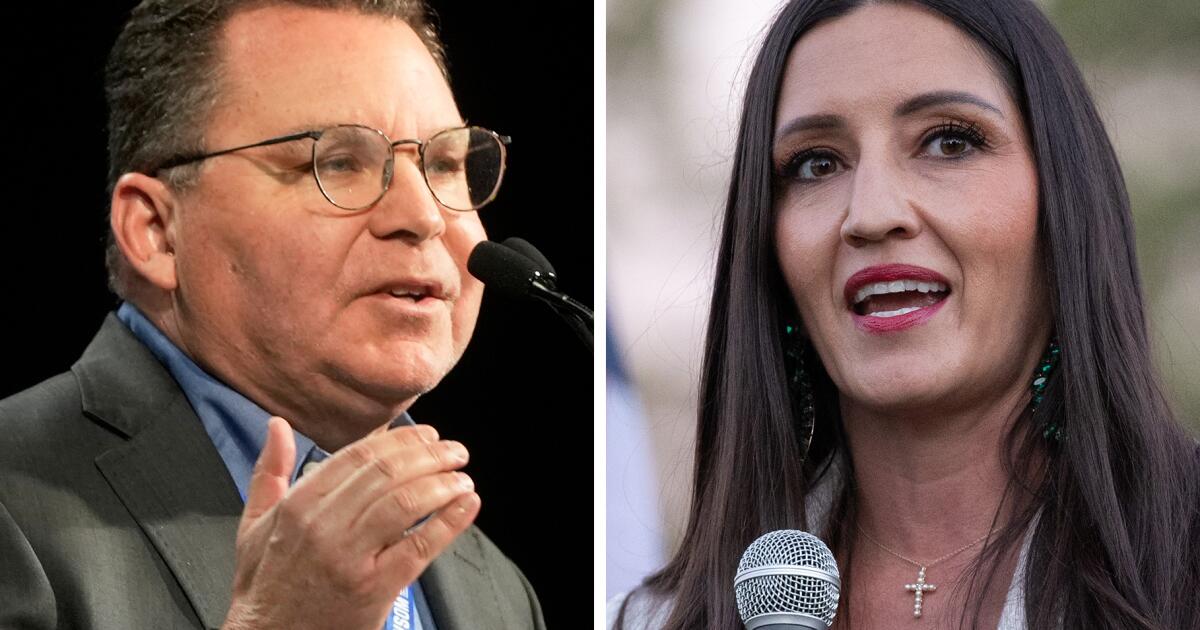
The November runoff for state schools superintendent will pit two school board presidents — one a union-friendly liberal and the other a Trump-aligned conservative — against each other.

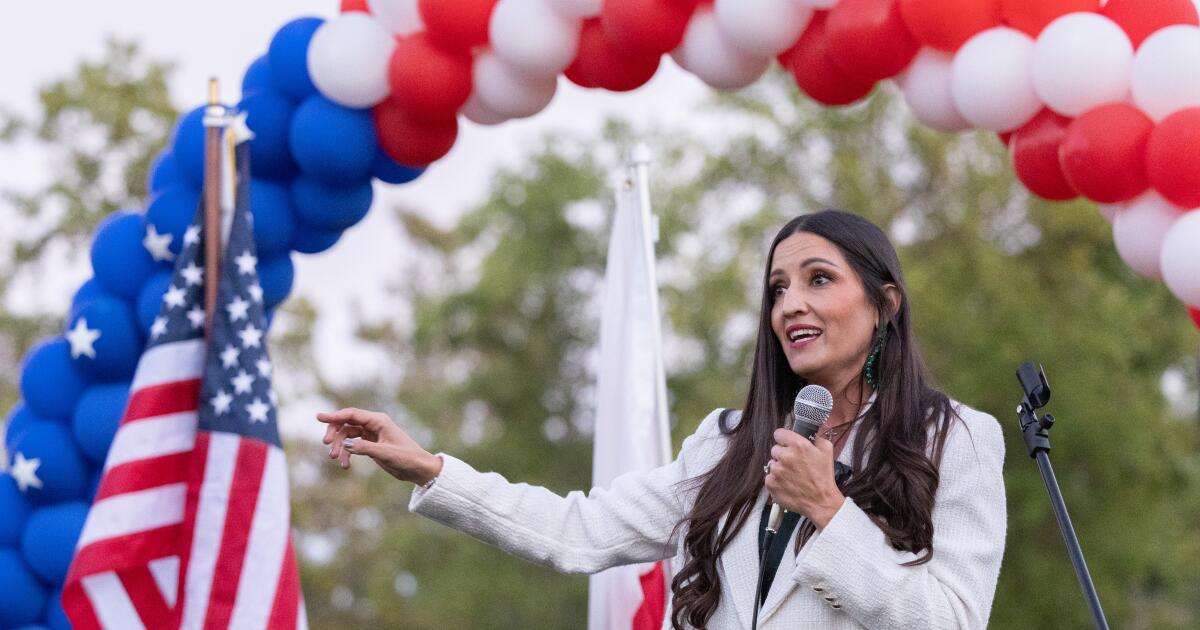
Republican, Sonja Shaw finished in first place in this week’s primary with 24.5% of votes counted through June 4. Democrat Richard Barrera had19.3%.

Shaw’s margin seems comfortable even with more ballots to be counted, with Barrera firmly in the runoff. The third-leading vote-getter, Wendy Castaneda Leal, was about 10 percentage points behind him.

The race creates a clear contrast between candidates and their vision for California’s schools.

While Shaw, 43, has not typically spoken to Trump’s immigration policies in relation to schooling, she is in accord with the Trump administration education agenda, including banning trans-athletes from women’s and girls’ sports and notifying parents when a child expresses gender-identity issues at school.

Under Shaw’s leadership, the school board in Chino Valley Unified, located in San Bernardino County, also approved a policy that permits parents to challenge books in school libraries.

Barrera, 59, is the board president of San Diego Unified, the second-largest school system in the state. He is a former union official who has developed strong bonds with the teachers union during his long board tenure.

That history helped him win the endorsement of the California Teachers Assn., which poured about $5 million into an independent campaign on his behalf.

Barrera acknowledges that this support made the difference in his leap ahead of other strong Democratic candidates.

Shaw has framed her campaign as a populist effort against a failed and self-interested status quo establishment.

“I didn’t get into this race because I was a politician,” Shaw said in a statement. “I got into it because I was a mom who saw too many families being ignored, too many classrooms falling behind, and too many elected officials unwilling to stand up for our kids.”

Barrera said he is ready to focus on the job of helping students learn more effectively.

“We see examples of schools that are delivering,” Barrera said. “The answers are all around us. The challenge for us as a state is to learn from educators in the local community about what is beating the odds and then take those practices to scale.”

Barrera speaks of an “assault” by the Trump administration on immigrant families: “I’m going to stand up to that assault.”

Barrera, who is a senior adviser to outgoing state Superintendent Tony Thurmond, praises the record of his boss.

Shaw, in contrast, once threw Thurmond out of her local school board meeting.

Lance Christensen, a conservative education analyst who ran unsuccessfully for the office four years ago against Thurmond, is ready for a spirited campaign that “is about to go nuclear.”

“Sonja Shaw pulled out an impressive primary win as an unabashed parental rights advocate while successfully running her local school district,” Christensen said.

“Should Shaw weather the political maelstrom that is about to hit her with tens of millions of dollars from the entrenched left,” he added, “she will have a bigger bully pulpit to shame the people in power who have made California’s education system the laughing-stock of the nation.”

Veteran Democratic political consultant Larry Levine predicted that, in November, Democrats will consolidate around Barrera just like Republicans did around Shaw in the primary — likely leading to a different order of finish in November.

“She consolidated the Republican vote and the Democrats spread like butter on warm bread,” Levine said. “It will be a far different story in the general. CTA will step up with the money to make sure their candidate wins.”

One of the trailing Democrats — former state Legislative leader Anthony Rendon —has already endorsed Barrera.

Rendon said that Barrera “is qualified, shares my values, and has spent his career fighting for public education. He is the candidate who will stand up to and defeat the dangerous, extremist ideology of Sonja Shaw.”

The state superintendent has limited authority over school districts, which are locally managed. The officeholder instead manages the California Department of Education. This agency guides local school districts and also provides partial oversight. The state superintendent also typically takes advantage of the bully pulpit on education issues.

The office has an uncertain future because Gov. Gavin Newsom is pushing a proposal to reimagine the office and redistribute some of its duties.

Source link

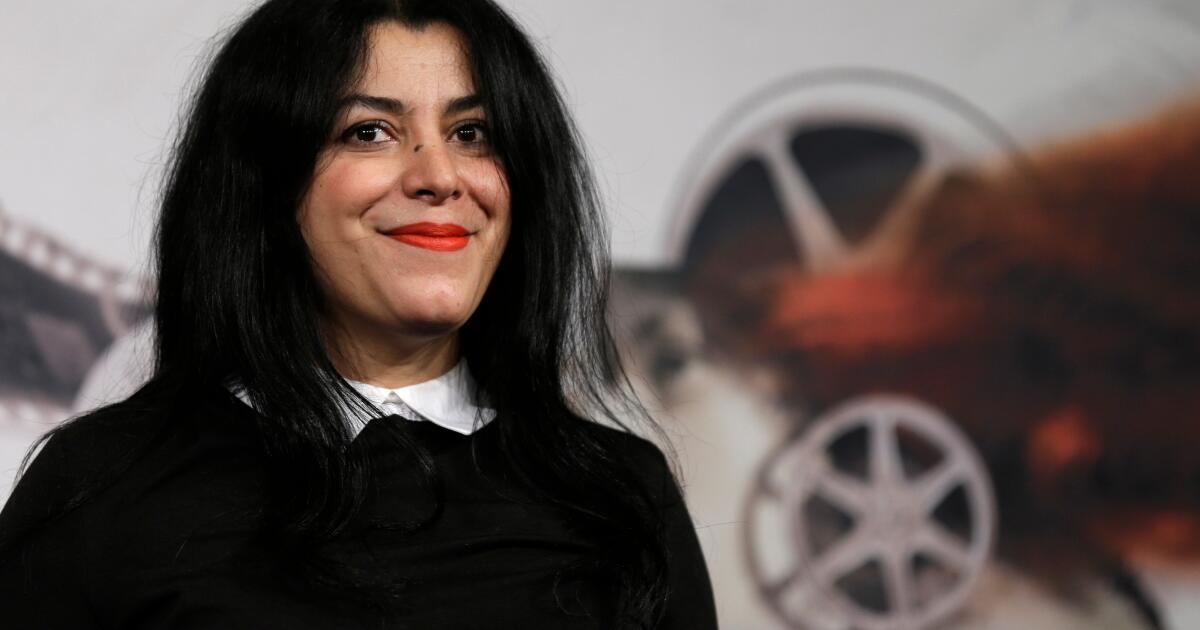
Marjane Satrapi, ‘Persepolis’ author and filmmaker, has died at 56

Acclaimed Iranian-French cartoonist and filmmaker Marjane Satrapi, a prominent advocate for women’s rights, has died at 56, the French presidency said Thursday.

“Her passing marks the loss of a leading figure of French culture and an artist devoted to freedom, whose work carried a universal message and earned her immense international acclaim,” the French presidency said in a statement.

President Emmanuel Macron and his wife “pay tribute to a remarkable artist who transformed an Iranian childhood into a universal fable,” the statement said.

News broadcaster BFM TV and other French media reported Satrapi has “died of sadness” a little over a year after the death of her husband, Swedish film producer and actor Mattias Ripa, according to a statement from people close to the artist.

The French Academy of Fine Arts, of which she was a member, expressed its deep sadness in a social media statement, paying tribute to “a passionate advocate for cinema and film education” who earlier this year created a foundation to help international students come to Paris to study film.

Satrapi is best-known for her monochrome autobiographical comic book and film “Persepolis,” a coming-of-age tale set against the Islamic Revolution in her native Iran.

“Persepolis” won the Film Critics Grand Prix at the Cannes Festival in 2007 and the César Award for adapted screenplay in 2008, in addition to being nominated for animated feature at the 2008 Oscars.

The film, which details her life in Tehran as the willful daughter of intellectual Marxists, is a reminder that Iranians are just like everyone else, Satrapi told The Associated Press in a 2007 interview in Cannes.

“What we wanted to say is, if these people scare you, look closer: They have parents, they have lovers, they have hope, they have stories,” she said.

Iranian authorities at the time protested the movie’s inclusion at Cannes, sending a letter to the French Embassy in Tehran.

Satrapi was born on Nov. 22, 1969, in Rasht, Iran, but her parents sent her to Vienna, Austria, in 1983 to finish her studies because of the extremism in their country following the 1979 Revolution that brought Ayatollah Khomeini to power.

But Satrapi, who found Austria hostile and who desperately missed her parents, returned to Iran in 1989 to attend Tehran University, where she earned a degree in visual communications.

By the time she graduated, Satrapi decided she finally was ready to leave Iran and accept the opportunities her parents had been so desperate to give her a decade before. In 1994 she moved to France. She studied in Strasbourg and later moved to Paris.

Her graphic novels also include “Broderies” (“Embroideries”) and “Poulet aux prunes” (“Chicken with plums”), which also was adapted into a film. As a filmmaker, she has directed several works including “La Bande des Jotas” (“The Gang of Jotas”) and “Radioactive” (“Madame Curie”), a biography about the Polish physicist Marie Curie.

Satrapi in 2023 coordinated the book “Femme, vie, liberté” (“Woman, Life, Freedom”) together with a group of artists and academics to illustrate the revolts that occurred in Iran after the death of Mahsa Amini in 2022 at the hands of the so-called “morality police.” The work denounces the repression and lack of human rights that Iranian society, especially women, suffers at the hands of the Iranian regime, the foundation said.

Satrapi was elected member of the French Academy of Fine Arts in 2024. She also was offered France’s highest award, the Legion of Honor, that same year but declined it, arguing France was not doing enough to support Iranian people fighting for democracy.

“Supporting the women’s revolution in Iran cannot be reduced to photos or speeches,” she wrote in a January 2025 letter to French authorities. “When people are fighting for democracy, we should support them.”

In 2024, Satrapi won the Princess of Asturias Foundation award in Spain for communication and humanities. The organization said she was “an essential voice in the defense of human rights and freedom.” The judges described her as “a symbol of civic engagement led by women.”

Satrapi’s husband, Ripa, died in April 2025 at 53. On her Instagram page, only one message was left in a series of posts: “Because I have lost the love of my life.”

Source link

Conservative Sonja Shaw leads California State Superintendent race;

Sonja Shaw — a Trump-aligned conservative Republican whose public profile rose as she became identified with culture-war causes, including banning transgender athletes from girls’ sports — has emerged as the leading vote-getter in the June primary for California’s superintendent of public instruction.

With more than 80% of precincts at least partially reporting, Shaw was well ahead of Democrat Richard Barrera, holding a lead that would be difficult to surmount.

Both Shaw and Barrera are school board presidents.

Shaw heads the elected Board of Education for Chino Valley Unified in San Bernardino County, a diverse but substantially conservative inland portion of Southern California.

Barrera heads the school board of San Diego Unified, the state’s second largest school district, serving an area with liberal leanings, but that is also politically diverse.

In the primary Shaw was greatly helped by a candidate field that included seven Democrats — most with a voter and financial base that would make them competitive. Incoming results show they divided votes among themselves.

Shaw managed to consolidate the Republican vote, which put her on top for the primary. A second Republican candidate finished far behind her.

On Tuesday night, Shaw sounded hopeful and confident that her campaign themes were resonating beyond her conservative roots.

“I am humbled and grateful that Californians from every corner of our state have rallied behind this campaign,” Shaw said in a statement. “What we’ve built is more than a campaign. It’s a diverse movement of communities who believe our schools can do better and who are determined to make that happen.”

Among its high-profile actions, the Chino Valley board majority put forward a policy that would require parents to be notified if their child expressed gender-identity issues at school. Shaw and her allies also approved a policy that allows parents to challenge the content of library books.

Positioned in a runoff against one Democrat — in a state where Democrats dominate — makes for a challenging campaign.

“Tonight is not the finish line,” Shaw said. “It’s the beginning of the final stretch.”

Barrera, who was not available for comment late Tuesday night, benefited immensely from a $5 million independent expenditure campaign from the California Teachers Assn., which, in the recent past, has seemed determined to spend whatever it takes to get an ally into the state superintendent’s office.

Barrera, besides his work as a longtime public official, has been a senior aide to current state Superintendent Tony Thurmond. Thurmond could not run again because of term limits and instead mounted an unsuccessful campaign for governor.

The state superintendent has limited authority over school districts, which are locally managed. The officeholder instead manages the California Department of Education. This agency guides local school districts and also provides partial oversight. The state superintendent also typically takes advantage of the bully pulpit on education issues.

The office has an uncertain future because Gov. Gavin Newsom is pushing a proposal to reimagine the office and redistribute some of its duties.

Source link

Google parent Alphabet to sell $80bn in stock to fund AI plans | Technology News

US tech giant says fundraising drive includes deal to sell $10 bn of stock to Berkshire Hathaway.

Alphabet, Google’s parent company, has announced plans to sell $80bn worth of shares to fund its rollout of artificial intelligence.

Alphabet said on Monday that the equity offerings would finance the rollout of AI infrastructure needed to meet “unprecedented customer demand”.

Recommended Stories

list of 4 itemsend of list

The US tech giant said the fundraising drive included a deal to sell $10bn of stock to Berkshire Hathaway, the conglomerate led for six decades by legendary investor Warren Buffett.

The remaining $70bn will come from $30bn in underwritten offerings – a type of share issuance where a financial institution buys stock to sell on to investors – and $40bn in staggered sales on the open market.

“The company is experiencing strong demand for its AI solutions and services from enterprises and consumers, at levels that are exceeding the company’s available supply,” Alphabet said in a statement.

“By scaling its investments, the company seeks to expand its foundational infrastructure to support the significant growth opportunity ahead.”

Shares of Alphabet, which has a market capitalisation of more than $4.5 trillion, were down about 1 percent in after-hours trading following the announcement.

Like other Silicon Valley giants, Alphabet, whose AI business spans the Gemini family of assistants, data centres and cloud services, has committed eye-watering sums to AI-related infrastructure.

The company said in its most recent earnings call that it expected its capital expenditures to reach $180-190bn this year, and rise “significantly” in 2027.

US tech behemoths, such as Alphabet, Microsoft, Amazon and Meta, are expected to spend some $800bn on AI-related capital investment in 2026, according to an analysis by Goldman Sachs.

Troy Hooper, co-head of equity capital markets for the Americas at the financial intelligence provider Mergermarket, said Alphabet’s funding plans underscored the intensity of the race to lead the AI buildout.

“For hyperscalers, compute capacity is a direct driver of future revenue,” Hooper told Al Jazeera.

“By leaning into equity, Alphabet is bringing in permanent capital rather than burdening a balance sheet already absorbing record capex,” Hooper said, using the shorthand for capital expenditure.

Hooper said US tech giants have come to view underinvestment in AI as an “existential risk” and over-investment as “merely expensive”.

“The logic is simple: under-investing is an existential risk; over-investing is merely expensive. Microsoft, Amazon, and Meta are following the same calculus,” Hooper said.

“Ownership at scale lowers the marginal cost of training advanced models, building a moat smaller competitors will struggle to match. The message is clear: The winners of the AI era will be decided not just by algorithms, but by who owns the largest and most efficient compute platforms.”

Source link