ParamountWarner

California attorney general vows to scrutinize Paramount/Warner deal

California Atty. Gen. Rob Bonta called out the federal government for largely vacating its role as antitrust regulator, saying it’s now up to California and other states to look out for consumers’ interests.

Bonta, the state’s top law enforcement officer, spoke Thursday at a Capitol Forum conference in Beverly Hills on antitrust issues and the future of Hollywood. His appearance came just days after the U.S. Department of Justice settled its case against Live Nation and Ticketmaster a week into a high-stakes trial, leaving state attorneys general to try to continue to fight that battle on their own.

The Justice Department’s about-face revealed a major fracture in antitrust enforcement. State attorneys general — particularly in Democratic-controlled states — say their role is becoming increasingly important to challenge alleged anti-competitive behavior.

President Trump has “abdicated the federal administration’s responsibilities to hold big corporations accountable to the law and protect a competitive marketplace,” Bonta said.

Bonta’s appearance comes as another major Hollywood merger appears to be sailing through its federal review with Trump’s tacit approval: Paramount Skydance’s proposed $110-billion deal for Warner Bros. Discovery.

The merger, announced late last month, has rattled Hollywood unions and some antitrust experts. It would combine legendary film studios, robust television production units and two prominent news organizations, CBS News and CNN, as well as dozens of cable channels.

“Paramount and Warner Bros. haven’t cleared regulatory scrutiny,” Bonta said. “My office has an open investigation into [the deal] and we intend to be vigorous in our review.”

California could bring its own lawsuit to block Paramount’s takeover, or join with other state attorney generals to launch legal proceedings to try thwart the deal or extract concessions — even if the Justice Department ultimately clears David Ellison’s deal.

Bonta outlined various concerns, including a continued contraction of Hollywood’s labor market, the consolidation of streaming services — Paramount+, HBO Max, Pluto and Discovery+ — and potentially higher prices and lower wages.

“There’s no industry as iconically California as the entertainment industry,” Bonta said. “It’s baked into California’s DNA.”

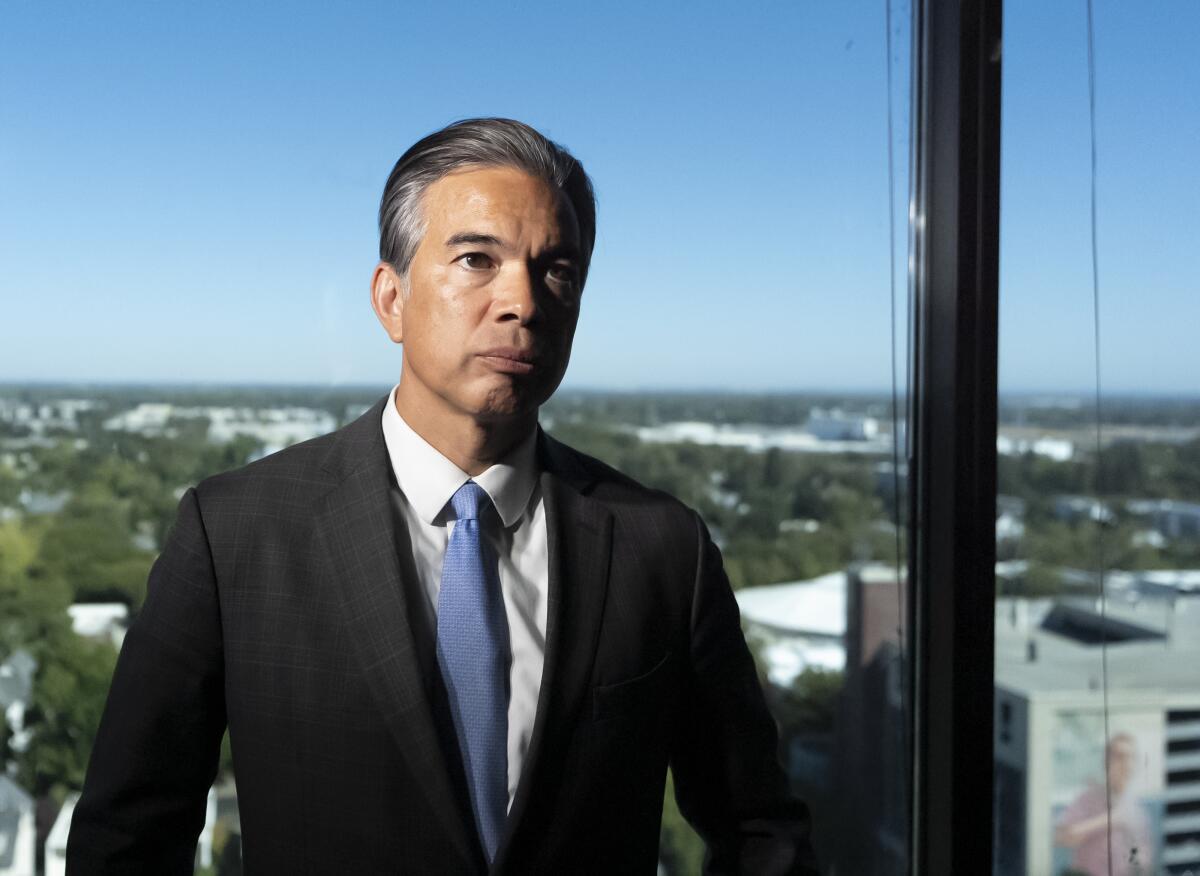
California Attorney General Rob Bonta. (Paul Kuroda / For The Times)

California Attorney General Rob Bonta vowed to drill into Paramount Skydance’s proposed takeover of Warner Bros. Discovery.

(Paul Kuroda/For The Times)

Paramount filed for Justice Department approval in December .

The maneuver started the regulatory review clock. And last month a key deadline for the Justice Department to raise concerns about Paramount’s proposed acquisition of Warner passed without comment from Washington.

Paramount has said it could finalize its deal by the end of September.

The architect of Paramount’s strategy, Chief Legal Officer Makan Delrahim, delivered his own keynote address, stressing the Ellison-family’s acquisition of Warner Bros. would not reduce competition and instead would be “a huge win for the creative community.”

“Paramount’s transaction with Warners is an opportunity to expand output, to grow the number of movies, shows and other content we are offering to the consumer,” Delrahim said, adding that will result in “more job opportunities,” including in Southern California, which is reeling from a production flight to other states and countries.

Delrahim conceded that Paramount was driven to buy Warner Bros. — it prevailed after Netflix bowed out — because Paramount is not big enough to compete in an industry dominated by technology giants.

He criticized the proposed Netflix deal, saying he doubted it would have passed regulatory muster due to Netflix’s strength in the streaming market.

Paramount still needs to win the support of Warner shareholders, and also gain regulatory approvals from the Justice Department, state attorney generals and overseas governments.

“This deal is a big win for Los Angeles, for California and for all communities that embrace filmmaking,” Delrahim said.

Tech mogul Larry Ellison has personally guaranteed the $45.7-billion in equity needed for the transaction . The company would have to take on more than $60-billion in debt — raising concerns among Hollywood workers about large-scale cost-cuts and layoffs.

“What is Paramount doing is …paying $110 billion to take out a rival,” said attorney Ethan E. Litwin, a former lawyer for TV networks, who also spoke at the conference. “When you take out a major rival in a highly concentrated industry … you are taking out competitors for projects. “

Bonta declined to say whether he would try to stop the Paramount-Warner merger.

Progressive State Leaders Committee, an affiliate of the Democratic Attorneys General Association, in December hired Rohit Chopra, a former director of the Consumer Financial Protection Bureau and former commissioner on the Federal Trade Commission, as a senior advisor. He will help coordinate efforts as the group, including Bonta, wages antirust enforcement battles.

“The federal government is just not enforcing the law,” Chopra said during Thursday’s conference. “Our states are really the last line of defense.”
Source link

Paramount-Warner Bros. Discovery deal stirs fears of mass layoffs

Four days after the stunning news that Paramount Skydance would acquire Warner Bros. Discovery, Paramount executives tried to calm fears that the blockbuster deal would result in massive layoffs.

In a call Monday, Paramount Chief Strategy Officer and Chief Operating Officer Andy Gordon told Wall Street analysts that $6 billion in merger “synergies” would come from “non-labor sources” and not a “reduction in production capacity.”

Instead, Gordon said, the company would reduce costs by consolidating its streaming technology and cloud providers, finding marketing efficiencies and “optimizing the combined real estate footprint,” likely an allusion to widely anticipated plans that the new owners will consolidate operations around the Warner Bros. lot in Burbank.

Efficiencies aside, most Hollywood observers — including people who are familiar with Paramount Skydance Chief Executive David Ellison’s plans — predict that Paramount will be forced to make large-scale layoffs in order to offset the enormous costs of the mega-deal, which is valued at more than $111 billion (counting debt).

It’s a reasonable expectation, at least if history is any guide.

Many at Warner dread the kinds of cuts seen after Walt Disney Co. bought most of 21st Century Fox’s assets, resulting in thousands of layoffs as the two companies combined operations and shed redundant jobs.

You’re reading the Wide Shot

Samantha Masunaga delivers the latest news, analysis and insights on everything from streaming wars to production — and what it all means for the future.

By continuing, you agree to our Terms of Service and our Privacy Policy.

In the case of Warner-Paramount, the new company will have two film and TV studios, as well as two streaming businesses, two legal departments, two marketing departments and so on. It’s doubtful these overlapping functions will survive budget cuts.

Already, consolidation plans are underway.

This week Paramount announced it would combine the two streaming services — Paramount+ and HBO Max — to reach a total of more than 200 million subscribers and better compete against the behemoth Netflix, which boasts 325 million subscribers worldwide.

Ellison was full of praise for the HBO team on Monday’s analyst call, saying the premium service was a “crown jewel” and that it will “continue to have the resources and independence to do what it does best.”

He also reiterated that there is “no intention to pull back on production,” and that the company intends to make 30 films a year — 15 apiece from Paramount and Warner Bros.

“We have all the economic incentives to make sure that we grow this business and are going to invest in content to basically achieve those goals,” Ellison said Monday.

But this deal also includes $79 billion in net debt — a staggering load that overshadows even that of the merger that resulted in Warner Bros. Discovery. That amount became an albatross around that company’s neck and led to waves of layoffs.

“What everybody’s hoping is that the noise that’s being made around prioritizing content will hold true,” said Kevin Klowden, a Milken Institute fellow focused on entertainment and technology. “But until they see that happen, it’s really a question.”

Further job losses would be a blow to an industry that has been reeling from a steady drumbeat of job cuts fueled by media consolidation, dwindling streaming profits and the migration of film and TV jobs to cheaper states and countries.

Paramount executives have said the deal is expected to close in the fiscal third quarter of this year, and Ellison said he was “absolutely confident” they will meet that goal, based on conversations with regulators.

Despite support from the Trump administration, the acquisition is not yet final. Already, California Atty. Gen. Rob Bonta said he was in communication with other states’ attorneys general about challenging the merger on antitrust grounds, saying it wasn’t a “done deal.”

And on Monday, Rep. Sam Liccardo (D-San José), Sen. Elizabeth Warren (D-Mass.) and Sen. Richard Blumenthal (D-Conn.) called on Atty. Gen. Pam Bondi and White House Chief of Staff Susie Wiles to provide details of their conversations about the merger with Ellison and Netflix co-Chief Executive Ted Sarandos, highlighting the role of politics in the auction.

Paramount plans to keep the two studios separate for now, though company executives have discussed combining operations at the Warner Bros. Burbank lot at some point, according to sources close to Paramount who were not authorized to speak publicly. That could mean a wind down at the historic Paramount lot on Melrose Avenue — and more job losses.

The anxiety over looming cuts is especially deep inside Warner, where staff are still trying to process the news, according to people I spoke with. They noted that when Netflix was the winning bidder, co-Chief Executives Sarandos and Greg Peters came to the Burbank lot and spoke with several hundred of Warner’s senior leaders and outlined their plans, giving staff more clarity about a future under their ownership. No such conversations have occurred with the Paramount team, they said.

“I think genuinely, everyone’s nervous and a little uneasy,” said one Warner Bros. Discovery employee. “With the Netflix option, people had become a little more hopeful. But this outcome is a little more frightening for the staff.”

Stuff We Wrote

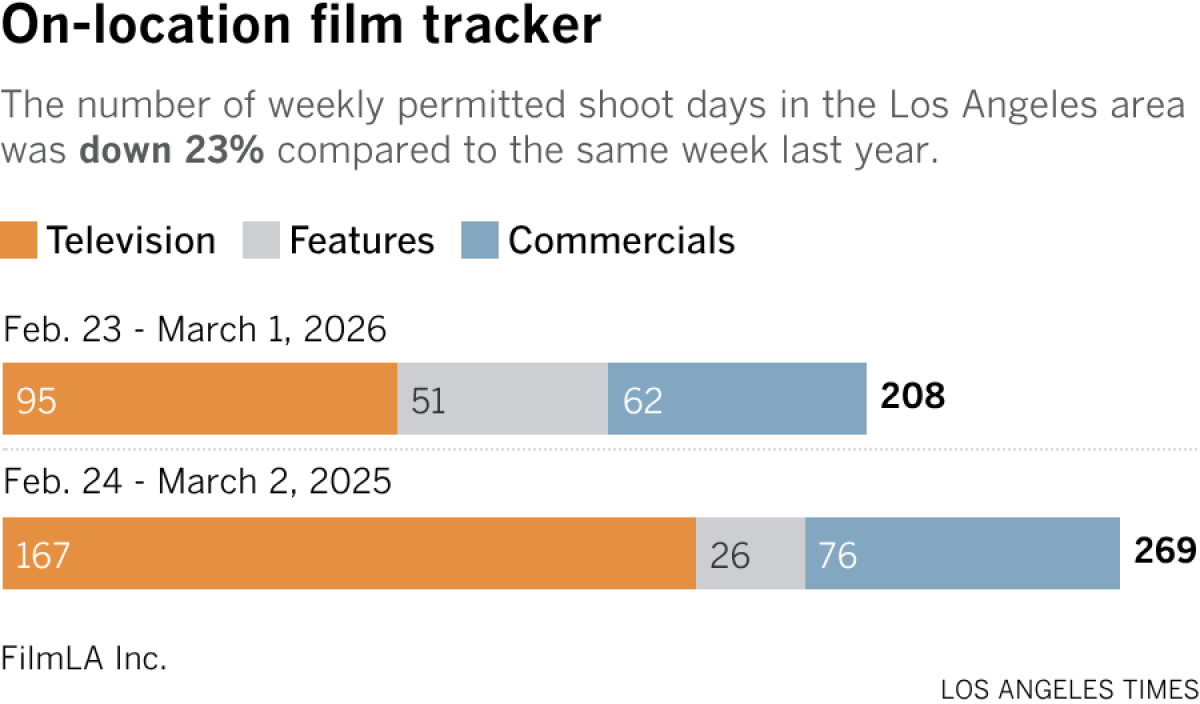
Film shoots

Number of the week

sixty-four point one million dollars

After 30 years, the Ghostface killer has still got it. Paramount Pictures and Spyglass Media Group’s “Scream 7” topped the box office this last weekend with $64.1 million in the U.S. and Canada, marking a franchise-best domestic opening. Globally, the film made $97.2 million.

The film centered on original franchise actors Neve Campbell and Courteney Cox, and featured numerous callbacks to the previous movies.

But the film’s debut did not come without controversy. Pro-Palestinian groups protested outside the “Scream 7” premiere on the Paramount lot last week and called for a boycott of the film after franchise star Melissa Barrera was fired more than two years ago for her comments on the Israel-Hamas war.

What I’m watching

On Sunday, I watched the UCLA women’s basketball team dominate USC in what I think is one of the best college rivalries out there (though I’m probably biased. Go Bruins!)

Source link

Paramount-Warner Bros. deal stirs fears about what it means for CNN

As the media industry took stock of Paramount Skydance’s startling acquisition of Warner Bros. Discovery, one question lingered on the minds of many in the news business and beyond: what will this mean for CNN?

The iconic 24-hour cable news network is among the various Warner Bros. assets that would be scooped up by Paramount in a deal announced Thursday that could transform the media landscape.

Paramount has undergone a swift transformation under Chief Executive David Ellison following his family’s acquisition of the company last summer. These changes reached CBS News almost immediately with the appointment of Bari Weiss, the controversial Free Press co-founder, as its new editor in chief.

Bari Weiss

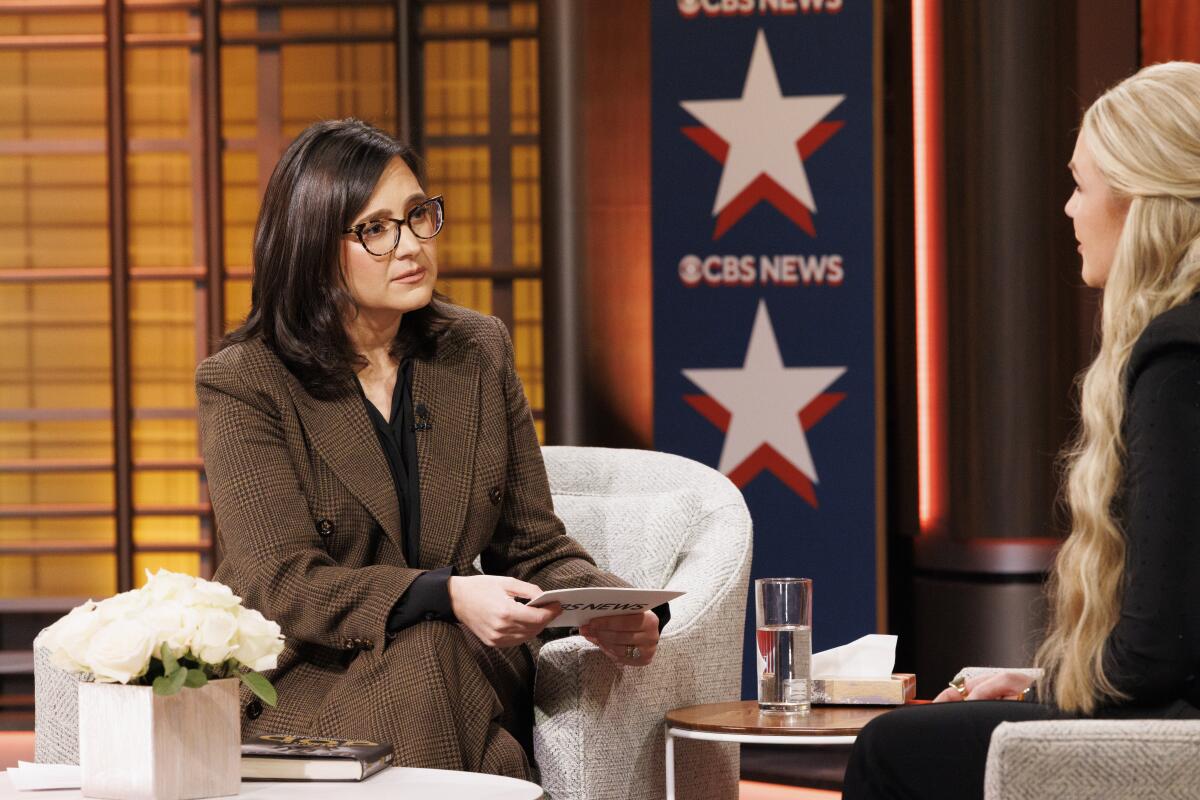
Bari Weiss moderated a town hall with Erika Kirk, widow of slain conservative activist Charlie Kirk.

(CBS via Getty Images)

Weiss’ tenure so far has been rocky.

Her decision to pull a “60 Minutes” story about conditions inside an El Salvador prison that housed undocumented Venezuelan migrants from the U.S. received widespread criticism and accusations of political motivation. The network said the story was held for more reporting, and the segment eventually aired.

There was more upheaval last week at the news magazine, when “60 Minutes” correspondent and CNN news anchor Anderson Cooper announced that he’d be leaving to spend more time with his family.

And earlier this year, a veteran producer at “CBS Evening News With Tony Dokoupil” was fired after he expressed disagreement about the editorial direction of the newscast.

Now, the concern is that similar changes could be in store for CNN, which has long been a target of President Trump’s ire. He has personally called for the ouster of hosts at the network who have questioned his policies.

CNN Worldwide Chief Executive Mark Thompson tried to quell some of those fears, particularly inside his own newsroom.

In an internal memo dated Thursday and obtained by The Times, Thompson urged employees not to “jump to conclusions about the future” and try to concentrate on their work.

“We’re still near the start of what is already an incredibly newsy year at home and abroad,” he wrote in the note. “Let’s continue to focus on delivering the best possible journalism to the millions of people who rely on us all around the world.”

Chairman and CEO of CNN Worldwide Mark Thompson and media editor for Semafor, Maxwell Tani, speak onstage.

Chairman and CEO of CNN Worldwide Mark Thompson and media editor for Semafor, Maxwell Tani, speak onstage.

(Shannon Finney / Getty Images for Semafor)

CNN declined to comment beyond Thompson’s memo.

Ellison has said his vision for a news business is one that is ideologically down the middle.

“We want to build a scaled news service that is basically, fundamentally in the trust business, that is in the truth business, and that speaks to the 70% of Americans that are in the middle,” he said during a Dec. 8 interview on CNBC, shortly after Warner said it had chosen Netflix as the winning bidder for its studios, HBO and HBO Max. “And we believe that by doing so that is for us, kind of doing well, while doing good.”

Ellison demurred when asked whether Trump would embrace him as CNN’s owner, given the president’s past criticisms of the network.

“We’ve had great conversations with the president about this, but … I don’t want to speak for him in any way, shape or form,” he said.

First Amendment scholars have raised concerns about press freedom and free speech rights under the Trump administration, particularly after last month’s arrest of former CNN journalist Don Lemon and the Federal Communications Commission’s pressure on late-night hosts like Jimmy Kimmel and Stephen Colbert.

Press freedom groups have long asked questions in other countries about how authoritarian regimes use their power and “oligarchical alliances to belittle, silence, and punish independent journalistic voices, or to steer media ownership toward … a preferred version of the truth,” said RonNell Andersen Jones, a 1st Amendment scholar and distinguished professor in the college of law at the University of Utah, in an email.

“We see them asking at least some of these questions about the U.S. today,” she wrote.

Apprehension about the merger also extends beyond its implications for CNN and the media business.

Lawmakers such as Rep. Laura Friedman (D-Glendale), Sen. Adam Schiff (D-Calif.) and Sen. Cory Booker (D-N.J.) have raised concerns about how the consolidation of two major Hollywood studios could affect industry jobs and film and television production — which has significantly slowed since the pandemic, the dual writers’ and actors’ strikes in 2023 and corporate cutbacks in spending.

Sen. Elizabeth Warren (D-Mass.) called the deal an “antitrust disaster” that she feared could raise prices and limit choices for consumers.

“With the cloud of corruption looming over Trump’s Department of Justice, it’ll be up to the American people to speak up and state attorneys general to enforce the law,” she said in a statement.

Already, California Atty. Gen. Rob Bonta has said the merger isn’t a “done deal,” adding that he is in communication with other states attorneys general about the issue.

“As the epicenter of the entertainment industry, California has a special interest in protecting competition,” he posted Friday on X.

Ellison addressed some of these concerns in a statement Friday.

“By bringing together these world-class studios, our complementary streaming platforms, and the extraordinary talent behind them, we will create even greater value for audiences, partners and shareholders,” he said. “We couldn’t be more excited for what’s ahead.”

Times staff writer Meg James contributed to this report.

Source link