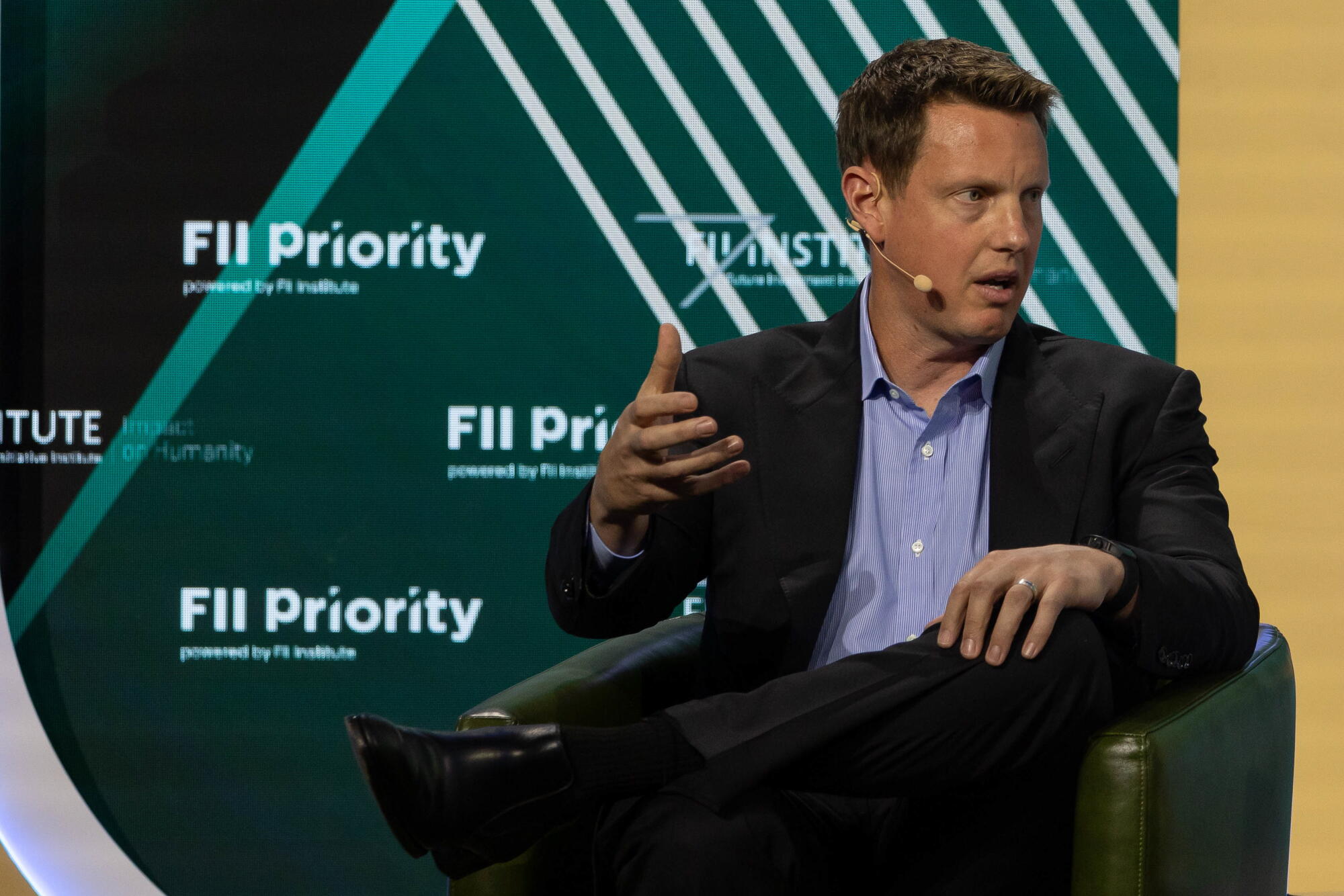
Skydance-owned Paramount Pictures has taken over the lease for the Bay Theater in Pacific Palisades and intends to reopen the cinema, which has been closed since the January 2025 Palisades fire last year.
Paramount plans to upgrade the theater with state-of-the-art projection systems and in-seat food and drink service, Rick Caruso, whose company owns the Palisades Village shopping center where the Bay Theater is located, said in an interview. Caruso is founder and executive chairman of the real estate firm Caruso.
Paramount plans to show first-run theatrical movies from all studios. The theater will be operated by The Lot, a La Jolla-based luxury dine-in theater chain with four locations in California. The theater is expected to reopen later this year, Caruso said.
“The comeback of this movie theater is a great signal for all of L.A.,” he said. “Los Angeles is resilient, and we’re going to show the country that Los Angeles can bounce back from a terrible, terrible disaster, and the comeback is going to be much greater than the setback.”
Palisades Village reopened in August after more than $100 million in renovations, including major infrastructure work. The upscale outdoor mall survived the Palisades fire, but needed refurbishment to eliminate any potential contaminants from the blaze.
Caruso declined to share terms of Paramount’s lease agreement, saying only that it was long-term. Paramount declined to comment on the size of its investment in the theater.
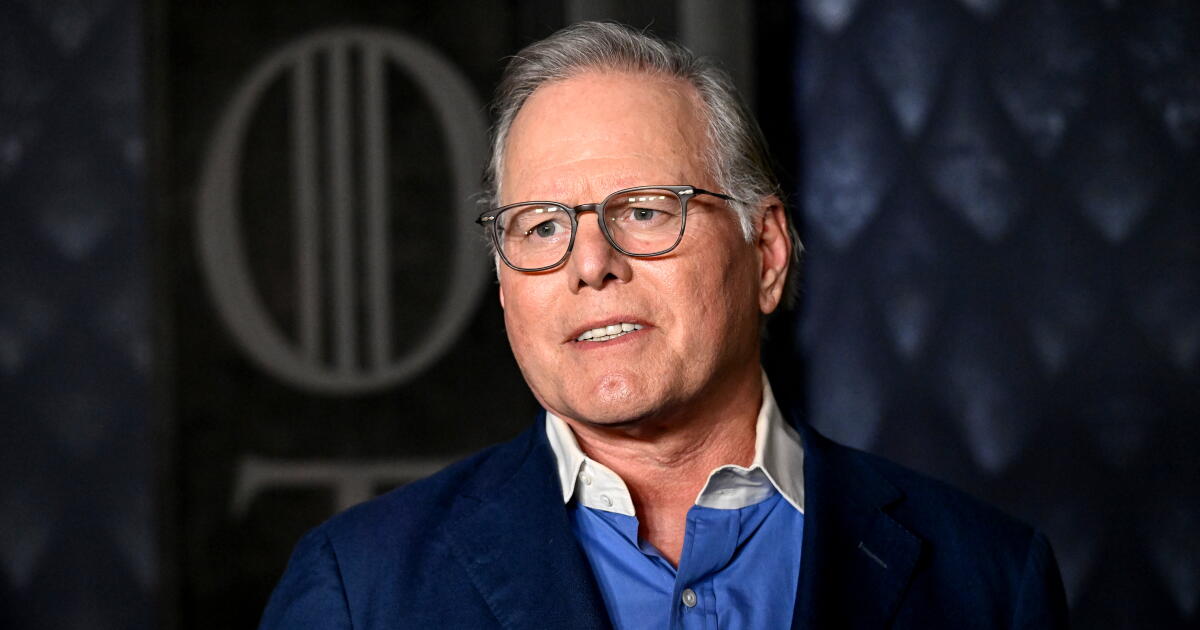
Caruso said he brought up the Bay Theater over lunch last year with David Ellison, chief executive of Skydance, who was then working to acquire Paramount. The two were discussing that deal and Ellison’s belief in the importance of the movie theater business to the industry.
“Together with Caruso, we are proud to help bring the Bay back to life as a place for the Pacific Palisades community to gather around the shared experience of cinema,” Ellison said in a statement. “This theater has always meant more than movies alone — it’s woven into the fabric of this neighborhood, and helping restore it is a privilege.”
The Bay Theater was previously leased by Netflix, which took it over in 2021. The company used the theater to host special events, screen classic films and showcase its own original theatrical movies.
Caruso described Netflix and company Chief Executive Ted Sarandos as “incredible stewards” of the theater, adding that Sarandos was “very much a gentleman” in having the discussion about Paramount stepping in at the theater.
Ellison has long extolled his love of movies and appeared at the CinemaCon movie theater owners convention earlier this year to reiterate his commitment to theatrical releases.
Studios were barred from owning theaters for decades under the Paramount consent decrees, which a federal judge terminated in 2020. Netflix has since operated the Egyptian Theatre in Hollywood and the Paris Theater in New York.
“Through our curated offering and dedicated hospitality, we look forward to welcoming the Pacific Palisades community back to the movies, the way they were intended to be shared,” Adolfo Fastlicht, founder and chief executive of The Lot, said in a statement.
David Zaslav, the longtime TV executive who created Warner Bros. Discovery Inc. but ultimately failed to keep it going as an independent company, made about $600 million on the sale of the business to Paramount Skydance Corp. this week.
Much of Zaslav’s compensation came in the form of stock options. Warner Bros. stockholders received $31 a share in cash in the sale, a nearly 25% increase from when the stock first began trading in April of 2022. The Standard & Poor’s 500 rose 76% over that period.
Many other Warner executives received large paydays, including streaming boss JB Perrette and strategy chief Bruce Campbell. A spokesperson said Zaslav doubled the number of employees overall who received stock awards.
The new company, now called Skydance Corp. and led by technology scion David Ellison, is one of the largest media businesses in the world, comprising the century-old Paramount and Warner Bros. movie studios, dozens of TV networks, like CBS and CNN, as well as the Paramount+ and HBO Max streaming services.
Christopher Palmeri and Dylan Sloan report for Bloomberg.
Tech scion David Ellison spent three years doggedly pursuing his dream: acquiring Paramount, then Warner Bros. Discovery.
Ellison pulled off his bold feat this week by completing Paramount’s $111-billion takeover of Warner Bros., uniting two industry pioneers and a wealth of cherished properties — Batman, Bugs Bunny, Harry Potter and Maverick of “Top Gun,” as well as CBS, HBO, Comedy Central and CNN. All will be tucked under a corporate umbrella that Ellison is calling Skydance — the name of the studio he formed two decades ago.
The mogul and his lieutenants celebrated their victory in style, ringing the New York Stock Exchange opening bell on Thursday, capping a bruising battle to secure approval of a deal that had sparked protests across Hollywood over fears of looming job cuts.
Ellison and his team must braid together two huge film studios (housing nine film labels), four streaming services, three TV production studios, three animation units and more than 50 television networks, including two prominent news organizations. That could be a daunting task, particularly based on how previous Hollywood mergers have fared.
“Now, the real work begins,” David G. Fubini, a Harvard Business School senior lecturer, said in an interview.
Anxieties were evident Tuesday — the day the deal closed — when Ellison held a town hall meeting at Warner Bros., which drew nearly 500 employees.
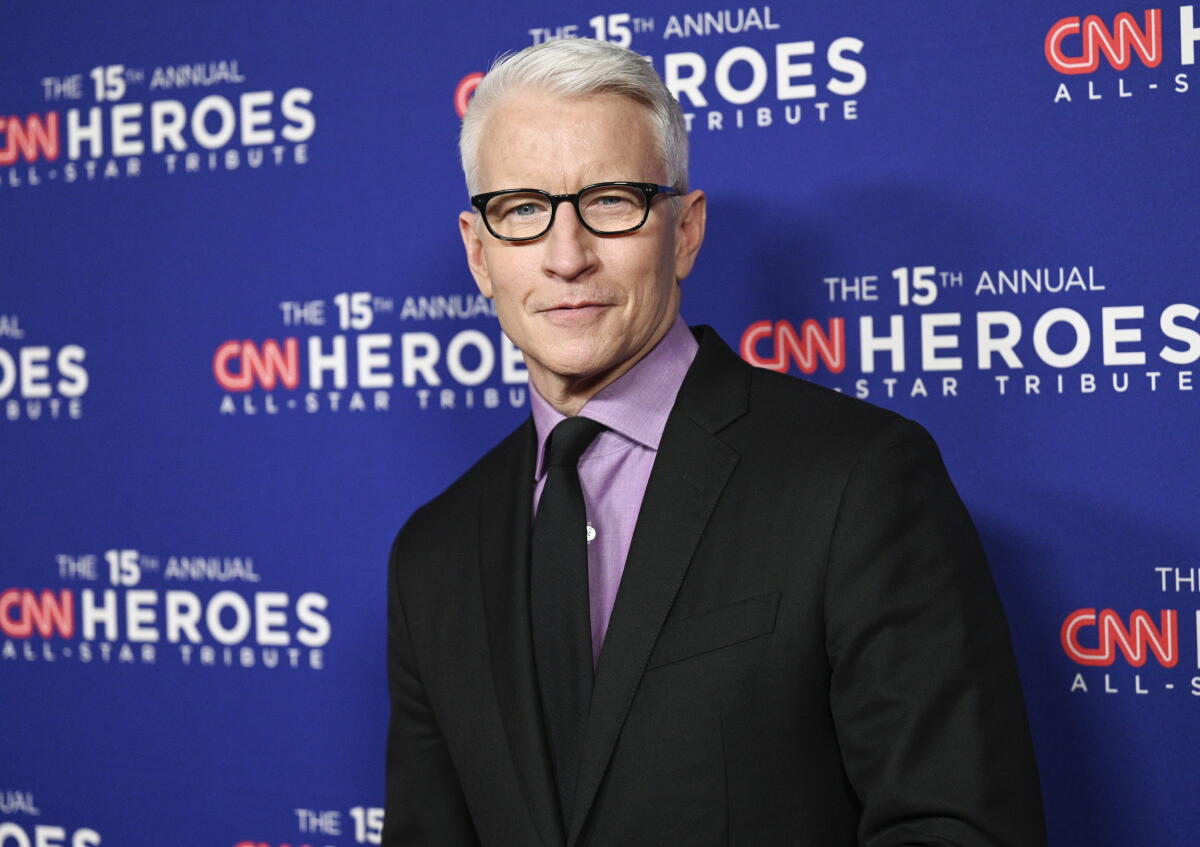
During the session, CNN’s Anderson Cooper quizzed his new bosses, including about anticipated layoffs and news independence.
“Do you stand with CNN and our effort to completely restore access to covering President Trump?” Cooper asked, referring to CNN’s legal fight alongside MS Now and Politico to reverse the president’s ban on the three organizations.
“Of course,” Ellison replied.
CNN news anchor Anderson Cooper, pictured here in 2021, quizzed his bosses at a Burbank town hall.
(Evan Agostini / Invision / Associated Press)
Hours later, Ellison parried with reporters in Paramount’s darkened Stage 3, recently revamped with laser projection capabilities to simulate fantastical and far-flung settings for TV shows, such as the streets of New York.
“This was a turbulent process, and, at times, a really ugly process, to actually get this deal over the finish line,” Ellison acknowledged to reporters. “What I want to be able to do now is turn the page, and actually make sure that we are in the business of rebuilding trust.”
To do that, Ellison intends to make more movies and TV shows than rivals. He wants to ensure the Warner Bros. and Paramount studios, which will be kept separate for now, remain talent-friendly destinations.
Ellison has taken an opposing view from his predecessors who confronted crumbling industry economics by cutting expenditures to boost their corporate bottom lines.
The 43-year-old executive, son of Oracle co-founder Larry Ellison, proudly views his family as “owner-operators,” unshackled by quarterly earnings expectations or the need to dole out dividends to keep investors happy. The Ellison family controls the company’s voting stock, allowing David Ellison to take a long-term view as he charts Skydance’s course.
The goal is to “win in storytelling,” Skydance said in an investor presentation. It intends to build the media industry’s most “technologically capable” firm, which uses artificial intelligence to speed work flows. Skydance plans to spend at least $30 billion a year on film, television and video game content.
Skydance co-CEO Ynon Kreiz, Sarah Ellison, CEO David Ellison and investor Gerry Cardinale of RedBird Capital Partners on the floor of the New York Stock Exchange on Thursday.
(Yuki Iwamura / Associated Press)
The realities of Ellison’s big swing will soon sink in as he and his team turn their focus to integrating the myriad operations and about 55,000 employees.
In some ways, Ellison is behind the curve.
Most major mergers are consummated after executives have dedicated months to quietly drafting detailed operational plans and organizational hierarchies. Ellison, in contrast, has spent the last nine months in a pitched battle for Warner Bros. — ultimately vanquishing Netflix, hundreds of vocal merger opponents, and California Atty. Gen. Rob Bonta and his coalition of 11 other state attorneys general who filed an antitrust lawsuit in July in an attempt to derail the deal.
Ellison and Bonta resolved their legal fight Sept. 21. A week later, a federal judge cleared the way for the merger to close.
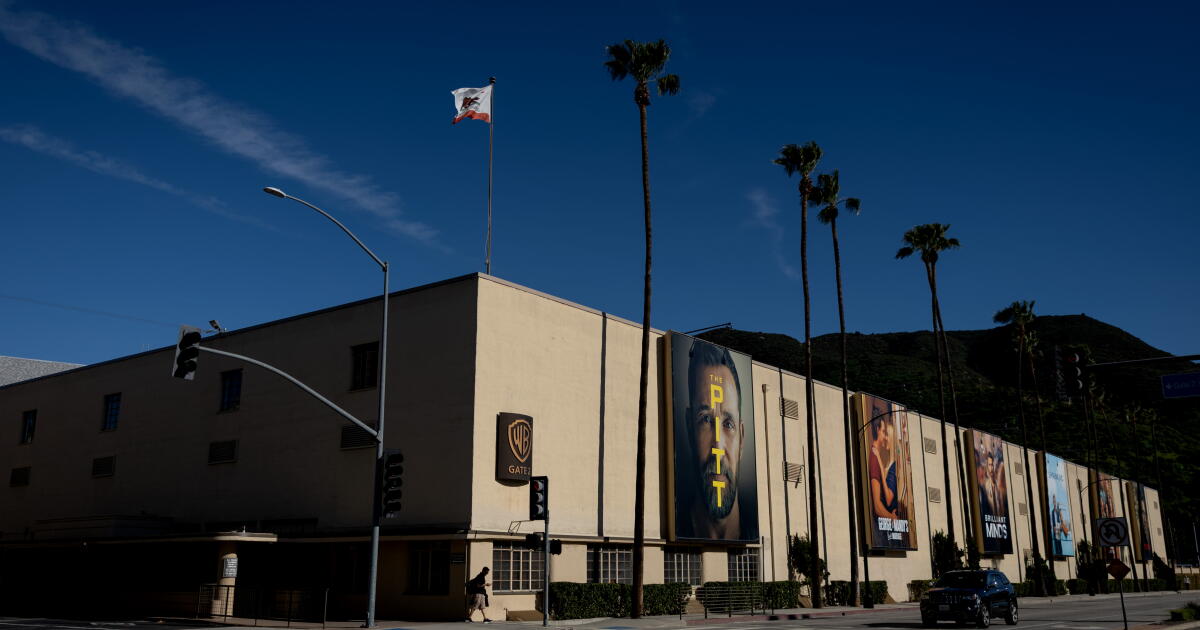
The lawsuit settlement with Bonta requires that the combined company produce at least 30 movies a year for five years. It also must maintain the studio facilities in Los Angeles, making “reasonable efforts to operate the lots in a manner consistent with past practices,” according to the agreement.
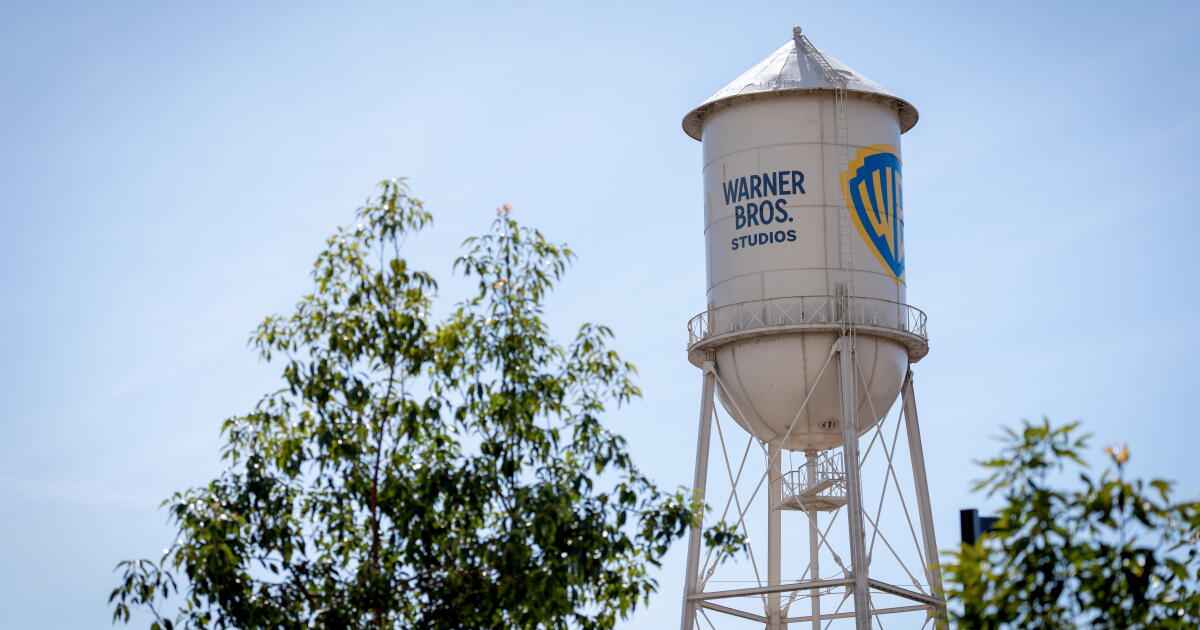
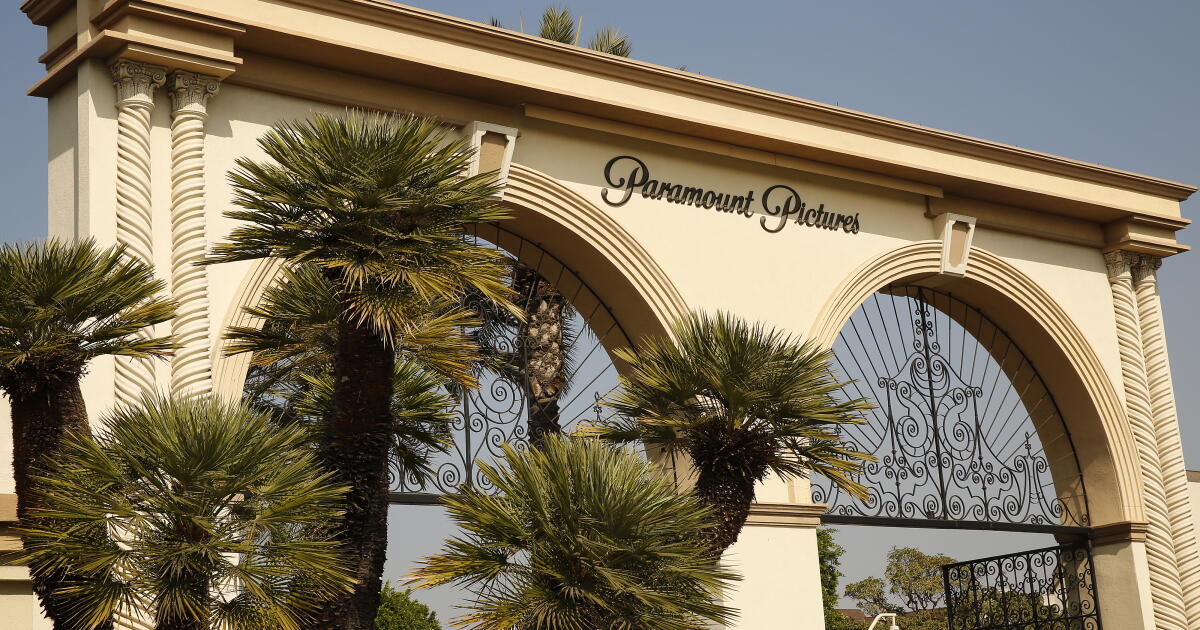
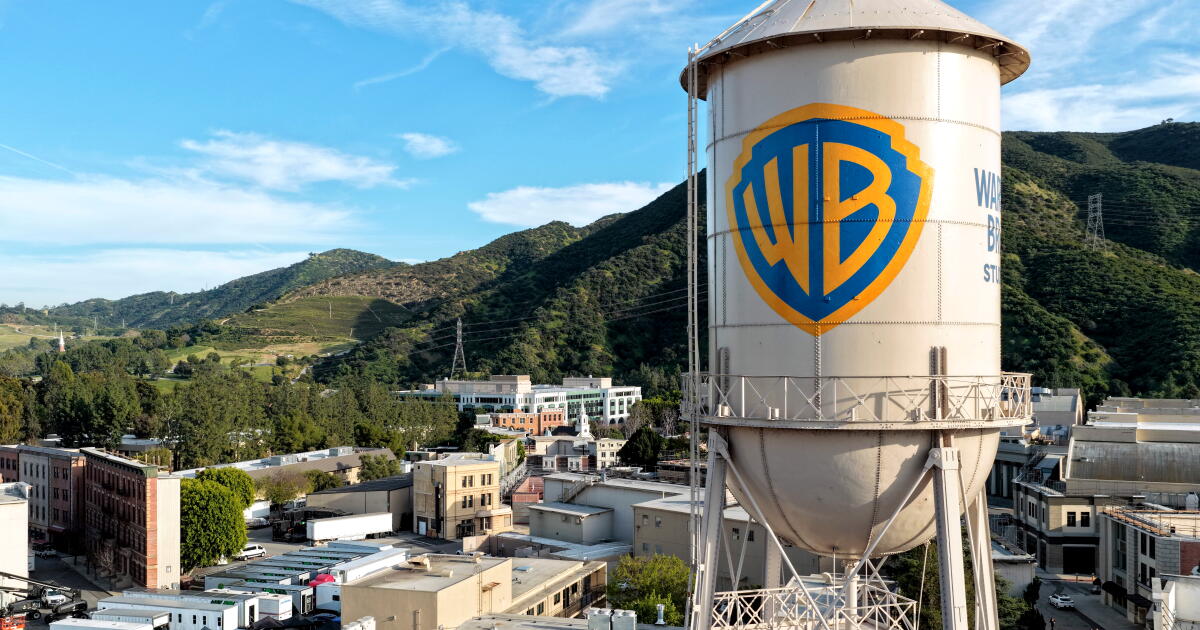
Skydance has committed to maintaining operations on the Warner Bros. lot, pictured here, and at Paramount Pictures in Hollywood.
(Eric Thayer / Los Angeles Times)
Ynon Kreiz, former chief executive of Mattel toys in El Segundo, has been tasked with leading the integration. The 61-year-old executive joined Ellison at Skydance as his co-CEO earlier this week. Day One of the combined company marked Kreiz’s second day on the job.
“They have a whole new management team that will be expected to immediately lead this massive integration,” Fubini, a former partner at consulting firm McKinsey, said. “The clouds have cleared, and they are at the base camp of Mt. Everest facing this enormous undertaking.”
In a report this week, TD Cowen Global Research maintained its “hold” rating on the newly constituted Skydance, expressing some doubts about Ellison and his team’s ability to “avoid integration and execution problems that have bedeviled other major media mergers.”
Hollywood has had a history of failed mergers, including Discovery’s 2022 takeover of WarnerMedia from AT&T, which led to years of cost cuts that ultimately seeded the ground for Ellison’s takeover. AT&T’s purchase of the same assets in 2018 also quickly unraveled, some 20 years after the epic failure of AOL Time Warner.
Ellison now must grapple with the hefty acquisition costs for Warner Bros., which climbed as the deal was delayed. The company emerged from the transaction with $86.8 billion in total debt; with most of that going toward buying out Warner Bros. Discovery’s stockholders at $31.17 a share.
The debt burden also includes more than $18 billion in obligations leftover from past mergers. Skydance has nearly $7 billion in cash on hand.
Oracle’s Larry Ellison and executive producer David Ellison arrive at the L.A. premiere of “Star Trek Into Darkness” at the Dolby Theatre in 2013.
(Eric Charbonneau / Getty Images for the Hollywood Reporter)
The Ellison family brought in foreign investors, including royal families of Saudi Arabia, Qatar and Abu Dhabi as passive owners, to contribute equity to the deal. Gerald Cardinale’s RedBird Capital Partners, a longtime Skydance stakeholder, added $4 billion, bringing its total investment in Skydance deals to $6 billion.
The deal’s financial terms pose deep challenges, analysts said. Fitch Ratings this week downgraded Skydance credit, citing “materially higher leverage after the acquisition and significant execution and integration risks,” according to its report.
“Interest rate increases made financing this transaction far more expensive than anyone anticipated,” said Eric Talley, a professor at Columbia Law School. “Those lenders are going to start expecting their interest payments — Skydance executives won’t have the luxury of time.”
The company could struggle, Talley said, to “generate the cash flow needed to easily service that debt unless they can significantly cut costs.”
Skydance has promised investors that it will make $6 billion in cost cuts over three years. It anticipates $2 billion in reductions within a year, with the bulk of the rest occurring in the second year of the merger.
“They are going to be firing a lot of people,” TD Cowen Global Research media analyst Doug Creutz said.
During the press briefing, Kreiz sought to downplay the expected workforce toll, saying Skydance would achieve savings by combining technologies that support streaming services and marketing expenditures. It plans to save costs on real estate by locating employees at Skydance-owned properties in Santa Monica, Hollywood and Burbank.
Ellison and Kreiz said they would jointly manage the new colossus.
“Where David will focus on creative, technology, long-term strategy, including especially as it relates to the creative part of the business, I will focus more on the operations and the day-to-day management of the business,” Kreiz said.
Kreiz was named to Skydance‘s expanded board this week along with Laurene Powell Jobs, founder of the Emerson Collective; and Bobby Kotick, former CEO of Activision.
The new leaders expressed confidence they could expand and integrate their two major streaming services to drive growth. HBO Max and Paramount+ combined will reach more than 200 million subscribers.
The plan, they said, is to combine the two streamers within a couple of years, but the company may offer subscribers a bundle with the two offerings sooner.
Skydance, according to sources, also expects to bolster its free, ad-supported service Pluto TV, which offers more than 200 channels. The service hasn’t had much corporate attention in recent years amid the cuts and deal-making.
The executives have not disclosed which teams would soon be affected or how they will structure overlapping business units.
For example, the company’s three TV studios each have their own leader: Channing Dungey runs the largest, Warner Bros. Television; David Stapf has long managed CBS Studios; and Skydance executive Matt Thunell has been president of Paramount Television Studios since last year.
Integrating CNN and CBS
Anxiety over whether CNN and CBS News would be mashed together was quelled, at least for now.
Skydance announced that it was retaining CNN Worldwide Chairman Mark Thompson as head of the larger news organization. CNN journalists had worried that CBS News Editor in Chief Bari Weiss, who has presided over a year of turmoil at the network, would be put in charge of both.
Any news consolidation could take years, in part, because CBS News is largely unionized while CNN is a non-union shop.
“We are going to spend the next several months basically getting under the hood,” Ellison said.
CBS News Editor in Chief Bari Weiss, pictured here in 2023 in Los Angeles, has had a turbulent tenure at CBS.
(Francine Orr / Los Angeles Times)
Another challenge will be stabilizing the Warner Bros. film unit, which has had a rough year at the box office. This month, the top two Warner Bros. film executives, Mike DeLuca and Pam Abdy, exited abruptly, clearing the way for longtime Ellison lieutenants Dana Goldberg and Josh Greenstein to oversee both film studios. The co-heads of DC Comics, James Gunn and Peter Safran, segued to the new Skydance.
Skydance also will have to deal with the NFL, which could demand substantially higher fees for CBS to keep its Sunday games.
The current contract allows the league to reopen negotiations because of the ownership change. Skydance is hoping it can wait three years until the contracts of other broadcasters also are up for discussion.
Skydance will be a major player in sports. Last year, Paramount agreed to spend $7.7 billion for UFC fights. The combined company also has rights to professional golf, including the Masters tournament; National Hockey League; Major League Baseball and NCAA basketball, including March Madness, as well as European rights to televise the Olympics.
“Until you actually get inside the company, there are things you won’t know,” Creutz said. “But they are going to have to come up with answers pretty quick.”
David Ellison said the merged Paramount and Warner Bros. Discovery will be called Skydance — the moniker he picked nearly two decades ago when the tech scion began building his Hollywood empire.
Ellison, currently the chairman and chief executive of Paramount, is aiming to finalize the acquisition of Warner Bros. Discovery by Tuesday. Then the combined company will assume the name and logo of his once small studio.
“We chose this name for a few important reasons,” Ellison wrote Friday in an X post. “As we bring Paramount and Warner Bros. together, we wanted to preserve what has made each of these studios iconic. Both have distinct identities, extraordinary legacies and brands that have resonated with audiences … We never wanted a new corporate identity to diminish, alter or overshadow either one.”
By calling the company “Skydance,” Ellison said the merged entity would have “an identity of its own while allowing Paramount and Warner Bros. — and all our extraordinary brands — to remain in the spotlight.”
In Hollywood, there had been much speculation over what jumbled mash-up of the corporate titles would be used, with WarnerMount and Paramount-Warner Bros. often mentioned as possibilities.
Both companies boast century-old studios, beloved media brands and a recent past that has included several fraught mergers. When AT&T sold WarnerMedia to David Zaslav’s Discovery in 2022, he selected Warner Bros. Discovery as the corporate name.
The merger is quickly reaching the finish line after U.S. District Judge Araceli Martínez-Olguín on Wednesday signed a settlement agreement, effectively ending an antitrust lawsuit brought in July by California Atty. Gen. Rob Bonta and 11 other state attorneys general who initially fought the formation of a new Hollywood colossus. Paramount now has won approvals by nearly 70 regulators for the industry-reshaping deal.
For more than a decade, Paramount has been the smallest of the major media companies, owning CBS, Comedy Central, BET, Nickelodeon and the Melrose Avenue studio. With the $111-billion merger with Warner, Skydance will gain more valuable assets including HBO, CNN, TBS, Food Network and Warner Bros. film and television studios, along with their massive libraries that include the Harry Potter, “Lord of the Rings,” and DC Comics franchises.
Earlier this week, Ellison announced he was bringing Ynon Kreiz, who has served as the CEO of toymaker Mattel for eight years, to run the new entity’s day-to-day operations. Kreiz, 61, brings years of operational experience that Paramount’s top executives had lacked.
Paramount released details of Kreiz’s contract on Thursday in a regulatory filing, saying he would receive an $5 million annual salary and an annual target bonus of $4.9 million. He will also qualify for a signing bonus of $31.5 million to come over to the new company, paid through restricted stock units.
In addition, HBO Chairman Casey Bloys is widely expected to become head of the merged company’s streaming programming. Paramount’s streaming chief Cindy Holland exited the company earlier this week to make way for Bloys.
During a Thursday appearance at the Bloomberg News Screentime media conference in Hollywood, Bloys declined to discuss his presumed new role. But he suggested that that Ellison’s company might bundle HBO Max and Paramount+ services, allowing the two services to remain for now, rather than try to fold them into one gigantic offering.
Skydance will carry than $80-billion in debt, much of it acquired to retire the holdings of Warner Bros. Discovery investors at $31.17 a share. The company also has promised investors that it would find $6 billion in cost-cuts within three years.
During a separate appearance at the Bloomberg conference, RedBird Capital Partners founder Gerry Cardinale, a Paramount investor and board member, said finding $6 billion in cuts would be relatively easy, and would not be focused solely on layoffs. It would include combining the technology stacks for the various streaming platforms.
But Cardinale acknowledged layoffs would be part of the cost-cuts, a prospect that frightened many in Hollywood after endless waves of job cuts at the two companies.
Warner’s outgoing chief executive Zaslav will leave with a golden parachute valued at about $887 million, which includes cash, stock and options valued at more than $550 million, according to regulatory filings.
In addition, Warner board members separately agreed to pay Zaslav’s tax bills, which could approach $330 million.
CNN Chairman and Chief Executive Mark Thompson could remain in his role at the news network after Paramount completes its deal to acquire the news network’s parent company, Warner Bros. Discovery.
Thompson, 69, is said to be in early stages of a discussions with Paramount Skydance Chief Executive David Ellison about continuing in the job he has held since April 2023, according to two people familiar with the matter who were not authorized to discuss it publicly.
The Wall Street Journal was first to report Thursday that Thompson has been approached by Ellison about staying with the network. A representative for Paramount declined to comment.
Retaining Thompson in his role would provide short-term relief to CNN staffers who are concerned about the change in ownership. As Paramount pursued its $111-million deal to acquire Warner Bros. Discovery — which is moving forward following a judge’s decision to settle an antitrust suit filed by state attorneys general who wanted to block the deal — the Ellison family have reportedly had discussions with President Trump about altering the network’s coverage, which he has often deemed as unfair.
As part of the settlement, Paramount agreed to the formation of an editorial oversight board that will monitor adherence to editorial independence from its owners and shareholders. The editorial board is part of an agreement to end the states’ antitrust fight that threatened to delay the completion of the deal for months.
Keeping Thompson at CNN raises questions of how CBS News Editor-in-chief Bari Weiss will be integrated into the new company.
Weiss, who joined the storied news division after Paramount acquired her contrarian digital news site the Free Press last year, has made major changes at “CBS Evening News” and the top rated newsmagazine “60 Minutes,” with no audience gains to show for it.
CNN insiders have been skeptical over how Weiss could take over the vastly larger and more profitable news organization based on her CBS track record so far.
CNN and CBS News are expected to consolidate some of their operations, such as its overseas bureaus. But there are obstacles to a rapid consolidation, as many CBS News employees work under union contracts. Most of CNN is not unionized.
But if Thompson remains, its likely he we will have the task of reducing costs, as the traditional TV audience that provides the bulk of revenues for both CNN and CBS News continues to shrink.
Thompson has been behind a major effort to generate more revenue from CNN’s digital operations, which now include a subscription streaming service that makes the channel available without a cable or satellite TV package. He oversaw the New York Times’ successful transformation into a dominant digital news product during his run as president and chief executive from 2012 to 2020.
The Paramount-Warner deal will close soon after a judge signed a settlement that ended the antitrust lawsuit brought by Calif. Atty. General Rob Bonta and 11 other attorneys general. The detente , however, has not cooled tensions between CNN and the White House.
CNN was scheduled to provide press pool coverage of Trump’s trip to Texas and Oklahoma on Thursday. But the White House removed the network from the pool, despite a judge’s order last week to block the administration’s attempt to ban access for some media outlets.
Last week, CNN, MS NOW and Politico were banned from White House grounds. Trump cited the outlets’ ongoing negative coverage of him as the reason for the ban. The administration later tried to argue in court that their coverage was a threat to national security.
A federal judge in Oakland has approved a settlement that allows Paramount Skydance Chief Executive David Ellison to finalize his $111-billion acquisition of Warner Bros. Discovery.
U.S. District Judge Araceli Martínez-Olguín on Wednesday signed a settlement agreement, effectively ending an antitrust lawsuit brought by California Atty. Gen. Rob Bonta and 11 other state attorneys general who initially fought the formation of a new Hollywood colossus.
“The Court finds the proposed settlement agreement reflects a procedurally sound resolution,” Martínez-Olguín wrote in her order.
Ellison is aiming to finalize the merger early next week, capping his meteoric rise into one of the industry’s most influential figures. The Ellison family claimed Paramount and CBS last year, and will now add HBO, CNN, TBS, HGTV and the film and television studio with rights to Batman, Harry Potter, Fred Flintstone, “Friends” and “The Pitt” to its sprawling media and entertainment portfolio.
His father Larry Ellison, through his company Oracle Corp., also owns a substantial stake in the social media app TikTok and is among the tech giants supporting development of artificial intelligence.
The settlement agreement, which spans five years, requires the combined Paramount-Warner Bros. to release at least 30 films in theaters each year, commit an additional $1.5 billion to domestic film production and set aside $47.5 million for workers who may be adversely affected by the merger. It calls for the creation of a five-member panel to monitor editorial independence of CBS News and CNN, although critics note the Ellisons control board appointments, diminishing its independence.
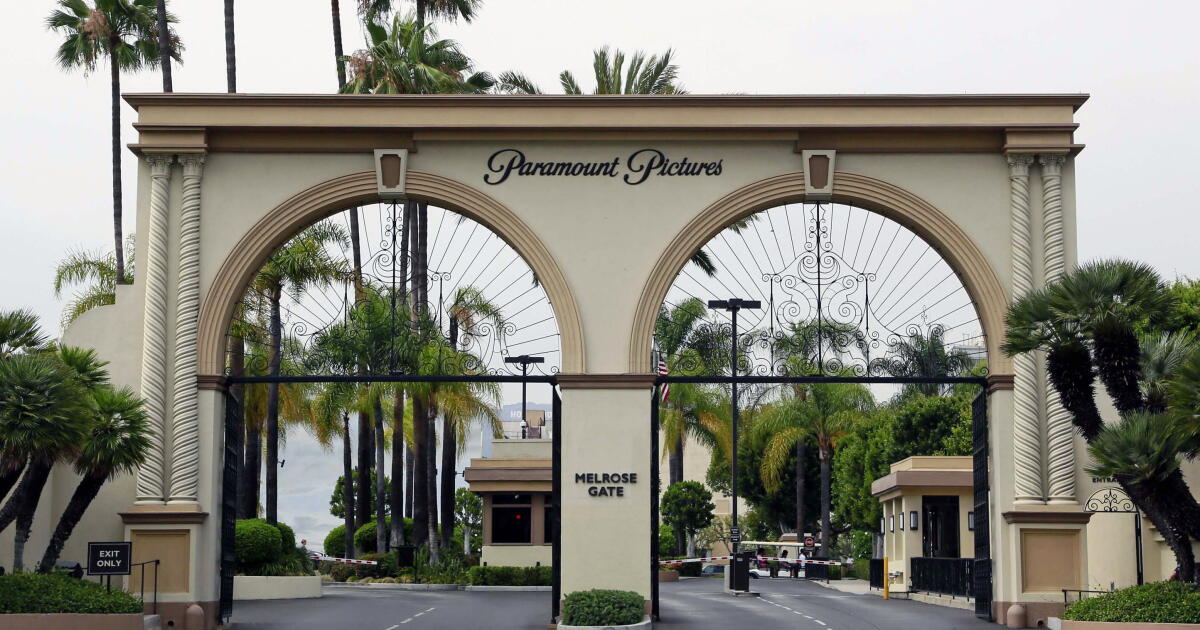
The agreement, known as a consent decree, also stipulates that Paramount won’t sell or close its Melrose Avenue campus in Hollywood or the larger Warner Bros. lot in Burbank. The combined company must instead operate the historic facilities “in a manner consistent with past practices” for at least five years.
Paramount will also face restrictions on how it wields clout during negotiations for distribution of its basic cable TV channels. An independent monitor is expected to oversee implementation of the settlement terms.
The merger has been unpopular in Hollywood and critics denounced the settlement as weak. Opponents accused Bonta, who led the negotiations with Paramount, of caving into pressure from Gov. Gavin Newsom and Los Angeles Mayor Karen Bass, who publicly urged Bonta to abandon his court fight.
“Our settlement with Paramount resolves our antitrust concerns in every market we brought in our case, protects competition and consumer choice, and centers the needs, concerns, and futures of California workers,” Bonta’s office said in a statement.
Los Angeles County’s Department of Economic Opportunity has estimated that the merger will result in the loss of 4,500 local jobs as Ellison seeks to integrate the two entities and cut costs. Paramount has promised investors that it will shave $6 billion in spending within three years.
“Allowing the Paramount Skydance-Warner Bros. Discovery merger to move forward with no meaningful structural remedies will cost jobs, mute creativity, weaken independent journalism, and damage our First Amendment rights,” the Block the Merger coalition said Wednesday in a statement.
Sen. Cory Booker (D-N.J.) last week urged Martínez-Olguín to order an independent review to evaluate the strength of the proposed settlement terms and determine whether the pact adequately addresses alleged violations of the Clayton Antitrust Act.
During a Thursday hearing, Martínez-Olguín questioned key deal tenets, including the five-year length of the agreement and the value of the Miramax film studio, which Paramount agreed to divest should the company fall short of its film goals. She also asked why the state attorneys general dropped so many of their initial demands in pursuit of a settlement with Paramount.
“In years to come, we’ll be able to point to this failure to put consumers over the monied interests of corporate consolidation as the tipping-point moment for media in this country,” the Block the Merger coalition said in its statement.
The judge noted that she recognized the deep disappointment by merger opponents, and heard their concerns about news independence and a potential lack of diversity in storytelling when the two studios consolidate.
“But these hopes and desires for the proposed consent decree to reach farther — to achieve more — do not rise to the level of legal violations upon which the Court can reject the parties’ negotiated resolution,” Martínez-Olguín wrote.
The lawsuit resolution ends months of acrimony over Ellison’s deal for Warner Bros. Discovery, which was stalled for two months after Bonta and 11 other state attorneys general sued, arguing the combination would violate U.S. antitrust law and thwart competition. The Writers Guild of America lobbed its own antitrust lawsuit in an attempt to foil the merger.
But Paramount dug in, and its lobbying reached a crescendo by early September. A parade of state and local politicians, including Bass and others, urged a settlement due to fears that Paramount might follow through on its threat to leave California unless Bonta retreated.
Paramount’s bankers have since been pricing bonds and lining up loans needed to finance the buyout of Warner Bros. Discovery shareholders at $31 a share. Ellison’s team had hoped to price the offering months ago, and interest rates have since climbed.
Paramount is selling about $44 billion of bonds and $7.5 billion in loans to finance the takeover, according to Bloomberg, which said the combined company will have more than $87 billion of investment-grade and high-yield debt.
Larry Ellison has promised to guarantee $47.5 billion in equity that his son needs to close the deal. Three Middle Eastern sovereign wealth funds, representing royal families in Saudi Arabia, Abu Dhabi and Qatar have agreed to invest $24 billion in the merged company, giving them a substantial stake in the new Paramount-Warner Bros.
Paramount separately announced Wednesday that Mattel Chief Executive Ynon Kreiz would soon join the merged company as co-chief executive, running Paramount-Warner Bros. day-to-day operations. Friday will be Kreiz’s last day at Mattel.
Mammoth deal has raised questions about corporate consolidation and editorial independence in media.
Published On 30 Sep 202630 Sep 2026
A United States judge has entered an order giving the green light for the media giant Paramount to complete its $110bn acquisition of entertainment company Warner Bros., despite fears about the long-term impacts of media consolidation.
On Wednesday, US District Court Judge Araceli Martinez-Olguin approved a settlement between Paramount, Warner Bros, and a group of 12 states that had sued to block the merger.
Recommended Stories
list of 3 itemsend of list
In her ruling, Martinez-Olguin described the proposed deal as a “fair, reasonable, and good faith approach to address the competitive harms”.
Analysts have long raised concerns about the acquisition, one of the largest media mergers in history.
The coalition of states that sued to block the deal, led by California, had argued that combining Paramount with Warner Bros would effectively stifle media competition. They estimated that nearly one-third of all theatrical releases and basic cable programming would be consolidated under the merger.
But the states abandoned their lawsuit in favour of a settlement on September 21.
The five-year agreement requires Paramount to abide by theatrical film release quotas, committing to 30 releases per year in the US.
It also mandates that the combined company must keep negotiations with cable providers for Warner-owned channels separate from its deals for Paramount-owned channels.
The settlement approved on Wednesday also includes the creation of a five-member panel meant to safeguard the editorial independence of CNN and CBS, two major news networks.
But sceptics have pointed out that the merger puts a large swath of US media under the control of David Ellison, who leads Paramount.
Under Wednesday’s agreement, Ellison is in charge of appointments to the board that would oversee news independence.
The Paramount CEO is the son of billionaire Oracle founder Larry Ellison, a strong backer of pro-Israel causes who has close ties to the administration of President Donald Trump.
The founder of the film production company Skydance, David Ellison acquired Paramount last year as part of another controversial merger.
The 2025 Paramount-Skydance deal brought CBS under Ellison’s control. Ahead of the merger, sceptics questioned the abrupt cancellation of the CBS comedy show The Late Show with Stephen Colbert, which had been critical of Trump.
Ellison later installed Bari Weiss, a pro-Israel media figure, as the head of CBS News in a move that also raised questions about diminished independence within major journalism outlets.
Some critics depicted Wednesday’s settlement as a further capitulation to powerful corporate interests.
“Allowing one Trump-aligned, foreign-owned conglomerate to dominate American news and entertainment is a disastrous outcome,” Senator Elizabeth Warren of Massachusetts said in the wake of the settlement’s announcement.
But public officials like California Governor Gavin Newsom had called on his state’s Attorney General Rob Bonta to scrap the 12-state effort to block the deal and to pursue a settlement instead.
Paramount emerged victorious from a bidding war with the streaming giant Netflix in February to win control of Warner Bros’s holdings.
That includes a series of media and entertainment services, including the film studio Warner Bros Pictures, CNN and HBO Max. The Trump administration approved the deal without alterations in June.
Paramount Skydance’s streaming chief Cindy Holland is exiting the studio, clearing the way for HBO Chairman Casey Bloys to claim a key role in the company once Paramount acquires Warner Bros. Discovery.
Holland announced her departure Tuesday in a memo to her staff. Her resignation is effective immediately.
She joined Paramount nearly 14 months ago as chairman of direct-to-consumer operations, in charge of Paramount+ and Pluto TV, after David Ellison’s Skydance Media took control of the media company long held by the Sumner Redstone family.
Holland, a respected former Netflix executive, was one of the few Paramount executives who lacked long ties to Ellison, who brought much of his Skydance team with him to Paramount.
Her resignation comes as Paramount is waiting for a federal judge to approve a settlement agreement that would allow Paramount to finalize its $111-billion purchase of Warner Bros. Discovery, which also includes CNN, TBS and the Warner Bros. film and television studios.
The agreement, unveiled last week, was designed to end a lawsuit brought by California Atty. Gen. Rob Bonta and 11 other Democratic attorneys general, who had argued Hollywood’s biggest merger in decades violated U.S. antitrust laws.
“As David readies for the next phase of his vision, we’ve discussed my role and the future of the combined businesses,” Holland wrote in the memo shared with her staff viewed by the Times. “David is optimizing for HBO stability as we move into this next chapter, and I fully support that.”
Ellison, in recent months, has signaled his intention to install Bloys in a pivotal role at the combined company.
Ellison months ago made a public commitment to protect HBO, which has long been a leader in prestige TV programming. The network has already undergone two ownership changes, and considerable management turmoil, during the last decade. Bloys has led HBO as its chairman since late 2022. He was one of the first Warner executives that Ellison met with this year after Paramount prevailed over Netflix in the bidding war for Warner Bros. Discovery.
The New York Times first reported Holland’s departure.
“Cindy has been a trusted partner to me and so many others, and I couldn’t be more grateful for her leadership, her relentless drive and everything she’s done for our company,” Ellison said in a statement.
Last week’s settlement of the antitrust lawsuit between state attorneys general and Paramount Skydance over its planned merger with Warner Bros. Discovery marked a clear victory for David Ellison.
If approved by a judge, the settlement would clear the way for the emerging Hollywood mogul to complete the blockbuster $111-billion purchase after months of uncertainty over whether the deal would overcome intense opposition in Hollywood.
What’s more, Ellison achieved the settlement without having to agree to any so-called structural remedies that California Atty. Gen. Rob Bonta had been seeking.
But Ellison can hardly rest on his laurels. The Paramount Skydance chief executive will have to work hard to repair badly frayed relations with Hollywood talent who fiercely opposed the consolidation of two historic studios as a bad deal for workers. And the 43-year-old tech scion will be constrained by some of the terms that were imposed in the consent decree negotiated with Bonta and other attorneys general.
“I don’t envy David Ellison. You bought this ship, now you’ve got to sail it. And you’re facing threats on all fronts: bad will, everybody rooting for you to fail and operating a business in an incredibly uncertain, challenging time,” said Gabriel Kahn, a professor at the USC Annenberg School for Communication and Journalism. “At the same time, you are going to have to mortgage everything to make these debt payments.”
As part of the deal, Paramount agreed to a slate of requirements that, if it fails to deliver, could induce financial penalties, litigation and other costs.
For one thing, Paramount would have to pay a penalty and divest the Miramax film studio if it does not distribute 30 or more films a year in theaters.
The studio also pledged to spend $300 million more each year on film production in the U.S. and further boost its film spending if the federal government adopts a film tax credit of at least 20%; it agreed not to sell or close its lot on Melrose or the Warner Bros lot in Burbank and to operate them “in a manner consistent with past practices,” until 2031.
Additionally, Paramount is required to establish a board to ensure editorial independence for CNN and CBS News, though it will be appointed by Paramount directors with the authority to remove its members.
Beyond attempting to smooth the industry’s many ruffled feathers, Hollywood’s newest mogul must now also wrestle down an astonishing $80 billion in debt accrued as a result of this highly leveraged merger.
The months-long battle was bitter and hard fought and enmity within the industry has yet to subside.
On Tuesday, the morning after Bonta announced the settlement agreement, protesters converged outside of Paramount Skydance’s Melrose Avenue gate criticizing the deal. Some held fake gravestones that read: “RIP local business,” “RIP crew call” and “RIP creativity.”
Two days later, a coalition of several groups including the Committee for the First Amendment, filed an amicus brief asking the court to reject the consent decree, saying that it failed to address the anti-competitive concerns of the state attorneys general and would not protect jobs or consumers.
The sense of betrayal was acute.
“Hate to say it but we all got played,” wrote actor Mark Ruffalo, a leading organizer in Block the Merger, a grassroots organization made up of 1st Amendment advocates and Hollywood celebrities who aggressively opposed it, in a post on X.
Sen. Elizabeth Warren (D-Mass.) repudiated the deal, saying in a statement. that it “enables a handful of billionaires to call the shots in the media.”
The entertainment unions struck more cautionary notes.
SAG-AFTRA, the actors union, wrote in a statement that the deal “addresses some of our deep concerns,” but added, “We hope that the process of engaging with the attorneys general has impressed upon them the fact that in addition to collective bargaining, our members rely on the law to help protect our interests. These are the lowest standards that our employers must meet.”
Bonta, who had spearheaded the antitrust suit, gave a tepid endorsement of the consent decree.
“I want to be clear about something right up front: This settlement is not a vote of support for this merger. It is not a blessing,” he said.
During Paramount’s heated and often contentious legal and political wrangling to wrest control of Warner Bros., many in Hollywood became increasingly apprehensive. Combining two legacy studios, opponents feared, would bring even more job losses to an industry already battered by runaway production.
The skepticism hardened as the Ellisons made several controversial moves after Skydance acquired Paramount last summer. They included agreeing to pay $16 million to settle a lawsuit filed by President Trump over a “60 Minutes” interview segment, canceling the “Late Show With Stephen Colbert,” ending diversity, equity and inclusion programs and appointing Bari Weiss as editor in chief of CBS News, who engaged in a wholesale overhaul that led to a revolt at the esteemed “60 Minutes.”
When the newly formed Paramount Skydance announced its intention to swallow up Warner Bros. Discovery just months later, a massive wave of political pressure and public backlash began.
But the Ellisons dug in.
In January — after Netflix threw a surprise wrench into the Ellisons’ designs on Warner Bros. by offering $72 billion, which the studio accepted — Paramount took Warner Bros. to court and launched a hostile takeover bid.
A month later, Netflix walked away from the deal and collected a $2.8-billion termination fee after the Warners’ board agreed to Paramount’s higher all-cash bid.
But many in Hollywood began agitating against the planned merger and pushing for guardrails and protections.
In April, Block the Merger released an open letter declaring their opposition; its list of professionals across the film and television industry eventually swelled to nearly 6,000 names, including Ruffalo, Jane Fonda, Ben Stiller, Sofia Coppola, Trey Parker and Denis Villeneuve.
“The future of free media and a strong entertainment industry in America is at stake here,” said Norm Eisen, co-founder and executive chair of Democracy Defenders Fund, who also helped lead the Block the Merger campaign.
The Writers Guild of America sued to stop the deal, saying it violated antitrust laws. The union last week settled its lawsuit, citing the costs of continuing the litigation, after Paramount agreed not to lay off writers at CBS Broadcast News for years and to pay $17.5 million to the union’s health fund. Nonetheless, the guild said: “We continue to believe the merger will cause damage to writers and the industry at large.”
Some backed the megadeal, including power broker Ari Emanuel.
The WME executive and chairman and CEO of TKO came out swinging, excoriating the antitrust suit, in an op-ed for the Wall Street Journal in July. “They say they are protecting competition. Their actions threaten to destroy it,” he wrote.
Both Ellison and his son David reportedly promised the president they would make “sweeping” changes at CNN, which is owned by Warner Bros. Discovery.
In June, David Ellison attended the “UFC Freedom 250” event hosted by Trump on the South Lawn of the White House, and last week he was a guest at the White House state dinner honoring Chinese President Xi Jinping.
Amid the high-level public-facing Trump engagements, Paramount had been quietly trying to allay fears about the relationship to industry insiders.
Two individuals in the entertainment industry, who declined to be named for fear of retaliation, said that Paramount sent emissaries to extend a kind of olive branch, explaining their commitment to Hollywood and downplaying the relationship as a necessary step to get the deal done.
In August, Ellison published an op-ed in the New York Times in which he extolled his lifelong love of movies and laid out his case that he could be “trusted as a steward” of the media giant he was amassing, that includes two institutional news organizations (CBS and CNN) and the legacy studios he wished to combine.
However, his seemingly conciliatory message was undercut that same month when he threatened to relocate Paramount’s base to Tennessee or Texas. Ellison built his Skydance production in Santa Monica.
Across the industry, workers viewed the mixed messaging with wariness and anger.
“If Ellison truly wants to be a steward and do the things that he said he can do and wants to do in that article, I think people would welcome it,” said Pamala Buzick Kim, a co-founder of Stay in LA, the 23,000-member grassroots campaign aimed at boosting local film and television production. “They just have no evidence of it.”
Aside from the bad blood, Ellison’s biggest challenge may be financial.
At a time of massive industry upheaval, most observers believe that the company will have to lay off droves of workers to bring its costs down.
“I will honestly say that the biggest work that they have cut out for them is servicing this debt, and that’s going to guide every decision,” said Kahn, the USC professor.
“Now they’re going to have to fire lots of people in order to reduce costs to be able to make this deal pencil out, and they’re going to be skating on the razor’s edge to make sure that they have enough revenue coming in going forward to service this debt. They have almost no room to maneuver.”
But Paramount has one thing working in its favor: leverage. David (as in Ellison), for better or worse, is now the industry’s Goliath.
“I think temper tantrums can be easily forgotten if the work is there,” said Buzick Kim. “I think most people would be happy to leave it behind them — if the work is there.”
Times staff writers Meg James, Stephen Battaglio and Samantha Masunaga contributed to this report.
A federal judge declined Thursday to rule immediately on a proposed settlement between Paramount Skydance and 12 state attorneys general, leaving the last major legal hurdle to the studio’s $111-billion acquisition of Warner Bros. Discovery unresolved for now.
U.S. District Judge Araceli Martínez-Olguín did not indicate how she would rule, but said she wanted more information before deciding whether to approve the proposed consent decree, a court-enforceable agreement that would allow the merger to proceed under certain conditions..
“I’m not the only one who has some questions for you all. There’s lots of interest,” said Judge Martínez-Olguín. “I appreciate people are interested, but I also want to make sure that I have everything that I’m going to consider in front of me.”
The judge said she would issue a ruling “in due course.”
The hearing comes three days after California Atty. Gen. Rob Bonta announced that the two sides had reached an agreement.
It requires the combined company to release at least 30 films in theaters each year, commit at least an additional $1.5 billion to domestic film production and set aside $47.5 million for workers affected by the merger.
“When theater owners have publicly said that supply is the problem, those are voices that carry weight because they’re in the market,” said Paula Blizzard, an attorney for California, during the hearing. “They are the people we’re trying to protect — the businesses and the competition that we are trying to protect.”
The settlement proposal also includes stipulations on how basic cable channel negotiations must proceed, creates a board intended to protect the editorial independence of CBS News and CNN, and bars Paramount from selling or closing its Melrose Ave. lot or Warner Bros.’ Burbank lot while requiring the company to operate them “in a manner consistent with past practices.”
An independent monitor will oversee the settlement implementation. The agreement, if approved by the judge, will be in effect for five years.
“Paramount wants to get to work. Paramount is doing this deal because it wants to compete. Netflix, Amazon, Disney are far larger streaming undertakings,” said Josh Holian, an attorney for Paramount, during the hearing. “Paramount believes that a transaction like this can be transformative in fueling its ability to compete in that market.”
Before ending the hearing, Judge Martínez-Olguín assigned the parties several tasks, which included addressing a letter from U.S. Senator Cory Booker (D-N.J.) who echoed some concerns about the proposal.
Booker, the top Democrat on the Senate Judiciary Subcommittee on Antitrust, Competition Policy, and Consumer Rights, asked the judge to conduct an “independent public-interest review” before approving the settlement agreement. Because the U.S. Justice Department closed its investigation of the Paramount-Warner Bros. merger without seeking any remedies, Booker argued, the proposal is “the only enforceable instrument that will govern” the combined company.
Martínez-Olguín asked the parties to submit their responses to Booker’s letter by Monday, Sept. 28 at noon.
Warner Bros. Discovery Chief Executive David Zaslav had told staff earlier this week that he expected the deal to close no later than early October.
The settlement has divided Hollywood, with some saying Bonta bowed to political pressure from Los Angeles Mayor Karen Bass and California Gov. Gavin Newsom. During negotiations, Paramount threatened to move its studio out of state, which Newsom said he took seriously.
After the proposed settlement was announced, Paramount Chief Executive David Ellison said the combined company would remain in L.A.
Many in Hollywood are concerned about the threat of layoffs from the merger. Paramount has told Wall Street it plans to make more than $6 billion in cost cuts. A recent report commissioned by L.A. County estimated that 4,500 jobs could be lost over three years.
MADONNA is an expensive Material Girl – flogging a square of pink fabric for £40.
The Queen of Pop, 68, posed in a pink veil on the cover of her No1 album Confessions II and is now selling replica versions on her online store.
Madonna has upset fans by flogging a square of pink fabric for £40Credit: Shutterstock EditorialThe star posed in a pink veil on the cover of her No1 album Confessions II and is now selling replica versions on her online storeCredit: AP
The item is described as a 58-inch sheer pink veil, with a “custom Madonna graphic tag” in the corner.
However, fans are also being charged £5.54 in shipping fees on top of the £40 cost.
Sign up for the Showbiz newsletter
Thank you!
One fan joked: “Madonna really said, ‘Why buy sheer pink voile for $3.99 a yard when you can buy it from me for $45 with a tiny tag sewn on it?’”
Another fan account for the star wrote: “That’s a lot for a piece of fabric #Madonna.”
The pink material for sale on the icon’s web storeWith 11 nominations, Madonna is the frontrunner to win big at the VMAsCredit: GC Images
The item is among a raft of new merchandise, including a £40 rhinestone drinks tumbler, £40 tote bag, £35 water bottle and £7 pencil set.
Madonna will tomorrow release a remix of her track Danceteria featuring Charli xcx, 34, months after an online spat.
They fell out in April when Charli gave an interview to Vogue and quoted a line from her track Rock Music, in which she sings: “The dance floor is dead, so now we’re making rock music”.
But Madonna, who had just launched the campaign for her dance-inspired album Confessions II, clapped back in an Instagram post in which she wrote: “If your dance floor feels dead, maybe you’re playing the wrong music.”
They made amends when they were photographed at Paris Fashion Week in June and then hosted a club night together.
It is now hoped they will perform their track together for the first time at the MTV Video Music Awards in Los Angeles on Sunday night.
With 11 nominations, Madonna is the frontrunner to win big at the event
She will open the show – her first performance at the ceremony since 2003 when she famously kissed Britney Spears and Christina Aguilera on stage during a mash-up of her songs Like A Virgin and Hollywood.
Sources in the US said she is likely to be joined by multiple guests although exact details of her set are being kept under wraps.
Charli, who is nominated for four awards including Best Pop and Best Long Form Video, will be in the US at the same time as she is currently on a tour across North America.
However, she played in Boston on the east coast last night (THURS) and is due to perform in Washington on Monday.
Snoop Dogg, 54, will host the ceremony, which will be available to watch on streaming service Paramount+ and from 9pm on MTV on Monday.
California Atty. Gen. Rob Bonta’s deal to allow the $111-billion Paramount-Warner Bros. merger to proceed was struck amid political pressure from state leaders and concern from some Democratic attorneys general that concessions from the studio fell short, according to multiple sources familiar with the negotiations.
As recently as this weekend, New York Atty. Gen. Letitia James and Connecticut Atty. Gen. William Tong — who had signed on to the lawsuit — had said they needed more concessions, according to three knowledgeable sources close to the negotiations.
In an interview with The Times on Tuesday, Tong said Bonta was “doing his very best in very difficult circumstances” to steer the coalition to a favorable outcome, but amid “a lot of political pressure” from others in California that “did not help.”
“I’m not going to sugarcoat it. This is ultimately not what I wanted,” Tong said.
Tong said one of his chief concerns — shared by others in the 12-member coalition of states — was with the merger’s consolidation of CNN and CBS News under Paramount Skydance Chief Executive David Ellison, the billionaire media mogul close to President Trump and son of Oracle co-founder and Republican mega-donor Larry Ellison.
Tong raised similar concerns after the announcement of the deal, when he said publicly that his state had “led the fight to the bitter end to protect the editorial independence of CNN and CBS News,” and that he was “deeply disappointed that we could not do more.”
Paramount declined to comment.
With its economy and global reputation heavily intertwined with Hollywood’s allure and ability to survive, California had more at stake in the negotiations.
In exchange for the states lifting their antitrust challenge, Bonta said Monday that the studio had agreed to either produce 30 or more films annually for the first five years of the combined company or divest the Miramax film studio; separately negotiate basic channel agreements for Paramount and Warner Bros. or divest from major cable channels; spend $300 million more each year on film production in the U.S.; maintain its Melrose Avenue and Burbank lots; and establish a board to ensure editorial independence at CNN and CBS News, which also fall under the merger.
Bonta said the deal has “real teeth,” and that he “will hold Paramount accountable” moving forward.
Since then, however, other Democrats have voiced less confidence, and some in the coalition believed they could have held out for better terms as the midterm elections approached.
Some also questioned whether Bonta and other California leaders were swayed by Ellison’s threat to move Paramount out of the state.
Gov. Gavin Newsom, Los Angeles Mayor Karen Bass and Xavier Becerra — the front-runner in the race to succeed Newsom as governor — had all urged Bonta to settle the case. In his initial statement on the deal, Ellison thanked the Democratic attorneys general for working through their differences, but also thanked Newsom for “his support throughout this process.”
Sen. Cory Booker (D-N.J.), the ranking Democrat on the Senate Judiciary Subcommittee on Antitrust, Competition Policy and Consumer Rights, said Bonta and the other state attorneys general “took on one of the most powerful media companies in the world, a company backed by the full weight of the White House,” and that Paramount had answered “with what amounted to extortion” by threatening to withdraw from California if the deal was blocked.
Booker claimed the merger remains illegal and questioned the independence of any editorial board picked by and reporting to Ellison — saying it would not stop him from making “sweeping changes at CNN” to please Trump.
“This is what happens when federal enforcers abandon their posts. States are left to carry the fight alone, and even the strongest state enforcers cannot outlast a company willing to say anything and spend anything,” Booker said. “That is not justice. That is a price tag.”
Dissent before the deal
The pace of the negotiations, which had been on-again, off-again for weeks, quickened last week, and Bonta’s office had reached a deal with Paramount by Friday, sources said.
But there was a last-minute hiccup: Some members of the coalition felt the deal fell considerably short of what they had been seeking.
Among other things, James was dismayed that the Writers Guild of America — which had separately sued to block the deal — hadn’t been brought into the negotiations. She pushed to include the WGA and to bolster Paramount’s commitment to the WGA’s health and pension fund.
Over the weekend, Paramount agreed to increase its health fund commitment from $10 million to $17.5 million. Still, the WGA had largely been shut out of the process, and said Monday that it continued to “believe the merger will cause damage to writers and the industry at large.”
One source familiar with the negotiations said the states had four separate votes against settling on Sunday, but the resistance eventually crumbled with word that the WGA was backing out of the fight. Two sources familiar with the matter said some in the coalition were caught off guard by the speed with which Bonta’s “tone” changed and the deal was reached. Some had felt Paramount may be more inclined to grant concessions once it had to start increasing its payout to Warner Bros. investors starting Oct. 1.
On Tuesday, Bonta told The Times that he would not comment on “what specifics led up to” the deal, except to note that all 12 state attorneys general in the coalition signed on to it.
“It was unanimous, and I’ll leave it at that,” he said.
Bonta said there was certainly “a lot of interest” in the case from other elected officials, some of whom made their positions clear, but that “none of it had any influence” on him.
“I need to look at the law and the facts,” he said. “If we’re able to get a solution to our antitrust concerns, we take it.”
Bonta said he could not comment on what effect Ellison’s threats to move Paramount out of California might have had on his decision and that his “focus was on the antitrust concerns” — which he believes the deal substantially addresses.
A source close to the governor’s office said Newsom communicated frequently with Bonta and Ellison, acted as an unofficial mediator and urged them to reach a resolution, but did not try to control the terms of the deal and respects Bonta’s role as the state’s independently elected law enforcement leader. Newsom appointed Bonta as California’s attorney general in 2021 after Becerra, who was serving in that post, accepted a position in President Biden’s cabinet. California voters elected Bonta as attorney general in 2022.
The source said Newsom wanted the two sides to settle the case because he was concerned that the state could face protracted litigation, ultimately lose in court and end up with nothing. Paramount leaving California for Nashville — a destination floated by Ellison — also would have been an economic blow to the state.
Newsom has tried to keep businesses headquartered in the state due to the economic and budgetary impacts of losing companies and their wealthy chief executives to other places, and recently signed legislation to create a new post-production tax credit for studios. Last year, he doubled the state’s existing film and television tax credit in an effort to support the industry.
Mixed reaction
Newsom and many of Bonta’s fellow attorneys general echoed his claims of victory.
James said the deal “will allow the film and television industry to continue to thrive with more movies produced in America and $1.5 billion of new investment in film production.” Oregon Atty. Gen. Dan Rayfield said it “keeps real competition in place, ensures that productions will continue, and ensures journalistic independence.” Arizona Atty. Gen. Kris Mayes said it would protect businesses, including local movie theaters. Colorado Atty. Gen. Phil Weiser said it would protect “moviegoers and producers.”
In a statement, Newsom thanked Bonta for his work to reach the deal, which he called “a practical path forward” that “protects California jobs while putting a safeguard in place to help preserve editorial independence for two of America’s most important news organizations.”
Still, it was clear that others viewed the deal as a partial win at best.
New Mexico Atty. Gen. Raúl Torrez called it a “great first step.” Massachusetts Atty. Gen. Andrea Joy Campbell said the states were “unable to secure every protection we fought for,” and that she “would have liked to see more.” Minnesota Atty. Gen. Keith Ellison stressed that the deal should not be seen as an endorsement of the merger.
“I believe mergers like this are never done with the best interests of consumers, workers and small businesses in mind and are instead designed to help a select few get richer,” he said.
Some outsiders were even more forthright with their skepticism. Rich Greenfield, a longtime media analyst, called the deal a “slam dunk win” for Paramount because it didn’t require the company to sell off any assets. Norm Eisen, co-founder of the Democracy Defenders Action group, said the “so-called independence board” to oversee CNN and CBS News “appears to be sorely lacking in independence.”
Bonta said the deal does set out structural divestment remedies if Paramount does not follow its other terms — including by requiring it to sell off Miramax if it doesn’t produce enough films, and to sell off BET, VH1, Comedy Central and other channels if it doesn’t negotiate cable agreements for Paramount and Warner Bros. separately.
He said that if the state had held out and gone to trial on its antitrust arguments, it would not have been able to negotiate any journalistic oversight for CNN and CBS, whereas the “creativity and flexibility of settlement” allowed them to establish the oversight panel.
“Does that transform our information ecosystem broadly, to make sure that there’s no more misinformation or disinformation? No. Does it make sure that all broadcast news and cable channel news organizations are only telling fair, fact-based, independent, objective news? No. Does it even ensure that happens every single time at CBS News or CNN? No,” Bonta said. “Does it improve the likelihood, vastly, significantly, that that outcome will occur? It does.”
The settlement with 12 state attorneys general that cleared the way for Paramount to move forward with its $111-billion acquisition of Warner Bros. Discovery contained a surprise for CNN and CBS News.
The merged company will have an oversight board that will monitor adherence to editorial independence from its owners and shareholders. The editorial board is part of an agreement to end the states’ antitrust fight that threatened to delay the completion of the deal for months.
But the initial reaction among media observers and opponents of the merger was to question how much teeth editorial overseers will have as they will be appointees of Paramount’s board. The board is controlled by Paramount Chief Executive David Ellison’s family and RedBird Capital Partners.
“The so-called independence board appears to be sorely lacking in independence. It’s appointed by and answerable to the board of the combined Ellison-controlled entity, which can also remove the independence board members,” said Norm Eisen, founder of Democracy Defenders Action and one of the leaders of the Block the Merger group.
Agreements on editorial boards or ombudsmen are typically made to assuage regulatory concerns over a change in media ownership.
CBS News installed Kenneth R. Weinstein as an ombudsman ahead of Ellison’s acquisition of Paramount last year. But he has had a scant presence at the network, according to CBS News insiders.
When Rupert Murdoch’s News Corp. took over the Wall Street Journal in 2007, a five-member committee was created to ensure the editorial independence of the newspaper and Dow Jones’ other news services. The Journal has largely been successful in keeping its news-gathering operation separate from its right-leaning opinion pages reflecting the values of its owners.
The oversight board at Paramount adds a new layer of uncertainty as to how the two news divisions will operate in the merged company. CBS News has already seen significant upheaval since Ellison installed Bari Weiss as editor in chief.
Weiss, the founder of the heterodox digital news site the Free Press, has disrupted CBS News with major changes to its signature program “60 Minutes.” Her push to consider more conservative talking points and voices in stories led to accusations that she is tilting the program’s political bent to please President Trump, who has a friendly relationship with the Ellisons.
CNN insiders have been watching the discord at CBS News with concern. Trump and Larry Ellison, the tech mogul and father of David, have reportedly discussed personnel changes at CNN once the takeover of its parent, Warner Bros. Discovery, is complete.
Trump has never been happy with CNN’s coverage, but the hostility intensified last Friday when he banned the organization along with MS NOW and Politico from the White House grounds. The three news organizations are challenging Trump’s ban in federal courts on the grounds that it violates their 1st Amendment rights.
But amid all the turmoil, veteran news executives inside and outside the companies involved were scratching their heads over exactly how an editorial board would operate.
“This was formed up in haste, and the fact that it looks like it’s kind of half-baked is not surprising,” said Tom Bettag, a former network news producer and lecturer at the Philip Merrill College of Journalism at the University of Maryland. “But they were in a hurry to get this merger approved by hook or by crook.”
The agreement says the board will be in charge of “resolving any disputes between CBS News employees, CNN employees, and management of the combined entity regarding alleged reporting bias or failure to meet” agreed upon reporting standards.
Back in June, “60 Minutes” correspondent Scott Pelley angrily questioned Weiss’ decision to fire several of his colleagues. As a result, he was dismissed as well.
It’s unclear whether similar confrontations would be resolved by the new Paramount board and, if so, what that would mean for the authority of the top executives at CBS News and CNN.
Paramount did not respond to requests for comment.
The creation of the editorial board was a compromise brokered among the coalition of state attorneys general. The proposal came about in the final two days of negotiations, according to two people familiar with the matter who were not authorized to comment publicly.
William Tong, the Connecticut attorney general, said in an interview that he agreed to the editorial board after pushing for the divestiture of CNN and CBS News as a condition for approving the merger.
“I’m not going to sugarcoat it. This is ultimately not what I wanted,” Tong told The Times. “However, a week ago, they weren’t willing to do anything.”
He added: “Their view was, ‘We’re buying it. We get to control it.’ … And so, you know, by Friday we had broken them down, and they were willing to do this editorial independence board for both CBS News and CNN. That’s what we were able to secure and it has to be all journalists on this five-person board.”
No Paramount executives, including Weiss, can serve on the board.
That’s the question everyone is trying to figure out, as the 32-page agreement is parsed, with pundits pouring over minutiae of cable streaming and tax credits. I’ll leave that to the business experts, but I’m here to give you a big picture of politics, power and possibilities — and one short but unsatisfying answer about whether this deal is good for the Golden State: Yes and no.
I’ll start with this: Did California win is the wrong question. There was always something bigger at play here that was lost behind the fear of further decimation to an industry so central and crucial to the state. The question the lawsuit asked is, “Do we live in an America where government institutions are so broken that power makes its own rules?”
The settlement might not give the entertainment industry all it hoped for but it was “a fight worth fighting,” said George Hay, a professor at Cornell Law School and a former attorney with the U.S. Department of Justice’s Antitrust Division, because it sought to answer that question in favor of consumers, and showed that states like California can and will step up to fill a dangerous void.
Under the Trump administration, the U.S. Department of Justice hasn’t so much abdicated its responsibility to enforce antitrust laws — it has embraced an oligarchic ethos that seems happy to feed the American economy into the mouths of behemoths, allowing companies such as Paramount free reign to gobble up whatever lies in their paths like an old-school Pac-Man.
Our president personally invests in industries he’s supposed to regulate (I’m looking at you, Silicon Valley). Corporations dump money into elections that average people can never hope to match. The free press is under increasing attack with multiple outlets banned from the White House — including CNN, which Paramount hopes to own along with CBS and whose editorial independence is at least addressed in this settlement, albeit weakly.
States, even powerful states such as New York and California, don’t have the muscle or money of the federal apparatus, and were never meant to play the role of national enforcer on issues such as these.
The fact that Bonta and the 11 other states involved in the antitrust litigation pulled together not just a credible, but effective team is a victory for all American consumers, and a message to other Pac-Man companies out there that even if federal regulation is on life support, there are still rules.
The states “showed that they could quickly and effectively put together a formidable litigation team, and achieve significant initial success. That’s a big deal. That that changes the role of the states for a long time into the future,” said William Kovacic. He’s a law professor at George Washington University and a former chair of the Federal Trade Commission, so like Hay, he knows a bit about antitrust enforcement.
“This has a ripple effect that goes through the entire federal enforcement system because they showed they could do something that was very difficult,” Kovacic said. “That’s a big institutional win for the states.”
To hear Bonta describe it, California is absolutely a winner in its own right, though, and this will be “very good” for the state. Which to be fair, is exactly what any decent politician would say.
“It will be good for consumers, good for prices, good for jobs, good for choice, quality, competition,” Bonta told me Monday afternoon.
Kovacic is a bit more measured, calling it a “modest win.”
The deal has many parts, but it covers a five-year period in which the new Paramount mega-studio must release between 30 to 32 films each year, many in theaters and some independent. It also has to keep open and running both the Paramount and Warner Bros. lots, a not-insignificant source of L.A. jobs — and maybe one of the most visible wins for the city.
The new company also must spend at least $1.5 billion over the five years on production in the U.S., and increase that figure if there are certain, uncapped federal or state tax credits available to them.
In California, where the budget deficit is in the billions, creating uncapped credits may be a hard sell, but Bonta told me he’s making it a priority in the next legislative session and will push the next governor — likely Xavier Becerra, who once held his job — to back them.
“I think we’re going to get it in California,” he said. It’s somewhat important because the settlement doesn’t specifically address production in California — and tax credits from other states have been drawing production away for years.
We’ll see how successful Bonta is on that endeavor — he hasn’t always gotten what he wants from governors.
Much has been made about the recent threats from Paramount Skydance Chief Executive David Ellison to move business operations out of California. That pressure has been cited as one of the factors pushing the state to settle, and it probably was — but not just because of Ellison.
Gov. Gavin Newsom made it clear that he preferred a settlement to a drawn-out court case, especially after that threat.
You may recall our governor has presidential aspirations, and is in a long-running battle with Trump over whether California is a wasteland for business beset by fraud and regulation, or a utopia of economic activity fueling the world’s fourth largest economy. Paramount reupping its threat to leave, or even worse, decamping for someplace such as Nashville, is not a great look.
So this case, which was never going to be a slam-dunk to win in court and which could easily have run into 2028 if it proceeded, was never a winning issue for Newsom.
Newsom Monday called the deal “a practical path forward,” which it definitely is — for him.
Hay, of Cornell, said it was a “big blow” when the governor failed to back Bonta and go all-in on litigation.
“Once [Newsom] once came out on the other side, it made things really, really difficult,” Hay said.
So there was pressure on Bonta to make a deal even from his friends, though Bonta told me that “what you call pressure was just noise to me. I never felt pressured in this process.”
But of course, nearly everything that happens in politics and litigation is about pressure — who has the power to apply it and who has the power to withstand it. Bonta, to his credit, applied pressure where Paramount never expected it.
“If I were in California, I’d be proud of the attorney general. At the end of the day, he got the best he could,” Hay said. “I’m glad they were there when the government bailed out because it made Paramount tow the line, and maybe that’s all that we could hope for.”
The Paramount settlement is more about possible than perfect, but it proved that states — and consumers — are not powerless, and every brawl that proves that is, as Hay said, a fight worth fighting.
California Atty. General Rob Bonta and Paramount Skydance Chief Executive David Ellison have reached an agreement to end the state’s antitrust fight, paving the way for Ellison to complete his $111-billion purchase of Warner Bros. Discovery, said a person familiar with the matter.
The two sides have agreed to resolve antitrust claims that Bonta and 11 other state attorneys general brought in late July, said the source, who was not authorized to comment publicly on the settlement.
As part of the deal, Paramount agreed to pay a penalty if the company fails to make good on a promise to distribute 30 films per year in theaters and to spend $1.5 billion on film production in Hollywood over the next five years, said the source who was not authorized to comment.
Representatives of Paramount and Bonta did not respond to a request for comment.
A federal judge must approve the agreement. Paramount would then be poised to quickly finalize its purchase of Warner Bros. Discovery — a blockbuster combination that will reshape Hollywood by collapsing two historic film studios with rights to Batman, Harry Potter, “Top Gun,” and Bugs Bunny and by combining the HBO Max and Paramount+ streaming services.
In addition to CBS, Paramount would own dozens of cable television channels, including CNN, TBS, HGTV, Food Network and Comedy Central.
The road to a resolution was fraught. Bonta abruptly canceled a negotiation session with Paramount in late August after potential deal terms leaked. Then, after talks restarted and the settlement began taking shape, several powerful Bonta allies, including New York Atty. Gen. Letitia James and Connecticut Atty. Gen. William Tong, signaled their displeasure with proposed deal terms.
They felt the deal points didn’t go far enough to mitigate the potential clout Paramount would wield over the film and television industries if it was allowed to swallow its larger industry rival, according to three people familiar with the matter but not authorized to comment.
Ellison’s goal had long been to complete the Warner takeover by the end of September — before midterm Congressional elections and prior to a key deadline for Paramount to increase its payout to Warner Bros. Discovery shareholders. Ellison received a boost from California Gov. Gavin Newsom, Los Angeles Mayor Karen Bass and Xavier Becerra, the Democratic nominee for California governor, who pressed Bonta to end the dispute rather than take the case to trial in Oakland in March.
Newsom said he took “seriously” Paramount’s threat to leave the state. He advocated for a settlement behind the scenes, according to two people close to the matter who were not authorized to comment.
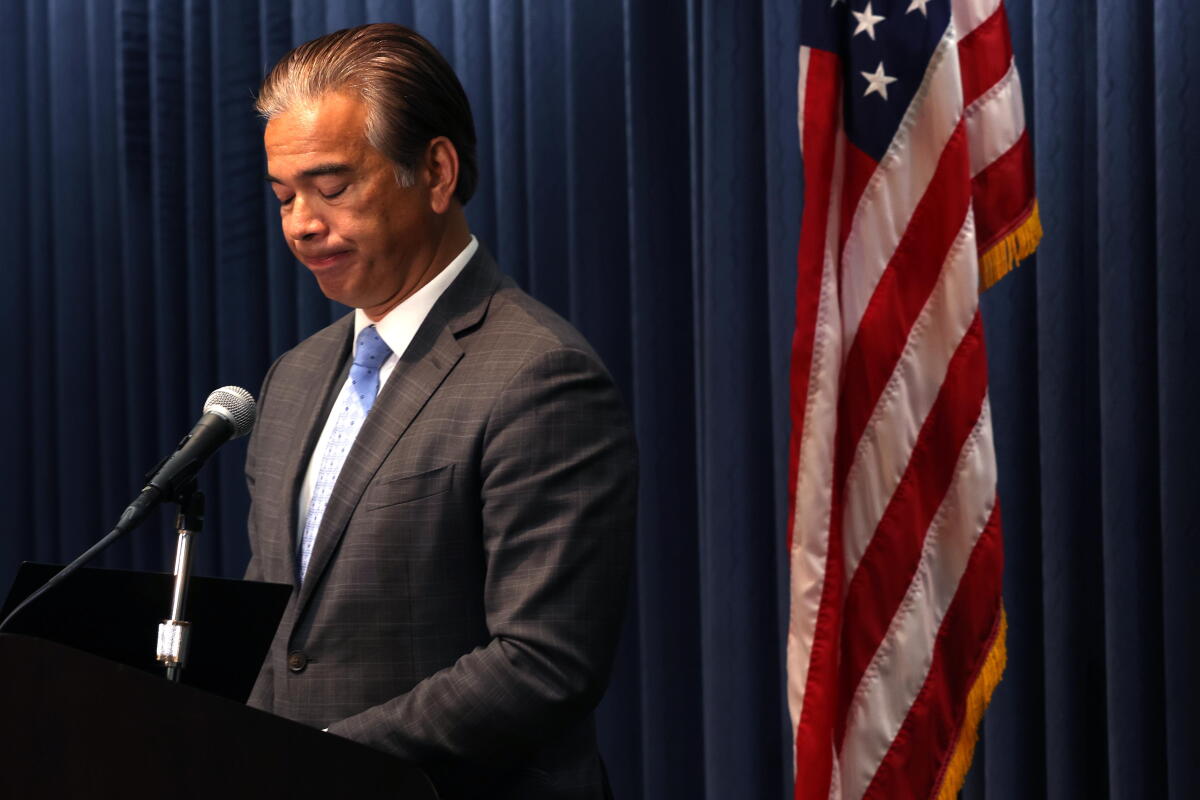
State Attorney General Rob Bonta in 2025. (Genaro Molina/Los Angeles Times)
(Genaro Molina/Los Angeles Times)
Ellison was highly motivated to strike a deal because his company’s expenses will soon accelerate. Beginning Oct. 1, Paramount is on the hook to pay Warner investors a “ticking fee” of 25 cents per quarter, per share until the deal closed. That obligation is expected to add $7 million a day to the cost of the $31 a share that Paramount agreed to pay Warner shareholders when it won the bidding war back in February.
Paramount’s takeover will be heavily leveraged. The company’s bankers have lined up nearly $80 billion in debt to finance the merger. Ellison’s father, billionaire Larry Ellison, late last year agreed to backstop the $47-billion in equity needed to complete the acquisition. Royal families from Saudi Arabia, Qatar and Abu Dhabi have agreed to chip in $24 billion for an equity stake by assuming some of Ellison’s financial commitments.
Late last week, the Federal Communications Commission approved Paramount’s request to allow the foreign investors to own nearly 50% of the merged company. The Ellison family, however, will retain its voting control.
Paramount has promised Wall Street that it would make more than $6 billion in cost cuts. A recent Los Angeles County economic report predicted the merger could lead to an estimated 4,500 workers in the Los Angeles region losing their jobs as Ellison works to combine the two companies.
The truce comes after Paramount received clearances from regulators around the world, including the European Commission, Canada and the U.S. Justice Department.
Larry Ellison separately announced plans to switch the headquarters of his software behemoth Oracle to Nashville from Austin, Texas (after Oracle relocated from Silicon Valley six years ago).
Paramount also enlisted major Hollywood unions, the Directors Guild of America and the International Alliance of Theatrical Stage Employees, and prominent cinema chains to drop their opposition to the deal.
Bonta’s suit had leaned heavily into potential harms to theatrical distribution and lawyers for the states had been banking on theater executives’ testimony at trial.
The parties also were facing a key court hearing Thursday. Paramount was poised to ask U.S. District Judge Araceli Martínez-Olguín in Oakland to make the states and the Writers Guild of America post a $1.88-billion bond that would cover some of Paramount’s delay-related deal costs should the company eventually prevail.
The states and the WGA, which also sued to block the merger, have balked at the request, which was designed by Paramount to create fissures within the coalition of states by raising doubts about the strength of their case.
Paramount’s high-profile lobbying campaign reached a crescendo in late August after Paramount called out activist-actor Mark Ruffalo, accusing him of resorting to “antisemitic tropes” to argue against the merger.
Prominent Jewish groups rushed to Paramount’s aid. Ruffalo, who frequently works with HBO, denied the allegation, saying he had a 1st Amendment right to speak against the deal as well as Oracle’s business ties to Israel. Numerous Jewish artists came to Ruffalo’s defense, saying his free speech rights were being squelched.
Bonta abruptly canceled a settlement conference, accusing Paramount of leaking confidential information.
“If you want to have an adult, legitimate, serious settlement discussion — no problem,” Bonta said during an Aug. 25 appearance in Los Angeles. “But if you want to play games, we’ve got better things to do.”
The states’ 37-page lawsuit, filed in the U.S. District Court for Northern California, claimed the Paramount-Warner combination would violate the U.S. Clayton Act, a century-old antitrust law to prevent mergers that weaken competition and raise costs for consumers.
The states, which also included Nevada, Colorado, Oregon, Washington, New Jersey and New Mexico, had argued the tie-up of two legacy movie studios would give Paramount-Warner too much marketshare in two categories — wide-release movies and potential blockbusters.
Paramount Skydance CEO David Ellison has pressed to get his blockbuster deal done before his company must make higher payouts to Warner Bros. Discovery shareholders and before the mid-term elections, which could change the makeup in Congress.
(Mark Schiefelbein / Associated Press)
The states also said Paramount-Warner would control nearly 30% of the cable television channel space with more than 50 networks.
Paramount has been facing a June 4 deadline to complete the deal — or owe Warner Bros. Discovery a $7-billion breakup fee. Paramount has already paid $2.8-billion to cover a termination fee paid to Netflix after the streamer withdrew from the auction in February.
Paramount Skydance (PSKY) is in advanced talks with state attorneys general to allow its $110 billion purchase of Warner Bros. Discovery (WBD) to be completed, though not all of the state AGs are on board.
Tensions flared on the eve of a critical week ahead for Paramount Skydance’s proposed $111-billion acquisition of Warner Bros. Discovery, amid new urgency for talks aimed at settling antitrust litigation brought by California Atty. Gen. Rob Bonta and 11 other states.
Over the weekend, opposition intensified to a proposed settlement as details trickled out, including a proposal to establish a bipartisan editorial board to monitor cable news channel CNN, one of Warner’s premier properties that Paramount Chief Executive David Ellison would control along with CBS News.
It wasn’t clear Sunday whether a proposed settlement would require Warner to sell off assets — something Bonta repeatedly has insisted upon. Critics of the deal urged Bonta and other state attorneys general to resist pressure to reach a settlement that would allow Ellison’s deal to move forward.
“State Attorneys General, please hang tough against the giant proposed Paramount-Warner Brothers merger,” Rep. Jamie Raskin (D-Md.) wrote on social media late Saturday.
“Paramount, run by the Ellisons, should not own both CBS and CNN. California must not cave and take a deal that leaves both under the same owner,” Rep. Ro Khanna (D-Fremont) wrote.
However, New York’s Letitia James and at least two other attorneys general who joined Bonta’s lawsuit in July privately have expressed reservations about the proposed compromises, believing they don’t go far enough to mitigate concerns about the power Paramount-Warner Bros. would wield over the film and TV industries should the merger go through, according to the people familiar with the matter.
James isn’t on board with Bonta’s proposed settlement, two of the people said. A potential split within Bonta’s coalition could be a setback because Bonta needs the other state attorneys general who joined his legal effort to sign off on any deal.
A spokesperson for Bonta did not respond Sunday to a request for comment.
Paramount maintains its deal to bring HBO, CNN, CBS, TBS, Comedy Central and two legendary film and television studios together would create a stronger company that could withstand the fierce competition from tech giants such as Apple, Netflix, Google (which owns YouTube) and Amazon. The two studios, on their own, would not be strong enough on their own to remain viable in the streaming age, the company has said.
On Thursday, Paramount lawyers plan to demand that U.S. District Judge Araceli Martínez-Olguín in Oakland require the states and the Writers Guild of America to post a $1.88-billion bond that would cover some of Paramount’s delay-related deal costs should the company eventually prevail.
The states and the WGA, which also sued to block the merger, have balked at the request, which was designed by Paramount to create fissures within the coalition of states, which also include Minnesota, Oregon, Colorado, Connecticut, New Jersey and Massachusetts.
Ellison wants the merger finalized by Oct. 1, when his company will be obligated to make a higher payout to Warner Bros. Discovery shareholders. The company has threatened to move its Hollywood base from its historic Melrose Avenue lot to Tennessee or Texas should the antitrust battle stretch into October.
The prospective loss of an iconic California business — a century-old film studio that helped establish Hollywood — has rattled state and local politicians, who are fearful of losing more jobs at a time when Los Angeles film production levels already are at alarming lows.
Gov. Gavin Newsom, Los Angeles Mayor Karen Bass and Xavier Becerra, the Democratic nominee for California governor, have publicly called on Bonta to settle the suit rather than prepare for a trial next spring. City Councilmember Nithya Raman, Bass’ opponent in the L.A. mayor race, has been one of few California politicians in support of Bonta’s fight.
In an opinion essay Sunday, a trio of 1st Amendment and antitrust experts dismissed Paramount’s threat to leave Los Angeles as a ploy that doesn’t make business sense.
“Ellison’s threat is empty, and the AG should call that out — not give into it,” the experts — Fiona Scott Morton, Gene Kimmelman and Norm Eisen — wrote in the Contrarian.
Both Morton, an economics professor at the Yale School of Management, and Kimmelman formerly served in the U.S. Justice Department during Democratic administrations. Eisen, founder of the group Democracy Defenders Action, is helping lead the Block the Merger campaign.
“Paramount [would be] sinking the cost of moving before it knows what businesses it owns and how best to combine and organize them — which makes expensive strategic mistakes inevitable,” the trio wrote. “A company that raises its own costs while leaving behind the most valuable labor in the industry does not threaten California; it threatens itself.”
The group noted Paramount, in its regulatory filings, still lists its Times Square offices in New York as its corporate headquarters — not its Melrose Avenue campus in Hollywood.
“There is also the possibility that Ellison is planning to move Paramount to Tennessee regardless of how the lawsuit resolves,” the group wrote.
Bonta and Paramount have discussed including in any settlement a condition that Paramount would keep its operations in California for a set period, according to people familiar with the proposal but not authorized to comment.
Merger opponents planned a Sunday evening rally outside Bonta’s offices in Oakland to encourage him to stand tough. The group plans subsequent demonstrations this week outside James’ office in New York City and the Paramount lot in Hollywood.
The jockeying comes as President Trump, who favors the Ellison takeover of CNN and Warner Bros., has sought to block several prominent news organizations, including CNN and Politico, from reporting from the White House.
“Trump just locked CNN out of the White House. Now his billionaire allies want to own it,” Sen. Cory Booker (D-N.J.) added in a Sunday post. “State attorneys general: Don’t settle. Hold the line. Block this merger.”
After a bitter standoff, Paramount Skydance and California Atty. Gen. Rob Bonta have made progress in settlement talks that could push Hollywood’s massive merger over the finish line, people familiar with the matter said Friday.
The two sides have quietly been negotiating a truce to end the antitrust lawsuit brought by Bonta and 11 other Democratic state attorneys general — a legal volley that has threatened to derail Paramount’s $111-billion takeover of Warner Bros. Discovery.
It’s not clear how close to a resolution the two sides are, but talks in recent days have been constructive, one of the knowledgeable sources said.
Paramount Chief Executive David Ellison is highly motivated to end the court battle with Bonta before Oct. 1, when his company will be obligated to make a higher payout — an extra $7 million a day — to Warner Bros. Discovery shareholders on top of the $81 billion the company has already agreed to pay.
For weeks, Ellison and his team have been ratcheting up political heat on Bonta to abandon his lawsuit, including threatening to pull Paramount out of Hollywood — a scenario that has rattled state and local lawmakers who desperately want to bring film jobs back to Los Angeles, not lose thousands more.
Paramount declined to comment.
A spokesperson for Bonta’s office said in a statement: “Potential settlement talks are confidential. We cannot confirm or deny whether settlement talks are occurring or their alleged substance.”
Both sides have incentives to settle. Ellison, who has leaned on his family’s connections to President Trump and Washington Republicans, would like to avoid taking on more debt for the already highly leveraged deal. And he is eager to close the transaction and take the reins at Warner Bros. before the midterm elections.
Bonta has been on a winning streak with favorable rulings against the Trump administration and social media giant Meta, and he doesn’t want to overplay his hand or risk having his coalition of state attorneys fall apart.
Paramount Skydance will meet with California Atty. Gen. Rob Bonta’s representatives next month for court-ordered settlement talks that could clear a path for David Ellison’s $111-billion takeover of Warner Bros. Discovery.
The two sides will convene for two days, Oct. 14 and Oct. 15, according to court documents filed this week.
The talks come as both sides look for ways to resolve the pitched battle over Hollywood’s industry-reshaping deal, which would put HBO, CBS, CNN, TBS, Food Network, Comedy Central and the Paramount and Warner Bros. studios under one roof. Bonta and 11 other Democratic state attorneys general sued in July to block it, and Ellison’s team has been stoking political pressure on Bonta to retreat.
Bonta canceled preliminary last month after details of a session on ground rules leaked, accusing Paramount of “playing games” by violating a confidentiality agreement and spreading misinformation.
Bonta’s Paramount case appears to have ruffled the Trump administration. He sued one month after the U.S. Justice Department blessed the merger without demanding concessions — a decision he said showed federal officials were not doing their jobs to enforce antitrust law. This week the department weighed in on Paramount’s side.
“The United States enforces the federal antitrust laws and has a strong interest in their correct application,” the Justice Department said in a Tuesday filing, describing its unique position to bring antitrust actions. Its “statement of interest” argued that the plaintiffs had sued as “private persons,” who must clear higher hurdles than the federal government.
The department also asked the judge to force California, the other states and the Writers Guild of America to post a $1.88-billion bond, covering fees Paramount would owe Warner Bros. Discovery shareholders if the deal isn’t finalized by Oct. 1. Paramount agreed to the so-called ticking fees earlier this year, confident the deal would sail through regulatory review. Bonta’s office said Wednesday it stands by its earlier filings arguing it should not have to post the bond. A hearing is set for Sept. 24.
Paramount’s chief legal officer, Makan Delrahim, has been quarterbacking the campaign for Warner Bros. Discovery. He served as Trump’s antitrust chief in his first administration, when he led an unsuccessful effort to block AT&T’s takeover of the company, then known as Time Warner Inc. That 2018 deal was the first of two acquisitions that saddled Warner Bros. with instability, strategic misfires and a mountain of debt, paving the way for the Paramount bid — which would mark the third time in a decade the storied studio has changed hands.
Trump has been eager for Ellison to shake up CNN, a Warner property, following his reboot of CBS News, which has coincided with diminished ratings at “60 Minutes”.
Ellison’s company has won approvals from more than 65 international regulators, and Paramount expects the Trump-appointed Federal Communications Commission leadership to sign off on a foreign ownership arrangement that would give Middle Eastern royal families a nearly 50% equity stake in the merged company. Bonta’s lawsuit is the remaining obstacle to closing.
Paramount Skydance Chief Executive David Ellison faces a pivotal decision: Should he uproot his Hollywood studio — the birthplace of such film classics as “Sunset Boulevard,” “The Godfather” and “Beverly Hills Cop”?
Paramount floated shifting its home base to Tennessee or Texas in July, hoping to deter California Atty. Gen. Rob Bonta from waging a legal battle to block Paramount’s $111-billion acquisition of Warner Bros. Discovery.
Bonta rejected the tactic, calling it “blackmail.” His antitrust lawsuit, filed in collaboration with 11 other Democratic state attorneys general, has since stalled the largest Hollywood merger in decades and put Ellison in a jam.
The 43-year-old tech scion — a film aficionado who has spent two decades building his career in Hollywood — has told associates he doesn’t want to leave L.A. But he has signaled that he’s prepared to sell the historic studio lots and move Paramount’s and Warner Bros.’ operations from California if the merger isn’t finalized by next month, according to people familiar with the situation who were not authorized to comment.
“It would be devastating,” Assemblymember Rick Chavez Zbur, who represents a district that includes the Melrose Avenue movie lot and neighborhoods near Warner Bros. in Burbank, said of a Paramount move. “We need to do everything we can to protect these important jobs in California’s iconic industry.”
Paramount declined to comment.
Ellison is frustrated after securing approvals from more than 65 regulators worldwide for the mammoth merger that would bring HBO, CNN, CBS, Comedy Central, MTV and TBS under the same roof.
“California is the fourth-largest economy in the world and the best place to do business,” a spokesman from Bonta’s office said. “Strong antitrust enforcement is essential so everyone can benefit from a vibrant economy.”
A federal judge in Oakland temporarily blocked the deal, prompting Paramount to agree not to finalize the acquisition until after a trial or June 1, whichever comes first. Settlement talks collapsed in late August after Bonta accused Paramount of leaking and misrepresenting their discussions.
Paramount has plenty at stake. U.S. District Judge Araceli Martínez-Olguín set the trial for March, but the company urgently needs the valuable Warner assets to better compete against tech behemoths. And beginning Oct. 1, Paramount must increase its payout to Warner Bros. Discovery shareholders by $7 million a day, so-called ticking fees that will heap more debt onto the highly leveraged transaction.
Paramount asked the judge to require California and other plaintiff states, including Nevada, Oregon and New York, along with the Writers Guild of America (which also sued) to post a $1.88-billion bond that could compensate Paramount for ticking fee costs. A hearing is set for Sept. 24.
For weeks, Paramount’s most potent weapon has been its in-the-works plan to leave L.A.
Lobbying has been intense, prompting a parade of politicians led by Gov. Gavin Newsom, L.A. Mayor Karen Bass and gubernatorial nominee Xavier Becerra to urge the two sides to settle the lawsuit.
“It’s a game of chicken,” Kevin Klowden, an economist and managing director at the Melcene Advisory firm, said in an interview. “But I’m not dismissing the threat because it is very real.”
Relocating from Los Angeles would allow Ellison’s cash-hungry media company to qualify for lucrative tax incentives offered by another state. Ellison’s short list includes Tennessee, Texas and Georgia. But leaving its longtime home would be costly for Paramount too, given how much of the talent and deal-making remains concentrated around L.A.
Tennessee’s Department of Economic and Community Development declined to discuss its negotiations with Paramount, but in a statement a spokesperson said the state “remains committed to working with companies across a wide range of industries that are exploring opportunities to invest and grow in Tennessee.”
Early this month, a pro-merger group was set to hold a news conference outside Paramount, but it moved its gathering to a warehouse a few blocks away after anti-merger activists planned a counterprotest.
The pro-merger organization, Neighbors for Strong Communities, was incorporated in Washington, D.C., in June and has lobbed text messages to Californians urging them to press Bonta to drop the case.
Speakers were concerned with just one issue: What would happen should Paramount pull out?
“What are we going to do with all these people who have invested their lives and many generations into building something here?” asked Keyla Wood, who moved from Mexico to L.A. about a decade ago after getting her start in Spanish-language soap operas.
“It’s been one thing after the other: The pandemic, the strikes and then it was the fires,” said Wood, who has worked as a stand-in for Eva Longoria and Salma Hayek. “So many people never work again.”
David Ellison is deciding whether to leave Hollywood.
(Bloomberg via Getty Images)
L.A.’s very identity is at stake, added Daniela Kelly, an actor and dancer who arrived from Brazil two decades ago.
“Everyone in the world sees Los Angeles and Hollywood as the platform for their dreams,” Kelly said. “Imagine if a huge studio with 100 years of history here just leaves? What will we be?”
Businesses like Kelly’s small Kreashen Studios USA, which provides video and podcasting space in Marina del Rey, depends on the region’s entertainment economy.
“It’s difficult financially right now to keep open,” she said. “So I’m pro having Paramount stay because this is the center, the heart of Hollywood.”
But deal opponents and some experts say the merger would actually worsen L.A.’s already bleak production picture.
Paramount has promised to cut $6 billion in expenses — a figure that doesn’t factor in the cost of ticking fees, which would add $650 million each quarter to the $81 billion that Paramount had anticipated paying Warner shareholders.
“We’ve seen from previous mergers that jobs have been lost,” L.A. City Councilmember Adrin Nazarian said at a City Hall event recently.
“When you look at the economic impact, it’s pretty staggering,” Kelly LoBianco, the department director, said in a recent interview. “An estimated $4 billion in economic output lost, and another $550 million lost in tax revenue at the local, state and federal level.”
The merger also could erase $79 million in tax revenue to Los Angeles County even if Paramount stays in L.A., she said.
But state and county tax revenue would plummet further should Paramount dispatch hundreds of its workers to Tennessee or some other state, Klowden said.
“If Ellison moves all the management out and all of the productions out, you’re talking about potentially tens of thousands of jobs,” Klowden said. “That, bluntly, isn’t just devastating to L.A. That becomes devastating to everybody.”
A report commissioned by Paramount from Los Angeles Economic Development Corp. predicted even steeper losses of at least 28,000 jobs should the studio move its entire operation out of state, according to a draft report given to Politico.
Under a less dire scenario, Paramount could shift its corporate headquarters to another state to qualify for incentives but still maintain large staffs in the creative hubs of Los Angeles and New York, where the company has its legal headquarters.
When the Ellison family acquired Paramount from the Sumner Redstone family last year, Ellison shifted operations to L.A., where he and other key executives work on the Melrose Avenue lot.
The threat to pull up stakes has created a disconnect after Ellison has spent more than a year touting how his family’s growing collection of media properties would strengthen traditional Hollywood.
The relocation campaign echoes a tactic used by software giant Oracle Corp., co-founded by Ellison’s billionaire father, Larry Ellison. For three decades, Oracle thrived in Redwood City, Calif., but in 2020, the company moved its headquarters to Austin, Texas, joining other California tech firms leaving in protest of the state’s high taxes.
The elder Ellison announced in 2024 that Oracle would be moving again, this time to Nashville, although that relocation hasn’t been finalized.
Paramount would risk leaving behind a skilled talent pool filled with experienced production workers and entertainment executives, Klowden said.
Fleeing L.A. could prompt “a talent bleed-out,” Klowden said. “Creative types are like: ‘Would I feel comfortable moving there?’ And, ‘What if I move there and something goes wrong? There would be nowhere else for me to go.’”
He pointed to Nissan’s 2006 U.S. headquarters move to the Nashville area from Gardena in L.A.’s South Bay, which dramatically reset the automaker’s workforce as fewer than half of its Southern California employees made the trek to Tennessee.
On Friday, a magistrate judge told both sides to identify dates in late October to meet for court-ordered settlement talks.
Each has motivations to settle — including avoiding a years-long court fight. Bonta has said Paramount must be willing to part with assets to alleviate market concentration, which could lead to a sale of Warner’s New Line Cinema, which has rights to “The Lord of the Rings” and “The Conjuring” franchises, and potentially cable channels such as CNN, Food Network or Cartoon Network.
Paramount, as part of a settlement, could abandon plans to leave L.A.
“All of the parties need to understand what this [issue] means to workers and small businesses,” Zbur, the local Assembly member, said. “I’m hopeful for a settlement that assures that Paramount and Warner Bros. will maintain their operations and remain a significant economic and employment force in Los Angeles.”
Times staff writer Cerys Davies contributed to this report.