paramount skydance

Prominent Latino group blasts proposed Paramount-Warner merger

A prominent Latino group is raising fresh concerns about Paramount Skydance’s proposed acquisition of Warner Bros. Discovery, saying the blockbuster deal would crush Latino workers and small businesses that support Hollywood.

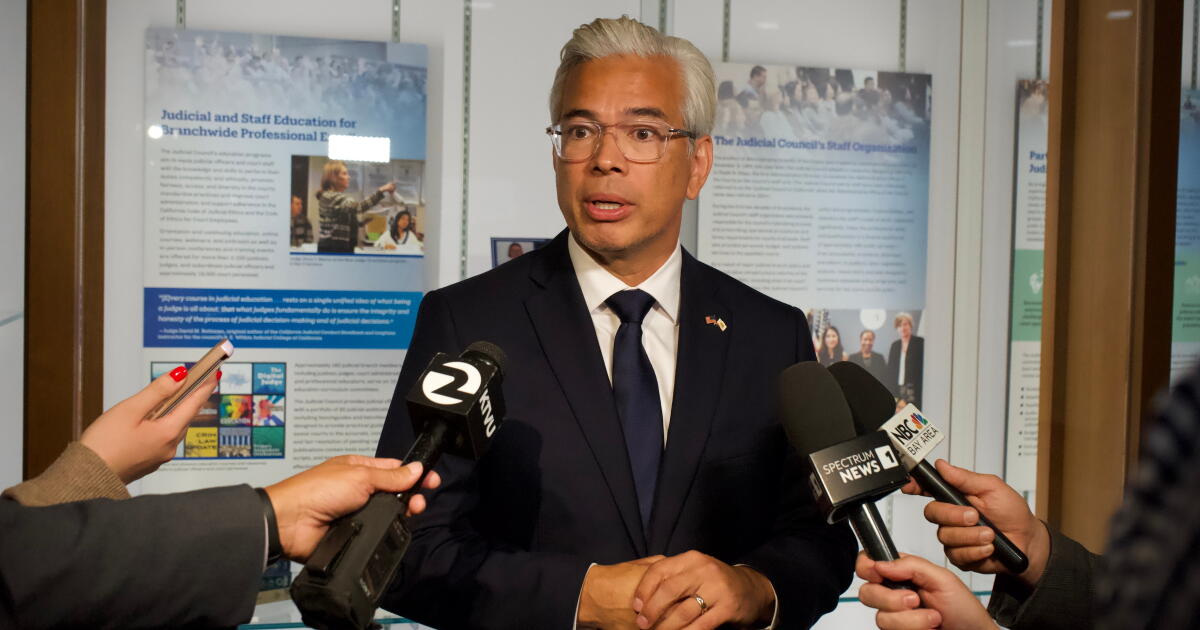
In an open letter to California Atty. Gen. Rob Bonta, the League of United Latin American Citizens urged the state’s top prosecutor to continue his legal fight to block Paramount’s proposed $111-billion takeover of the media company that owns HBO, CNN, HGTV and the Warner Bros. film and television studios.

“No state has more to lose from this disastrous merger … than California,” LULAC National President Roman Palomares and Chief Executive Juan Proaño wrote in the six-page letter sent to Bonta late Sunday.

Thousands of jobs would be lost, and Latino voices could be squelched should the deal go through as it is drawn, the LULAC leaders said.

“The current form of the consolidation would have a devastating and unacceptable impact on Latinos, including those who reside in the Los Angeles community,” they wrote, noting Latinos make up 40% of the state’s population and nearly half of Los Angeles County, where HBO and the Paramount and Warner Bros. studios are based.

At least 4,500 jobs in Southern California would be lost if the merger goes through, according to a 120-page report last week from Los Angeles County’s economic office.

Paramount’s proposed merger has carved deep divisions and become increasingly contentious.

In recent days, Gov. Gavin Newsom, Los Angeles Mayor Karen Bass and Democratic gubernatorial nominee Xavier Becerra publicly pressured Bonta to settle the lawsuit to avoid a drawn-out court fight.

Politicians have been reacting to Paramount’s threat to move its studio, and potentially Warner Bros., from Hollywood to Tennessee or Texas unless Bonta backs down.

Theater owners and two major Hollywood unions — the Directors Guild of America and the International Alliance of Theatrical Stage Employees — have joined the parade pleading for a settlement. But the Writers Guild of America and Teamsters have steadfastly opposed the merger, warning about its potential impact on working writers and film crews.

Paramount Chief Executive David Ellison was set Monday to meet Bonta and others representing the 12 states that sued to block the transaction. But Bonta abruptly canceled the mediation session, accusing Paramount of “playing games,” leaking details and making misrepresentations about the talks despite agreeing to keep them confidential.

Paramount later denied that it was the source of the leaks.

Paramount didn’t immediately comment on the LULAC letter, but previously has touted the merger as a way to build a stronger competitor amid a pullback in local production. The company said it would “invest $30 billion annually in production and release at least 30 films a year,” a commitment that would lead to “more jobs over time, and ultimately, a stronger, more durable entertainment industry for generations to come.”

“To have it thrown in your face that Paramount will leave Los Angeles if they don’t get what they want is really just tantamount to a threat … one that will be devastating to Latinos,” Proaño said in an interview with The Times.

“There is a significant number of small businesses — Latino small businesses — and Latino residents, employees and workers that support this industry,” Proaño said. “We’ve been invisible, we’ve been silent — but we wanted to make sure that LULAC is not silent in this moment.”

In its letter, LULAC pointed to Hollywood’s most recent mergers, including Discovery’s 2022 acquisition of WarnerMedia from AT&T, saying such tie-ups underscore how media consolidation tramples over Latino voices, particularly when companies resort to job eliminations and other cost cuts to balance the expense of a corporate takeover.

After Warner Bros. Discovery Chief Executive David Zaslav took the helm, his company plodded through years of turmoil and massive layoffs. The movie “Batgirl,” which was set to feature a young Afro-Latina as lead actor, was shelved to gain tax benefits. Warner also canceled “Gordita Chronicles,” a TV show about an immigrant Dominican family, despite solid viewership.

Latino families make up “a significant portion of the film and television industry audience,” the letter said, adding that Motion Picture Assn. data show Latinos annually attend more movies per person in theaters than any other demographic group.

“Hollywood returns almost nothing for that loyalty,” the letter said. “Latino characters filled only 5 percent of speaking roles across 1,300 top-grossing films.”

“These and other harms are not collateral to the antitrust case,” LULAC’s letter said. “They are consequences of the diminished competition that will result. Every studio absorbed by a rival is one fewer buyer for a script, one fewer employer for a crew and one fewer distributor willing to bet on a story its franchise slate does not need.”

Warner Bros. Discovery nearly drowned in debt that it took on to finance its $43-billion buyout from AT&T in 2022. Ellison’s proposed Warner Bros. takeover also will be heavily leveraged with nearly twice the debt that resulted from Zaslav’s previous deal.

David Ellison has lined up nearly $80 billion in debt financing to buy out Warner investors. The tech scion is relying on a guarantee from his billionaire father, Oracle co-founder Larry Ellison, and $24 billion in equity financing from three Middle Eastern sovereign wealth funds, representing the royal families of Saudi Arabia, Qatar and Abu Dhabi.

The deal comes one year after the Ellison family bought Paramount, which had been on the ropes because of significant under-investment over the years.

“Paramount followed the same script: within months of closing its Skydance merger in August 2025, it laid off roughly 2,000 employees, about ten percent of its workforce, just after dismantling its diversity programs earlier that year,” the LULAC letter reads.

“This time, Zaslav’s going to walk away with a billion-dollar parachute and Paramount may end up with these crown jewels assets when it comes to movie-making and television programming,” Proaño said.

Source link

LA County warns that Paramount-Warner merger could erase thousands jobs

Paramount Skydance’s proposed $111-billion takeover of Warner Bros. Discovery could result in 4,500 jobs eliminated in Los Angeles over a three-year period, according to a new report.

Los Angeles County supervisors earlier this year wanted to explore the potential economic impact of David Ellison’s proposed union of two historic Hollywood studios. The report, completed this week by CVL Economics, paints a sobering picture of the potential aftermath of the debt-laden deal, including the prospect of an estimated $1.26 billion in lost wages.

“Los Angeles County’s film and television economy is already undergoing a significant structural contraction,” the report said. “The proposed merger of Warner Bros. Discovery and Paramount Skydance introduces an additional source of risk into that already changing market.”

California Atty. General Rob Bonta is leading a coalition of 12 states attempting to block the merger on antitrust grounds. A trial has been set for March. Paramount and other groups, including cinema chain owners and some Hollywood unions, have agitated for a settlement to curtail months of uncertainty over whether the deal will go through.

The proposed merger has been controversial in Hollywood due to fears of widespread layoffs. The Writers Guild of America has brought its own lawsuit to thwart the deal.

The goal of the county’s report was to provide “a comprehensive assessment of the merger’s production workforce implications,” amid the ongoing decline of L.A. based film and television production work. Los Angeles has witnessed the elimination of more than 50,000 entertainment jobs since 2022.

The 120-page report, from the county’s Department of Economic Opportunity and Film Office and requested by Supervisor Lindsey Horvath, found that more than 15,000 corporate roles would be at risk, including an estimated 2,495 jobs based in Los Angeles County.

The two companies would have an overlapping workforce within its linear cable channel divisions, film and television studios, streaming operations and corporate functions, including marketing, technology and advertising sales.

“Effects on crews, crafts, post-production personnel, vendors, and production-serving small businesses,” could also be substantial, the report said.

Paramount, in a statement, said the report highlighted the industry’s troubles and made a case for the merger.

“LA County’s own economic report underscores what we have been saying all along: our industry is in decline, production is down and jobs are being lost — and lost for good if we don’t act,” Paramount said. “Our plan to invest $30 billion annually in production and release at least 30 films a year.”

That commitment, Paramount said, would lead to “more jobs over time, and ultimately, a stronger, more durable entertainment industry for generations to come.”

Paramount has received clearances from the U.S. Justice Department and 65 other regulators around the globe to complete the merger.

For now, Bonta’s lawsuit is standing in the way.

Paramount has promised investors the deal would lead to at least $6 billion in cost savings through the consolidation of operations. The company has said the merger would ultimately be good for consumers and workers because a combined Paramount-Warner Bros. would have greater resources to compete with tech giants that are investing heavily in entertainment.

But the report pointed to the high level of debt that Paramount would have to take on — nearly $82 billion — to buy the stock of Warner Bros. Discovery shareholders to finalize the takeover.

“If revenues underperform or planned savings prove more difficult to achieve, pressure to identify additional cost reductions could increase,” the report said.

The two companies already are carrying substantial interest costs due to their existing debt structures. “In the quarter ended June 30, 2026, the two companies reported a combined $712 million in operating income and $737 million in net interest expense,” the report said, meaning that the companies were producing less profit than what was needed to support their debt obligations.

Despite Paramount predicting cost savings and reduction in debt over time, “those savings will take several years to fully realize,” the report said.

Paramount Skydance CEO David Ellison.  (Photo by PATRICK T. FALLON/AFP via Getty Images)

David Ellison was hoping to wrap up his $111-billion merger with Warner Bros. by September.

(PATRICK T. FALLON/AFP via Getty Images)

Television production in Los Angeles could be especially vulnerable, in large part, because Paramount and Warner Bros. already have moved most of their feature film projects outside of L.A. High levels of TV production continues at Warner Bros. complex in Burbank and Paramount’s and CBS’ soundstages in Hollywood and Santa Clarita.

“The economic impact extends well beyond employment,” with an expected elimination of $547 million in tax revenue, including $78.6 million in local taxes, the report said.

It noted that Warner Bros. and Paramount films were “particularly employment-intensive.”

“Their theatrical releases carry 2.74 times as many screen credits as the average theatrical release, while their streaming films carry twice as many,” the report found.

The document also highlighted a pre-existing pull-back in production at the two studios in recent years — something that Ellison plans to correct.

Paramount was struggling to remain solvent prior to the Ellison family’s purchase of the media company last year. Warner Bros. had scaled back offerings following Discovery’s $43-billion takeover of WarnerMedia in 2022 as it struggled to contain the debt from that deal.

“Between 2019 and 2025, Warner Bros. Discovery and Paramount accounted for a net reduction of approximately 195 major U.S. releases,” the report said. At the same time, other major distributors combined “added about 67 projects.”

Ellison is looking to finalize his massive Hollywood deal — folding CNN, HBO, TBS, Food Network and the Warner Bros. film and television studios under Paramount — as quickly as possible. He must hold together Paramount’s coalition of financiers and manage rising expenses, primarily legal fees and escalating obligations to Warner shareholders.

The state attorneys general, including from Colorado, Oregon, Nevada, Washington and New York have argued that the blockbuster merger — the largest in Hollywood in decades — would violate the century-old Clayton Antitrust Act.

Paramount hoped the trial over Bonta’s lawsuit would begin in November but U.S. District Judge Araceli Martínez-Olguín set the trial for March 2.

If the deal goes forward, just four studios — a post-merger Paramount-Warner, Disney, NBCUniversal and Sony Pictures — would control 86% of movies that are widely released (in more than 3,000 movie theaters), according to the attorneys general lawsuit. Paramount has argued that projects from Amazon MGM, Netflix and Apple should be included because they compete with the traditional companies for talent and audiences.

Paramount-Warner Bros. would also own more than 50 cable channels, including HGTV, Animal Planet, BET, MTV and Comedy Central.

Source link

David Ellison is best argument to block Paramount-Warner Bros. deal

It will take someone better versed in finance, corporate law, family psychology and, perhaps, the impact of great wealth on brain chemistry than I to analyze the recent actions of Paramount Skydance Chief Executive David Ellison.

To a cultural journalist, however, it seems like he continues to make himself the best argument yet for opposing his company’s proposed acquisition of Warner Bros. Discovery.

Mere days after taking to the media to insist that he is a misunderstood film buff who just wants to save Hollywood, he threatened to help destroy it.

If California Atty. Gen. Rob Bonta and state attorneys general from 11 other states, including New York, New Jersey, Washington and Colorado, refuse to negotiate a settlement of their antitrust lawsuit, Ellison said he will yank Paramount Studios, and potentially Warner Bros., out of California.

Um, OK, Ultron.

So that’s how Ellison wants to prove that he will be a steward of the flailing entertainment industry — by threatening to rip out a big part of its still-beating heart and implant it in Texas or Tennessee?

Will he be taking the Hollywood sign as well, to stick atop the Grand Ole Opry or, better yet, the Alamo?

Not only does this grant Bonta VIP access to the moral highground, it all but negates Ellison’s recent New York Times guest essay. Especially the part in which he wrote: “The states claim this deal will give one company too much influence over theatrical releases and cable operators, while the W.G.A. argues that our combined market power will hurt writers.”

If one man can decide, in a fit of pique, to scoop up a huge portion of the entertainment industry and float it thousands of miles away, I’d say that’s a decent argument for “too much influence.”

Also, good luck with the landing. Texas and Tennessee are both fine states with vibrant cities, undeniable corporate incentives and lower costs of living, but their draconian abortion laws and restrictive LGBTQ+ legislation may give many in the entertainment industry pause.

Still, according to Ellison, it’s Bonta and his gang who are trying to make things political, not him; in his essay, Ellison claimed that the suit is mostly about preventing his ownership of CNN, despite his insistence that (the hiring of Bari Weiss to oversee CBS News to the contrary) the news network would remain autonomous.

As a journalist, I would love to believe that Bonta and the other attorneys general are simply going to bat for the Fourth Estate; with President Trump openly longing for the day when Ellison controls CNN, it is no doubt a concern. But as Ellison seems intent on personally underscoring, the bigger issue is how to prevent a dwindling number of individuals from controlling enormous portions of an industry that not only employs millions, but also plays a vital role in shaping the nature of art and culture in this country and the world.

(Never mind the queasy fact that Ellison is being bankrolled by his billionaire father Larry, who is putting many, if not all, of his eggs in the AI basket, to the detriment of his employees.)

Shaping art and culture is, of course, precisely why Ellison wants to buy Warner Bros. Discovery, almost literally at all costs. When he first lost the bid for Warner Bros. to Netflix, he (and his dad) responded by offering enough money (including a $7-billion payout should the deal not clear antitrust regulation) to make Ted Sarandos blink. Money has always been a ladder to power and influence in this country, and the widening wealth gap, not to mention the current administration, has turned the ladder into a rocket ship. (See please Elon Musk.)

Ellison has continually stressed his love of cinematic storytelling. Under the proposed Paramount Warner, he promises to produce 30 theatrical films and 170 television series a year and create more work for everyone.

That would be lovely (if fiscally difficult) to believe. If only he hadn’t just tried to hold the state that gave birth to cinematic storytelling hostage by threatening to kidnap one of its kids.

As negotiating tactics go, it certainly undermines whatever public approval he hoped to gain with his “I’m just a guy, standing in front of the movie biz asking it to love me” bit.

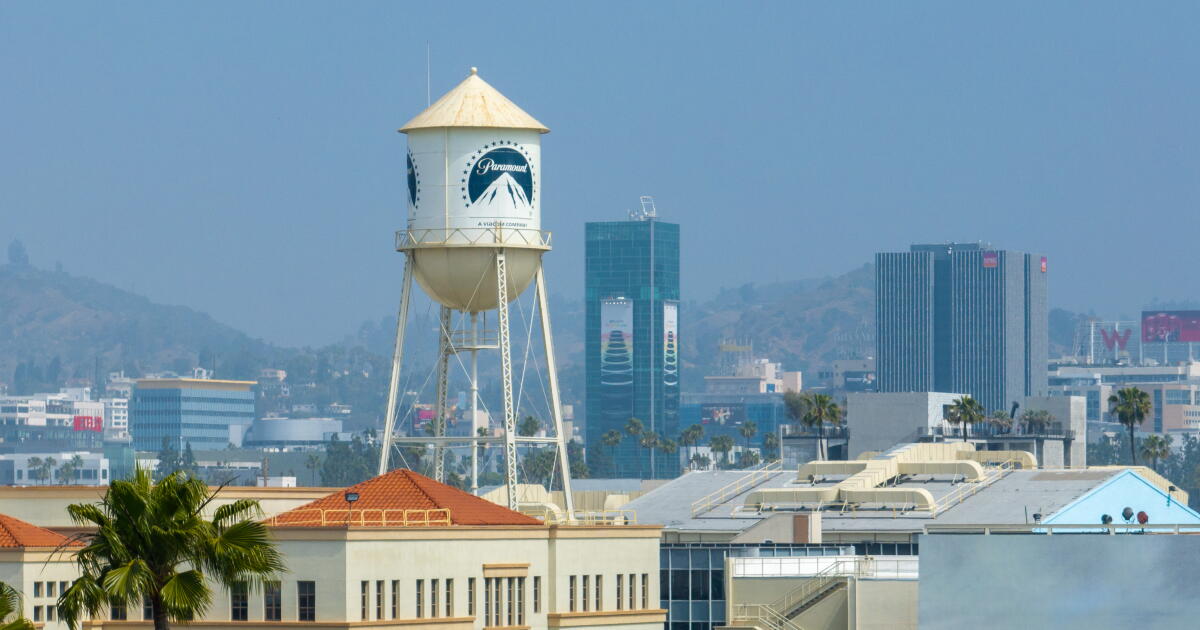
Change is coming for Paramount Studios — the lot on Melrose Avenue — either way. If Paramount Skydance acquires Warner Bros., production will likely shift to the Warner Bros. lot, with Paramount leased or sold.

Now, it seems, Ellison is willing to have a fire sale — he’ll certainly need to raise a bunch of cash if he’s going to quickly flee to redder pastures. As for the thousands of local workers who depend on Paramount production to make a living, well, Ellison and his executives may be able to afford to relocate or (more probably) commute out of state, but most of the people who actually make movies and television cannot.

Business, of course, is business and it has become financially and politically fashionable to desert California to avoid whatever local law, regulation or tax you now find unfair. Tech mavens, including Musk, have ditched California for the Lone Star State. Ellison’s father recently took Oracle out of Redwood City, first to Austin, Texas, then to Nashville, workers be damned.

But Ellison taking Paramount and potentially Warner Bros. out of Los Angeles isn’t about business. It’s pure politics, of the savage, oligarchical variety.

Given the stakes, it’s difficult to imagine that some sort of deal won’t be struck that allows the sale to go through. But Ellison isn’t saving the entertainment industry, he’s leveraging it.

And if he has to spit in Hollywood’s face to save his own, well, apparently that’s fine too.

Source link

U.K. may challenge Paramount takeover of Warner Bros. Discovery

Britain’s culture minister may challenge Paramount Skydance’s takeover of Warner Bros. Discovery — presenting a potential speed bump to David Ellison’s plan to wrap up his $111-billion deal by September.

Earlier this month, Paramount secured the U.S. Justice Department’s blessing to buy the Warner assets, which include CNN, HBO, Cartoon Network, Animal Planet and the Warner Bros. film and TV studios in Burbank.

Paramount also must win the approval of British and European regulators, who are known for drilling deeply into media matters because of their influence on society.

Britain’s Competition and Markets Authority took a preliminary step this month by opening an investigation into Ellison’s proposed merger.

On Tuesday, Lisa Nandy, Britain’s secretary of state for culture, media and sport, notified Parliament that she was inclined to intervene in the blockbuster deal.

In a written statement, Nandy cited her ability to weigh in on “public interest grounds,” due to concerns about maintaining a competitive media market in Britain.

“The UK’s move to intervene in the Paramount–WBD deal confirms what we’ve been saying for months. The real regulatory risk was never in the US — it’s in Europe,” Forrester VP Research Director Mike Proulx said Tuesday in a statement.

While Nandy cautioned she has not made “a final decision on intervention at this stage,” she has invited Paramount and Warner Bros. to respond to her concerns by Monday.

Lisa Nandy arriving at Downing Street in London.

Lisa Nandy, Britain’s secretary of state for culture, media and sport, has said she may intervene in the deal on “public interest grounds.”

(Alishia Abodunde / Getty Images)

Paramount did not offer immediate comment.

The company owns CBS News, children’s channel Nickelodeon and Channel 5, one of the largest over-the-air television broadcasters in the United Kingdom.

Warner Bros. Discovery owns CNN, Cartoon Network and TNT Sports, which broadcasts the Olympics, Champions League and Premier League soccer matches.

“I am conscious that the proposed acquisition is global in nature,” Nandy wrote in her statement. “In reaching this decision, my focus has been, and will remain, on the UK public interest and the range of services available to UK audiences, including Channel 5, TNT Sports, Cartoon Network, Nickelodeon, and CNN International, as well as Paramount+ and HBO Max.”

If Nandy decides to intervene, the Office of Communications, known as Ofcom, would launch an assessment of the deal. Britain’s Competition and Markets Authority also would determine how the merger might reshape the competitive landscape.

Teams from the two companies have been huddling for months to plan for the melding of the two operations as soon as Paramount receives all of its regulatory approvals.

Australia, New Zealand, China, Saudi Arabia, Ukraine, Serbia, France and Italy have already given their approvals to the deal.

Saudi Arabia’s Public Investment Fund is planning to contribute $10 billion to help the billionaire Ellison family pull off the merger, which would make the Saudi royal family a significant, although passive, equity owner. In addition, the royal families of Qatar and Abu Dhabi have agreed to each contribute $7 billion in equity financing.

The Federal Communications Commission must evaluate the foreign ownership stakes due to Paramount’s holding of CBS broadcast licenses. U.S. antitrust regulators already have concluded the combination would not violate federal anticompetition laws.

Approval had been expected because President Trump — who has friendly ties with Ellison and his father, tech billionaire Larry Ellison — favors the deal.

Trump has been eager for changes at CNN.

The U.S. government stopped short of asking Paramount to make concessions or divestitures. Many expect that Paramount may have to reconfigure its children’s television holdings abroad due to the proposed combination of two large players — Nickelodeon and Cartoon Network.

Nandy suggested that Britain also should scrutinize the impact of combining two major streaming services, HBO Max, a Warner property, with Paramount+.

HBO programming, including “Game of Thrones,” “Boardwalk Empire” and “Succession,” has long been popular in Britain.

A coalition of state attorneys general, led by California‘s Rob Bonta, also is expected to challenge the deal, in part, due to concerns about news media consolidation. Bonta’s office has said the matter remains under review.

Opposition to the deal has been building in the U.S. for months. A group of Hollywood activists — led by actors Jane Fonda and Mark Ruffalo — have spearheaded a “block the merger” campaign that now has support from more than 5,000 entertainment workers.

The group’s open letter calls on Bonta to take action to thwart the Ellison expansion effort. Paramount’s Chief Legal Officer Makan Delrahim has blasted the campaign, calling it “fear-mongering” and a partisan distortion of antitrust law.

Forrester’s Proulx noted differences in attitudes toward the deal among the various constituencies.

“For U.S. consumers, this merger has become a proxy fight about political influence and control of media,” Proulx said. “In the UK, it’s being treated as a structural competition issue where regulators, not consumers, will decide how this deal plays out and how long it takes.”

Source link