pam bondi

Northwestern U. to pay $75M fine to end federal civil rights investigation

Nov. 29 (UPI) — The federal government is ending its anti-Semitism investigation at Northwestern University in exchange for a $75 million fine in an agreement that restores $790 million in federal funding for research.

The Chicago-area private university must abide by federal anti-discrimination laws regarding admissions and hiring and initiate mandatory anti-Semitism training for students, staff and faculty as part of the deal, the Chicago Sun Times reported.

University officials also must enact and maintain policies that clearly regulate protests and other “expressive activities,” review its policies regarding international admissions and end its Deering Meadow agreement that enabled “peaceful” protests at the university’s 2-acre park.

“This is not an agreement the university enters into lightly, but one that was made based on institutional values,” interim President Henry Bienen said, as reported by the Chicago Tribune.

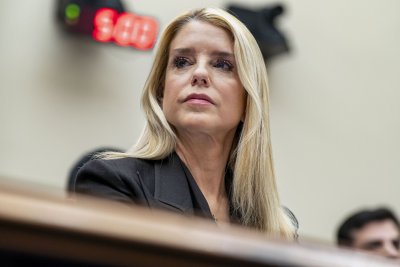
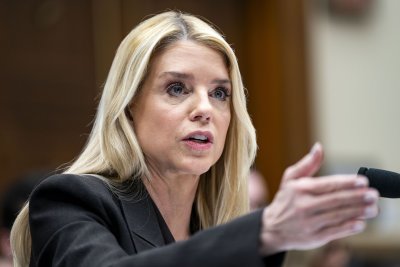
Attorney General Pam Bondi called the settlement a win for civil rights.

“Today’s settlement marks another victory for the Trump administration’s fight to ensure that American educational institutions protect Jewish students and put merit first,” Bondi said in a statement.

“Institutions that accept federal funds are obligated to follow civil rights law,” Bondi added. “We are grateful to Northwestern for negotiating this historic deal.”

Bienen said university officials had several “hard lines” that they refused to cross when negotiating the settlement.

“We would not relinquish any control over whom we hire, whom we admit as students, what our faculty would teach or how our faculty would teach,” he said.

University officials said they will review their international admissions criteria and develop training to better socialize international students so that they understand the campus norms regarding open debate and inquiry.

Northwestern’s board of trustees also will create a committee to ensure the university complies with the agreement with the federal government.

The university must pay its $75 million fine in increments over the next three years, which is the second-highest amount being paid by a college or university to settle accusations of discrimination and anti-Semitism amid pro-Palestinian campus protests.

Columbia University in New York City earlier agreed to pay a $200 million fine to settle claims made against it by federal investigators.

The $790 million in federal research funding that had been suspended should be restored by the end of December, according to Bienen.

President Donald Trump and first lady Melania Trump pardon Gobble, the National Thanksgiving Turkey, in the Rose Garden of the White House in Washington on November 25, 2025. Photo by Jim Lo Scalzo/UPI | License Photo

Source link

Canadian man arrested in hunt for ex-Olympian-turned-drug kingpin

Rasheed Pascua Hossain, 32, was arrested by Canadian authorities on Friday. U.S. law enforcement was hunting for Hossain as it searchers for Ryan Wedding, an alleged drug king pin Photo courtesy of FBI/Release

Nov. 23 (UPI) — Authorities in Canada have arrested an associate of a former Olympian snowboarder accused by the United States of being a drug kingpin on the FBI’s Most Wanted list.

The FBI confirmed on X that Rasheed Pascua Hossain, 32, was arrested in Vancouver by the Royal Canadian Mounted Police, Canada’s federal law enforcement agency. The Canadian Broadcasting Corporation reported that Hossain was detained Friday.

On Wednesday, U.S. federal authorities announced at a press conference that they were intensifying their manhunt for Ryan Wedding, 44, whom FBI Director Kash Patel called a “modern-day iteration” of Pablo Escobar and Joaquin “El Chapo” Guzman, two of the most infamous drug cartel leaders.

Wedding is believed to be in Mexico, receiving protection from the Sinaloa Cartel.

He is accused of flooding U.S. streets with drugs and of being Canada’s main distributor of cocaine.

An indictment unsealed Wednesday alleged that he was involved in orchestrating the execution of a witness working with authorities to secure his extradition to the United States. Wedding was first charged in the United States in October 2024. He is facing an array of charges that include murder and drug trafficking.

More than 35 people have been indicted in Operation Giant Slalom, with the announcement that 10 people, seven in Canada and three from Colombia, have been arrested made public on Wednesday.

An FBI 10 most wanted poster is displayed during a press conference with Attorney General Pam Bondi and Federal Bureau of Investigation (FBI) Director Kash Patel on Wednesday. Photo by Bonnie Cash/UPI

Federal prosecutors said Hossain was one of four people, including Wedding, who law enforcement was continuing to search for.

Hossain was charged in the indictment announced Wednesday over his alleged involvement in money laundering for what U.S. federal authorities have called the Wedding Criminal Enterprise.

He has been charged with conspiracy to distribute and possess with intent to distribute cocaine, conspiracy to export cocaine and conspiracy to launder monetary instruments.

A $15 million reward is being offered by the United States for information leading to the arrest and conviction of Wedding.


Source link

Could Trump destroy the Epstein files?

In political exile at his mansion in Florida, under investigation for possessing highly classified documents, Donald Trump summoned his lawyer in 2022 for a fateful conversation. A folder had been compiled with 38 documents that should have been returned to the federal government. But Trump had other ideas.

Making a plucking motion, Trump suggested his attorney, Evan Corcoran, remove the most incriminating material. “Why don’t you take them with you to your hotel room, and if there’s anything really bad in there, like, you know, pluck it out,” Corcoran memorialized in a series of notes that surfaced during criminal proceedings.

Trump’s purported willingness to conceal evidence from law enforcement as a private citizen is now fueling concern on Capitol Hill that his efforts to thwart the release of Justice Department files in the Jeffrey Epstein investigation could lead to similar obstructive efforts — this time wielding the powers of the presidency.

Since resuming office in January, Trump has opposed releasing files from the federal probe into the conduct of his former friend, a convicted sex offender and alleged sex trafficker who is believed to have abused more than 200 women and girls. But bipartisan fervor has only grown over the case, with House lawmakers across party lines expected to unite behind a bill on Tuesday that would compel the release of the documents.

Last week, facing intensifying public pressure, the House Oversight Committee released over 20,000 files from Epstein’s estate that referenced Trump more than 1,000 times.

Those files, which included emails from Epstein himself, showed the notorious financier believed that Trump had intimate knowledge of his criminal conduct. “He knew about the girls,” Epstein wrote, referring to Trump as the “dog that hasn’t barked.”

Rep. Dave Min (D-Irvine), a member of the oversight committee, noted Trump could order the release of the Justice Department files without any action from Congress.

“The fact that he has not done so, coupled with his long and well documented history of lying and obstructing justice, raises serious concerns that he is still trying to stop this investigation,” Min said in an interview, “either by trying to persuade Senate Republicans to vote against the release or through other mechanisms.”

A spokesperson for Sen. Adam Schiff (D-Calif.) said that altering or destroying portions of the Epstein files “would violate a wide range of federal laws.”

“The senator is certainly concerned that Donald Trump, who was investigated and indicted for obstruction, will persist in trying to stonewall and otherwise prevent the full release of all the documents and information in the U.S. government’s possession,” the spokesperson said, “even if the law is passed with overwhelming bipartisan support.”

After the House votes on the bill, titled the Epstein Files Transparency Act, bipartisan support in the Senate would be required to pass the measure. Trump would then have to sign it into law.

Trump encouraged Republican House members to support it over the weekend after enough GOP lawmakers broke ranks last week to compel a vote, overriding opposition from the speaker of the House. Still, it is unclear whether the president will support the measure as it proceeds to his desk.

On Monday, Trump said he would sign the bill if it ultimately passes. “Let the Senate look at it,” he told reporters.

The bill prohibits the attorney general, Pam Bondi, from withholding, delaying or redacting the publication of “any record, document, communication, or investigative material on the basis of embarrassment, reputational harm, or political sensitivity, including to any government official, public figure, or foreign dignitary.”

But caveats in the bill could provide Trump and Bondi with loopholes to keep records related to the president concealed.

“Because DOJ possesses and controls these files, it is far from certain that a vote to disclose ‘the Epstein files’ will include documents pertaining to Donald Trump,” said Barbara McQuade, who served as the United States attorney for the eastern district of Michigan from 2010 until 2017, when Trump requested a slew of resignations from U.S. attorneys.

Already, this past spring, FBI Director Kash Patel directed a Freedom of Information Act team to work with hundreds of agents to comb through the entire trove of files from the investigation, and directed them to redact references to Trump, citing his status as a private citizen with privacy protections when the probe first launched in 2006, Bloomberg reported at the time.

“It would be improper for Trump to order the documents destroyed, but Bondi could redact or remove some in the name of grand jury secrecy or privacy laws,” McQuade added. “As long as there’s a pending criminal investigation, I think she can either block disclosure of the entire file or block disclosure of individuals who are not being charged, including Trump.”

Destroying the documents would be a taller task, and “would need a loyal secretary or equivalent,” said Rhodri Jeffreys-Jones, a professor emeritus and FBI historian at the University of Edinburgh.

Jeffreys-Jones recalled J. Edgar Hoover’s assistant, Helen Gandy, spending weeks at his home destroying the famed FBI director’s personal file on the dirty secrets of America’s rich and powerful.

It would also be illegal, scholars say, pointing to the Federal Records Act that prohibits anyone — including presidents — from destroying government documents.

After President Nixon attempted to assert executive authority over a collection of incriminating tapes that would ultimately end his presidency, Congress passed the Presidential Recordings and Materials Preservation Act, asserting that government documents and presidential records are federal property. Courts have repeatedly upheld the law.

While presidents are immune from prosecution over their official conduct, ordering the destruction of documents from a criminal investigation would not fall under presidential duties, legal scholars said, exposing Trump to charges of obstructing justice if he were to do so.

“Multiple federal laws bar anyone, including the president or those around him, from destroying or altering material contained in the Epstein files, including various federal record-keeping laws and criminal statutes. But that doesn’t mean that Trump or his cronies won’t consider trying,” said Norm Eisen, who served as chief ethics lawyer for President Obama and counsel for the House Judiciary Committee during Trump’s first impeachment trial.

The Democracy Defenders Fund, a nonprofit organization co-founded by Eisen, has sued the Trump administration for all records in the Epstein investigation related to Trump, warning that “court supervision is needed” to ensure Trump doesn’t attempt to subvert a lawful directive to release them.

“Perhaps the greatest danger is not altering documents but wrongly withholding them or producing and redacting them,” Eisen added. “Those are both issues that we can get at in our litigation, and where court supervision can be valuable.”

Jeffreys-Jones also said that Trump may attempt to order redactions based on claims of national security. But “this might be unconvincing for two reasons,” he said.

“Trump was not yet president at the time,” he said, and “it would raise ancillary questions if redactions did not operate in the case of President Clinton.”

Last week, Trump directed the Justice Department to investigate Epstein’s ties to Democratic figures, including Clinton, former Treasury Secretary Larry Summers, and Reid Hoffman, LinkedIn’s co-founder and a major Democratic donor.

He made no request for the department to similarly investigate Republicans.

Times staff writer Ana Ceballos contributed to this report.

Source link

Massie: 100 Republicans likely to vote for release of Epstein files

Nov. 16 (UPI) — Rep. Thomas Massie said as many as 100 Republicans may vote to release files related to convicted sex offender Jeffery Epstein, amid a last-ditch effort by the White House to stall their release.

Massie, R-Ky., said Sunday on ABC News’ This Week that at least 100 Republicans will join Democrats in the House and vote this week for the rest of the Epstein documents to be released.

President Donald Trump this week also ordered the Department of Justice to investigate Democrats and their supporters whose names appear in the files after more than 20,000 documents related to Epstein were released by Congress.

With newly sworn in Rep. Adelita Grijalva, D-Ariz., there were enough members of the House to sign a discharge petition forcing a vote on whether to force the Department of Justice to release all of the files it has on Epstein — over the objections of Trump, House Speaker Mike Johnson, R-La., and other Republicans in Congress.

Massie cautioned that while there are ways to push the Senate to vote on the bill, the chamber does not have a discharge petition-like method to force a vote over the objection of the majority leader. If the bill passes both houses of Congress, Trump still would have to sign it.

But Massie also noted that Trump’s order to the Department of Justice could potentially delay some part of the documents from being released, regardless of what Congress does.

“If they have ongoing investigations in certain areas, those documents can’t be released,” he said. “So, this might be a big smokescreen, these investigations, to open a bunch of them to, as a last-ditch effort to prevent the release of the Epstein files.”

Trump has fought the release of the files, at least partially because of widespread speculation that he figures prominently in them over of his years-long friendship with Epstein.

Despite the president’s claims that “Jeffery Epstein and I had a very bad relationship for many years,” they were close for more than a decade before the friendship went south.

“This is a hoax put out by the Democrats and a couple, a few Republicans have gone along with it because they’re weak and ineffective,” Trump said about the Democrats push for the release of the files.

Trump directed Attorney General Pam Bondi and the FBI to investigate alleged Epstein ties to former President Bill Clinton and other Democrats whose names appear in the files.

Bondi said last week that she would pursue the investigation with “urgency and integrity to deliver answers to the American people.”

Bondi announced that Manhattan U.S. Attorney Jay Clayton will lead the investigation just days after the House Oversight Committee released tens of thousands of emails released by Epstein’s estate, which documented his ties to friends and associates over a decade.

The emails made several direct references to Trump, Clinton and prominent media figures, Hollywood personalities and high-ranking politicians.

Source link

Trump demands investigation of Bill Clinton, others in Epstein emails

Posters calling for the release of the Epstein files are displayed on a wall in Washington, D.C., in September. On Friday, President Donald Trump announced on social media that he wants an investigation into former President Bill Clinton’s involvement with Jeffrey Epstein, along with others. File Photo by Annabelle Gordon/UPI | License Photo

Nov. 14 (UPI) — President Donald Trump posted on social media Friday that he wants an investigation into former President Bill Clinton and others mentioned in the Jeffrey Epstein emails released this week.

On Wednesday, Democrats on the House Oversight and Government Reform Committee released a cache of emails between convicted sex traffickers Jeffrey Epstein and Ghislaine Maxwell and others that talked about Trump repeatedly. The emails were released by Rep. Robert Garcia, D-Calif., the ranking Democrat on the committee.

“Now that the Democrats are using the Epstein Hoax, involving Democrats, not Republicans, to try and deflect from their disastrous SHUTDOWN, and all of their other failures, I will be asking [Attorney General] Pam Bondi, and the Department of Justice, together with our great patriots at the FBI, to investigate Jeffrey Epstein’s involvement and relationship with Bill Clinton, Larry Summers, Reid Hoffman, J.P. Morgan, Chase, and many other people and institutions, to determine what was going on with them, and him,” Trump wrote on Truth Social. “This is another Russia, Russia, Russia Scam, with all arrows pointing to the Democrats. Records show that these men, and many others, spent large portions of their life with Epstein, and on his ‘Island.’ Stay tuned!!!”

Summers was Clinton’s treasury secretary and an economic adviser to former President Barack Obama. Hoffman co-founded LinkedIn and donates to Democrats.

JP Morgan Chase issued a statement in response. Spokeswoman Patricia Wexler said in a statement it “ended our relationship with him years before his arrest on sex trafficking charges.”

“The government had damning information about his crimes and failed to share it with us or other banks,” Wexler said. “We regret any association we had with the man, but did not help him commit his heinous acts.”

The White House continued to defend the president.

White House press secretary Karoline Leavitt said Wednesday, “These stories are nothing more than bad-faith efforts to distract from President Trump’s historic accomplishments, and any American with common sense sees right through this hoax and clear distraction from the government opening back up again.”

The House of Representatives is expected to pass legislation that demands the government release all files related to Epstein, who died by suicide in a jail cell. The discharge petition has enough signatures now that Rep. Adelita Grijalva, D-Ariz., was sworn in. Though it should pass the House, it’s not certain to pass the Senate.

Source link

DOJ sues California over redistricting effort, calling it a ‘power grab’

Nov. 14 (UPI) — The Justice Department is suing California over its recently voter-approved congressional maps, alleging they are an unconstitutional “power grab.”

Earlier this month, Californians approved Gov. Gavin Newsom‘s redistricting initiative, introduced in direct response to Texas’ effort to create new congressional maps that favor Republicans ahead of the 2026 midterm elections.

While Texas Republican lawmakers pursued an unprecedented mid-cycle redraw without voter approval, President Donald Trump and his allies have been critical of the California move. Democrats counter that they are trying to protect the state’s representation in Congress, accusing Trump — who pressured Texas to pursue the new maps — of undermining democratic norms.

Federal prosecutors on Thursday filed the lawsuit against Newsom over California’s redistricting plan, alleging that it racially gerrymandered congressional districts in violation of the Equal Protection Clause of the 14th Amendment.

“California’s redistricting scheme is a brazen power grab that tramples on civil rights and mocks the democratic process,” Attorney General Pam Bondi said in a statement. “Gov. Newsom’s attempt to entrench one-party rule and silence millions of Californians will not stand.”

According to the lawsuit, federal prosecutors accuse California’s Democratic leaders of manipulating congressional maps to bolster “the voting power of Hispanic Californians because of their race.”

“Our Constitution does not tolerate this racial gerrymander,” the 17-page court document states.

“No one, let alone California, contends that its pre-existing map unlawfully discriminated on the basis of Race. Because the Proposition 50 map does, the United States respectfully requests this court enjoin defendants from using it in the 2026 election and future elections.”

Texas’ GOP-controlled legislature in August passed its new maps that are projected to give Republicans as many as five additional seats in the U.S. House of Representatives in next year’s midterm elections.

Democrats have criticized this move as Trump trying to create more red seats to keep control of the House, which the GOP now narrowly holds.

Texas has 38 seats in the U.S. House of Representatives, 25 of which are filled by Republicans.

California, which has 52 House districts — 43 of them held by Democrats — responded with Proposition 50.

Republicans hold a 219-214 majority of the U.S. House of Representatives, with two seats vacant.

Several states — led by both Republicans and Democrats — have since announced efforts to redraw their maps, setting off a gerrymandering arms race ahead of 2026.

“These losers lost at the ballot box, and soon they will also lose in court,” Newsom’s office said in a statement in response to the Trump administration lawsuit.

Source link

Cornell reaches $60M deal with Trump administration to restore funds

Nov. 7 (UPI) — Cornell University on Friday reached an agreement with the Trump administration to allocate $60 million that would end government investigations and restore several hundred million dollars in research funding for the private school.

Cornell has now joined four other elite universities in making deals.

The allegations stem from accusations of anti-Semitism and admissions discrimination. Cornell, located in Ithaca, N.Y., settled after Brown University, Columbia University, the University of Pennsylvania and the University of Virginia.

Cornell reached the deal with the Department of Justice, Department of Education and Department of Health and Human Services that “will protect Cornell’s students from violations of federal civil rights laws, including from discrimination based on race, sex, or national origin, and promote America’s hardworking farming and rural communities,” according to a DOJ news release.

The Ivy League school agreed to pay a $30 million fine and to invest another $30 million for programs to improve efficiency and lower costs in agriculture and farming. Cornell is a land-grant school that conducts agricultural research. The money will be spread out over three years.

The Trump administration froze more than $1 billion in research funding at the school.

Cornell’s president, Michael Kotlikoff, during his State of the University address in September, said officials didn’t know how the government reached that figure.

He said Cornell had accounted for “nearly $250 million in canceled or unpaid research funds.”

Kotlikoff had said he didn’t want the government to “dictate our institution’s policies.”

“The months of stop-work orders, grant terminations and funding freezes have stalled cutting-edge research, upended lives and careers, and threatened the future of academic programs at Cornell,” he said in a statement to the Cornell community.

“With this resolution. Cornell looks forward to resuming the long and fruitful partnership with the federal government that has yielded, for so many years, so much progress and well-being for our nation and our world.”

The five-page document reads: “This agreement is not an admission in whole or in part by either party. Cornell denies liability with respect to the subject matter of the Investigations.” The deal goes through Dec. 31, 2028.

“Both parties affirm the importance of and their support for academic freedom,” the agreement said. “The United States does not aim to dictate the content of academic speech or curricula, and no provision of this agreement, individually or taken together, shall be construed as giving the United States authority to dictate the content of academic speech or curricula.”

In the agreement, the school and government “affirm the importance of and their support for civil rights, and Cornell has a “commitment to complying with federal civil rights laws and agrees to include the Department of Justice’s ‘Guidance for Recipients of Federal Funding Regarding Unlawful Discrimination.”

Cornell agreed to provide discrimination training to faculty and staff members.

“The Trump administration has secured another transformative commitment from an Ivy League institution to end divisive DEl policies,” Secretary of Education Linda McMahon said.

“Thanks to this deal with Cornell and the ongoing work of DOJ, HHS, and the team at ED, U.S. universities are refocusing their attention on merit, rigor, and truth seeking — not ideology. These reforms are a huge win in the fight to restore excellence to American higher education and make our schools the greatest in the world.”

Attorney General Pam Bondi also praised the deal, saying, “Recipients of federal funding must fully adhere to federal civil rights laws and ensure that harmful DEI policies [diversity, equity and inclusion] do not discriminate against students.

“Today’s deal is a positive outcome that illustrates the value of universities working with this administration — we are grateful to Cornell for working toward this agreement.”

“The Trump Administration is actively dismantling the ability of elite universities to discriminate based on race or religion,” HHS Secretary Robert F. Kennedy Jr. said. “The DOJ’s agreement with Cornell strengthens protections for students against anti-Semitism and all other forms of discrimination.”

The investigations into Cornell centered on campus demonstrations against Israel in the war with Hamas that began on Oct. 7, 2023, and demands to diversify from weapons manufacturers that supplied the Israeli military.

McMahon had said the protests “severely disrupted campus life” and Jewish students were fearful on campus.

Despite a nearly $12 billion endowment, university officials warned about layoffs and “a comprehensive review of programs and head count across the university.”

In the other deals, Penn and Virginia had no financial penalties, while Columbia agreed to a $200 million fine and Brown committed to spend $50 million on workforce development programs.

Harvard hasn’t reached a deal and individually sued in April. The federal government said it would freeze more than $2.2 billion in grants and $60 million in contracts after Harvard refused to agree to demands, including eliminating DEI programs.

Also, another $1 billion in federal health research contracts to Harvard could be withheld. The IRS is considering rescinding the tax-exempt status of the university. And the administration has threatened Harvard’s ability to enroll foreign students.

A Justice Department lawyer told a federal judge Thursday that the University of California system wasn’t close to reaching an agreement. The schools include UCLA.

Source link

Trump wants investigation of meatpacking industry amid beef price rise

Nov. 7 (UPI) — President Donald Trump on Friday wants the U.S. Justice Department to investigate the meatpacking industry for possible price fixing and collusion.

Trump posted about the situation on Truth Social while flying to South Florida for the weekend and after he met in the White House with three Republican senators from beef-producing states, who are opposed to importing beef from Argentina.

“I have asked the DOJ to immediately begin an investigation into the meatpacking companies, who are driving up the price of beef through illicit collusion, price fixing, and price manipulation,” Trump posted.

“We will always protect our American Ranchers, and they are being blamed for what is being done by a majority of foreign-owned meatpackers, who artificially inflate prices and jeopardize the security of our Nation’s food supply.

“Action must be taken immediately to protect consumers, combat Illegal monopolies, and ensure these corporations are not criminally profiting at the expense of the American people. I am asking the DOJ to act expeditiously.”

A short time later, he posted: “Cattle prices have dropped substantially, the price of boxed beef has gone up — therefore, you know that something is ‘fishy.’ We will get to the bottom of it very quickly. If there is criminality, those people responsible will pay a steep price!”

After the messages, Attorney General Pam Bondi posted on X: “Our investigation is underway! My Antitrust Division led by @AAGSlater has taken the lead in partnership with our friend @SecRollins at @USDA.”

Brooke Rollins is the agriculture secretary and Abigail “Gail” Slater leads the DOJ’s Antitrust Division.

The top four meatpackers control more than about 85% of the U.S. market — American companies Tyson and Cargill with JBS and National subsidiaries of Brazilian companies.

“This consolidation allows them to suppress prices paid to ranchers while keeping consumer prices high,” Farm Action said. “Importing more beef into this rigged system will not lower costs for families or restore fair markets for producers.

Three of the companies have been sued.

In October, Cargill and Tyson agreed to pay $87.5 million to settle a case alleging price fixing for beef while also denying any wrongdoing.

Earlier this year, JBS agreed to pay $83.5 million for its portion of a separate suit over alleged cattle price fixing.

Trump was taking aim on meatpacking instead of cattle raising, which has been affected by drought, smaller herds, labor shortages and lingering COVID-19 effects, Axios reported.

Trump has said overall grocery prices are going down but concedes beef costs are rising.

A CNN fact check pointed out in September that they were 1.4% higher than in January, when Trump returned to office, according to the Consumer Price Index.

There was a 0.6% increase in average grocery prices from July 2025 to August 2025, the biggest month-to-month jump in three years

Beef is up 13% in one year — the highest over most food items — according to the CPI.

Trump has attempted to increase the nation’s beef supply with increased imports.

The cattle industry and legislators, including Republicans, have opposed this move.

“President Trump’s plan to buy beef from Argentina is a betrayal of the American rancher,” Farm Action said.

“Those of us who raise cattle have finally started to see what profit looks like after facing years of high input costs and market manipulation by the meatpacking monopoly.

“After crashing the soybean market and gifting Argentina our largest export buyer, he’s now poised to do the same to the cattle market. Importing Argentinian beef would send U.S. cattle prices plummeting -and with the meatpacking industry as consolidated as it is, consumers may not see lower beef prices either. Washington should be focused on fixing our broken cattle market, not rewarding foreign competitors.”

Senate Majority Leader John Thune of South Dakota, opposes the imports.

“This isn’t the way to do it,” Thune told Semafor in October. “It’s created a lot of uncertainty in that market. So I’m hoping that the White House has gotten the message.”

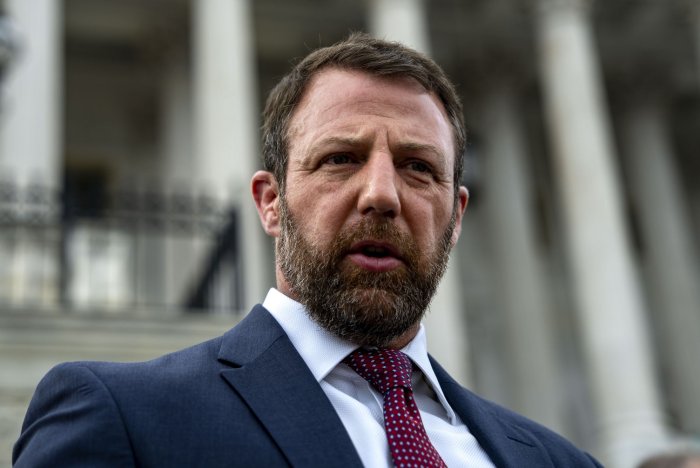
Trump met with some Republican senators from beef-producing states: Sen. Cindy Hyde-Smith of Mississippi, Tim Sheehy of Montana and Markwayne Mullin of Oklahoma.

Hyde-Smith is a Republican from Mississippi whose family raises cattle. She is opposed to the imports.

In October, he announced plans to quadruple the tariff quota for imported Argentine beef from 20,000 to 80,000 metric tons. Any imports above this new quota with no tariff would still be subject to a higher 26.4% tariff.

In October, Trump authorized $20 billion loan to Argentina’s government and another $20 billion in financing from private lenders and sovereign wealth funds. It has been described as a bailout to Argentine President Javier Milei.

Source link

Trump administration loses appeal on full SNAP payments

Rep. Nikema Williams, D-Ga., helps distribute food aid bags during a free food distribution at the Young Family YMCA in Atlanta on Thursday. The YMCA’s weekly neighborhood food distribution gave out nearly 10,000 pounds of food to about 400 families. Photo by Erik S. Lesser/EPA

Nov. 7 (UPI) — The Trump administration on Friday night appealed to the U.S. Supreme Court after a federal appeals court upheld a district judge’s order to pay full benefits in November to 42 million in the Supplemental Nutrition Assistance Program.

A short time earlier, the 1st District Circuit left in place a decision on Thursday by Rhode Island federal Judge Jack McConnell, who ordered the administration to pay out the full benefits within one day, saying, “People have gone without for too long.”

The three-member appeals court’s decision means the U.S. Department of Agriculture must take steps to disperse the electronic payments, which are staggered each month. Earlier Friday, the agency said it notified states that it is working to process the payments.

The panel was Chief Appellate Judge David Barron, appointed by President Barack Obama, and Gustavo Atavo Gelpi Jr. and Julie Rikelman, both picked by President Joe Biden.

The judges said that they are still considering a bid for longer relief while assessing the appeal.

Attorney General Pam Bondi posted on X the Trump administration will ask the Supreme Court to stay the Rhode Island-based lower court judge’s ruling, which she called “judicial activism at its worst.”

“A single district court in Rhode Island should not be able to seize center stage in the shutdown, seek to upend political negotiations that could produce swift political solutions for SNAP and other programs, and dictate its own preferences for how scarce federal funds should be spent,” Bondi said.

Seven days ago, McDonnell and U.S. District Court of Massachusetts Judge Indira Talwani told the Trump administration to access available funds to continue. They were both nominated by Obama.

On Monday, the administration told the judge it only had reserved money to pay out 50% of the total $9 billion cost. Then, it was raised to 65%.

The judge directed USDA to find $4 billion “in the metaphorical couch cushions.”

McConnell said the administration could use Section 32 funds, which the USDA uses to help with child nutrition programs. But the administration rejected that plan.

In the appeal, DOJ claimed that the judge’s order “makes a mockery of the separation of powers.” Lawyers said transferring funds would mean diverting money from Child Nutrition Programs.

“Unfortunately, by injecting itself with its erroneous short-term solution, the district court has scrambled ongoing political negotiations, extending the shutdown and thus undercutting its own objective of ensuring adequate funding for SNAP and all other crucial safety-net programs,” they said.

Plaintiffs in the case, which are nonprofit organizations, asked for the full payment, and McConnell agreed.

“The evidence shows that people will go hungry, food pantries will be overburdened, and needless suffering will occur” if SNAP is not fully funded, he said.

“While the president of the United States professes a commitment to helping those it serves, the government’s actions tell a different story,” McConnell wrote in a written order.

The federal government has been shut down since Oct. 1, and the shutdown is now the longest in history.

In every past shutdown, emergency funds have been used to fund the program.

McConnell also mentioned a social media post that Trump made, saying he refused to release any more funds until “the radical-left Democrats open up government, which they can easily do, and not before.”

The post was used as evidence that the administration would ignore McConnell’s order.

Source link

Jury acquits Washington resident in sandwich-throwing incident

Nov. 6 (UPI) — Former Justice Department paralegal Sean Dunn is not guilty of assault for throwing a sub sandwich at a Border Patrol agent in Washington, D.C., a federal jury ruled Thursday.

The jury deliberated a misdemeanor assault charge against Dunn on Wednesday and Thursday before rendering its verdict, NBC News reported.

Dunn accosted Border Patrol agent Greg Lairimore in the capital’s U Street area, swore at him called him an unwelcome “fascist” before throwing a footlong sub sandwich that struck him in the chest.

The Border Patrol agent was there as part of President Donald Trump‘s federal law enforcement surge to thwart crime in the nation’s capital.

Lairimore testified that the sandwich “exploded” when it hit his chest, but photos showed it was still wrapped while lying on the ground after striking him.

The case was tried in the U.S. District Court for the District of Columbia, where a grand jury earlier rejected several potential felony charges against Dunn.

U.S. Attorney Jeanine Pirro proceeded with the misdemeanor assault charge against Dunn and agreed to hold a jury trial upon the request of Dunn’s attorneys.

Attorney General Pam Bondi earlier cited Dunn as an example of the “deep state” in Washington and fired him from his DOJ job.

The incident went viral as video footage circulated on social media and inspired murals and other depictions of a masked Dunn preparing to hurl a footlong sub sandwich like a quarterback would throw a football.

Some people also dressed in costumes intended to mimic Dunn, and many Washington-area homes featured skeletons dressed similarly to Dunn during Halloween.

Source link

Michigan suspects charged in alleged ‘ISIS-inspired Halloween terror attack’

Nov. 3 (UPI) — The Justice Department announced Monday that “multiple suspects” have been charged in Michigan in an alleged Halloween plot to support the terror group ISIS in an “attack on American soil.”

Monday’s charges come three days after Federal Bureau of Investigation Director Kash Patel announced that the FBI had “stopped a potential terrorist attack in Michigan before it could unfold.”

“Thanks to swift action and coordination with our partners, a violent plot tied to international terrorism was disrupted,” he said Friday.

On Monday, Patel provided more details.

“Two Michigan men planned an ISIS-inspired Halloween terror attack near Detroit — stockpiling weapons, scouting targets and training at gun ranges,” Patel wrote in a second post on X. “This FBI acted fast, followed the evidence, and likely saved countless lives.”

According to a Justice Department press release Monday, FBI agents made the arrests Friday in eastern Michigan.

“This newly unsealed complaint reveals a major ISIS-linked terror plot with multiple suspects arrested in the Eastern District of Michigan targeting the United States,” said U.S. Attorney General Pam Bondi. “According to the complaint, subjects had multiple AR-15 rifles, tactical gear and a detailed plan to carry out an attack on American soil.”

No information was provided on the identity of the suspects, as the FBI called the investigation “ongoing.”

“With today’s unsealed criminal complaint, the American people can see the results of months of tireless investigative work where the FBI acted quickly and likely saved many lives,” Patel added. “We’ll continue to follow the facts, uphold the law and deliver justice for the American people.”

The special agent in charge of the FBI Detroit Field Office credited local authorities for their work to “ensure the safety of the citizens of Michigan and beyond.”

“Defending the homeland will always be one of our top priorities,” said Special Agent Jennifer Runyan. “We will utilize every available federal resource to disrupt and dismantle any individuals or groups who threaten national security.”

Source link