Country music star Zach Bryan signaled his support for Palestinians at the same stadium that recently banned rapper Macklemore over his efforts to do the same.
Grammy winner Bryan donned a black T-shirt emblazoned with the words “Free Palestine” and “Appeal to Heaven” during his Friday concert at Gillette Stadium in Foxborough, Mass., according to photos and videos shared on social media.
Members of his backing band also wore similar shirts, including drummer Nate Head, whose jersey paid homage to Hind Rajab, the 5-year-old girl killed alongside five members of her family in a 2024 attack by Israeli forces in Gaza.
Bryan’s Friday concert marked the first of two at Gillette Stadium, owned by billionaire Robert Kraft. The musician’s public display of support for Palestinians comes weeks after Kraft urged pop star Ed Sheeran to remove Macklemore from his tour, citing concerns over his pro-Palestinian messaging.
Last month, Sheeran and his touring team faced pressure to remove former opening act Macklemore from the rest of the tour. The Grammy-winning “Same Love” musician faced backlash from a number of Jewish advocacy groups over his performances at MetLife Stadium in New Jersey.
Days after the New Jersey shows, Messina Touring dismissed the rapper, who has been a vocal advocate for the Palestinian cause. “Shape of You” singer Sheeran denied playing a part in Macklemore’s departure, but confirmed in a statement that he spoke with Kraft, who was among the stadium owners expressing concern about Macklemore’s further involvement.
The remaining supporting acts for Sheeran’s tour, including Grammy winner Finneas (and brother of Billie Eilish) and folk band Beoga (Sheeran’s backing band), quit Sheeran’s Loop tour in solidarity. Sheeran carried on with his tour, but it hit another snag when his shows at Gillette Stadium last weekend were canceled “due to severe weather warnings” in the region.
Following the fallout, Macklemore announced his Free Palestine tour, which begins later this month with three shows in Dublin, Paris and London. Macklemore said he will be joined by artists “who have shown up and used their stages to stand in solidarity with the Palestinian people.”
The rapper announced on Wednesday that “all three shows sold out immediately.” He also said the full concert lineups and U.S. tour stops will come in a later announcement.
Macklemore, in his announcement, said all proceeds from the tour will go to a handful of charities supporting the Palestinians amid Israel’s war in Gaza. Macklemore previously said he would donate all $1 million of his earnings from his time on Sheeran’s tour to numerous pro-Palestinian charities.
Bryan’s With Heaven on Tour will return Saturday at Gillette Stadium. The “I Remember Everything” and “Pink Skies” singer will conclude his tour Oct. 10 at Jordan-Hare Stadium in Auburn, Ala.
The country star and U.S. Navy veteran, 30, is no stranger to channeling his political views in his music and performances. In 2025, Bryan released “Bad News,” a song critical of nationwide federal immigration enforcement operations.
Bryan’s pro-Palestinian stage gesture adds to a noticeable shift among mainstream artists speaking openly about their support for Palestinians amid Israel’s ongoing strikes on Gaza. Melissa Barrera, Rachel Zegler, Irish rap trio Kneecap and rap-punk group Bob Vylan have been among the entertainers who faced professional backlash for their criticism of Israel.
In April 2025, Cornell University also dismissed Kehlani from her headlining performance at the school after President Michael Kotlikoff accused the singer of espousing “antisemitic, anti-Israel sentiments in performances, videos, and on social media.”
In recent months, however, artists and entertainers, including Mark Ruffalo and the Israeli “NAZA” filmmakers Yuval Abraham and Rachel Szor (co-directors of Oscar winner “No Other Land”), continue to face backlash for criticizing Israel.
Saeed Ayed* watches over his livestock herd. The animals are starving and parched due to a two-week-long Israeli siege on the Ras al-Ahmar Bedouin community in the occupied West Bank’s Jordan Valley.
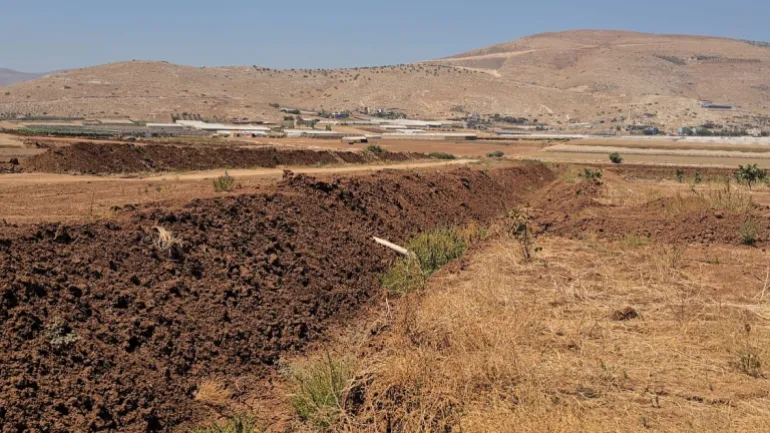
Access to the community has been blocked since mid-September, as Israeli forces continue building a barrier through Palestinian land in the area, including a road for military patrols, trenches and embankments.
Recommended Stories
list of 3 itemsend of list
Since the road closures began, movement for Palestinians has been severely restricted. They are forced to move around at night, transporting water, fodder and milk via donkeys under the cover of darkness to avoid detection by Israeli soldiers and settlers.
Ayed told Al Jazeera that no water had entered the community over the past three days after Israeli forces sealed the access points residents had been using to bring in supplies.
“The situation is dire. We are completely besieged, and the livestock cannot survive without water and food for this long,” Ayed said. “We own 15,000 head of livestock, and we fear they will perish because of the siege.”
Ras al-Ahmar is a 300-person village home to around 50 families who have lived off livestock and herding since the 1970s. Ayed said that Israeli settler attacks – part of a wider pogrom against Palestinians across the West Bank – had intensified since February, accusing settlers of trying to force residents out to seize their land.
“We have faced livestock theft, attacks on our dwellings, beatings of residents and vandalism of our homes. This was happening almost daily, yet we refused to leave. Now, they are completely besieging us to force us out,” he added.
The greatest challenge facing residents is restricted access to medical care as a result of the siege, a particular concern for the elderly.
Disease is also rampant among livestock, particularly newborn animals. And with veterinary teams unable to reach the area and treat the animals, deaths have been reported.
The military barrier – which Israel calls Crimson Thread and says it is needed for security – runs for roughly 20km (12 miles) through the northern Jordan Valley, with a width of up to 50 metres (165 feet).
Construction expanded early this year, including the digging of trenches and the bulldozing of agricultural land that damaged wells, water networks and greenhouses. The Israeli military seized nearly 115 hectares, 85 percent of which is privately owned Palestinian land, according to Kerem Navot, which monitors Israeli land policies in the West Bank.
Abdullah Bisharat, head of the village council of Ras al-Ahmar and Atuf, a nearby rural area also facing the military blockade, told Al Jazeera that the Israeli blockade has stopped 51 schoolchildren from attending classes for two weeks because vehicles can no longer reach them.
Israeli forces confiscated a tractor belonging to the village council on Sunday, detaining its driver as he was delivering animal fodder and water to Ras al-Ahmar, Bisharat said.
“We reached out to human rights organisations, but unfortunately no one was able to break the siege. Hundreds of people there are suffering, the majority of whom are women and children,” Bisharat added.
A trench dug by Israel around the rural Bedouin community of Ras al-Ahmar has restricted their movement [File: Moath Ghannam/Al Jazeera]
Broader context
The targeting of Bedouin and herding communities in the Jordan Valley is part of a mounting pressure campaign on residents to abandon their properties by restricting access to land and pastures. The tactics include settler violence, the demolition of structures and the closure of roads and access points.
The United Nations Office for the Coordination of Humanitarian Affairs (OCHA) has described Bedouin and herding communities as among the groups most vulnerable to displacement in the West Bank. Dozens of Palestinian communities across the West Bank have been entirely or partially displaced since 2023, when Israel began its genocide in Gaza and ramped up its attacks on the West Bank after the October 7 Hamas attack.
OCHA has reported that at least 130 Palestinian communities have experienced full or partial displacement since January 2023, with 48 communities completely displaced, including 12 from January to August.
According to OCHA, more than 2,500 Palestinians were displaced in 2026 due to settler attacks and related access restrictions, out of a total of more than 6,400 displaced since 2023.
As the Israeli elections – scheduled for October 27 – approach, Palestinian analysts and rights advocates argue that the measures being implemented on the ground are entrenching a new reality that may persist regardless of the next government.
Hassan Mleihat, chairman of the al-Baydar Organization for Defense of Bedouin Rights, told Al Jazeera that settlers appear to be rapidly intensifying measures aimed at displacing Bedouin communities in the lead-up to the elections.
Mleihat said that Israel’s objective was to expel as many Palestinians as possible and seize control of their land.
“The road being constructed near Ras al-Ahmar aims to dominate the area’s land under security pretexts and to isolate Palestinian communities into tiny geographical pockets, effectively confining their presence there,” he said.
A new reality
Observers believe the significance of these Israeli measures against Palestinian communities extends beyond their immediate impact on the population, creating demographic, geographic and security-related changes that may prove irreversible even if the Israeli political landscape shifts after the elections.
Adel Shadid, an expert on Israeli affairs, told Al Jazeera that Israel currently exercises an unprecedented degree of control over Palestinian territory in the West Bank. Palestinians, he said, live in small, fragmented and scattered enclaves with Israeli control over security, military and economic matters, as well as the minutiae of daily life.
He said the change was not only limited to geography but also entails normalising the presence of illegal Israeli settlements in the West Bank so that they are viewed as an integral part of the region’s fabric, rather than a temporary presence or a reality subject to change.
“This shift is accompanied by the entrenchment of the perception that the West Bank is no longer viewed as a Palestinian area – or even a disputed one – but rather as a territory where Jews have the right to live in safety and security,” he said.
Shadid argued that this perspective also shapes how Israeli and Palestinian communities in the West Bank are perceived by the Israeli state. Israeli settlers are presented as a population requiring protection, while Palestinians are increasingly framed primarily as a security threat.
“This logic extends to how the land and the very elements of life are treated. A tree, for instance, might be viewed as a potential resource for acts targeting the Jewish community; consequently, cutting it down is seen, within this framework, as a security measure that warrants no intervention,” he said.
Shadid said this was also changing perceptions of the role of the Israeli army and police in the West Bank. He argued that the security forces’ role was increasingly seen as protecting settlers against a so-called “Palestinian threat”, rather than restraining settler aggression against Palestinians.
“This new reality is not tied to the current Israeli government. Rather, it creates a dynamic that will persist beyond the elections, regardless of the outcome,” Shadid said.
*Saeed Ayed is a pseudonym used at the individual’s request for security reasons.
WASHINGTON — A pro-Israel Democratic advocacy group on Thursday released a framework intended to help the party better articulate its vision for the U.S. relationship with Israel, an issue that has deeply fractured Democrats this year and could lead to further divisions heading into the next presidential campaign.
Democratic Majority for Israel is calling on the party to continue providing security and military assistance to the country while supporting a negotiated path to statehood for both Israelis and Palestinians and a future for Gaza that doesn’t include Hamas.
It notably does not insist on unyielding support for Israel, acknowledging that “Israel’s security does not require support for every decision made by an Israeli government.” The document also calls on Israel to “act decisively against settler threats, intimidation, and violence.”
The framework is being released at a sensitive moment for Democrats following a primary season in which voters from New York to Michigan embraced candidates who backed positions including ending military aid to Israel. If Democrats retake control of the U.S. House or Senate in next month’s elections, these candidates could play a significant role in shaping the debate over America’s posture toward Israel.
The issue could also play prominently in the early stages of the next presidential campaign, which could begin shortly after the midterms.
Democratic Majority for Israel’s chief executive, Brian Romick, said his goal is to provide a “helpful guide for our mainstream Democratic candidates on how to engage with a complicated issue.”
“It’s important to remind Democrats and Americans that there’s value in the U.S.-Israel relationship,” he said. “We thought it was important to kind of lay out a forward-looking vision.”
The question is whether such a framework will go very far in shaping the views of Democrats, who are increasingly skeptical of Israel.
About 58% of Democrats said the U.S. is “too supportive” of the Israelis, according to a June survey by The Associated Press-NORC Center for Public Affairs Research, up from 45% in January 2024. Roughly half of Democrats believe that Israel has committed genocide against Palestinians during the war with Hamas, an accusation Israel rejects.
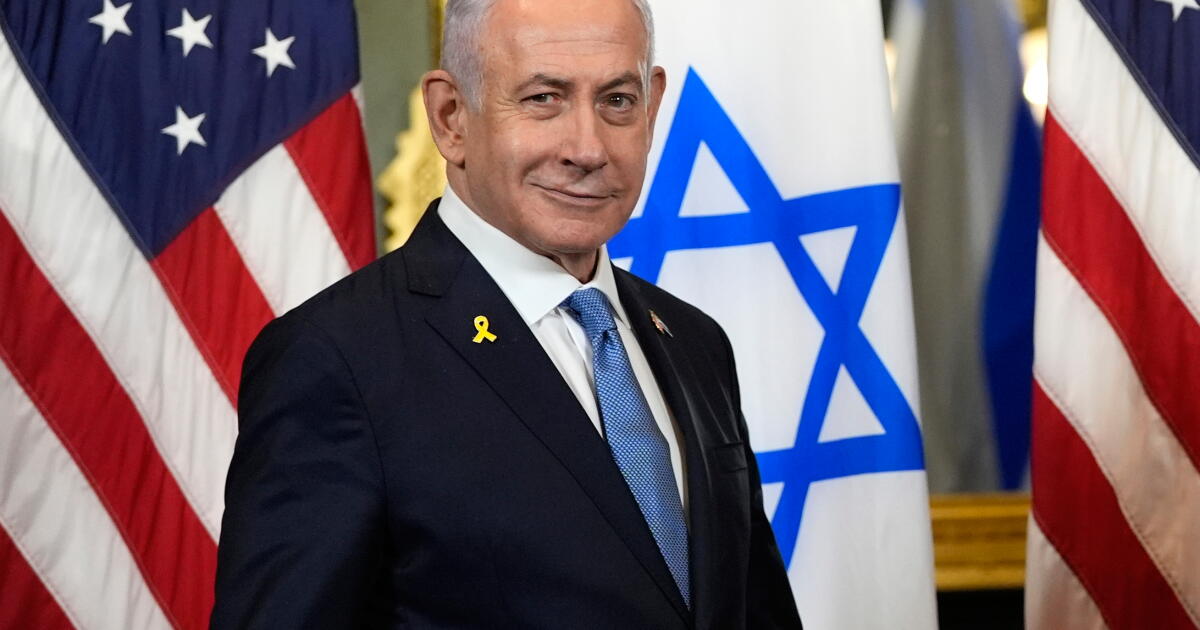
Former Obama administration chief of staff Rahm Emanuel, who has argued Democrats need to return to the political center ahead of launching a potential presidential bid, went to Israel in July and delivered a blistering speech warning the country was at risk of becoming a “territorial pariah.” He specifically called out Prime Minister Benjamin Netanyahu, who has closely aligned himself with President Trump, a Republican.
Emanuel, who’s also a former congressman, Chicago mayor and U.S. ambassador, blamed Netanyahu for driving Israel to a “dead end,” emboldened by poor decisions from American leaders.
The framework from Democratic Majority for Israel takes a less strident view on Netanyahu, who faces another election this month. “Support for Israel,” the group argued, “transcends any one Israeli government.”
The group took a similarly long view on military and security assistance for Israel, arguing it shouldn’t be stopped now even as it acknowledged the possibility of change in the future.
“Over time, and by mutual agreement, today’s partnership should be capable of evolving beyond the traditional assistance framework toward an increasingly reciprocal relationship centered on joint investment, innovation, and technological advantage,” the framework reads. “The objective should be to build the partnership both countries will need to confront the threats and seize the opportunities of the coming decades.”
Daniel Shapiro, the former U.S. ambassador to Israel under President Barack Obama, acknowledged “strong, passionate views” on the issue.
“Clearly, not everyone will agree with every aspect” of the framework, he said. “But I think there’s a lot there that many Democrats would find speaks to them.”
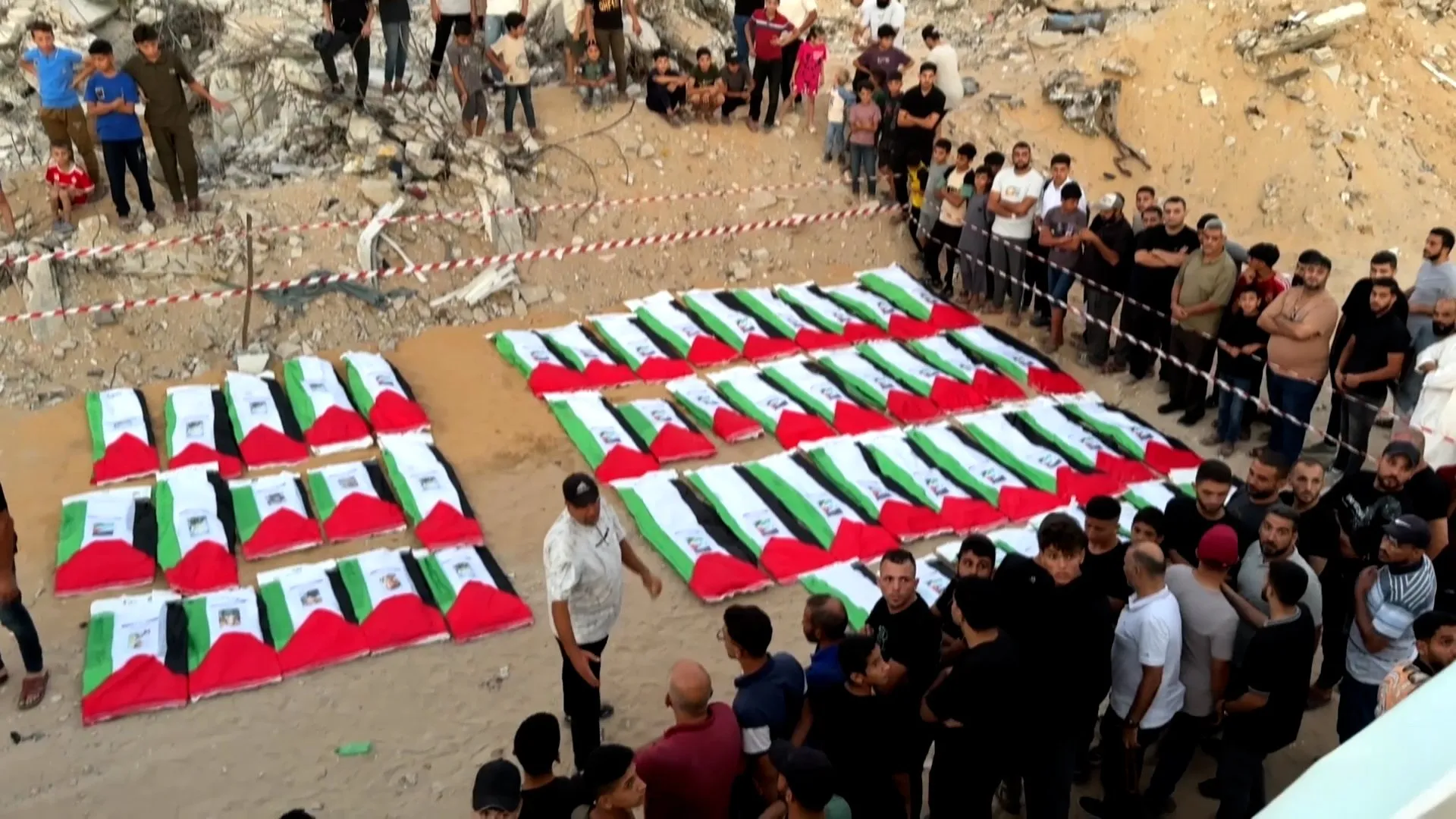
Coffins containing the remains of those killed will be carried in a funeral procession involving family members.
Published On 1 Oct 20261 Oct 2026
Palestinians are preparing to bury the remains of 105 people killed in a devastating Israeli attack on Gaza City in October 2023.
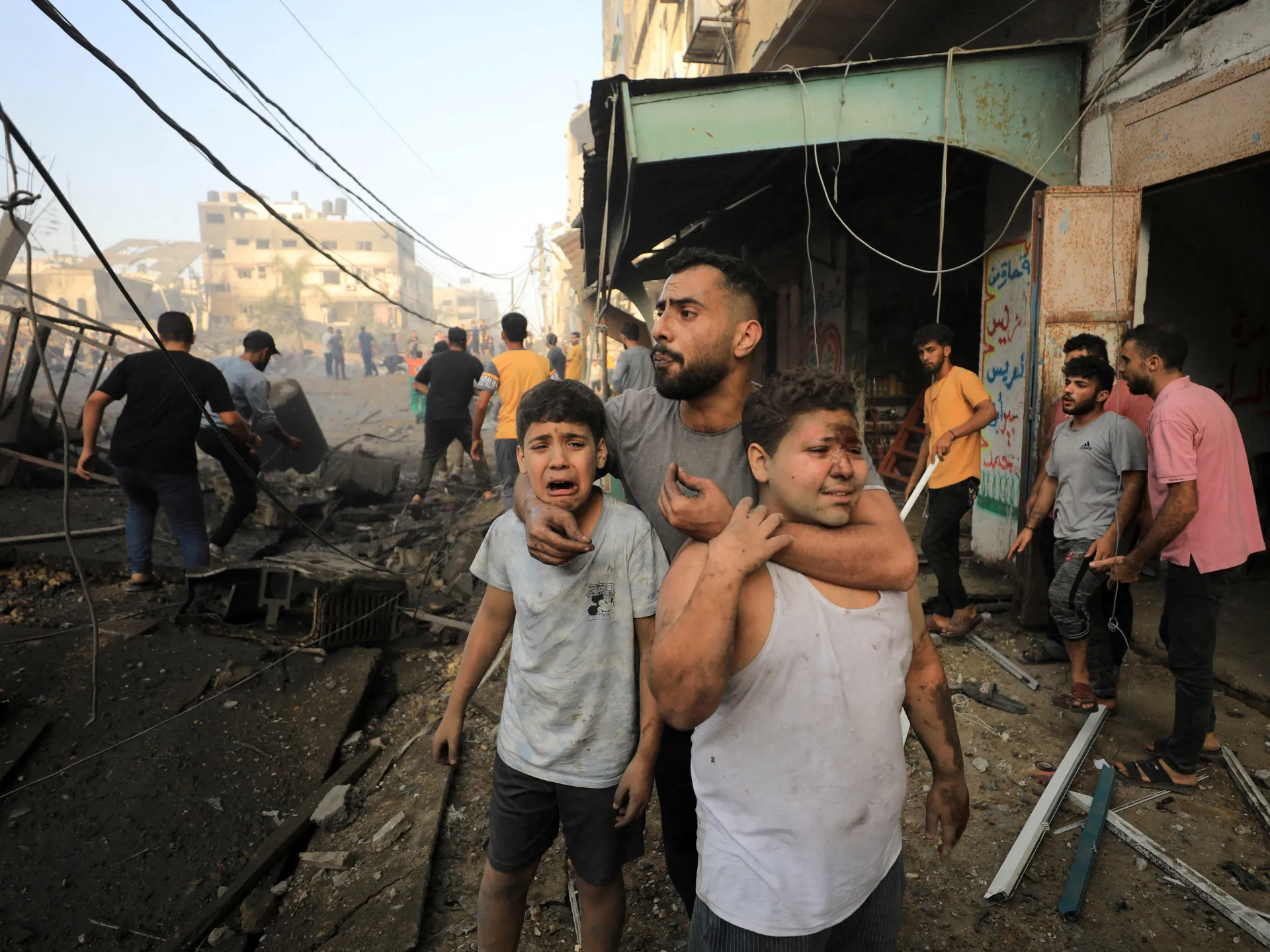
The victims were killed in a series of Israeli air strikes involving at least 20 bombs that levelled the seven-storey Al Taj 3 building and destroyed several other residential buildings in the Yarmouk Square neighbourhood on the afternoon of October 25, 2023.
Recommended Stories
list of 3 itemsend of list
Coffins containing the remains of those killed will be carried in a funeral procession involving family members on Thursday, the General Directorate of Civil Defence said.
The remains will be buried in the Sheikh Radwan cemetery, northwest of Gaza City.
Gaza’s civil defence said the recovery operation was carried out in coordination with an Egyptian committee.
Al Jazeera correspondent Ibrahim Khalili, reporting from Gaza City, said the recovery operation was the fifth largest of its kind since Israel launched its genocidal war against Palestinians in Gaza in October 2023, in terms of the number of bodies recovered.
Civil defence operations director Abdul al-Majdalawi said it had been “impossible” to reach the bodies at the time of the attack.
“Bulldozers, excavators and other heavy machinery used by civil defence teams in Gaza were directly and deliberately targeted,” he said.
Osama Sharaf said 37 members of his family were killed in the attack.
“We recovered some of them at the beginning of the war, and today [Wednesday] 16 more were recovered, including my father, my mother, and all of my siblings. My sister’s son was also there with them,” he said.
The bodies of 105 Palestinians have been recovered from the rubble of a residential block destroyed by Israel in the early part of its genocide on Gaza. The victims are being prepared for burial almost three years since the war began.
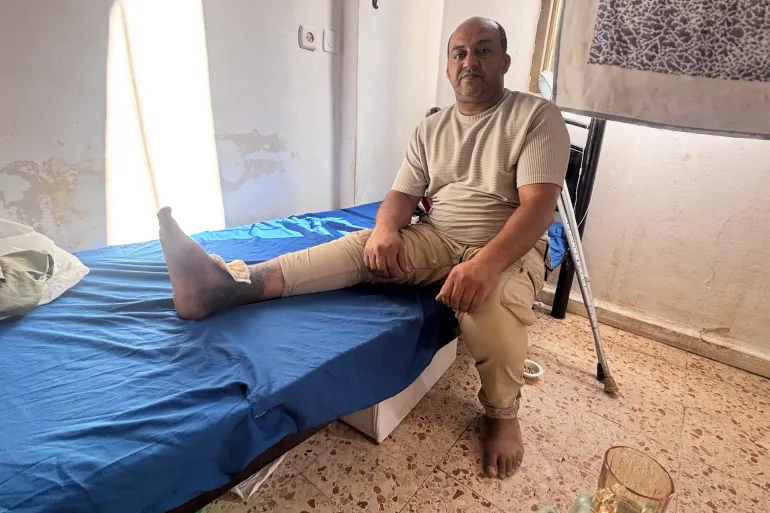
Tulkarem, occupied West Bank – Hakim Mar’i spends his days lying on a single bed, his disfigured leg raised. The windows of Mar’i’s dilapidated apartment, his latest temporary shelter, are covered with old blankets. Unable to work, Mar’i has no money for electricity, so the blankets have to do. At night, his family lives in near darkness.
The apartment is just around the corner from mounds of rubble and gnarled iron structures that mark one entrance to the now-emptied Tulkarem refugee camp. For Mar’i and other Palestinians, the camp was a home once considered temporary. But now, even the physical structure – their home – that tied those generations together is gone.
Recommended Stories
list of 4 itemsend of list
The apartment is just around the corner from mounds of rubble and gnarled iron structures that mark one entrance to the now-emptied Tulkarem refugee camp. For Mar’i and other Palestinians, the camp was a home once considered temporary. But generations lived there, and now, the physical structure – their home – that tied his family together over the years is gone.
Impoverished, Hakim’s family is in disarray. With its debts mounting and its members facing another eviction, he said he has considered taking his life several times over the past year and a half.
Mar’i cannot afford treatment for his debilitating leg injury, which has developed severe infections. He said he sustained it while working as a labourer inside Israel in 2019. The wound worsened after Israeli soldiers severely beat him when they forced his family from the Tulkarem camp. Diabetes and other untreated conditions have piled on, but he is unable to pay for the needed medical care.
“This joint here is completely gone,” he said, gesturing at the swollen, blackened lower leg that prevents him from working.
“The medicine – by God, the medicine, I haven’t been able to get. My wife and kids tell me: get out travel. Go to America, Turkey – so I can the medical treatment I need… I’m a sick man.”
His mother, Salwa, sat beside him, less than a kilometre (0.6 miles) from their former four-storey home. She wept when asked about the family home that was built floor by floor after they were first displaced in 1948 from al-Khudayra, the Arabic name for Hadera, a city in Israel. “We really put a lot into that house,” she said.
After their removal, the Israeli military razed the Mar’i home so a road traversing the now-emptied camp could be built. “Seeing it destroyed was really painful for us – all of us,” she said.
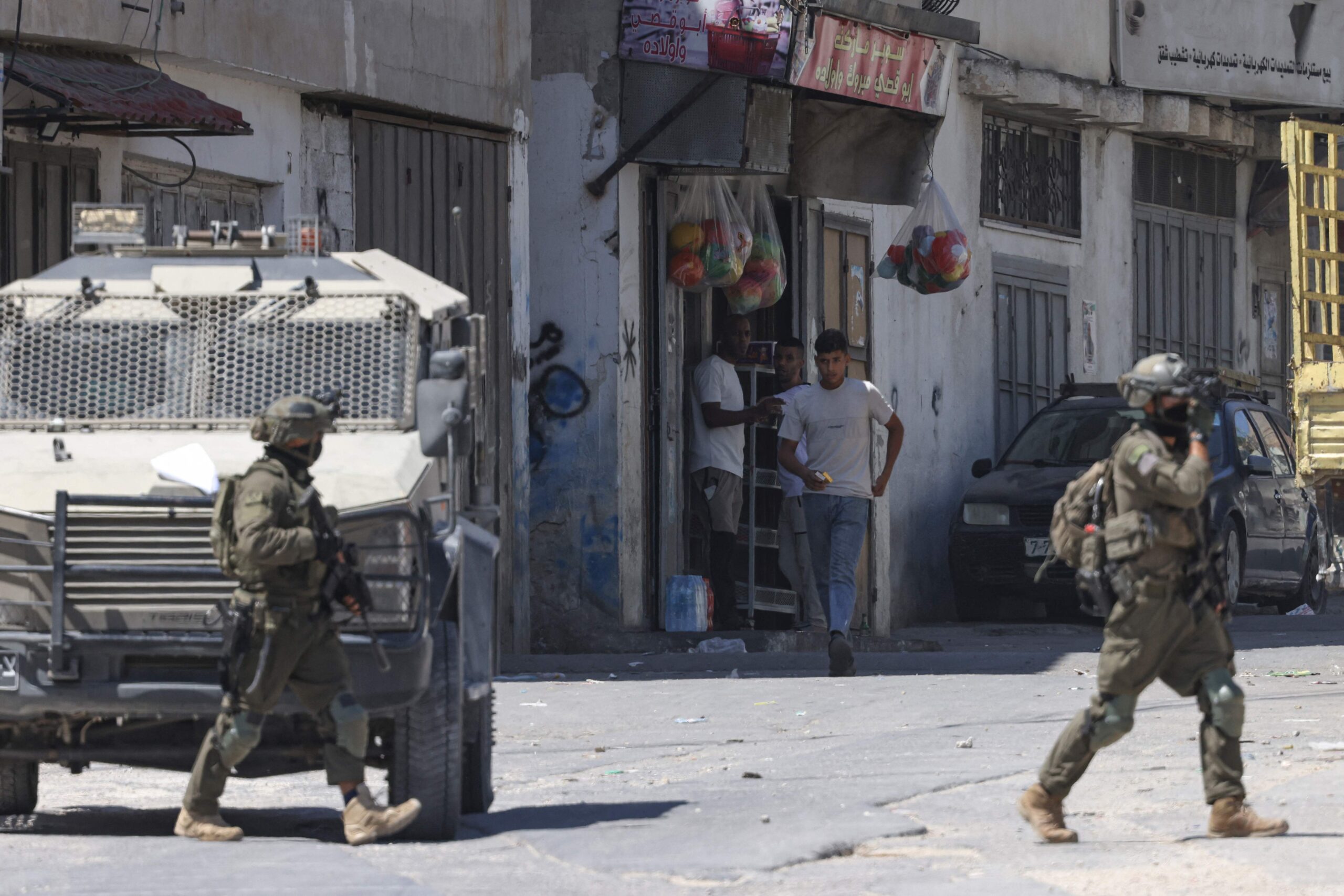
It has been more than 20 months since Israeli forces emptied the Jenin, Tulkarem and Nur Shams refugee camps in a sweeping military operation in the northern West Bank, displacing tens of thousands of Palestinians whose families had already been refugees for three generations. Constantly renewed orders for a closed military zone now prevent their return.
Since January 2025, Hakim’s family has been forced to move four times. First, they fled to a converted youth centre before landing in a cramped apartment with their four children, all under 15.
Unable to pay rent, the family could see the landlord’s generosity run its course as this once-temporary housing arrangement now has no end in sight. Hakim owes money at the local shops for food he bought on credit. Some nights, the children eat at neighbours’ houses.
“I have children. I have food. I have drink,” he said. “My hands are empty. Nobody is with me. Nobody is standing beside me.”
Hakim Mar’i in his family’s apartment with his injured leg, which prevents him from working [Al Jazeera]
‘We’re already at the brink’
The Mar’i family is among more than 33,000 Palestinians forcibly removed from the Jenin, Nur Shams and Tulkarem camps by Israeli forces in early 2025. This is the largest single episode of forced displacement in the West Bank since Israel’s occupation began in 1967, according to the United Nations agency for Palestinian refugees (UNRWA).
UN satellite imagery shows that 20 percent of all buildings across the three camps have been destroyed and another 28 percent are damaged.
“The level of destruction we are seeing is severe and unprecedented,” said Roland Friedrich, director of West Bank affairs for the UN agency for Palestinian refugees, UNRWA.
According to Friedrich, 85 percent of those displaced have no regular income after many lost jobs when the camps were emptied. More than 80 percent of residents are renting, an unfamiliar expense for families who never paid for housing or utilities inside the camps.
The closed military zone covering the camps is renewed every two months, Friedrich said, with no indication of when – or whether – residents will be allowed to return. “What we saw there is forced displacement,” Friedrich said. “The UN’s position is very clear: People have to be allowed to return. The camps must be rebuilt.”
Unlike after the 2000-2005 second Intifada when the Jenin camp was rebuilt, displaced families and UNRWA staff fear there is no return plan this time.
The Israeli military stated the camps were emptied for “operational security” in its effort to root out fighters from the camps. Friedrich worried the aim of the military operations is to “change the geographical expression of the Palestinian refugee issue”.
Now more than 20 months into what was meant to be an emergency response, funding shortages have left UNRWA unable to cover the vast needs of the displaced population. It has moved some operations to keep schools and basic health clinics functioning. With funds dwindling, the agency has shifted to a “targeted approach”, leaving thousands without support.
Friedrich pointed to a rise in gender-based violence linked to the economic strain on families and to growing depression and anxiety among displaced children observed by UNRWA’s psychosocial teams. “We’re already at the brink now,” he declared.
Members of the Zbeidat family sit on couches outside. The room they stay in is on the left [Al Jazeera]
‘Everyone went their own way’
While Hakim’s displacement plays out in the shadow of the camp, the family of Khadija Zbeidat face their own imminent eviction on the outskirts of Tulkarem. They live in the neighbourhood of Dhinnaba, where sparse houses are interspersed with greenhouses. They are unable to afford a residence closer to the city centre.
As Khadija sat on a couch in the middle of the yard, her many children and grandchildren ran past a small patch of plants she has planted – one of her few remaining joys. “I love plants,” she said. “We had many flowers in our home in the camp. Having the plants here is all I have to feel like myself,” she told Al Jazeera.
Khadija, a widow, shares a tiny spartan room with nine family members, nearly all children, along with a small bathroom and a kitchen barely big enough for one person to cook in. A worn couch takes up one corner. The ceiling is peeling above it.
The room was given to them rent free by a relative of Khadija’s brother-in-law after they spent four months crammed into her daughter’s house with nine other people. “It got really cramped, the pressure on each other,” Zbeidat said. “And we became a burden too.”
Khadija’s family was displaced in January 2025 from the Tulkarem camp’s Haret al-Nadi section, a significant part of which has been destroyed, she said.
“The camp was excellent,” she said of their life before. “I swear, I wish they’d take us back. Everything was close to us, dear – … the closeness, that sense of belonging and the warmth, the company and the neighbours.”
The memories that she cherishes most dearly and that bring her to tears are of food: the stuffed grape leaves and the maamoul cookies made as a neighbourhood together for Eid. This year, there was none of it.
“Nothing. No cookies,” she said. “Nobody even had it in them to do anything any more. Everyone went their own way – scattered.”
Like the Mar’i family and others, they were not allowed to bring their belongings during their abrupt displacement. Some residents have since been allowed to retrieve belongings once or twice from their homes in the camps, but much of what they own remains left behind. Khadija’s daughter-in-law at one point returned to the ruins of the camp – at the risk of being shot – to retrieve a doll left behind that Khadija’s granddaughter Sandy would not stop crying about.
In Tulkarem, displaced families live either in the poorest areas closest to the camp, like the Mar’is, or on the cheaper outskirts, like the Zbeidats, remaining close enough to the health and schooling services that UNRWA still provides. But even a simple trip to buy groceries requires Khadija, who has no car, to travel 2km (1.2 miles).
At night, the family sits outside rather than in the stifling heat of the poorly ventilated room, watching Israeli military drones pass low overhead. “What to do? We’re used to seeing them, to having them around, to them raiding houses,” Khadija said. “It doesn’t matter any more.”
The military raids that always haunted life in the refugee camps have now come to wherever the displaced refugees have fled to. “We don’t feel safe,” Khadija said. “Nor the kids. It’s dangerous. When they want to go out somewhere, my heart stays busy until they come back.”
The kitchen and bathroom the Zbeidats have are in the same room they sleep in [Al Jazeera]
Waiting to be kicked out again
For months after the displacement, landlords, relatives and shopkeepers absorbed much of the shock, allowing families to stay for free or buy food on credit. But as the emergency stretches to almost two years now, that informal safety net is fraying. The pressure is felt particularly in economically moribund Tulkarem, where many families had relied on jobs inside Israel before Palestinian work permits were revoked after the Hamas-led attacks in southern Israel and the start of Israel’s genocidal war in Gaza in October 2023.
The owner of the property where Khadija’s family is staying recently sent his sister to tell Khadija’s family to leave. “They think it’s been too long,” Khadija explained. “They want the land, to benefit from the land and the room. … But where can we get money, where to pay from? The rent is very high, and we can’t afford it. We don’t know what to do if she comes again and kicks us out.”
Hakim’s family is on the brink of eviction too. Like others, he received from UNRWA a one-time rental subsidy of 3,000 shekels ($985) and a separate 1,700-shekel ($560) multipurpose cash payment for short-term assistance. “Every minute, I am waiting for the landlord to kick us out,” he said.
Khadija’s family survives on credit from shopkeepers who know their situation and, for now, still extend it – but patience is wearing thin.
Hakim said this goodwill is collapsing: “You tell them: ‘Give me a day, two days. Be patient with me.’ They won’t bear it.”
As distant as a return to her family’s lands in 1948 feels now, Khadija still hopes to return to the camp one day. But she worries that her children may inherit an even more precarious existence than the one that preceded this latest dispossession – refugees for generations displaced yet again. “Only God knows what tomorrow will bring us,” Khadija said.
If you or someone you know is at risk of suicide, theseorganisations may be able to help.
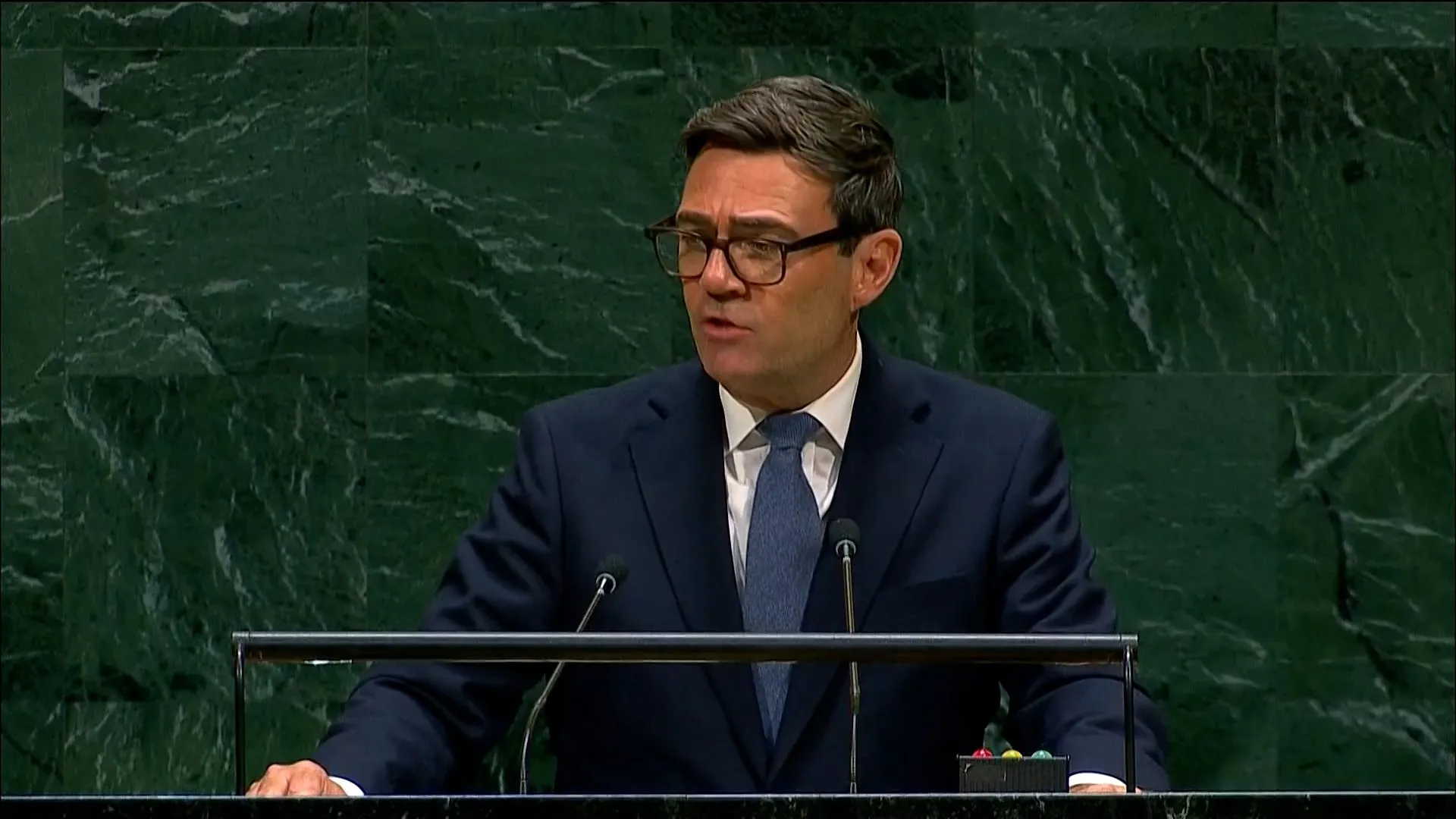
UK Prime Minister Andy Burnham condemned Israel’s genocidal war on Gaza during his UN General Assembly address. He also said continued Israeli military action had led the UK to impose sanctions on illegal Israeli settlements in Palestinian territory.
Ed Sheeran’s Loop tour, in the span of less than two weeks, became an unexpected lightning rod for controversy and conversation about artist activism amid Israel’s deadly war in Gaza. Still, the show will go on.
Sheeran’s tour will proceed as planned, The Times has learned. He is scheduled to play on Saturday at Lincoln Financial Field in Philadelphia. The venue also confirmed on Wednesday that the Saturday concert is still a go, but that supporting acts have yet to be finalized.
A representative for Sheeran’s tour did not immediately respond to requests for additional information, including who will be the new supporting acts.
In a rapid turn of events since rapper and former opening act Macklemore called for Palestinian liberation onstage earlier this month, Sheeran — the singer of inoffensive hits including “Thinking Out Loud” and “Shape of You” — fell out with the fellow Grammy winner, witnessed all supporting acts drop from his lineup and defended himself against accusations of complicity in silencing criticism of Israel. Additionally, Sheeran confronted scrutiny over his largely apolitical public presence. He attributed this to his longtime desire to “bring people from all backgrounds and cultures together” via his music and performances.
“I am not complicit. I have my personal views on this devastating conflict,” he wrote Tuesday on Instagram. “Just because I choose not to speak publicly, it doesn’t mean I don’t have them, and it doesn’t mean I don’t care. Nor does it mean I don’t support causes in my own, personal way.”
Ahead of Sheeran’s first concert since the scrutiny surrounding Macklemore’s performance, read on for what preceded the fallout of Sheeran’s Loop tour.
Macklemore goes from “Thrift Shop” to “Hind’s Hall”
Macklemore performs at Rod Laver Arena on May 15, 2024, in Melbourne, Australia.
(Morgan Hancock / Getty Images)
Before hitting the stage for Sheeran’s Loop tour, Macklemore famously burst onto the music scene in 2012 as part of the duo Macklemore & Ryan Lewis. The pair gained popularity for the then-inescapable hit “Thrift Shop,” the fourth single off their acclaimed debut album, “The Heist.”
The duo gained further notoriety with hits “Can’t Hold Us” and same-sex marriage anthem “Same Love.” They notoriously bested Kendrick Lamar at the 2014 Grammy Awards in the rap album category. Lamar was nominated for his striking debut “Good Kid, M.A.A.D City.”
A year after releasing their 2016 album, “This Unruly Mess I’ve Made,” the duo announced an indefinite hiatus. Macklemore focused on his solo work, including collaborations with Kesha, Lil Yachty and Skylar Grey. In recent years, Macklemore has taken on a new purpose with his platform.
Macklemore, like many musical acts including Kehlani, Finneas and Irish rap group Kneecap, became a vocal supporter of the Palestinian cause after Israel began its offensive in Gaza in the wake of the Hamas attacks on Oct. 7, 2023. The rapper has channeled his views on the conflict into his music, releasing his protest song “Hind’s Hall” in May 2024. The song calls for a ceasefire, an end to Israeli occupation in Gaza and highlights pro-Palestinian protests on college campuses.
Ed Sheeran announces his Loop tour
Ed Sheeran performs during iHeartRadio Kiss 108’s Jingle Ball 2025 at TD Garden on Dec. 14, 2025, in Boston, Mass..
(Scott Eisen / Getty Images for iHeartRadio)
Last September, Sheeran unveiled his plans to hit the road to promote his eighth studio album, “Play.”
The British “A Team” singer announced at the time that his tour would begin June 2026 with a stop at Arizona’s State Farm Stadium and would run through early November. The announcement did not disclose the supporting acts set to share the stage with him, but informed fans the singer would perform shows across large venues including Inglewood’s SoFi Stadium in August and a pair of performances at MetLife Stadium in New Jersey.
The concerts at MetLife Stadium would later embroil Sheeran, his tour, Macklemore — and somehow pop star Pink — in controversy.
Macklemore calls to ‘Free Palestine’: Performance or ‘propaganda?’
When Macklemore took the MetLife Stadium stage as the supporting act for Sheeran’s Sept. 4 and 5 concerts, he did not mince words in his message. During his set, Macklemore criticized Israel for its war in Gaza and accused it of genocide of Palestinians. He also projected an edited version of his “Hind’s Hall” music video, which features footage of pro-Palestinian college encampments and protests and military strikes in Gaza.
Video of Macklemore’s performance spread online, drawing ire from some Jewish advocacy groups including StopAntisemitism, which accused Macklemore on Instagram of turning “a mainstream event into a political nightmare against the Jewish state.” Pop star Pink, who is Jewish, shared StopAntisemitism’s post to her Instagram story. She faced backlash for the repost and later clarified in a three-part statement that she took issue with the imagery Macklemore displayed during his performance. She also accused the rapper of taking “the mic to tell all the Jews in the stadium that it wasn’t about them.”
In the wake of Macklemore’s performance, the Israeli American Council and the Anti-Defamation League also decried Macklemore’s performance on social media, with the former publishing a petition calling on Sheeran to remove the rapper from the remaining shows of his tour.
“Freedom of expression does not give anyone the right to turn someone else’s stage into a platform for political propaganda,” the Israeli American Council said on Instagram.
Amid the mounting backlash, Macklemore defended his stance and shared video on social media of his full address to the MetLife crowd. “I said ‘Free Palestine.’ I want those words to be loud and clear so that the people in Gaza all the way to the occupied West Bank know that we have not forgotten them,” he tells concertgoers in his introduction to “Hind’s Hall.”
“To all my Jewish brothers and sisters, criticism of Israel, criticism of apartheid, being against genocide in no way is a criticism of you,” he adds, according to video of his address. “My message is for peace, love for all human beings to be treated with dignity, respect and equality.”
The fallout begins: Macklemore fired from Loop tour
Whether Macklemore would remain on Sheeran’s tour amid the public outcry remained uncertain, until he confirmed his status earlier this week. He said in a lengthy statement shared to Facebook that his continued, vocal support for Palestinians amid Israel’s war in Gaza has cost him professionally.
The rapper said he was removed after “some difficult conversations” with Sheeran. He also went into depth about the inner workings that led to his removal from the tour, including conversations between Sheeran and wealthy venue owners, including billionaire Robert Kraft, whose Kraft Group owns Gillette Stadium in Massachusetts, where Sheeran is set to play later this month.
“Ed told me that Kraft said I would not be allowed to perform in his stadium,” Macklemore wrote. “Ed also told me that Kraft had rallied some of the other stadium owners and collectively they gave him an ultimatum: if Macklemore stays on the tour, you will not be allowed to play in our venues.”
Sheeran in a separate statement shared on Tuesday confirmed he had conversations with Kraft but did not speak to the alleged ultimatum. The singer also said removing Macklemore from the tour “was the promoter’s decision, it was not mine” and that Macklemore’s contract was with its promoter. Messina Touring announced on Monday it had dropped Macklemore from the remaining tour dates “after discussions with stakeholders.”
Additionally, Macklemore wrote that Sheeran’s “typical apolitical stance was being challenged” amid the public scrutiny and “he couldn’t get past his public facing, ‘I don’t take sides.’”
Sheeran appeared to address that criticism, writing in his missive that attendees at his concerts “do not expect a political forum.” The singer also wrote he thinks there can be different ways to work toward peace.
“If we only focus on shouting the loudest, nothing will ever change,” he wrote.
Macklemore said in his Monday statement he was hopeful this turn of events would not mean an end to his friendship with Sheeran and he was grateful for the opportunity to play on tour, regardless.
“I didn’t need 10 Shows from Ed. I needed 2,” he wrote. “Two chances to stand in front of 90,000 people and say … ‘Free Palestine.’”
Supporting acts depart tour in solidarity
Grammy winner Finneas was among the supporting acts who announced their departure from Ed Sheeran’s tour on Tuesday.
(Monica Schipper / Getty Images)
Hours after Sheeran shared his side to the controversy, numerous musical acts including Grammy winner Finneas and folk band Beoga, Sheeran’s backing band, pulled from the Loop tour in solidarity with Macklemore and in support of Palestinians.
“Artists must not be silenced when they speak up for the oppressed. I have decided to withdraw from my upcoming tour dates with Ed Sheeran,” wrote Finneas, who has been a vocal supporter of Palestinians. “I stand with Palestine and its people.”
Pop band Lukas Graham and Irish singer-songwriter Aaron Rowe, both billed as supporting acts for several upcoming dates on Sheeran’s tour, voiced support for the Palestinian people and spoke against the inner workings that led to Macklemore’s removal.
In its statement, Lukas Graham wrote: “Money doesn’t give you the right to own the conversation. Nobody’s bank balance should decide who gets to speak or which suffering we’re allowed to acknowledge.”
Rowe in his Instagram statement said that Sheeran “has been a friend to me and has changed my life” but that he is sympathetic to the Palestinian cause. “As Irish people we know all too well about genocide, forced famine and violent occupation,” he wrote. The “Hey Ma” singer accused elites of leveraging their power to “silence the rightful voices” and criticism of Israel.
“I need to be true to myself and my ancestors who resisted colonisation, and fought for a freedom that I enjoy today in Ireland,” Rowe continued.
Macklemore announced Wednesday that he will donate his earnings from his shows with Sheeran to charities supporting Palestinians. He also invited Kraft to match his donation and reaffirmed his dedication to the Palestinian cause.
“This is what this has always been about,” he wrote. “Not me. Not a tour. Not the headlines or the controversy.”
The North American leg of Sheeran’s Loop tour is scheduled to end Nov. 7 at Raymond James Stadium in Tampa, Fla. — the same venue that platformed controversial rapper Ye (formerly Kanye West) earlier this summer.
Palestinians in the occupied West Bank know they shouldn’t ask what time their loved ones are going to make it home.
There’s simply no way to give an accurate answer. What used to be a short ride from one place to another could now take hours, or it might not happen at all.
Recommended Stories
list of 3 itemsend of list
Before driving, Palestinians check dedicated WhatsApp and Telegram groups and channels where people share updates on road conditions. But this isn’t typical traffic news: Instead, chats focus on which Israeli military checkpoints are open, which roads are off limits to Palestinians and whether Israeli settlers are attacking Palestinians as they drive their vehicles.
Sometimes pins are sent to warn people driving near towns where Israeli forces are conducting raids.
And if there’s no time to check the groups, then there’s always Basma FM. The Palestinian radio station, based in Rawabi near Ramallah, carries three traffic updates per hour.
The channel started broadcasting on October 2, 2023 – just days before the Hamas-led attack on Israel on October 7 and the start of Israel’s genocidal war on Gaza, and what has become a pogrom against Palestinians in the West Bank.
“Our idea was to target young people. We wanted to offer entertainment and culture news. But five days later, we realised we couldn’t,” said Fatima Barqawi, Basma FM’s news and traffic director.
The team had originally planned traffic updates as part of their programming. “We thought we could tell parents picking up their children from school to know where there was traffic, but after the war on Gaza started, we had to shift focus,” Barqawi said.
Her department has seven employees who verify information with their sources and provide updates on roadblocks.
“Things change each second. We could say there’s a closed checkpoint and Israeli soldiers decide to reopen it. Or vice versa,” Barqawi explained.
Dangers on the roads
The issue for Palestinians driving through the West Bank isn’t simply being late for appointments or held up for hours – it’s that there is an inherent danger to travelling in the occupied territory.
Palestinians in the West Bank drive white-plated vehicles, making them easily identifiable compared to the yellow-plated cars driven by Israeli settlers.
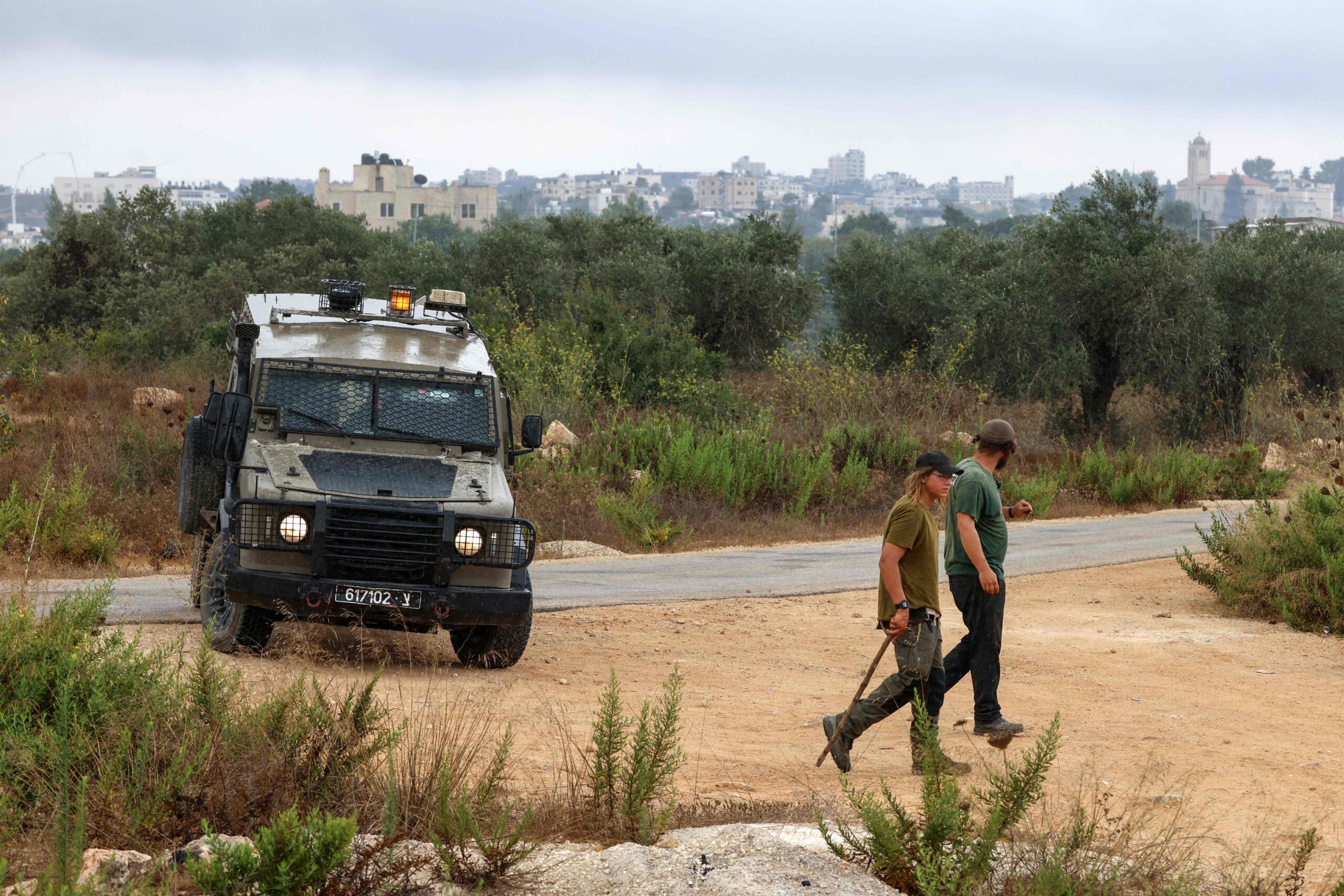
Israeli soldiers have killed Palestinians near checkpoints after claiming they were conducting ramming attacks, and Israeli settlers often attack Palestinian cars or block them from using certain highways.
These attacks are increasing as illegal Israeli settlements grow at a record pace.
It is hard to miss the large infrastructure projects Israel is implementing, expanding highways to connect Israeli settlements to one another and to Israel. This ends up isolating Palestinian communities, often forcing Palestinians to use poorly paved roads or dangerous mountainous routes to avoid Israeli settlers and roadblocks.
It’s a journey of fear and anxiety, a young Palestinian woman who did not wish to be named told Al Jazeera. “I used to blast my music and drive, now I’m on high alert. Always on edge.”
The woman recounted how Israeli soldiers assaulted her fiancé near a checkpoint in Hebron, in the southern occupied West Bank, because they mistakenly thought he had passed without stopping. A year later, she said, a soldier pointed his rifle at her.
“He was shouting at me. The sun was blocking my view, and I was careful crossing the checkpoint but that wasn’t enough. I saw the green beam [from the gun] and thought that was the end,” she said.
Attacks at checkpoints
Many Palestinians report being assaulted, humiliated and sometimes arrested at these checkpoints and roadblocks.
Israel has long imposed movement restrictions on Palestinians, controlling the road system and Palestinians’ access to the wider world. But since the war on Gaza began, these restrictions have intensified.
As of December 2025, the United Nations documented 925 barriers across the occupied West Bank including East Jerusalem, a 43 percent increase over the 20-year annual average of 647, the UN’s humanitarian affairs agency, OCHA, reported.
Almost all of of the villages and cities in the West Bank have iron gates at their entrances, and Israeli forces close them arbitrarily. Some of the gates are only open during certain hours.
A new report by the Israeli human rights group B’Tselem said the restrictions are used to deliberately fragment Palestinian life, with roadblocks and military checkpoints cutting off people from their work, schools, hospitals and one another.
The report, titled The Elimination Project, says there’s a broad rapid and systematic Israeli assault in the West Bank that aims to dismantle the foundations of Palestinian existence, and road closures are just one of them.
That is why, as Heba Erkat prepared her notes before heading into the studio for Basma FM’s Wednesday afternoon bulletin, she knew the information about to be read out could change rapidly.
Her colleague read the news, and then Erkat started listing updates at 61 checkpoints across the West Bank.
It was a relatively good day: only 12 of the checkpoints were either closed or had long queues.
But, as Erkat noted at the end of the segment, “the situation changes by the minute”.
Israel’s defence minister has pledged to remove Palestinians from the besieged Strip.
Published On 16 Sep 202616 Sep 2026
Egyptian President Abdel Fattah el-Sisi has rejected any plans for Palestinian displacement, following comments by Israel’s defence minister saying the army would “finish the job” in Gaza.
Speaking during a visit by Palestinian President Mahmoud Abbas on Wednesday, el-Sisi stressed “Egypt’s firm stance against the displacement of the Palestinian people or any attempt to annihilate the Palestinian cause”, the Wafa news agency reported.
Recommended Stories
list of 3 itemsend of list
Abbas praised Egypt’s steadfastness in defending Palestinian rights and reiterated that “Gaza is an integral part of our state.”
The Egyptian leader’s comments came hours after Israeli Defence Minister Israel Katz said the army would “finish the job” in Gaza, “so that we can also implement the migration plan.”
Katz said earlier this month that Israel was ready to remove Palestinians from Gaza by sea and land, but was waiting for the United States, which he said was discussing where the two million people would go.
US Ambassador Mike Huckabee has denied any plan to “displace people out of Gaza against their will”. In February, Huckabee explicitly said he “would be fine” if Israel took most of the Middle East in accordance with his interpretation of the Bible, but then suggested the remark was selectively edited.
Nearly all of Gaza’s population has been internally displaced, and most of the territory lies in rubble after three years of a war that has killed more than 73,700 Palestinians.
Israeli Prime Minister Benjamin Netanyahu said earlier this month that the army would not withdraw from the Gaza Strip, despite a US-backed ceasefire plan that came into effect in October stipulating it as a condition.
Netanyahu claimed Israel controls 60 percent of the Palestinian enclave and promised not to pull back until Hezbollah is disarmed.
His government has been pushing for more Israeli settlements on Palestinian territory in the West Bank, including through a controversial settlement project dubbed E1 designed to construct thousands of housing units between Jerusalem and the Maale Adumim settlement.
Israeli human rights group B’Tselem warned this week that Israel is executing a systematic and accelerated campaign to dismantle “Palestinian collective life” and establish permanent Jewish-Israeli sovereignty across the occupied West Bank.
LONDON: Jordan’s Crown Prince Hussein bin Abdullah Al-Hashimi on Monday visited the baptismal site of Jesus, also known as Bethany Beyond the Jordan, to review preparations for the 2,000th anniversary of the historical event, which will take place in 2030.
He issued directives to enhance the site for the Christian pilgrims and other visitors who will visit the UNESCO World Heritage site to mark the bimillennial celebrations, the Jordan News Agency reported.
He said the upcoming occasion reaffirmed Jordan’s status as a premier destination for Christian pilgrimage. He emphasized the importance of efforts to promote the site of Jesus’ baptism, in coordination with the Ministry of Tourism and Antiquities and the Jordan Tourism Board.
During the visit, the crown prince met Prince Ghazi bin Mohammed, chairperson of the board of trustees for the Baptism Site Commission, and his wife, Princess Miriam.
Jordanian Ministry of Tourism officials recently met Palestinian counterparts to discuss collaboration in the field of religious tourism ahead of the 2030 bimillennial celebrations.
Both Jordan and Palestine are home to important Christian holy sites, including Mount Nebo in Jordan’s Madaba governorate, where the Bible says Moses saw the Promised Land before he died, and, in the West Bank, the Church of the Nativity in Bethlehem, and the Church of the Holy Sepulcher in East Jerusalem, which includes the traditional sites of Jesus’ crucifixion and resurrection tomb.
The crown prince was also joined on his tour of the baptismal site by the minister of tourism and antiquities, Imad Hijazin, the director of the Office of the Crown Prince, Zaid Baqain, and the director general of the Baptism Site Commission, Abdullah Bawareed.
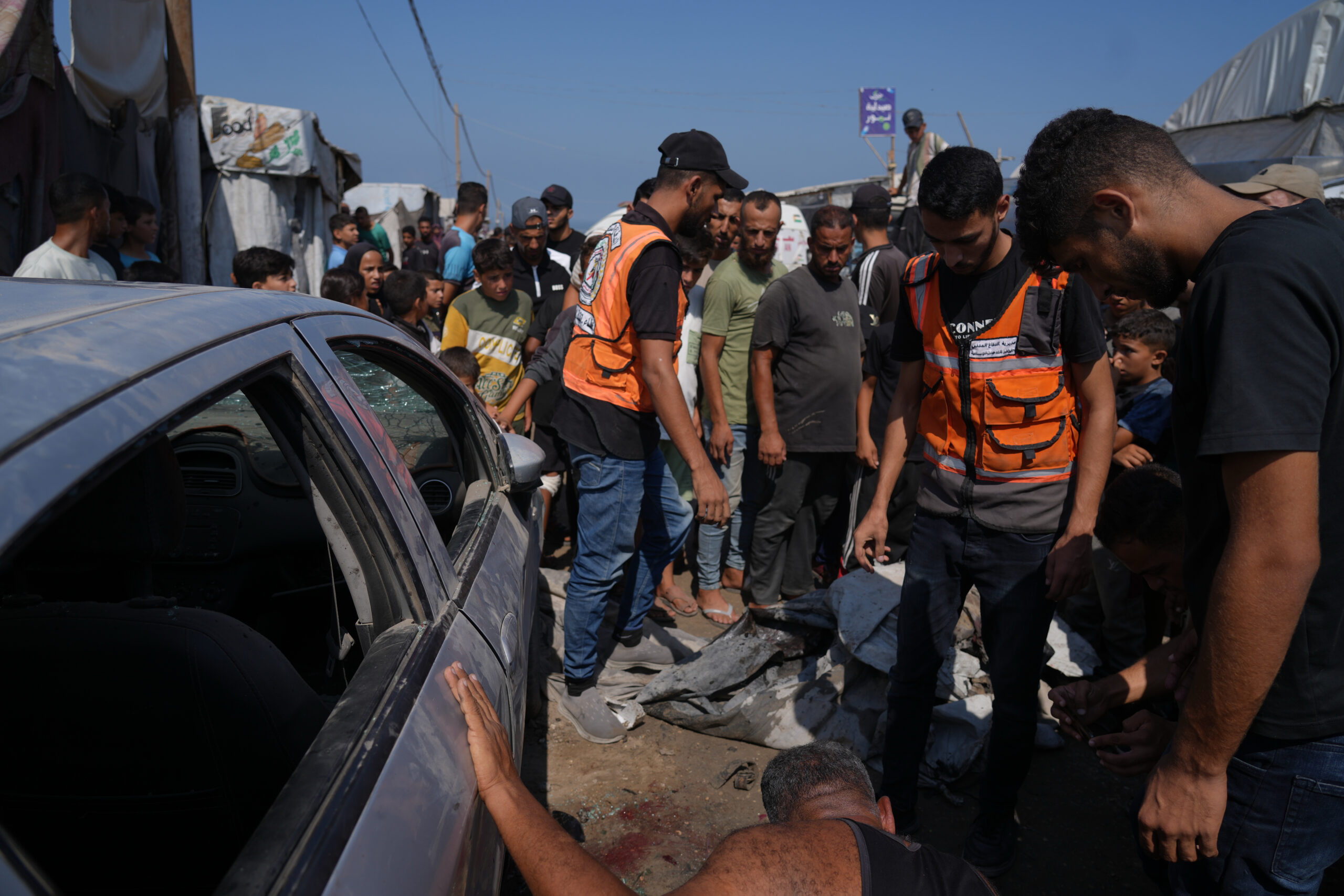
CAIRO: An Israeli airstrike on Sunday killed at least two Palestinians in a vehicle and wounded 13 others in the Gaza Strip, medical staff said.
The strike in the Tel Al-Hawa neighbourhood in western Gaza City, left the vehicle mangled, according to footage circulated on social media. Local medical staff told Reuters that they urged people to provide information that could help identify the two people who were killed and whose bodies were dismembered by the explosion.
The Israeli military said the strike targeted two Hamas militants, without giving further information.
An October 2025, U.S.-backed, ceasefire halted large-scale fighting in Gaza, but it has not ended Israeli strikes and there has been little progress on steps towards permanent peace. Hamas accuses Israel of violating the ceasefire and undermining efforts to implement U.S. President Donald Trump’s broader plan to end the Gaza conflict, which includes the Israeli withdrawal from the strip and the disarmament of Hamas. Israel says Hamas has been violating the deal.
More than 1,300 Palestinians, mostly civilians, have been killed in Gaza since the ceasefire took effect, according to the territory’s health officials, while the Israeli military says four Israeli soldiers have been killed.
Hamas does not usually disclose information about fatalities among its fighters.
NEW YORK CITY: About 4,100 Palestinians have been displaced across the West Bank so far this year as a result of demolitions and settler violence, UN deputy spokesperson Farhan Haq said on Thursday.
He warned of a sharp rise in demolitions in the Masafer Yatta area of the southern West Bank in recent days. The Office for the Coordination of Humanitarian Affairs said Israeli authorities demolished 20 homes and other structures, including a water cistern and solar panels, in two Palestinian herding communities there on Tuesday.
This activity, and demolitions in a nearby third community on Wednesday, displaced nearly 60 people, half of them children, and affected a further 30 seasonal residents. Many of the destroyed properties were built with donor support, Haq said.
Masafer Yatta is home to about 1,200 Palestinians in 13 communities, all of whom have been under pressure to leave after Israeli authorities designated the area a “firing zone.”
Haq said humanitarian officials have reported increased violence by Israeli settlers targeting those communities following the establishment in recent years of settlement outposts nearby.
Representatives of the UN and its humanitarian partners visited Masafer Yatta on Tuesday to speak with displaced residents who are receiving emergency shelter, food, hygiene items, baby products and psychosocial support, Haq said.
Across the West Bank, he added, about 1,500 Palestinians have been displaced so far this year as a result of demolitions, and more than 2,600 have been displaced by settler violence and related access restrictions.
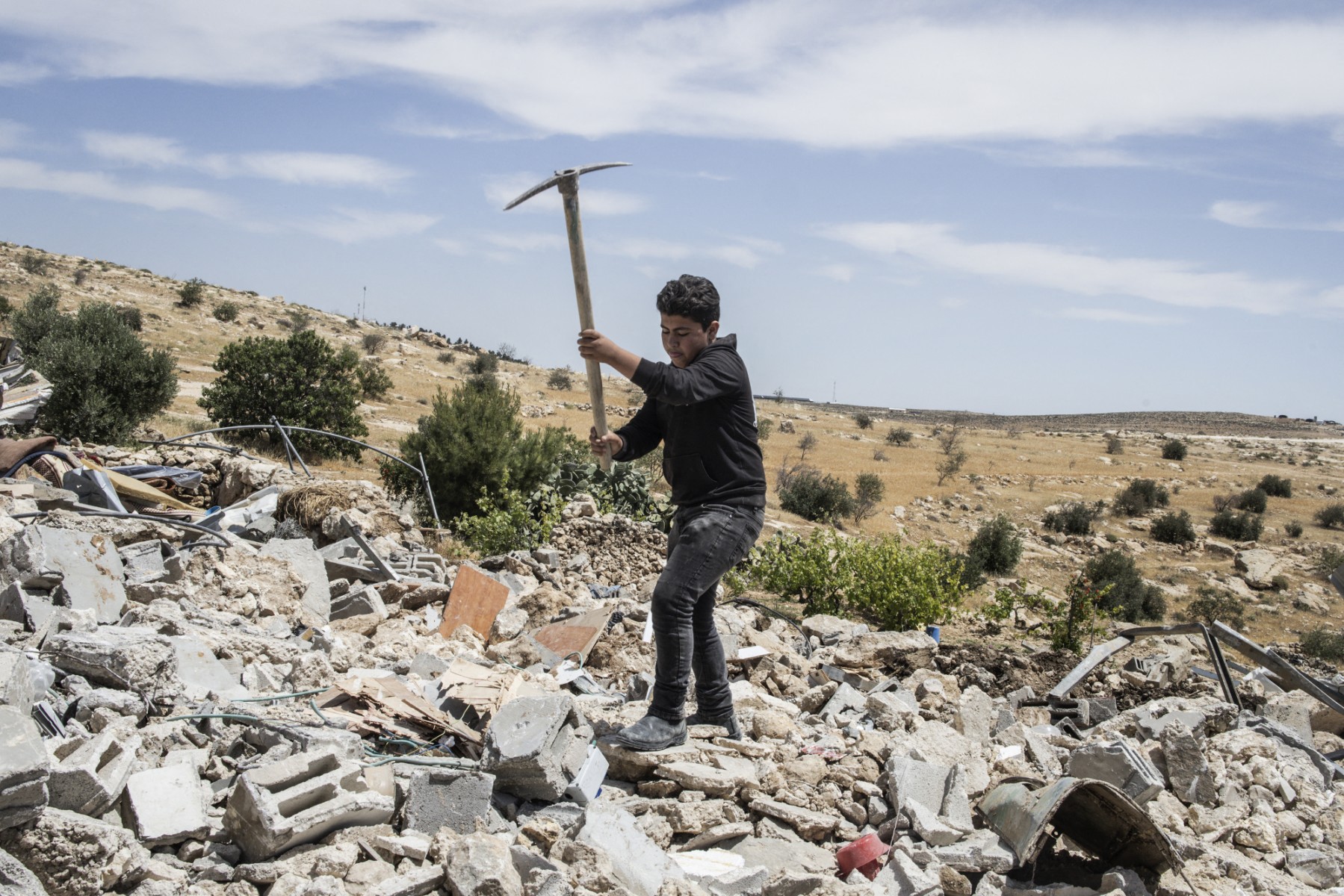
LONDON: Israeli forces demolished a home on Tuesday that belonged to a Palestinian family in the nomadic hamlet of Khirbet Khalla Al-Dabaa, located in Masafer Yatta, south of the occupied West Bank.
Fourteen members of the Mohammad Ali Dabbaba family lost their home when Israeli authorities demolished their 200-sq.-meter residence, constructed from tin and stone, according to the Palestine News Agency.
Forces also filled a crucial water well for the Bedouin community, destroyed electricity networks, damaged several water tanks, and uprooted 15 trees. Additionally, Israeli forces demolished a residential cave belonging to Abdullah Dabbaba, which housed six people.
Israeli authorities have issued demolition notices for 14 inhabited caves and several homes in Khirbet Khalla Al-Dabaa, the report added.
Masafer Yatta consists of nearly 15 Palestinian hamlets located in the southern West Bank; Khirbet Khalla Al-Dabaa is one of them. Israeli forces and settlers regularly invade the area in an effort to evict its total population of 1,150 residents, half of whom are children. Since the 1980s, the area has been designated a military zone by Israel.
In late August, armed Israeli settlers detained a 22-year-old British activist in the village of Umm Al-Kheir in Masafer Yatta, who was part of a “protective presence” initiative intended to support Palestinian residents. He was deported from Israel last week.
RIYADH: Eight Islamic and Arab countries on Sunday condemned Israeli plans for the removal of Palestinians from the Gaza Strip saying the designs, voiced by ministers, jeopardise a US-backed peace in the territory.
Israeli Defence Minister Israel Katz said Wednesday the government had plans to remove Palestinians from Gaza but was waiting for US approval on where to displace the territory’s population.
A day later, Israel’s National Security Minister Itamar Ben Gvir said the plan aimed to remove 250,000 Palestinians from Gaza in the first year, followed by the rest of the roughly two million residents over the following six years.
The foreign ministers of Saudi Arabia, Egypt, Jordan, the United Arab Emirates, Qatar, Pakistan, Indonesia and Turkey said they condemned in “the strongest terms” the “plans and mechanisms they proposed aimed at forcibly expelling Palestinians from their land”.
“Such measures directly challenge international efforts to achieve peace, particularly President Donald Trump’s comprehensive plan to end the conflict in Gaza, which includes a firm rejection of forced displacement,” they added referring to a US-backed, October 2025 peace plan for Gaza.
On Saturday the US ambassador to Israel Mike Huckabee, a staunch supporter of Israel and Israeli settlers in the occupied West Bank, denied there was an Israeli plan to force Palestinians out of Gaza.


![Hakim Mar’i in his family’s apartment with his injured leg, which prevents him from working [Al Jazeera]](https://i0.wp.com/occasionaldigest.com/wp-content/uploads/2026/09/d9-1790406476.jpg?w=640&ssl=1)
![Members of the Zbeidat family sit on couches outside. The room they stay in is on the left [Al Jazeera]](https://i0.wp.com/occasionaldigest.com/wp-content/uploads/2026/09/s2-1790406485.jpg?w=640&ssl=1)
![The kitchen and bathroom the Zbeidats have are in the same room they sleep in [Al Jazeera]](https://i0.wp.com/occasionaldigest.com/wp-content/uploads/2026/09/s4-1790406489.jpg?w=640&ssl=1)