Palestinian

Some change, but much more of the same in Palestinian Fatah elections | Israel-Palestine conflict News

The Palestinian group Fatah concluded its eighth General Conference late Saturday but the results of the elections of the group’s leadership bodies, the Central Committee and Revolutionary Council, were not announced until Monday afternoon. The delay compelled Wael Lafi, the head of the elections committee in the General Conference, who is also the legal advisor of the Palestinian President, to defend the process and delay.

Even before convening, questions about membership, funding, and the general political direction of the group – which dominates the Palestinian Authority – overshadowed preparations for the General Conference.

Recommended Stories

list of 3 itemsend of list

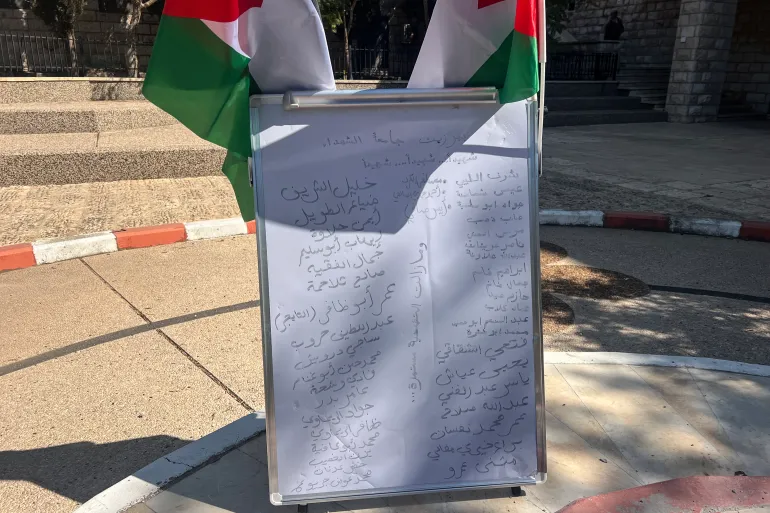
Sixty candidates competed for 18 seats in the Central Committee, Fatah’s highest leadership body.

Mahmoud Abbas, the 91-year-old Palestinian President, was unanimously voted as chair ahead of the vote, foreshadowing the results of the elections and Abbas’s tightening grip on power.

Dr Nasser al-Qudwa, who was the only member of the Central Committee to boycott the General Conference, told Al Jazeera, “Mahmoud Abbas engineered this meeting to produce the outcome he wants and he succeeded”. Many Fatah members agree with that assessment.

The election results of Fatah’s top body saw the replacement of half of the incumbent old guard. Those included all but one of Gaza’s representatives in the Central Committee, with Ahmed Hilles, a close ally of Palestinian President Mahmoud Abbas, the only one remaining.

Abbas’s close ally and intelligence chief, Majed Faraj, also won a seat on the Central Committee. Faraj is seen by many in Fatah as a competitor to Hussein al-Sheikh, who Abbas appointed as vice president a year ago.

Another signal of Abbas’s grip on the Congress was the nomination and victory of his son, Yasser, to the Central Committee. That was despite the fact that Yasser Abbas has never held a leadership position at any level in Fatah, and the development has overshadowed Fatah’s argument that the Congress was a sign of democratic vitality and inclusion.

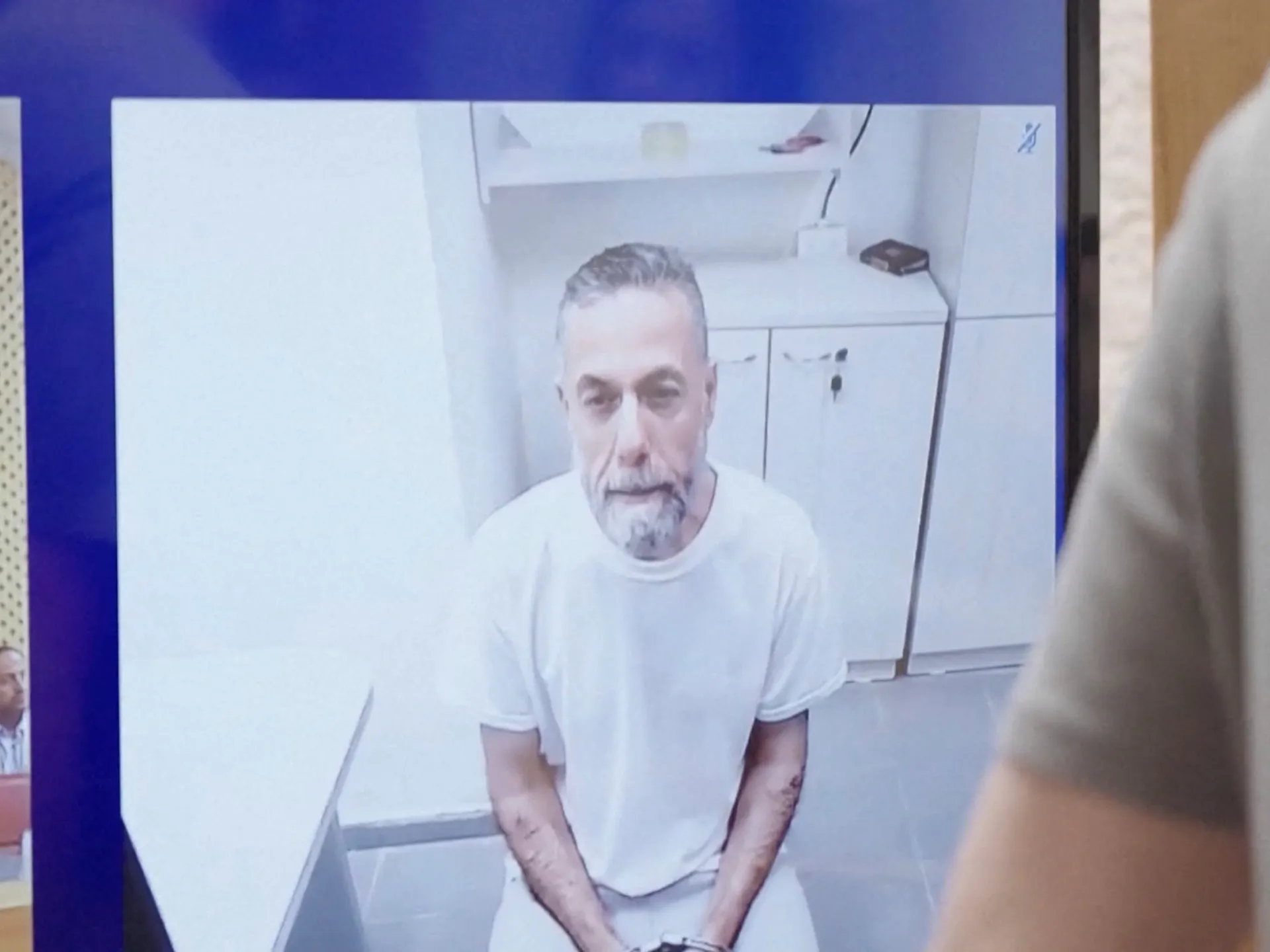
Palestinian detainees secured three seats in Fatah’s top leadership body, with Marwan Barghouti – imprisoned by Israel for more than 20 years – earning the highest number of votes among all competitors.

Another winner is Zakariya al-Zubaidi, a prominent Fatah figure who has been imprisoned repeatedly by Israel over the years. Al-Zubaidi notoriously escaped with five other Palestinian prisoners from Gilboa prison in 2021 only to be recaptured and then freed again in one of the prisoner exchange deals struck between Israel and Hamas during the Gaza genocide.

Fatah and Hamas make up the two main Palestinian political factions, with Hamas dominant in Gaza, and Fatah in the occupied West Bank.

Victory for Abbas?

There were 450 members competing for the 80 seats of the Revolutionary Council, which serves as Fatah’s legislator and in theory has strong sway over Fatah policy choices.

However, the winners appear to be dominated by the party’s insiders.

Absent from the Central Committee for the first time is a representative of Fatah outside Palestine, which is seen by many as a worrying precedent for a movement that has followers across the widespread Palestinian diaspora.

But the new Central Committee has an abundance of technocrats and senior officials working in the Palestinian Authority (PA), like the popular Ramallah Governor Laila Ghannam or the head of the PA’s General Personnel Council Musa Abu Zaid.

“These are not leaders. They are employees. They will do as ordered,” one Fatah official, who spoke to Al Jazeera on condition of anonymity, said.

Dr al-Qudwa views the results as a victory for the Palestinian president, not Fatah.

“President Abbas is the biggest winner,” al-Qudwa said. “He succeeded in completely subduing Fatah to his will.”

A significant proportion of the winners are also current or former PA employees, especially in the security sector.

Most of the old guard were replaced by younger members, but many of that new cohort themselves rose through the ranks of Fatah’s youth movement. Several sons and daughters of former Fatah leaders were also elected despite having no history of involvement or membership in the group, like the daughter of the late chief negotiator Saeb Erekat, Dalal.

Facing crises

Kifah Harb, a prominent Fatah figure who ran unsuccessfully for the Central Committee, confirmed to Al Jazeera that many members had concerns and misgivings about the organisational committee of the Congress.

But she struck a conciliatory tone about the process as a whole.

“As members of the Congress, we are leading members of Fatah and regardless the outcome of the elections, we must stand by it and help Fatah march forward in leading the Palestinian national movement,” Harb said. “There are no alternatives.”

Fatah’s Congress was closely followed by world governments and the Palestinian public, who saw the competition within the group play out in advertisements and posts on social media platforms.

Governments around the world see Fatah leaders as their Palestinian counterparts when it comes to bilateral relations, but Western governments are also demanding reforms in return for increased support to the Palestinian Authority.

Fatah leaders say the Congress is proof of their commitment to reform, pointing to the change of some names and a younger demographic emerging, even if the balance of power ultimately remained firmly in Abbas’s hands.

Whether that placates the international community is one matter, but Fatah will have a tough time getting the Palestinian public on side.

Fatah’s new leaders are faced with the task of resolving several chronic crises, including the PA’s inability to pay civil servants and Israel’s hostile policies – including the unlawful withholding of Palestinian tax revenues, unprecedented land grabs, settler attacks, and the Israeli-made humanitarian disaster becoming entrenched in Gaza.

On Monday, after the announcement of the election results, Fatah offered general policy lines in a statement, but provided no answers on the way forward.

And now it has to content with that future, and a public demand for presidential and legislative elections that will likely become more pressing – one of the many tests that awaits Fatah’s reformulated leadership.

Source link

Israeli settler blindfolds and detains Palestinian in occupied West Bank | Israel-Palestine conflict News

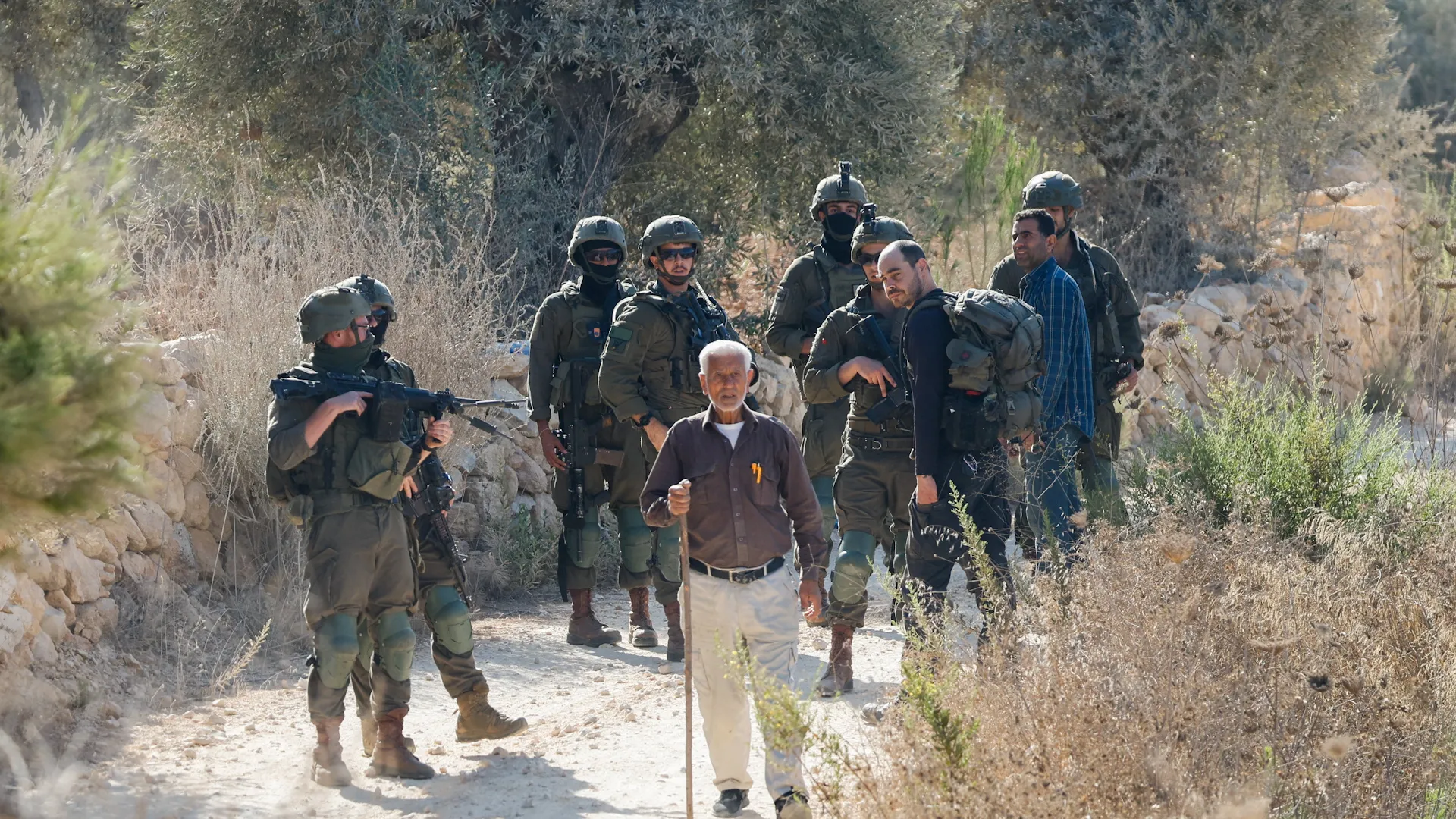
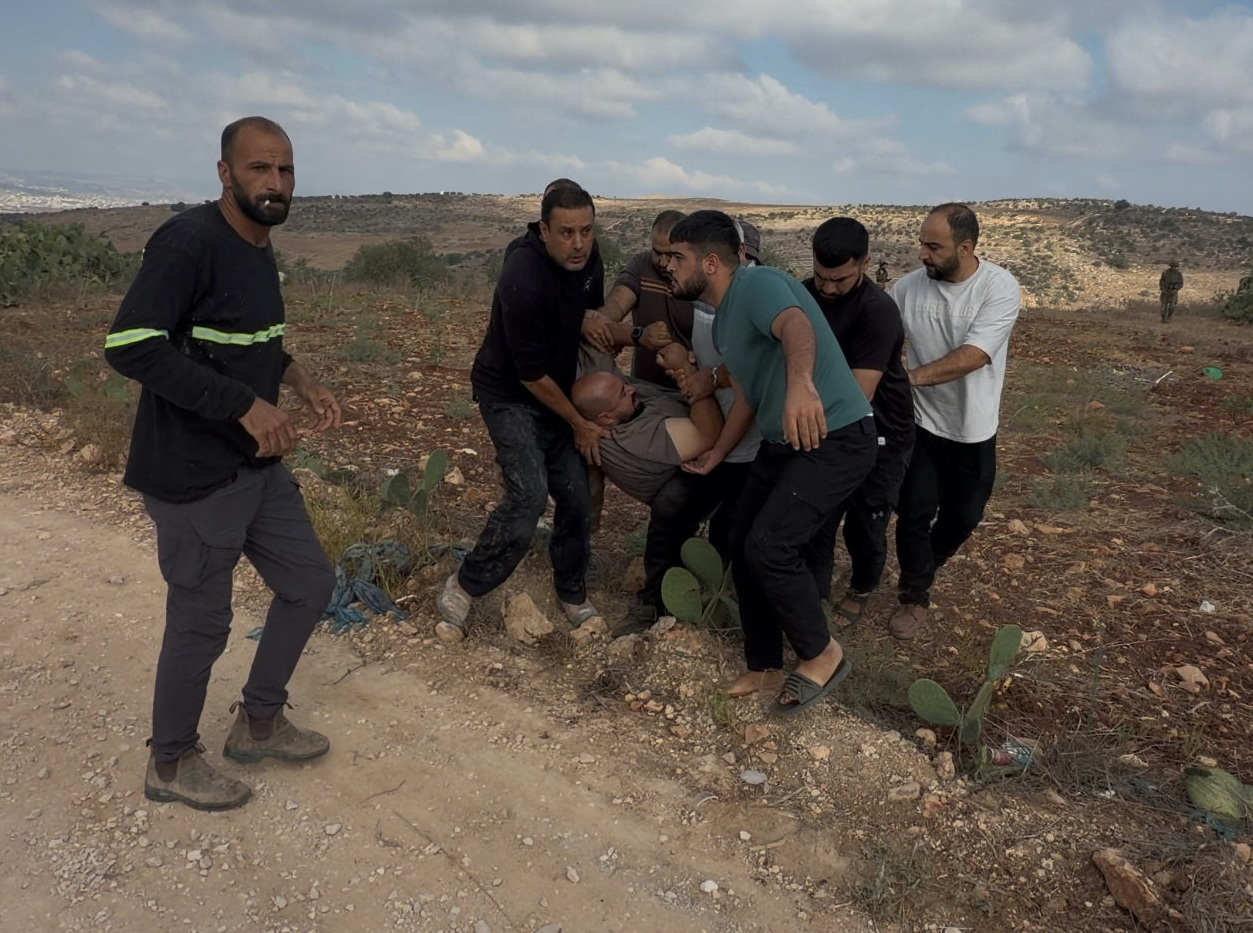
An armed Israeli settler blindfolded and detained a Palestinian man near the village of Beit Iksa in the occupied West Bank, dragging him onto a road as Israeli forces stood nearby. The Palestinian farmer was reportedly trying to reach his land before he was captured.

Source link

The assault on a French nun and the forgotten story of Palestinian Christians – Middle East Monitor

The video is horrifying, though it is the kind of horror now synonymous with the behavior of Israel, its military, its armed settlers, and society that has been conditioned to see the ‘other’ as subhuman.

Yet, this was not the typical viral video that emerges almost daily from occupied Palestine. The victim, this time, was not a Palestinian. She was an elderly French nun.  

On May 1, footage surfaced from Jerusalem showing a 36-year-old Israeli man running behind a French nun—a researcher at the French School of Biblical and Archaeological Research—and shoving her violently to the ground. 

In a chilling display of cruelty, the assailant did not simply hit and run. He walked away a few paces, then returned to the fallen woman to kick her repeatedly and mercilessly as she lay helpless.  

What was most astonishing was the sense of normalcy that followed. The assailant remained on the scene, conversing with another man who appeared entirely unperturbed by what should have been a devastating event in any other context. 

The video briefly imposed itself on the mainstream media scene, garnering perfunctory condemnations. Many explained the event as part of the larger landscape of Israeli violence, highlighting the ongoing genocide in Gaza as the most obvious example of this unchecked aggression.

But even the context of general violence does not fully explain why a French nun was targeted. She is not dark-skinned, she is European, she is Christian, and she holds no historical or territorial claims that would typically trigger the ‘security’ paranoia of the Zionist state. 

READ: Latin Patriarchate of Jerusalem files complaint over Israeli occupiers’ encroachments on church-owned lands in West Bank

Still, the incident was anything but ‘isolated,’ despite the rush by Israeli officials to label it a ‘shameful’ exception. To the contrary, the nun was attacked specifically because she is Christian. 

This raises the question: why? 

To answer this, we must acknowledge how Palestinian Christians have been systematically written out of the history of their own land.  

Palestinian Christians are not merely present in the land; they are among the most historically rooted communities in Palestine. They are anything but ‘foreigners’ or ‘bystanders’ caught in a supposed religious conflict between Jews and Muslims. 

In fact, the Christian Arab presence in Palestine predates the Islamic era by centuries. They are the descendants of historic tribes who shaped the region’s identity long before the advent of modern political labels.  

The marginalization of Palestinian Christians is a relatively new phenomenon, deeply linked to Western colonialism. For centuries, European powers used the pretense of ‘protecting’ Christian communities to justify their own imperial interventions. 

Consequently, this framed the native Christian not as a sovereign Arab with agency, but as a ward of the West—a narrative that effectively stripped them of their indigenous status and alienated them from their own national fabric in the eyes of the world.

Zionism added a lethal layer to this erasure. It has often projected itself as a ‘protector’ of Christians to avoid raising the ire of its Western backers. 

In reality, Palestinian Christians have been subjected to the same policies of ethnic cleansing, racism, and military occupation as their Muslim brothers and sisters. How else can we explain the catastrophic dwindling of the Christian population? 

Before the 1948 Nakba, Palestinian Christians made up roughly 12% of the population. Today, that number has plummeted to a mere 1%. During the Nakba alone, tens of thousands were expelled from their homes in West Jerusalem, Haifa, and Jaffa, their properties looted and their communities dismantled.  

A quick look at the map of Jerusalem and Bethlehem today tells the story of an ongoing erasure. Jerusalem is being systematically emptied of its native population, both Christian and Muslim. Christian properties and houses of worship are restricted, and the ‘Little Town’ of Bethlehem has been swallowed by a ring of illegal settlements and an 8-meter-high Apartheid Wall that has transformed the birthplace of Christ into an open-air prison. 

Yet, despite this, we rarely hear about the struggle for survival of Palestinian Christians. Instead, the world occasionally glimpses ‘incidents’—like the common habit of Jewish extremists spitting on foreign pilgrims and clergy in Jerusalem. This behavior has become so normalized that Israeli ministers, such as Itamar Ben-Gvir, have previously defended the act as an “ancient custom” that should not be criminalized.  

The reason the Palestinian Christian story is rarely told is that it fails to factor neatly into the convenient narratives used by Western governments. They are keen on presenting the ‘conflict’ as a Jewish state fighting for its identity against a monolithic ‘Islamic’ threat. Israel is heavily invested in this same ‘Clash of Civilizations’ trope, positioning itself as the vanguard of “Western civilization” against Arab extremism.

READ: Israeli army demolishes Christian monastery, nuns’ school in southern Lebanon

But some Palestinians—Muslim and Christian alike—are, to a lesser degree, also guilty of falling into this trap. The former often frame the Palestinian resistance as an exclusively Muslim struggle; meanwhile, some Christians participate in the very discourse that led to their marginalization in the first place. 

The Gaza genocide, however, has proven this logic not only erroneous but unsustainable. Throughout the slaughter, Israel has destroyed over 800 mosques, but it has not spared the Christian sanctuaries. 

On October 19, 2023, an Israeli airstrike targeted a building within the compound of the Church of Saint Porphyrius—one of the oldest churches in the world. 

In that massacre, 18 Palestinian Christians were killed, their blood mixing with the dust of a sanctuary that had stood for 1,600 years. It was a devastating reminder that the Israeli missile does not distinguish between a mosque and a church, nor between the blood of a Muslim and a Christian. 

The story of the French nun is worth every bit of the attention it received, as is the targeting of pilgrims. But as the headlines move on, we must remember that Palestinian Christians endure a suffering that is collective and rooted in the very soil of Palestine. They are now an endangered community, and Israel is the culprit. Without them, Palestine is not the same. 

The Palestinian homeland is only whole when it is the cradle of religious coexistence, and Palestinian Christians sit at the very heart of that history, dating back two millennia. Their survival is not a ‘minority issue’—it is the survival of Palestine itself.  

OPINION: Subjects of empire: Breaking the cycle of Arab dependency on US elections

The views expressed in this article belong to the author and do not necessarily reflect the editorial policy of Middle East Monitor.

Source link

The Palestinian shot dead hours before his son was born | Israel-Palestine conflict

NewsFeed

Nayef Samaro, 26, left work in Nablus to run errands for his wife, who was hours away from delivering their first son by C-section. He was excited, despite the Israeli army raiding his city.

An Israeli soldier shot Nayef in the head, leaving him to bleed out in the street. He never saw his son.

Source link

Palestinian boy mourns father killed in Israeli strike on security post | Gaza

NewsFeed

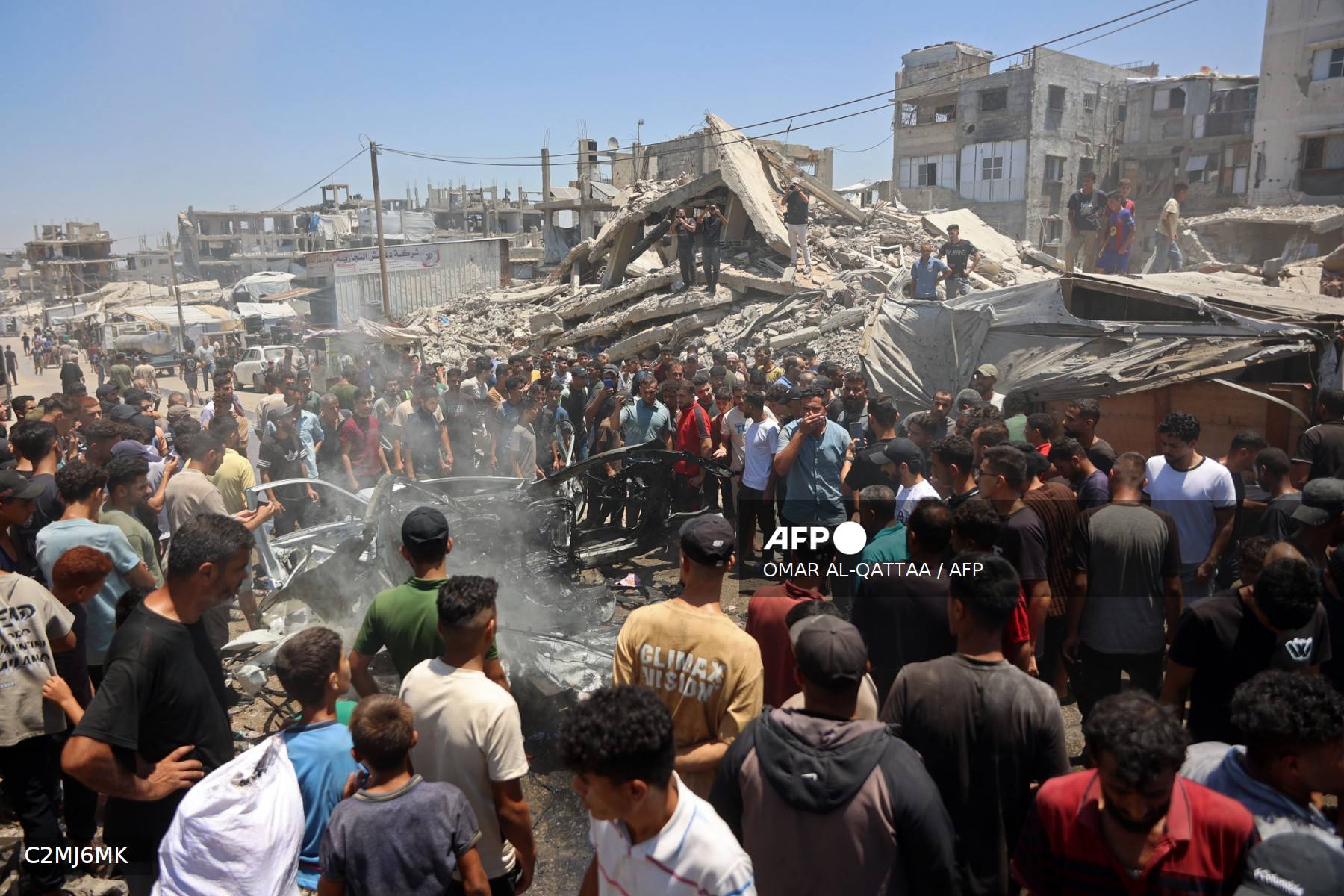
A Palestinian boy mourns his father, one of three people killed in an Israeli strike on a security post in Gaza. The attack is part of ongoing Israeli violence, despite a fragile ceasefire, which has killed at least 846 Palestinians, according to Gaza’s Health Ministry.

Source link

Palestinian National Popular Action Committee condemns Israel abduction of flotilla activists – Middle East Monitor

The Palestinian National Popular Action Committee have today issued a press statement strongly condemning the Israeli abduction of activists Saif Abu Khashk and Thiago Ávila in international waters near the island of Crete. “This act of maritime piracy,” the Committee said, “is part of a continuing pattern of violations of all international norms and laws.”  The statement said Israel’s cross-border lawlessness comes as no surprise from an occupation that systematically disregards international law. “We hold all those complicit in these crimes, including those who remain silent, fully responsible.” 

It added; “While we hold the occupation fully accountable for the safety of Saif and Thiago, we urgently call on the Governments of Spain and Brazil to intervene immediately to secure their safety and ensure their prompt release.”

The Committee expressed its appreciation and esteem to the two activists, Saif and Thiago, as well as to all participants in the “Sumud Flotilla” who confronted the occupation’s arrogance and piracy with their unarmed presence and firm determination. “These sacrifices reaffirm that the struggle for freedom and justice will continue,” it concluded.

READ: Israeli court extends detention of 2 Gaza-bound flotilla volunteers

Source link

Israeli forces kill Palestinian man in raid on Nablus in occupied West Ban | Occupied West Bank

NewsFeed

Israeli forces have raided the city of Nablus in the occupied West Bank, firing live ammunition that killed a 26-year-old Palestinian man and wounded four others, including children. Dozens of people have suffered tear gas inhalation.

Source link

Israel’s ‘two-tier’ policing and the crime epidemic in Palestinian towns | Benjamin Netanyahu News

Addressing the cameras following reports of spiralling youth violence, including the killing of the 21-year-old former Israeli soldier Yemanu Binyamin Zalka last week, Israel’s National Security Minister Itamar Ben-Gvir was clear.

“This will be a total war,” he said, announcing a national operation to target a surge in youth violence. “We will restore security to the streets and calm to parents. Anyone who harms Israeli civilians will face the strong hand of the Israel Police and pay a heavy price.”

Recommended Stories

list of 4 itemsend of list

The response was sharp, aligned itself with the victim, and promised a solution.

That, critics say, is a sharp contrast to Ben-Gvir’s response – or lack of one – to the ongoing epidemic of violence in Israeli towns and villages populated by Palestinians, which has so far led to the deaths of almost 100 people and, according to Israel’s own finance ministry, costs the country up to $6.7bn a year.

Allegations of two-tier policing, to the detriment of what Israelis refer to as the “Arab sector”, have dogged Israel’s police for decades. But the situation has gotten worse under the current administration of Prime Minister Benjamin Netanyahu, which has been in power since the end of 2022, and Ben-Gvir, a far-right politician who is in charge of the police.

The statistics since Ben-Gvir came into office back up the narrative that the crime wave in Palestinian communities has gotten significantly worse. The Israeli newspaper Haaretz reported that the murder rate in Israel’s Palestinian communities increased from 4.9 per 100,000 in 2020, to 11 per 100,000, on par with the murder rate in Sudan and Iraq.

In contrast, the murder rate in Israel’s Jewish society stood at approximately 0.6 per 100,000.

That increase can not totally be attributed to the current government – Netanyahu himself was prime minister in 2020, when the murder rate was lower. But critics argue that the introduction into government of figures like Ben-Gvir and Finance Minister Bezalel Smotrich, who they say are openly disdainful of Palestinians, has contributed to the sharp uptick in violence.

Analysts and experts who spoke to Al Jazeera had little doubt over the Netanyahu government’s culpability in the increased murder rate.

“They really don’t mind that Palestinians are killing each other, as they’ve been left to do for years,” lawmaker Aida Touma-Suleiman, a Palestinian member of the Hadash party and a longstanding critic of the lack of policing in Palestinian communities in Israel, said.

Israel's far-right National Security Minister Itamar Ben-Gvir celebrates after Israel's parliament passed a law on Monday making the death penalty a default sentence for Palestinians convicted in military courts of deadly attacks, at the Knesset, Israel’s parliament in Jerusalem, March 30, 2026 REUTERS/Oren Ben Hakoon ISRAEL OUT. NO COMMERCIAL OR EDITORIAL SALES IN ISRAEL
Israel’s far-right National Security Minister Itamar Ben-Gvir celebrates after Israel’s parliament passed a law making the death penalty a default sentence for Palestinians convicted in military courts of deadly attacks [Oren Ben Hakoon/Reuters]

“It would never occur to the police that they should provide a service to Arab neighbourhoods,” she said of the lack of physical police presence within Palestinian communities. “It’s about enforcement. It’s hostile.”

While police stations are standard in Israel’s Jewish-majority areas, there are only about 10 in Palestinian-majority areas.

Among the decisions that have most angered Palestinian advocacy groups in Israel was the government’s December approval of a $68.5m cut to an economic development programme for Palestinian communities in Israel, in order to fund more policing in the communities.

Critics agreed that more funding was needed for the police, but bemoaned that the money was coming from a fund designed to address the root causes of criminality by addressing housing and economic development, areas where Palestinian communities are notoriously underfunded in comparison to Jewish ones.

Hardwired poverty

Palestinian citizens of Israel make up around 21 percent of the country’s population. Disadvantaged economically, they are the descendants of Palestinians who did not flee after the 1948 establishment of Israel – an event they know as the Nakba, when an estimated 750,000 Palestinians were ethnically cleansed and forced out.

Often concentrated in separate towns and villages from Israeli Jews, Palestinians frequently describe a reality of chronic underinvestment, with the presence of the state either limited or non-existent.

Joblessness has long been woven into their daily lives, analysts say, but the unemployment rate has worsened since Israel choked off access to the occupied West Bank, where many worked, after the Hamas-led October 7 attack on Israel and the start of Israel’s genocidal war on Gaza in 2023.

The most recent official date, based on 2024 figures, shows that 37.6 percent of Palestinian households in Israel live below the poverty line.

Members of Israel's Arab minority protest, calling on the Israeli government to tackle a wave of crime and killings from within Arab communities through effective law and order, in Sakhnin, northern Israel, January 22, 2026. REUTERS/Ammar Awad REFILE - CORRECTING YEAR FROM "2025" TO "2026".
Palestinian Israelis protest in January against the wave of crime and killings within Arab communities [Fie: Ammar Awad/Reuters]

Local criminal networks in Israel’s Palestinian towns and villages have grown in scale and influence in recent years, in some cases taking on the form of mafia-style organisations, untroubled, critics say, by the current government.

“There is a wide network of criminal gangs who exert control across Arab neighbourhoods,” said Daniel Bar-Tal, professor of social-political psychology at Tel Aviv University, adding that criminality and even murder were allowed to continue with the state’s own complicity.

“In part, the government just likes it. They get to say, ‘Look, this is Arab culture, this is Arab society. This is what they do.’ They also rely on the collaboration of the gangs to gather information on what’s going on in these communities,” he said, referring to numerous accounts of how friends who had reported criminal activity in their neighbourhoods were dismissed. “And lastly, it is because the police force is controlled by Ben-Gvir, a racist who actively enjoys dehumanising Arab society.”

Ben-Gvir has previously rejected accusations of racism and says he is only against those who harm Jews.

Policed by the enemy

From leveraging his position in government to urge on the genocide in Gaza, to defending officers under his charge filmed raping a Palestinian prisoner, Ben-Gvir’s actions have dismayed many of Israel’s self-styled liberals, just as they have shocked observers around the world.

However, following an uptick in crime in Israel, criticism of Ben-Gvir’s performance in his role as national security minister has begun to enter the domestic mainstream.

As well as more predictable opinion pieces in Israel’s liberal press, accusing the National Security Minister of being “busy on TikTok” while Zelka was killed, or concentrating his efforts on arresting professors wearing Palestinian flags on their kippahs while murder rates break records, there have also been criticisms from those closer to the establishment.

Earlier this month, Israel’s High Court intervened in a row between Ben-Gvir and Attorney General Gali Baharav-Miara, ordering the two to reach an accommodation after Baharav-Miara called for his ousting following what she claimed was his attempts to make political interventions in the police’s work.

“Nobody cares if Ben-Gvir’s good at his job,” political scientist Ori Goldberg said. “He’s there to punish Palestinians, even those in Israel. They’re punished through a lack of security, just as they’re punished through hostile planning, and a lack of healthcare punishes them. This is how the apartheid Israel always works.”

Source link

Israeli army says soldiers accused of abusing Palestinian to return to duty | Israel-Palestine conflict News

Some of the reservists accused of sexually assaulting a detainee have already started combat roles, reports Israeli Army Radio.

Israeli military chief Eyal Zamir has authorised five soldiers accused of sexually assaulting a Palestinian inmate in the notorious Sde Teiman detention camp to return to reserve service after charges against them were dropped, according to Israeli media reports.

The soldiers, all from the Force 100 unit assigned to guard military prisons, are being reinstated despite an ongoing, internal military inquiry into their conduct.

Recommended Stories

list of 3 itemsend of list

Israeli Army Radio reported that some of the reservists have already returned to active duty, including deployment to combat roles.

An Israeli army statement, cited by Israel’s Haaretz newspaper, said: “The investigation does not prevent them from continuing to serve … the command-level investigation will be completed as soon as possible.”

The reinstatement comes after Israel’s top military lawyer dropped all charges against the soldiers last month, closing a case that had been among the most divisive in Israel’s recent history.

The soldiers had been charged with aggravated assault and causing severe injury, after footage broadcast by Israeli television showed them abusing a Palestinian man in Sde Teiman. The military’s own indictment described soldiers stabbing the detainee with a sharp object near his rectum, causing cracked ribs, a punctured lung and an internal tear.

A doctor at the facility, Yoel Donchin, told Haaretz he was so shocked by the Palestinian inmate’s condition that he initially assumed it was the work of a rival armed group.

Military Advocate General Itay Offir said the indictments were scrapped partly because of “complexities in the evidentiary structure” and “difficulties” arising from the detainee’s release to the Gaza Strip.

Rights groups condemned the decision as a legal injustice, with Amnesty International calling it “yet another unconscionable chapter in the Israeli legal system’s long-standing history of granting impunity to perpetrators of grave crimes against Palestinians”.

“Since the start of Israel’s genocide against Palestinians in the occupied Gaza Strip, and despite overwhelming evidence of widespread torture and abuse, including sexual violence, against Palestinians in Israeli detention centers, only one Israeli soldier has so far been sentenced over torturing a Palestinian detainee,” said the rights group in a statement.

Palestinians released from Israeli detention have reported suffering widespread abuse while in custody.

A February report by the Committee to Protect Journalists also cited dozens of formerly detained Palestinian journalists describing “routine beatings, starvation and sexual assault” in Israeli custody.

Source link