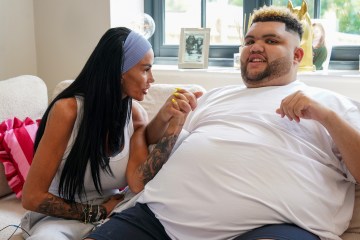
KATIE Price’s furious sister Sophie has revealed her true thoughts on the glamour model’s whirlwind marriage to Lee Andrews – admitting she was left shocked over the nuptials.
Katie Price’s sister has revealed the star ‘ruined my year’ with her shock wedding to Lee Andrews – which left her family blindsidedCredit: @KatiePriceYoutube/BackgridKatie married Lee in January just ten days after meeting him in a Dubai ceremony, shocking family and fans back homeCredit: wesleeeandrews/instagramWe revealed earlier this year how Sophie and Katie’s mum Amy were concerned for the star over Lee’s intentionsCredit: Instagram
As they spoke about their mum Amy, Sophie added that Katie had “traumatised” the whole family with her shock romance.
The pair then moved on to other news throughout the episode as Sophie said she “didn’t want to hear it” when it came to conversation surrounding Lee.
Katie and her sister took almost two months away from recording their podcast following the wedding, with the former admitting she didn’t blame her family for being ‘angry’Credit: InstagramAnd in the new episode, Sophie described her sister as a ‘pain in the a**’The former glamour model returned home earlier this month after spending several weeks in DubaiCredit: wesleeandrews/Instagram
ACTRESS Daisy Edgar-Jones has spoken about a crippling health diagnosis – and going through ‘years of unexplained pain’.
The Normal People star, 27, opened up for the first time about suffering from a chronic disease.
Sign up for the Showbiz newsletter
Thank you!
Daisy Edgar-Jones has revealed she has been diagnosed with a debilitating chronic diseaseCredit: YouTube/VogueThe actress opened up about her painful health battleCredit: Getty
“I was diagnosed when I was, I think I was 24. I was definitely relieved to find out why I was going through it.”
The chronic disease causes inflammation, scarring and – in many cases – excruciating pain.
According to the NHS, it affects around one in ten women of reproductive age in the UK – an estimated 1.5 million people – and there is no cure.
Daisy, who is in a relationship with photographer Ben Seed, said she has found ways to manage the condition’s hormonal effects through diet and skincare.
She explained: “I’ve found over the years skincare that really works for me.
“But I also find drinking lots of water and when I eat well – especially when I try and not eat as much dairy – that really helps.”
She also offered a heartfelt message to others struggling with breakouts.
“When I had terrible acne, it was all I could see when I looked in the mirror.
“But actually when I look back at photos and videos, it’s funny that so much of the beauty of you is inside and the confidence that you wear can really help.
“So I would say to anyone with acne – I know it’s all you can see, but it’s not what everyone else can see.”
The actress was born in Islington, North London, and grew up in the world of entertainment.
Her dad Phil is head of entertainment at Sky TV while her mum Wendy is a former film editor.
The actress was catapulted to fame thanks to her debut lead role inBBClockdown smash-hitNormal People, alongsidePaul Mescal.
TheBaftaandGolden Globe-nominated actress trained with the National YouthTheatrefrom the age of 14 before landing her first professional job at 17, appearing in aChristmasspecial of BBC sitcom Outnumbered.
Daisy then joined the cast ofCold Feetas Olivia, the on-screen daughter of actressHermione Norris – shortly before starring in the raunchy drama Normal People, an adaptation of the best-sellingSally Rooneynovel.
Daisy has become a Vogue ‘It Girl’Credit: YouTube/VogueThe actress found fame with Paul Mescal in BBC’s Normal PeopleCredit: BBC/Element Pictures/HuluDaisy starred alongside Glen Powell in TwistersCredit: AlamyDaisy has become a style icon since finding fame in Normal PeopleCredit: Getty
What are the symptoms of endometriosis?
Endometriosis is the name given to the condition where cells similar to the ones in the lining of the womb are found elsewhere in the body.
Each month these cells react in the same way to those in the womb, building up and then breaking down and bleeding.
Unlike the cells in the womb that leave the body as a period, this blood has no way to escape.
This can cause inflammation, pain and the formation of scar tissue.
In the UK, around 1.5 million women and people assigned female at birth are currently living with the condition.
Not everyone with endometriosis experiences symptoms.
Symptoms can vary in intensity and the amount of endometriosis does not always correspond to the amount of pain and discomfort people have.
When Jared Snow goes to the hospital, he’s usually in serious pain, which he hopes will be assuaged soon. But living with sickle cell disease as a Black man in America often tests this hope.
The Compton born stand-up comedian and actor has been living with sickle cell disease since he was a child. Hospital visits and pain have always been part of his life. But now he’s using his latest project, a documentary film called “You Look Fine,” to show the world how he copes as an entertainer with living with sickle cell disease in an industry steeped in image and perception.
Alongside actor-comedian Marlon Wayans, Snow wanted to make the film to raise awareness about the realities of sickle cell disease and how it impacts Black communities.
In the United States, sickle cell disease affects about 100,000 people, with more than 90% of cases being among Black people, according to the U.S. Centers for Disease Control and Prevention. Sickle cell disease occurs in about one out of every 365 Black or African American births. People living with sickle cell disease have red blood cells that are crescent shaped due to a gene mutation. Because of this, the red blood cells can block blood flow to the rest of the body and can cause chronic pain, strokes, lung problems, infections and kidney disease.
The nearly 90-minute documentary has Snow filming himself inside small hospital rooms, nurses trying to find a vein in which to stick needles, and even him trying to work on material as he lies in hospital beds. The film also includes interviews with his friends.
Snow was adamant about showing the blood and needles in the film as well as footage of himself writhing in pain on hospital beds and the frustration of waiting hours for doctors to provide adequate dosages of pain medication that can help him. He cracks jokes during his hospital stays, but in between you get a front-row look at how tiring, tearful and emotionally devastating his illness can be. Interspersed within such footage are clips from his stand-up shows and him trying to live his best life by traveling, skydiving and even experiencing New York City snowfall.
The Times caught up with Snow and Wayans to talk about the film, vulnerability, Black men’s health, and finding levity through the pain.
J. Snow in the hospital in “You Look Fine”
(J. SnowPro)
I was struck by the handwritten notes with title ideas. Tell me where “You Look Fine” comes from?
J. Snow: It’s just something I hear a lot. It’s something I’ve heard a lot during my life. It’s cultural Black gaslighting is what it is. When you’re in pain, sometimes you look fine. When you are telling people, “I’m not fine,” they’re like, “Your hair is nice.” I can’t go to the hospital with gold. I had gold beads. Sometimes you go there looking too nice. Sometimes I got to dress down just to try to get the help. But if I dress too far down, I look homeless, and they really won’t be open to helping me. So you got to find the balance. But that’s kind of where it comes from. … I wanted to throw it back into people’s face. This is something that a lot of sickle cell warriors, and people with chronic illnesses in general hear, people with mental illness hear, and so I think it’s important to highlight how that literally is gaslighting.
What was your motivation to do this documentary now?
J.S.: I wanted to show that humor lives within this and that a lot of resilience and strength are also within this, and that was really the motivator. Also, just growing up with it, not having a lot of information, not seeing a lot of men talk about it. I wanted to be different, you know.
Marlon Wayans: For me it fits on brand for several reasons. One is because I love taking the dark things in life and finding some humor in it. And I think I try to do that with my comedy. I try to do it with my specials. I try to do it because I think we need to all find smiles no matter what your situation is; laughter is always healing and always necessary. Being African American, I grew up when sickle cell was like a prominent disease, and in our culture I know even when it came to dating, my mother would ask “Who you dating? You know, because if she got the trait, and you got the trait, you know, what could happen.” So I’ve always been aware of it, and I’ve lost now four friends to sickle cell. I just lost two in the last year. It’s a long fight, and so I’m here to support them and our culture and the awareness. And you know, Jay is a friend, and you know, I want him to see fame.
For Jared, in the film, you say, “I just want to see what my body can do.” I thought that was just so deeply profound. What is your relationship like with your body now, compared with the moment you were filming that?
J.S.: When somebody sees me eating a salad, and they’re like, “Oh, you eating salad?” I’m like, “This could save my life.” When I’m stretching and doing yoga, it’s not because I want to be a yogi. It’s because it literally gets oxygen into the joints that are suffering without oxygen. It stretches my hips and I want the longevity. I see what happens in sickle cell warriors and people without sickle cell who just age without moving frequently.
J. Snow walks through the halls of a hospital while dealing with issues from sickle cell.
(Courtesy of J. SnowPro)
Black people, especially for Black men, don’t have their pain taken seriously — be it their physical pain or their emotional pain. What has it been like for you to publicly show that pain?
J.S.: It’s been challenging. It took awhile for me to get to the point where I could even talk about this publicly, especially being in entertainment and trying to maintain a certain persona and image in entertainment where like your ego clashes against your vulnerability and you feeling like you’re weak. That’s the stigma that comes with people who admit that they have illnesses and stuff like that, especially in entertainment. It makes people not want to work with you. I’ve suffered through that. I’ve lost jobs while in the hospital because of this. And so it got to a place where it just was unavoidable. The pressure built so much and the frequency of the hospital visits became so crazy that it was like, you’re either going to be viewed as this very lazy, sometime-y person, or you’re going to come clean about what you’re actually dealing with and just face it.
M.W.: I live in the pain. I live in the vulnerability. I think that’s why I create my best work. You know, my parents died. I thought it was only appropriate to talk about that thing that hurts me so much. I think part of it takes courage, but at the same time, I know it’s necessary.
What was going through your mind when you first saw that footage of [Snow] in the hospital?
M.W.: “This [man] is crazy. Why you filming?” He made sure he had a GoPro on his foot and set cameras up — dude really wants to make it. Forget this disease. He may be faking it just to make it bigger. I was proud, right? That’s because I love the resilience, I love that you still have a passion, that you still have a thing that you want to do, and you have this art and this vessel and this expression, and I know that even though he’s hurting, that he’s healing at the same time, at least, you know, emotionally and spiritually. Because to put art out there at the time that it’s happening, that you’re in pain, that takes a lot of courage from the artist, and so I was proud. That’s why I stand behind it, because I think it’s something I’ve never seen, and I think it’s something that’s necessary for the culture.
How has this film changed your relationship to your understanding of masculinity and strength?
M.W.: For me, it’s just on theme. It hasn’t changed, it just enforced how I feel. You know, I’ve never been one to hide my feelings. I go to therapy. I have two therapists, I go on my walks. I talk to God. I’m reading my Bible. I understand that life is a long journey of suffering, and you need these outlets, and this movie and art are part of that. I have the stage. I always have this thing that I’m expressing because it helps me reconcile all that’s going on with me, especially when I take this pain and make other people laugh or are entertained by it, then I go, all right, I did something good with that thing that was bad. And so this enforces what I want people to feel. I want people to watch this. That’s why I stand behind this, because it’s on theme spiritually for me.
J.S.: I think when you stand outside of that vulnerability and you’re afraid to really go into it, I don’t know, I feel like that’s orbiting your true power. The most masculine thing you can do is face your highs and lows head on and own them. And that’s where you find out who you really are. This is where you find out what you can really bring to the table for yourself, for others, and where you become fearless. And that’s exactly what this showed me, was that I can do anything, I can conquer a lot of things. I walk around with a new energy because I’ve done this. I literally had a film on hard drives, and I sat for 11 months and edited it relentlessly, and now I have my first feature film because I was fearless enough to at least try to do it and not feel, what are people going to think, or what are people going to say? That didn’t matter to me. Also with this clock over my head, you don’t got time to think about stuff like that. It’s like, what do you want to do while you’re here? And what I wanted to do was make movies, make people laugh and inspire others to do things that they want to do too. And that took letting go of whatever this masculine image was that was blocking me.
J. Snow on stage at the Hollywood Laugh Factory
(Brianna Joseph)
The whole film is endearing, but I found those moments of levity so well- timed and so thoughtful and funny. How do Black people find those moments of levity, oftentimes, during these moments of pain?
M.W.: Because Black people have been through so much trauma before we get into family trauma, just as a people. We have suffered the most trauma from being separated from our family, slavery — we’ve been through it — and yet, and still, we find that funny. And that has been, I think, our saving grace is our sense of humor. It’s been a lifesaver. It’s been a raft in a really rough ocean for us. And I think it’s beautiful that we can. I will always promote laughing when you’re in your most pain to find the funny, because that takes a little pressure off. You’re laughing and crying at the same time. It’s like the best feeling.
J.S.: It’s like oxygen, like when the air is being sucked out of the room by your circumstances, your trauma, your pain or whatever. That little laugh is like a little breath of oxygen. It gives you something to keep going forward, to continue to think, “OK, like, where’s another solution from here? What else can I do here?” It gives you that breath that you need.