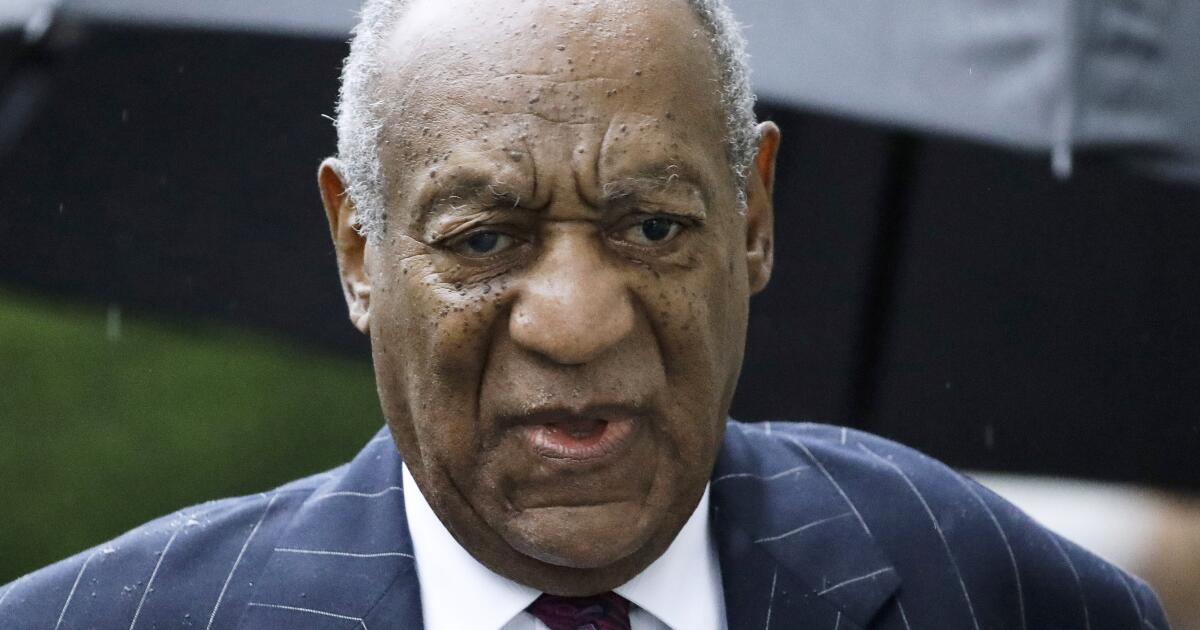
Tou Lue Vang being deported from the United States by Immigration and Customs Enforcement after Secretary of State Marco Rubio canceled the convicted child rapist’s legal status to remain in the country. Photo by Department of Homeland Security
July 10 (UPI) — Immigration and Customs Enforcement on Friday deported a man who was convicted of repeatedly sexually assaulting a child and ordered removed from the country in 2006.
Tou Lue Vang, who legally entered the United States in 1994, was convicted in 2006 of first-degree criminal sexual conduct for repeatedly sexually assaulting a 10-year-old girl over the course of two years.
Vang was ordered to be deported to Laos in October 2006 but because of that country’s limits on how many deportees it accepts he, like many ethnic Laotians and Hmong, was permitted to stay, The New York Times reported.
Having been in the country legally ever since, Vang applied for a pardon during the Trump administration’s immigration crackdown last year to prevent himself from being deported — which was granted in June.
“ICE deported Tou Vang, an illegal alien convicted child rapist,” Lauren Bis, acting assistant secretary of homeland security, said in a press release.
“This monster repeatedly sexually assaulted a 10-year-old girl,” Bis said.
Vang was convicted repeatedly sexually assaulting the girl between 2002 and 2004, and justified his actions as being “a cultural thing … to marry and have sex with girls as young as 12,” and also suggested that the girl was just as guilty as he was of a crime, ICE said last week.
The Times reported that Vang has not been charged with serious crimes since his conviction and supervised release while awaiting his 2006 deportation.
ICE arrested Vang in December 2025, with plans to deport him, based on his prior conviction, but a Minnesota judge ordered that he be released from custody in February 2026.
Vang’s pardon request, which the Minnesota Clemency Review Commission granted on June 10, could prevent him from being deported, the federal government and legal experts have said.
The State Department said Friday that it had terminated Vang’s legal status in the United States and deported him immediately.
“Americans should never have to live in fear that foreign sex predators — shielded from deportation by their own elected officials — could endanger them or their children,” Secretary of State Marco Rubio said in a statement.
“That’s why I terminated his legal status in the United States,” Rubio said. “Vang has now been removed from our country and will never pose a threat to any American ever again.”
Olympic canoeist David Hearn departs the Moultrie Courthouse after pleading not guilty to damaging the Lincoln Memorial Reflecting Pool on Thursday. Hearn was indicted on July 2 on one count of destruction of property of more than $1,000 for allegedly damaging the Reflecting Pool, carrying a maximum penalty of 10 years in prison if convicted. Photo by Bonnie Cash/UPI | License Photo
CONCORD, N.H. — Two transgender girls who were the first to challenge President Trump’s executive order, “Keeping Men Out of Women’s Sports,” have withdrawn their lawsuit in New Hampshire based on a recent U.S. Supreme Court ruling that upheld state bans on transgender athletes in girls’ sports and their own personal hardships, their lawyer said.
“This case was always about two courageous young girls who simply wanted the same opportunities as their peers to participate in school life,” their lawyer, Chris Erchull of GLAD Law, said in a statement Thursday. “Their willingness to stand up to extraordinary hostility made clear the human cost of laws that target transgender youth.”
The teenagers, Parker Tirrell and Iris Turmelle, took on Trump’s executive order last year, amending their 2024 complaint against New Hampshire’s law on banning transgender girls from school sports. A federal judge had granted a court order allowing them to play as the case proceeded.
For Tirrell, it meant being able to keep playing on her high school girls’ soccer team. For Turmelle, it was having a chance to try out for different sports.
Both sides agreed to pause the case and wait for a ruling from the Supreme Court as it considered similar state laws barring transgender girls and women from playing on school and college athletic teams in Idaho and West Virginia. Last month, the court upheld the laws. It also said that barring transgender girls and women doesn’t run afoul of the federal law known as Title IX, which prohibits sex discrimination in education.
One teen and her family decided to move from New Hampshire
Turmelle and her family moved out of New Hampshire last summer following proposed legislation against transgender people. One measure signed into law by Republican Gov. Kelly Ayotte last year prohibits medical professionals from providing puberty blockers and hormone replacement therapy to new transgender patients under age 18.
“Though there may be a carve-out for people already receiving gender-affirming care, that is way too close a call for us to risk staying,” Turmelle’s mother, Amy Manzetti, wrote in an op-ed piece at the time. “Other New Hampshire laws also seek to erase her.”
Most Republican-controlled states in the past five years have adopted laws or policies limiting gender-affirming care for transgender minors and limiting which school bathrooms transgender people can use, as well as sports restrictions. The Williams Institute at UCLA estimates that about 3% of youth ages 13 to 17 identify as transgender.
“The challenges with relocation are significant and burdensome — this includes having to find new employment, buying and selling homes, packing and moving possessions, integrating kids with a new school system, losing access to longstanding family and friends, and potential loss of income,” Corinne Goodwin, the executive director of Eastern PA Trans Equality Project in Pennsylvania, said in an email.
“But these families do so because they love their kids and know that supporting them with the care and opportunities they need is critical to their long-term success and happiness.”
The other teen gave up playing soccer at high school
Tirrell, 17, began her junior year last fall on the girls’ junior varsity soccer team. Things were fine at first, and each time she scored a goal, she got a round of ice cream from her parents. But a few weeks into the season, she decided to stop playing.
“With all of the political stuff going on, soccer wasn’t just about the game anymore,” her mother, Sara Tirrell, told The Associated Press in an interview.
It became more about preparing for the possibility of conflict.
“Were there any local Facebook groups where they were sort of agitating about potential protests and how do we prepare, and what are we walking into, and we never kind of knew,” she said. “We were on a lot of pins and needles, especially after the previous season.”
She was referring to a controversy at an away game where two dads from an opposing team were banned from school grounds for wearing pink wristbands marked “XX” to represent female chromosomes. They sued the school district and a judge ruled against them. They have appealed their case.
Last fall, there was an increased presence of school administrators at the games and bus drivers pulled in closer to the field so the students weren’t in the parking lot, she said.
“Parker didn’t talk about it a lot, but I think she could see that stress for everybody — for her, for her teammates, for her coaches,” Sara Tirrell said. “She felt kind of bad about pulling them all into that circus again. And so she ultimately said, ‘This isn’t fun anymore and I don’t want to do it.’”
Parker’s father described the atmosphere as “palpable tension.”
Even playing on her own turf, “there would typically be a couple of police officers at the home games where there weren’t previously,” Zach Tirrell said.
In the past, Parker also played soccer in a recreation league and could still do so.
“But I think it all kind of still sort of weighs on her,” her mother said. “It’s the same group of kids that she plays with who, honestly, have been very supportive and love to have her on the team and have expressed that to her many times over. But I think she still has that worry in her brain around, ‘What are other people going to say and do if I show up at a game?’”
Parker’s parents hope she’ll return to playing soccer some day. In the meantime, “she plans to be around and use her voice to continue standing up to discrimination,” her mother said. “In some ways she’s had to grow up a lot faster than some of her peers.”
McCormack writes for the Associated Press. AP writer Geoff Mulvihill in Haddonfield, N.J., contributed to this report.
The Azteca Stadium has issued a shelter-in-place order because of severe weather before the last-16 World Cup tie between Mexico and England.
The match in Mexico City is set to kick off at 18:00 local time on Sunday (01:00 BST Monday).
There has been heavy rain in the city during the day and reports of lightning above the stadium.
The current advice for supporters and media inside the ground is to remain in their seats.
Fifa held talks with the English and Mexican football associations on Friday after proposing the match be moved to 19:00 BST on Sunday (12:00 local time) before a U-turn resulted in the kick-off time remaining unchanged.
About six months after Toni Morrison died in the summer of 2019, Literary Cleveland began hosting annual community tribute parties on the Nobel Prize-winning author’s birthday, Feb. 18. Lorain, Ohio — a suburb of Cleveland — is where Morrison was born and raised, and where she set several of her novels. During these gatherings, participants were prompted to read aloud from their favorite Morrison works, and share why they savored those particular lines.
Over time, these meetings began to feel increasingly intimate, even “sacred,” according to Literary Cleveland’s Executive Director Matt Weinkam, which prompted him, in tandem with Ohio Humanities head Rebecca Asmo, to brainstorm how to take their program state-wide. “This is Toni Morrison, one of our greatest writers,” Weinkam recalls thinking. “We needed to do something bigger.”
At the time, Weinkam and Osmo were also trying to figure out how to commemorate America’s semiquincentennial. Weinkam was listening to Morrison’s entire oeuvre on audio and realized that when you organize the 11 novels in a certain order, “they tell the history of America.” So how, he thought, “could you use the literature of Toni Morrison to view our country through a different lens — through her lens?” He says they knew honoring Morrison as a consequential figure not just in literature but also in the context of American history would be central to Ohio’s celebration of the semiquincentennial.
“[But] only as the project was coming together did we strike on the fact that her novels trace American history from ‘A Mercy,’ set in 1690, through ‘God Help the Child,’ in the 2010s. Not only does her work re-center African Americans in the story of our country, it also tackles major events from our founding, through slavery, to the impact of Jim Crow, to the great migration and beyond.”
In the months leading up to the 250th anniversary, they decided to bring the Morrison salons they were curating in Cleveland to all 88 Ohio counties. For assistance they connected with Britt Lovett, a strategist, community leader and fellow Morrison acolyte.
“People say that reading Toni Morrison is challenging,” says Lovett. “[But] reading Toni Morrison is like my grandmother speaking to me.”
In February, on what would have been Morrison’s 95th birthday, they officially launched “Beloved: Ohio Celebrates Toni Morrison,” a yearlong homage including readings, workshops, lectures and a monthly book club that meets on Sunday evenings. They intentionally programmed the book club so that it would take readers through our U.S. history utilizing Morrison’s vision: Weinkam proposed reading Morrison’s novels in the order in which they are set rather than the order in which they were published. “That simple shift,” says Lovett, “changed everything.”
They began with “A Mercy,” one of Morrison’s later novels, published in 2008 — which is set in the late 17th century, before slavery took hold and the country became “racialized.” Next came “Beloved,” then “Sula” and “Jazz.” “Experiencing the novels this way reveals how Morrison traced generations of Black American life across centuries of our nation’s history,” Lovett says. “What may appear to be individual stories become part of a larger narrative about memory, freedom, family, belonging and the ongoing project of America itself.”
For Morrison, writing fiction was a form of “literary archaeology,” excavating history, and how the past hovers over the present. Her quest was what she termed “rememory.”
Eddie S. Glaude Jr. is a Princeton professor and author of “America, U.S.A.: How Race Shadows the Nation’s Anniversaries” who has studied Morrison. “She understood the ongoing national effort to disremember — this startling combination of dismembering and remembering — to protect the innocence of America,” Glaude says. “Instead, her novels relentlessly expose the horror and the magisterial efforts on the part of ordinary people to overcome them. In doing so, she takes us to the beating heart of this fragile experiment — something we desperately need to remember in this 250th year of the country.”
In 1973, as an editor at Random House, Morrison published and collaborated with collectors in compiling “The Black Book,” a seminal volume that tells the story of the African American experience in America in the form of an encyclopedic scrapbook that spans from 1619 through the 1940s. There is no narrator, and this is intentional. The visuals — newspaper clippings, slave auction notices, patent applications by Black inventors, photographs, sheet music, relate their own powerful story “Black life as lived” — great joy juxtaposed with the tragedy and legacy of slavery. From her work on that groundbreaking assemblage emerged the idea for “Beloved,” which won the 1988 Pulitzer Prize for fiction.
For the record:
2:12 p.m. July 2, 2026An earlier version of this article misattributed Toni Morrison quotes about writing to “think the unthinkable” and be “relentlessly black” with no deference to the “white gaze” to Namwali Serpell.
Nearly seven years after Morrison’s death at 88, we are living in a golden age of Morrisonia. Three extraordinary new books, published this year, shed light on the brilliance and complexity of Morrison’s life and work, and place her as an American eminence, a visionary who saw fiction as a means through which to recast her country’s story. “On Morrison” by Namwali Serpell; “Toni at Random: The Iconic Writer’s Legendary Editorship” by Dana Williams; and a posthumously published collection of Morrison essays entitled “Language as Liberation: Reflections on the American Canon.” Serpell writes that “Morrison has shaped the way we think about everything.” Morrison herself said that she wrote to “think the unthinkable,” to write novels that were “relentlessly black,” giving no deference to the “white gaze.” Her refusal to sugarcoat the interior and exterior lives of her characters, whether enslaved or traumatized by the past — by events in American history — was purposeful.
“You’re confronted with horrific acts of violence,” Serpell says. “Not to present it in spectacular fashion, nor to feed any kind of voyeuristic or prurient interest on the part of the audience, but to use quiet language — beautiful language — in order to actually get us to step back and think about why this violence is happening and where it’s coming from.”
In that way, Morrison’s work was always a radical experiment — and is perhaps why, according to the American Library Assn., “The Bluest Eye” her 1970 debut — continues to be one of the most frequently “challenged” books in the U.S. “Beloved” runs a close second. But this also is among the reasons her books are considered must-reads in the classroom, and contemporary classics.
John Freeman is an executive editor at Knopf who oversees Morrison’s publishing program. “Her books persist today because they beckon us doubly: they invite us to look clearly at what America is, to come to grips with the fantasies and shadows developed to avoid this awful knowledge,” Freeman says. “They also tell us one phenomenal love story after another.”
Through her book club, cultural icon Oprah Winfrey introduced millions of readers to Morrison by featuring four of the author’s novels. “From ‘The Bluest Eye’ through ‘Beloved,’ ‘Jazz,’ ‘Home,’ ‘A Mercy’ and ‘Love,’ Morrison’s words have helped me become more of myself,” Winfrey says. “She understands the lives of Black women like no one else I’ve ever read. Reading her, I’ve often felt seen in places I didn’t know how to name.”
(HarperCollins; Penguin Random House)
In Morrison’s essays, lectures and other public comments — including as a professor at Princeton for nearly two decades — she occupied the role of public intellectual, always teaching us how to view America’s evolution as a country, and how it became “racialized.”
In a Granta interview conducted late in her life, she challenged the interviewer to consider that the concept of “whiteness” is peculiarly American: “Think about it, “ she prompted. “If you come to this country from Germany or Russia, or anywhere you got off the boat, got on the land, in order to become an American, you have to be white. That’s the quality that brings the country, its people together — having a non-white population. My concept is that if you were from Sweden, you were Swedish. You didn’t have to say, ‘I’m a white Swede.’ You know what I’m saying?”
As we prepare to celebrate America’s 250th, it’s useful to reflect on how Morrison viewed the intersection of fiction, history and memory, how the mission of her fiction was to uncover truths omitted by the standard historical records and history’s “sages.” In her 1987 essay, “The Site of Memory,” she utilized a river as a metaphor to discuss how imagination excavates forgotten histories and people. “All water,” she wrote, “has a perfect memory and is forever trying to get back to where it was. Writers are like that: remembering where we were.”
Haber is a writer, editor and publishing strategist, and co-founder of the Ink Book Club on Substack. She was director of Oprah’s Book Club and books editor for O, the Oprah Magazine.
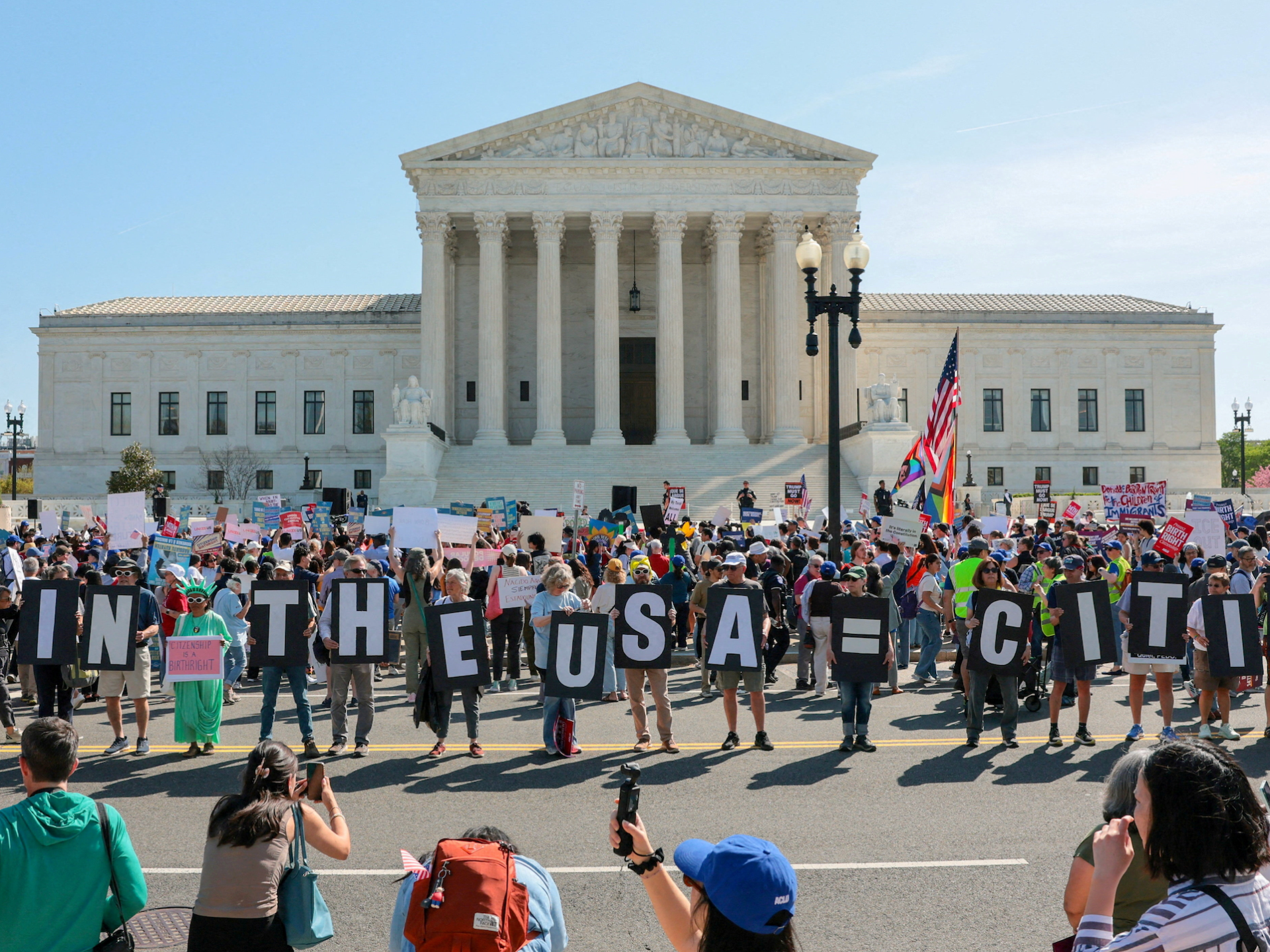
The US Supreme Court has blocked President Donald Trump’s executive order to end birthright citizenship for all individuals born on US soil, ruling that children born in the country remain entitled to citizenship under the Constitution.
Travellers can save money on the popular onboard drink if they place their order at the right time
Passengers could save money by placing their order ahead of time (stock photo)(Image: Getty)
Jet2 says passengers can save money onboard of they order their drinks early. Customers often love to make the most of the onboard refreshments when they’re jetting off on holiday.
The airline enables passengers to pre-order their in-flight meals, which typically include a hot dish, snacks, and a drink (Costa Coffee, Yorkshire Tea, hot chocolate or water). For those who enjoy a celebratory tipple, Jet2 also serves a selection of alcoholic drinks. According to the website, customers who order ahead could save money on one of the most popular alcoholic drinks.
Jet2 said: “To make your holiday extra special, you can pre-order champagne to enjoy on board. Plus, when you pre-order, you’ll save £5 on the onboard price!” Many passengers bring their own food and drink on board to save money, packing snacks such as sandwiches, salads, wraps, and pasta dishes.
However, there are some restrictions that people should be aware of. For instance, customers can’t bring hot food or drink onto planes for safety reasons, and they cannot bring their own alcohol onboard to drink during the flight. This means passengers cannot drink any duty-free alcohol onboard their flight.
Jet2’s website explains: “No, you can’t bring your own alcohol onboard to drink while on the plane. Only alcoholic drinks bought onboard can be consumed during your flight. And we reserve the right to serve alcoholic drinks at our absolute discretion.”
The airline’s current menu includes spirits, cocktails, wines, and beers, including Grey Goose Vodka, Aperol Spritz, and Heineken. There’s also a range of soft drinks, including Harrogate Spring Water and Robinsons Fruit Shoot.
Remember to drink responsibly (18+) and be Drinkaware. For advice and support on alcohol, visit the Drinkaware website here. Drinkaware warns that the risk of developing a range of health problems, including cancers of the mouth, throat and breast, increases the more you drink regularly.
To keep health risks from alcohol low, you should drink no more than 14 units a week, ensure you have several drink-free days, and avoid binge drinking. The NHS website offers information about alcohol support.
Passengers should be aware that being drunk on a plane is a criminal offence.
Gov.uk explains: “It is an offence under the Air Navigation Order to be drunk on an aircraft and airlines have the authority to prevent passengers they believe are intoxicated from boarding aircraft.”
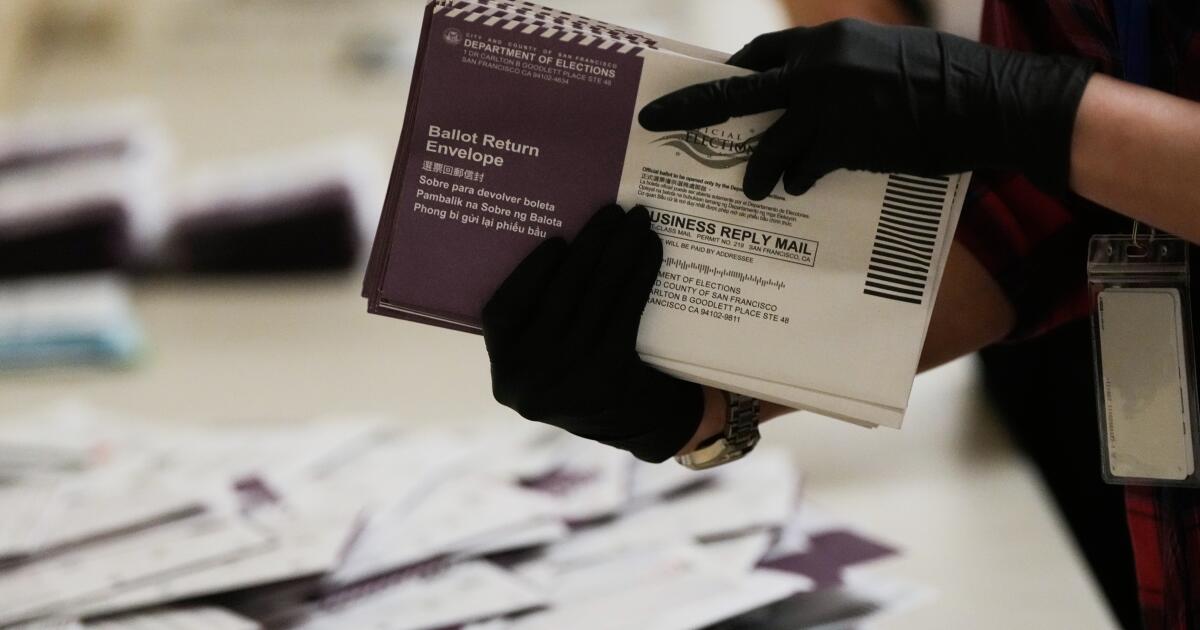
California officials cheered a U.S. Supreme Court ruling Monday that allows states to continue counting mail ballots postmarked by election day but received in the days after — calling it a win for voter participation and access, including in the upcoming November midterm.
They also acknowledged delays in recent vote counting have spurred frustration, and promised to speed the process through other solutions — including by investing millions into new election infrastructure and vote processing capabilities.
Gov. Gavin Newsom — who called the court ruling a “win for voters, plain and simple” — has previously said the state should be able to count ballots faster, and his latest budget includes $29 million for “increased staffing, technology and equipment upgrades and purchases for counties,” $10 million for voter education and outreach at the state and county levels and $750,000 for combating election misinformation.
The court decision, a loss for President Trump and other critics who contend such policies contribute to unacceptable delays in vote counting, specifically upheld a Mississippi policy to accept mail ballots received within five business days of an election.
But it also lets stand similar policies in other states — including California, which counts ballots postmarked by and received within seven days of an election.
California Secretary of State Shirley Weber, who has long prioritized voter participation over a speedy count, called the high court’s ruling a “win for voters, for the rule of law, and for the future of our democracy.”
She said that she will “keep working to ensure every eligible Californian has the opportunity to be heard, because our democracy is strongest when every voice and vote count.”
Dean Logan, head of the Los Angeles County registrar-recorder/county clerk’s office, said in a statement to The Times that the ruling “affirms what Los Angeles County voters deserve: the assurance that a ballot cast by Election Day will be counted if received within the legal timeframe established in State Law.”
“Our office will continue to provide voter education, multilingual outreach, and leverage available resources to ensure voting access for our 5.8 million registered voters,” Logan said.
Many voting rights experts agree California’s vote counting should and could be faster, but disagree with the Trump administration’s efforts to step in with policies such as election day deadlines.
In 2024, California counted more than 406,000 late-arriving mail ballots, but they represented only about 2.5% of the statewide total. Experts say California’s delayed results have far more to do with the massive influx of mail ballots that are placed in ballot drop boxes or arrive at processing facilities on or just before election day.
Rick Hasen, an election law expert and director of the Safeguarding Democracy Project at UCLA Law, said the court’s decision was a “symbolic loss” for Trump, in that the court rejected his preferred policy on mail ballots, but “doesn’t appreciably change how long it takes to count ballots” because late-arriving ballots were never the problem.
In a report published Thursday, the California Voter Foundation recommended statewide adoption of “sign, scan, and go” programs that allow elections officials to immediately process mail ballots that voters submit in person at polling centers or drop boxes.
The foundation recommended ballot curing programs that speed up the process by utilizing a secure text platform when double checking whether a ballot is legitimate when a voter’s signature doesn’t match state records.
It also urged the state to invest $35 million in a voter education campaign to encourage early ballot returns, and more than $55 million in improving counting capacity and efficiency in county elections facilities.
Trump and other conservatives had called for an end to state policies allowing late-arriving mail ballots to be counted as an overdue fix to a voting system that often can’t produce election results in close races for days after polls close, as was the case in California’s recent primary races for governor and L.A. mayor.
Trump has pointed to California’s time-consuming count as proof of widespread fraud to undermine Republican candidates, though he has never produced evidence to support that claim and Democrats have fiercely denied it.
On Monday, Trump called the high court’s decision to uphold such state policies a “tremendous loss,” and more reason to pass the Save America Act — a bill he has backed that would enforce new voter ID and proof of citizenship requirements and ban mail ballots except for military personnel, individuals suffering from illness, disability, and in other rare circumstances.
He said politicians have “no excuse” other than “CHEATING!” to oppose such measures, especially at “a time when there is a powerful Communist Movement taking place in our Country, one more dangerous than World War I, World War II, Pearl Harbor, or September 11th.”
But California leaders rejected that — saying the criticisms of mail ballots are baseless and an attempt by Trump and his allies to undermine elections in which they are poised to lose, particularly in big blue states such as California, by attempting to wrest control over voting processes that have always been the purview of states, not the federal government.
California Atty. Gen. Rob Bonta said Monday that states have been “primarily responsible for regulating elections” since the nation’s founding, and his office was “pleased that the U.S. Supreme Court has respected that authority.”
“Today’s decision recognizes a basic reality: Mail delays happen. When people vote by election day, their ballots should not be discarded because of those delays,” he said.
Sen. Alex Padilla (D-Calif.), the ranking Democrat on the Senate Rules and Administration Committee, which has oversight over federal elections, praised the high court Monday for acknowledging that nothing in federal law precludes states from counting mail ballots in the days after an election.
“Today’s decision is a victory for voting rights and a rejection of Trump’s attacks on mail and absentee voters,” Padilla said.
Liberal groups and many voting rights experts also hailed the ruling as a win for voters.
Moving up deadlines for mail ballots is just one effort in a much broader political war over voting and the rules that govern it. The U.S. Constitution generally gives states the authority to run their own elections, but the Trump administration has been trying to assert greater federal control — especially around mail ballots.
Earlier this year, Trump signed an executive order directing the U.S. Postal Service to assert control over mail balloting by designing new envelopes with special bar codes that would allow the federal government to ensure ballots only go to and get returned by eligible voters. The order prompted the Postal Service to propose new rules requiring states to hand over their voter mailing lists so it could implement Trump’s directive.
In a letter to U.S. Postmaster General David Steiner on Wednesday, Democratic senators denounced the proposed rule as an “unconstitutional and illegal attempt to transform [USPS] into an election administration agency controlled by the White House and President Trump.”
In a Senate hearing the same day, Steiner said that under the new rule, the USPS would not mail the ballots of a state that refused to turn over its voter lists, but also that his agency would adhere to any court orders curtailing its implementation.
On Thursday, just such an order came down in a federal case in which California and other Democrat-led states challenged Trump’s executive order. U.S. District Judge Indira Talwani ruled that the Constitution does not grant the president “any specific powers over elections,” and blocked his order as unlawful.
Nevada Secretary of State Cisco Aguilar, who is chair of the Democratic Assn. of Secretaries of State, said states such as California were right to focus on increasing investment in their own election infrastructure rather than accepting the Trump administration’s “bad policy ideas” for speeding things up.
Newsom’s office on Monday said that is exactly what California has been doing. It pointed to laws passed by the state Legislature last year that allow election officials to begin processing mail ballots earlier and require them to finish counting ballots sooner.
WITH its pretty timber-framed walls and stained-glass windows, even from the outside you can instantly tell The Old Inn is something special.
It’s been welcoming guests since 1614, but that doesn’t mean the hotel in the village of Crawfords-burn, Co Down, is stuck in a time warp.
Sign up for the Travel newsletter
Thank you!
The Old Inn was a pick of Narnia author CS LewisCredit: UnknownThe rooms are as comfy as the pub is historicCredit: Unknown
Inside, it has been transformed into an oasis of modern luxury, and it has proved such a hit since it was bought by the Galgorm hotel group in 2021 that it was recently crowned the AA’s Hotel of the Year for Northern Ireland.
Now, with its stunning Treetop spa, it promises the ultimate romantic retreat – apt, because Narnia author CS Lewis chose it for his honeymoon in July 1958.
We stayed in one of the spacious junior suites, with a super-king bed and a stand-alone copper bath by the ornate bay window.
Antique furnishings maintain the 17th-century character, while the bathrooms are new and luxurious, with a marble sink and a vast rainfall shower.
The attention to detail really makes it stand out from other 4* hotels, with lavish toiletries, fluffy robes and slippers, a GHD hairdryer, and free soft drinks in the fridge as well as a Nespresso coffee machine and minibar.
We spent most of our stay unwinding in the Treetop spa, which is without doubt the star of the show.
Hotel guests get access from noon on the day of check-in until check-out.
Overlooking the Crawfordsburn Country Park and surrounded by greenery, this outdoor haven features a heated hydrotherapy pool, Jacuzzi, sauna and steam room.
Or you can also relax by a wood-fire stove in the cosy conservatory, taking in the forest views below, or indulge in a treatment such as a facial or massage.
But the best part is that you can order cocktails straight to the pool or your lounger.
On a Sunday morning, I was able to sweat out my multiple cocktails in the hotel’s new gym, which also offers various classes, including yoga.
As for food, the hotel’s charming 1614 Bar offers pub grub such as fish and chips and burgers.
For dinner, we headed into The Restaurant to try the a-la-carte menu.
It’s not cheap, but is excellent if you fancy splashing out.
To start, I had the white asparagus with shaved mushrooms, Irish coppa and truffled honey (£15), and for my main I had the monkfish with spring brassicas, mussels and buttermilk (£33) with a great bottle of white wine.
After dinner, we returned to the 1614 Bar for a nightcap or two with live music.
Breakfast is a continental buffet spread and guests can also order a la carte.
The hotel prides itself on its fresh food, so everything from fish to yoghurt at breakfast was local.
We then strolled through the park to Crawfordsburn beach.
A winding path takes you through woods, then the trees clear and you are on to the sweeping, sandy beach looking out over Belfast Lough.
You can see why CS Lewis chose this spot for his honeymoon – with stunning scenery on your doorstep and a warm welcome, it’s couples heaven.
GO: NORTHERN IRELAND
STAYING THERE: Rooms at The Old Inn start from £175 per night.
BOSTON — A federal judge on Thursday halted President Trump’s executive order that sought to create a federal voter list and limit who can receive a mail ballot.
U.S. District Court Judge Indira Talwani, who was nominated by Democratic President Obama, sided with a coalition of nearly two dozen states that challenged the Republican president’s order in granting a summary judgment. Her ruling applies to this year’s midterm election cycle.
Plaintiffs argued in two lawsuits, both filed in federal court in Boston, that Trump’s order should be found unconstitutional because the states and Congress, not the president, have the power to set election rules. The judge agreed, noting in her ruling that the provisions of Trump’s order “unconstitutionally violate the separation of powers.”
It was the second ruling in as many days against executive orders Trump has signed seeking oversight of the nation’s elections. A separate ruling Wednesday prohibited an executive order he had signed last year that would have required people to show documents proving their citizenship when registering to vote.
The administration, in its motions to dismiss the lawsuits challenging the order seeking to establish a federal voter list, argued that the motions are premature and that plaintiffs lacked the legal basis to bring their claim based on the Administrative Procedure Act, which governs how federal agencies develop and issue regulations.
But in an interim order before Thursday’s ruling, Talwani said the motions pertaining to this year’s election cycle were relevant: “In light of the EO’s specific deadlines over the next three months, and the reality that elections will be occurring throughout this period with the November 3, 2026 midterm occurring in just five months, postponing judicial review is impracticable and may inflict significant hardship on Plaintiffs,” she wrote. That order denied the Trump administration’s motion to dismiss the challenges.
Trump’s executive order, the second one aimed at elections during his second term, comes as he continues to raise the specter of widespread voting by noncitizens as a reason to change election rules. But states already have detailed processes aimed at keeping their voter rolls accurate, and voting by noncitizens has been shown to be rare. It also is a felony that can be punishable by deportation.
Trump issued his second order in March after a bill he supported to overhaul voting stalled in Congress. The order would have had the federal government create a list of eligible voters and then directed the U.S. Postal Service to deliver mail ballots only to those on the list. Election officials argued that it was ripe for abuse and could cause chaos, and the postal union has objected to the idea of mail carriers policing ballots.
The Postal Service has published a proposed rule required by Trump’s executive order in the Federal Register. Among other things, the rule would not apply to primary elections or overseas ballots.
The lawsuit seeking summary judgment was filed by Democratic attorneys general representing 22 states and the District of Columbia. Also signing on were attorneys representing Democratic Gov. Josh Shapiro of Pennsylvania, which has a Republican attorney general.
The states also told the court that the move imposes a costly burden on election officials to comply and would spread fear about the possibility of prosecution. Stephen Pezzi, a lawyer for the Trump administration, had argued that no one would be prosecuted for violating the order.
In a separate lawsuit filed against the executive order, a federal judge in Washington, D.C., in May agreed with the Trump administration that it was too early to block the order because it had yet to be implemented. That lawsuit was brought by Democratic and civil rights groups, who have appealed.
Since his 2020 presidential election loss to Democrat Joe Biden, Trump has groundlessly claimed mail voting is rife with fraud and has launched a federal investigation into that year’s vote, even though repeated audits and investigations, including ones run by Republicans, found it was free of widespread fraud. Trump also has said he wants to “take over” election administration in Democratic areas.
Kenya stops constructing US-run Ebola site amid public outcry; $13.5m US funding is criticised as masking health risks.
Published On 23 Jun 202623 Jun 2026
Kenya has ordered a halt to preparations for a United States-run Ebola quarantine facility, the health minister has told a court after being held in contempt for ignoring a previous stop-work order.
The announcement on Tuesday comes amid strong opposition to the plan in Kenya. Deadly protests have taken place since the government confirmed plans to build the facility for potential US citizens evacuated from the Democratic Republic of the Congo (DR Congo), which is grappling with a major Ebola outbreak.
Recommended Stories
list of 3 itemsend of list
The quarantine facility was being constructed at Laikipia airbase, about 200 kilometres (124 miles) from the capital, Nairobi, with some 50 isolation beds. It was expected to be managed by US medical staff.
“I have directed the immediate and complete cessation of any intended construction, site preparation, or related activities concerning the Laikipia airbase facility pending the hearing and determination of the substantive petition or until further orders of this court,” Health Minister Aden Duale said.
The minister spoke in court a day after he was held in contempt for failing to respond to multiple orders in late May and early June to halt activities.
Rights groups had petitioned the court, saying the facility was being developed secretly and without consultation. Kenyan doctors and medical professionals have been especially outspoken about the proposed Nanyuki site, arguing it would threaten the country’s already fragile health system.
Three people have been killed in unrest near the facility in Laikipia.
Civilians and healthcare workers have expressed anger over the prospect of importing the virus and criticised the Kenyan government’s acceptance of a $13.5m Ebola preparedness contribution from the US as whitewashing the deal. So far, the country has not recorded a case of Ebola.
The Ebola outbreak was confirmed in DR Congo in May. It has led to 1,048 confirmed cases and at least 267 deaths as of June 22, according to the Health Ministry. At least 75 healthcare workers in DRC have contracted the virus, with 17 deaths recorded.
Uganda – which neighbours Kenya – has reported 20 confirmed cases, including two deaths.
It was Andy Pages’ wife, Alondra, who told the Dodgers’ center fielder on June 3 that MLB All-Star voting had opened.
“I simply just told her, [the ballots] don’t really matter to me,” Pages said through interpreter Juan Dorado, in a conversation with The Times earlier this month. “I’m just going to keep doing what I’m doing.”
Doing just that has worked out well for Pages. When MLB released the first All-Star balloting update Monday, Pages led all National League outfielders with 800,496 fan votes, putting him in prime position to claim a starter’s spot.
He has added to his All-Star case against the Baltimore Orioles this weekend, largely with his defense. In the Dodgers’ 3-2 loss Saturday, he authored his third highlight-worthy play of the series. Ranging into right field, Pages tracked down a line drive off Tyler Ward’s bat and made a sliding catch for the first out of the third inning.
The day before, on the first play of the game, Pages cut off Ward’s hit to the right-field gap before it could reach the warning track, spun, and threw a dart to second base to nab him trying to stretch a single into a double.
Dodgers fans chanted Pages’ name in the sixth inning Friday, after he robbed Jeremiah Jackson of a hit with another sliding grab in shallow left-center field.
“He’s going to be in that Gold Glove conversation,” manager Dave Roberts said Saturday. “He’s engaged every pitch. It’s just fun to see a young player value the defense, all the while taking care of business in the batters’ box. He’s a complete player, he really is.”
Phase 1 of All-Star fan voting, which lasts until June 25, determines the starter finalists — two at each position (six outfielders) in each league. Pitchers and reserves are chosen through the player ballot (which includes votes from players, coaches and managers) and commissioner’s office selections.
Pages was one of four Dodgers leading their respective position groups, joined by first baseman Freddie Freeman, third baseman Max Muncy and designated hitter Shohei Ohtani, who led all players with 1,165,133 votes. Catcher Will Smith and shortstop Mookie Betts were sitting in second place, and Teoscar Hernández was No. 5 among NL outfielders.
The others have all won multiple All-Star nods. This would be Pages’ first.
He entered Saturday with top-five defensive fWAR (4.9) among NL outfielders and a top-nine slugging percentage (.490). He carried the Dodgers’ offense early in the year, while the team’s established stars got off to a slow offensive start.
Dodgers center fielder Andy Pages celebrates in the dugout with Miguel Rojas after hitting a solo home run against the Colorado Rockies on May 27.
(Gina Ferazzi / Los Angeles Times)
“It would mean a lot to me for all the work, and all the things that I do to get ready for the game and to prepare,” Pages said. “It would mean a lot in that sense. But I also know it’s completely out of my control, especially having gone through it last year, where I didn’t really have any chance to dictate whether I was going to make it or if I didn’t make it.”
Going into the All-Star break last year, Pages was on the cusp. Because the outfield pool doesn’t take specific positions into account, it didn’t matter that among qualified National League center fielders he had the second-highest fWAR (2.8) and OPS (.804), behind the Cubs’ Pete Crow-Armstrong — while leading that group in batting average (.285).
Pages was instead competing with all NL outfielders. In those same categories he still ranked an impressive eighth and 10th (among qualified hitters).
Fans voted in Crow-Armstrong, the Cubs’ Kyle Tucker and the Braves’ Ronald Acuña Jr. as All-Star starters. So, Pages’ All-Star fate was in the hands of the player ballot (which includes votes from players, managers and coaches) and the commissioner’s office selection process.
Pages didn’t quite make the cut, with the Diamondbacks’ Corbin Carroll, the Marlins’ Kyle Stowers, the Padres’ Fernando Tatís Jr. and the Nationals’ James Wood claiming the reserve spots.
This year is already playing out differently.
“He’s been just up the top of the leaderboards, one of our better hitters the whole season,” hitting coach Aaron Bates said earlier this month. “It’s not just a good two or three weeks. So I definitely feel like he’s an All-Star.”
Still, when the ballots first came out, Pages knew better than to make any assumptions. That same focus on controllables, turning the page on from failure, has helped spur Pages’ consistency.
“The work ethic, obviously, those changes, and how I prepare for the games has changed a lot,” Pages said. “But also, I just don’t really focus on anything like I used to. I just focus on getting ready and prepared and do the best I can that day.”
Roberts had seen that shift. He noticed all the work Pages put in over the offseason and through the spring, drilling down on his plate discipline, a soft spot in his game. And Roberts named Pages his pick to click at the end of camp, saying he wouldn’t be surprised if Pages made the All-Star team.
Since then, Roberts, who will also manage the NL All-Star team, has appreciated how diligent Pages has remained in his routine.
“As we all know, he’s not a self-promoter at all,” Roberts said. “He just wants to play baseball, and so for the fans to recognize that, they’re getting it right, as far as the person, the talent, the performance. And so that’s really good to see. So hopefully he can keep playing well, and then solidify that No. 1 spot. That’d be fun. That’ll be fun to have him in Philly with me.”
Dodgers fall to Orioles
Dodgers pitcher Yoshinobu Yamamoto delivers against the Orioles in the fourth inning Saturday.
(Gina Ferazzi / Los Angeles Times)
Ohtani hit a solo home run in the ninth inning in his first game back after missing Friday’s walk-off win for the birth of his second child, but it wasn’t enough to ignite a ninth-inning comeback in a 3-2 loss to the Orioles.
Dodgers starting pitcher Yoshinobu Yamamoto didn’t put together as dominant of a performance as he did a week ago against the White Sox, when he took a no-hit bid into the ninth inning.
He gave up six hits and issued two walks in six innings. But he managed to hold the Orioles (36-42) to three runs, getting out of jams in the second and fourth innings.
“It took me a little time to get the feel for the splitter,” said Yamamoto through interpreter Yoshihiro Sonoda. “And then in the meantime I was trying to grind it out with different options, with other pitches.”
Shohei Ohtani hits a solo home run in the ninth inning Saturday against the Baltimore Orioles.
(Gina Ferazzi / Los Angeles Times)
The Dodgers (49-28) wasted the quality start with a four-hit offensive night, which included two from Tommy Edman and one from Betts.
The Dodgers finally recorded their only hit against Orioles starter Trevor Rogers in the fifth inning, when Edman reached on a weak pop fly to center field. Rogers turned the game over to the Orioles’ bullpen after the seventh, and it did enough to maintain the lead, despite shaky defense in the ninth.
“It wasn’t our night,” said Miguel Rojas, whose deep fly out in the seventh inning fell just shy of a two-run homer. “We’ve got to bounce back and come back tomorrow and get the series.”
Blake Treinen placed on injured list
The Dodgers put right-handed reliever Blake Treinen on the 15-day injured list with right elbow inflammation.
Treinen was the winning pitcher in the Dodgers’ 6-5 victory Friday, after retiring the side in order in the top of the ninth.
According to Roberts, Treinen felt normal after the game. But when he woke up Saturday morning, he had trouble fully extending his right arm. When he went in for treatment, it became clear the Dodgers would have to put him on the IL.
Dodgers relief pitcher Blake Treinen delivers against the San Francisco Giants on May 11.
(Ronaldo Bolanos / Los Angeles Times)
Treinen underwent imaging, but Roberts did not have his exact diagnosis.
“He’ll be down for a minute,” Roberts said. “I think it was more of just staying away, getting rest, versus anything more aggressive right now.”
Treinen has a 3.52 ERA after bouncing back from a rocky 2025.
In a corresponding move, the Dodgers recalled right-hander Chayce McDermott. The 27-year-old has only thrown one major-league inning this season, when he limited the Angels to one hit in a scoreless inning.
The Dodgers acquired McDermott from the Orioles in mid-April, after Baltimore designated him for assignment. He’s been a frequent short-term call-up and taxi squad member since.
The Dodgers have more bullpen help coming. They hope to reinstate right-hander Brock Stewart (left foot bone spur) from the injured list Monday, Roberts said. And right-hander Evan Phillips (Tommy John surgery) is expected to return in early July.
WASHINGTON — The curtain started to come down for President Trump at the Kennedy Center on Saturday.
After a day of legal maneuvers and thunderstorms, workers began the process in the early morning hours of removing the letters spelling out Trump’s name from the facade of the performing arts venue. They were a few hours past a court-ordered deadline and did their work shrouded by a tarp, much to the frustration of onlookers who had gathered for hours hoping to witness a dramatic moment symbolizing the limits of Trump’s power.
As the sun rose over Washington, the tarp remained in place, leaving it impossible to determine whether all the letters had been removed. Shortly after midnight, the Kennedy Center asked a judge to extend the deadline until noon Eastern time, citing the storms for delaying the work. The court agreed to that request Saturday morning.
The removal of Trump’s name closes one of the more unusual chapters in the history of the Kennedy Center, which began construction in 1964 and was dedicated to the memory of the slain president, John F. Kennedy. At what is typically one of the few relatively nonpartisan spaces in Washington, Trump has exerted unprecedented executive influence over the congressionally created venue during his second term.
Though he rarely discussed the Kennedy Center during his 2024 campaign, Trump moved quickly to oust the institution’s leadership when he returned to office in January 2025 and replaced it with a board of trustees that named him chairman. It rebranded the venue the “Donald J. Trump and John F. Kennedy Center for the Performing Arts” and his name was quickly added to the building’s exterior, though an official name change would require an act of Congress.
While the removal of his name marks a setback for Trump, he is moving forward with other plans to reshape the physical landscape of the nation’s capital in ways that have few modern parallels.
He demolished the East Wing of the White House and is building a controversial ballroom in its place. He remodeled the Lincoln Memorial Reflecting Pool and plans extensive renovations of a golf course in East Potomac Park, moves that could significantly reduce the public’s access to running and biking paths. He is also moving forward with a triumphal arch that would sit near Arlington National Cemetery across the Potomac River in Virginia.
Indeed, as Trump’s name is being removed from the Kennedy Center, the South Lawn of the White House has been transformed into a venue for a UFC match intended to celebrate the 250th anniversary of American independence but also coinciding with Trump’s birthday on Sunday.
Back at the Kennedy Center, there are many questions about the institution’s future. The same May court decision that ordered Trump’s name to be removed from the building also blocked a planned two-year closure for renovations that was set to begin next month.
The Kennedy Center’s calendar for the weeks ahead include performances of “Moulin Rouge! The Musical” and “Bluey’s Big Play.” Comedian Bill Maher is to be awarded the Mark Twain Award for American Humor during a ceremony on June 28.
But little is scheduled for the stages beyond that and, after the Kennedy Center substantially reduced staff, it is unclear how quickly it could build out a robust performance list. Trump, angered by the court’s order to remove his name, has said he would turn the Kennedy Center over to Congress and has suggested it might simply shutter because of public safety concerns.
In its unsuccessful appeal Friday seeking a pause on the order removing Trump’s name, the Kennedy Center’s leadership argued, in terms similar to the president’s use of language and framing of the argument, that the lower court was interfering with needed renovations.
“The District Court is not allowing us to close in order to properly fix up and repair the Building, including potentially life threatening structural damage like beams and parking garage ceilings that are rusted, and in serious danger of falling onto people below,” according to the appeal. “Indeed, total collapse!”
The institution also suggested that the president’s name could return to the building if the Kennedy Center later wins its appeal.
If the court denied the venue’s request for a pause, the Kennedy Center argued that it would “be forced to squander time and money — by both removing the signage and then potentially returning it after appeal.”
The US president has sought to reshape the capital city’s image and institutions through series of plans and projects.
Published On 12 Jun 202612 Jun 2026
President Donald Trump’s name is set to be removed from the facade of the Kennedy Center, an entertainment and cultural institution in Washington, DC, after a judge rejected a last-minute request to keep it in place.
US District Judge Christopher Cooper dismissed an effort by the centre’s board, whose members were handpicked by Trump, to reverse a previous order taking his name off the building by Friday.
Recommended Stories
list of 3 itemsend of list
The saga is yet another example of Trump’s effort to make changes to major sites and institutions across the nation’s capital, on which he has sought to impose himself through a series of planned projects that include an enormous triumphal arch and a White House ballroom.
Many of those efforts have faced legal challenges.
Trump dismissed the centre’s previous leadership and appointed a board that named him chairman.
Cooper had ruled last month that the addition of Trump’s name to the exterior of the John F Kennedy Center for the Performing Arts was illegal and ordered its removal.
“Unfortunately, Judge Cooper and the Radical Left would rather see it DIE than have President Trump transform it into something that everyone could be proud of,” Trump wrote in a 580-word social media post at the time, slamming the decision, referring to himself in third-person.
A June 4 memo from the centre’s Office of General Counsel had instructed staff to use the name “The John F Kennedy Center for the Performing Arts” or “Kennedy Center” in email signatures, letterhead and other documents. The centre’s website also dropped Trump’s name.
But the board attempted to salvage the change in an appeal on Thursday, appealing a previous ruling that denied their request for a stay. Cooper rejected that request on Friday.
ALEXANDRIA, Va. — A federal judge agreed on Friday to extend a court-ordered block on the Trump administration’s creation and operation of a $1.8 billion settlement fund for compensating people who claim to be victims of a weaponized government.
Earlier this month, acting Atty. Gen. Todd Blanche told Congress that the government is scrapping its plans for the fund in the face of a fierce bipartisan backlash. Government attorneys have argued that lawsuits challenging the fund are now moot, but plaintiffs’ attorneys aren’t satisfied by Blanche’s assurances that the fund won’t move forward.
Neither was U.S. District Judge Leonie Brinkema, who ruled that the “Anti-Weaponization Fund” will remain blocked until further notice from the court.
“The (government’s) mootness argument, in my view, doesn’t go anywhere,” the judge said.
President Trump, meanwhile, has not publicly and unequivocally endorsed its cancellation. He has continued to express support for the fund in remarks to reporters.
Brinkema gave the parties a week to negotiate an agreement for Blanche to submit a sworn declaration that the administration won’t revive the fund.
Brinkema previously agreed to temporarily block the administration from proceeding with the fund for at least two weeks. Her May 29 order was due to expire on Friday.
Trump’s Republican administration created the fund to resolve his lawsuit against the Internal Revenue Service over the leak of his tax returns.
Plaintiffs who sued to block fund payouts argue that the government can’t legally divert taxpayer money into what they argue is a slush fund for compensating Trump’s allies.
In a separate case on Wednesday, a different judge in Washington, D.C., rejected a government watchdog’s parallel request for a court order temporarily blocking the Trump administration from forging ahead with the fund. U.S. District Judge Richard Leon said he accepts Blanche’s representation that the fund is now moot.
Leon had asked Justice Department attorney Andrew Block why Blanche doesn’t formally rescind his May 18 order establishing the fund. Block said he didn’t know. He still didn’t have an answer to that question when Brinkema posed it two days later.
“It’s a huge gap in the record that we don’t have an answer to that question,” the judge said.
In the Virginia case, attorneys from the legal advocacy group Democracy Forward asked for an order to temporarily suspend the fund’s implementation and stop the Trump administration from disbursing any payouts from it.
The plaintiffs include a fired prosecutor and a college professor acquitted of assaulting federal agents at a protest.
Even before the administration said it was dropping the fund, the Justice Department did not form the five-member commission that would decide on payout criteria, so no money was paid out nor claims accepted.
Many of the Republican president’s allies are opposed to compensating rioters who stormed the U.S. Capitol on Jan. 6, 2021. In May, however, Blanche wouldn’t rule out the possibility that Capitol rioters who engaged could be eligible to apply for payments from the fund.
Trump issued mass pardons to Capitol rioters on his first day back in the White House last year. More than 1,500 people were charged in the Jan. 6 attack before Trump erased every case with his sweeping act of clemency.
Brinkema was nominated to the bench by President Clinton, a Democrat.
WASHINGTON — After Defense Secretary Pete Hegseth cut nine Navy officers, including all the women, from a promotion list, several female officers say they see the unusual intervention as a sign that their careers now have a ceiling and worry for the future generation of female military leaders.
The Navy had selected 31 sailors to promote from the rank of captain to one-star admiral, but Hegseth recently intervened to strike nine people from the list, including three women and two Black men, according to a Defense official who spoke on condition of anonymity to discuss information not permitted to be released publicly.
As a result, the Navy is not promoting a single woman to the one-star admiral rank this year even though women make up about one-quarter of all Navy officers and nearly one-third of the sea service’s midgrade ranks, according to military data from 2024.
The Associated Press spoke with eight female Navy officers of varying ranks and time in service after Hegseth’s cuts, which were reported earlier by the New York Times, became public. They spoke on condition of anonymity out of fear of retribution from their superiors.
The more junior officers said they saw the development as a sign that their careers would become politicized if they rose too far in the ranks, and some said they felt they now had a limit on how far they could be promoted. Some said it made them feel less valued within the military and wondered whether that wasn’t part of the intent.
The Pentagon has not offered any rationale on why the women, or any of the other six people, were removed from the promotion list.
Sean Parnell, the Pentagon’s top spokesman, said on social media last week that “military promotions are given to those who have earned them” and that the Pentagon “will never consider the color of a service member’s skin or their gender as a factor in promotions.” The Pentagon did not immediately respond to a request seeking further comment.
The Navy’s process for choosing which officers to promote to the one-star rank has been relatively constant and transparent over the years. The service convenes a group of officers, called a promotion board, that examines the records of eligible officers and chooses those deemed to be the most qualified.
The board that selected the initial slate of 31 officers for promotion was directed by then-Navy Secretary John Phelan, an appointee of President Trump, to “recommend for promotion the best qualified officers within their respective competitive category.”
The order from Phelan, who abruptly departed his post in April, said the board should consider an officer’s performance, competence and character, among other traits, as part of those qualifications.
It also said that given China’s prominence in the Trump administration’s National Defense Strategy, “special consideration shall be given to officers who have excelled in their knowledge of the political military affairs and U.S. strategic interests in the Indo-Pacific region, and operational contingency planning for Indo-Pacific war plans.”
Hegseth has long argued, without offering evidence, that women in the military benefit from preferential treatment and are not suited for combat roles.
“For too long, we’ve promoted too many uniformed leaders for the wrong reasons based on their race, based on gender quotas, based on historic so-called firsts,” Hegseth told hundreds of military leaders in September.
The approach, he asserted, made the Pentagon “less capable and less lethal.”
‘A break from tradition’
Phelan’s order said the Navy cannot discriminate based on criteria such as race and sex, and it specifically noted that “this guidance shall not be interpreted as requiring or permitting preferential treatment of any officer or group of officers on the grounds of race, religion, color, sex.”
The full list of 31 people to be promoted was approved by Phelan, other Navy leaders and the chairman of the Joint Chiefs of Staff, Gen. Dan Caine, before it reached Hegseth, who chose to make the changes, the Defense official said.
While Hegseth is within his rights to intervene in the list, “it’s just not the norm” and is “a break from tradition,” said Katherine Kuzminski, a researcher specializing in military recruiting and retention at the Center for New American Security think tank. She said that promotions historically have been seen as “the services’ business.”
Kuzminski noted that “this is a decision that’s not being made by the Navy — it’s being made by the secretary of Defense,” and she said Hegseth’s growing interference in operational aspects of the military services such as promotions is creating “tension” about what “normal” will look like going forward.
Some of the more senior Navy officers who spoke with the AP expressed concerns about the message it sends to the next generation of young sailors.
In addition to pulling the recent promotions of three women to admiral, Hegseth shortly after he took office fired Adm. Lisa Franchetti, the service’s top officer and the first woman to hold the job. He never explained his rationale.
Since then, he also has fired two other female three-star admirals without explanation.
Some of the officers who spoke to the AP said that while they were encouraging female sailors to stick with the Navy, they acknowledged that message is coming at a difficult time.
Kuzminski said the rhetoric and actions surrounding women in the military “affects individual service member decision-making and it also affects family unit decision-making,” including whether people make a career of the military.
Kuzminski said that following the months-long hold on military promotions by Sen. Tommy Tuberville (R-Ala.) during the Biden administration, surveys showed that partisan politics spilling into the day-to-day lives of troops affected their decision-making.
One officer said this impact was not confined to women.
In conversations with other sailors in her unit, she said that male sailors were hesitant to deal with what appears to be a growing politicization of simply following the orders of previous administrations.
He-Man has made his way back to the big screen thanks to the power of Grayskull — and Hollywood’s love of nostalgia.
Now in theaters, “Masters of the Universe” stars Nicholas Galitzine as Eternia’s long-lost Prince Adam. Working a menial HR job after getting stranded on Earth as a child, Adam “(he/him)” dreams of reuniting with his Sword of Power in order to make his way back home.
Spoiler: He does (with a little help from his friends).
Helmed by “Bumblebee” and “Kubo and the Two Strings” director Travis Knight, the movie is “a dopey, friendly comedy about modern masculinity in crisis with a He-Man who openly wonders what kind of a man to be,” according to a review by Times film critic Amy Nicholson.
Much like the first live-action film around the popular 1980s toyline, the new “Masters of the Universe” features a couple of post-credits scenes that tease what could come in the franchise’s future. But for now, fans will have to wait to learn whether a sequel is forthcoming.
Yes, Orko is in the He-Man movie
Fans of the He-Man franchise can rejoice because everyone’s favorite floating wizard (and court jester) does make an appearance after the main “Masters of the Universe” story ends. In a nod to the animated Filmation series in which the character originated, Orko appears in a brief stinger after the conclusion of the film in order to share what lessons audiences could learn from the story they just watched.
Has He-Man seen the last of Skeletor (Jared Leto)?
(Amazon MGM Studios / Prime)
The mid-credits scene introduces a familiar hero
The most significant of the bonus scenes comes in the middle of the credits. The scene opens with Prince Adam’s mother, Queen Marlena (Charlotte Riley), sharing a moment with Duncan (Idris Elba).
After the queen mentions she had given up hope for reuniting with “both of them,” Man-At-Arms replies “perhaps one day she’ll come back to us too.”
The scene then cuts to the “she” in question, wearing a red cape and holding a familiar sword.
“Force Captain… Adora?” calls out a voice.
“No, not anymore,” she replies.
Those familiar with the lore of the “Masters of the Universe” franchise will recognize that the mysterious woman is Adam’s long-lost twin sister, Adora. The most common backstory is that Adora was kidnapped by Hordak as an infant and raised on the planet Etheria as a member of his Evil Horde. She eventually learns the truth about her heritage and defects to fight for good.
The Sword of Protection gives her the power to transform into the hero She-Ra.
Is that the last post-credits scene?
Nope. The final stinger shown after the credits are done rolling involves Evil-Lyn (Alison Brie) and Skeletor (Jared Leto). It appears He-Man has not seen the last of his nemesis — as long as a sequel is greenlit.
BOSTON — A federal judge on Tuesday heard from voting rights groups and a coalition of two dozen states that want the courts to halt President Trump’s executive order seeking to create a federal voter list and limit who can receive a mail ballot.
The plaintiffs argued in two lawsuits that Trump’s order should be found unconstitutional because the states and Congress, not the president, have the power to set election rules. They also told the court that the move imposes a costly burden on state election officials to comply and would spread fear about the possibility of prosecution.
“This is going to be a sea change in the way that some states administer their ballots,” said Michael Cohen, who was part of a team representing California, adding that “it will be difficult to overstate the disruption that this will cause.”
Trump’s executive order, the second one aimed at elections during his second term, comes as he continues to raise the specter of widespread voting by noncitizens as a reason to change election rules. But states already have detailed processes aimed at keeping their voter rolls accurate, and voting by noncitizens has been shown to be rare. It also is a felony that can be punishable by deportation.
His latest order is being challenged through multiple lawsuits, including two filed in U.S. District Court in Boston.
The American Civil Liberties Union, which represented the League of Women Voters in one of the two Boston cases, has called the order “a dangerous attempt to disenfranchise eligible voters nationwide.” The group said the order transforms “the U.S. Postal Service from a neutral mail carrier to an arbiter of who may cast a ballot by mail.”
“This case challenges an extraordinary and abusive assertion of executive power over the administration of federal elections,” the organization said in its complaint.
The hearing comes less than a week after another judge declined to halt the order. U.S. District Judge Carl Nichols, a Trump appointee in Washington, agreed with the Trump administration’s contention that it was too early to block the order because it has yet to be implemented.
The administration, in its motions to dismiss the lawsuits, argued that the plaintiffs lack standing to bring their claims. They also argued the motions are premature and that plaintiffs lack the legal basis to bring their Administrative Procedure Act claim, which governs how federal agencies develop and issue regulations.
Stephen Pezzi, a lawyer for the Trump administration, said the harms the plaintiffs referred to were subjective, since much can change with the voting list before it is finalized. He also said no one would be prosecuted for violating the executive order.
Missouri Solicitor Gen. Lou Capozzi, speaking for the states supporting the list, argued it was too early to say how his state might use the list, but that it was “unlikely” any voter would be removed this year from the voter rolls because of it.
“We are not exactly sure how we would use it,” Capozzi said, adding that “we don’t want this process to be strangled in the crib, so to speak.”
U.S. District Judge Indira Talwani took the requests for motions to halt the order, along with motions to dismiss the cases under advisement.
During oral arguments, Talwani expressed concerns about whether the federal system envisioned under the executive order could be ready for the upcoming midterm elections and about the risks posed to election workers who rely on a state list that differs from the federal one. She also raised doubts about the reliability of a federal list — noting, for example, women who changed their names after getting married or someone who has moved from state to state might be missed.
“Isn’t there a reasonable fear and concern on behalf of voters that they will be precluded?” Talwani asked.
Trump issued the order in March after a bill he supported to overhaul voting stalled in Congress. The order would have had the federal government create a list of eligible voters and then directed the postal service to deliver mail ballots only to those on the list. Election officials argued that it was ripe for abuse and could cause chaos, and the postal union has objected to the idea of mail carriers policing ballots.
The postal service has published a proposed rule required by Trump’s executive order in the Federal Register. Among other things, the rule would not apply to primary elections or overseas ballots.
Since his 2020 presidential election loss to Democrat Joe Biden, Trump has groundlessly claimed mail voting is rife with fraud and has launched a federal investigation into that year’s vote, even though repeated audits and investigations, including ones run by Republicans, found it was free of widespread fraud. Trump also has said he wants to “take over” election administration in Democratic areas.
President Trump signed an executive order on artificial intelligence Tuesday, less than two weeks after postponing a White House ceremony over his concerns that a similar policy could dull America’s edge on AI technology.
The order establishes a framework for the federal government to vet the national security risks of the most advanced AI systems for up to a month before their public release. The government will be able to work with trusted partners “that will have early access to covered frontier models to promote secure innovation and strengthen the cybersecurity of critical infrastructure,” the order says.
It was not immediately clear to what extent the order differed from the one he declined to sign on May 21.
Trump canceled an Oval Office event with tech industry executives last month because he did not like what he saw in the earlier version of the order’s text. “We’re leading China, we’re leading everybody, and I don’t want to do anything that’s going to get in the way of that lead,” Trump told reporters at the time.
That directive was characterized as a voluntary collaboration with participating U.S.-based tech companies, including Anthropic, OpenAI and Google.
Looking ahead to the second half of the year, corporate finance chiefs are hardwiring contingency into strategy.
Global corporate finance leaders are entering the second half of 2026 facing the most complex operating environment of the post-pandemic era, requiring them to balance cost discipline, technology investment, and capital deployment against a backdrop of geopolitical volatility and renewed energy uncertainty.
At the center of that uncertainty is the Strait of Hormuz. Normally a conduit for around 20% of global oil and liquified natural gas (LNG) exports, the strait has remained largely blocked since war broke out in the Middle East in late February.
The conflict has added a new shock layer to an environment that was already fragile as a result of tariff turbulence, weakening demand, and declining consumer confidence.
The consequences for corporate finance professionals are direct and serious, forcing teams into defensive mode: conserving cash, deferring capital investment, and stress-testing portfolios against prolonged geopolitical disruption.
Macro Shocks Add Strain
Cost pressures were already elevated before the war, and are continuing their upward trajectory. According to the ACCA and IMA Global Economic Conditions Survey (GECS), the further rise likely reflects some early impacts of the surge in energy and other commodity prices since the outbreak of hostilities in the Persian Gulf. Among the CFOs surveyed, the proportion reporting increased operating costs eased slightly in the first quarter of 2026, but remains high by historical standards.
Confidence across finance teams, meanwhile, fell sharply in the first quarter, taking sentiment to a low point previously seen only at the onset of the Covid-19 pandemic in 2020. Since the GECS survey was conducted in the first half of March, the outbreak of hostilities would have been a major factor weighing on sentiment, owing to the surge in geopolitical uncertainty and the price jump in energy and some other commodities.
Logistics and energy are the most immediate concerns, according to findings of the Allianz Trade survey of 6,000 companies across 13 major economies: 60% said they are worried about supply chain disruption and rising commodity prices, with concern running highest in Vietnam, Poland, the UK, and the U.S.
One consequence of the war-induced shocks is that businesses are holding more inventory, adding to liquidity demand at precisely the moment rates are falling more slowly than expected, if at all.
Beyond Hedging
When it comes to sustaining readiness in the months ahead, Naresh Aggarwal, associate director, Policy and Technical at the Association of Corporate Treasurers, says the framework is simple: “plan for the worst, hope for the best.” In practice, this means larger, more committed credit facilities, greater use of derivatives, and hedge duration adjusted to circumstances.
Alex Ashby, group treasurer, WPP
The effects of the war are extending far beyond the energy, shipping, and chemical manufacturing sectors. Alex Ashby, group treasurer at WPP, says the ongoing volatility has driven material change at the global media company.
“Geopolitical volatility has led us to materially step up our focus on foreign exchange risk management,” he notes. “We have invested heavily in training across the organization to raise capability and accountability and introduced new monitoring and reporting so that FX exposures and outcomes are reviewed regularly at executive and board level. Alongside more frequent liquidity stress-testing, this ensures risks are identified earlier, decisions are taken closer to the underlying exposure, and we remain agile as conditions evolve.”
The world remains deeply interconnected, says Raphael Savalle, CFO at Montblanc, and so shocks travel fast and wide. Businesses are no longer operating in a world where companies can remove volatility by hedging, but one where operating models must be built to absorb it.
“This isn’t going away; if anything, it’s increasing,” he says. “It’s the butterfly effect, times 10. The key is to maintain long-term strategic direction while also building agility into how you operate – what I call dynamic P&L management, or dynamic resource allocation – and still be on the lookout every day for risks that may not at first seem relevant but turn out to be, because of the way the world is connected.”
What impact will this level of uncertainty have on the day-to-day in the coming months? Beyond a structured routine of information exchange, it demands the confidence to be candid about these less-obvious risks.
Reassessing the Tech Arsenal
The challenges of the coming months are also prompting some companies to review their technology needs. ERP systems are still the backbone of corporate finance, but their rigidity is fueling demand for smarter, more flexible tools to augment them.
Enterprise Performance Management (EPM) platforms are emerging as a viable contender, says Armand Angeli, AI and automation specialist and vice president of the Digital Transformation and AI Group at DFCG, the French network of CFOs, broadening their scope beyond finance to cover sales, purchasing, and logistics.
Major ERP transformation projects are stalling as companies wrestle with legacy integration, Angeli says; bridging old and new without discarding existing investment remains the central challenge.
“We can’t just abandon ERP,” he says. “We have to create bridges or APIs between AI tools and all the ERPs. So the question becomes, How do you create these bridges? It’s not easy.” While ERPs can be inflexible, they are still valuable tools, “thought through by experts, for CFOs.”
While the major ERP providers are working to embed AI in their offerings, corporate users are taking different routes, depending on individual views and budgets. In practice, then, AI adoption by corporate finance teams is advancing with extreme caution.
“If the pace of change for these tools is 100, the pace of change among individuals is 10, and for companies, it’s 1,” Angeli observes.
Predictive AI, built on auditable algorithms, has earned trust as a tool for reconciliations, fraud detection, and cash posting, while generative AI remains a source of deep skepticism. Hallucinations, compliance failures, and the risk of over-reliance are tangible concerns.
“We now see more and more suspicious posting, more and more duplicate payments,” says Angeli.
Agentic AI is further still from meaningful deployment, he adds: “CFOs don’t trust agentic AI. And given that studies show that hallucinations account for between 30% and 70% of Gen AI output, we don’t trust Gen AI, either. Maybe 1% or 2% of companies can say they have agents working.”
Aggarwal concurs, observing that corporate finance teams remain in the exploratory phase when it comes to AI, but with purpose. Companies are mandating structured upskilling; One treasury team of his acquaintance dedicates half a day every other week to some form of AI-related upskilling or evaluating AI processes, he says.
Data Integrity
The priority for the second half of this year, however, will be data integrity and learning which insights are genuinely actionable, Aggarwal predicts; truly agentic AI is a story for 2027.
Raphael Savalle, CFO, Montblanc
“The word I hear a lot in these circles is trust: trusted data, trusted algorithms, trusted outputs, trusted use of the outputs,” he says. Going forward, the deeper cultural question of if and when to remove the human from the loop will become harder to avoid as, presumably, AI systems accumulate error-free track records.
Progress may be cautious for now, but Gartner estimates that CFOs who get AI deployment right could unlock 10 additional margin points by 2029. It won’t be isolated pilots that deliver returns, however; the gains will come from managing technology as a portfolio. Three quarters of CFOs are already raising technology budgets for 2026, the research firm finds, with nearly half boosting them by 10% or more.
Quantifying return on investment is difficult for the majority of AI-based projects, however, and will continue to be so through this year, Angeli predicts: “We know that we have to implement AI and hope for financial ROI in the future, but most companies are not seeing it yet.”
Another aspect of the technology challenge that is intrinsically linked to wider geopolitical developments, says Montblanc’s Savalle, is digital sovereignty, or a nation’s ability to control, secure, and regulate its entire infrastructure: in accordance with its laws, but also its strategic interests. Different approaches to the governance of these technologies and the accompanying data have deepened geopolitical competition between the U.S., China, and the EU, according to the World Economic Forum.
“Many governments are now insisting that data centers sit within their own borders,” Savalle warns, “and increasingly, they’re looking at software dependency more broadly: not just AI, but email systems, video conferencing tools, the whole stack. As a CFO, you have to consider what that means for your IT architecture.” Under these circumstances, will the old ambition of a single global ERP still be viable in five years’ time? He is not so sure.
Permanent Contingency Thinking
Whether physical war or digital friction, geopolitical risks are forcing the finance function into a state of permanent contingency thinking. The closing of the Strait of Hormuz is an extreme case, but it sits within a pattern that was already familiar to CFOs and treasurers. The post-Covid supply chain collapse, the Russia-Ukraine war’s impact on energy and commodities, the Red Sea disruptions of 2024–25 — each forced treasury teams to rethink counterparty risk, liquidity buffers, FX exposure, and supply chain financing.
What’s different this time is that finance leaders are no longer treating the shocks as exceptional.
Aggarwal sees the broader geopolitical realignment as structural rather than cyclical, and doubts even a change in US administration can reverse it: “The genie is out of the bottle around using trade as a way of imposing sovereignty.” Looking ahead, he foresees continued pressure on the finance function to operate against a challenging backdrop.
“What I understand from my CFO network is that there is no going back,” Savalle observes. “This is the new normal, and, if anything, it will continue and expand. So the question is about how you adapt your operating model. Make sure that you get that feedback loop and keep an open mind, because you are going into uncharted territory. Things used to work in a certain world order. This is changing.”
For corporate finance leaders, the priority is no longer waiting for stability to return, but operating effectively in its absence. While keeping to a long-term strategy is vital, so is reconsidering some of the operating model assumptions that a world divided into regional blocs is calling into question. That could include maintaining higher liquidity buffers, diversifying supply chains geographically, stress-testing cash flow forecasts against energy price scenarios, and investing in planning and forecasting tools that allow the organization to model disruption faster.
For the corporate finance function, these are no longer crisis measures, but the baseline.
This article appears in the June 2026 issue of Global Finance Magazine.
A Los Angeles County Superior Court judge has denied Bill Cosby’s request for a new trial after a civil jury recently found he was liable for $19 million in damages in a sexual assault case.
Judge Bradley S. Phillips ruled Friday that Cosby did not prove there was “any irregularity” in the court proceedings that would have prevented him from getting a fair trial and that the damages awarded to his accuser were not “excessive.”
“The Court finds that there was sufficient evidence … to support the jury’s finding that defendant’s conduct caused plaintiff’s damages,” Phillips wrote in Friday’s order.
In March, a jury awarded former waitress Donna Motsinger $19.25 million in damages after she sued Cosby in 2023, alleging that the disgraced comedian drugged and sexually assaulted her in 1972 after escorting her to one of his shows.
Motsinger, now 84, claimed Cosby picked her up at her home and gave her wine and a pill she thought was aspirin on the way to the venue.
“Next thing she knew, she was going in and out of consciousness while two men attending to Mr. Cosby were putting her in the limousine,” the original complaint said. “The last thing Ms. Motsinger recalls were flashes of light,” before waking up in her house in nothing but underwear.
Cosby has denied Motsinger’s allegations, as well as those brought by dozens of other women who said they had been drugged and sexually assaulted by the former actor. Cosby served about three years in a Pennsylvania prison on sexual assault charges before that case was overturned in 2021.
Cosby had filed a motion for a new trial in the Motsinger case in early April. Attorneys for Cosby did not immediately respond to a request for comment about Friday’s ruling.
Times staff writer Fedor Zarkhin contributed to this report.