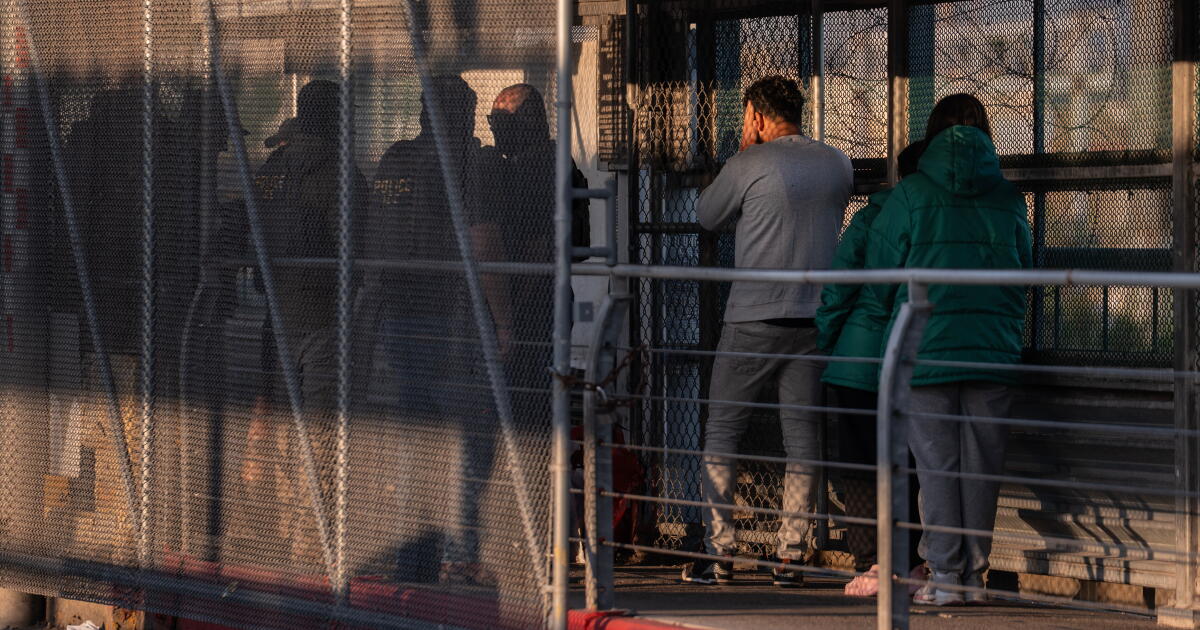
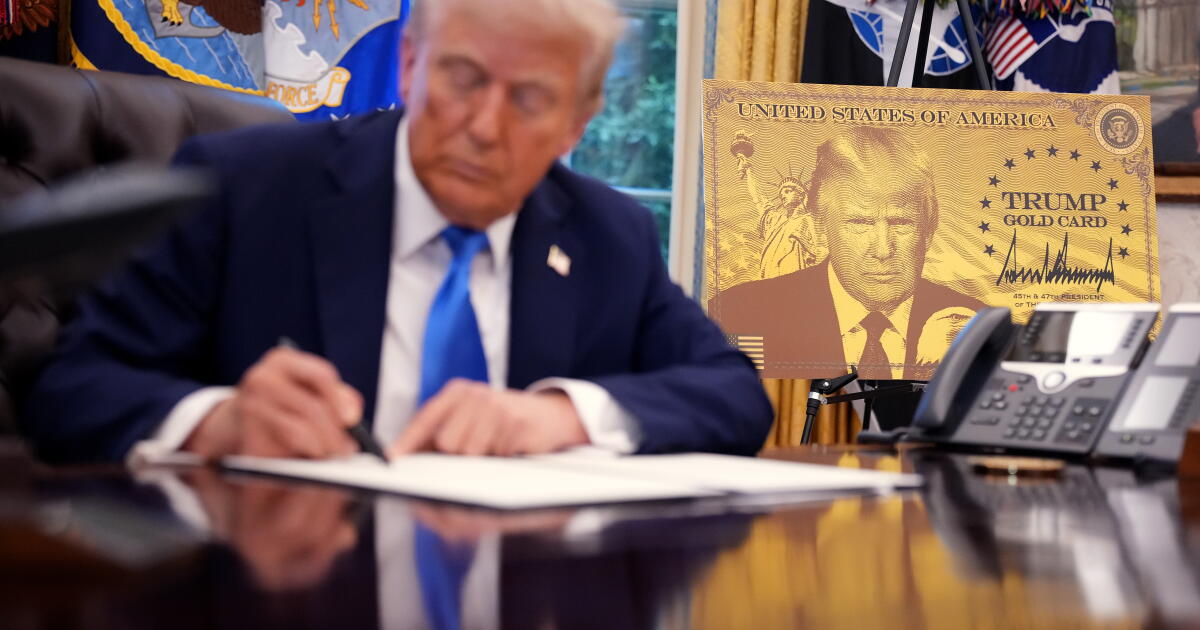
WASHINGTON — The Supreme Court on Tuesday let President Trump’s administration continue swiftly deporting people to countries other than their own for now, while the justices consider whether the policy is legal.
The apparent 6-3 order halts a lower-court decision. It requires the government to give migrants a chance to object before they are sent to countries to which they have no ties.
The Supreme Court will hear arguments in December.
The Trump administration said the lower-court order forced the cancellation of a deportation flight carrying about 70 people bound for three countries last week.
The justices have sided with the administration once before on the core Trump administration policy, allowing deportation flights to temporarily continue last year.
The court said it will consider several questions: whether the policy is lawful, whether lower courts had the authority to issue a sweeping block and other questions the government deems appropriate.
Under a series of often-secret agreements, the Trump administration has deported some 25,000 people to more than two dozen countries, including Liberia and Guyana. The vast majority have been sent to Mexico.
Trump’s Republican administration has said that it sends people with final deportation orders to third countries when they can’t be returned to their homelands or their native countries won’t accept them, including those who have criminal convictions. Those governments provide assurances that people won’t be persecuted or tortured, federal attorneys said.
But some migrants have nevertheless found themselves imprisoned in countries they’d never heard of before their arrivals. Others also face serious safety risks and are left with little choice except to return to the home countries they were fleeing. Many have no criminal convictions and have been found to be at risk of torture or persecution, attorneys for the immigrants said.
The case comes amid a sweeping immigration crackdown by the Trump administration, which has pledged to deport millions of people who are living in the United States illegally.
The police prevented an early morning attempt by the Orange Order to make a controversial parade down a road which had previously been blocked by protesters.
A group of men tried to march from Drumcree Church down the mainly-nationalist Garvaghy Road in Portadown in the early hours of Monday but a line of police Land Rovers stood in the way.
They had been unable to make the permitted parade on Sunday morning because protesters had gathered on the Garvaghy Road. The stand-off continued throughout Sunday, with the Orangemen waiting at the church, around a mile from the road, for the go-ahead from police.
Sinn Féin First Minister Michelle O’Neill joined the protest, prompting Democratic Unionist Party leader Gavin Robinson to accuse her of acting unlawfully.
Northern Ireland Secretary Sir Chris Bryant called for “compromise”.
Breandán Mac Cionnaith, from the Garvaghy Road Residents Coalition, said he was meeting the secretary of state and chief constable on Monday, and that he would not prejudge those conversations.
Nigel Dawson, who is the Orange Order’s Portadown district master, told BBC News NI there was frustration.
He said they had a legal right to parade down the Garvaghy Road and the police should facilitate their route.
“We have been open and honest, and were seeking mediation to seek a resolution suitable to both sides that would bring this to a successful conclusion,” he added.
Democratic Unionist Party (DUP) MP Carla Lockhart, who came back to Drumcree in the early hours of Monday, said the Police Service of Northern Ireland’s chief constable needed “to take a grip of this very quickly or his position will become untenable”.
The Drumcree parade, which in the 1990s sparked some of the most serious disorder in Northern Ireland’s history, was due to go ahead for the first time in 30 years after a series of legal challenges.
Since 1998, the Orange Order had been banned from completing its Drumcree march – and until this year had been repeatedly refused permission to finish the route by the Parades Commission, which was set up to adjudicate disputes.
The Orange Order is a Protestant pro-British organisation, while the area where it wants to walk – specifically along the Garvaghy Road – is largely Catholic and predominantly inhabited by pro-Irish nationalists.
Crowd gathers on Garvaghy Road early on Sunday morning to protest against the ruling allowing the march.
Published On 27 Sep 202627 Sep 2026
Northern Ireland’s High Court has permitted the Orange Order, a Protestant organisation, to march through a mainly Catholic area in the town of Portadown for the first time in 28 years, reviving one of the region’s most contentious marching disputes.
The court rejected a final attempt by residents to stop the parade passing through the Garvaghy Road early on Sunday, after Northern Ireland’s Court of Appeal overturned a temporary injunction granted on Saturday.
Recommended Stories
list of 2 itemsend of list
Large crowds gathered on the road before the procession, with the Belfast Telegraph reporting that protesters planned to block the route peacefully by linking arms.
First Minister Michelle O’Neill, vice president of Sinn Fein, an Irish nationalist party that supports a united Ireland, joined residents opposing the march.
In a statement posted on X on Sunday, she backed their right to protest and urged restraint, saying, “I am calling for calm on all sides.”
Sinn Fein leader Mary Lou McDonald also condemned the court decision in a post on X early on Sunday, calling it “disgraceful” and saying her party stood with the Garvaghy Road community.
Deputy First Minister Emma Little-Pengelly, from the Democratic Unionist Party (DUP), which supports Northern Ireland remaining part of the United Kingdom, urged people to stay away from the area.
She said on Sunday that threats of violence were unacceptable and added: “No one in Northern Ireland wants violence or disorder.”
The Orange Order is a Protestant organisation closely associated with unionism, the political tradition that favours Northern Ireland remaining in the UK.
The Parades Commission, the independent body that rules on disputed marches in Northern Ireland, approved Sunday’s procession with a 35-person limit, barred bands and accompanying supporters, and required the march to finish by 9:30am (08:30 GMT).
The dispute over the Drumcree parade and Garvaghy Road became one of the most bitter marching confrontations of the “Troubles”, the decades-long conflict over Northern Ireland’s political status that largely ended with the 1998 Good Friday Agreement.
Repeated attempts by the Orange Order to return from Drumcree church along Garvaghy Road triggered protests, violence and major security operations during the 1990s.
In a statement on Saturday afternoon Archbishop Eamon Martin called for “prayers and support for a peaceful resolution to complex Garvaghy Road situation”.
The Catholic primate said he shared the “sense of shock and disappointment of so many people at recent developments”.
“I also appeal for support for the patient use of solely lawful and democratic processes to resolve this deeply complex and emotive situation.”
Fr Peter Clarke, from St John the Baptist in Portadown, said he was concerned the march would “clash” with parishioners coming and going from the church.
He said he had emailed the commission to express his concerns and stated he “doesn’t know how they came to” their conclusion.
Parishioners at St Patrick’s Church on William Street are also likely to be affected ahead of the 10:00 service, according to the priest.
He added “tensions are high” in the community, and said he will be addressing the situation during Sunday’s service.
The decision to give the go-ahead for the parade came after the five-person Parades Commission, led by Prof Evelyn Collins, held face-to-face talks with the Orange Order earlier this week, and a separate meeting with the residents’ coalition.
Senior police officers were also consulted about the planned parade.
Within the 31-paragraph determination by the Parades Commission, details were revealed of conversations held with the PSNI.
The document stated: “The police made both written and oral submissions, indicating that they, at the time of making them, had no information indicating that the parade would result in disorder or violence.”
The Police Service of Northern Ireland (PSNI) said it had activated “mutual aid arrangements to support contingency planning for a policing operation” in Portadown on Sunday.
It is understood about 200 officers are coming from Scotland.
NATO member Latvia is moving toward acquiring Anduril Industries’ Barracuda family of long-range strike missiles, with Latvian President Edgars Rinkēvičs highlighting the effort during a visit to the U.S. defense technology company and a series of new defense-industry cooperation agreements involving Latvia. If the acquisition goes through, Latvia would be the first of the Baltic states to field a strike weapon in this category.
“It was great to visit Anduril to meet with Palmer Luckey and to witness signing of memoranda of cooperation with MOD of Latvia and Origin Robotics,” Rinkēvičs said in a post on X. “Looking forward to complete acquisition of Barracuda long-range missiles and [Latvian-U.S.] defense industry cooperation.”
The statement does not specify the precise Barracuda variant involved, the number of missiles Latvia intends to acquire, the expected delivery schedule, or the value of the prospective purchase. We have reached out to Anduril for more details.
A likely candidate weapon is the Barracuda-500M, one member of Anduril’s family of autonomous, jet-powered cruise missiles, alongside the Barracuda-100M and -250M variants. Official descriptions put its range at more than 500 nautical miles, with a stated speed range of approximately 190 to 500 knots. The missile can be air-launched, for which it has received the official U.S. military designation AGM-189A. But with only a handful of utility biplanes and helicopters in its inventory, Latvia would acquire the surface-launched version, designated SLB-500M.
Introducing: Barracuda-M Family of Cruise Missiles
The announcement points to a potentially significant expansion of Latvia’s precision-strike capabilities as NATO’s eastern flank continues to build out longer-range conventional fires.
Latvia has already ordered the U.S.-made Army Tactical Missile System, or ATACMS, which will be fired from M142 HIMARS launchers. The system is expected to enter Latvian service in 2027 and has a maximum range of about 186 miles.
A U.S. Army M142 HIMARS launcher involved in an exercise at at Spilve Airfield and Liepāja Airport in Latvia. Latvian Armed Forces Eriks Kukutis
Latvia’s ATACMS capability will give the country a foundation for ground-launched precision fires, but the broader European trend is toward significantly greater reach.
Ground- and sea-launched cruise and ballistic missile systems capable of hitting targets at between 1,000 and 2,000 kilometers (620 and 1,242 miles) or more are an emerging target for several European NATO members. France, Germany, Poland, Italy, Sweden and the United Kingdom are pursuing combinations of indigenous development and foreign procurement to address this requirement.
Latvia’s neighbor Poland, for example, has been building a layered long-range strike architecture combining JASSM/JASSM-ER air-launched cruise missiles with HIMARS and ATACMS. Warsaw’s ambitions are extending toward ground-launched weapons with ranges potentially reaching 3,000 kilometers (1,864 miles) and the country has previously expressed openness to hosting U.S.-owned nuclear weapons on its territory, too.
A M142 HIMARS launcher is seen during Poland’s Armed Forces Day parade in 2025. Photo by Artur Widak/NurPhoto/Getty Artur Widak
Latvian interest in Barracuda fits into the same larger transformation in European conventional strike capabilities.
For NATO’s Baltic members, the logic is particularly straightforward, with mobile, ground-launched weapons providing an additional means of striking military targets at depth without requiring control of the air over the launch area.
Dragon’s teeth obstacles are among the anti-mobility measures on Latvia’s eastern border with Russia. Latvian Armed Forces
The potential Barracuda acquisition would represent another step in a broader European shift toward deep precision strike, a term increasingly used to describe conventional weapons capable of holding targets hundreds or thousands of miles away at risk.
Deep precision strike is widely acknowledged as an increasingly important European capability gap. European NATO members have historically relied heavily on air-launched cruise missiles and other aircraft-delivered weapons, while ground-launched long-range systems have been comparatively scarce.
The deterioration of the European security environment following Russia’s full-scale invasion of Ukraine, together with the 2019 collapse of the Intermediate-Range Nuclear Forces Treaty, are important factors behind renewed European interest in long-range conventional strike.
A key driver behind Europe’s push for longer-range conventional strike is the desire to build a credible deterrent capable of holding targets deep inside Russia at risk, potentially including Moscow. Ukraine’s long-range strike campaign has demonstrated the strategic value of being able to impose costs at significant distances, while also underscoring the importance of having sufficient stocks of precision weapons. For NATO’s eastern flank, systems such as the ground-launched Barracuda could therefore provide not just another fires capability, but an additional means of imposing costs on an adversary without relying exclusively on airpower.
Importantly for Latvia, the emerging European approach is not limited to large air forces. NATO’s prospective deep-strike requirements are likely to place significant emphasis on mobile ground-launched systems because they can be dispersed and offer survivability advantages while avoiding the cost and vulnerability associated with relying exclusively on aircraft or ships as launch platforms.
An Anduril Barracuda 500, top, and a Barracuda 100, displayed during Modern Day Marine 2026 in Washington, D.C. U.S. Marine Corps photo by Cpl. Abigail Hutcheson Cpl. Abigail Hutcheson
That makes systems such as the surface-launched Barracuda particularly relevant to countries on NATO’s eastern flank.
Anduril has positioned Barracuda as part of an effort to address what it describes as a shortfall in affordable, producible long-range precision weapons. A prototype surface-launched Barracuda-500 successfully demonstrated its launcher, missile, and booster concept in testing in 2025. Anduril has emphasized that the family is intended to be more producible and affordable than many existing “exquisite” long-range weapons.
European governments are increasingly wrestling with the same issue. However, there is a fundamental tension between rapidly filling capability gaps through off-the-shelf purchases and developing indigenous European weapons that can strengthen the continent’s defense-industrial base, which is also a critical political consideration.
Latvia’s emerging relationship with Anduril appears to combine elements of both approaches, by acquiring an American-developed strike capability while simultaneously pursuing industrial cooperation with U.S. defense companies.
Ground launch of Anduril’s Barracuda-500M. Anduril
There is also a recent European precedent for combining Barracuda procurement with local industrial participation.
In July 2026, Anduril signed a strategic agreement with Polish national maintenance, repair and overhaul provider Wojskowe Zakłady Lotnicze Nr 2 (WZL-2) to establish production of the Barracuda-500M at WZL-2 facilities in Bydgoszcz, Poland. Polish state-owned defence group Polska Grupa Zbrojeniowa said Poland was the first European country to sign such an agreement with Anduril.
Bezpieczeństwo zaczyna się od silnych sojuszy.
💥🖊️ Dziś została podpisana umowa o współpracy @PGZ_pl i WZL-2 z firmą Anduril Industries, która umożliwi utworzenie w Polsce miejsc montażu i produkcji autonomicznych rakietowych pocisków manewrujących dalekiego zasięgu… pic.twitter.com/JnmM6lQZ7L
— Ministerstwo Aktywów Państwowych 🇵🇱 (@MAPGOVPL) July 6, 2026
Polish officials have also emphasized the missile’s intended low production cost relative to higher-end U.S. cruise missiles. The planned Polish program is expected to progressively increase Polish content and eventually incorporate broader European elements, including software solutions from Anduril.
Latvia has not publicly detailed whether any Barracuda-related production, assembly, or other industrial work would be conducted in the country.
However, Latvia’s Investment and Development Agency says the country’s defense-technology delegation in the United States is seeking opportunities involving joint development, testing, manufacturing, system integration and supply chains. Origin Robotics is among the Latvian companies participating in that effort.
The broader Latvian delegation includes companies working across unmanned and counter-unmanned systems, communications, electronics, sensors, software, artificial intelligence, cybersecurity, and manufacturing.
A Latvian Army soldier shows drone video footage to U.S. Marines during a HIMARS live-fire exercise at Adazi Training Area, Latvia. U.S. Marine Corps photo by Cpl. Niles Lee Sgt. Niles Lee
Exactly how Latvia intends to employ Barracuda, how many missiles it plans to acquire, and whether any portion of the system will eventually be produced or integrated in Latvia remain unclear from the president’s announcement.
For now, the development marks another indication that long-range precision fires are moving from a capability concentrated among Europe’s largest military powers toward a broader requirement across NATO’s highly strategic eastern flank.
WASHINGTON — The Supreme Court on Friday upheld President Trump’s expanded use of government data to spot non-citizens who are registered to vote.
The justices granted an emergency appeal from Trump’s lawyers and set aside a judge’s order that blocked use of this data on the grounds it was error-prone, particularly for naturalized citizens.
Justices Ketanji Brown Jackson, Sonia Sotomayor and Elena Kagan dissented.
The decision will aid states that seek to scrub their voter rolls and remove those who are not citizens.
Several Republican-led states including Texas and Florida supported the administration’s appeal.
The use of the new database “allowed Texas to more efficiently, promptly, and economically ensure the accuracy of its voter rolls,” the state said. It was “able to run its entire list of 18 million voters” through the expanded system of checks “in bulk and for no cost.”
It’s not clear the decision will have much impact in California and other Democratic-led states. It is likely to have a limited impact in the month ahead because the law forbids states from purging their voter rolls in the 90 days prior to an election.
The court, in an unsigned opinion, said the law supported use of the data.
“The federal Government has an obligation to respond to requests from state and local election officials seeking to verify the citizenship of voters,” the court said. “The order below prevents the federal government from using the program it believes is best suited to the task.”
The administration said the Department of Homeland Security can respond to more than 1 million requests per day to check if a person appears to be a citizen or not based on Social Security records and other data files.
If not, state or county election officials may require these suspect voters to furnish proof of their citizenship.
However, states and local election boards are not required to conduct these searches. The administration also said its data reports are not final proof of citizenship.
Upholding these data searches “would not require states, candidates, parties, or voters to do anything,” Solicitor Gen. D. John Sauer told the court. “It would simply make available to states additional information. … States that wish to use that information in the course of ensuring that only eligible citizens cast ballots this November should be free to do so.”
In dissent, Jackson said the court’s order creates the “risk that states might cancel the voter registrations of at least some recently naturalized citizens or force such persons to provide proof of citizenship before voting.”
The new system of voter checks is based on the 40-year-old Systematic Alien Verification for Entitlements, or SAVE, that was created by Congress. Then, the goal was to check if applicants were entitled to receive federal benefits.
Last year, Trump issued an executive order directing Homeland Security to expand the reach of SAVE to provide states “access to appropriate systems for verifying the citizenship or immigration status of individuals registering to vote or who are already registered to vote.”
It is a federal crime for non-citizens to register and vote.
Trump has long maintained that non-citizens are voting, but he has had little evidence to support that claim.
Voting rights advocates sued, contending the new “mass verification” system was not authorized by Congress and relied on data that is protected as private under the law.
In June, U.S. District Judge Sparkle Sooknanan, a Biden appointee, agreed and blocked use of the expanded searches. The administration has “trampled on the privacy rights of American citizens in a manner that threatens the sacred right to vote,” she said.
On Sept. 4, the U.S. court of appeals by a 2-1 vote refused to overturn her ruling, prompting the administration’s fast-track appeal.
The voting rights advocates, led by the League of Women Voters, had urged the court to stand aside.
“The government has recklessly created an error-laden master citizenship database that endangers millions of Americans’ privacy and voting rights,” they said.
The data searches are flawed, they argued, because they “only reflect a person’s citizenship status when they applied for a Social Security number. That status does not automatically update if the person later naturalizes.”
Texas admitted that the mass checks yield “some inaccurate information.” It said 2,724 people were cited as “potential non-citizens” among its 18 million registered voters.
In response, county officials had to check further to confirm the citizenship of these voters, the state said.
Last week, the Supreme Court dealt Trump a defeat when it blocked use of his proposed postal rules that could have prevented millions of voters from casting ballots by mail.
In a brief order, the court said Trump’s claims of power over states and their voting were “unlikely to succeed.”
But in the case of the expanded data files, the court said the law appears to favor the administration.
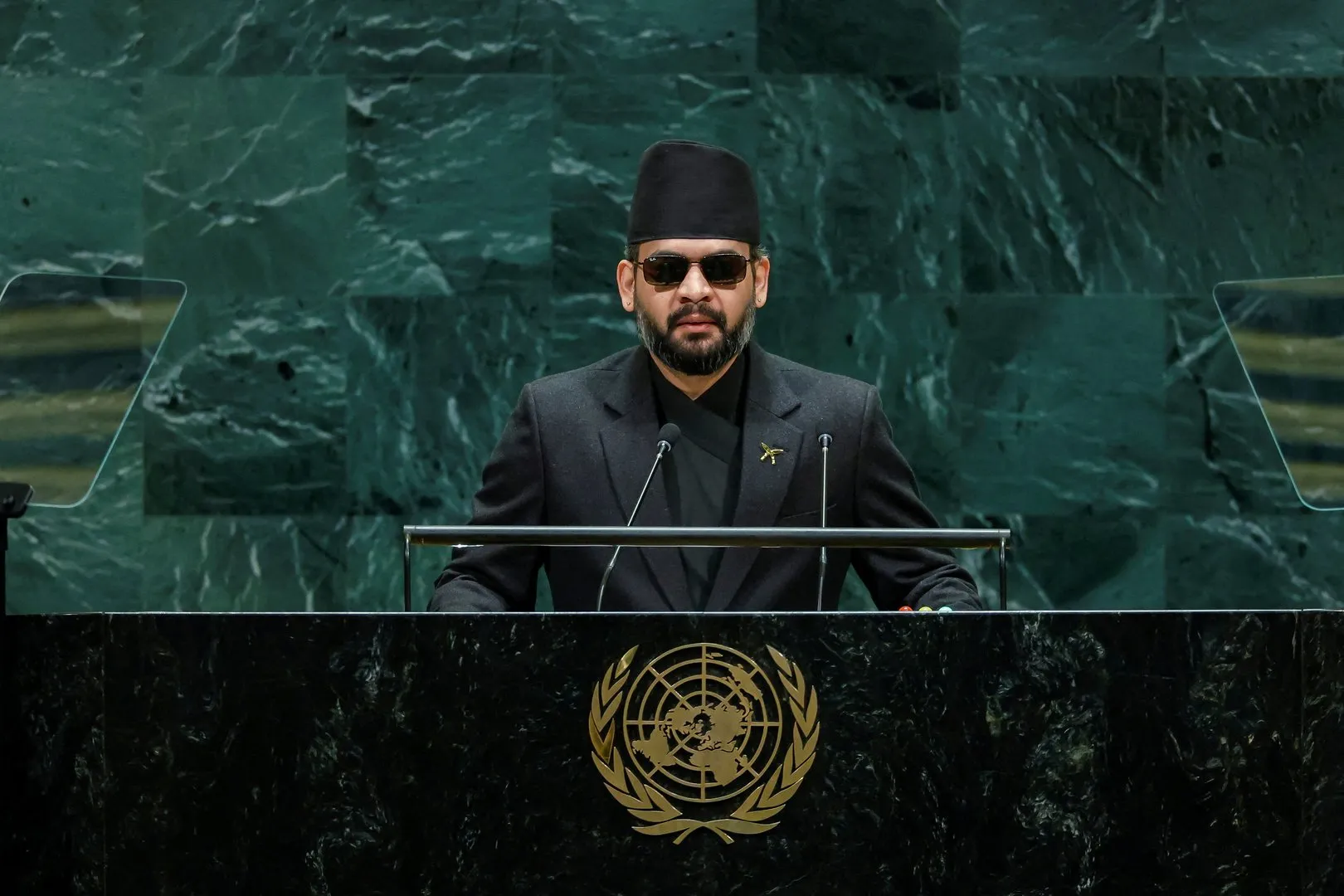
‘Hit by the climate we didn’t warm, hit by the wars we didn’t start.’
Nepal’s Prime Minister Balendra Shah was applauded at the UN General Assembly, as he highlighted how the world is failing countries on the frontline of the climate crisis.
WASHINGTON — A federal judge early Thursday temporarily blocked President Trump’s move to ban three news outlets from the White House grounds and said CNN, MS NOW and Politico must have their access restored.
It’s the latest development in an escalating showdown between Trump and media outlets whose coverage he dislikes. The president announced he was banning the outlets Sept. 18, assailing what he called “fake news.” More recently, Trump has said negative coverage is dangerous for the country.
The outlets argued that they were singled out because of the content of their coverage — in other words, viewpoint discrimination — and called the ban a “blatant violation” of the 1st Amendment.
In an order posted shortly after midnight Eastern time, U.S. District Judge Timothy Kelly said the media outlets had met the legal thresholds needed to obtain a temporary restraining order, which include the likelihood of succeeding on the merits of the case and of suffering irreparable harm without an order.
“This is a high bar, but Plaintiffs have met it,” he wrote.
Kelly — whom Trump nominated in 2017 and who ordered a CNN journalist’s access restored in a similar case in 2018 — heard arguments Wednesday and ended the hearing without ruling.
On Thursday, he issued the temporary restraining order, which will be in effect for 14 days. Such orders are typically designed to preserve the status quo pending a closer review of the case by the court.
During the hearing, Kelly questioned whether the administration had met its legal responsibilities and provided CNN, MS NOW and Politico with adequate due process before banning them.
The rulings in two prior cases over press access, including one that went to the U.S. Supreme Court, made it clear that journalists are entitled to an opportunity to be heard before they have their press passes revoked.
Justice Department attorney Michael Velchik argued that the rulings in the earlier cases were wrong.
The judge noted that his decision would be guided by prior rulings in comparable 1st Amendment cases, even if the government disagrees with them.
CNN, MS NOW and Politico are headed to court to challenge the constitutionality of President Trump’s order to ban the three news organizations from the White House.
The three outlets announced Monday they are jointly filing a lawsuit in U.S. Federal Court in Washington, D.C. asking for a temporary restraining order that restores their access immediately while the case is heard.
“This morning we notified the government that we are filing a lawsuit today to protect our First Amendment rights and defend the principle that the government does not decide what the press reports and publishes,” CNN, MS NOW and Politico said in a statement. “Without notice or due process, the White House revoked our journalists’ credentials because it objected to our reporting. Left unchallenged this threatens press freedom and the public’s right to indpendent journalism free from government interference.”
The lawsuit against the Trump Administration will allege that the ban violates the 1st Amendment by retaliating against protected newsgathering as punishment for unfavorable coverage, as well as blocking reporters from a “nonpublic forum” for unlawful reasons.
The suit notes precedent is a case from 1977 that ruled the White House cannot arbitrarily restrict press credentials for reporters on grounds that there’s retaliation for viewpoint discrimination.
Trump announced the ban Friday in a Truth Social post, describing CNN, MS NOW and Politico as “fake news.” He did not cite any specific story that prompted the action, claiming the outlets have long been unfair to him and never provide any positive coverage.
Trump was asked Friday how his ban will hold up in court.
“I don’t think a court should allow fake news to be written day after day after day,” he said. “I think that somebody has a right to keep them away if they’re going to write false stories all the time.”
Trump’s asserts that the ban is the result of unhappiness with the coverage he receives from the three outlets. Trump’s statements are likely to be used against him in court.
The ban has already raised questions on how the public will be able to monitor the president’s activities. CNN was scheduled to provide the video feed of Trump’s Monday trip to New York for the United Nations General Assembly. The pool feed, as it’s called, provides video to all other press outlets.
CNN’s assignment does not appear on the press schedule issued Sunday by the White House.
On Saturday, journalists from CNN, MS NOW and Politico were barred from entering White House grounds as they learned their press credentials were no longer valid. Some were asked to hand them over to Secret Service.
Trump has tried twice to deny news organizations White House access. In 2018 during his first term, the White House tried to ban journalist Jim Acosta, then working for CNN, but a court ordered that his press credential be resinstated.
Last year, the Trump White House issued a ban on the Associated Press when the news organization refused to recognize the president’s renaming of the Gulf of Mexico by executive order. A federal judge ordered that the AP’s access to the White House be restored on the grounds that the government cannot punish a journalistic outlet over the content of its speech.
A divided appeals court panel later paused that ruling for the Oval Office, Air Force One and other restricted spaces, allowing the White House to keep the AP out of them while the case proceeds.
Trump has railed against outlets that he considers unfriendly to his administration, calling for the Federal Communications Commission to pull the TV station licenses of the broadcast networks. He has also asked the FCC to take action against individual journalists who irk him, the last being “Meet the Press” moderator Kristen Welker.
FCC Chairman Brendan Carr has tried to act on Trump’s behalf by calling for a review of ABC’s TV licenses, which the Walt Disney Co.-owned network is challenging in court.
“This is about more than the rights of journalists. It is about the right of the American people to receive a full and independent account of the activities, policies and decisions of whoever occupies the nation’s highest office,” Heinrich said in a statement.
Trump has also lashed out at individual reporters in person or over social media, sometimes in strikingly personal terms — insulting them in briefings, or in his recent speech at the White House Correspondents’ Assn. dinner.
Trump’s press attacks have spread to other parts of his administration. The Department of Defense tried to restrict journalist access to the Pentagon.
The department also recently fired three journalists at the military’s newspaper Stars and Stripes for insubordination after they appeared in a CBS News report on how the Trump administration has tried to restrict their reporting.
Known as MEHKOs, microenterprise home kitchen operations come in many shapes and sizes. They are coffee shops, barbecue joints, supper clubs, backyard tea parties, pickup-only pizzerias and everything in between. For some of these operators, it’s a passion project, and for others, it’s their only source of income.
MEHKOs were first legalized by state lawmakers in 2019, spurred by advocacy from nonprofit organization the COOK Alliance. Riverside County was the first in the state to adopt the program in 2019. MEHKOs were greenlighted in L.A. County in May 2024, and since then over 400 licenses have been approved. While informal backyard restaurants are nothing new in L.A., the program offers a legal, health-department-approved pathway for many existing home kitchens to thrive.
MEHKOs can only sell up to 30 meals per day and no more than 90 meals per week. They’re also not allowed to advertise with signs on their homes or front lawns. And unlike commercial restaurants, where line cooks will often prep ingredients for the rest of the week, MEHKOs can only serve food that was prepared the same day.
“A home kitchen is not designed or required to have the same commercial infrastructure, such as ventilation systems, grease interceptors, specialized wastewater systems,” said James Dragan, who oversees initiatives including the MEHKO program at the L.A. County Department of Public Health. “The limits are important because of the food safety perspective.”
When dining at a MEHKO, be flexible. It might not be as easy as just placing an order. These home businesses are often open just a few days per week with limited hours, and might only accept orders placed in advance. For example, Palestinian home kitchen Mid East Eats — one of L.A.’s first MEHKOs — currently only offers private dinners and monthly supper clubs. It was previously open for walk-ins with a larger menu, but the format was difficult to sustain and would often create food waste.
“I want to continue doing my private dinners because that’s my favorite thing to do,” said Mid East Eats founder Sumer Durkee. “It’s satisfying to me and feels like home, and people leave feeling so happy.”
MEHKOs can serve as a relatively low-cost stepping stone toward opening a brick-and-mortar and offer one-of-a-kind food experiences, even in a city with as rich a culinary vocabulary as L.A. These eight home kitchens, all of which offer dine-in service, are a great starting place to discover the city’s burgeoning MEHKO scene.
As the fall equinox approached from a week away, the Primetime Emmy Awards made its 78th visit, leaving trophies in some hands, the honor of just being nominated for others and bupkes for the rest of the thousands who make what we call television. Once again I have been called to witness (from afar) and report, so let’s get down to it.
It was the turn of NBC (and Peacock) in the round robin of major networks who broadcast the show, and to keep things literally in-house it was hosted by Mariska Hargitay, “America’s sweetheart sex cop Olivia Benson” from the network’s “Law & Order: Special Victims Unit” and broadcast from the Peacock Theater, formerly the Microsoft Theater, formerly the Nokia in #DTLA, formerly downtown Los Angeles.
When reviewing the Emmys, or any awards show, as television in its own right, the only real questions are what distinguishes it from its many previous appearances on the karmic wheel of life — how it tricks up the basic, immutable form, like different decorations on the same sugar cookie recipe you have been using forever. Anything unexpectedly or especially moving, rousing, funny or strange, things that go against the grain of a production that wants to keep things controlled in order to bring the ship in on time.
This year the critic has been given the gift of Hargitay, primarily a serious actor (and director and producer), following in a long line of comedians and comic actors. There have been other serious actors as host, for example, Raymond Burr in 1959, Tom Selleck in 1984 and Angela Lansbury in 1993. And certainly, if you’re looking for someone to represent the medium rather than merely to comment on, celebrate or joke about it, you could do no better than Hargitay, the longest-serving actor on the longest-running prime-time live-action series on American TV. She’s beautiful, glamorous, self-possessed. She was recently on Broadway in “Every Brilliant Thing,” which involved a degree of what comedians call “crowd work,” so standing up in front of a live audience of people no more famous than she wasn’t going to throw her. Professional comedian Nate Bargatze, who hosted last year, was much more of a dark horse.
Emmys host Mariska Hargitay with singer Taylor Swift and her cat Olivia Benson on screen during a skit the 78th Primetime Emmy Awards.
(Patrick T. Fallon / AFP via Getty Images)
Although I would have bet on a pre-filmed “Special Victims Unit” routine to open the show, which is why I’m not a gambler, it wasn’t until an hour in that it appeared. (It involved murder-style boards, concerning the Case of Whether Taylor Swift would be making an appearance; she did, in the bit.) The pre-filmed production number that did open the show began with Hargitay and her actual good friend New York Knick Jalen Brunson steaming their clothes when Hargitay suddenly realizes she is due across the country to host the show. This led to Joan Jett’s “I Love Rock ’N Roll” reconceptualized as “I Love TV Screens,” which included the “Widow’s Bay” sea hag revealed to be Jennifer Coolidge, bringing boba tea (rhymes with “TV”); other rhymes matched “eating beef” and “watching ‘Beef’” and “Ed Gein” and “mean.” It moved to the live stage, with Hargitay flanked by dancers with television heads. Both segments felt more effortful than funny, but not unfunny.
On her own, however, Hargitay was above all a woman having a good time, never less than likable and game and enthusiastic, managing the scripted patter as well as anyone might have. Her monologue included several jokes about age, one about “L&O” producer Dick Wolf’s real name (Richard Penis), and another about her inability to pronounce “finale” because she’d never been in one. As is practically an Emmys tradition, some of these were confusing (even to the people performing it), or went on too long (Nick Offerman, cornered at his table, describing his work as an erotic house painter), or just had the effect of having been put on their feet without much, if any, rehearsal. Presenting the final award, for outstanding comedy, Woody Harrelson and Matthew McConaughey, told to stretch — the show was actually running short — described the plot of their upcoming Apple series, “Brothers,” until they were allowed to move on.
As to what the Television Academy calls “creative elements,” everything that isn’t a presentation or a speech, they advertised tributes to the 30th anniversary of “Buffy the Vampire Slayer,” certainly a typo, and the 50th of “Charlie’s Angels,” a logical impossibility, but these were really just themed groupings of presenters — Sarah Michelle Gellar and David Boreanaz in the former, Kate Jackson, Cheryl Ladd and Jaclyn Smith in the latter. (The Angels managed a few words for Farrah Fawcett, but none for Shelley Hack, Tanya Roberts or David Doyle.) But there were full tributes to Dolly Parton (Sally Field enthused, Reba McEntire sang); to James Burrows, with Jamie Lee Curtis pivoting emotionally to talk about old friend Rob Reiner, who won a posthumous guest appearance Emmy this year for “The Bear”; and to Catherine O’Hara, with her “Home Alone” child Macaulay Culkin and “Schitt’s Creek” children Annie Murphy and Dan Levy, who spoke to “helping her build a TV character over the age of 60 that wears leather miniskirts and eight-inch heels and speaks in a strange, sometimes unintelligible transatlantic accent, and know that she will not scare an audience away.”
And there was Julianna Margulies presenting the Bob Hope Humanitarian Award to Michael J. Fox, who, in his usual way, was eloquent and funny, and let the people know about the goodness of Bob Hope, setting up a punchline in the bargain. Like a lot of you, I love Michael J. Fox, and I’m just going to leave that here, with a pile of soaked-through tissues.
John Mulaney stole the show as a presenter at the 78th Emmy Awards ceremony at the Peacock Theater in Los Angeles.
(Robert Gauthier / Los Angeles Times)
But what America will mostly remember from this night was John Mulaney, introducing the award for lead actor in a drama, and burning the house down with a routine that went wherever it wanted. “They can play anything, these nominees. Not just doctors. They can play a cop or an FBI agent or a secret agent. And then that’s it. No other examples.”
“Since the creation of television, men have been historically underrepresented,” Mulaney said, explaining that the medium was all “beauty contests and children talking to hand puppets until the early ’60s. Until a man walked out and said, ‘Enough. My name is Fonzie and the president’s been shot.’” Mulaney is a man who has convulsed crowds in arenas and stadiums, but, as a local, nothing made me laugh harder than the words, “You know, I was shooting down Barham last night at 90 miles an hour.”
Nothing against Hargitay, but it’s clear that Mulaney should host this show, and every awards show, from now on.
WASHINGTON — The Supreme Court has blocked President Trump’s plan to restrict voting by mail, ruling it is too late to impose new postal service rules for the November election.
The justices on Monday turned down an emergency appeal from Trump’s lawyers, who argued the government needed a new and untested system of unique bar codes to track all the ballots of the tens of millions of people who vote by mail.
Instead, the justices left in place a judge’s order that prevents the U.S. Postal Service from enforcing the new rules for the midterm elections.
Concurring, Justice Brett M. Kavanaugh agreed it was too late to enforce the new rules for this election.
Justices Samuel A. Alito Jr. and Clarence Thomas dissented.
The decision in USPS vs. California is a victory for California Atty. Gen. Rob Bonta and the attorneys general for 22 other Democratic-led states who sued to block the new rules.
Last week, they warned there would be chaos and confusion if Trump’s rules were put in effect now.
Bonta cheered the decision late Monday, calling it “a victory for our democracy and a powerful affirmation of the rule of law” in a case where the stakes “could not have been higher.”
“Voting is the fundamental right from which all other rights flow, and all 50 states allow ballots to be cast by mail in some form. In California and several other states, mail voting is the primary way elections are conducted,” Bonta said. “Had this rule been allowed to take effect, the consequences would have been catastrophic.”
He said his office “will remain vigilant in safeguarding our elections,” and urged voters to make their voices heard.
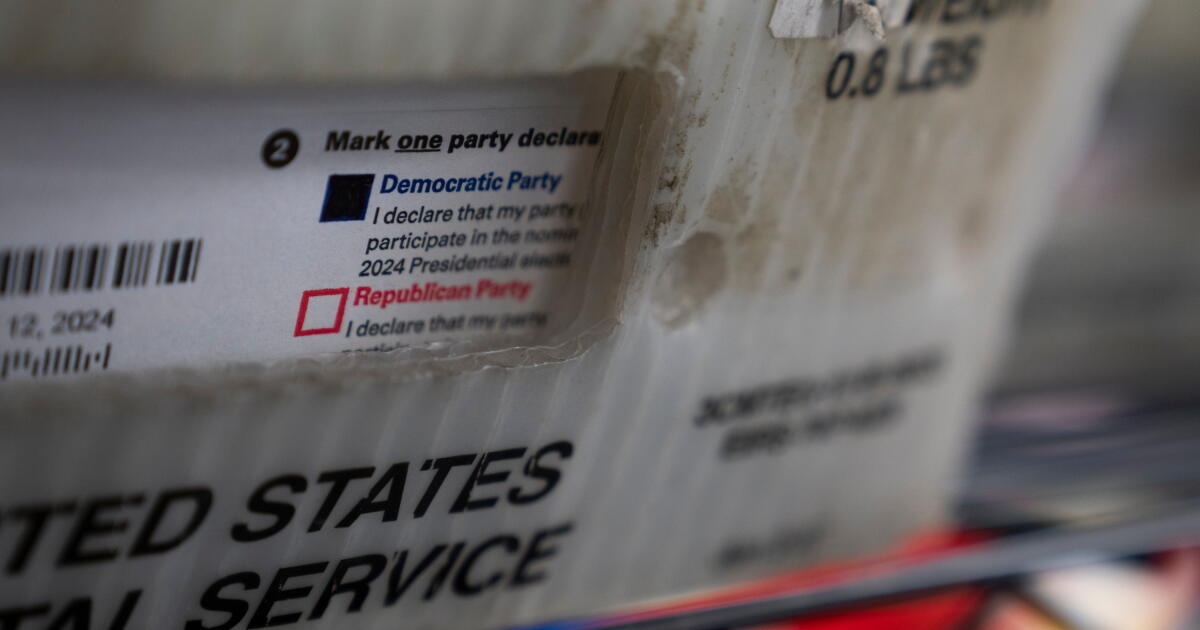
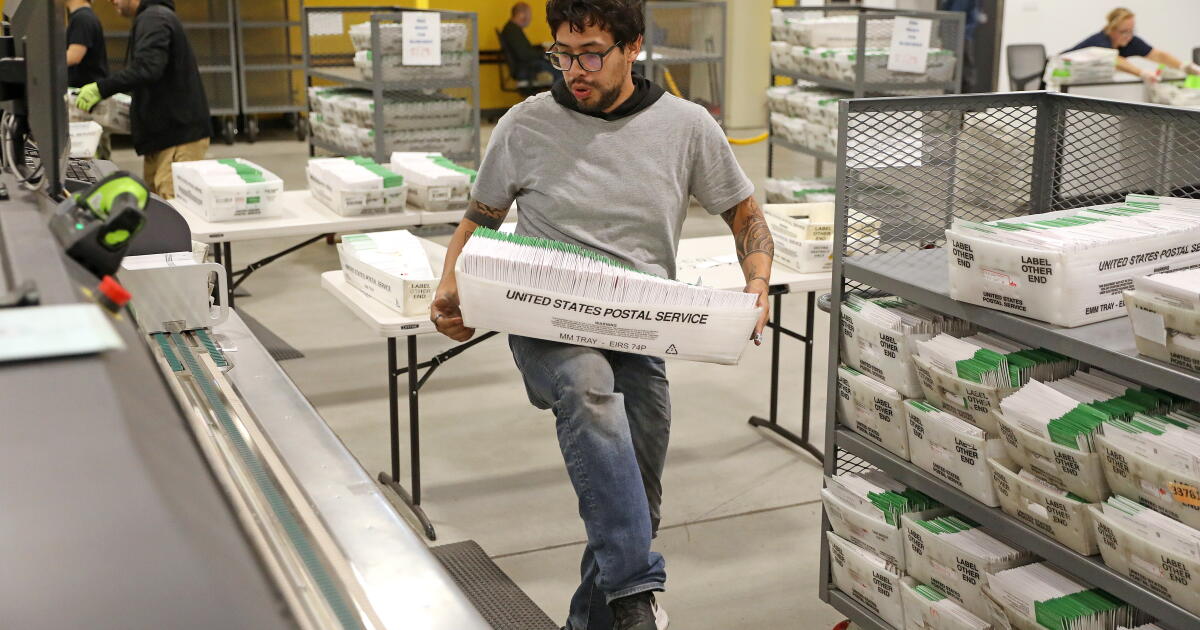
Under the proposed rules, state and county election officials across the nation would be required to enroll each voter with a unique bar code and submit this data to a new online portal that, as of last week, was not yet functioning.
Without the individualized bar codes, states could not send ballots through the mail. In California, that would mean election officials would have to enroll 23 million voters with new bar codes before state ballots could be mailed.
“Compliance with the USPS’ rule would be impossible ahead of the midterms, meaning that millions of voters would be unable to vote by mail and some would not be able to vote at all,” the state attorneys general told the court last week.
The impact would not be limited to Democratic-leaning states. Utah Lt. Gov. Deidre Henderson said it would be “an unmitigated disaster” if the new rules were put into effect now. About 30% of the nation’s voters — and 80% of Californians — cast ballots by mail in 2024.
But Trump has maintained, without providing evidence, that voting by mail leads to widespread cheating and fraud.
In March, he issued an executive order that called on the postal service to do more to “enhance election integrity.”
“Unique ballot envelope identifiers, such as bar codes, enable confirmation that only citizens receive and cast ballots,” he said.
Elections experts say there is no evidence of such widespread fraud, despite robust audits and other searches for it.
State attorneys general argued that the Constitution entrusts states, not federal officials, to conduct elections. While Congress may impose new rules, it is not done to limit voting by mail or to empower the postal service to do so, they said.
Trump and his lawyers maintained the administration had a duty to combat fraud, including in elections.
Solicitor Gen. D. John Sauer described the new rules as “modest measures that will help prevent and restrain potential gross abuses of the mails to perpetrate a fraud on the Nation.”
And he said the federal government, the states and the voting public would face irreparable harm if the new Postal Service rules were not allowed to be applied to the coming election.
But U.S. District Judge Indira Talwani, in Boston, ruled the postal service may not put its new regulations into effect for the Nov. 3 election. She found the Trump administration had presented no evidence to the court of widespread fraud existing, while the states had presented ample evidence that implementing such a system on such a fast timeline posed tremendous risk.
The 1st Circuit Court affirmed her order and said the administration’s lawyers “have not even seriously challenged the … detailed findings about the chaos and widespread disenfranchisement that would occur between now and November 3 should the USPS rule take immediate effect.”
On Sunday, U.S. District Judge Carl Nichols — a Trump appointee — also blocked the new Postal Service rules from being implemented in separate cases brought by the NAACP and Democratic groups, finding they clearly exceeding the Postal Service’s authority in elections.
What the future will hold is unclear. The courts did not declare the new rules to be illegal or unconstitutional, though multiple lower courts have suggested that parts of the plan likely would be — including by exceeding the Postal Service’s authority to intervene in elections.
Much of the debate before the appellate and high court related to the rushed timeline under which the Postal Service was seeking to implement the changes. With that set aside by the Supreme Court’s ruling that the rules will not apply this election, the debate in the lower courts may shift focus to whether the new regulations can be applied to the 2028 elections.
Nevada Secretary of State Cisco Aguilar, chair of the Democratic Assn. of Secretaries of State, said the high court’s ruling was a clear loss for Trump, and that state election officials are ready to continue their fight to protect U.S. elections if necessary.
“This ruling affirms what our Constitution has always held: Elections belong to the American people, not a desperate man in Washington,” he said.
The Emmys “red” carpet is underway as television’s biggest stars descend on the Peacock Theater at L.A. Live.
Instead of the usual vibrant red, this year’s carpet is peacock blue in honor of the 100th anniversary of NBC, which is broadcasting the ceremony. Network stalwart Mariska Hargitay, who’s starred in “Law & Order: Special Victims Unit” for 27 seasons, will host the show. Hot off the heels of film awards season, Chase Infiniti is sure to take another red carpet by storm in her Emmys debut. She’ll be joined by fellow drama lead actress nominees and fashion mavens Keri Russell and Zendaya (whose red carpet winning streak is unmatched). Comedy lead actress nominees sure to rule the carpet include Quinta Brunson, Ayo Edebiri and Elle Fanning. Their limited series / TV movie counterparts Claire Danes, Carey Mulligan and Sarah Pidgeon will also dress to impress.
Europe has long been the primary target for US President Donald Trump’s tirades against traditional allies. However, Asia got a taste of this treatment last month when he cut short, at very short notice, the annual “Ulchi Freedom Shield” US military drills with South Korea.
Seoul is still angry at this development, especially given Trump’s later confirmation that he would also try to arrange a meeting with North Korea’s supreme leader, Kim Jong Un, in coming months. Signs of this frustration included President Lee Jae Myung’s call to speed up the development of new nuclear-powered submarines and his push to regain presidential wartime operational control of South Korean forces from the US, insisting that enhanced domestic military capabilities were needed in parallel with the alliance with Washington.
As remarkable as Trump’s decision was, it only confirmed the degree to which US partnerships with traditional allies have changed during his presidencies, as Washington demands wider concessions in return for US collaboration. These White House expectations include not only huge investments in the US, but also support in a conflict with Iran that has failed to unseat the regime in Tehran, while causing the largest global energy shock in a generation.
Certainly, some agree that Trump has legitimate concerns about South Korea. However, the manner in which he expressed his disagreement, in such a publicly humiliating way, is self-defeating. The US president said he told his South Korean counterpart that “we have 39,000 soldiers over there, guarding you from Kim Jong Un, your next-door neighbor, and you’re not going to help us on a very easy military operation in Iran? That’s strange.”
As ever, Trump’s statement requires a fact check. Currently, Seoul is scheduled this year to pay Washington about $1.19 billion of the estimated $5.5 billion-$6 billion it costs to station approximately 28,500 US troops in South Korea.
Even though that $1.19 billion sum represents a significant increase, Trump claimed that during his first term, Seoul pledged to pay much more: $3 billion. He further contends that the Biden administration failed to follow up on this pledge.
Trump’s decision to end the latest US-South Korea military exercises on Aug. 21 rather than Aug. 27, as scheduled, was embarrassing enough for Seoul. To also confirm that he planned to try to arrange another meeting with Kim was rubbing salt in the wounds.
His tirade has set back recent and extensive efforts by his team to reassure Asian allies about the US commitment to the region. At a recent meeting of Association of Southeast Asian Nations foreign ministers in the Philippines, for instance, Secretary of State Marco Rubio pledged about $2.5 billion of strategic investments in Southeast Asia. During a speech at Singapore’s Shangri-La conference in May, US Secretary of Defense Pete Hegseth emphasized the importance of the region to Washington.
White House expectations include not only huge investments in the US, but also support in a conflict with Iran.
Andrew Hammond
Asian allies also query the utility of reengaging with Kim, after Trump’s first three meetings with him, between 2017 and 2021, failed to deliver any diplomatic breakthroughs.
White House expectations include not only huge investments in the US, but also support in a conflict with Iran.
Andrew Hammond
The prospects appear slim for any sustained de-escalation of tensions in the world’s last Cold War-era frontier in the form of the prize of a verifiable, comprehensive denuclearization of North Korea. Pyongyang’s weapons program has only grown in size and sophistication since Trump’s first term. This potentially widens the negotiating divide between the two sides.
The central challenge in making any meaningful diplomatic process with Kim is, as it was during Trump’s first term, the differing US and Korean interpretations of what exactly would constitute “denuclearization” of the peninsula.
To Trump, this appears to mean unilateral North Korean disarmament. For Kim, it appears to be more about potentially lengthy negotiations in which Pyongyang should be treated as an equal to the US, providing him with the further potential for propaganda victories. In this context, Kim will continue to be wary of commitments on specific time frames, and will want to win further concessions from Trump before agreeing to any reduction in nuclear capabilities, let alone committing to full denuclearization.
As was the case during Trump’s first term, it is far from clear what, if any, sequencing is possible to move the process forward. After the last meeting between Trump and Kim, North Korea disputed the US assertion that the reason the talks collapsed was because Kim demanded a full roll-back of sanctions. Pyongyang said it asked only for partial sanctions relief, and that an offer had been made to permanently halt nuclear and long-range rocket testing.
One reason Pyongyang’s position will not shift far or fast is that it was Kim, not Trump, who emerged as the bigger beneficiary of their previous engagements. The North Korean leader made few concrete concessions while Trump called off US-South Korea military exercises, and held out the prospect of an easing of sanctions on Pyongyang if it did “something meaningful” on denuclearization.
Taking all of this together, the damage to US alliances in Asia from last month’s decisions therefore goes far beyond South Korea and might outlast Trump’s second term. The paradox is that the White House had spent much time in recent months reassuring allies of enduring US support for the region, efforts that have now been badly set back.
• Andrew Hammond is an associate at LSE IDEAS at the London School of Economics.
The ruling says the Energy Department exceeded its authority by extending the plant’s operation.
Published On 12 Sep 202612 Sep 2026
A federal appeals court has ruled that the United States Energy Department exceeded its authority when it ordered a coal-fired power plant in the US state of Michigan to remain open beyond its planned retirement, dealing a setback to the Trump administration’s effort to keep ageing coal facilities operating.
The US Court of Appeals for the District of Columbia Circuit ruled unanimously on Friday that there was no emergency under federal law that justified keeping the 64-year-old JH Campbell Generating Plant online. Energy Secretary Chris Wright invoked emergency powers last year, arguing that the plant was needed to maintain reliable electricity in the region.
Recommended Stories
list of 3 itemsend of list
President Donald Trump declared a national energy emergency in an executive order in January last year, citing demand increases from artificial intelligence and data centre growth.
Judge Cornelia Pillard, writing for the three-judge panel, said the emergency provision of the Federal Power Act was intended as a “narrow, last-resort backstop.” She said the authority could be used only when immediate action was required, and states or utilities could not address the problem themselves.
Pillard also described the reversal of the plant’s “long and carefully planned retirement” as “disruptive”.
The plant, operated by Consumers Energy, had been scheduled to close in May 2025, but the company has continued operations under energy department orders. That has cost about $259m, according to financial filings, with opponents warning that the expense could ultimately fall on families and businesses in midwestern US states.
The company told The Associated Press it was reviewing the court ruling.
Michigan Attorney General Dana Nessel, a Democrat, whose office joined counterparts in Illinois and Minnesota in challenging the orders, welcomed the ruling. She said the appeals court had “thrown out DOE’s order that had zero basis in reality”.
The Energy Department defended its use of emergency powers, saying the orders helped prevent blackouts and “likely saved hundreds of lives” during periods of peak demand, particularly during severe winter storms in late January and early February.
The department said that during the winter storm peak, coal generation in affected areas increased by 25 percent compared to the previous year.
The Michigan case is one of several legal disputes that have emerged across the country. Secretary Wright issued another emergency order, just hours after the ruling, to a coal plant in Centralia, Washington, to remain in operation. Similar orders have been issued for plants in Indiana, Colorado and Florida, as well as an oil and gas plant in Pennsylvania.
WASHINGTON — An appeals court on Thursday upheld a block on President Trump’s executive order limiting mail voting, a decision that comes as the Supreme Court considers the same case and states have already started sending out ballots for the high-stakes midterm elections.
The three-judge panel refused to lift a preliminary injunction against the order issued last week by U.S. District Judge Indira Talwani. It prohibits the U.S. Postal Service from implementing Trump’s directive. The Postal Service has said it would not deliver ballots from states that did not pre-clear their envelope design with the federal government and submit a list of voters to an online portal, which has yet to be activated.
Election officials warn that it’s impossible to comply with those terms, especially with the first mail ballots already being sent out in Alabama, North Carolina and Wisconsin.
The panel of three judges nominated by former President Biden agreed with the plaintiffs that the president does not have the power to regulate states’ election policy.
“Appellants have not made a strong showing that the district court erred in determining that the Final Rule is likely unlawful,” they wrote, a reference to a rule published by the Postal Service to implement Trump’s order.
The panel wrote that the Trump administration had done little to dispel arguments by many election officials that the changes would bring “chaos and widespread disenfranchisement.”
“Indeed, appellants have not even seriously challenged this aspect of the district court’s ruling, much less demonstrated why it is clearly erroneous,” the order states.
The government also hasn’t shown evidence of past fraud to justify the restrictions, the judges said.
A request for comment from the White House was not immediately returned.
The panel’s decision comes even as the Supreme Court is already considering the same case, which is part of a frenzied legal rush as states are beginning to send out mail ballots for this fall’s midterm elections. Democrats and civil rights groups in a separate lawsuit in Washington, D.C., also are trying to halt the executive order.
The 1st Circuit also had upheld a previous hold Talwani placed on the executive order. But that ruling was lifted by the Supreme Court in a procedural decision that did not determine whether the plan was constitutional.
The plaintiffs swiftly filed new lawsuits after the Postal Service finalized its rule governing mail ballots.
Riccardi and Whitehurst write for the Associated Press.
The estranged wife of former Chargers defensive end Marcellus Wiley has been granted a three-year restraining order against the former Los Angeles sports radio personality two months after she accused him of raping her and physically abusing her and their children.
The former Pro Bowl player has denied the allegations that Annemarie, a nurse anesthetist and former cast member of “The Real Housewives of Beverly Hills,” made in a declaration submitted July 6 to the Superior Court of Los Angeles County with her request for a restraining order against her husband of 12 years. She filed for divorce the same day.
Marcellus and Annemarie Wiley both testified in person during a hearing on Wednesday. Evidence presented by both sides included texts and WhatsApp messages, social media posts, court filings and media coverage of the couple.
“The Court finds that Petitioner has met the burden of proof by preponderance of the evidence,” Judge Esther P. Kim wrote in her ruling, which was issued the next day. “Petitioner’s request for a Domestic Violence the minor children are included as protected person in the Restraining Order After Hearing.”
Annemarie Wiley was granted full legal and physical custody of their three children, with a visitation plan detailed for her husband.
“I’m grateful for the court’s decision and welcome the opportunity for our family to finally begin healing after an incredibly difficult and trying time,” Marcellus Wiley said in a statement to The California Post on Thursday. “From the beginning, my fight has been about being present in my children’s lives, loving them, supporting them, and being their father every day.
“I’m thankful I get to return to that role. Annemarie deserves the space to protect her peace, our children deserve the love and presence of both parents, and our family deserves the opportunity to move forward without conflict defining us. My hope now is simple: healing, peace, and getting our family back to a place where love leads the way.”
On July 4, Marcellus Wiley was arrested in Florida after his wife told police he poked her in the face with his finger and threatened to kill her. He was released the next day on $1,000 bond and faced a possible charge of misdemeanor domestic battery. Last month, the state opted not to file charges because of a lack of sufficient evidence.
In the declaration she submitted with her restraining order request, Annemarie Wiley documented numerous alleged incidents that she said demonstrated “a continuing and escalating pattern of physical violence, sexual abuse, verbal and emotional abuse, financial control, and intimidation, much of which our children have witnessed.” She also mentioned four instances in which her husband allegedly raped her, once in 2012 and three times in January.
A temporary restraining order was granted on July 7. On the same day, Marcellus Wiley wrote on X that he has “videos, photographs, text messages, emails, and other evidence that directly contradicts those baseless claims and provides a factual record of our family and the events leading to this unfortunate divorce.”
WASHINGTON — The Trump administration on Sunday renewed its appeal to the Supreme Court after a federal judge blocked new restrictions on mail ballots ahead of the midterms.
The filing came after U.S. District Court Judge Indira Talwani extended an order against the U.S. Postal Service enforcing President Trump’s executive order for the November elections.
The legal wrangling comes even as states start sending out mail ballots, leaving the administration little time to make big changes in mail ballot rules.
“Ballots have already begun to be mailed in North Carolina, and more States will begin the mailing process as the injunction remains in place — including Alabama on September 9 and at least five States the week of September 13,” Solicitor Gen. John Sauer said in the filing.
“Once those ballot envelopes enter the mailstream, there is no retrieving them. And while the injunction allows the Postal Service and the States to continue taking steps to ensure that their envelopes satisfy the Rule’s requirements … each day the injunction is in place risks sowing confusion and chaos because the injunction makes those preparatory steps voluntary, rather than mandatory.”
The appeal marks the third time the administration has asked the high court to intervene. The high court has allowed the plan to move forward but not ruled on whether it is legal.
The battle could have major ramifications for this year’s elections, when control of Congress is at stake. Nearly one-third of voters in the U.S. cast mail ballots. Mail ballots are sent to every California voter.
Democratic states and voting rights groups say the changes are unconstitutional and amount to voter suppression. Election officials contend that there isn’t enough time to revise their systems to comply with the new Postal Service directives.
The Trump administration has framed the restrictions as commonsense changes that are within its power to regulate the mail.
“Simply put, the best way to address respondents’ fears about inability to comply with the Rule is to grant an immediate administrative stay of the order, followed by a full stay pending further review,” Sauer said. “That will remove the improper cloud of uncertainty that the district court has cast over the Rule, making clear to all involved that compliance with the Rule is not optional and must start without further delay.”
Trump has long sought to limit mail voting, even though he himself often uses that method to cast his own ballot. He has falsely blamed mail balloting for his 2020 election loss to Democrat Joe Biden, spreading baseless claims of fraud. But so far, he has been unable to change the long-standing voting procedure.
Whitehurst and Fields write for the Associated Press.
A federal judge again Friday blocked the U.S. Postal Service from enacting President Trump’s sweeping new mail ballot rules for the November election, finding that the Postal Service lacks such authority over elections and that neither it nor states such as California are capable of implementing the changes without causing chaos and disenfranchising voters.
U.S. District Judge Indira Talwani noted that election officials from across the country told the court that it is “likely impossible” to comply with the rules, which “makes disenfranchisement more than likely, if not probable” if the Postal Service were to proceed with them.
Talwani’s order — her latest of several halting the plan since this summer — came after a Postal Service whistleblower alleged the agency’s new computer systems for the project are fundamentally flawed; a top Postal Service official acknowledged a key online portal was unfinished; and the Trump administration filed an emergency petition asking the U.S. Supreme Court to allow the plans to proceed anyway.
All this unfolded this week as some of the first mail ballots of the election cycle started going out.
The new rules — which Trump required in a March executive order — would require states to submit complete voter lists to the Postal Service and to adopt new ballot envelopes with individualized voter bar codes designed by the Postal Service, and empower the Postal Service to reject any mail ballots that don’t match those lists.
Trump’s executive order also required the Department of Homeland Security to develop its own lists of eligible citizen voters, ostensibly to be compared against the state lists.
Trump has said the changes are necessary to combat widespread voter fraud, including by non-citizens, though independent election experts say there is no evidence that such fraud exists in large numbers.
Leading Democrats and elections officials in California and other states say the new rules constitute an unlawful federal overreach into state-run elections and a thinly veiled effort by the Trump administration to suppress the vote in a midterm election the GOP is poised to lose.
Talwani, an appointee of President Obama, agreed, finding that the states and voting rights groups are likely to succeed in their claims that the U.S. Constitution reserves the right to regulate elections to the states and Congress — not the executive branch.
Talwani issued her order after holding a contentious hearing in federal court in Boston on Thursday, where she questioned the Postal Service and the dozen conservative-led states supporting it on their ability to implement the changes in time for the Nov. 3 elections. She also heard from California, other liberal-led states and voting rights groups that it would be impossible.
California Atty. Gen. Rob Bonta, whose office is helping lead the states’ challenge, hailed Talwani’s order as a crucial reprieve.
“We’ve now secured longer-term relief that will keep the USPS changes blocked while our case moves forward,” Bonta said in a statement to The Times. “We will continue to take all steps to stop the Trump Administration from trampling on voting rights and restricting mail voting.”
Bonta’s office also criticized Department of Justice attorneys for rushing to the Supreme Court before Talwani could issue her order or the U.S. 1st Circuit Court of Appeals could weigh in on an appeal the department had already filed on the matter.
Walter Garcia, a Bonta spokesman, said the Justice Department had “flouted standard procedural rules” by approaching the high court before the lower courts had weighed in, despite the fact that the Postal Service acknowledged Thursday that it was not ready to launch its new portal.
“It defies common sense that they would seek emergency relief from the U.S. Supreme Court when USPS is unprepared to implement the rule now,” Garcia said.
State law requires that all registered voters be sent a ballot in the mail, and more than 80% of California voters have used those ballots to vote in recent elections.
In its emergency petition to the Supreme Court, the Trump administration argued that an earlier temporary restraining order by Talwani to halt the new rules from taking effect was “baseless” and would cause “serious irreparable harm” to the federal government, states and voting public.
“To forestall those harms and protect the public interest, this Court should grant an immediate stay, making clear to States that they should begin efforts to comply if they have not done so already,” wrote Solicitor Gen. D. John Sauer.
The swirl of litigation has created uncertainty around the Nov. 3 election. It also reflects the Trump administration’s desperate race to get the lower court orders lifted and the new rules implemented in time for that election — the rushed nature of which was a prime focus of the whistleblower.
The unidentified Postal Service employee alleged in a statement released Tuesday by congressional Democrats and submitted in court by Bonta’s office that the agency has been rushing to implement the changes — in defiance of an earlier court order — using “an entirely new and untested set of IT systems” that could cause “catastrophic problems” and disenfranchise millions of voters nationwide.
The Postal Service in a statement Friday said that while its system was developed on an “accelerated schedule,” quality and security standards “were not compromised,” and the agency stands behind “both the rigor of our process and the resulting system.”
At Thursday’s hearing, Talwani appeared frustrated when a Justice Department attorney was unable to tell her the status of the portal.
In a subsequent declaration hours later, Steven W. Monteith, the Postal Service’s chief customer and marketing officer, said officials were still making “refinements” to the portal, but anticipated being able to make it available “for voluntary use by sometime next week.”
Talwani previously issued an order blocking the Postal Service changes from being implemented in California and more than 20 other suing states in June. The Trump administration appealed that decision to the 1st Circuit, which declined to lift it, and then on an emergency basis to the U.S. Supreme Court. In early August, Talwani issued a second ruling for the League of Women Voters and other voting rights groups, blocking the changes nationwide.
On Aug. 24, the Supreme Court set aside Talwani’s order in the states’ case, finding that the states’ challenge was essentially premature because the Postal Service had yet to formally initiate the changes or require state compliance. However, the court explicitly noted that it was not reaching any conclusions as to the legality of the pending rules themselves. “On that score, time will tell,” it said.
The states and voting rights groups promptly filed new lawsuits challenging the legality of the rules, which the Postal Service formally issued Aug. 21. And it is in those cases that Talwani issued her ruling Friday.
She wrote that the voting rights groups had standing to challenge the Postal Service rules nationwide in part because the “chaos” created by the rules’ stiff deadlines significantly interfered with their mission to provide voters with accurate and reliable information about how to vote — and whether to use mail ballots to do so.
David Becker, executive director of the nonpartisan Center for Election Innovation & Research, said in remarks prior to Talwani’s Friday order that he was “very, very confident” that the Postal Service changes will be blocked for the upcoming elections, and that “mail voting is going to go forward as conveniently and securely as it always has.”
That’s in part because election officials nationwide are “telling the courts that even if they wanted to, they could not implement it,” he said — including in a legal filing Becker helped nearly 100 local elections officials from red and blue states file in separate litigation challenging the rules.
The U.S. Postal Service is poised to launch a hastily built, error-riddled computer system that could jeopardize the process of mail voting relied upon by one-third of all voters, according to a whistleblower statement released Tuesday by Democratic Sen. Richard Blumenthal.
The effort is part of the implementation of President Trump’s executive order limiting mail voting and has been temporarily halted by a federal judge. The ruling is being appealed by the administration and the directive may ultimately end up back before the U.S. Supreme Court.
The disclosure from the unidentified whistleblower contends that the Postal Service has been scrambling to try to build a complex system that would normally take a year or more in only three months, sometimes in defiance of the judge’s orders halting work. The goal is to have it ready for use in the midterm elections.
The disclosure contends that, due to the new procedures, a single scanning error in a batch of tens of thousands of ballot envelopes could prevent any from reaching voters. It details a system that election officials have already warned could not be implemented before the first mail ballots begin going out Friday in North Carolina.
“The Postal Service has designed a system to disenfranchise millions of Americans,” Blumenthal told reporters in advance of releasing the whistleblower information. “This administration seems hell-bent on changing the framework on casting ballots in this country clearly for political reasons.”
Executive order is subject to furious court action with midterms nearing
Trump’s executive order, signed in March, directed U.S. Citizenship and Immigration Services and the commissioner of the Social Security Administration to develop state citizenship lists and then required the Postal Service to send mail ballots only to voters who are on such a list. Ballot envelopes would have to comply with new Postal Service rules and include bar codes.
The online portal that is the subject of the whistleblower complaint is intended for states to deliver their lists of verified voters to the Postal Service.
The Postal Service did not comment on Monday night. The White House did not immediately respond to a request for comment Tuesday. The White House has called the mail voting provisions “commonsense measures” necessary to combat fraud.
Trump has long opposed voting by mail, even though he has repeatedly used the method to cast his own ballot. He falsely blamed mail voting for his 2020 election loss and has spent years spreading conspiracy theories about it. A report by the Brookings Institution published in 2025 found that mail voting fraud occurred in only about four cases out of every 10 million mail ballots cast.
Since returning to office, Trump has said Republicans should be “taking over” vote counting in Democratic areas and launched a sweeping attempt to reinvestigate the 2020 election, despite a mountain of evidence that he lost fairly to Democrat Joe Biden.
Until Trump came out against mail voting in 2020, the system was used equally by both parties. Since then, it has become more common among Democratic voters. More than 29% of all voters in 2024 cast their ballots through the mail.
After Trump issued his executive order, Democrats and civil rights groups sued and eventually won a ruling from U.S. District Court Judge Indira Talwani in Boston barring implementation of the system before the November midterms. But without ruling on the legality of Trump’s order, the Supreme Court’s conservative majority last week found that was premature and overruled Talwani, momentarily clearing the way for its implementation.
On the night of Aug. 21, the Postal Service released a final rule outlining how it would implement the order.
It said it would only send mail ballots for states that got approval for the design of their envelopes and submitted a list of voters receiving them through the still-not-active online portal. That rule gave plaintiffs a chance to sue again, and Talwani on Thursday night issued a 14-day restraining order against implementation of the measure.
Whistleblower complaint says portal development is rushed and sloppy
The letter from Blumenthal and an accompanying summary of the whistleblower’s statements says the Postal Service began work on the portal on June 15 and stopped on June 25 after Talwani’s initial order. Then on July 29, the Postal Service restarted the work. That was when the administration appealed the judge’s order to the Supreme Court. The high court did not strike Talwani’s injunction down until Aug. 24.
Talwani last week found the Postal Service violated her order by continuing to work on the final rule, but she imposed no sanctions on the government. On Monday, she issued a ruling refusing to lift the restraining order that also said the Postal Service could continue work on its portal, as long as it wasn’t forcing states to use it.
In its summary of the whistleblower’s statement, the group Whistleblower Aid says the hurried construction of the portal, with a goal of being active on Tuesday, meant it did not undergo full testing.
“The apparently sloppy and rushed manner in which the Federal Ballot Mail Portal and supporting IT systems are being built poses significant risk,” the group wrote. “Potentially millions of American voters may not receive their mail-in ballot this election cycle in a timely manner, or at all.”
The statement also says the Postal Service is implementing a “zero percent” rule in which any errors in any mail ballots sent out by an election office could lead to all of them being discarded — even if it’s simply one problem amid tens of thousands of legitimate ballots.
The rule requires ballots to be handled in a physical post office by an election official. Those will then be scanned to ensure they match the voter database. During three layers of checks, a single apparent error could cause the whole batch to be rejected, the statement says.
Blumenthal said he has “a very strong hope and some faith that our system of justice will strike down this unconstitutional and unconscionable rule.” But, he added, if it somehow goes into effect for the midterms, he would not advise voting by mail.
Riccardi writes for the Associated Press. AP writer Lindsay Whitehurst contributed to this story.