Brazil has not yet decided whether it will proceed with retaliatory measures, but has committed to defending its position.
Published On 14 Aug 202614 Aug 2026
Brazil has opened consultations into potential retaliatory measures against the United States following the imposition of 25 percent tariffs on a range of Brazilian exports.
The new US tariffs are “unjustified and arbitrary”, and Brazil will “continue to defend its position in all appropriate forums”, the Brazilian government said in a statement on Thursday.
Recommended Stories
list of 3 itemsend of list
The step is the beginning of the reciprocity process that could eventually see Brazil introduce retaliatory measures, including tariffs, on imports from the US.
This early stage involves further diplomatic consultations with US trade authorities.
In July, the US imposed a surcharge of 25 percent on some Brazilian imports, including sugar, clothing, paper and steel, alleging unfair trade practices. The US also hit Brazil – and a host of other countries – with an additional 12.5 percent tariff linked to allegations of lax enforcement of forced labour bans.
While no decision has yet been made, Brazil’s retaliatory options include imposing taxes or fees, eliminating exemptions or reducing import tariffs, or even restricting imports of American goods or services.
A source told the Reuters news agency that further measures could go beyond tariffs, for example by suspending pharmaceutical and agricultural patents.
The US runs a trade surplus with Brazil, meaning it sells the country goods and services worth more than it imports from it. In 2026 so far, the US has exported $26.5bn worth to Brazil and imported $17bn, according to the US Census Bureau.
Multiple rounds of tariffs
Under President Donald Trump, the US has repeatedly sought to impose sweeping tariffs on imports into the US, lamenting the US’s trade deficit with countries around the world.
In April 2025, the White House announced the introduction of a minimum 10 percent tariff on nearly every country, in what Trump and his team dubbed the “Liberation Day” tariffs.
Those were struck down by US courts this year, but the latest round of tariffs is widely seen as a replacement for the failed Liberation Day tariffs, designed to survive challenges in the US court system.
WASHINGTON — With three months remaining until election day, there is now little the Trump administration can do to bring relief to Americans battered by years of stagnant wages and steep inflation before they hit the polls, experts say — complicating midterm campaigning for Republicans and sharpening the opportunity for Democrats to win back some control in Washington.
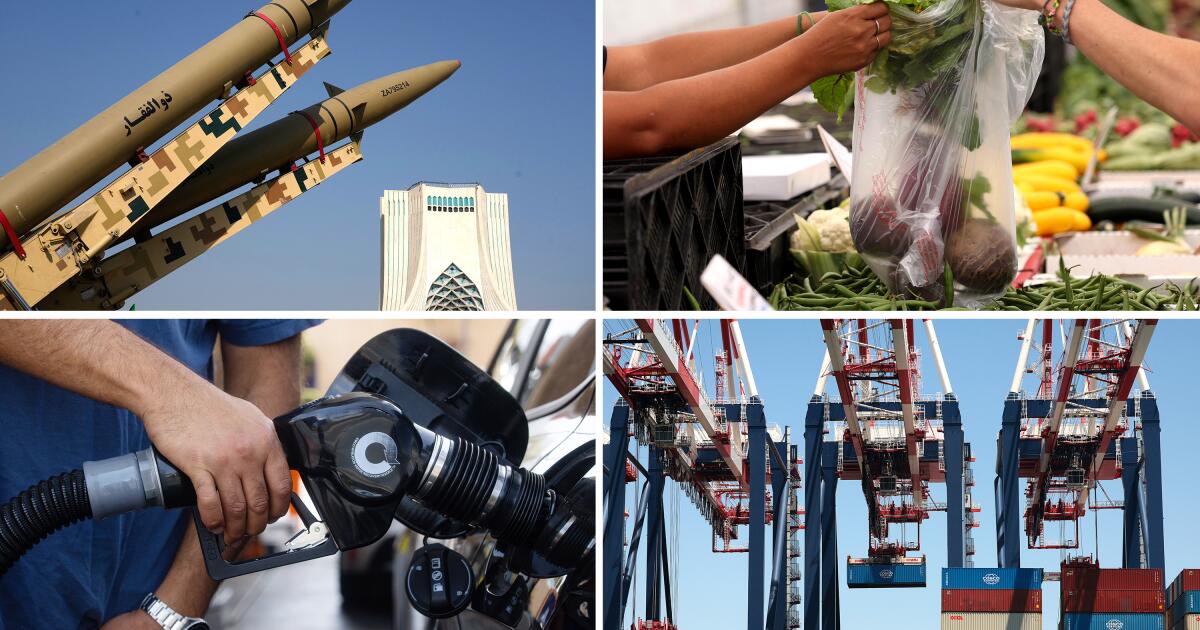
That’s in part because the Trump administration has very few levers to turn the tide in such a short period, and has shown little interest in using those it does have, experts said. Rather, President Trump has persisted in waging war in Iran and pushed forward with new tariffs on trade partners despite both contributing to soaring costs for food, gas and other basic necessities.
Other options, such as issuing rebate checks for consumers or releasing strategic oil reserves, would be costly in the long run, experts said.
“There isn’t much available on a 14-week clock that doesn’t cost more later than it delivers now,” said Patrick Harker, professor at the University of Pennsylvania Wharton School and former president of the Federal Reserve Bank of Philadelphia.
The Federal Reserve on Wednesday also declined to use its primary tool for reducing inflation — increasing interest rates — by instead holding rates steady. Trump had not supported a rate increase, instead pressuring the central bank to lower rates, which can lower borrowing costs but increase inflation.
Some factors driving up costs are virtually impossible to resolve in the near term, such as damage to oil refining capabilities in the Middle East as a result of the war in Iran. Others are already baked into pricing to come as a result of tariffs and fuel costs, including for groceries, experts said.
Incumbent parties often suffer midterm losses when voters are broadly pessimistic about the economy, as they are now despite remarkable resilience in the U.S. labor market and strong stock returns.
Consumer prices declined in June for the first time in six years, largely thanks to a decline in gas prices as the Iran war appeared headed toward a resolution — which is no longer the case.
New data Thursday showed the U.S. economy growing at a sluggish 1.5% pace from April through June. It also showed consumer spending and inflation slowing down. But slowing inflation has not meant lower costs.
As the Iran war entered its sixth month this week, average gas prices nationally climbed back above $4 a gallon. On Wednesday, the price of Brent crude oil rose to $90 a barrel as the U.S. and Iran carried out new strikes.
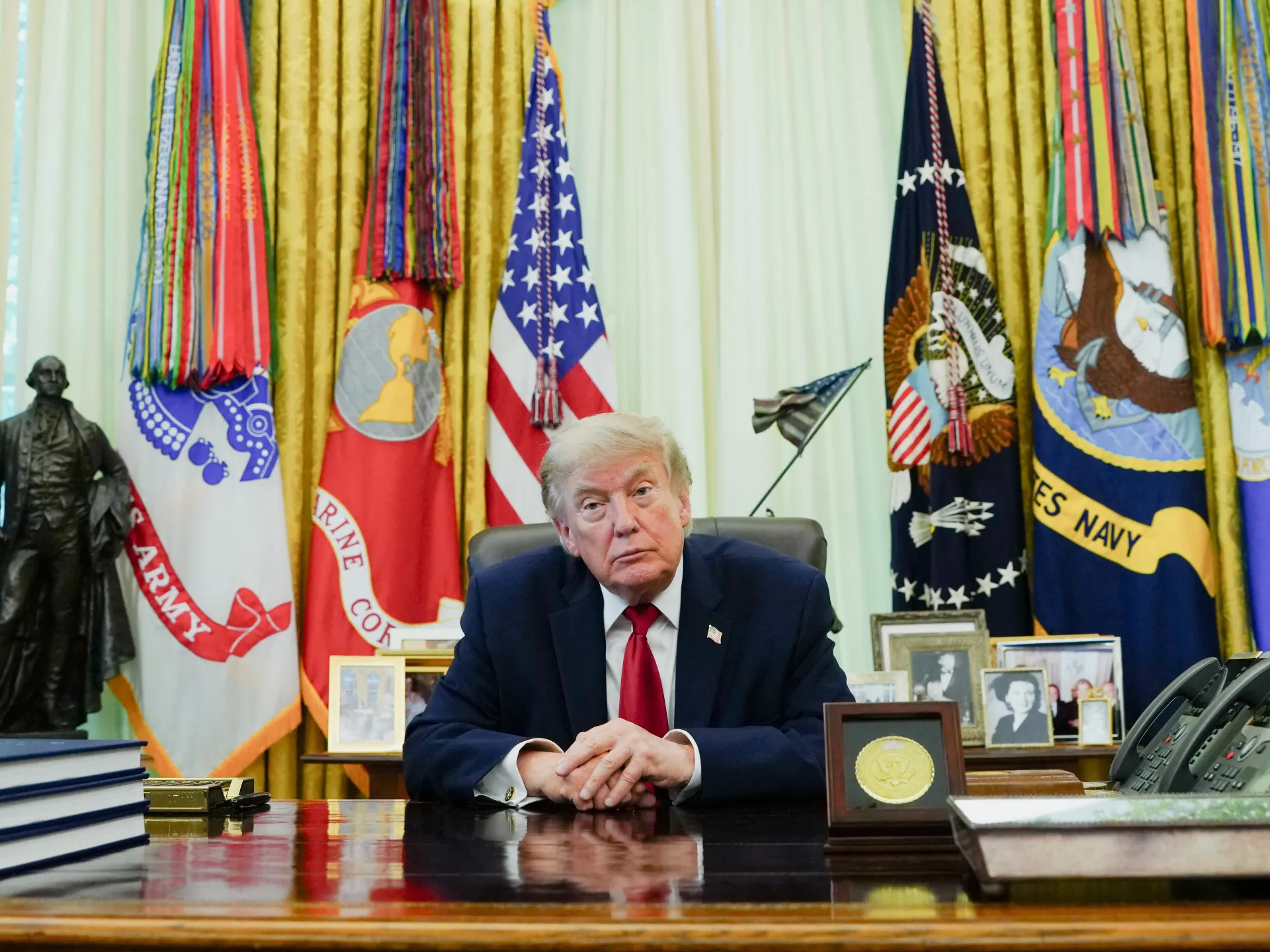
The White House did not respond to a request for comment. However, Trump asserted Wednesday that the economy is strong — citing in part new U.S. automobile plants as evidence — while slamming the Federal Reserve’s decision to leave interest rates unchanged.
“They want to keep rates up, but we will fight through this,” Trump told reporters at an Oval Office event. “We have things that are going on in our country in the likes of which no one has ever seen.”
As Democrats have seized on the economy as the midterms’ defining issue, Trump has promised improvements but also called affordability concerns a “hoax.” Last week, he rejected the notion that he should rethink his unpopular Iran strategy because of the looming midterms.
“No, the election — I can’t think about that having to do with this,” he said before renewing attacks last week. “I think people are very impressed.”
Jonathan Nagler, a New York University professor who studies how the economy shapes politics, said it is impossible to predict how voters will feel about the economy three months from now, because there are so many variables.
But data make clear that “the better the economy is, the better the incumbent does,” and voters will blame Trump and his party for their economic woes if they persist, Nagler said — particularly with gas prices, which are “a non-trivial expense” that is “super directly tied to Trump.”
“Democrats can draw a very straight line from a decision by Trump to go to war with Iran, and gas prices rising. That is just very, very easy to explain to people in a pretty convincing way,” Nagler said. “Democrats can try to say, ‘Hey, there should be some accountability here.’”
Diane Swonk, chief economist at KPMG, said inflation has compounded for years “to make the level of prices too high for too many,” and is clearly the biggest economic issue facing many Americans.
“And that’s not likely to change in the next few months, where you still not only have some of the spillover effects of the war in Iran to play out — most notably in terms of the fall harvest and food prices, which will go well into 2027 — but also just the on-again, off-again truces and the damages to refining capacities,” she said.
All of that is adding to “simmering” service sector inflation and Trump’s latest tariffs, which mean “more paperwork, more costs, and another bump in prices in the pipeline,” Swonk said.
Harker said the administration has no good options for bringing down prices by November. Reducing tariffs takes time to filter down to shelf prices, so that can’t offer a quick fix even if Trump were to decide to cut them, he said.
The biggest variable between now and November is energy, Harker said, and no economic tool allows the administration to control what happens in the Persian Gulf. Even if Trump’s war with Iran were to end, economists say it would take a significant amount of time for gas prices to come down.
The Fed could decide to raise rates in September, but Harker said that would take time to filter through the economy and would do “nothing” ahead of November.
On the campaign trail, Trump promised to immediately “reverse the disastrous effects of [President] Biden’s inflation and rebuild the greatest economy in the history of the world,” one where “incomes will skyrocket, inflation will vanish completely, jobs will come roaring back, and the middle class will prosper like never, ever before.”
A recent CNN poll found that 65% of Americans believe Trump’s policies have worsened economic conditions in the country, while less than a quarter — 22% — said they had improved conditions, and that 67% believe Trump’s choices in Iran hurt the U.S.
The poll found Trump had a 34% approval rating, matching a career low from the end of his first term, and that his support fell even lower on key issues: to 28% on Iran, 25% on inflation and 21% on gas prices.
A recent Pew Research Center survey found most Americans aren’t feeling great about the economy — with 24% rating economic conditions as excellent or good, 41% rating them as “only fair,” and 35% rating them as poor. It also found that voters want candidates running for Congress in November to talk about economic issues.
Democrats see the poll numbers as an opportunity to win over swing voters, which becomes more urgent as the campaign enters its fall stretch.
House Democratic Leader Hakeem Jeffries (D-N.Y.) last week placed blame for rising costs squarely on Trump‘s tariffs, his “reckless war of choice” in Iran, and cuts to healthcare made in last year’s federal spending package.
Vidhya Jeyadev, a spokesperson for Majority Democrats, which is focused on growing the party, said Democrats now have an opportunity to bring in Republican voters disillusioned with the president’s handling of the economy.
“We need to tie what people are feeling day to day — rising rent, groceries, utility costs — directly to the choices that Trump and Republicans have made,” Jeyadev said.
Many Republican leaders have acknowledged economic challenges while defending Trump’s policy decisions.
They have broadly backed the war in Iran as a necessary step to halt Iran’s nuclear ambitions. House Speaker Mike Johnson (R-La.) recently defended Trump’s tariffs, too, acknowledging some sectors have experienced “challenges” as a result, but saying “all that’s settling out as we go into this election cycle.”
Swonk said some economic indicators do show a surprisingly strong economy that benefits the rich.
However, “there’s a reason people are upset, and that’s because inflation, much like stock returns, has compounded — but not everybody has stock returns. Everybody feels inflation. And that drives a larger wedge between the haves and the have-nots,” she said.
“What anyone really cares about is the prices that went up didn’t come back down, and their wages didn’t keep up with it,” Swonk said. “It doesn’t feel like you can do as many things as you once did. And that’s hard.”
Last week, it was reported that US President Donald Trump placed massive attacks on Iran on hold after a meeting with advisers at the White House. Clearly, domestic political pressure on him and on the Republican Party over rising economic costs is fierce. Current polls suggest nearly 70 percent of Americans oppose the war.
Despite assertions, notably by Secretary of Defense Pete Hegseth, that Iran’s military has reached “its lowest point ever”, Iran is still able to conduct massive drone and missile strikes. Some intelligence suggests Iran has reconstituted and increased its capacity to build these weapons.
Meanwhile, the US has moved more aircraft and missile defence units in preparation for what may be a campaign to target staging points for Iranian forces. Two Marine Expeditionary Units (MEUs) and components of the 82nd or 101st Airborne are currently stationed in the region.
Yet, reports that the US and its Gulf allies have exhausted defensive missile magazines, as well as Tomahawk land-attack missiles, may be a powerful constraint.
While Trump appears not to have made a decision yet, he has several options on how to move forward.
The first option is ramping up air and missile strikes. One of the challenges of this strategy is that the list of military targets may have been exhausted. If so, expanding the aerial campaign would mean attacking largely civilian infrastructure, including energy production facilities, electricity and power grids, bridges and roads, and television and phone networks. The likely outcomes are all bad.
Trump would be accused of war crimes. The Iranian public would coalesce in their resentment against the US. Iran’s ability to strike back would not be significantly curbed and it may strike Gulf desalination and energy infrastructure. The result would be a humanitarian catastrophe. No plans exist to deal with this contingency. And of course, oil could soar to $150 or even $200 a barrel, triggering an international economic disaster.
Another option is a ground invasion of some sort. The forces currently deployed in the region are too small to achieve any realistic military objectives. A MEU numbers about 2,500 marines and only 800 of them are infantry, able to conduct very limited ground operations. Airborne units deploy with only a few days worth of bullets, beans and batteries. Resupply is essential for these units.
As retired US Army General Barry McCaffery has pointed out, even 150,000 troops may not be enough to secure control of the Strait of Hormuz along the Iranian coast.
Attacking Kharg Island requires a long and dangerous transit from the western end of the Strait of Hormuz. That would create conditions for a high number of casualties among US troops.
The third option is for Trump to employ a nuclear weapon, at least as a demonstration shot. That would open a catastrophic Pandora’s box of consequences. Trump would be declared a war criminal. Wherever and however the weapon is detonated—an air or surface burst—it would have destructive outcomes.
If exploded exoatmospherically, the nuclear bomb would emit an electromagnetic pulse (EMP) which would destroy virtually all chip-installed systems for hundreds of miles beyond Iran. Few modern militaries, including in the Gulf, are protected from EMP due to costs. A surface burst would form a radioactive cloud that would travel east given the winds and affect populations well beyond Iran.
A major geopolitical consequence would be that such an attack could change the way Russia’s President Vladimir Putin sees the possibility of using nuclear weapons in the war in Ukraine.
Given this list of unpalatable options, the most promising is to claim victory and pursue negotiations. Trump will say he has brought Iran to the negotiating table even though talks between Washington and Tehran have not stopped despite the escalation. The first issue would be reopening the Strait of Hormuz and Bab al-Mandeb. Oil prices would drop. Stock markets would rebound.
Trump would take the credit. And a devastating war and economic crisis would be sensibly avoided. This is his best and only sensible option.
The views expressed in this article are the author’s own and do not necessarily reflect Al Jazeera’s editorial stance.
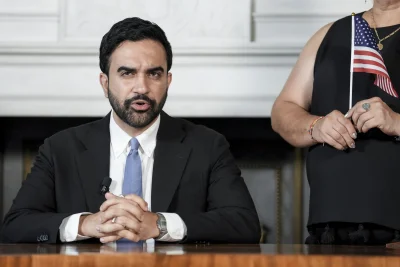
July 18 (UPI) — New York City Mayor Zohran Mandani on Saturday said his government is reviewing whether it could legally arrest Israeli Prime Minister Benjamin Netanyahu over accusations of war crimes.
In 2024, the International Criminal Court issued a warrant for the prime minister’s arrest over alleged war crimes and crimes against humanity in Gaza, including starvation and attacking a civilian population.
“I believe that Prime Minister Netanyahu belongs in The Hague,” Mamdani told The New York Times. “He’s a war criminal who has been charged by the International Criminal Court, and what you will find is that is an opinion that is held by many, purely because of what his actions have wrought over these past many years.”
Mandani said his legal team is reviewing the city’s options.
“We’re not talking about a personal assessment of Benjamin Netanyahu,” the mayor told The Times. “We’re talking about the International Criminal Court and the fact that they have a warrant out for this prime minister’s arrest, and I think it’s important to talk about the weight that that has as a charge and that also, as the mayor of New York City, I’ll be following the laws of New York City.”
Netanyahu has denied the ICC charges and disputes the court’s jurisdiction.
In a previous interview, the prime minister claimed without evidence that Mandani is a Hamas supporter.
“He is with the terror actors,” he told WABC. “I think, secretly, he hates America.”
Michael Waltz, the U.S. ambassador to the U.N., called Mandani’s comments “pure political theater.”
“The U.S. is not party to the Rome Statute that underlies the ICC,” he wrote on X, adding, “The U.N. Headquarters Agreement grants diplomatic protections to visiting heads of government.”
A woman applies sunscreen to her face. On Tuesday, the U.S. Food and Drug Administration said it will allow the first new permitted ingredient in over-the-counter sunscreens in 20 years. File Photo by Bill Branson/National Cancer Institute
June 9 (UPI) — The U.S. Food and Drug Administration on Tuesday added bemotrizinol to the list of permitted active ingredients in over-the-counter sunscreens, the first addition to that list since the 1990s.
The Department of Health and Human Services “is advancing innovation by bringing a new sunscreen ingredient to the U.S. market for the first time in 20 years,” HHS Secretary Robert F.Kennedy Jr said. “Bemotrizinol has been used safely in Europe for decades, and FDA’s action will increase competition and consumer confidence in sunscreen products.
The FDA said the ingredient has low levels of absorption through the skin and into the body and is generally recognized as safe and effective for adults and children 6 months old and older.
The American Chemical Society said that BEMT blocks ultraviolet A and ultraviolet B light rays and was first used in sunscreens in the European Union in 2000, with Canada, Australia and some countries in Asia following suit soon after.
UV B rays have more energy, cause visible sunburns and are the ones blocked by most U.S. sunscreens today. However, UV A rays can also cause skin cancers, the American Cancer Society said. They also cause skin cells to age and can cause indirect damage to cells’ DNA. The ACS said about 95% of the UV rays that reach the ground are UV A rays.
The FDA said an over-the-counter monograph drug, such as a sunscreen product, can enter the market without an approved drug application if it meets certain requirements. DSM Nutritional Products LLC submitted an OTC monograph order request to add BEMT, at concentrations up to 6%, as a new active ingredient in the OTC monograph for sunscreens. The FDA proposed to add BEMT in December, and the public could submit comments through Jan. 26.
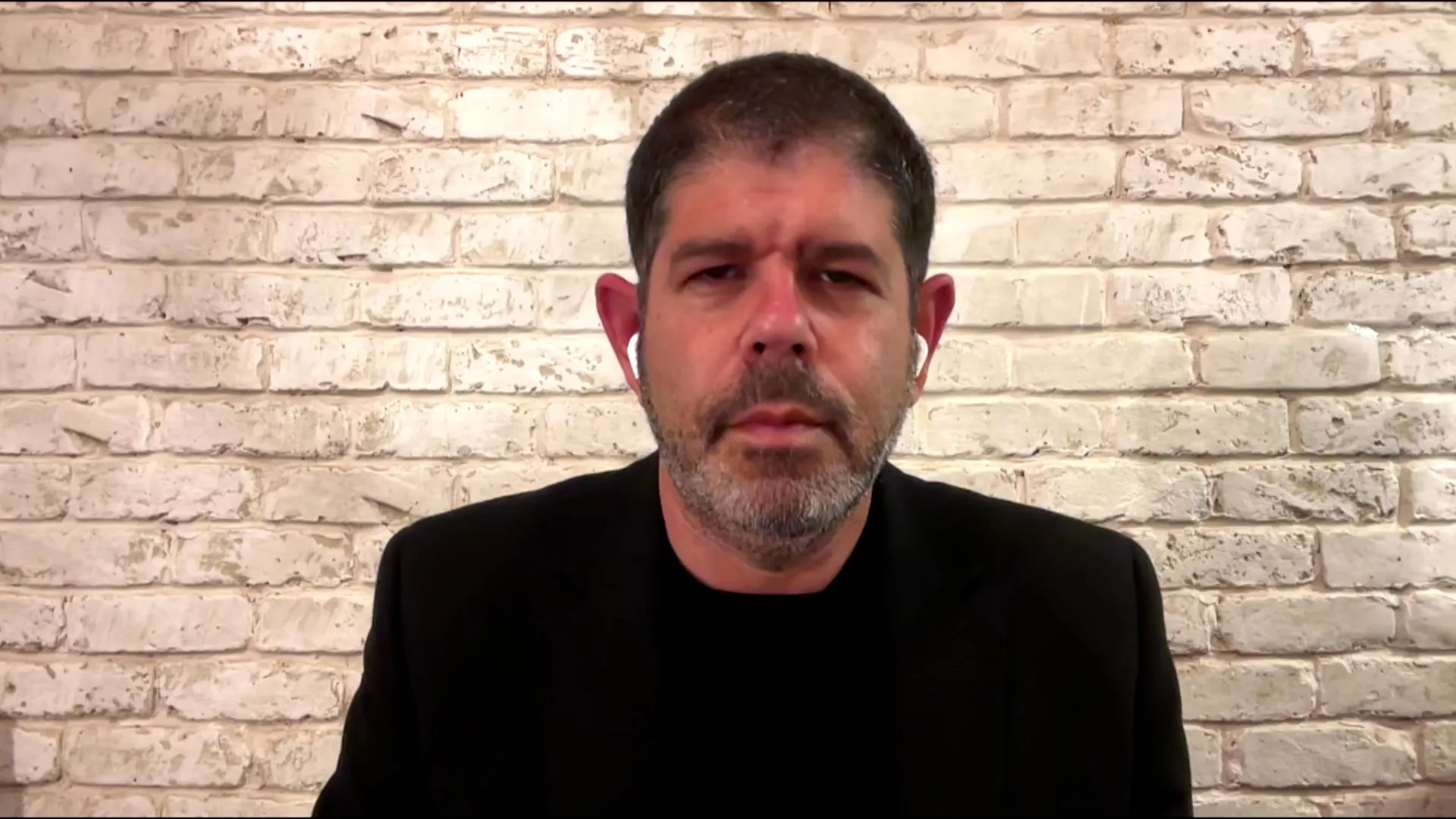
Yariv Oppenheimer told Al Jazeera that Israeli PM Benjamin Netanyahu has incentives to escalate tensions with Iran and Hezbollah but is constrained by US President Donald Trump and US interests. He said Iran’s June 7 response was a warning, not a push for war, and doubts Trump would allow major Israeli retaliation.
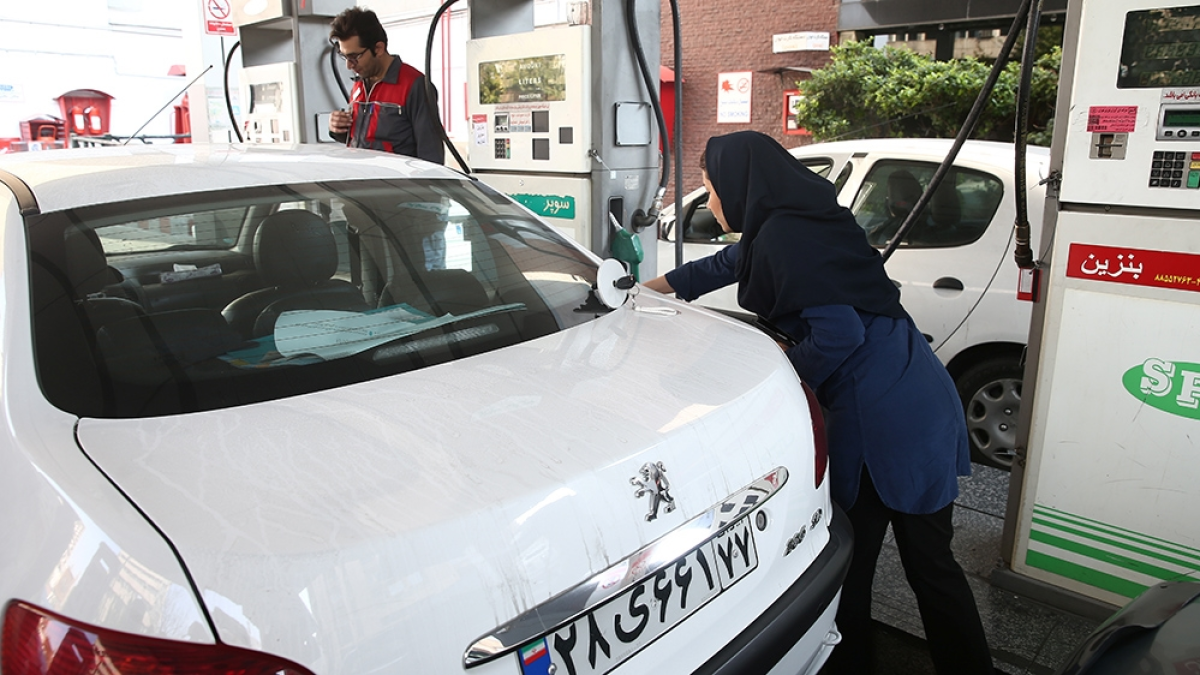
Tehran, Iran – Iran is facing more energy constraints as its summer season begins, with the widespread use of air conditioning and other needs during hotter months contributing to an imbalance between supply and consumption.
For decades, successive Iranian governments have kept utility bills well below supply costs for households and offices through a mix of implicit oil-and-gas subsidies, administered tariffs, state-controlled pricing, and sometimes direct financial support.
The negative impacts of the war with Israel and the United States on the economy mean the government has fewer tools at its disposal to deal with an energy crisis this summer.
Despite having the world’s third-largest proven crude oil reserves, Iran will have to import fuel again as demand outpaces refinery output.
President Masoud Pezeshkian has repeatedly urged households and offices to take practical steps to limit energy consumption. Last week, he removed his jacket during a government meeting to demonstrate how Iranians can avoid turning down their air conditioning thermostats in their offices.
Even though energy costs for households are much lower than in other parts of the world, corruption, mismanagement, sanctions, chronic inflation and currency devaluation have eroded the benefits Iranians usually feel from subsidised energy prices.
In November 2019, the government announced a tiered gasoline price scheme that would see huge increases for some consumers. This sparked nationwide protests, and since then, the government has been wary about similar price hikes.
While inflation has galloped on, continued subsidies have kept fuel artificially low.
The administration’s attempts to tackle the subsidies burden due to a mounting budget crunch have resulted in only limited increases in petrol through a complex three-tiered pricing system.
This is applied via a government-issued fuel card, giving most users of Iranian-made vehicles access to 60 litres (15.85 US gallons) per month of subsidised petrol at 15,000 rials (0.8 cents) and another 100 litres (26.42 gallons) at 1.6 cents.
Iranians going over this amount then must use an “emergency card” issued at petrol stations, permitting them to an additional 30 litres (7.9 gallons) of fuel a day at 50,000 rials (about 2.9 cents) per litre.
After a new cap was imposed during the war to limit fuel consumption, each card allows only 30 litres of fuel a day. Petrol stations are issued their own “emergency card” for uses beyond this limit.
Due to supply constraints, staff at petrol stations have now reportedly been instructed to limit the use of these cards to 10 to 15 litres (up to 4 gallons) or asked not to issue any new cards at all to customers.
The Iranian government is running similar schemes for natural gas, electricity and urban water, with fears of social unrest making them averse to any sudden price hikes.
There appears to be little the government can do to bridge the divide between lower energy production and growing demand for subsidised fuel, illustrated by the perpetual queues at petrol stations since the start of the war.
“Reforming and increasing the price of energy is currently not feasible and logical due to the current economic conditions and social concerns,” Esmail Saghab Esfahani, a vice president of the state-linked Organization for Energy Optimization and Strategic Management, said earlier this week.
There have been some changes to pricing structures, but this is impacting small businesses that are already struggling with the dire economic conditions in Iran.
One 35-year-old owner of a welding workshop near Tehran, who asked to remain anonymous, told Al Jazeera that a surge in his monthly energy bill from 40 million rials ($23) per month in the previous Persian calendar year to three times that today.
“I went to the electricity company, and they only kept saying the tariffs have gone up,” he said.
“I had a similar message from a friend who is paying much more now for roughly the same usage as before, so it looks like we’re to pay for the cost of war.”
Authorities say that any complaints about escalating bills will be reviewed. They also have a system where normal household energy consumption is kept artificially low, but excessive users can be billed as much as 45 times the normal prices.
Despite having the second-largest proven natural gas reserves in the world, Iran still suffers from perpetual supply shortages during its winter and summer, when consumption is at its highest.
The situation has worsened during the war, with strikes on Iranian energy facilities seeing Iran’s gasoline production capacity drop marginally from 115 million litres (30.37 million gallons) per day to 110 million litres (29.06 million gallons). Meanwhile, consumption has jumped from 10 million litres (2.64 million litres) in 2025 to 140 million litres this year (36.98 million litres).
US President Donald Trump’s threats of more strikes on power plants have heightened fears of further blackouts and gas shortages this summer, meaning the energy crisis is likely to continue in the coming months.
TAKE this as your sign to grab your faves and book a brilliant spa break.
From Champneys, Tring to The Greenway Hotel & Spa, Cheltenham and a Fab find in Faversham – we’ve got you covered for rest and recuperation.
Sign up for the Travel newsletter
Thank you!
Champneys, Tring is set in 170 acres of beautiful countryside, and was once owned by the Rothschild familyCredit: JACK HARDY
THE FRIENDS’ GET-TOGETHER – Champneys, Tring
Editor in chief Sinead McIntyre and pals found R&R in Hertfordshire.
THE PAD
Set in 170 acres of beautiful countryside, this stately home, once owned by the Rothschild family, gives immediate Downton Abbey vibes, thanks to the sweeping staircases, huge chandeliers and grand fireplaces that are home to roaring fires on cooler days.
As do the rooms, with their opulent floral curtains and plush carpets.
Much to our delight, on arrival we are upgraded to two deluxe suites – mine has a super-king-size bed, adjoining lounge and two bathrooms, as well as stunning views of the grounds.
There is no scrimping on the toiletries here either, with both Champneys and Elemis products, as well as soft white robes and slippers.
The standalone bath is the centrepiece of one bathroom, while the second has an invigorating rainforest shower.
The lounge is the perfect spot for a much-needed gossip, washed down with complimentary bubbles. Champneys, which celebrated its 100th birthday last year, also has more exercise classes than you can shake a stick at, from reformer Pilates to pickleball and HIIT, so we sign up for a legs, bums and tums class, followed by stretch and relax by candlelight.
There are also maps for walks in the extensive grounds and we enjoy a wholesome 45-minute stroll before dinner.
THE SPA
Its spa featured a 25m pool, sauna, steam room and alfresco JacuzziCredit: Supplied
With its 25m pool, sauna, steam room, whirlpool and alfresco Jacuzzi, this is relaxation at its best – and that’s before you even book a treatment.
However, definitely do!
My 50-minute Upper Body Bliss massage, £105, using Elemis oils, was absolutely gorgeous and got rid of the tension I was holding in my shoulders after a stressful few months at work.
THE GRUB
The evening menu at Champneys is the star of the showCredit: Supplied by STEVE LANCDFIELD
There are so many delicious food options – stays are full-board, and breakfast and lunch are both buffets with tasty cereals, yoghurt, fresh fruit and bagels each morning and delicious meats, salads and pasta dishes come lunchtime.
But the evening menu is the star of the show.
We loved the pulled oyster mushroom taco and the crab and prawn summer rolls to start, while the sirloin steak with peppercorn sauce and the monkfish curry were both melt–in-the-mouth.
Make sure you leave room for the deconstructed honeycomb cheesecake for pudding, while the cheeseboard is also a winner.
OUT AND ABOUT
Forget it, you’re here to chill and chat.
BOOK IT
Full-board stays at Champneys, Tring, cost from £210 per person, per night (Champneys.com).
THE COUPLE’S ESCAPE – The Greenway Hotel & Spa, Cheltenham
Senior Assistant Editor Sarah Barns and husband Patrick cosied up in the Cotswolds.
The Cotswolds is pretty inside and outCredit: Supplied
THE PAD
Suite dreams at The Greenway Hotel & SpaCredit: Kieran Brimson
Throw open the velvet drapes, take in the stunning views and relaaaax. Winner of four AA Red Stars, this gem, just 13 minutes’ drive from Gloucester train station, offers the perfect rural recharge.
The Elizabethan manor house blends historical charm with modern luxury, and although there are 21 newly refurbished bedrooms to choose from, our pick is the Manor Suite, where the bed is so large you can both starfish, the marble bathroom comes with a bath and walk-in rainfall shower, plus there’s a cosy living area.
THE SPA
Make a splash in the hydrotherapy poolCredit: Kieran Brimson
Take a dip in the hydrotherapy pool and outdoor vitality pool, sweat it out in the sauna and steam room, and indulge in a TempleSpa treatment at the Elan spa, awarded five bubbles by the Good Spa Guide.
Hot stone massages, which use warm basalt stones (essentially giant black rocks) to harmonise energy points throughout the body, fixed our tense muscles and helped us instantly de-stress.
The Rocks Of The Mediterranean 75-minute treatment costs from £119 per person.
THE GRUB
Posh picky bits at The Garden RoomCredit: Supplied
The Garden Room restaurant, run by talented head chef Abhijit Dasalkar, offers a brilliant value à la carte dinner.
Think treats like Cornish crab with lemon, yuzu gel and edible flowers – one of the prettiest plates I’ve ever seen – and beef wellington served perfectly pink.
Three courses cost £67.50 per person.
Opt for the veggie Full English come morning – it’s a winner.
OUT AND ABOUT
Hit Cheltenham, 15 minutes’ drive away, for indie shops, as well as faves like Jo Malone, Toast and Reiss, plus Regency architecture.
Hatchards bookshop gives Hogwarts library feels, and Society Coffee serves up excellent flat whites, £4, and scrumptious chocolate cruffins, £3.95 (Society-cafe.com).
A short walk from the hotel is the Leckhampton Loop, a four-and- a-half-mile amble in gorgeous Cotswolds scenery.
Some parts are hilly, so you’ll have earned your lamb roast, £25.95, and sticky toffee pudding, £8.95, at The Frogmill (Thefrogmill.co.uk).
Enjoy the therapeutic heat of the Finnish barrel saunaCredit: Supplied
You don’t need a swish spa hotel in this Kent town, says Contributing Picture Editor Ruth Greatrex.
Embracing the therapeutic heat of the Finnish barrel sauna, my friend Katie and I gaze out at the vivid green fields, our skin slathered with sea-salt scrub, fragrant with rose petals and uplifting orange oil.
Staff are poised to bring juices, kombucha, or even a cocktail at the ding of a bell, too.
Once suitably baked, we brave the chilly overhead water bucket, then plunge into the ice-cold barrel.
A restorative soak in the wood-fired hot tub later, we both emerge with baby-soft skin and feel thoroughly revived.
This Sea Scrub Sauna sits on the site of Macknade, one of England’s best farm shops and a family-run spot where apples and hops have grown since 1847.
We grab lunch at the new street-food village, digging into miso cream mushrooms, £11, at Hop Shed Bar & Kitchen, washed down with zingy Faversham bacchus, £9 a glass, and finishing with brown butter popcorn ice cream, £4.15, from Bears Ice Cream, before checking out the amazing food hall (Macknade.com).
Family-owned country estate Mount Ephraim Gardens is 10 minutes’ drive away and offers rooms.
We play ladies of the manor, strolling through the pretty rose gardens and even spy the sea from the Sir Edwyn Suite, which has a freestanding bath.
Come morning, we’re tempted back to Macknade for pancakes with blood orange and rhubarb compote, £12.
Although there are HIIT and spin classes on offer, I go for a soothing hot-stone aromatherapy massage, from £35 for 30 minutes (@Serene_ massage_therapies).
You don’t need long here to rediscover your zen. . .