opening match

Fox pivots to partial ads during World Cup hydration breaks

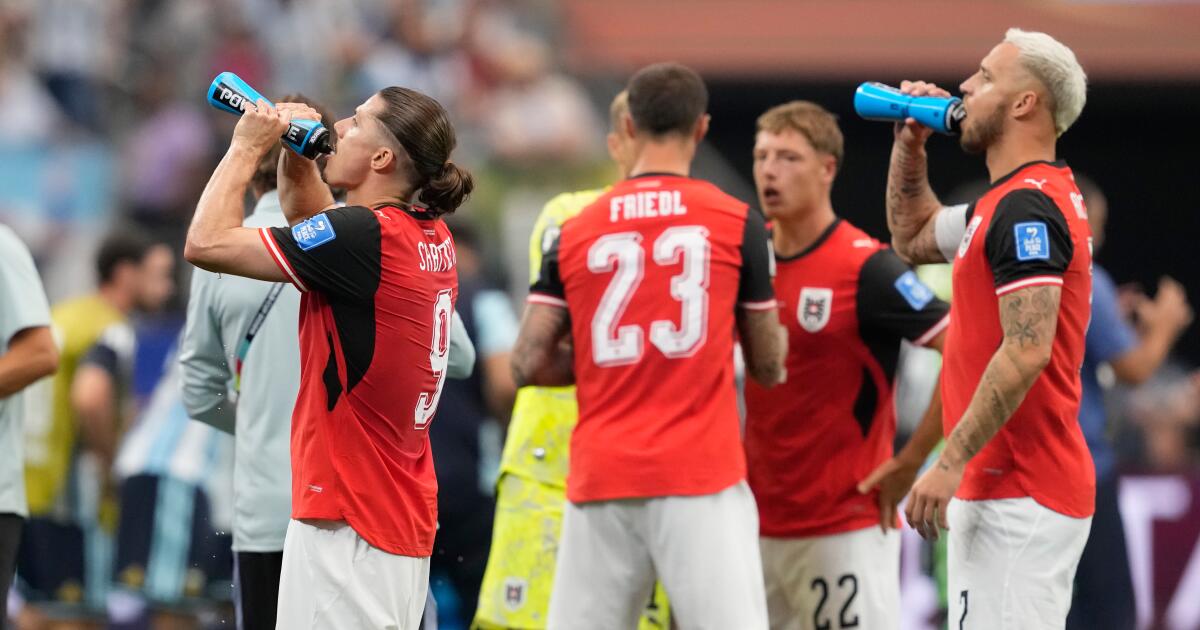
Fox has adopted a new split-screen approach to ads during the World Cup’s mandatory hydration breaks, after a stir among viewers over how it had been handling the pauses.

At the start of the tournament, the network aired full-screen ads during the three-minute breaks, cutting away from the field during the opening match between Mexico and South Africa. Soccer fans complained that they were missing on-field action, and the backlash mounted.

By the Mexico-South Korea match last week, Fox had changed course, running split-screen advertisements for the first time: two side-by-side panels, one keeping the camera on the stadium while the other played a commercial. The approach hasn’t been consistent, though. For Friday’s U.S.-Australia match, the network reverted to full-screen ads.

Fox declined to comment on the changes.

Viewers were quick to notice the split-screen format and weigh in on social media. “At least FOX stopped doing the stupid full screen breaks,” one user wrote on X. “I can live with split screen.”

The World Cup has posted substantial ratings gains for Fox.

Throughout the first 16 telecasts of the tournament, the network is averaging more than 6 million viewers from Fox and Fox Sports 1, up 128% from 2022’s World Cup in Qatar. The broadcast of the U.S. team’s first game this month was the most-watched FIFA Men’s World Cup telecast in English in U.S. history, with more than 18 million views, according to the network.

The hydration break itself is new to the World Cup. FIFA announced it in December as a way to protect players’ health in the summer heat. In every match, the referee is to call for a break around the 22-minute mark of both halves, regardless of the weather.

In addition to helping the players, these extra minutes created a new advertising window. Networks are allowed to leave the on-field action 20 seconds after the referee signals the hydration break and return 30 seconds before play resumes, allowing for ads of up to two minutes and 10 seconds in total. They can air any full-screen ad they’d like, or run a split-screen ad — though a split-screen has to feature a FIFA partner, such as Coca-Cola or Adidas.

Ads during the tournament’s earlier games reportedly cost around $200,000 for a 30-second slot. The price jumps to $750,000 when the U.S. is playing, according to the Wall Street Journal.

When any rules change in televised sports, the most dedicated fans are going to get upset, said Patrick Rishe, the director of the sports business program at Washington University in St. Louis. Despite all the online uproar, he said that the hydration breaks are overall beneficial, as they allow networks an extra opportunity to recoup revenue and brands to get additional exposure.

“This is commercially fantastic for FIFA and the networks. It’s tactically helpful for the teams, and I do think it’s helpful for growing interest in the sport,” Rishe said. “It makes it easier for the casual fans to stay engaged.”
Source link

With calmer nerves, Mexico hopes to top South Korea at World Cup

Goalkeeper Raúl Rangel was 18 years old and playing for Chivas de Guadalajara’s youth academy the last time Mexico faced South Korea in a World Cup match in 2018.

Three years ago, when asked who might be the next great goalkeeper for the Mexican national team, Rangel named himself ahead of veteran Guillermo “Memo” Ochoa. A bold statement for a player who was just making his professional debut.

On Thursday, the 26-year-old goalkeeper will defend El Tri’s goal during his second World Cup match at Guadalajara Stadium — where he usually plays home games with Chivas — when Mexico takes on South Korea at 6 p.m. PDT on Fox/Telemundo in the second match of Group A.

“I told everyone, ‘I see myself at the World Cup.’ Some people laughed,” Rangel recalled. “I’d been picturing myself on the national team for three years.”

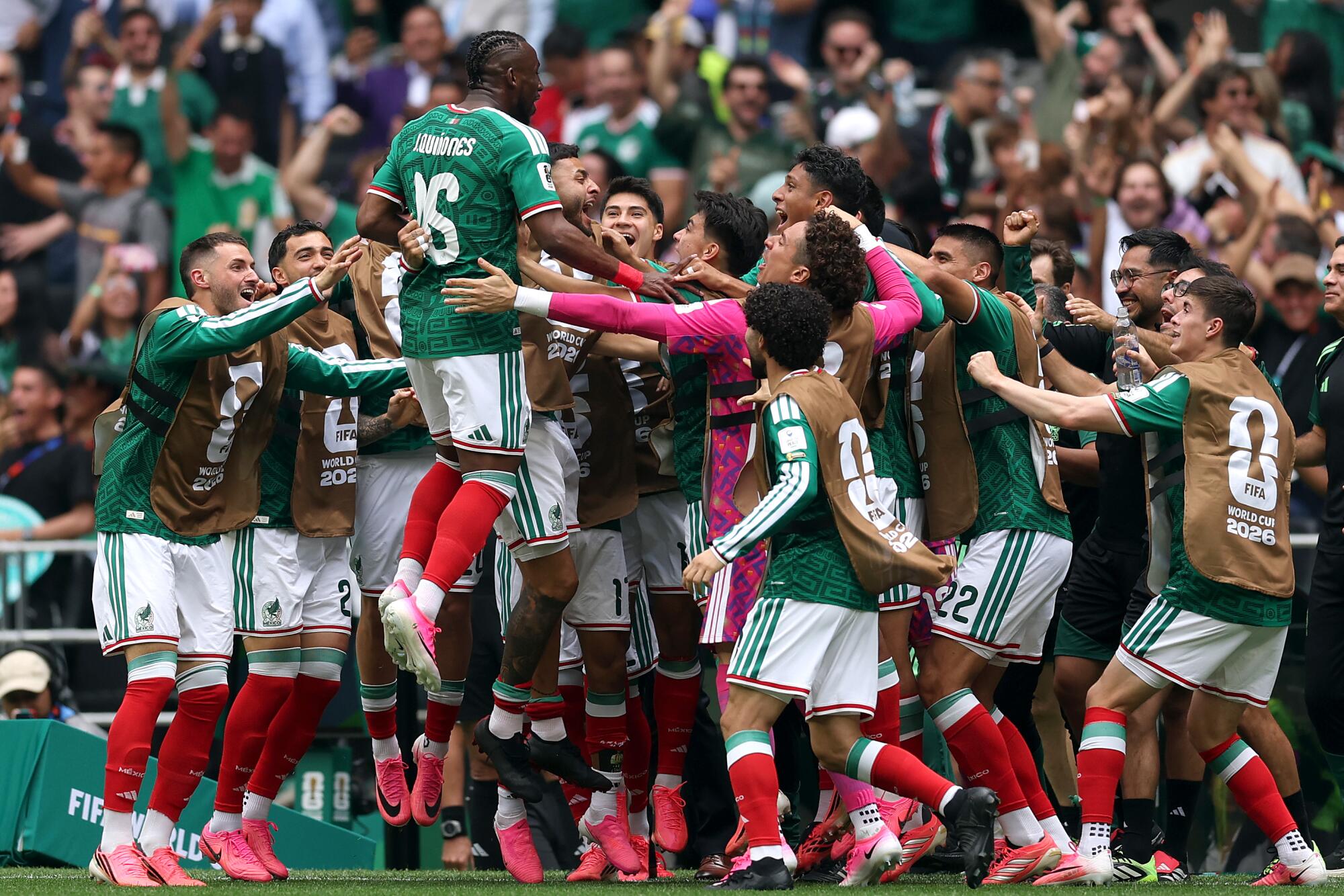
Mexico's Julian Quinones celebrates with teammates after scoring against South Africa at Azteca Stadium on June 11.

Mexico’s Julian Quinones celebrates with teammates after scoring during a World Cup match against South Africa at Azteca Stadium on June 11.

(Luke Hales / Getty Images)

Mexico and South Korea won their opening matches — El Tri against South Africa and the South Koreans against the Czech Republic — so the winner of this match will take first place in the group and secure its spot in the next round. The incentive is clear for Mexico, as the group winner will play the next two knockout rounds at Azteca Stadium, where El Tri has never lost a World Cup match.

The second-place team, on the other hand, would have to travel to Los Angeles for its next match. While the opponent could be tougher, Los Angeles would be a comfortable destination for South Korea — it has a strong fan base in L.A. and wouldn’t have to contend with Mexico City’s high altitude.

After an opening match in which Mexico coach Javier Aguirre acknowledged that the pressure of the first day affected the team’s performance and that the emotional atmosphere at Azteca Stadium had “weighed heavily” on several of his players, the coach and the players hope to deliver a sharper performance against South Korea.

“Yes, there was a bit of nervousness, a bit of fear,” Mexico midfielder Erik Lira admitted after the opener.

“We need to be more decisive; the win has calmed the nerves we’ve had over the last few days,” Mexico defender Israel Reyes said.

But if Mexico wants to excel, it needs not only to put its nerves behind it but also to improve tactically. Mexico, a co-host of the tournament alongside the United States and Canada, is aiming to reach the knockout stage of the World Cup and advance beyond the round of 16. El Tri has won only one match in the knockout stage — in 1986, when it defeated Bulgaria 2-0 at Azteca Stadium.

“I think that mental aspect has been missing for us. We have to believe that we can achieve great things,” Rangel said. “I truly believe I’m going to be a champion with Mexico. We have a responsibility as hosts.”

The match will be played at Guadalajara Stadium, 5,138 feet above sea level, and will mark the first time Mexico has played a World Cup match in the city.

Chivas, Mexico’s most popular club team, has the most players on the national team with five and all of them will get to play their second World Cup match on their club’s home turf. Brian Gutiérrez, the Mexican American who played a key role in the opener as South Africa was hit a with a red card while trying to stop him, and veteran Roberto Alvarado, who recorded an assist against South Africa, joined Rangel as Chivas starters in the opener. Bench players Luis Romo and Armando González, who also saw action in the opener, also play for Chivas.

Mexico captain Edson Álvarez challenges South Africa's Themba Zwane during a World Cup match at Azteca Stadium.

Mexico captain Edson Álvarez challenges South Africa’s Themba Zwane during a World Cup match at Azteca Stadium on June 11.

(Carl Recine / Getty Images)

Aguirre will have to make at least one lineup change against South Korea, with Edson Álvarez replacing César Montes, who is serving a red-card suspension. Álvarez is coming off an injury and it’s unclear how he will navigate the stress. Aguirre is also expected to give playing time to 17-year-old prospect Gilberto Mora in midfield — possibly in place of Gutiérrez — and to bring in Jorge Sánchez for Reyes at fullback.

South Korea arrives with a mix of European experience and a hunger for glory. LAFC star Son Heung-min is playing in his fourth World Cup and scored against Mexico in 2018. Kim Min-jae of Bayern Munich has been a rock in defensive midfield, while Paris Saint-Germain’s Lee Kang-in — who, interestingly, played under Aguirre at Mallorca — is a constant threat in creating plays. Joining them is Hwang In-beom of Feyenoord in the Netherlands.

The South Koreans have also been training for weeks at Verde Valle, Chivas’ training facility, which has allowed them to acclimate to the altitude. With the support of the Mexican crowd, they won their World Cup opening match against the Czech Republic at Guadalajara Stadium.

“It was like playing a game in Seoul,” Hwang said after the match, thanking Guadalajara for its support.

“[Mexico] is a good team, but, as you’ve just seen, we can take on anyone,” Hwang said after his team rallied from a 1-0 deficit to beat the Czech Republic.

The week, however, was not without controversy for the South Korean team, as the squad barred press from their home country after audio of media criticizing the mandatory military service exemption granted to Son was leaked. The audio also included criticism of coach Hong Myung-bo.

South Korea and Mexico faced off in September ahead of the World Cup, tying 2-2 in Nashville.

The World Cup stage, however, will be different and brings immense pressure.

Source link

Naomi Osaka’s French Open fashion statements depend on wins to matter

“Dress shabbily and they remember the dress; dress impeccably and they remember the woman.” ― Coco Chanel

Apropos of Paris. Apropos of the French Open.

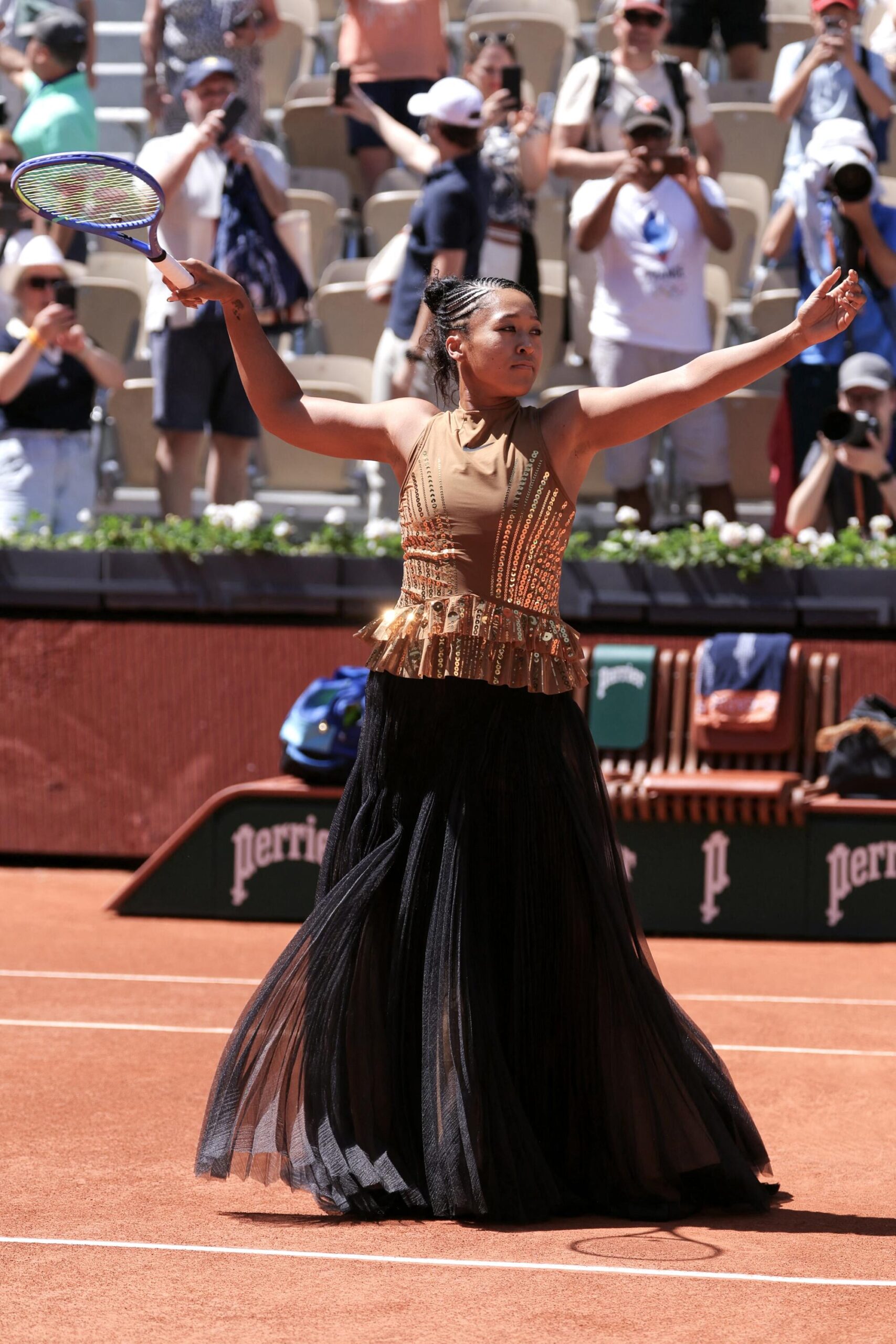
That’s all the context necessary to appreciate Naomi Osaka removing a ceremonial black skirt and sleeveless beaded bodice ahead of her opening match at the Roland-Garros Complex this week, revealing a sequined gold playing dress.

Osaka was playing all right. With sensibilities. With tradition. With her opponents, who she summarily dispatched with victories in the first and second rounds.

Naomi Osaka in a flowy pleated black skirt atop a shiny tennis dress, holding up a tennis racket

Naomi Osaka arrives on Court Suzanne-Lenglen to play her singles match against Laura Siegemund.

(THOMAS SAMSON/AFP via Getty Images)

And it was clear the four-time Grand Slam champion was playing with all of us when she said of her dress, “It’s very couture. You know the Eiffel Tower at night when it’s sparkly? I kind of think I look like that a little bit.”

Countless LinkedIn pages spout something about residing at the intersection of sport and fashion. Osaka locates that intersection at tennis tournaments worldwide, looks both ways and boldly steps into the street.

Last year at the U.S. Open she adorned her ponytail with red roses and attached a Labubu to her tennis bag that she named Billie Jean Bling.

At the Australian Open in January, she entered the court in a tie-dye turquoise and green palette with flowing tendrils. Her face was concealed by a veil, a wide-brim hat and a white parasol that she said was inspired by an image of a jellyfish that excited her 2-year-old daughter.

Naomi Osaka in a white wide-brimmed hat with a veil, white wide leg flowy pants and holds a white parasol with stairs behind

Naomi Osaka walking onto the court in a jellyfish-inspired ensemble ahead of her first-round match at the 2026 Australian Open in Melbourne.

(Quinn Rooney/Getty Images)

It’s all great fun. Yet continued fashion statements depend on her performance on the court. Osaka wins, she earns another grand entrance. She loses, nobody cares what she wears on the ride home.

At the U.S. Open, Osaka shined, reaching the women’s singles semifinals. Seeded as an also-ran at No. 23, she upset Coco Gauff and Karolina Muchova before falling in a tight three-set match to Amanda Anisimova.

Seeded No. 16 in Australia, she won two matches before withdrawing because of an abdominal injury suffered during her three-set victory against Sorana Cîrstea.

Fast forward to the French Open. Osaka advanced to the third round for the first time in seven years Thursday with a 7-6 (7/1), 6-4 win against Croatia’s Donna Vekic and will take on teenager Iva Jovic on Saturday.

What she will wear walking in is anybody’s guess. An effortless chic aesthetic courses through Paris. Advancing to the French Open round of 16 for the first time would require the opposite, Osaka toiling through another step in her return to form after giving birth to her daughter.

And creating another opportunity to have fun with fashion.

Source link