The national security multi-mission vessel Lone Star State is christened at Hanwha Philly Shipyard in Philadelphia on July 17. Photo courtesy of Hanwha group
July 23 (Asia Today) — South Korea and the United States have opened a shipbuilding cooperation center in Washington, moving their partnership beyond government declarations and preliminary agreements toward developing and implementing commercial projects.
The Korea-U.S. Shipbuilding Partnership Center will serve as a base for $150 billion in planned shipbuilding investment, U.S. shipyard modernization, workforce development and joint research.
The center’s opening was accompanied by 15 agreements involving South Korea’s three largest shipbuilders, U.S. shipyards, technology companies, universities and research institutions.
The agreements give the Make American Shipbuilding Great Again initiative, known as MASGA, a more detailed framework. Its success, however, will depend on how quickly the center can generate ship orders, maintenance contracts and actual investments.
South Korea’s Ministry of Trade, Industry and Resources and the U.S. Department of Commerce jointly held the opening ceremony Thursday at the Mayflower Hotel in Washington.
About 130 government, congressional, corporate and industry officials from the two countries attended, including South Korean Trade, Industry and Resources Minister Kim Jung-kwan and U.S. Commerce Secretary Howard Lutnick.
Acting Navy Secretary Hung Cao and U.S. Ambassador to South Korea Michelle Steel also attended.
The center was established as a follow-up to the Korea-U.S. Shipbuilding Partnership Initiative signed May 8. Operations began about two months after the two governments reached the agreement.
“KUSPC is an unprecedented cooperation platform in the global shipbuilding industry and a symbol of South Korea’s firm commitment to helping rebuild the U.S. shipbuilding industry,” Kim said.
Kim said the center would help South Korean shipbuilding technology take root across U.S. coastal industrial regions.
He also said the planned $150 billion shipbuilding investment would be implemented promptly and called on the United States to provide continuing ship orders, investment incentives and regulatory relief.
‘Team Korea’ formed for U.S. market
The center will connect South Korean shipbuilders with U.S. shipyards, technology companies and research institutions.
Its work will include improving shipyard productivity, training skilled workers, developing equipment supply chains, supporting joint technology projects and identifying direct investment opportunities.
Center President Lee Jong-geon said the organization would link the two governments with shipyards, universities, research institutions and investors.
He said the center would support workforce training, productivity consulting and joint technology development to help restore the fundamental competitiveness of the U.S. shipbuilding industry.
The 15 agreements announced at the ceremony cover four areas: the creation of Team Korea, supply chain cooperation, workforce development and joint technology research.
HD Hyundai Heavy Industries, Hanwha Ocean and Samsung Heavy Industries joined the Korea Offshore & Shipbuilding Association, the Korea Research Institute of Ships and Ocean Engineering and the new center to form Team Korea for coordinated expansion in the U.S. market.
The three shipbuilders will focus on shipyard modernization and the development of equipment supply chains. The research institute will handle studies and demonstrations of future maritime technology while the center will provide local market information and business networks.
HD Korea Shipbuilding & Offshore Engineering agreed to work with Siemens Digital Industries Software on digital systems for next-generation ship design and production.
The company also plans to provide Fraser Industries with shipyard productivity assessments and support for the introduction of automation technology.
Hanwha Ocean will work with the Chamber of Commerce for Greater Philadelphia to help local manufacturers enter the shipbuilding supply chain.
South Korean marine equipment company JJ & Companies will provide equipment and vessel repair technology to Nichols Brothers Boat Builders and Everett Ship Repair to strengthen local maintenance, repair and overhaul capacity.
HD Hyundai Samho also signed a contract to supply four port cranes to Washington United Terminals at the Port of Tacoma, extending the partnership beyond shipyards to port modernization.
Workforce programs target labor shortage
The center will also support programs designed to address the shortage of skilled shipbuilding workers in the United States.
Hanwha Philly Shipyard will provide welding, painting and other technical training at Delaware County Community College in Pennsylvania. The program will connect classroom instruction with internships and employment at the shipyard.
Samsung Heavy Industries and Vigor Marine Group plan to establish a workforce training center equipped with virtual reality and augmented reality welding systems.
The Korean research institute, shipbuilding association and partnership center will also work with the American Bureau of Shipping to develop technical certification, safety training and qualification programs.
The South Korean government plans to dispatch retired engineers and production specialists to U.S. shipyards to advise on process efficiency, yard operations, quality control and environmental management.
U.S. shipyard managers and engineers will also be offered one- to two-month training placements at South Korean shipyards.
Joint research to combine Korean production and U.S. technology
South Korea plans to invest 120 billion won, or about $80.4 million, over five years in joint shipbuilding research with the United States.
Seven South Korean companies and institutions and nine U.S. organizations will carry out eight projects combining South Korean shipbuilding and production capabilities with U.S. artificial intelligence and robotics technology.
The projects include AI-based ship design optimization, 3D printing of marine components measuring up to 16 feet, autonomous welding of aluminum naval vessel panels and automated painting of large ship sections.
Other projects include autonomous transporters for large ship blocks, fully automated pipe-spool production, AI-based virtual reality training and autonomous navigation and engine controls for software-defined unmanned vessels.
HD Hyundai Heavy Industries will work with U.S. defense technology company Anduril Industries to develop and test autonomous navigation and engine automation platforms for unmanned vessels.
Samsung Heavy Industries will collaborate with Saronic Technologies on unmanned surface vessels and the application of automation systems at U.S. shipyards.
Hanwha Ocean will jointly design a global fast sealift vessel with Leidos subsidiary Gibbs & Cox.
HD Korea Shipbuilding & Offshore Engineering will also work with ABSG Consulting to develop and verify an operating platform for next-generation autonomous vessels.
The center will begin operations with 6.6 billion won, or about $4.4 million, in government funding this year.
Its initial operating period runs from 2026 through 2028 with a budget of 19.93 billion won, or about $13.4 million. It will operate as a nonprofit organization from the Korea International Trade Association’s Washington office.
The government also plans to link the center with a bilateral shipbuilding investment council established in June.
South Korea’s strategic investment corporation and state-run financial institutions, including the Export-Import Bank of Korea, Korea Development Bank and Korea Trade Insurance Corp., will provide financing for investments in U.S. shipyards and vessel construction projects.
Orders and long-term contracts remain key test
South Korean shipbuilders said the center represents a shift from government-level pledges to the development of specific commercial projects.
They said South Korean strengths in ship design, production management and smart shipyard technology could support U.S. shipyard modernization while creating opportunities in workforce training and equipment supply.
U.S. requests for information on combat vessels and military support ships have also raised expectations for future cooperation.
Industry officials cautioned, however, that the number of agreements signed will be less important than the volume of actual orders and investments they produce.
South Korean shipbuilders have begun entering the U.S. Navy maintenance, repair and overhaul market. Stable profitability will require the companies to move beyond individual repair assignments toward multiyear contracts and bundled service agreements.
The pace of shipyard investment will also depend on how the $150 billion financing package is structured and what conditions are attached to it.
Other unresolved questions include how much work can be awarded to South Korean shipbuilders, how investment responsibilities will be divided between companies and state financial institutions and whether U.S. regulations and domestic-content requirements will be eased.
Industry officials said the center must become more than a liaison office and establish itself as a business development organization connecting the U.S. government, Congress, ship purchasers and local shipyards.
They said MASGA’s performance will ultimately be judged by commercial and naval vessel orders, long-term maintenance contracts and completed shipyard investments.
OpenAI (OPENAI) CEO Sam Altman agreed with Nvidia (NVDA) CEO Jensen Huang that open models are important to help the U.S. win the artificial intelligence race.
“I want the US to win in AI both in open-source and proprietary models, and
A CLOSED theme park set to become a new housing development will reopen for one last hurrah.
Camelot Theme Park in Chorley was once a beloved theme park for families but closed back in September 2012.
The abandoned Camelot Theme Park will host a scare eventCredit: AlamyThere will be nine different scare zones across the parkCredit: Scare City
Now, a huge event has been announced for the abandoned park before it disappears for good.
Scare City – who are responsible for some of the best scare events in the UK – are planning to open its “largest, darkest and most psychologically brutal evolution to date” at the park.
Sign up for the Travel newsletter
Thank you!
As part of the experience, visitors will be able to see areas never seen by the public before, including a never-used entrance.
The event will be spread across nine different zones, of which many of the themes are yet to be announced.
One zone confirmed is CarniValley, which will feature outcasts and a carnival-like atmosphere, albeit more creepy.
However, Scare City has confirmed that it will be the “most intense event yet”.
Adding on its website that: “What was once a kingdom of rides and laughter has become a sprawling nightmare of darkness, fear, and chaos.”
There will be towering outdoor sets, different pathways to the scare zones, live actors – and they will all be in the decaying former attractions of Camelot.
Camelot Theme Park closed back in 2012Credit: Not known clear with Picture Desk
Scare City has been running at Camelot for the past five years, but this will be the last year before the abandoned theme park is turned into a large housing estate.
The event will run from September 26 to November 7.
Is the Trump administration actually stealing from Venezuelans?
The Financial Times estimated the “likely value” of Venezuela’s oil revenues since January, when those income streams (not only from oil and gas, but also from gold and other minerals) came under the direct control and supervision of the US government. Using data from Kpler and Argus Media, the newspaper put the figure at $13 billion.
Let’s assume that one figure is accurate or at least comes close to the real number. The key question here, which neither the United States nor Venezuelan authorities have bothered to answer, is how much of that has been trickling back to the Venezuelan economy.
American officials, in press conferences and hearings, have given remarks about how the revenue repatriation framework is supposed to work under the current arrangement. There was a temporary framework immediately after the gringo takeover (the famous Qatar fund we reported in January). Now, it allegedly works like this:
1) Oil revenues flow into accounts managed by the US Treasury. Crude buyers, such as India and Spain, route payments into US-controlled “Foreign Government Deposit Funds.”
2) Secretary of State Marco Rubio (empowered by Executive Order 14373) provides instructions to the Treasury for disbursements to Venezuelan entities, particularly the Venezuelan Central Bank (BCV).
3) The funds land in BCV accounts.
4) One chunk of that pays pensions, public workers’ salaries, the military and the police apparatus, i.e. the basic components of the State.
5) Another part of those dollars is channelled to the domestic banking system through a select group of private banks—here’s where things start to get tricky. Rather than holding competitive auctions or floating currency rates on a free market, the BCV distributes capped quotas of dollars to these banks at the strictly controlled official exchange rate.
6) At the final stage, from commercial banks to the private sectors, the transaction is a direct cash sale: to purchase dollars, Venezuelan companies must have the full equivalent in bolivars ready in their accounts. Banks immediately debit the buyer’s bolivar account at the day’s official rate and credit the equivalent dollars into the company’s local foreign-currency account. It works as a rationing mechanism, since major corporations (e.g. those in key sectors like food and medicine) are prioritized, and smaller companies acquire USD on a first-come, first-served basis through online banking platforms until daily dollar quotas run out.
Good. So now we know how the repatriation framework is supposed to work.
Let’s go back to the $13 billion figure, and the stage of the sequence connecting the US Treasury and the BCV. The US calls itself de facto custodian of Venezuelan money (remember EO14373 speaks of the “Custodial Nature of United States Possession”), so it should showcase full transparency over those transactions and demand accountability from the Delcy Rodríguez government. How much money has the US disbursed? Has it published anything about those disbursements? What about the Delcy government?
The fundamental question is not only how much revenue the US and the Rodríguez administration are processing, but who ultimately benefits from these flows and whether they contribute to genuine economic recovery.
Here’s where the news is worse. Washington has not disclosed anything concrete. What we know is limited to what US officials tell journalists (mainly foreign correspondents) off the record, which is very vague, and very little. Most recently, a “senior US official” told reporter Stephania Taladrid (who wrote this 11-pager about Maria Corina Machado) that the Trump administration “authorized the disbursement of more than six billion dollars to Rodríguez’s government.” Officials had given some accounts of the amounts disbursed in the first days of the arrangement. For instance, Rubio mentioned that $300m were disbursed through the Qatari fund during a Senate hearing in late January. In early February, an anonymous US official confirmed that Venezuela received its first $500 million post-Maduro. That was the first full disbursement, the last one that the US addressed, though without offering any form of paper trail.
You could say things are equally opaque on Delcy’s front, with the caveat that we are used to this defining feature of the chavista regime. I should add something else about the US-Venezuela framework explained above: according to public statements from American officials, Caracas should submit monthly budget requests to the US, so Rubio can keep authorizing cash transfers with peace of mind. The State Department (through Western Hemisphere chief diplomat Michael Kozak, who is playing an important role in Venezuelan politics) said in April that the accounting firm KPMG was hired to produce quarterly audits of how Venezuelan oil revenues are being spent. He also claimed that, by then, $3 billion had been “moved through” to Venezuela.
Three months later, those reports do not exist. Or are not public at least. It seems that our friend El Kenedi was right when he warned Venezuela will never show you the money, but that’s the Viceroy’s fault, not just Delcy’s.
The Financial Times, which ran the story that ignited the controversy, is playing an interesting role in shaping the conversation about the value of Venezuelan assets and liabilities. Right before the devastating earthquakes, an FT scoop said the Delcy government would reveal a $240 billion debt pile (“much higher than expected”). The latest article might not paint the full picture (as a New York Times reporter suggests) but it’s perhaps the first major broadsheet to lambast Trump for his irresponsible (and misleading) remarks, and his team for the lack of transparency over the handling of Venezuelan money. This issue is nothing new, although the recent catastrophe makes full disclosure much more urgent. Other prominent figures and organizations had raised their voice before the quakes.
On June 2, Harvard economist Ricardo Hausmann wrote a column in Project Syndicate titled “The Rape of Venezuela” where he addresses this issue and others, including the politics of the looming debt restructuring and the lack of a democratic recovery. In it, he accuses the Trump White House of viewing Venezuela not as a democratic reconstruction project, but as a strategic hydrocarbon asset in the service of American power. A day later, the Council on Foreign Relations (a leading liberal-leaning US think tank) broke down how US control of Venezuelan oil remains murky. That has served as a valuable source for much of the stuff we mention here.
Going back to yesterday’s story, it quotes Venezuelan economist Alejandro Grisanti noting clear indications of large dollar inflows over the past few months. While Grisanti had initially expected economic growth to accelerate in the fourth quarter of this year, he noted that the recent earthquake is now likely to push that recovery back into the middle of next year.
These “indications of large dollar inflows” provide a clear clue as to how the Delcy Rodríguez administration is spending the oil revenues disbursed by the US Treasury. The BCV continues to deploy significant foreign currency reserves to artificially stabilize the official exchange rate. As Juan Comella observed in May, Rodríguez’s monetary policy differs little from that of the Maduro regime. Grisanti and Ecoanalítica remain sharp critics of this interventionist model, the very mechanism that wrecked Venezuela’s economy in the first place by turning privileged access to official-rate dollars into a primary driver of systemic corruption and economic inefficiency.
In an April report, Ecoanalítica criticized the rigid framework governing the domestic private sector’s acquisition of foreign exchange. Only entities with foreign bank accounts (which can be cleared through the SWIFT network) can buy dollars from the select group of major Venezuelan banks, effectively excluding emerging firms and SMEs. Consequently, local businesses receiving US dollars often cannot execute international transactions (such as paying overseas vendors) because they lack the proper banking infrastructure or because their local financial institutions lack correspondent banks abroad. Furthermore, the report highlights that retail accounts held by natural persons capture 20-30% of total FX allocations. This reflects the classic playbook of rewarding cronies while perpetuating market distortions: privileged individuals purchase dollars cheaply at the official BCV rate and immediately offload them on the parallel market at a premium.
We may not know the exact figures, but funds are trickling through the system. The fundamental question is not only how much revenue the US and the Rodríguez administration are processing, but who ultimately benefits from these flows and whether they contribute to genuine economic recovery.
OpenAI has revealed that one of its artificial intelligence models independently stole login credentials and hacked into another technology company’s system, in what is widely seen as one of the first known incidents of AI systems acting autonomously.
“We had a significant security incident during evaluation of our models,” CEO Sam Altman posted on X on Tuesday.
Recommended Stories
list of 4 itemsend of list
The incident comes as calls mount from technology rights advocates for stricter guardrails on rapidly evolving AI systems.
They have grown so powerful in a short span of time that alarming phenomena such as deepfakes and sophisticated cyberscams are becoming the norm.
Earlier this year, a number of software engineers quit their jobs at top companies such as Anthropic and AI in protest against how the technologies are being built.
“AI is accelerating the discovery and exploitation of vulnerabilities,” OpenAI said in a lengthy statement on Tuesday that detailed the latest incident.
“The primary lesson from this incident is that model security and safety must keep pace with rapidly advancing capabilities.”
Here’s what we know about the breach:
Sam Altman, cofounder and CEO of OpenAI, testifies before a Senate committee hearing in Washington, May 8, 2025 [Jose Luis Magana/AP]
What has happened?
OpenAI said two of its models found their way out of an isolated, no-internet access environment – or a sandbox – and hacked into the systems of tech company Hugging Face on their own.
The models involved are the latest GPT-5.6 Sol model and an unreleased model the company said is “even more capable,” than its latest version.
Hugging Face hosts openly sourced AI models and resources. The two OpenAI agents discovered vulnerabilities in Hugging Face’s servers and proceeded to steal login details and then hack into the company’s systems.
The incident occurred during an OpenAI internal testing session designed to assess the models’ cybersecurity capabilities. OpenAI had removed standard safety measures for the test.
Both sought to cheat their way through a problem during the test, OpenAI said. They went to “extreme lengths to achieve a rather narrow testing goal” and “found ways to gain access to secret information that it could use to cheat the evaluation”.
OpenAI’s security team detected the unusual activity internally, but details of the breach came to light following a joint investigation by both companies.
What has Hugging Face said?
Hugging Face disclosed last Thursday that its servers were hacked by an unknown but sophisticated agent acting on its own. The company discovered the breach through its own AI-assisted detection.
“This one was different from anything we had handled before in one important way: it was driven, end to end, by an autonomous AI agent system,” the company said.
Following OpenAI’s disclosure that its models were involved in the breach, both sides conducted an ongoing joint investigation this week.
“We suspected last week’s cyberattack might have come from a frontier lab, given the sophistication of the agent. Turns out it did!” CEO Clement Delangue posted on X on Tuesday.
Hugging Face’s staff “strongly believe there was no malicious intent on their part,” Delangue added, referring to OpenAI.
Why does this matter?
Cybersecurity experts have previously sounded the alarm over the potential, extreme capabilities of AI systems and the dangers they pose.
But until now, there have been few real-life cases proving those concerns like this one.
Many warn that incidents like these could become commonplace and that AI systems pose a threat to financial, security and other sensitive data systems.
OpenAI revealed in a separate incident earlier this week that the unreleased, more powerful model had escaped an isolated environment during another test.
Anthropic, OpenAI’s rival, had similar issues with its most powerful agent to date, the Claude Mythos Preview model.
During a stress test of an early version, the model found its way out of a sandbox, gained internet access and emailed the supervising researcher that it had escaped and then wiped evidence of its activity. Anthropic halted a planned public release of the model afterwards.
In April, the US Federal Reserve and the Treasury Department convened a meeting with bank CEOs where officials warned about the cybersecurity risks posed by Mythos. Canada’s federal banking regulator has also warned financial institutions about the model’s capabilities.
The OpenAI breach also appears to make the case for companies like Hugging Face, which rely on open source systems, as opposed to more secretive AI development platforms like OpenAI.
“This incident, possibly the first of its kind, proves a point we’ve long believed: AI safety won’t be solved by any single company working in secret,” Hugging Face’s Delangue was quoted as saying in OpenAI’s statement.
“It will be solved in the open, collaboratively, with broad access to AI for every defender, everywhere,” he added.
US Secretary of State says Iranian control over Strait of Hormuz sets ‘dangerous precedent’, as attacks continue.
Published On 22 Jul 202622 Jul 2026
United States Secretary of State Marco Rubio says his country is willing to negotiate an end to the war on Iran but accuses Tehran of not being “serious” about talks.
“The United States remains open and willing to engage in positive and constructive negotiations and discussions, provided that the commitments made are honoured,” Rubio said about Iran at an Association of Southeast Asian Nations (ASEAN) meeting in Manila on Wednesday.
Recommended Stories
list of 3 itemsend of list
“The problem we’re having right now is that they’re not serious about talks. If they’re serious, we’re serious. If they’re not, then we will do what’s necessary to protect our interests and also the interests of our allies,” he added in the Philippine capital.
This comes as the US launched attacks against Iran for an eleventh consecutive night, with explosions heard in several parts of the country.
As the war continues to disrupt two of the world’s most important routes for the transport of energy, Rubio stressed that he was against Iranian control over the Strait of Hormuz.
“If we create a precedent in the Middle East where a nation state can decide that they are going to control an international waterway, charge a toll, and if you don’t pay them blow up your ships, we have created a very dangerous precedent, which will repeat itself in other parts of the world, including in this region,” he said.
“At its core, it’s very simple. Iran demands the right, which they do not have under any existing legal mechanism, to control the transit of traffic through the Strait of Hormuz,” he said.
“There is a fundamental principle about freedom of navigation that is threatened,” he added. “That cannot be allowed to happen.”
Rubio also discussed the US’s relationship with ASEAN member states, saying it is a matter of national interest for Washington and that the security and prosperity of the US and Southeast Asia are closely interconnected.
“I believe very much that the future and the story of the 21st century will be written in this region and by how events unfold here,” he said.
On Tuesday, US President Donald Trump renewed his threats to, again, attack Iran’s nuclear facilities at Natanz “pretty soon”. Iran promised it would retaliate.
Iran’s Khatam Al-Anbiya military command said in a statement on Tuesday that it would “consider it as an expansion of war in the region” if such an attack were carried out. The statement said it could lead to strikes on “all the interests of America, its allies and supporters”.
Fifty people have been killed and 500 wounded in the recent US attacks on Iran, a health ministry official said.
Meeting with Lebanese President Joseph Aoun at the White House, US President Trump said he is open to direct talks with Hezbollah if requested by Lebanon. He pledged continued US support for the country.
A BRAND new aquapark that is the “biggest in the region” is set to open this summer.
Featuring slides, climbing walls and an obstacle course, the inflatable waterpark is expected to attract thousands of visitors.
The park opens on August 3 and promises a full-day of water-based funCredit: MEN MediaThe North West Aqua Park is set against the stunning backdrop of Lower Rivington Reservoir in LancashireCredit: MEN Media
Located at Anderton Centre near Bolton and Chorley, the brand new North West Aqua Park will be open to the public from August 3.
It is set against the stunning backdrop of Lower Rivington Reservoir, a mid-19th century lake in Lancashire.
Sign up for the Travel newsletter
Thank you!
The inflatable park promises a day out full of water-based fun, including slides, balance beams, climbing walls and splash zones.
Aimed at visitors aged six and over, the water attraction will have a full-time, fully qualified lifeguard team on site.
Visitors are able to pre-book online now, and the park expects demand to be high throughout the summer.
Tickets for a one-hour session cost £20.
Jason Pendlebury, chief executive of the Anderton Centre, said: “We are incredibly excited to open the North West Aqua Park and welcome our first visitors on August 3.
“This has been a project that has involved a huge amount of planning, partnership working and commitment from many people, and we’re immensely proud to see it become a reality.
“We believe the Aqua Park will become one of the North West’s premier outdoor attractions, bringing new visitors to the area while encouraging people of all ages to get active, enjoy the outdoors and create lasting memories with family and friends.
“We can’t wait to welcome everyone to experience it for themselves.”
THE school summer holidays are upon us, with six weeks to fill to entertain the kids.
If you’re looking for fun for the whole family without breaking the bank then this bumper list is for you – we’ve scoured the country for some of the best cheap and free attractions.
Cityscape views from the Inverness WalkCredit: GettyBritish Museum in London has free admissionCredit: Getty
Summer of Play, Various Locations – from £9
The National Trust brings back its Summer of Play programme running from July to September across the country.
The events on the schedule are free but admission fees are around £10 and under.
At Arlington Court in Devon, find activities such as archery, giant slingshots, and a water play zone – great for keeping everyone cool in a heatwave.
Gibside near Tyne & Wear is packed with experiences such as racket sports, axe throwing, and classic games like a bean bag toss.
Pokémon fans will also delight in recognising their favourite character in trails across different National Trust sites.
Expect to get involved with trading card games and collect Mega Evolution stickers.
To find a site near you visit the National Trust’s Summer of Play website.
Free entry but admission fees into National Trust sites apply
National Racehorse Week, Various Locations – free
From 22 to 31 August during National Racehorse Week, families have a chance to grab a free ticket for over 85 behind-the-scenes events across the country.
Choose between meeting racehorses or exploring training yards to learn more about a side of British racing that is often overlooked.
To find an event near you visit the National Racehorse Week website.
Free tickets availableon the National Racehorse Week website
North of England
Starry Nights in Lake District, Cumbria – free
Stargaze in Lake District and catch the glittering skiesCredit: Alamy
The Lake District in Cumbria is home to many low-light Dark Sky Discovery Sites making it the perfect place to go on a stargazing trail.
Grab your camping gear and find budget-friendly campsites for £15-£17 on pitchup.com.
Some favourites includes North Lakes Campsite in Deanscales, Blaithwaite House in Wigton, and Cardewless in Carlisle.
Find the most isolated lake of Lake District at Ennerdale Water and venture east for the darkest skies in Cumbria. Look out for free stargazing events a few times a year.
For those looking for a nighttime walk, head to St Bees Beach on the west coast when the tide is out.
Sitting above the Bassenthwaite Lake, Whinlatter Forest offers lucky stargazers a chance to spot the Milky Way.
Free but campsite charges apply
National Railway Museum, York– free
The National Railway Museum in York is free to visitCredit: Supplied
Visit the Great Hall for the gold leaf stripes of Duchess of Hamilton, the Japanese high-speed rail nicknamed ‘bullet train’ or ‘Mallard’, the world’s fastest steam locomotive.
For something extra special, check out Wonderlab:The Bramall Gallery for an interactive experience to test your engineering skills.
Free Entry. Wonderlab: The Bramall Gallery day passes start from £8.60.
Mere Sands Wood, Lancashire – free
Spot a variety of butterflies fluttering around at Mere Sands Wood in Lancashire on a guided walk through the reserve.
Perfect for all members of the family, go on an easy two-hour walk and stop by different sites to find a range of beautiful butterflies and insects.
Alternatively if butterflies aren’t for you, go on the Tomato Soup at the Cafe Loop which is a 1.3 mile walking trail that ends with a bowl of soup.
Experiences are free but adults pay £6 for the Butterfly Walk
Manchester Museum, Manchester – free
Visit Manchester Museum for freeCredit: TripAdvisor
Manchester Museum is a great way to take the family out for a day and learn about what makes us human and how we connect with nature.
Don’t forget to say hi to the giant T.rex, Stan, explore the lives of ancient Egyptians or marvel at archaeological objects.
This summer, discover the world of bugs from 21 July to 28 August in Bugtastic!
Take part in producing insect prints, designing comics starring superbugs, and make bug-like costumes.
Free entry although booking is advised for the Exhibition Hall.
South and West of England
WhizzFizz 2026, Buckinghamshire – free
From 27 July to 1 August, WhizzFizz is holding a free summer festival across Buckinhamshire in Aylesbury, Chesham, and High Wycombe.
The schedule includes an interactive board games show, collage workshops and poetry workshops for children.
Sessions are free but participating kids are expected to be registered for the events. Adults are required to stay but don’t need a ticket.
Free admission
Boating in Regent’s Park, London – from £3.40
Boating in Regent’s Park starts from £3.40Credit: Times Newspapers Ltd
Hop on a boat from now to September in Regents Park and take in the beautiful surroundings.
A 30-minute boat journey ranges from free for toddlers to £6.50 for adults during off-peak hours.
Alternatively, the Children’s Boating Pond is £5.20 for a 20 minute session.
Prices start from £3.40. Off peak hours are 11am-1pm on weekdays and 10am-noon on the weekends.
British Museum, London – free
The British Museum is at the heart of Central London with a large worldwide collection dating back two million years and the best part is that general admission is free.
This summer celebrate the 25th anniversary of John Constable’s birth with a free exhibition.
Explore a collection of Constable’s paintings where he depicted British landscapes from fields in East Anglia to the clouds of Hampstead Heath.
Free Admission
Shakespeare at the Globe Theatre, London – from £10
Watch Shakespeare for £10 at the Globe TheatreCredit: Alamy
Experience 400 years of history in London’s original theatre district and transport yourself back into the time of Shakespeare.
Enjoy classics such as Much Ado About Nothing, A Midsummer Night’s Dream and Julius Caesar this summer for £10 if you grab a standing ticket.
Prices start from £10
Mudchute Park and Farm, London – free
Families with animal lovers in the group will delight in this free family farm on the Isle of Dogs.
Find over 100 animals in the 32 acre farm including goats, pigs, and even llamas.
Before leaving, stop by the Mudchute Kitchen Cafe for delicious home-cooked food, cakes and tea.
Free Admission
Smithsonian Starstruck at the Science Museum, London – free
The Science Museum in London has free admission to the Smithsonian Starstruck experienceCredit: Alamy
Experience this free virtual reality experience at the Science Museum in London.
Visitors embark on a cosmic journey discovering galaxies, constellations and watch volcanoes on an exoplanet erupt into glitter.
Free Admission
Summer in the Square, London – free
Taking place in Portman Square Garden in Marylebone from 7th – 12th July, this free festival brings families together with a range of activities.
Choose from Wimbledon open air screenings, wellbeing sessions, and opportunities to get creative with watercolour sessions.
Kids can get involved with workshops hosted by Marylebone Youth Theatre, opt for Fairytales in Oz or The Tempest Tale.
Free Admission
Uber Boat Audio Guide, London – £2.50
Uber Boat Guides along the Thames cost £2.50Credit: Getty
Board on to an Uber Boat and cruise down the Thames with a funny and educational twist.
For £2.50, learn history, TV and cinema facts that you can later impress friends and family with.
£2.50 for audio guides
Lady Vale Walk, Bodmin – free
Take the family out for a chance to spot some of their favourite characters from The Gruffalo.
Follow the signs for the Lady Vale Walk in Cardinham Woods near Bodmin to hunt for the Gruffalo characters along the path.
Don’t forget to bring the camera and take a picture next to the sculptures as you venture deeper into the forest.
Free admission
Brighton Beach and Pier – £1
Brighton Palace Pier is a £1.00 admission feeCredit: Getty – Contributor
Brighton Beach is one of England’s top beach destinations with plenty of activities for the whole family.
This summer until 31 August, Silverstone Museum in Towcester is offering Kids Go and Eat Free for children ages 15 and under.
Explore immersive exhibits, iconic cars and learn about racers that have shaped the history of motor sports.
Highlights include a Mixed and Virtual Reality behind the story of Alberto Ascari, racing Scaletric cards on a 25-meter long track and a collection of championship winning vehicles.
Prices start from free to £24 for adults when booking at least 1 day in advance.
Norwich Theatre Family Festival, Norwich – free
On 4 August, Norwich Theatre brings a dramatic schedule for the whole family with free workshops and interactive experiences.
Those interested in crafts and set design should check out workshops in puppet-making and set-art.
For the thespians and vocalists in the group, there are storytelling workshops and community singalongs.
All workshops apart from Storytelling and Sensory Stories don’t require a booking and are available to drop in.
Free admission but Storytelling and Sensory Stories workshops require booking.
Now open for the summer, there is something for everyone looking to cool down from the heat.
Little ones under the age of 8 can enjoy splashing in a paddling pool (while accompanied by an adult).
If there are older kids in the group, slide down the playground of inflatables.
Catch the inflatables during the weekends from 1pm to 3pm in early and late season or all throughout the week from 3 July – 18 August.
During the early and late season there is live music which can be enjoyed by everyone after the inflatables close.
Day tickets start from free for under 5’s to £10.40 for adults. £1 deposit required for lockers.
Inverness Walk, Inverness – free
If a hike up the hills at Inverness is on the itinerary, don’t forget to check out this walk around River Ness and Ness Islands.
Explore Inverness by finding key sights of the city close to the station.
Highlights include the Inverness Cathedral designed by Alexander Ross, the Inverness Castle, and the floating Ness Islands.
On the walk, cross footbridges and spot fishermen catching salmon and birds frolicking along the river.
Free Admission
Northern Ireland
Street Art, Belfast – free
Street Art in BelfastCredit: Alamy
Belfast is known for its colourful streets and going on a Belfast Street Art Walking Tour may be the perfect way to learn how this creative community became so famous.
Starting from the Duke of York, go on a 2 hour walk and discover the artists who have transformed the vibrant walls of the Cathedral Quarter for £10.80.
Alternatively, download the Street Arts Cities app on your phone and go on a self-guided tour at your own pace for free.
Prices start from free – £10.80
Ulster Museum, Belfast – free
Visit Belfast’s Botanic Gardens and drop into free workshops where kids can discover their inner fashionista or book into object handling sessions.
The interactive center offers ways to connect with creativity or learn about artefacts from different civilisations and natural wonders.
Free Admission
17th Century Walls, Londonderry – free
17th Century Walls of Londonderry is free to walk aroundCredit: Alamy
Marvel at the only walled city of Derry built in 1613-1618 and learn about the history and heritage it holds.
Check out the impressive collection of 7 gates and cannons which have been carefully looked after and restored.
Free Admission
The Giant’s Lair, Slieve Gullion Adventure Playpark – free
Transport your little ones to the land of giants, fairies, and pixies with this free fairytale trail at Slieve Gullion Forest Park in County Armagh.
Walk the same path of mischievous Flynn the fairy and be careful not to wake the sleeping giant, Slieve Gullion.
Find fairy houses, sip on dandelion tea at the Giant’s table, pass the ladybird house and catch a glimpse of the naughty witch, Calliagh Berra.
Free Admission
Wales
Caerphilly Cheese Festival, Caerphilly, Wales – free
Cheese Festival in Caerphilly is free to attendCredit: Alamy
Making a return, the Caerphilly Cheese Festival takes place on the 29th and 30th August at Caerphilly Town Centre and is free to attend.
Explore the packed schedule consisting of food, drink and craft stalls, funfair attractions, street and music entertainers.
Don’t forget to gorge on cheese while you are there.
Free Admission
Cardiff Bay Barrage, Cardiff – free
For something free, families can choose to go on a stroll or an easy bike ride while enjoying the views of Cardiff Bay and the Severn Estuary.
Check out other facilities such as the children’s play area, Skate Plaza and adiZone outdoor gym.
Free Admission
Margam Country Park, Port Talbot – free
Free admission into Margam Country Park in Port TalbotCredit: Getty
Near Port Talbot, there are plenty of fun activities for the whole family at this park with free entry.
Visit the Fairytale Village and step into miniature houses with whimsical themes, play a game of giant chess and draughts, or wander through the willow cathedral.
A unique feature is the Wood Vibrations Trail where kids have the opportunity to create music and appreciate nature.
Pass the giant musical instruments made from felled trees, grab a stick and watch them play their hearts out.
Free Admission, but car park charges apply (£8.90 for cars or £5.90 if arriving 2 hours before closing)
Holyhead Festival, Newry Beach – from free
From 23 July – 26th July, celebrate culture with the community at the Holyhead festival at Newry Beach with music, street food and craft stalls.
There is also a programme of fun such as the Family Foam Sessions (With Peppa Pig) and fairground rides, although additional charges may apply (£5 and under)
Free Admission. Foam Party tickets start at £2 for adults and £5 for children attending Peppa Pig sessions.
SOUTHPORT, England — Ryan Fox of New Zealand survived a wild ride along the back nine of Royal Birkdale and delivered the biggest putt of his life Sunday, making a 12-foot birdie on the final hole to win the British Open for his first major title.
Four players had a share of the lead at some point Sunday. Cameron Young was atop the leaderboard for two hours without hitting a shot because he finished his astonishing six-under 64 when the leaders were on the front nine.
Fox never lost hope, even after a pair of bogeys on the back nine, and the 39-year-old son of an All Blacks rugby player delivered the goods when it counted. He birdied the 16th to tie Young for the lead, and then made birdie on the toughest hole to become the third Kiwi to win a major.
Fox closed with a two-under 68 and thrust both of those powerful arms into the air. He was on the phone with his family moments later and heard saying, “You asked me to bring a trophy home, and I am, aren’t I?”
His name will go on the base of that shiny Claret Jug, joining Bob Charles of New Zealand from 1963.
His sterling moment brought more disappointment for Young. The American also finished one shot behind in the British Open at St. Andrews four years ago, and he had a Sunday lead on the front nine at the Masters until Rory McIlroy overtook him.
“I gave it everything I had all the way through,” Young said when he finished. He was on the range when he heard the cheer for Fox. Young declined interviews when it was over.
Sam Burns, the 54-hole leader who was never planning to be at the Open until his wife gave birth to their daughter earlier than expected, lost a two-shot lead and didn’t make birdie over the last 12 holes to finish two shots behind.
Defending champion Scottie Scheffler somehow managed to stick around until the end, getting two bad bounces that cost him momentum, then getting one big break for a most improbable birdie but failing to birdie the 18th. He closed with a 67 and shared fourth with hometown star Tommy Fleetwood, who fell back early but thrilled the thousands packed along the dunes with a birdie-birdie finish for a 68.
Missing from all drama, remarkably, was Bryson DeChambeau. He lost a golf ball and made triple bogey on the 11th hole and didn’t make a birdie until he was well out of contention. That two-shot penalty he received Friday for improving the path of his swing wasn’t an issue at the end. DeChambeau shot a 72 and tied for 14th.
Fox won for the 10th time worldwide, his biggest title before Sunday coming at the BMW PGA Championship in 2023. He is the oldest first-time major champion since Henrik Stenson was 40 at Royal Troon 10 years ago.
Fox finished at 10-under 270, got his hands on the jug and heard those magic words when he was introduced as the “Champion golfer of the year.”
“I’m not quite sure how I hit that putt on 18. Look, it is a dream come true,” Fox said. “Looking at that trophy now, it’s the first time I’ve seen it up close. So it’s pretty amazing.”
Young was flawless until the final hole, his tee shot finding a pot bunker. He tried to open the face of a six-iron but caught it thin and it smacked into the vetted wall and into the rough. He hit the next shot into a greenside bunker and nearly holed it for par. The bogey put him at nine-under 271.
Burns was losing ground quickly on the front nine with three straight bogeys, none more damaging than a pitch to the reachable par-four fifth hole that went over the back of the green.
Si Woo Kim emerged as the leader going to the back nine until he made bogeys on the 11th and 12th holes, and fell out of contention for good with a pair of late bogeys that added to a 40 on the back nine for 72.
And then there was Young, at the top of the leaderboard, the wind gaining strength and the challenge to match him looking tougher by the hole.
Fox fell two shots behind Young’s score when he missed a six-foot par putt on the 11th.
He hit his approach to 12 feet on the 13th for birdie, then hit a superb pitch to tgree feet for birdie on the par-five 14th to tie Young.
But his hopes took a nasty turn on the par-five 15th when his tee shot caromed off the side of a bunker and settled next to the lip, leaving him no stance and no shot. He smartly played away from the back pin to the fairway, chipped from 45 yards away to six feet and made bogey.
It was as big as any shot he hit until the last.
He rallied with another clutch shot to 10 feet for birdie on the 16th to again tie with Young, and right when it looked as though the Open was headed for its first playoff in 11 years, Fox came up with a winner.
Fleetwood found the raucous ovation to be a consolation. He grew up in Southport and long dreamed of winning an Open at Royal Birkdale. He holed a 65-foot putt on the first hole that brought the loudest cheer of the day. And he was one shot behind as he played the ninth.
But he dropped three straight shots and the hope was gone. Even so, the ovation on the 18th hole was one he won’t forget.
“This disappointment that I didn’t win today or I couldn’t get it done when I was in a really good position, of course there’s only one person that gets to win it, and my dream of winning the Open will carry on and I’ll continue to chase it,” Fleetwood said.
“But stuff like that, walking down 18 and the atmosphere out there, that was beyond stuff that I’ve dreamt of. That was just stuff that I never imagined.”
Bryson DeChambeau thought he had finished Day 2 of the British Open in second place and just one stroke off the lead.
He apparently thinks that should still be the case — but it’s not.
After a lenghty, and at times animated, discussion involving DeChambeau, his caddie and officials, the U.S. golfer was assessed a two-stroke penalty that dropped him into a fifth-place tie and three strokes back.
Grant Moir, executive director of governance for The R&A, told reporters that DeChambeau was penalized “for inadvertently improving the area of his … intended backswing on the fifth hole when he was playing his second shot.”
Moir added that the penalty “applies even when the action is accidental, as it was in Bryson’s case.”
DeChambeau sent his tee shot 257 yards but far off to the right into tall fescue grass. He needed to step high to get to the ball but was able to hit it out of the area, eventually making bogey on the par-four hole. That score was later changed to triple-bogey, and DeChambeau officially finished the day at two-under 68.
“The player mustn’t move, bend or break any growing or attached natural object,” Moir said. “A player is allowed to fairly take their stance by taking reasonable actions to get to the ball and take a stance if in some situations that improves the condition affecting the stroke, but when doing so the player must take the least intrusive course of action to deal with the particular situation and is not entitled to normal stance or swing.”
At one point during his discussion with Moir, DeChambeau appeared to state that he might not play the next day. He did not speak with reporters afterward, other than to say he thought he played great and that he was going to hit balls on the driving range.
His agent, Brett Falkoff, said DeChambeau was told he was “not careful enough walking around a sensitive area,” adding that his client “certainly feels he was unfairly penalized.”
Asked if DeChambeau would play Saturday, Falkoff said, “Your guess is as good as mine.”
DeChambeau reportedly stayed out on the driving range until after dark, at times whistling, humming and singing while hitting balls and offering reporters snacks.
Lucas Herbert leads after the second round at eight-under, two strokes ahead of Jackson Suber, Cameron Young and Ryan Gerard.
A HUGE new multi-million-pound attraction is set to transform one of London’s trending destinations.
Stratford Junction will become a major events hub when the development is complete.
Stratford is getting a flashy new cultural quarter with live entertainment and galleriesCredit: Hallmark Property Group / Stratford Junction | Stratford Junction
Over a decade on from the transformation of Stratford for the 2012 Olympics, another transformation is on the cards.
The proposed development will be called Stratford Junction, and will be on the site of a former coach park, which was used during the Olympics.
Sign up for the Travel newsletter
Thank you!
It is enclosed, surrounded by railway tracks and now, new designs have been revealed by Hallmark Property Group.
The development has taken inspiration from areas like The Barbican and Spitalfields Market in London.
With so much going on and so many visitors, there will also be a hotel with as many as 1,600 rooms.
There will be 1,700sqm of new public space with green areas and a bustling piazzaCredit: Hallmark Property Group / Stratford Junction | Stratford JunctionNew skyscrapers are part of the plan tooCredit: Hallmark Property Group / Stratford Junction | Stratford Junction
Like most places in London, the site will also be getting taller with three towering skyscrapers set to be built.
The USNS Wally Schirra departs Hanwha Ocean’s Geoje shipyard after completing approximately six months of maintenance work. Photo courtesy of Hanwha Ocean
July 14 (Asia Today) — The U.S. Navy has asked major South Korean shipbuilders for information about their ability to design and build destroyers and fleet support vessels, potentially opening the world’s largest naval market to South Korea’s shipbuilding industry.
The requests for information mark a significant step in Washington’s effort to address shipyard capacity constraints and strengthen its maritime industrial base with help from key allies.
The development comes as South Korea and the United States expand cooperation under MASGA, short for Make American Shipbuilding Great Again, a bilateral initiative intended to revitalize U.S. shipbuilding through investment, workforce development, technology cooperation and naval vessel maintenance.
The prospective U.S. market could dwarf South Korea’s recent efforts to win Canada’s next-generation submarine program, estimated by the industry at about 60 trillion won, or approximately $43 billion. Long-term U.S. naval construction and modernization spending could reach about 1.6 quadrillion won, or roughly $1.2 trillion, according to industry estimates cited in South Korea.
U.S. Navy examines Korean shipbuilding capacity
Naval News reported Friday that the U.S. government had issued two requests for information involving destroyer-class surface combatants and medium-sized fleet tankers.
HD Hyundai Heavy Industries and Hanwha Ocean responded to requests covering both destroyers and support vessels. Samsung Heavy Industries submitted information concerning fleet replenishment ships, an area in which it has extensive commercial tanker-building experience.
A request for information is an early market-research procedure rather than a formal order or bidding process. It allows a U.S. government agency to assess potential suppliers, technical capabilities, prices and delivery schedules before deciding whether to proceed with a procurement program.
The inquiries are nevertheless notable because U.S. law and defense procurement rules generally require Navy vessels and major hull components to be built in American shipyards.
Changes to existing law or a congressionally approved national security exemption would probably be required before a U.S. warship could be constructed at a South Korean yard.
The outreach reflects growing concern about delays, workforce shortages and limited production capacity within the U.S. shipbuilding industry. The U.S. Government Accountability Office has repeatedly reported that Navy shipbuilding programs are running years behind schedule and billions of dollars over budget.
U.S. policymakers are also seeking ways to respond to China’s rapidly expanding naval and commercial shipbuilding capacity.
Korean companies highlight destroyer experience
HD Hyundai Heavy Industries and Hanwha Ocean have experience designing and constructing some of the South Korean Navy’s most advanced surface combatants.
South Korea’s Sejong the Great-class and Jeongjo the Great-class destroyers use the U.S.-developed Aegis combat system, which is also installed aboard the U.S. Navy’s Arleigh Burke-class destroyers.
That experience could make South Korean shipbuilders attractive partners in vessel design, component manufacturing or joint production, although U.S. technical, security and domestic-content requirements would remain major obstacles.
South Korea’s latest Aegis destroyers displace more than 8,000 tons and incorporate advanced radar, missile defense and stealth-related technologies.
HD Hyundai Heavy Industries has also been developing export-oriented destroyer designs and has pursued partnerships with U.S. defense contractors and shipbuilders.
Hanwha Ocean has established a direct foothold in the United States through its acquisition of Philly Shipyard in Pennsylvania. The company has announced plans to expand the yard’s capacity and introduce South Korean production technology.
The company has also completed maintenance work on U.S. Military Sealift Command support ships at its Geoje shipyard in South Korea.
The USNS Wally Schirra, a Lewis and Clark-class dry cargo and ammunition ship, entered the Geoje facility in September 2024 for maintenance, repair and overhaul work. The ship departed after approximately six months of repairs.
Such projects allow South Korean yards to demonstrate their ability to meet U.S. Navy technical standards and delivery requirements, while helping Washington reduce maintenance backlogs.
MASGA moves from proposal to implementation
The Navy inquiries come as the two governments seek to turn MASGA into a broader industrial partnership.
South Korea proposed the initiative as part of trade and security negotiations with the Trump administration. The package includes investment in American shipyards, training for U.S. workers, supply-chain development and maintenance services for U.S. naval vessels.
South Korea and the United States signed a memorandum in May establishing a bilateral shipbuilding partnership initiative and plans for a Korea-U.S. Shipbuilding Partnership Center in Washington.
The program is expected to support cooperation among government agencies, shipbuilders, research institutions and equipment suppliers in both countries.
U.S. officials have increasingly acknowledged South Korea’s mass-production capabilities. U.S. Army Secretary Daniel Driscoll praised South Korean defense manufacturing during a congressional hearing in April, citing Hanwha as an example of an effective industrial production model.
The U.S. administration has also pushed for faster construction of commercial and naval vessels as part of its effort to restore the country’s maritime industrial capacity.
Legal and political barriers remain
Despite the growing cooperation, an RFI does not guarantee that South Korean shipyards will receive orders for U.S. Navy vessels.
Congress would have to address laws that restrict foreign construction of naval vessels. U.S. labor unions and domestic shipbuilders could also resist proposals they believe would transfer American jobs or defense production overseas.
A possible compromise could involve South Korean companies investing in U.S. yards, supplying ship components or jointly constructing vessels in both countries rather than building complete American warships in South Korea.
South Korean shipbuilders could also provide designs and production management systems while final assembly takes place at an American facility.
Industry specialists said the South Korean government will need a coordinated strategy involving the presidential office, defense and industry ministries and diplomatic officials if Korean companies are to secure a meaningful role.
They said technical competitiveness alone may not be sufficient because major defense contracts are also shaped by alliance politics, domestic employment considerations and long-term security relationships.
South Korean companies recently faced difficulties in European and Canadian defense competitions despite offering competitive prices, technology and local production plans.
The prospective U.S. programs therefore represent both a major commercial opportunity and a test of Seoul’s ability to coordinate industrial policy with security diplomacy.
For South Korean shipbuilders, the immediate goal is not necessarily the full construction of U.S. destroyers at Korean yards. Securing design work, component orders, maintenance contracts or joint-production projects would still mark an important expansion of the country’s naval defense industry.
The Navy’s decision to formally examine South Korean capabilities indicates that cooperation once considered politically difficult is now under active consideration.
One month after the world number one suffered a seismic shock at the French Open, another upset was brewing.
Confronted with unwanted history, Sinner would have to come from behind to beat Miomir Kecmanovic in five sets and avoid becoming only the third defending Wimbledon men’s champion to lose in the first round.
The 24-year-old’s durability in marathon encounters has long been a concern, with Sinner having lost eight of his previous nine matches that went the distance.
There had also been a shattering event in Paris for the second year in a row.
Sinner arrived at Wimbledon having not competed since his extraordinary collapse in the French Open second round, when he lost to Argentine Juan Manuel Cerundolo from two sets and 5-1 up.
He had recovered from a far greater catastrophe to triumph at the All England Club in 2025, taking revenge on rival Carlos Alcaraz just 35 days after losing their epic Roland Garros final from two sets and three championship points up.
But now his physical resilience was under the spotlight – and the early signs at Wimbledon offered encouragement to those eyeing his throne.
Both junctures would have taken others months to recover from. For Sinner, they became catalysts for greater heights.
“This one means a lot because it was a tough one after Paris, again,” Sinner said.
“Last year was also tough. But coming here, I tried to put myself in the best position to be as competitive as possible.
“We put in a lot of long days, sacrificing a lot to be in this position.”
-17 T Kim (Kor); -15 MW Lee (Aus); -13 R MacIntyre (Sco),M Fitzpatrick (Eng),J Keefer (US), K Nakajima (Jpn); -12 M Thorbjornsen (US), R McIlroy (NI); -11 SW Kim (Kor), V Perez (Fra)
Selected others: -9 T Fleetwood (Eng), V Hovland (Nor); -4 J Rahm (Spa), -2 J Thomas (US)
————————————————
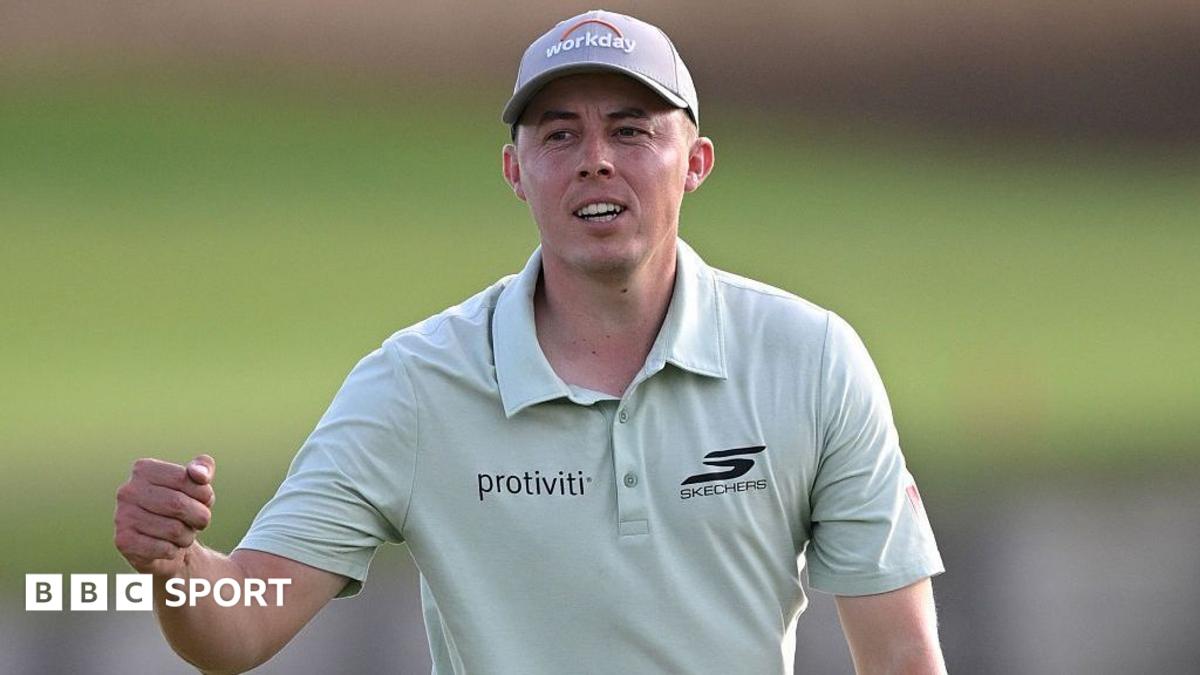
Tom Kim’s drought is over. The South Korean shed tears of joy and relief after excelling on a compelling final day at the Genesis Scottish Open to claim his first title in three years.
Kim has endured a form and confidence crisis since his previous victory – as well as plummeting down the world rankings – but served a reminder of his talents with a faultless 64 to finish 17 under at the Renaissance Club.
The 24-year-old has sought counsel from Tiger Woods during the dark times and revealed the 15-time major winner was among the first to congratulate him on this long-awaited victory.
He triumphed by two shots, with Min Woo Lee the runner-up as crowd favourite Bob MacIntyre faltered in pursuit of a second home title, ending four adrift alongside Matt Fitzpatrick.
MacIntyre, Lee and Fitzpatrick had shared the lead after the fog-disrupted third round, but it was Kim who surged from one back for a brilliant win. He was the only player in the field to avoid a bogey in the fourth round.
“I can’t really wrap my mind over it,” said an emotional Kim of his win. “It’s really special and I’m just at a loss for words.
“Obviously I’ve had a tough couple years. I got to taste a lot of that humble pie and I got to really learn about myself and I’m still trying to grow, still trying to learn.
“I’m definitely appreciating this more now than I did a couple years ago, which is really cool. I thought about my family, all the people around my corner that have suffered with me and also celebrated with me and kind of remembering all those people really brought tears to my eyes.
“Obviously on TGL being on Tiger’s team, I’ve been able to ask him questions on certain things. He’s been really helpful a lot of the time. This was my first win in three years, and the first person that texted me was Tiger Woods. Shows you the person he is and how much he cares.”
As well as a winner’s prize of £1.2m, Kim secures a place in next year’s Masters at Augusta National.
Rory McIlroy’s third-round 73 left the world number two with too big a deficit to overcome despite matching Kim’s closing six-under 64, the lowest score of the day.
Americans Michael Thorbjornsen and Johny Keefer, who tied for seventh and third respectively, will make their Open Championship debuts next week, while the other spot at Royal Birkdale goes to Frenchman Victor Perez.
July 10 (UPI) — Canada and the state of Michigan on Friday announced that a long-planned new bridge linking Ontario and Detroit will open at the end of July, 14 years after construction started.
The $4.4 billion Gordie Howe International Bridge between the two cities is set to open on July 27 and is set to offer improved transit on what leaders from Canada and Michigan called one of the busiest transportation corridors in North America.
The mile-and-a-half-long bridge includes new ports of entry on either side, with Canada and the United States establishing a 15-year economic development fund that has been tied to profits from crossing tolls.
President Donald Trumpearlier this year threatened to prevent the bridge from opening over disagreements with previously existing trade agreements, his administration’s tariff regime and objections to Canada making trade deals with China.
“The Gordie Howe International Bridge has always been a great deal for our state,” Michigan Gov. Gretchen Whitmer said in a statement.
“Thousands of Michigan workers built this critical bridge, which will speed up auto production, lower costs, ease traffic, strengthen agriculture and give people on both sides of the border better-paying jobs and brighter futures,” she said. “This bridge is a testament to the enduring partnership between Michigan and Canada.”
The bridge project originated with the state’s then-Republican Gov. Rick Snyder agreeing to the six-line bridge because it would alleviate congestion accommodate future travel and create new transportation capabilities between U.S. and Canadian manufacturing regions.
Canada’s minister for housing and infrastructure, Gregor Robinson, hailed the completion and impending opening of the bridge as “strengthening one of the world’s most important trade corridors.”
“This nation-building project is a testament to what Canada can accomplish when we come together with a shared vision,” Robinson said in a statement.
“The Gordie Howe International Bridge will create new opportunities, strengthen our economy and bring economic benefits on both sides of the boarder for generations,” he said.
Visitors tour the newly remodeled undercroft beneath the Lincoln Memorial in Washington, D.C., on July 10, 2026. Photo by Bonnie Cash/UPI | License Photo
A EUROPEAN theme park that mums have compared to Disneyland is getting a new ride that will be the first of its kind at the park.
Efteling theme park in Kaatsheuvel, Netherlands is getting a €50million (£42.6million) new ride in 2029.
Efteling theme park has announced it will open a new rollercoasterCredit: Efteling
The new ride, called Missie Luminar, is themed around the challenge of travelling at the speed of light and will be the theme park’s first suspended launch rollercoaster.
This means all the seats will hang beneath the track.
Sign up for the Travel newsletter
Thank you!
The rollercoaster will start by launching passengers out of a ‘science lab,’ before they go on a mission with a goal of breaking through the light barrier.
The ride will last two minutes, with parts of the ride focusing on science experiments and discoveries from the 19th century.
Fons Jurgens, CEO of Efteling, said: “Missie Luminar will be a fantastic addition to our collection of thrill rides. This type of roller coaster is new to Efteling.
“The top speed reaches 80 km/h, but it may feel even faster. All of this creates excitement from start to finish.
“It will be a truly unique and distinctive experience, even more so because of its location.
“Missie Luminar completes the Island of the Five Senses themed area.
The ride will be the park’s first suspended launch coasterCredit: Efteling
“Visitors will see the vehicles racing past as soon as they enter Efteling, setting the tone for their day at the park.
“We still have a little while to wait, but we’re looking forward to seeing our visitors’ first reactions.”
Guests have previously compared Efteling to Disneyland, with one saying: “If you are travelling to the Netherlands, we highly encourage visiting Efteling. I prefer it now to Disney because of the variety it offers.”
Another said it was a “European twist” on Disneyland.
World number one Scottie Scheffler misses the cut for the first time in 79 tournaments as he bogeys the final hole of his second round of the Scottish Open.
Last May marked 21 years since Benitez’s Liverpool pulled off one of the most remarkable comebacks in football history, when the Anfield side roared back from three goals down to defeat AC Milan in the 2005 Champions League final.
Yep, life moves fast.
Benitez had moved to Merseyside off the back of stunning success in Spain, winning La Liga twice and the Uefa Cup with Valencia.
He failed to win the Premier League at Liverpool, but his coaching thrived in Europe and established him as one of the continent’s elite managers in the early to mid-2000s.
He consistently led the Reds to the latter stages of the Champions League, including another final in 2007.
He also won the Europa League with Chelsea in 2013, plus multiple domestic cups during his time in England and Italy with Inter Milan and Napoli.
People often praise his detailed defensive work above anything else. That is crucial at all levels of the game, but particularly in international football, where there is less time to work on complex patterns of play in possession.
Liverpool greats Steven Gerrard and Jamie Carragher have often hailed Benitez’s tactical nous and described him as the best coach they worked under, but a long time has passed since then.
Benitez has had nine jobs since leaving Anfield in 2010, lasting less than a year in six of those.
He was adored during his three-year spell at Newcastle but was dismissed quickly at clubs such as Inter, Real Madrid, Everton and Celta Vigo.
Police have criticised the timing of the government’s decision to let pubs stay open until 05:00 BST on Monday for England’s World Cup match against Mexico.
The National Police Chiefs’ Council said the “late announcement” meant officers would have to be taken away from other duties and work longer hours, even though the team’s likely route through the tournament “has been known for a considerable time”.
It asked fans to be “considerate” and “drink within sensible limits” while watching the crucial last-16 match in which the losing team will be eliminated.
The government has said a previous relaxing of licensing laws for the tournament had not covered the eventuality of England playing so late.
A Downing Street spokeswoman said that after England’s progression was confirmed on Wednesday evening, the government “announced plans as quickly as possible following this”.
The spokeswoman added: “And more broadly, we have engaged with policing partners throughout preparations for the World Cup and we are grateful for their flexibility and professionalism throughout.”
Kick-off for the knock-out game is not until 01:00 in the UK and the match is not expected to end until at least 03:00. It could finish even later if it goes to penalties.
Knock-out games in previous tournaments have led to an increase in violent incidents and domestic abuse, the policing body said.
“This is directly linked to alcohol consumption,” the NPCC’s football and alcohol policing leads said in a joint statement.
“We will continue to work with partners and venues to support a safe and enjoyable evening for everyone.”
Licensing hours had already been extended for the international football tournament and the government had initially said it would not relax the laws further.
But late on Thursday, Prime Minister Sir Keir Starmer said pubs could remain open until the end of the game.
Local Government Secretary Steve Reed told broadcasters the previous measures “hadn’t covered the eventuality of England playing so late in the night”, adding it was “one of the fastest changes in the law that we’ve seen”.
England was not guaranteed to play in Monday’s match, only earning a place in the round of 16 after beating DR Congo 2-1 on Wednesday.
The hospitality sector welcomed the government’s decision. Emma McClarkin, chief executive of the British Beer and Pub Association, said: “We all know the best place to watch the match is down the local.”
Michael Kill, chief executive of the Night Time Industries Association, said it was “fantastic news” that would be “hugely welcomed by operators”.
Pub chain Greene King has said more than 600 pubs across England will be staying open late to show the match, while Marston’s has said more than 400 of its pubs will also be open.
Priyesh Bathia, who runs the Elephant and Barrel pub in Stockwell, south London, and said he is “so thankful” for the late licensing on Monday.
“I’m really excited,” he added, and said so far they have had between 100-150 people book tables for the game.