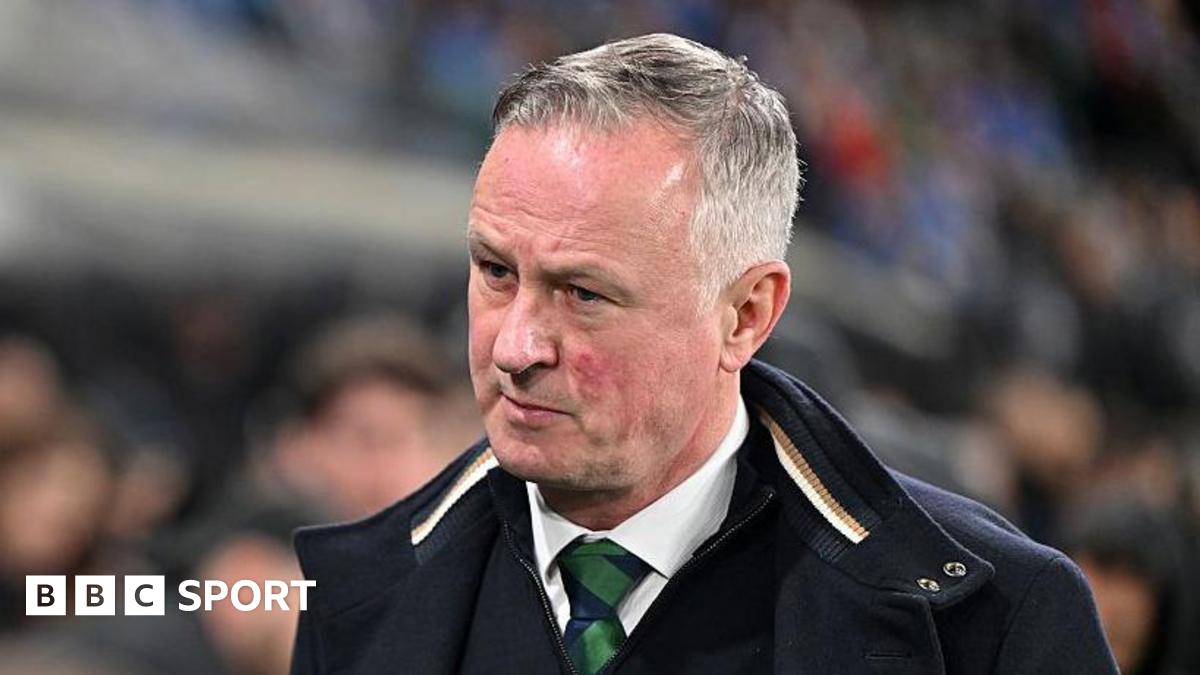
ONeill

Trump administration says it’s freezing child care funds to Minnesota after series of fraud schemes

President Trump’s administration announced late Tuesday that it’s freezing child care funds to Minnesota and demanding an audit of some day care centers after a series of fraud schemes involving government programs in recent years.

Deputy Secretary of Health and Human Services Jim O’Neill said on the social platform X that the move is in response to “blatant fraud that appears to be rampant in Minnesota and across the country.”

Minnesota Gov. Tim Walz pushed back on X, saying fraudsters are a serious issue that the state has spent years cracking down on but that this move is part of “Trump’s long game.”

“He’s politicizing the issue to defund programs that help Minnesotans,” Walz said.

O’Neill referenced a right-wing influencer who posted a video Friday claiming he found that day care centers operated by Somali residents in Minneapolis had committed up to $100 million in fraud. O’Neill said he has demanded Walz submit an audit of these centers that includes attendance records, licenses, complaints, investigations and inspections.

“We have turned off the money spigot and we are finding the fraud,” O’Neill said.

The announcement comes one day after U.S. Homeland Security officials were in Minneapolis conducting a fraud investigation by going to unidentified businesses and questioning workers.

There have been years of investigations that included a $300 million pandemic food fraud scheme revolving around the nonprofit Feeding Our Future, for which 57 defendants in Minnesota have been convicted. Prosecutors said the organization was at the center of the country’s largest COVID-19-related fraud scam, when defendants exploited a state-run, federally funded program meant to provide food for children.

A federal prosecutor alleged earlier this month that half or more of the roughly $18 billion in federal funds that supported 14 programs in Minnesota since 2018 may have been stolen. Most of the defendants in the child nutrition, housing services and autism program schemes are Somali Americans, according to the U.S. Attorney’s Office for Minnesota.

O’Neill, who is serving as acting director of the Centers for Disease Control and Prevention, also said in the social media post Tuesday that payments across the U.S. through the Administration for Children and Families, an agency within the U.S. Health and Human Services Department, will now require “justification and a receipt or photo evidence” before money is sent. They have also launched a fraud-reporting hotline and email address.

The Administration for Children and Families provides $185 million in child care funds annually to Minnesota, according to Assistant Secretary Alex Adams.

“That money should be helping 19,000 American children, including toddlers and infants,” he said in a video posted on X. “Any dollar stolen by fraudsters is stolen from those children.”

Adams said he spoke Monday with the director of Minnesota’s child care services office and she wasn’t able to say “with confidence whether those allegations of fraud are isolated or whether there’s fraud stretching statewide.”

Trump has criticized Walz’s administration over the fraud cases, capitalizing on them to target the Somalia diaspora in the state, which has the largest Somali population in the U.S.

Walz, the 2024 Democratic vice presidential nominee, has said an audit due by late January should give a better picture of the extent of the fraud. He said his administration is taking aggressive action to prevent additional fraud. He has long defended how his administration responded.

Minnesota’s most prominent Somali American, Democratic U.S. Rep. Ilhan Omar, has urged people not to blame an entire community for the actions of a relative few.

Golden writes for the Associated Press.

Source link

BP taps Woodside’s Meg O’Neill as CEO as it pivots back to fossil fuels | Oil and Gas News

BP has tapped Woodside Energy’s Meg O’Neill as its next CEO, its first external hire for the post in more than a century and the first woman to lead a top-five oil major as the firm pivots back to fossil fuels.

O’Neill, an Exxon veteran, will take over in April following the abrupt departure of Murray Auchincloss, the second CEO change in just over two years as the British oil major strives to improve its profitability and share performance, which for years has lagged competitors like Exxon.

Recommended Stories

list of 4 itemsend of list

The company embarked on a major strategy shift earlier this year, slashing billions in planned renewable energy initiatives and shifting its focus back to traditional oil and gas. BP has pledged to divest $20bn in assets by 2027, including its Castrol lubricants unit, and reduce debt and costs.

“Progress has been made in recent years, but increased rigour and diligence are required to make the necessary transformative changes to maximise value for our shareholders,” new BP Chair Albert Manifold said in a statement.

When Manifold took up his post in October, he emphasised the need for a deeper reshaping of BP’s portfolio to increase profitability and faced pressure from activist investor Elliott Investment Management, one of BP’s largest shareholders, which called for him to urgently address the company’s shortcomings.

Elliott saw the change of CEO as a sign of BP’s willingness to act swiftly to deliver cost cuts and divestments, a person familiar with the situation said.

An external change

O’Neill, a 55-year-old American from Boulder, Colorado, and the first openly gay woman to helm a FTSE 100 company, headed Woodside since 2021, having previously spent 23 years at Exxon.

Under O’Neill’s leadership, Woodside merged with BHP Group’s petroleum arm to create a top 10 global independent oil and gas producer valued at $40bn and doubled Woodside’s oil and gas production.

The acquisition took the company to the US, where it embarked on a major Louisiana liquefied natural gas project, which it is progressing in an LNG market braced for oversupply.

BP spent more than 40 percent of its $16.2bn investment budget in the United States last year and plans to boost its US output to 1 million barrels of oil equivalent per day by the end of the decade.

Markets react

Woodside shares fell as much as 2.9 percent after news of O’Neill’s departure. At BP, shares were up 0.3 percent, compared with a broader index of European energy companies.

Like BP, Woodside shares have underperformed rivals. In absolute terms, though, the stock has risen about 10 percent during O’Neill’s tenure.

BP’s executive vice president, Carol Howle, will serve as interim CEO. Auchincloss, 55, will step down on Thursday and serve in an advisory role until December 2026.

BP said O’Neill’s appointment was part of its long-term succession planning, though it had not publicly announced a search process.

Auchincloss became CEO in 2024, taking over from Bernard Looney, who was fired after lying to the board about personal relationships with colleagues.

After an ill-fated foray into renewables under Looney, BP has promised to increase profitability and cut costs while re-routing spending to focus on oil and gas, launching a review in August of how best to develop and monetise oil and gas production assets.

During BP’s third-quarter earnings call last month, the company did not give an update on the closely watched sale process for its Castrol lubricants unit, the centrepiece of its $20bn asset-sale drive to slash its debt pile.

“We question whether this is set to change BP’s thinking once again on key strategic initiatives – should they defer the sale of Castrol? We think yes. Should they cut the buyback to zero and repair the balance sheet further? We think yes,” said RBC analyst Biraj Borkhataria.

Woodside said in a separate statement that O’Neill was leaving immediately, and it had appointed executive Liz Westcott as acting CEO, while intending to announce a permanent appointment in the first quarter of 2026.

Source link