one

‘Musk’ review: Docmaker Alex Gibney tracks a supervillain’s rise

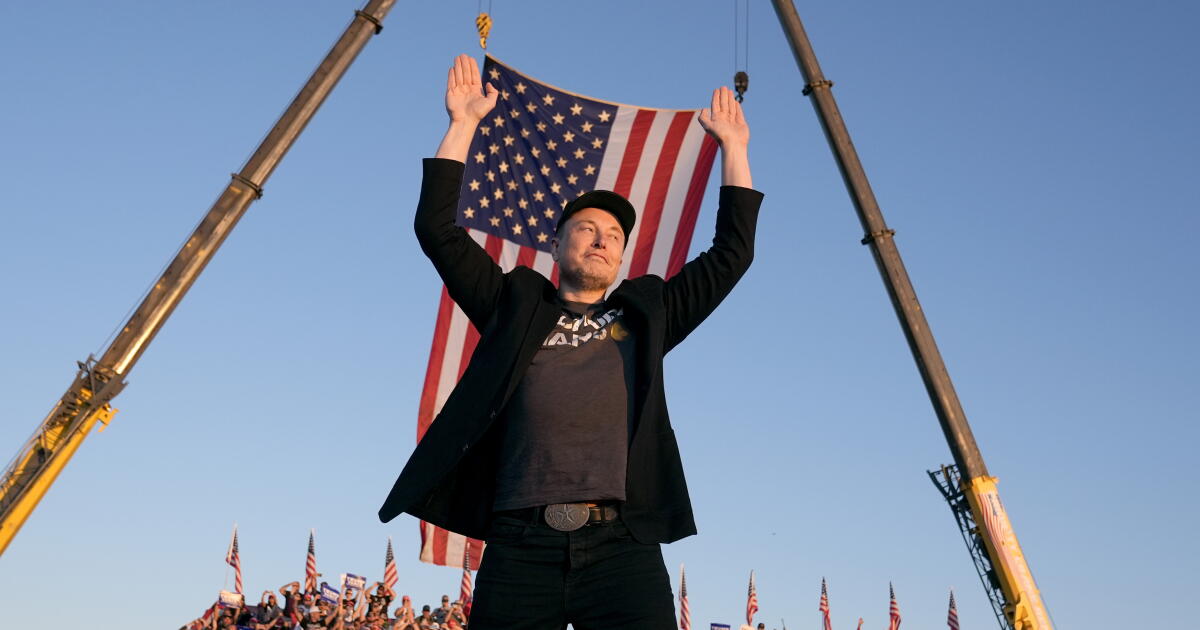
Is there anything more worrisome about today’s tech titans than the fact that they present as abundance-minded optimists but in actuality are gluttonous, scorched-earth pessimists? Documentarian Alex Gibney is no stranger to dissections of corrupting power — from his feature dives into Enron, Elizabeth Holmes and Scientology. He frames his deeply researched four-hour psych eval “Musk” as the reality check we all need when the world’s richest, most cult-powerful human keeps pushing migration to Mars. Musk might need Earth to become uninhabitable to justify the trip.

Musk’s Tesla cars, SpaceX rockets and Starlink satellites have inspired awe while his “dark MAGA” politics, limited knowledge and petty ego have made him plutocrat Enemy No. 1. Other behavior-coded prisms through which to view Musk — an immigrant whom American fascists love — include his oft-stated belief that we’re living in a simulation. He also loves video games. Gibney sporadically complements his archival materials and many interviews with the metaphoric imagery of player-one gaming: toggling between identities, first-person shooter modes. He also shrewdly compares Musk to the protagonist of a 1930s film adapted from an H.G. Wells story, “The Man Who Could Work Miracles,” about an ordinary guy bestowed with world-altering powers by the gods. (It doesn’t go well.)

There’s even a computer-generated Elon, a by-product of Gibney not securing a face-to-face interview with the tycoon himself. Avatar Musk, meant to appear like AI slop and spouting commentary culled from the totality of his recorded interviews, is pretty gimmicky. But its strangeness also seems appropriate, considering the epic oddity of the South African’s ascension from mistrusted Silicon Valley wannabe to ever-confident cheerleader for space dreams and electric vehicles. Musk is savvy at securing investment, whether his shiny pronouncements about the future prove real or not. It’s why Gibney’s surest, most clear-eyed take is that Musk is less a visionary than a self-promoter — selling Autopilot in Teslas when it led to deaths, being recklessly bullish about AI — and the greatest artificial stock-pumper of all time.

Musk’s forthright, crusty dad Errol sounds almost proud that something was bullied out of his son, but the movie avoids filling out that traumatic childhood. More heartbreaking is ex-wife Justine Musk’s well-articulated experience of Musk’s cruel domestic side — especially where trans daughter Jenna was involved. Ashley St. Clair, the right-wing influencer and one of Musk’s many baby mamas, chillingly completes the portrait of someone who sees fatherhood as an NDA arrangement to help facilitate a genetic army. She watched him up close as he cozied up to Donald Trump, grew his online fandom after taking over Twitter and consolidated his data power. St. Clair simply calls him a “nuke,” one that might readily self-detonate at the slightest bruising of his self-image.

With a built-in intermission dividing his rise (SpaceX, Tesla) from his rightward shift (Twitter, Trump), it’s wild how much the documentary’s second half makes you long for the garden variety tech-bro obnoxiousness of the first. The running time seems a lot for one’s tolerance of a supervillain story and not enough, since the story of DOGE, a venal propaganda folly with a human cost, really needs its own separate feature.

Even a four-hour “Musk” can’t keep up with the unelected trillionaire’s financially self-serving governmental meddling, considering the recent news of his involvement in a Department of Defense AI warfare study. Maybe his conning can be curtailed someday, but the thought there’d ever be enough distracting chaos for a similarly lengthy follow-up is almost too much to bear.

‘Musk’

Rated: R, for language and brief violent content

Running time: 3 hours, 55 minutes (including intermission)

Playing: Opens Friday, Oct. 9 at AMC Century City 15, AMC Burbank 16
Source link

‘The Social Reckoning’ review: Sorkin’s follow-up is awkward

Aaron Sorkin’s “The Social Reckoning,” a sequel to 2010’s David Fincher-directed “The Social Network,” is hitting theaters as part of a surge of tech geek takedowns that includes documentaries on Elon Musk and Theranos’ Elizabeth Holmes, as well as Luca Guadagnino’s upcoming comedy “Artificial” about OpenAI’s Sam Altman.

Still, its timing couldn’t be worse.

Cursory and hollow, it recounts the true story of Wall Street Journal reporter Jeff Horwitz (Jeremy Allen White) and Facebook whistleblower Frances Haugen (Mikey Madison), a disenchanted data engineer on the company’s civic integrity team, who paired up for a 17-part investigative series that provided proof of what people already sensed: Facebook boosted misinformation and rage-bait to juice user engagement at the cost of our country’s mental health.

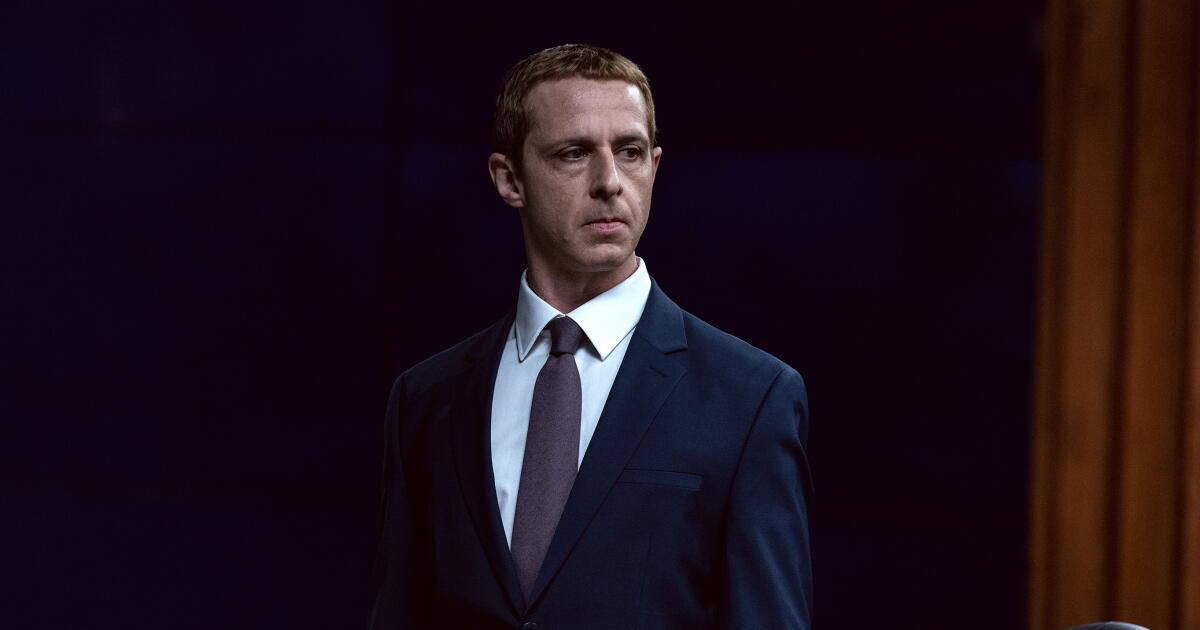
The script ends shortly after Haugen testified before Congress in October 2021, noting that the carpet in her waiting room had recently been swapped out because of bloodstains from the Jan. 6 Capitol attack. The film rewinds to that day, too, and attempts to squeeze drama from slow-motion reenactments of the rioters, which Alexandre Desplat scores to an overbearing military dirge as Mark Zuckerberg (Jeremy Strong) and his good little Facebook soldiers mull over whether to take down the U.S. president’s incendiary posts.

Back in our own reality, Zuckerberg and the president just had lunch last week. At this point, we’re all so psychically drained that the only response we can muster to this vacant period piece is: So what?

Sorkin has my sympathies. The future moves faster than a film in development. And he fundamentally gets the peril we’ve put ourselves in by entrusting Zuckerberg, who is, at minimum, an ethically askew man. After all, Sorkin’s own screenplay for “The Social Network” remains a prescient masterpiece.

But the movie’s problems go beyond arriving simultaneously too slowly and too soon for Zuckerberg’s endgame, where his emptying social media empire has him gambling his fortunes (and ours) on AI. Expanding his scope from Harvard to the planet, Sorkin now aims to show that we’re all trapped in Zuckerberg’s insensitive mind view. Cold computer speak has infected everyone like a virus. When Madison’s Frances goes on a blind date, her online match says he appreciates that the internet makes it simpler for singles to pair up “within their own vector.” The buddy-buddy Winkelvoss twins’ version of the app might actually have been better for the world.

Meanwhile, Zuckerberg, who mostly stays on the sidelines of the movie, is now a mighty billionaire and, as Strong plays him, a dour, lifeless dork. Gone are the beer bashes, the thrill of invention and any hint that Zuckerberg lusted for something — women, attention, clout — other than a quarterly earnings report. This Zuckerberg is no longer made of flesh and blood but ones and zeros. Pity Strong couldn’t play the CEO after his bro-y 2024 mutation into MMA-fighting Marky Mark. At least that guy is amusingly ridiculous. Trapped in this stiffer, earlier incarnation, the only acting Strong is able to do is poke his head straight up from his shoulders until he resembles a retractable pen.

Worse, all the other characters in the film talk just like him: charmless, frigid and quick to cut each other off with snippy corrections. I could forgive that if it was just Facebook’s employees: Madison’s quavering, exasperated Frances, the co-worker (Anna Lambe) who insists she and Frances are merely colleagues, not friends, even after their company frittered away the meaning of the word, and a media relations executive (a smooth Billy Magnussen) who gets the scariest line, coolly insisting that “we’re post-government around here.” After all, these are the folks who saw “The Social Network” and still wanted to work for Zuckerberg.

But the opposition is steeped in that same monotone rudeness. Sorkin must have adored that earlier film’s opening scene where Rooney Mara insults a clueless Jesse Eisenberg because he’s written three-dozen takes on it. At Sorkin’s version of the Wall Street Journal, everyone up and down the masthead — editors, writers, even interns — insults each other with such relish that someone should be written up by HR. The fast-and-furious dialogue hits its nadir when Madison’s Frances slips Jeff important documents that he can’t even read because she nonsensically starts chattering about the looming coronavirus.

Here’s where you say that this is just how Sorkin writes characters. And here’s where I counter that a movie about how algorithms destroy humanity has to have some credible humans in it, if only to illustrate its own point.

Instead, Sorkin’s protagonist-bots come with bolted-on personality quirks. White’s journalist is a Luddite who would rather be late to his own job interview than use Google Maps. He comes across as so clueless that the audience can barely credit him for his reporting work winning an eventual Pulitzer — he’s just soulful eyes and a cellphone ringtone that tinkles old show tunes.

Madison, 15 years the junior of the real Frances, is too young to convince us that her character truly believes she can turn Facebook into a digital utopia. An ultra-online 20-something, she was a front row witness to Gamergate, yet somehow she’s shocked to overhear about middle-school girls getting bullied on Instagram. Her character wears legwarmers and knit wristlets to the office as protection against the air conditioning, which also serves to emphasize her company’s interpersonal chill.

Yet, bizarrely, the script makes Frances dress like a sex worker whenever she sneaks to Jeff’s hotel to slip him some corporate secrets. It’s a disguise, she explains, although the gag is so forced that it’s just as easy to believe the literal-minded girl is taking her Deep Throat identity too seriously. Or perhaps Sorkin just wanted to remind audiences that this awkward creature is the same actor who won the Oscar stripping off in “Anora.”

A few moments do work, like an opening showdown between a drunk blond (a nasty-great Portia Doubleday) and two cops that gets live-streamed to the web, and Zuckerberg’s congressional coaching sessions with his crisis team, played by Wunmi Mosaku and the comedian Bill Burr. From what we learn of Burr’s Charlie Garrigan, an insider who sold his Facebook stock too fast and then wrote a negative New York Times editorial against the company, he seems to be inspired by early co-founder Christopher Hughes, which would made him the only other callback character from “The Social Network.” But Sorkin has changed his name and upped his age, so as fun and ferocious as Burr is, we also spend his scenes feeling a little confused.

Do we learn anything new about Facebook itself? No. Still, I appreciated how dismissive Frances gets when asked to confirm small scandals that she finds too piddly to care about, like Jeff’s suspicion that Zuckerberg is goosing his posts so that positive comments outrank negative ones 32 to 1. That’s just obvious, her posture says. Facebook is over two decades old and he still hasn’t made many friends.

‘The Social Reckoning’

Rated: R, for language

Running time: 1 hour, 53 minutes

Playing: Opens Friday, Oct. 9 in wide release

Source link