‘We’re going to be vocal about it, we’re going to make noise until we’re heard,’ South Africa’s gold medallist says.
Published On 31 Mar 202631 Mar 2026
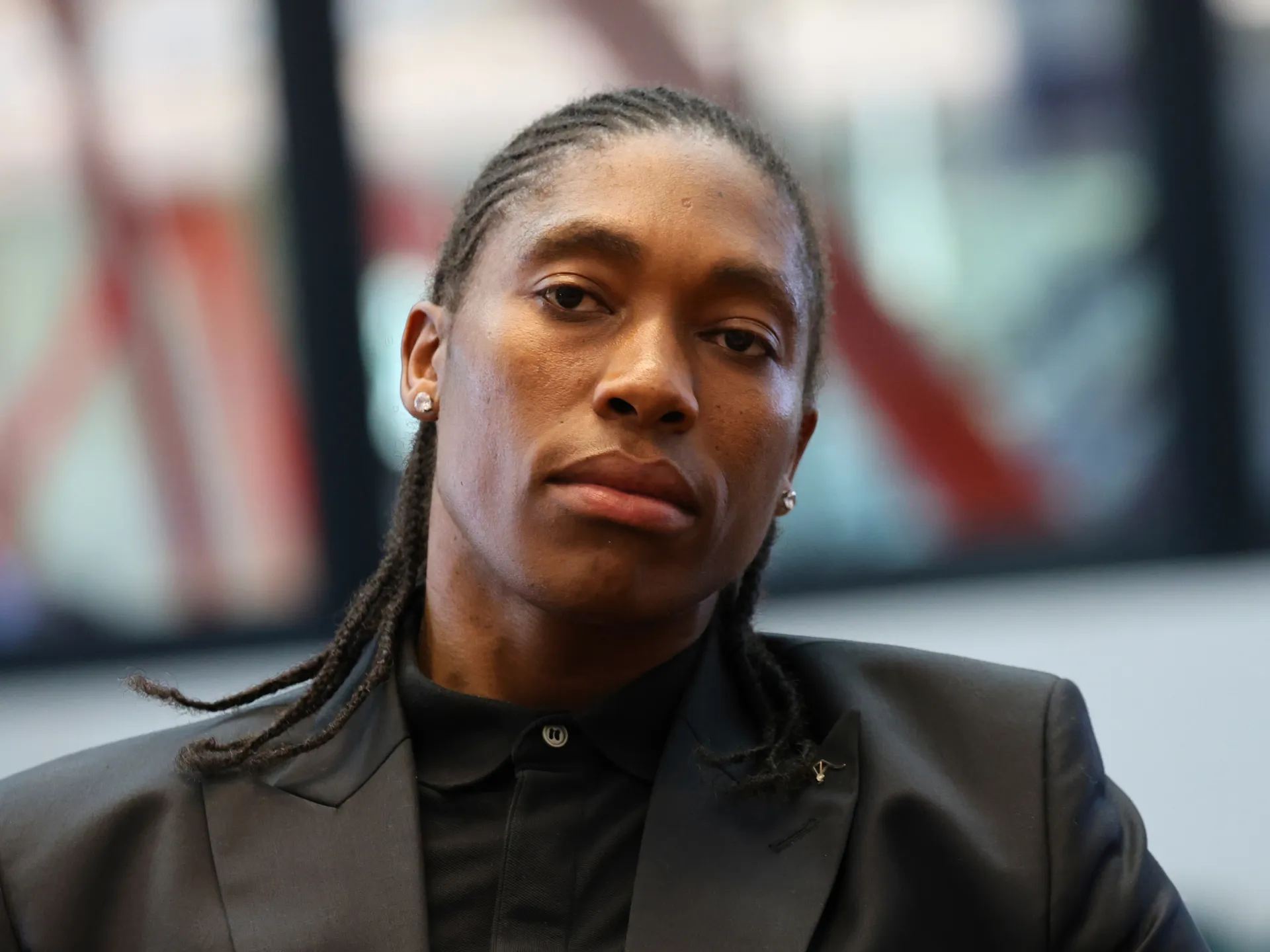
Double Olympic champion Caster Semenya says she intends to fight against the introduction of gender testing for the female category at the Olympics, a policy the South African insists “undermines women’s rights”.
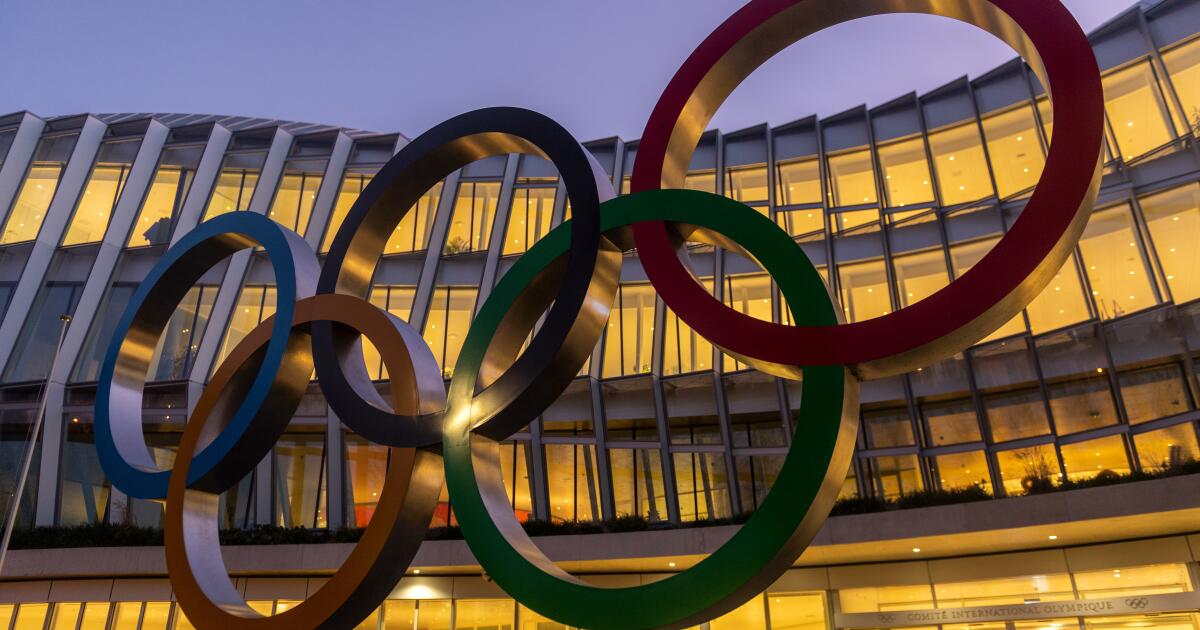
The International Olympic Committee (IOC) unveiled the policy last week and it is expected to become a universal rule for competitors in female elite sports after years of fragmented regulation that led to controversy.
Recommended Stories
list of 4 itemsend of list
Semenya has been at the centre of one of those controversies due to her long-running legal case against World Athletics over her right to compete on the track despite having a Difference of Sexual Development (DSD).
“We’re going to be vocal about it, we’re going to make noise until we’re heard,” the 35-year-old athlete told the Reuters news agency on Monday.
“Now it’s a matter of women standing for themselves to say, ‘Enough is enough.’ We are not going to be told how to do things.
“If really we are accepted as women to take part, why does my appearance or my voice, why do my inner parts need to be a problem to take part in the sport?”
DSDs are a group of rare conditions involving genes, hormones and reproductive organs. Some people with DSDs are raised as female but have XY sex chromosomes and blood testosterone levels in the male range.
The IOC policy document said including “androgen-sensitive XY-DSD athletes” in the female category in events that rely on strength, power or endurance “runs fundamentally counter to ensuring fairness, safety and integrity in elite competition”.
Semenya, who won two Olympic and three world titles in the 800 metres before being limited to shorter events, believes the IOC got the science wrong.
Semenya said “there’s no science” that XY-DSD gave an athlete an advantage. “I’ve been there, I’ve done that. There’s no such thing as that,” she said.
“There are people who are delusional. There are people who are convinced because a woman is masculine, a woman is born with intersex conditions, the DSD, they’ve mentioned all those things [that they have an advantage].
“But what I say is that if you’re going to be a great athlete, it’s through hard work.”
The test that will be applied to all athletes who want to compete in the female class will be conducted by a cheek swab or saliva analysis.
There will be further investigation for any athletes who test positive for the SRY gene, which is on the Y chromosome and triggers the development of male characteristics in mammals.
“What this decision does, it undermines women. It undermines women’s dignity. It violates women’s rights because we know historically, these [tests] have failed before,” Semenya said.
“Women need to be celebrated. Women are not supposed to be questioned about their gender. Why that is their physique? Why it is how they look like? It doesn’t matter. Neither also the hormone level. Those are the things that are obviously genetics that cannot be controlled.”
Semenya said IOC President Kirsty Coventry, the first woman and first African to hold the office, had failed to properly consult her or other athletes living with DSDs about the policy.
“They sent us a letter the day they were going to publish [the new policy],” she said.
“If you’re going to consult, consult with a genuine heart. Don’t consult because you’re ticking the box. Unfortunately, they have ticked a wrong box.”
South African sprinter Caster Semenya, a two-time Olympic 800-metres champion, says the International Olympic Committee’s (IOC’s) reinstatement of gender verification tests for the 2028 Los Angeles Games is “a disrespect for women”.
The hyperandrogenic athlete on Sunday also expressed her disappointment that the measure was taken under new IOC President Kirsty Coventry of Zimbabwe.
Recommended Stories
list of 3 itemsend of list
“For me personally, for her being a woman coming from Africa, knowing how African women or women in the Global South are affected by that, of course it causes harm,” Semenya said in Cape Town on the sidelines of a sporting competition.
The IOC said on Thursday that only “biological females” will be allowed to compete in women’s events, preventing transgender women from competing.
The IOC had previously used chromosomal sex testing from 1968 to the 1996 Atlanta Olympics before abandoning it in 1999 under pressure from the scientific community, which questioned its effectiveness, and from its own athletes commission.
“It came as a failure, and that’s why it was dropped,” Semenya said.
“It’s like now we need to prove that we are worthy as women to take part in sports. That’s a disrespect for women.”
Semenya has become the symbol of the struggle of hyperandrogenic athletes, a battle on the athletics tracks and then in courtrooms, to assert her rights, which she has waged since her first world title in the 800m in 2009.
In 2025, she won a partial victory at the European Court of Human Rights in her seven-year legal fight against track and field’s sex eligibility rules.
The court’s highest chamber said in a 15-2 ruling that Semenya had some of her rights to a fair hearing violated before Switzerland’s Supreme Court, where she had appealed against a decision by the Court of Arbitration for Sport. It had ruled in favour of track’s international governing body, World Athletics.
The original case between Semenya and Monaco-based World Athletics was about whether female athletes who have specific medical conditions, a typically male chromosome pattern and naturally high testosterone levels, should be allowed to compete freely in women’s sports.
The European court’s ruling did not overturn the World Athletics rules that in effect ended Semenya’s career running the 800m after she had won two Olympic gold medals and three world titles since emerging on the global stage as a teenager in 2009.
IOC’s policy shift removes conflict with Trump
In a major shift of policy, the IOC is abandoning rules it brought in in 2021 that allowed individual federations to decide their own policy and is instead implementing a policy across all Olympic sports.
“Eligibility for any female category event at the Olympic Games or any other IOC event, including individual and team sports, is now limited to biological females, determined on the basis of a one-time SRY gene screening,” the IOC said in a statement.
They will be carried out through a saliva sample, cheek swab or blood sample. It will be done once in an athlete’s lifetime.
“The policy we have announced is based on science and has been led by medical experts,” Coventry said.
“At the Olympic Games, even the smallest margins can be the difference between victory and defeat, so it is absolutely clear that it would not be fair for biological males to compete in the female category. In addition, in some sports it would simply not be safe.”
The new policy removes a potential source of conflict between the IOC and United States President Donald Trump as the 2028 Los Angeles Olympics comes onto the horizon.
Trump issued an executive order banning transgender athletes from women’s sport soon after he returned to office in January 2025.
The US leader took credit for the IOC’s new policy in a post on his Truth Social network on Thursday.
“Congratulations to the International Olympic Committee on their decision to ban Men from Women’s Sports,” Trump wrote. “This is only happening because of my powerful Executive Order, standing up for Women and Girls!”
2024 Olympic gender row
While sports such as swimming, athletics, cycling and rowing have brought in bans, many others have permitted transgender women to compete in the female category if they lowered their testosterone levels, normally through taking a course of drugs.
The IOC is bringing in the new policy after the women’s boxing competition at the 2024 Paris Olympics was rocked by a gender row involving Algerian fighter Imane Khelif and Lin Yu-ting of Taiwan.
Khelif and Lin were excluded from the International Boxing Association’s 2023 world championships after the IBA said they had failed eligibility tests.
However, the IOC allowed them both to compete at the Paris Games, saying they had been victims of “a sudden and arbitrary decision by the IBA”.
Both boxers went on to win gold medals.
Lin has since been cleared to compete in the female category at events run by World Boxing, the body that will oversee the sport at the Los Angeles Summer Games.
PRAGUE — Ilia Malinin is back on the top step of the podium.
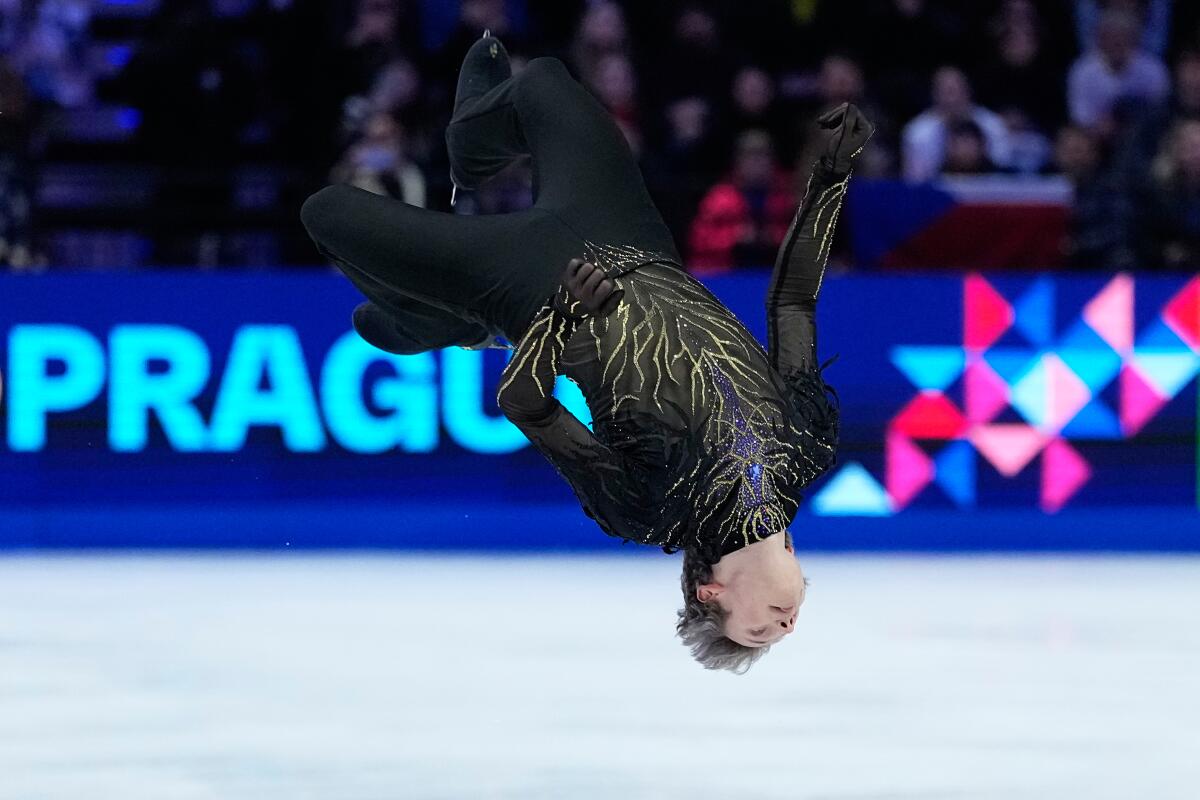
Six weeks after a disastrous skate knocked the Olympic gold-medal favorite off the podium, the “quad god” reeled off one huge jump after another, and a backflip for good measure, to retain his world championship title for the third year running.
Malinin shouted and punched the air with relief after finishing a skate that showed he had achieved his desire to “move on” from the Olympics after days tormented by his mistakes.
He praised the crowd’s support, saying: “It was really challenging, really hard but with you guys I was able to make it through.” His aim, he added, had simply been to get through the free skate “in one piece.”
Skating last after leading the short program, just as he did in Milan, Malinin landed five high-scoring quadruple jumps but not his pioneering quad axel, a jump he didn’t attempt at the Olympics.
Malinin scored 218.11 in the free skate for a total 329.40, far ahead of silver medalist Yuma Kagiyama of Japan on 306.67. Another Japanese skater, Shun Sato, was third on 288.54.
Ilia Malinin performs a backflip during his free skate at the World Figure Skating Championships on Saturday in Prague.
(Petr David Josek / Associated Press)
Kagiyama beat his personal-best free skate score but still had to make do with a fourth career world championship silver in a career which includes four Olympic silvers and five total worlds medals, but no gold from either event. He still embraced Malinin after his skate and they jumped together in celebration.
In a showcase of top-level skating, there was no podium spot for France’s Adam Siao Him Fa, who had been in second after the short program but dropped to fifth overall after a fall. Estonia’s Aleksandr Selevko also fell dropped from third to sixth.
Malinin had no rematch with Mikhail Shaidorov, the skater from Kazakhstan who won the Olympic gold, because he opted against competing again this season.
That’s relatively common in figure skating for gold medal winners who face a rush of media and commercial opportunities after a grueling four-year Olympic buildup.
Malinin becomes the first skater to win three consecutive men’s world titles since fellow American Nathan Chen, who achieved the feat in 2018, 2019 and 2021 after the 2020 event was canceled because of the COVID-19 pandemic.
The last competition of the championships is the free dance portion of the ice dance event later Saturday. France’s Laurence Fournier Beaudry and Guillaume Cizeron are in the lead after Friday’s rhythm dance.
HAVE you ever dreamed of becoming a famous Olympian?
It might be out of reach for most of us mere mortals.
Sign up for the Travel newsletter
Thank you!
I visited the Italian ski resort that once hosted the Winter Olympics – and you can pretend to be an Olympian yourselfCredit: SuppliedClub Med celebrated its 75th anniversary last yearCredit: Supplied
But at one resort in Italy, you can feel pretty close to it — especially if you’re skiing alongside one of Britain’s greatest Olympic snowboarders.
I joined two-time Winter Games star and World Cup winner Jamie Nicholls on the slopes of the dreamily named Milky Way (Via Lattea) ski area in the Italian Alps.
The snowy realm played host to the stars of the Turin Winter Olympics in 2006 and you can feel like a hero as you ski off from the original starting huts of the giant slalom or downhill black runs.
Remnants of the Games can be seen everywhere from the former bobsled track — a giant concrete cobra now disused and frozen in time — to the vertigo-inducing ski jump, as well as the downhill slopes.
The main athletes’ village — now a four-star hotel — dominates the village of Sestriere, from where more than 400km of pistes stretch all the way to Montgenevre in France.
I was staying at a smaller former athletes village in Pragelato, which is now owned and run by the all-inclusive holiday giant, Club Med.
It is the company’s only village concept, with the many chalets housing 350 rooms and surrounding a main hotel building to give it a cosy feel.
Club Med celebrated its 75th anniversary last year and the mantra from its founder, Belgian Gerard Blitz, is: “The purpose of life is to be happy. The place to be happy is here. The time to be happy is now.”
The always smiling, helpful and friendly staff try their best to make this true every day.
Every evening, a show including music, dancing and theatre is performed for both children and adults in the main bar, and the partying goes on long into the night.
Sun man Alex WestCredit: SuppliedEvery evening, a show including music, dancing and theatre is performed for both children and adults in the main barCredit: Supplied
Club Med was the original all-inclusive holiday company and packages include ski passes, ski lessons and all food and drink from a main buffet restaurant serving delicious local pasta, meats and cheeses, as well as a pizza trattoria and a fine dining option.
And what is exceptional about Club Med Pragelato is that it also has four restaurants on the mountain where you can eat out and drink for free as part of your package.
This means you can make the most of your day’s skiing as you don’t have to trek back to your hotel for lunch.
Olympian Jamie is a convert and regularly takes his family — wife Jenny and their two young daughters, Lily and Rosie.
He said: “It’s just very easy. You don’t have to think — everything is done for you.
“You drop the kids off at the kids’ club, they get them dressed, they get their ski boots on, they get them off to ski school . . . it’s no faff for you.
“They really put the kids at ease. They’re very energetic, very fun, so it takes their mind off them leaving their parents.
“My eldest has always been a bit scared of doing stuff on her own, but they are really good at making sure that they feel happy and OK.
“They’re very flexible in terms of when you want to pick your kids up after ski school.
“You can go and eat lunch with them and then bring them back, or you could just leave them there the whole day at the kids’ club.
What is exceptional about Club Med Pragelato is that it also has four restaurants on the mountainCredit: Unknown
Access to the slopes is also simple — just a one-minute walk to the cable car up the mountain. The skiing at Pragelato offers everything from beginners to the most hardcore advanced.
Avalanche kits are also available for those who want to do some of the endless back-country woodland routes and mountain-top off-piste adventures.
Ski lessons are included for free and there is a kids’ club all day and in the evening so you can enjoy supper in peace.
And while the children are being entertained, the adults can slip off to the spa for a massage and to chill and repair tired limbs in the hammam steam bath and sauna.
With so much included, the price is definitely not cheap.
In fact, you might need some of that Olympic gold and silver to afford a family holiday here.
However, if you value the stress-free convenience, it’s definitely worth it.
Some of that Olympian spirit could even rub off on you and who knows, your dreams of becoming an Olympian might just come true.
GO: ITALIAN ALPS
GETTING / STAYING THERE: Seven nights all-inclusive at Club Med Pragelato Sestriere is from £2,005pp including all-inclusive food and drink, lift pass and ski lessons as well as flights from Gatwick on January 10, 2027 and transfers.
To book, go to clubmed.co.uk/r/pregelato-sestriere/w or call 03453 676767.
France’s sports minister has called the International Olympic Committee’s decision to introduce genetic testing for women’s events a “step backwards”, warning it raises major ethical, legal and scientific concerns, while US President Donald Trump praised the IOC’s new policy.
France “takes note” of the decision to require athletes to undergo testing based on the SRY gene, but opposes any broad use of genetic screening, Marina Ferrari said in a statement on Friday.
Recommended Stories
list of 4 itemsend of list
“On behalf of the French government, I wish to express our deep concern regarding this decision,” she said. “We oppose a generalisation of genetic testing that raises numerous ethical, legal and medical questions, particularly in light of French bioethics legislation.”
The IOC said on Thursday that only biological female athletes would be eligible for women’s events from the Los Angeles 2028 Olympics onwards, following a one-time gene test designed to identify male sex development. The move essentially bars transgender athletes from competing in the female category.
The rule is in line with an executive order by Trump from February 2025 that banned transgender athletes from competing in girls’ and women’s sports.
“Congratulations to the International Olympic Committee on their decision to ban Men from Women’s Sports,” Trump said late on Thursday on the Truth Social platform.
“This is only happening because of my powerful Executive Order, standing up for Women and Girls!”
However, Ferrari said that: “These tests, introduced in 1967, were discontinued in 1999 due to strong reservations within the scientific community regarding their relevance. France regrets this step backwards.”
She added that the policy risked undermining equality by specifically targeting women.
“This decision raises major concerns, as it specifically targets women by introducing a distinction that undermines the principle of equality,” she said.
Ferrari also warned that the approach failed to reflect biological diversity, particularly among intersex individuals.
“It defines the female sex without taking into account the biological specificities of intersex individuals, whose sexual characteristics present natural variations, leading to a reductive and potentially stigmatising approach,” she said.
New Zealand’s Olympic Committee said on Friday that the IOC policy would bring greater “clarity” and “fairness” to future Games.
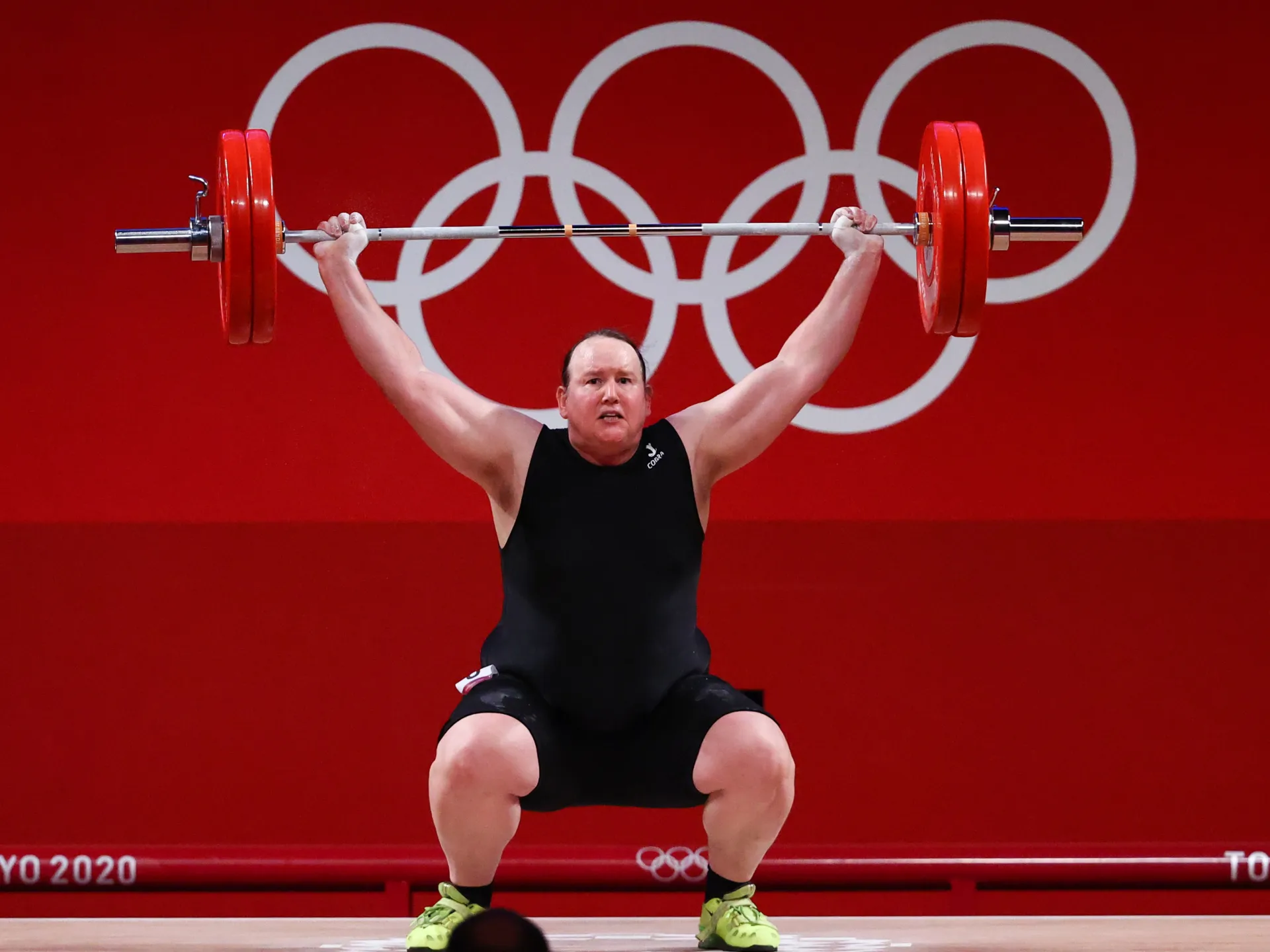
New Zealand weightlifter Laurel Hubbard became the first openly transgender woman to compete in the Olympics at Tokyo in 2021.
NZOC chief executive Nicki Nicol said the organisation recognised the “extensive consultation and expert input that has informed this policy”, particularly from athletes.
She said it would bring “greater clarity, consistency and fairness to eligibility for the female category at the Olympic level”.
“This is a complex and sensitive area that directly affects people, not just policy,” she added.
After competing in 2021, Hubbard, who failed in all of her lifting attempts in Tokyo, said she was aware of the controversy surrounding her participation.
Friday’s NZOC comments did not refer to Hubbard, who has kept a very low profile since her games appearance.
Also reacting to Thursday’s IOC announcement, Australian Olympic Committee president Ian Chesterman said the IOC had comprehensively investigated what he called a “complex issue”.
“Without doubt, this is a challenging and complex subject, and at the AOC we approach it with empathy and understanding.”
He added: “This decision provides clarity for elite female athletes who compete at the highest level and demonstrates a commitment to fairness, safety and integrity in Olympic competition, all of which are fundamental principles of the Olympic Movement.
“As the IOC has stated, at the highest level of sport, the smallest margins can determine outcomes, and clarity around eligibility is critical for female athletes to continue to compete on a level playing field.”
She has stopped taking painkillers but is still exhausted.
She is back home in Park City, Utah, but spends nearly all of her time in rehab.
She is 41 and has won four overall World Cup championships, with 84 World Cup wins and three Olympic medals, including gold in the downhill at the 2010 Vancouver Games.
“I don’t like to close the door on anything, because you just never know what’s going to happen,” said Vonn, who appears on the magazine’s cover in a long, black dress with a split that shows her left leg — bandages and all.
“I have no idea what my life will be like in two years or three years or four years. I could have two kids by then. I could have no kids and want to race again. I could live in Europe. I could be doing anything.”
She added: “It’s hard to tell with this injury. It’s so [messed] up.”
Vonn, who returned to racing in late 2024 after nearly six years away from the sport, had two victories and three other podium finishes in her five World Cup races during the most recent season. In December, Vonn announced she would be competing in her “5th and final Olympics!”
“I wanted to win the Olympics, and I wanted to win the downhill title, and I was on track to do both of those things,” Vonn told Vanity Fair.
On Jan. 30, Vonn suffered a complete rupture of the anterior cruciate ligament in her left knee, with meniscus and bone damage, when she crashed during a downhill race in Crans-Montana, Switzerland.
She decided to compete at the Olympics anyway and had a couple of successful training runs leading up to the Feb. 8 downhill competition.
“I was in the exact mental state that I wanted to be in,” Vonn said. “I was ready to go.”
Unfortunately, her race didn’t last long. Vonn lost control on the first jump, spun sideways in the air, slammed to the ground and needed to be airlifted from the course. Vonn and other skiing experts have said that the ruptured ACL likely had nothing to do with her crash at the Olympics.
Vonn suffered a complex tibia fracture and other major damage. It contributed to a condition called compartment syndrome, which involves excessive pressure building up inside a muscle and possibly can lead to permanent injury or amputation.
Five surgeries later, Vonn is on the road to recovery. She has posted several photos and videos on Instagram as she amps up her fitness routine again. In a March 15 post on X, Vonn wrote that she’s not ready to discuss her skiing future.
“My focus has been on recovering from my injury and getting back to normal life,” she wrote, adding, “I’ll let you know when I decide.”
Vonn did tell Vanity Fair that she’s not crazy about the idea of the catastrophe at the Winter Games being the public’s last impression of her as a skier.
“I don’t want people to hang on this crash and be remembered for that. What I did before the Olympics has never been done before. I was number one in the standings. No one remembers that I was winning.”
Transgender women athletes will be excluded from the Olympics beginning with the 2028 Los Angeles Games after the International Olympic Committee implemented a new eligibility policy on Thursday.
Eligibility for women’s competition will be determined by a one-time, mandatory genetics test, according to the IOC. The test requires screening through saliva, a cheek swab or a blood sample.
No woman who transitioned from being born male competed at the 2024 Paris Summer Games, and it is unclear if any transgender women currently compete at an Olympic level. The new policy, however, aligns with President Trump’s executive order banning transgender athletes from participating in women’s or girls’ sporting events in the United States.
The eligibility policy approved by the IOC is not retroactive and does not apply to recreational sports programs.
The IOC said in a statement that it “protects fairness, safety and integrity in the female category.
“Eligibility for any female category event at the Olympic Games or any other IOC event, including individual and team sports, is now limited to biological females.”
Until now, individual sports federations determined whether transgender women were allowed to compete in women’s categories, with the IOC providing only recommendations. Sports that placed restrictions on transgender athletes included track and field, boxing, swimming and rugby.
The IOC Executive Board approved the new policy after 18 months of study. It mirrors the guidelines approved by the World Athletics Council in June, determining eligibility for the female category through screening for the absence or presence of the SRY gene.
The IOC policy leans on scientific research that considers the presence of the SRY gene fixed for life and represents evidence that an athlete has experienced male sex development. Athletes who screen negative for the SRY gene will be eligible to compete in women’s sports.
SRY (which stands for sex-determining region Y gene) is found on the Y chromosome. In the cell, it binds to other DNA, leading to testis formation, according to the National Library of Medicine. Even men who lack Y chromosomes still have a copy of the SRY region on one of their X chromosomes, which accounts for their maleness.
Jane Thornton, the IOC medical and scientific director, last year presented to the executive board findings that transgender athletes born with male sexual markers retained physical advantages, even those that had received treatment to reduce testosterone.
Kirsty Coventry, a former gold-medal Olympics swimmer from Zimbabwe, was elected a year ago as the first woman president of the IOC. She campaigned on the importance of protecting the women’s category.
“At the Olympic Games, even the smallest margins can be the difference between victory and defeat,” Coventry said Thursday in a statement. “So, it is absolutely clear that it would not be fair for biological males to compete in the female category.”
The puck that Hughes smacked into the net in overtime to give the United States its first men’s Olympic hockey gold since the 1980 “Miracle on Ice” was seemingly forgotten amid the raucous celebration.
But this week, the Hockey Hall of Fame began displaying that puck along with the one Megan Keller knocked into the net in overtime to give the U.S. women’s team gold in Milan. The International Ice Hockey Federation apparently secured the frozen vulcanized rubber disks immediately after the games and handed them to the Hall of Fame located in Toronto.
Hughes is happy “his” puck surfaced but believes he is the rightful owner of a piece of memorabilia that David Kohler, president of SCP Auctions, estimated might be worth $1 million.
“I don’t see why Megan Keller or I shouldn’t have those pucks,” Hughes told ESPN. “I’m trying to get it. Like, that’s [B.S.] that the Hockey Hall of Fame has it, in my opinion. Why would they have that puck?”
Hughes might not like the answer. The provenance of the puck is similar to that of a basketball or football used in a notable moment. It is dissimilar to a historic home run because a baseball leaves the field of play, and the owner becomes the fortunate fan.
“Because of the increasing value of memorabilia, ownership of items has become standardized over the last decade or so,” said an expert who agreed to speak anonymously because they work in the acquisition of such items. “Whoever purchased the puck owns it. Jerseys belong to the team, shoes and gloves to the player, the puck to whoever supplied it to the Olympics.”
That would be the International Ice Hockey Federation, the governing body of the Olympics hockey tournament. The IIHF employees who immediately secured those precious pucks amid gold-medal bedlam apparently did their job well.
“The puck was designated for archival preservation with the Hockey Hall of Fame to ensure its long-term safekeeping and historical recognition,” an IIHF spokesperson said.
The pucks are featured in an “Olympics ‘26” display that also contains a hockey stick used by Brady Tkachuk of the U.S. team and a U.S. jersey worn by four-time Olympian Hilary Knight.
It might strike some as odd that the display is in Canada, where fans are mourning the loss to the United States, but that’s been the location of the Hall of Fame since it was established in 1943. HOF president Jamie Dinsmore said in a statement that the display contains “donated items,” although it is unclear whether the IIHF has donated or merely loaned the pucks to the HOF.
“The Olympics ’26 display will help ensure that these unforgettable Olympic moments are preserved for our guests from around the world to experience,” Dinsmore said.
Meanwhile, Hughes told ESPN he wants the puck to become the property of one particular fan — his father, who collects memorabilia for him and his brothers Quinn and Luke. All three play in the NHL.
“I wouldn’t even want it for myself. I’d want it for my dad. I know he’d just love, love having it,” Hughes said. “When I look back in my career, I don’t collect too many things for myself, but my dad’s a monster collector for the three of us. I know he would have a special place for it.”
Or it could be sold at auction, where certainly it would pay for any dental work Hughes needs after getting teeth knocked out during the gold-medal game. Various auction houses have estimated the value of the puck to be from $40,000 to $1 million.
Should he acquire the puck, though, Hughes might not even consider selling it. The first pick of the 2019 NHL draft, he signed an eight-year, $64 million contract extension with the New Jersey Devils four years ago.
Ohtani began the World Baseball Classic in Tokyo for Team Japan with a double on the first pitch he saw and then, one inning later, a grand slam … of course he did.
It continued with an espresso shot …
The hitters of lovable Team Italy celebrated home runs with shots of Italian espresso in a dugout dripping with cheek kisses and caffeine.
After hitting three homers against Mexico, Italy’s Vinnie Pasquantino told Fox that he was, “beaned up.”
Truly, this blip of a tournament has been beaned up, a glorious 10 days of deafening cheers and eye-blacked tears, fans dressed like discount popes and bald eagles, TV ratings through the roof, baseball at its October best … in the middle of spring training?
Italy’s Jac Caglianone takes a shot of espresso as he celebrates with teammate Vinnie Pasquantino after hitting a solo home run against the U.S. during the World Baseball Classic on Tuesday in Houston.
(Kenneth Richmond / Getty Images)
What a thing! What a treat!
All hail the WBC, 20 years old and all grown up, its sixth incarnation stealing the stage in a sweet spot during NBA doldrums and before March Madness.
Have you watched any of it? Have you been energized by all of it? It’s been like two weeks of All-Star games, only the players are serious. It’s been like when baseball was part of the Olympics, only the players are all truly the best in the world.
In the middle of the most boring part of the Cactus and Grapefruit Leagues, it’s like a Superhero League. Two weeks before opening day, it’s like the final week of a pennant race.
It’s competitive, and it’s crazy, and Friday’s quarterfinals were filled with both.
There was giant Vladimir Guerrero Jr. going airborne to score a run for the Dominican Republic against Korea, and then leaping up and pumping his fist as if he had just won the World Series.
There was Juan Soto flying home to score an inning later, his head-first dive celebrated by Soto doing a swim move in the dugout.
Then there was Team USA’s David Bednar, screaming along with the chanting crowd as he worked out of a seventh-inning jam in a win over Canada.
In a tournament filled with equal parts emotion and edginess, Team USA now plays the Dominican Republic Sunday in Miami in a semifinal that could be the most-watched game of this season before the season starts.
Paul Skenes versus a lineup so deep Julio Rodriguez bats seventh? A team led by Aaron Judge and Bryce Harper versus a team featuring Manny Machado and Fernando Tatis Jr?
Dominican Republic’s Vladimir Guerrero Jr. dives past South Korea catcher Park Dong-won to score on a double by Junior Caminero during the World Baseball Classic on Friday in Miami.
(Lynne Sladky / Associated Press)
“I expect it to be one of the best games of all time,” said Team USA Manager Mark DeRosa.
No, the WBC isn’t as big as the World Series. One notable player said it’s even bigger.
“The Classic kind of feels above the World Series,” Kiké Hernández told reporters earlier this spring. “Maybe it’s because of what we have on the chest,”
Hernández, who didn’t play for his home country Puerto Rico because he is recovering from elbow surgery, nonetheless showed up in San Juan for the pool-play games.
He was so excited when Puerto Rico beat Panama on a walk-off home run, he texted Dodgers baseball president Andrew Friedman and asked if he could accompany the team to Houston for the knockout round. Friedman of course said yes.
Yes, yes, yes, more, more, more.
Before this spring, I had watched exactly one WBC at-bat. The entire deal felt cheesy and contrived. American players didn’t appear to care. American players would rather lounge through the final days of spring training in occasional games and on countless golf courses
Other countries loved it. Other countries caused a ruckus. The fan experience was highlighted by a memorable and deafening 2009 final at Dodger Stadium featured a Japan victory over South Korea in a game that many observers said was the loudest they ever attended.
Not me. Didn’t care. I pretty much ignored the whole thing until stumbling upon that one at-bat, the final out in the 2023 title game, that stunning dramatic strikeout of Mike Trout by then-Angel teammate Ohtani to give Japan the title.
Ohtani threw his cap and glove in a rare show of emotion, setting off a wild and sincere celebration as my ignorant self finally realized, “Hey, this is a thing.”
Three years later, the American players have agreed, stacking the roster with stars like Judge and Harper, kids like Pete Crow-Armstrong, vets like Kyle Schwarber and Big Dumpers named Cal Raleigh, all transforming this occasional baseball oddity into must-see TV.
You know how one can tell it’s real American baseball? The team spent its first week mired in social media drama and a second-guessing controversy.
American right fielder Aaron Judge celebrates his team’s win over Canada during a World Baseball Classic quarterfinal game on Friday in Houston.
(David J. Phillip / Associated Press)
Tarik Skubal, the game’s best pitcher, found himself defending his patriotism after leaving the tournament early to better prepare for his opening day start with the Detroit Tigers.
First, he admitted he was surprised at how bad he felt about abandoning Team USA. That seemed to be a theme in a clubhouse that has been stunned at how much this matters.
“I totally misread how I would feel,” he said.
Then, he seemed genuinely hurt that people think he is turning his back on the flag.
“It’s just not fair,” he told the Athletic, later adding, “If they know me, though, and they know me on a personal level and they know what my peers think of me, I don’t think it’s fair to say those things.”
Also finding himself in hot water was USA manager Mark DeRosa, who nearly allowed his team to be eliminated in pool play because he didn’t know the rules.
When Team USA played Italy on Tuesday night, DeRosa rested most of his starters, nearly used retired Clayton Kershaw and basically managed the game as if he thought they didn’t need to win to guarantee advancement to the next round.
Guess what? They needed to win. But they didn’t win, losing 8-6 in a shocking upset. So they were forced to sweat out the Italy-Mexico game on Wednesday, where another Italian upset allowed them to back into the quarterfinals.
DeRosa claimed he knew the rules all along, which he clearly did not.
Before the game against Italy, in an interview on the MLB Network, he said, “Our ticket’s punched to the quarterfinals.”
After the game, DeRosa claimed he just, “misspoke”
And then Thursday he told the media, “I was well aware that we had to win the game.”
The 16-year journeyman clearly messed up, and then tried to cover up, and here’s guessing even if Team USA wins this tournament, he won’t be managing them in the 2028 Olympics or in any future WBC events.
Meanwhile, one American player had a dissenting view about the status of this tournament, Harper offering a tired argument.
“Obviously, the WBC has been great, but it’s not the Olympics, right?” he told reporters. “That’s no disrespect to the WBC or anything, but everybody knows that when the Olympics are on, everybody’s watching. It doesn’t matter what sport it is; it could be the most random sport, and it’s got all the fans watching it.”
Wrong. Here’s guessing more fans will be watching Sunday night in a matchup for the ages. Then, imagine if Team USA wins and plays Japan on Tuesday night for the championship?
With the sport headed toward a seemingly inevitable work stoppage this winter, this could be the sweet beginnings of a long farewell. Soak it in. Enjoy the buzz. Get all beaned up. March madness indeed.