ohio

Trump builds momentum with at least 3 more wins; Rubio drops out, Kasich takes Ohio

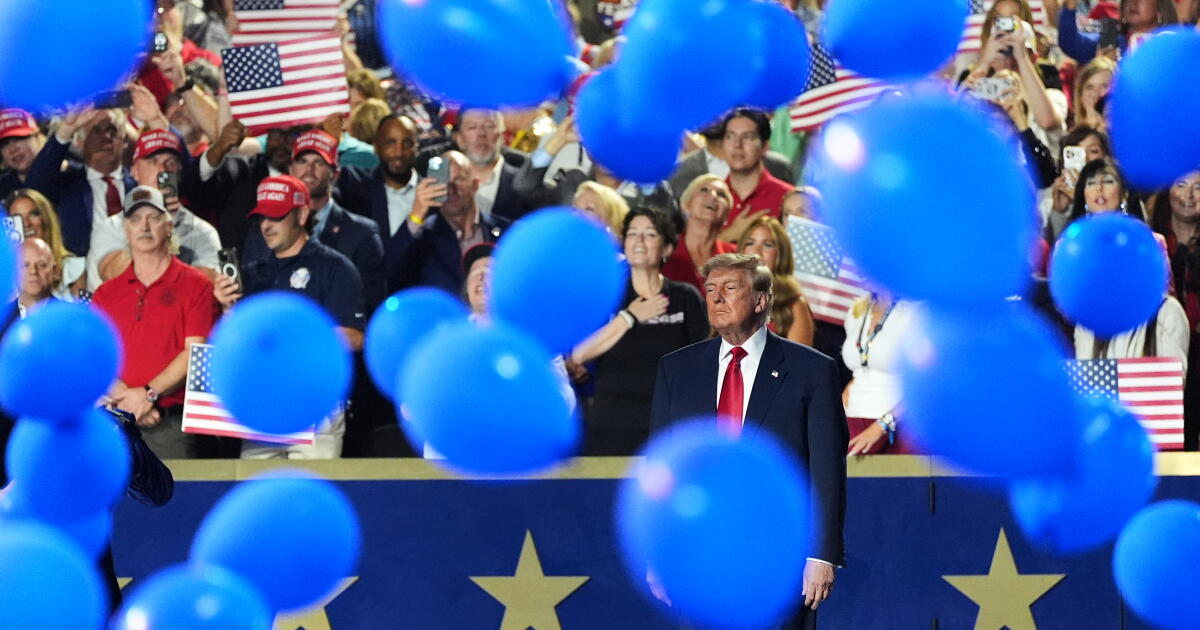
Donald Trump romped to victory Tuesday in Florida, chasing Marco Rubio from the race, but Ohio Gov. John Kasich won his home state, raising hopes for those seeking to stop Trump and settle the presidential contest on the floor of the Republican National Convention.

Trump also won North Carolina and Illinois and was locked in a close fight with Sen. Ted Cruz in Missouri.

“I’m getting ready to rent a covered wagon, we’re going to have a big sail and have the wind blow us to the Rocky Mountains and over the mountains to California,” Kasich said at a jubilant rally outside Cleveland.

That is just the sort of extended nominating fight the GOP establishment sought to avoid by stacking the political calendar with big early contests, capped by Tuesday night’s winner-take-all primaries in Florida and Ohio. California votes on June 7, near the close of the primary season.

Now, many of those same party types see an inconclusive nominating contest as the best and perhaps only chance of thwarting Trump, even if it threatens to shred the GOP in the process.

The setback in Ohio, where Trump campaigned hard, was his most disappointing performance since he finished second to Cruz in February’s Iowa caucuses.

His unhappiness was evident as he addressed reporters at his posh Mar-a-Lago private club in Palm Beach, Fla., and complained about the miseries of running for president.

“Lies, deceit, viciousness. Disgusting reporters. Horrible people,” the Manhattan businessman and reality TV star said. “Some are nice.”

Cruz, speaking with 99% of the Missouri votes counted, once more insisted he was the only candidate who could defeat Trump.

“Starting tomorrow morning, every Republican has a clear choice. Only two campaigns have a plausible path to the nomination — ours and Donald Trump’s,” the Texas senator told supporters in Houston. “Nobody else has any mathematical possibility whatsoever. Only one campaign has beaten Donald Trump over and over again.”

With Trump’s unmatched string of victories, no other candidate is nearly as well positioned to win the nomination ahead of the July convention in Cleveland. He padded his overall delegate lead with Tuesday’s victories, putting him ahead of Cruz and Kasich, who had not won a state before Ohio.

But there were signs Tuesday that not just the establishment but rank-and-file Republicans have yet to rally around the party’s polarizing front-runner.

Nearly 3 in 10 Republican voters across the five states said they would not vote for Trump if he wins the party’s nomination, according to exit poll interviews. Four in 10 said they would consider voting for a third-party candidate if the choice came down to Trump or the Democratic front-runner, Hillary Clinton.

Defections of that magnitude could badly undermine Trump in the general election, and that prospect will probably be stressed by his opponents going forward into next week’s contests in Arizona and Utah.

Rubio spoke to the controversy surrounding the GOP front-runner as he departed the race.

In a Miami concession speech delivered less than half an hour after the polls closed in Florida, the freshman senator congratulated Trump, wagging a finger and shushing members of the audience who booed his kind words.

Ohio Gov. John Kasich votes Tuesday in Westerville, Ohio.

Ohio Gov. John Kasich votes Tuesday in Westerville, Ohio.

(Matt Rourke / Associated Press)

Rubio then devoted the bulk of his lengthy remarks to warn against succumbing to the anger and frustration that have fueled Trump’s improbable rise.

“The politics of resentment against other people will not just leave us a fractured party,” Rubio said, as disconsolate family members stood by onstage. “They’re going to leave us a fractured nation” where people hate each other for their political views.

“Do not give in to the fear,” Rubio said. “Do not give in to the frustration.”

The son of Cuban immigrants and, at age 44, the youngest candidate in the field, Rubio was seen as one of the GOP’s rising stars, with a capacity to broaden the party’s support among millennial voters and the nation’s fast-growing Latino population.

But he failed to win more than a few contests and was never seriously competitive in his home state. Trump captured 99 delegates in Florida’s winner take-all-primary, more than a quarter of those at stake in Tuesday’s balloting.

The victory in winner-take-all Ohio gave Kasich 66 delegates, more than doubling his total but still leaving him well behind Trump. His goal is to build momentum with a series of wins positioning him as the strongest candidate heading into the Cleveland convention even if, as seems inevitable, Kasich is shy of the 1,237 delegates needed to win the nomination outright.

Pennsylvania, where Kasich was born, is the next big target on April 26.

The results Tuesday followed one of the oddest, most contentious weeks in a campaign that has been filled with strange and surreal moments.

The precipitating event was a racially charged near-riot at a Trump rally Friday night in Chicago, which was canceled out of security concerns.

Trump’s opponents quickly seized on the moment and the violent imagery that played around the world to once more challenge his temperament and fitness to be president. They accused him of fomenting the unrest through belligerent remarks that seemed to egg on his audiences into physically confronting dissenters.

Trump denied any responsibility, blaming the violence on what he called professional agitators linked to Democratic hopeful Bernie Sanders. He said the protesters provoked his supporters and were stifling their rights to free speech and assembly.

“I don’t condone violence,” Trump said repeatedly, though he sympathized with backers who chose to “be effective” with protesters in the audience. (Previously he used more pugilistic language.)

Trump said he might even pay the legal fees for a supporter who sucker-punched a demonstrator at a North Carolina rally, drawing widespread condemnation. He won the state anyway.

Indeed, for weeks increasingly desperate Republican opponents have mounted an effort to stop Trump, to seemingly little effect.

More than $10 million in negative ads blazed across the Florida airwaves in just the last week alone, attacking Trump for his ethics, the failings of his business empire and his all-over-the-map political ideology.

Those meant nothing to Mark Owens, who stepped into the Miami Beach sunshine Tuesday and lighted a cigar after casting a ballot for the political neophyte.

“We’ve trusted politicians for 200 years to run our country,” Owens said. “It’s time to give someone else a shot.”

With polls suggesting Florida was firmly in Trump’s grasp, much of the campaign focused on Ohio, another traditional fall battleground.

Trump laid on extra events, including an election-eve rally outside Youngstown in place of a planned Florida appearance, and he turned his attention to attacking Kasich after long ignoring the Ohio governor.

He assailed him for his support as a congressman for the North American Free Trade Agreement, a pact with Canada and Mexico that, Trump said, devastated the state’s economy. He also laid on personal insults in a bid to snatch a victory in Kasich’s home state and clear the governor from the race.

Kasich, whose strategy centered on staying above the salvos flying among other candidates, accused Trump of creating a “toxic” political atmosphere and, wrapping himself in the establishment mantle, spent Monday stumping alongside Mitt Romney, the party’s 2012 nominee.

With Kasich suddenly a factor in the GOP contest, the skirmishing here in Ohio seems a likely preview of what is to come.

While he pledged to take the high road at his victory party Tuesday night, Kasich sent a different message speaking to reporters earlier in the day.

He said, “I will be … forced going forward to talk about some of the deep concerns I have about the way this campaign has been run by some others — by one other in particular.”

There is no doubting who he had in mind.

mark.barabak@latimes.com

Twitter: @markzbarabak

Times staff writers Michael Finnegan, Kurtis Lee and Seema Mehta in Los Angeles and Kate Linthicum in Miami contributed to this report.


Source link

Indiana, Ohio primaries draw midterm battle lines, reinforce Trump’s pull | US Midterm Elections 2026 News

Latest votes set up key Senate race, underscore Trump’s continued influence over Republican Party.

Primary elections in Indiana and Ohio have drawn the latest battle lines for the United States midterm elections in November, while underscoring Trump’s continued sway over Republican voters.

In Ohio, voters on Tuesday picked the candidates who will face off in the consequential election, with Democrats picking former Senator Sherrod Brown to take on Republican Jon Husted. Husted replaced Vice President JD Vance when he left his Senate seat for the White House.

Recommended Stories

list of 3 itemsend of list

The race is considered one of the most consequential, as Democrats face an uphill battle to retake control of the Senate, which currently has a 53-47 Republican majority. Brown has long styled himself as an economic populist, able to cut across party lines, while Republican groups have pledged to spend heavily to defend Husted.

Also in the “Buckeye State”, Trump ally Vivek Ramaswamy won the Republican gubernatorial nomination. Ramaswamy, who had a short tenure co-running Trump’s Department of Government Efficiency (DOGE) panel, will face off with Democrat Amy Acton, who led the state’s Department of Health during the COVID-19 pandemic.

In Indiana, meanwhile, Trump’s continued influence over the Republican Party was apparent, even as polls have seen his overall approval rating tank in recent weeks amid economic uncertainty and the US-Israeli war in Iran.

The US president had promised to target Republicans who pushed back on his calls for Indiana to redraw its congressional districts in advance of the midterms. Indiana was one of the few Republican-controlled state legislatures to reject the president’s pressure amid a wider flurry of state redistricting.

Five of the state-level candidates Trump targeted subsequently lost their primary elections on Tuesday. One candidate won, and one race remained too close to call.

State Senator Linda Rogers, one of the ousted Republicans, said Trump’s successful attempt to scuttle her race sent a clear message to others in the party considering opposing the president.

“If someone is going to ask you to take a tough vote, you may think twice about your conscience and what’s best for your community and instead what’s best for you and your career,” she said.

The primary comes shortly before US Representative Thomas Massie in Kentucky and US Senator Bill Cassidy in Louisiana, both Republicans, face punishing primary challenges. Trump is opposing both incumbents.

Massie has been one of the most outspoken critics of the administration, particularly when it comes to the US-Israeli war in Iran and the Department of Justice’s handling of documents related to disgraced financier Jeffrey Epstein.

Cassidy had voted to impeach Trump in 2021 for his role in the January 6, 2021, riot at the US Capitol and remained a critic throughout Trump’s 2024 re-election campaign.

While Trump’s influence remained strong in the Indiana primary, it does not necessarily spell Republican success in the general elections.

Recent polls have shown tanking support for Trump among independents, who are unaffiliated with either party and often serve as key deciding factors in close races.

For example, a recent NPR/PBS News/Marist Poll found that 63 percent of US residents nationally place a “great deal or good amount of blame” on Trump for high petrol prices. That rate was the same – 63 percent – for independents.

Source link

Primaries: GOP voters in Indiana, Ohio back Trump-aligned candidates

May 6 (UPI) — Republican voters in Indiana and Ohio largely backed Trump-aligned candidates Tuesday in primaries seen as tests of President Donald Trump‘s influence within the GOP.

Both states held their party primaries on Tuesday to decide candidates for hundreds of races for November’s midterm elections, but most eyes were on contests for the Indiana state Senate, where incumbent Republicans had rejected Trump’s redistricting push.

Indiana

Though too late to influence Indiana’s congressional map before the midterms, Trump endorsed challengers to incumbents who had opposed his effort to redraw the map to add Republican seats.

Trump’s influence within the GOP in the Hoosier State appeared strong: Of his seven endorsed challengers against Indiana Republican state senators who opposed his gerrymandering push, five appeared poised to win outright, one seemed to have lost and another was in a tight race.

“Big night for MAGA in Indiana,” Sen. Jim Banks, R-Ind., said in a social media statement, referring to the acronym for Trump’s far-right nationalist Make American Great Again movement.

“Proud to have helped elect more conservative Republicans to the Indiana State Senate.”

Nearly 90% of all Indiana precincts were reporting as of early Wednesday, according to the Indiana Election Division, but five of the seven Trump-backed candidates had already declared victory.

Those five are Trevor De Vries, Brian Schmutzler, Blake Fiechter, Tracey Powell and Michelle Davis.

“Thank you to every Hoosier who came out to vote today,” De Vries said in a social media post late Tuesday.

“And special thanks to President @DonaldTrump for his endorsement that helped seal the deal and showed Indianapolis what real Hoosiers wanted.

“We did it, Indiana! Time to get to work.”

De Vries beat incumbent Daniel Dernulc, state senator for District 1, in a landslide. According to the unofficial results, De Vries secured 75.1% of the vote to Dernulc’s 23.3%.

Schmutzler was poised to beat state Sen. Linda Rogers in a 55.8% to 44.2% split, Fiechter over state Sen. Travis Holdman 61.5% to 38.5%, Powell’s 64.7% led state Sen. Jim Buck’s 35.3% and Davis led state Sen. Greg Walker 58.8% to 41.2%.

Trump-endorsed Paula Copenhaver also declared victory in her race against Sen. Spencer Deery despite being in a virtual tie. According to unofficial state results, she was trailing Deery by three ballots.

“After all provisional ballots are counted, we will prevail and be declared the winner of this race,” she said on X.

“I want to thank President Donald Trump for his unwavering support and endorsement. President Trump is the leader of our party, and it showed clearly tonight in his victories across the state.”

The only Trump-endorsed candidate to lose was Brenda Wilson. State Sen. Greg Goode was poised to win with 53.6% of the vote to Wilson’s 36%, according to the unofficial results.

A sixth incumbent who stood against redistricting, Sen. Rich Niemeyer, also appeared poised to lose his seat to challenger Jay Starkey, who was not endorsed by Trump.

Ohio

In Ohio, the race to watch was on the GOP gubernatorial primary.

With incumbent Republican Gov. Mike DeWine barred by term limits from running again, Ohio’s governor’s mansion will have a new occupant.

Amy Acton and her running mate David Pepper ran unopposed in the Democratic primary for governor and lieutenant governor, respectively.

Republican voters in the state nominated Trump ally Vivek Ramaswamy for governor and Robert McColley for lieutenant governor in a landslide.

According to unofficial results from the Office of Ohio Secretary of State, the Ramaswamy-McColley ticket secured 82.47% of the vote compared to the 17.53% that Casey Putsch and Kimberly Georgeton received.

“I speak for Rob and myself here: We are in this because we believe that together — with the complementary skills that we bring to the table — we are the two people in this state who can work together as a team to lead Ohio back to our true potential,” he said Tuesday night during his victory speech.

“To our greatest heights to put more money in your pocket, to bring down those costs and to give your kids the world-class education that is the birthright of every Ohioan.”

Trump had endorsed Ramaswamy for governor.

“I know Vivek well, competed against him and he is something SPECIAL,” Trump said earlier Tuesday.

“Vivek Ramaswamy will be a GREAT Governor of Ohio.”

Ramaswamy gained national attention during the 2024 GOP presidential primary, running against Trump. Instead of attacking the former New York real estate mogul, Ramaswamy aligned himself with Trump’s America First movement, often praising him.

“Thank you, Mr. President!” Ramaswamy said in response to Trump’s endorsement.

“It’s time to make Ohio greater than ever.”

Source link

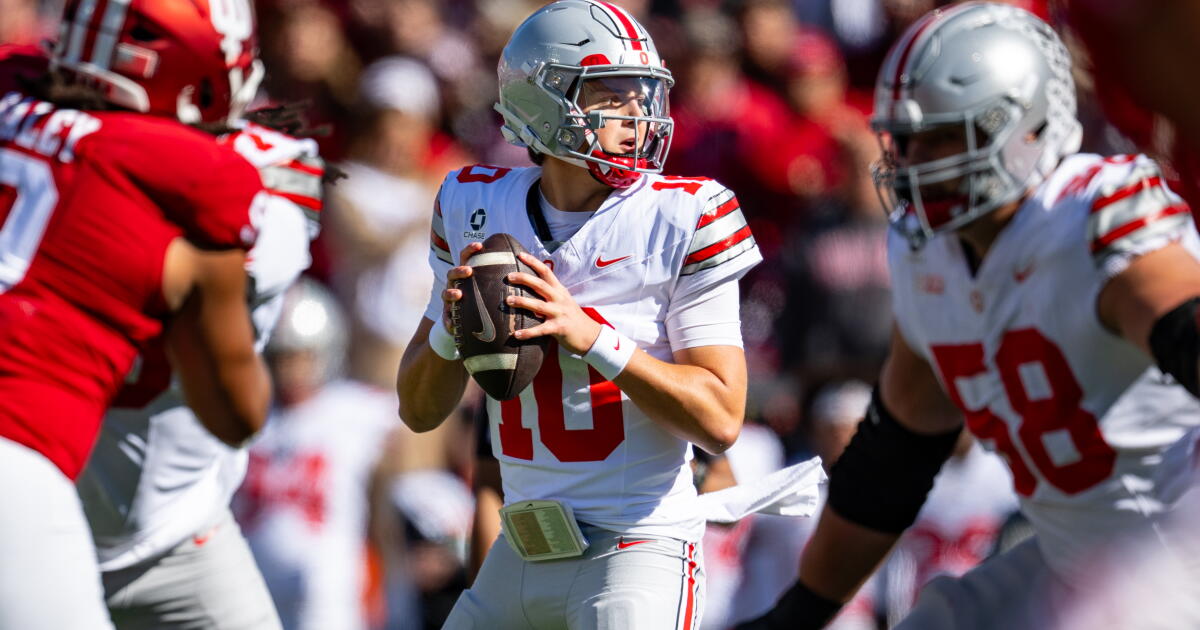
Sam Farmer’s final NFL mock draft is loaded with Ohio State alums

This might be the first time in the NFL’s modern era that Pittsburgh has hosted the draft, but the whole format was actually invented here.

Back in 1935, the league’s founders met at the Fort Pitt Hotel and voted unanimously to put in place a selection process in reverse order of the previous season’s standings. That would promote competitive balance, which has been a hallmark of the NFL ever since.

Ladies and gentlemen, meet the Las Vegas Raiders. The franchise went 21-41 over the past four seasons and its offense scored a league-worst 241 points last season.

Quarterback Fernando Mendoza, who led Indiana to a national championship, won’t be at the draft but almost certainly will hear his name called first. He’s likely to be the only quarterback selected in the opening round.

Indiana quarterback Fernando Mendoza is widely expected to be the No. 1 pick of the NFL draft.

Indiana quarterback Fernando Mendoza is widely expected to be the No. 1 pick of the NFL draft.

(Eric Thayer/Los Angeles Times)

The rest of the first round figures to be heavy on edge rushers and receivers — the Rams are in the market for a pass catcher — with a couple of Notre Dame running backs who could also make a splash.

Every franchise is looking for that game-changing find. The goal: Be a Pittsburgh stealer.

A look at how the draft could unfold:

1. Las Vegas Raiders: Fernando Mendoza, QB, Indiana — Mendoza gets Tom Brady’s stamp of approval, and Raiders begin yet another reboot.

2. New York Jets: Arvell Reese, Edge, Ohio State — Pie in the sky, but the Jets are praying to find a Micah Parsons of their own.

3. Arizona Cardinals: David Bailey, Edge, Texas Tech — Amid rumblings that Cardinals might take a running back, they grab a pass rusher instead.

4. Tennessee Titans: Jeremiyah Love, RB, Notre Dame — Cam Ward needs help, and Love bolsters that Titans backfield with big-play burst.

Ohio State's Caleb Downs is projected to be selected No. 5 by the New York Giants.

Ohio State’s Caleb Downs is projected to be selected No. 5 by the New York Giants.

(Steph Chambers / Getty Images)

5. New York Giants: Caleb Downs, S, Ohio State — John Harbaugh loves those smart safeties who can play quarterback on the back end of the defense.

6. Cleveland Browns: Carnell Tate, WR, Ohio State — The Browns got an up-close look at this guy in college, and they need to score points in the worst way.

7. Washington Commanders: Sonny Styles, LB, Ohio State — The Commanders get a versatile leader in the middle who can play all four downs.

8. New Orleans Saints: Jordyn Tyson, WR, Arizona State — Chris Olave has been great for the Saints, but he’s prone to concussions. Tyson is insurance.

9. Kansas City Chiefs: Rueben Bain Jr., Edge, Miami — If the Chiefs don’t take a receiver, they would be perfectly happy with a do-it-all pass rusher.

LSU cornerback Mansoor Delane is projected to be the Giants' second pick of the NFL draft.

LSU cornerback Mansoor Delane is projected to be the Giants’ second pick of the NFL draft.

(Michael DeMocker / Getty Images)

10. New York Giants: Mansoor Delane, CB, LSU — Giants will hold their breath making this pick as they have an illustrious history of drafting busts at corner.

11. Miami Dolphins: Keldric Faulk, Edge, Auburn — Dolphins are a trade-up candidate, but they are sorely in need of pass-rush help. Faulk is a good fit.

12. Dallas Cowboys: Dillon Thieneman, S, Oregon — The Cowboys surrendered a league-worst 30.1 points per game last season and need help all over.

13. Rams: Makai Lemon, WR, USC — The Rams have shown a knack for identifying receivers who will become stars. This would be a great landing spot.

USC receiver Makai Lemon falls backward while making an acrobatic touchdown catch in front of Michigan's Jayden Sanders.

USC receiver Makai Lemon, who made many acrobatic catches during his career with the Trojans, could be selected by the Rams.

(Gina Ferazzi/Los Angeles Times)

14. Baltimore Ravens: Francis Mauigoa, OT, Miami — With the best of the receivers gone, the Ravens look to bolster their offensive line. They need help at guard and tackle.

15. Tampa Bay Buccaneers: Akheem Mesidor, Edge, Miami — The Buccaneers haven’t had anyone with 10 sacks since 2021. Mesidor has that potential.

16. New York Jets: Denzel Boston, WR, Washington — The Jets need a bookend for Garret Wilson, and this gives Geno Smith a big target over the middle.

17. Detroit Lions: Spencer Fano, OT, Utah — Taylor Decker is gone. The Lions get a player who can line up on either side, opposite Penei Sewell.

18. Minnesota Vikings: Emmanuel McNeil-Warren, S, Toledo — Harrison Smith is in the sunset of his career, and if there’s a top-notch safety here, the Vikings need to grab him.

19. Carolina Panthers: Kenyon Sadiq, TE, Oregon — The Panthers take an elite safety if there’s still one around, but a target for Bryce Young would be nice too.

20. Dallas Cowboys: Jermod McCoy, CB, Tennessee — More help for the Cowboys defense. This could be Texas Tech linebacker Jacob Rodriguez as well.

21. Pittsburgh Steelers: Omar Cooper Jr., WR, Indiana — Steelers receivers coach is the brother of Indiana’s head coach. Pittsburgh knows this player well.

Penn State offensive lineman Olaivavega Ioane runs a drill at the NFL scouting combine in Indianapolis on March 1.

Penn State offensive lineman Olaivavega Ioane could be selected by the Chargers in the first round of the NFL draft.

(Michael Conroy / Associated Press)

22. Chargers: Olaivavega Ioane, G, Penn State — The Chargers have huge draft investments in their tackles, but they still need to fortify that offensive line.

23. Philadelphia Eagles: Kadyn Proctor, OT, Alabama — With Lane Johnson near the end of his career, the Eagles need to start developing a huge young successor.

24. Cleveland Browns: Monroe Freeling, OT, Georgia — Thanks to a trade with Jacksonville, the Browns have the draft capital to take a left tackle here.

25. Chicago Bears: Zion Young, Edge, Missouri — Lots of talent on offense, but the Bears need to do everything they can to fortify their defense. Young can get to quarterbacks.

26. Buffalo Bills: Cashius Howell, Edge, Texas A&M — SEC Defensive Player of the Year should be a nice complement to newly-acquired Bradley Chubb off the edge.

27. San Francisco 49ers: KC Concepcion, WR, Texas A&M — This receiver and return specialist fits the mold for Kyle Shanahan. A crisp route runner with speed to get deep.

28. Houston Texans: Kayden McDonald, DT, Ohio State — The Texans need help along the interior of both of their lines. McDonald can make an immediate impact.

29. Kansas City Chiefs: Colton Hood, CB, Tennessee — Chiefs need a corner, and if Jermod McCoy is gone, Hood would be a good alternative.

30. Miami Dolphins: Jacob Rodriguez, LB, Texas Tech — The reliable Rodriguez could go earlier – maybe to Dallas – but would help stabilize rebuilding Dolphins defense.

31. New England Patriots: T.J. Parker, Edge, Clemson — The Patriots have made no secret about their desire to beef up their rush off the edges.

32. Seattle Seahawks: Jadarian Price, RB, Notre Dame — The Seahawks didn’t re-sign Kenneth Walker III, so there’s opportunity for a young running back to fill the void.

Source link

Democratic Senate hopefuls put California cash in the bank

Democrats who once saw retaking the U.S. Senate as a long shot in 2026 have newfound hope thanks to an unpopular president and a California donor machine that has snapped into action.

Californians provided the most out-of-state cash to Democrats in nearly every hotly contested race, and in several cases gave more than in-state donors, according to a Times analysis of campaign finance filings covering the first three months of 2026.

Sen. Jon Ossoff of Georgia, who took in more than $14 million overall, received nearly as much from California backers as from supporters in his home state among donors who contributed at least $200 and whose identities were disclosed.

James Talarico, a Democratic Senate candidate in Texas, has raised a staggering $27 million so far this year, with California donors contributing just under $1.2 million to back his campaign — second only to Texas supporters among those donors whose names were disclosed.

Donors who give less than $200 are not required to be identified in campaign finance reports and made up a significant share of the donors to Ossoff’s and Talarico’s campaigns.

Republicans currently have control of the Senate with 53 of the chamber’s 100 seats. This year 35 seats are at play, including special elections in Florida and Ohio.

GOP still winning a key cash race

While more of the seats up for grabs are in Republican hands, polling showing the potential for tight races in several of them has given Democrats hope that they might be able to shrink or reverse their deficit in November.

Top Democratic candidates have out-raised their GOP rivals in the most competitive Senate races, but Republicans are winning the cash race among big-money committees that can accept checks far larger than the $7,000 cap on donations to candidate committees.

Those Democratic candidates have continued a tradition of relying on donors in the country’s most populous state to bankroll their campaigns.

“California has been a rich gold mine for many a candidate and continues to be that,” said Michael Beckel, director of money in politics reform at Issue One, a bipartisan advocacy group.

Democratic Senate candidates in a few races raised more from California donors than from donors in their home states, according to campaign finance reports filed Wednesday.

Democratic former Rep. Mary Peltola of Alaska, who is challenging incumbent Republican Sen. Dan Sullivan, brought in nearly $900,000 from California donors who had contributed at least $200. Alaska donors contributed just over $520,000 to Peltola in the same time period.

Two of the three leading Democratic hopefuls in Michigan’s open Senate race, Rep. Haley Stevens and physician Abdul El-Sayed, reported taking in more from California donors than from donors in Michigan. California was the second biggest bank of support for the other top Democratic contender, state Sen. Mallory McMorrow.

And in Nebraska, independent Dan Osborn, who is challenging incumbent Republican Sen. Pete Ricketts, took in $80,000 more from disclosed California donors than from Nebraskans.

Dozens of California donors gave to at least five Senate candidates across the country, according to The Times’ analysis of the filing data.

Burbank playwright and screenwriter Winnie Holzman has donated to Democratic candidates in nine key races and said she has been inspired to give to them — and other candidates and political groups — because of concerns about the policies of President Trump’s administration and what she sees as its violation of the law.

“This isn’t just about who is in the Senate,” said Holzman, who wrote the script for the play “Wicked” and co-wrote its movie adaptations. “But if enough Democrats were in the Senate right now, there would be a lot more ability to push back on this.”

The impressive fundraising hauls by Democrats come with a significant caveat.

The two most prominent political committees that support Republican Senate candidates — the party-affiliated National Republican Senatorial Committee and the Senate Leadership Fund super PAC, have both outraised rival Democratic groups by a significant margin this cycle.

For the NRSC, an $11.5-million fundraising advantage since the start of 2025 has translated to a modest $2-million advantage in cash in the bank through the end of February compared with the Democratic Senatorial Campaign Committee.

But the Senate Leadership Fund, which can accept unlimited amounts of cash from donors, had $91.6 million more to spend at the end of March than the Democratic rival Senate Majority PAC.

And the pro-Trump super PAC MAGA Inc. had a stunning $312 million in the bank at the end of February.

Money raised by candidate campaign committees does, however, bring some advantages over money raised by other committees. Most significantly, candidates are able to buy advertising at cheaper rates than other political committees.

That is an important distinction in a year when advertising spending in Senate races is expected to top $2.8 billion.

The Senate map

While political analysts expect that Democrats will likely perform well in congressional races — with early signs pointing to a strong possibility that the party regains control of the House — winning control of the Senate would be a much taller order.

“The Senate is going to be won or lost in red states,” said Kyle Kondik, managing editor of Sabato’s Crystal Ball at the University of Virginia’s Center for Politics.

Even in the best-case scenario for Democrats, to retake control of the chamber they would probably need to win in at least two states such as Iowa, Alaska, Ohio or Texas, all of which went to Trump in the 2024 presidential election by double-digit margins.

With the vast sums likely to be raised — and spent — by both sides, Kondik said that fundraising can reach a point of diminishing returns.

“You’d rather have more than less, obviously, but the actual effect is pretty debatable,” he said.

And history shows that fundraising prowess doesn’t necessarily translate to electoral success in November.

Take the example of Texas Democrat Beto O’Rourke.

In his 2018 challenge of incumbent Republican Ted Cruz, O’Rourke brought in more than $80 million, more than double Cruz’s fundraising haul of $35 million.

But it wasn’t enough to put the then-congressman from El Paso over the top.

O’Rourke lost the race by about 2.5 percentage points.

Source link