
Market expectations for an October Federal Reserve rate hike tumbled to just over 50% on Tuesday after New York Fed President John Williams indicated he is in no rush to increase borrowing costs next month.
After the Federal Open Market
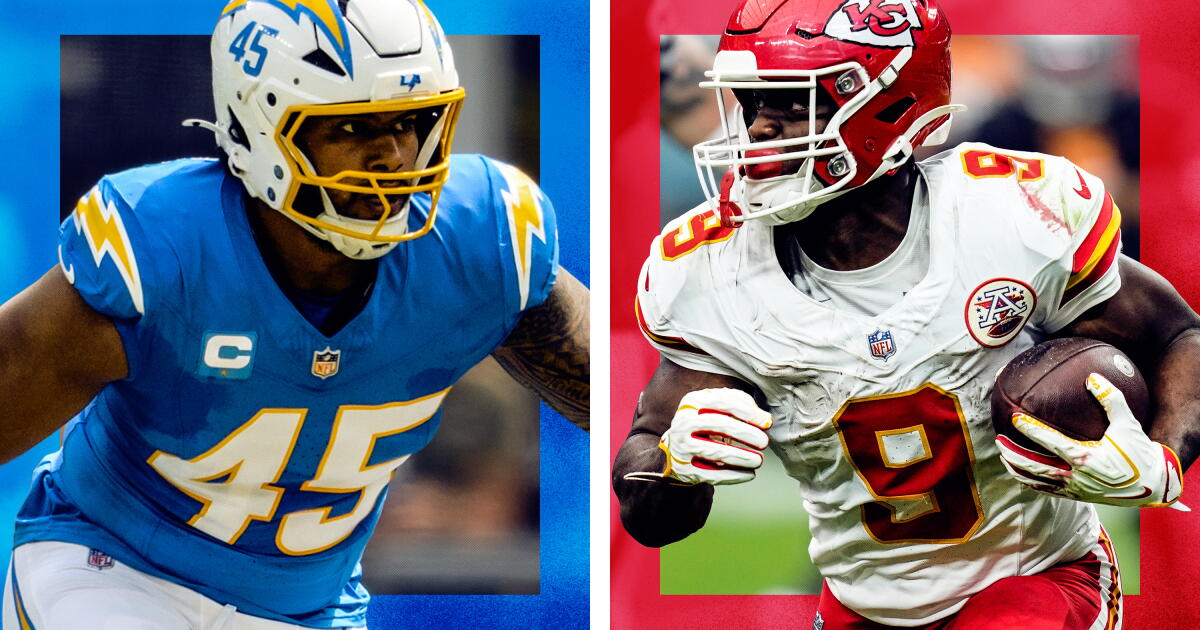
Six weeks into the NFL season and Chargers versus the Kansas City Chiefs pits a winless team against an unbeaten one. Last season, when the Chargers swept the Chiefs, feels like a lifetime ago.
This game might not be as lopsided as it appears, considering these teams know each other so well. But these are rough times for the Chargers, who are still missing their two starting tackles and All-Pro safety Derwin James Jr. What’s more, it has been a terrible start for Justin Herbert, who has five touchdowns, seven interceptions, an anemic passer rating of 70.2 and has been sacked 17 times.
Conversely, Chiefs quarterback Patrick Mahomes is on a roll despite returning from last season’s devastating knee injury. He has nine touchdowns, two interceptions, a 106.2 rating and six sacks — almost two-thirds fewer than Herbert.
A big battle for Los Angeles will be on defense, as the Chargers have done a good job against the run and are facing Kansas City’s Kenneth Walker III, who has rushed for 537 yards at an average of 6.2 yards per carry.

Los Angeles Times NFL writer Sam Farmer examines the matchups and makes his predictions for Week 6 of the NFL season.
All lines and over/under numbers are according to FanDuel Sportsbook.
Last week, Farmer posted an 11-5 (.688) record. Through the first five weeks of the season, he is 37-27 (.578).
Using point spreads with the scores Farmer predicted, his record against the spread in Week 5 would have been 9-7 (.563). For the season, his record against the spread is 25-39 (.391).
All times are Pacific and TV reflects broadcasts in the Los Angeles area. The Bengals, Dolphins, Lions and Vikings do not play this week.

Last month, a woman identified as Jane Doe filed a lawsuit against Cornell University, the fraternity Chi Phi and the seven fraternity members she accused of gang-raping her on the night of October 19, 2024.
Her allegations have triggered a nationwide reckoning in the United States over the prevalence of sexual assault on college campuses.
list of 3 itemsend of list
But the case has also reignited efforts to reform laws in the state of New York.
While the left-leaning state has long presented itself as a leader in women’s rights, advocates say sexual assault survivors still face pervasive legal barriers when they seek justice.
Erica Vladimer, a lawyer and founding director of Harassment-Free New York, a survivor-led nonprofit, told Al Jazeera that much of the legislation currently in the spotlight is the culmination of years, if not decades, of work.
“These are bills that we have been fighting for for years when sexual violence is not in the news,” Vladimer said.
She drew a line between the #MeToo movement, which began in 2017 as an online campaign to denounce sexual misconduct, and the current wave of outrage following Doe’s allegations.
“It speaks to the fact that the #MeToo movement is not dead. It is a movement, not a moment,” Vladimer said.
Already, leaders in Albany, the state capital, have signalled they would take action following the Cornell case.
On Wednesday, the New York Assembly announced it had formed a working group to examine the state’s sexual-assault laws and develop recommendations for the 2027 legislative session.
Still, advocates say more concrete measures are needed to address the crisis.
“I appreciate that this work is happening,” said Lindsey Boylan, a New York City Council candidate. “It doesn’t undo the fact that rape culture is pervasive in the United States and very much so alive and well in New York.”
Boylan was the first woman to publicly accuse former New York Governor Andrew Cuomo of sexual harassment in another high-profile misconduct case, back in 2020. She is among those calling for greater reform.
Here are some of the measures advocates are pushing state lawmakers to adopt or amend:
The Cornell University case has brought renewed attention to New York’s “voluntary intoxication” statute, a legal loophole that can make it harder to prosecute sexual assault when a person has willingly consumed alcohol or drugs.
New York Governor Kathy Hochul pledged on Friday to work with lawmakers to close the gap.
“It should not matter whether they chose to use drugs or alcohol. Voluntary intoxication is not a license for sexual assault or gang rape. Period,” Hochul said.
Under the current state law, a person who voluntarily drinks or takes drugs is not considered “mentally incapacitated” during an assault, even if they become too intoxicated to consent.
That can make it harder for prosecutors to bring a sex-crime charge. The law primarily recognises incapacitation in the context of sexual assault when a person was involuntarily intoxicated, unconscious or otherwise “physically helpless”.
That distinction has become central to the Cornell case. Doe has acknowledged that she consumed substances before the alleged rape, saying that she was pressured into drinking alcohol and taking the dissociative drug ketamine.
The Tompkins County district attorney initially declined to bring charges, pointing to the law’s stance on “voluntary intoxication”. But the investigation has since been reopened, amid public pressure.
New York is one of 19 states in the US that distinguish between “voluntary” and “involuntary” intoxication when it comes to determining consent in sexual violence cases.
But the Cornell case has spurred a push to remove the distinction from the law books. Critics have argued that sexual assault is no less grievous if a victim is drunk or has chosen to take drugs.
“I mean, to have New York, a supposedly progressive state, penalise people who are sexually abused for drinking is disgusting,” Boylan told Al Jazeera.
Vladimer, for her part, explained that distinguishing between “voluntary” and “involuntary” intoxication as a means for pursuing sexual assault cases shifts the focus onto the actions of victims, rather than perpetrators.
“We essentially have codified victim-blaming by saying if you become voluntarily intoxicated and then are sexually assaulted, you essentially cannot seek justice in our court system,” Vladimer told Al Jazeera.
In June, the New York state Senate unanimously passed a bill to allow sexual assault charges regardless of whether a victim is intoxicated voluntarily or involuntarily.
But the legislation has yet to be taken up in the state Assembly.

New York’s rape-shield protections limit the use of evidence about a complainant’s sexual history and conduct in criminal proceedings. But those protections do not currently extend to civil cases.
This distinction could matter in the Cornell case because Doe filed a civil lawsuit.
Vladimer said questions about a survivor’s behaviour could come up in the discovery process of a civil case, as well as in court.
“There is the potential of her having to face questions about things like her sexual history,” Vladimer said.
Bridie Farrell, the director of victim rights advocacy and legislation at the law firm Weitz and Luxenberg, told Al Jazeera that she has seen major differences in how male and female survivors are questioned in civil cases where this practice is still permitted.
In one case involving a brother and sister who were both sexually assaulted, Farrell said the man was not questioned about his sexual history while the woman was “grilled on it”.
A bill sponsored by State Senator Liz Krueger would extend rape-shield protections to civil proceedings. The measure passed the Senate in June and is currently before the Assembly Judiciary Committee.

Advocates are also pushing for legislation to prevent retaliatory defamation lawsuits.
Boylan said she has spent more than $2m defending herself in legal proceedings connected to her accusations against Cuomo, who stepped down as New York governor in 2021.
He has repeatedly denied any allegations of wrongdoing, despite a state attorney general’s report that concluded he “engaged in conduct constituting sexual harassment”.
“Every step of the way, we have a system that penalises people for speaking up about their own harm,” Boylan said.
Boylan and Charlotte Bennett, a former aide who also accused Cuomo of sexual harassment, are proponents of the Speak Your Truth Act, which would provide legal protections for people who publicly report sexual assault, harassment or discrimination.
The bill, sponsored by Assembly member Jessica Gonzalez-Rojas, would make certain communications about sexual assault, harassment or discrimination privileged when they are made without malice.
It would also allow survivors of sexual misconduct who successfully defend themselves against a defamation lawsuit to recover legal fees and costs. The bill remains in an Assembly committee.

For Bridie Farrell, the victims’ rights advocate, the fight for legal change is personal.
Farrell was a 15-year-old competitive speed skater in 1997 when she said she was sexually abused by her 33-year-old teammate and mentor. She came forward with her story of abuse in 2013.
By then, the statute of limitations in her case had expired. Farrell later became an advocate for changes to New York’s laws, helping to pass the Child Victims Act in 2019 that extended the time available for survivors of childhood sexual abuse to pursue criminal and civil claims.
The law allowed Farrell to file her own case, which she did in 2020. She tells Al Jazeera that a trial has finally been scheduled for June 2027.
“Before we passed the Child Victims Act in 2019, New York was one of the worst in the country,” Farrell said of the situation for sexual assault survivors seeking justice.
Farrell considers the legal impediments to Doe’s case — like the “voluntary intoxication” statute — all too predictable. “I’m not surprised if we haven’t updated a law that is archaic,” she said.
Still, lawmakers have signalled willingness to reform such laws. In announcing the state Assembly’s working group on sexual-assault laws, Speaker Carl Heastie pledged to “thoughtfully” consider how the state can strengthen its laws.
“The allegations being reported out of Cornell University are truly horrifying,” Heastie said on Wednesday. “We want to do everything we can to ensure victims of sexual assault see justice served.”
But survivors and sexual violence advocates say the Cornell case points to problems that go beyond any single law. They hope to see widespread systemic and societal change.
“Changing legislation is incredibly important. But legislation in a lot of cases can only go [as far as] the paper that it’s written on,” Boylan said. “It would be amiss to orient this horrible, tragic, unacceptable, infuriating case in isolation without looking at the broader rape culture of our state and our country.”

During the offseason, Rams coach Sean McVay said that receiver Davante Adams’ name came up when the Philadelphia Eagles were shopping for trade partners for receiver AJ Brown.
Adams said at the start of training camp — months after the Eagles traded Brown to the New England Patriots — that he understood that was part of the business.
The Rams are happy that Adams remains in the fold.
Heading into Sunday’s game against the Eagles, the 13th-year pro has amassed a career-best 358 receiving yards through three games.
“Fine wine gets better with time,” offensive coordinator Nate Scheelhaase said.
Adams, 33, is coming off two consecutive 100-yard receiving performances.
With receiver Puka Nacua sidelined because of a hip injury, Adams caught eight passes for 195 yards and two touchdowns in a 28-6 victory over the New York Giants, and he had seven receptions for 137 yards in a 30-26 defeat by the Denver Broncos.
“I don’t necessarily need a 100-yard game to validate what I can do on the field,” said Adams, who is in his second season with the Rams. “Coming to a team like this where you have playmakers literally at every single position, it’s not necessary.
“If it is necessary and I’m called on, then I’ll go and answer the bell on that. Whatever my game or my role looks like for whatever the situation is, I try to live up to that.”
Adams is tied for the league lead with nine catches of 15 yards or more.
Asked if he was conscious that after catching passes in space at 33, he might not get to a faraway end zone as quickly as he did in his 20s, Adams had a good-natured response.
Adams said he has never been looked at in the same way as “a burner” such as Tyreek Hill. But he makes the most of speed and experience.
“When I see an open field, I’m running, obviously, as hard as I can to get to the end zone and try to score any time that I can,” he said. “Angles and certain things obviously influence whether or not you can get in. I don’t have a whole lot of 91-yard touchdowns in my career so I don’t know if I would have got in as a 24 or 23-year-old.
“When I see that space, I’m always pushing to get there. I’m running as hard as I can without pulling any ‘hammies’ [hamstrings] or doing anything crazy out there.”
Nacua, the NFL receptions leader last season, will return to the lineup against the Eagles. Nacua and other Rams receivers continue to be awed by Adams after his back-to-back 100-yard performances.
“It’s funny because with him being the veteran in our group and quote-unquote ‘the old guy,’ it’s been really exciting for him,” Nacua said. “There’s a breath of fresh air that I think we bring to him, but also that standard where he’s as competitive as it comes.”
Rams: DL Aaron Donald (back) out; CB Jaylen Watson (shoulder) out; TE Terrance Ferguson (ankle) out; TE Colby Parkinson (shoulder/knee) questionable; OLB Josaiah Stewart (groin) questionable.
Eagles: LB Zack Baun (concussion) out; WR Marquise Brown (ankle) out; TE Dallas Goedert (knee) out; OL (knee); WR DeVonta Smith (hamstring) out; S Marcus Epps (groin) out.
The Rams and Philadelphia Eagles will play Sunday at 10 a.m. PDT at Lincoln Financial Field in Philadelphia. The game will be televised in California on Fox and will be available nationally via a subscription to NFL Sunday Ticket on YouTube TV. In Southern California, fans can listen to the game on 710 AM, 93.1 FM and 1330 AM (Español).

The return of Nacua — and the odds against the Rams losing to the Eagles again on a last-second blocked field goal returned for a touchdown — will help McVay get his first win against Eagles coach Nick Sirianni.
Gary Klein’s pick: Rams 27, Eagles 20
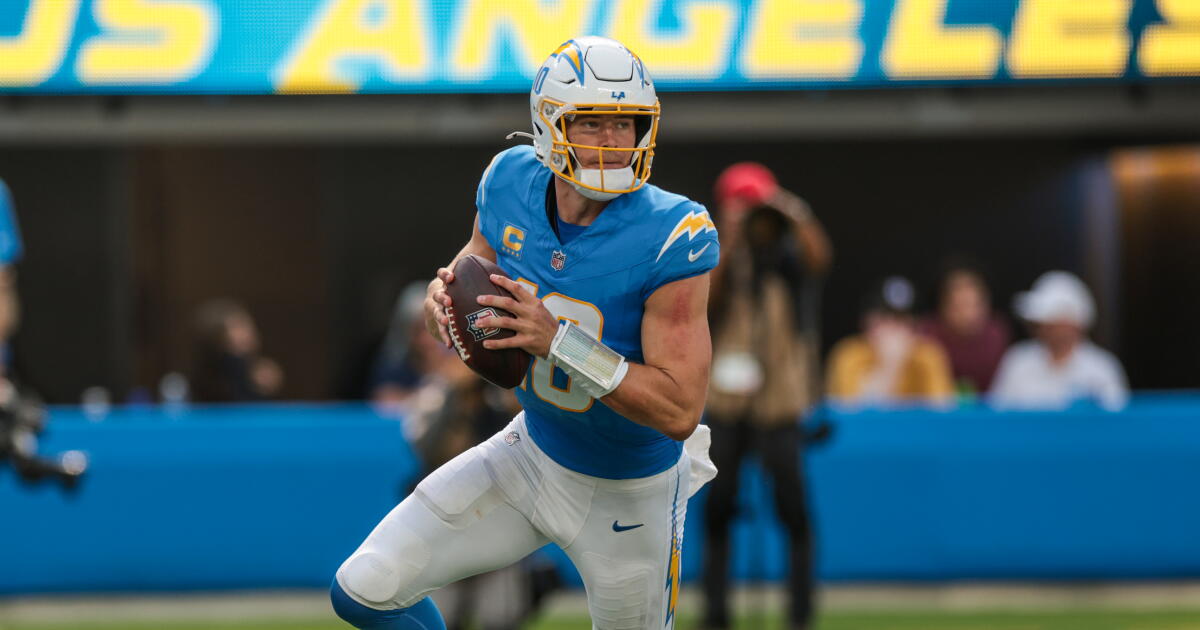
His right arm is unquestionably superb, but does Justin Herbert have two left feet?
NFL linebacker-turned-anayst Tedy Bruschi pondered as much this week in breaking down why the relationship between the Chargers’ quarterback and offensive coordinator Mike McDaniel has yet to click.
“I want to know if Justin Herbert can dance,” the impassioned Bruschi said on ESPN. “Really, like dance on a dance floor. Does he have rhythm?”
Because, Bruschi said, quarterback Tua Tagovailoa seemed much more attuned to McDaniel’s offense when the two teamed up for the Miami Dolphins.
“When Tua ran this offense, he was dancing,” Bruschi continued. “All the fakes, all the rhythmic, on time, left-handed. I mean, you would watch Tua and it was like boom, boom, boom, boom, gone [throwing an imaginary football]. He was dancing back there in the pocket. It was smoke and mirrors. That, at its best, is what this system is.
“And you’ve got a cyborg back there [in Herbert], a quarterback who can do everything under the sun, and now he has to learn to dance? ‘No, man, I don’t dance. I play football.’ So there’s just a little bit of conflict going on.”
The Chargers are 0-3 and Herbert has yet to hit his stride heading into Sunday’s game at Seattle. He has three touchdowns, four interceptions and a ho-hum passer rating of 73.4 after never finishing a season with a rating lower than 93.2. Granted, it’s early and there’s plenty of time for him to course correct, and his receivers have had several key bobbles and drops. But the schedule doesn’t get any easier soon for the Chargers, whose next games are against Denver, Kansas City, the Rams, Houston and Baltimore.
In short, the Chargers had better learn to navigate that dance floor. The night is not so young anymore.
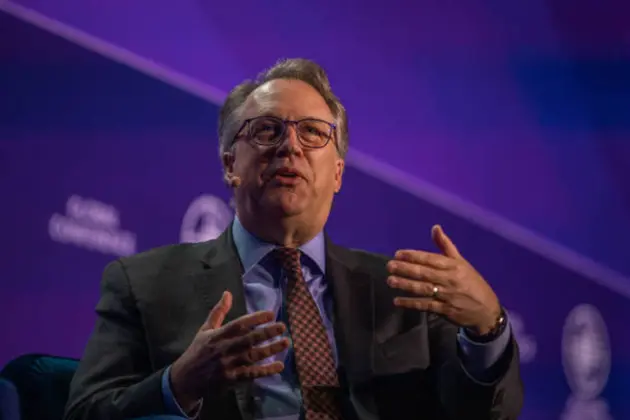
Market expectations for an October Federal Reserve rate hike tumbled to just over 50% on Tuesday after New York Fed President John Williams indicated he is in no rush to increase borrowing costs next month.
After the Federal Open Market
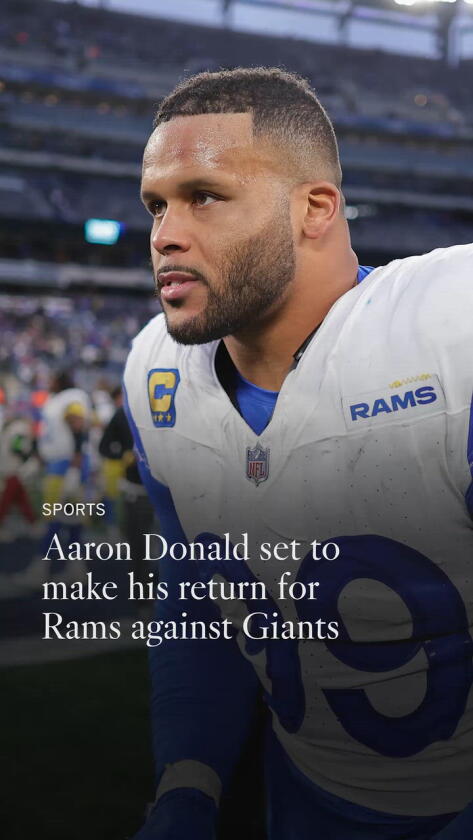
Myles Garrett is out for four games following knee surgery, but other Rams edge rushers said they were ready to step up against the New York Giants on Monday night at SoFi Stadium.
Second-year pro Josaiah Stewart could start in Garrett’s place opposite Byron Young with Desjuan Johnson and rookie Wesley Bailey rotating in.

Share via
Aaron Donald will play for the Rams against the New York Giants on Monday, but will Puka Nacua be on the field?
“I’m not going to go out there and be Myles Garrett,” said Stewart, who made six tackles and had one quarterback hit in the Rams’ season-opening defeat by the San Francisco 49ers, “but as a group we’ll fill our role and help do the job.”
The Rams’ pass rush will be aided by the addition of lineman Aaron Donald, the three-time NFL defensive player of the year who will make his season debut after coming out of two-year retirement.
But the outside linebackers plan to contribute.
“The room is full of talented guys, so everybody always smells blood,” said Johnson, a fourth-year pro. “We’re all sharks in the room, but we’re all helping each other. … It’s time for everybody to put on them big-boy boots.”
Bailey was the only first-year undrafted free agent to make the roster. He did it with outstanding performances in preseason games.
Young said losing Garrett was “huge” but he is confident the group will perform well.
“We’ve got guys that can definitely rush,” Young said. “I definitely think as a collective we can affect it together. He’s going to be back soon, and while he’s gone we’re going to hold it down and do what we do.”